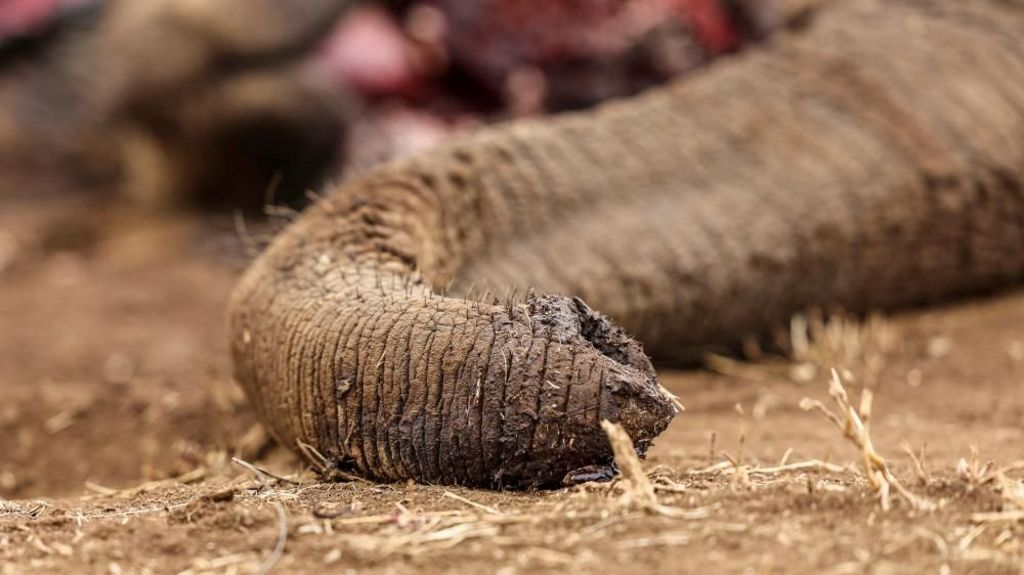
A devastating poaching-adjacent wildlife crisis has unfolded in southern Kenya’s iconic Amboseli ecosystem, leaving at least 18 elephants dead and triggering a major cross-border investigation that has resulted in four arrests, Kenya Wildlife Service has confirmed to the BBC.
The detained individuals include three Kenyan nationals and one Tanzanian national, all held on suspicion of orchestrating the mass poisoning that has rocked one of Africa’s most important elephant habitats over the past two months. Among the fatalities was Genghis Khan, an 11-year-old bull elephant whose remains were found just outside the boundary of Amboseli National Park, a stark reminder of how close this crisis has come to core protected areas.
Investigators are currently probing the theory that the elephants ingested lethal cyanide after raiding nearby tomato farms grown with illegally imported pesticides. Preliminary laboratory analysis of stomach content samples has already confirmed the presence of cyanide traces in affected animals. Most of the deceased elephants were adult females and their young calves, and all displayed clear symptoms of paralysis before death — a clinical sign that wildlife authorities say further supports the cyanide poisoning hypothesis.
The farms in question are located in Kenya’s Kimana region, a critical wildlife corridor that connects Amboseli National Park to the larger Tsavo National Park. This expansive transboundary landscape, the Amboseli ecosystem, crosses the porous Kenya-Tanzania border and supports a migrating population of more than 2,000 elephants that move through the area annually in search of fresh water and forage.
In recent years, expanding agricultural activity has brought human settlements and farms right up against the ecosystem’s boundaries, creating frequent conflict as elephants raid crops for food when wild forage becomes scarce. Smugglers regularly move pesticides banned for use in Kenya across the undefended border with Tanzania to supply local farms, a illegal trade that has flown under the radar for years. While Kenya does have formal regulations restricting the use of dangerous unapproved agrochemicals, enforcement remains chronically under-resourced, and little policy attention has been paid to the lethal spillover effects these substances have on protected wildlife.
All four suspects have since been released on bail as investigations continue, with authorities working to build a full picture of the poisoning network and prevent further mass deaths of Kenya’s threatened elephant population.