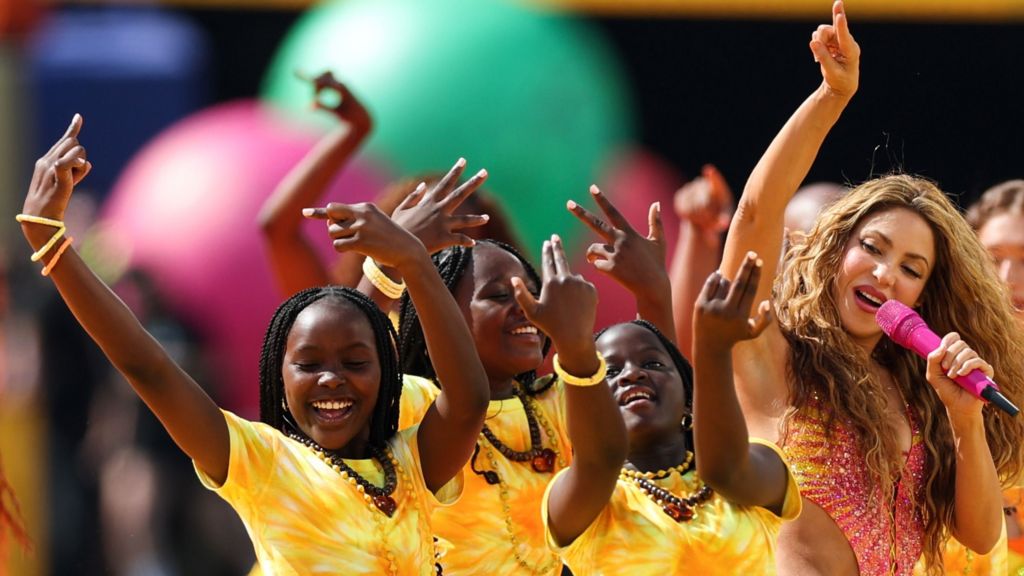
For a group of young Ugandan dancers who grew up amid hardship in Kampala’s underprivileged neighborhoods, a once-impossible dream became a tangible, life-changing reality this summer when they stepped onto the world’s biggest sports stage: the halftime show of the men’s football World Cup final. Performing alongside global superstars Shakira and Burna Boy, the Ghetto Kids dance collective marked another career milestone that capped off a years-long journey of perseverance, community support, and unwavering commitment to their craft.
Ten-year-old troupe member Sierra summed up the experience with unfiltered, childlike enthusiasm: “very, very, very, very, very good.” While some critics argued that adding a large-scale, Super Bowl-style performance to football’s most prestigious match diluted the sport’s traditional spirit, the children’s energetic routine drew hundreds of millions of viewers from across the globe, turning the young dancers into overnight inspirations for millions.
Speaking to BBC’s Newsday programme, the young dancers and their manager, Dauda Kavuma, opened up about the challenges of rising from humble, often difficult beginnings while balancing growing fame with their primary commitment: schoolwork. Sierra, who says dancing gave her the chance to access education she otherwise could not afford, shares a simple, powerful message for other young people facing barriers: “Never give up… pray to God. Listen to your parents, education is first, that’s all.”
For 11-year-old Josephine, the highlight of the day at New Jersey’s MetLife Stadium – where Spain defeated Argentina to claim the World Cup title – was getting a glimpse of the sport’s biggest icons. “I saw Messi and Lamine Yamal!” she exclaimed, referencing Argentine captain Lionel Messi and Spanish teenage star Lamine Yamal. Recalling the rush of performing for a global audience, she added, “I was so happy to see Messi and people watching us. I felt so excited and I was smiling, and a little bit nervous.” For Sierra, the warm kindness of Colombian pop legend Shakira stood out most from the experience.
When the performance wrapped, the children ran to embrace both Shakira and Nigerian music icon Burna Boy in a spontaneous moment of joy that was captured in viral photos. Manager Kavuma was quick to emphasize that the hugs were not a scripted part of the routine, but a natural outpouring of affection for the stars who gave the young dancers a once-in-a-lifetime opportunity. Kavuma recalled the group’s reaction when they first learned they had been selected for the halftime show: the children ran in circles, cheering and shouting with excitement at the news.
The collaboration with Shakira was particularly meaningful, Kavuma explained, because the Ghetto Kids had already performed her hit Waka Waka – a remake of 1980s Cameroonian classic Zangaléwa by Golden Sounds – during their 2023 run on Britain’s Got Talent. “But it was now a great moment to see that Shakira invited us… to perform with her. It means a lot and it’s life-changing,” he said.
Kavuma’s own story laid the foundation for the Ghetto Kids collective. As a child, he lived on the streets of Kampala before a teacher’s kindness changed the trajectory of his life. Determined to give back to the community that helped him, he became a teacher himself before founding the dance troupe for children who were homeless or unable to afford school fees. His core belief? There is no shortage of raw talent in Uganda’s ghettos – it just needs support and opportunities to shine.
Blending dynamic traditional African dance styles, playful comedy, and infectious joy, the group quickly caught the attention of regional stars, including Ugandan musician Eddy Kenzo, who cast the kids in several of his music videos. Leveraging the power of social media to reach global audiences, the Ghetto Kids earned their first major mainstream break in 2017, when they appeared in French Montana’s music video for Unforgettable. To date, the video has racked up more than 1.9 billion views on YouTube, opening doors that would have otherwise been closed to the young performers.
That viral fame catapulted the group to new heights: they reached the final of Britain’s Got Talent in 2023, then competed on America’s Got Talent the following year. The growing platform has also allowed Kavuma to expand his community project, providing housing, food, and school tuition to hundreds of disadvantaged children across Uganda.
The 2026 World Cup final halftime performance marks the group’s biggest stage to date, but it is far from their first major sporting event. In 2023, the troupe met French star Kylian Mbappé and performed at the halftime of a top-tier French league match between Paris Saint-Germain and Reims. Most recently, a documentary feature titled *Ghetto Kids Documentary: No Plan B* was released to tell their extraordinary story to a wider audience.
Even as their fame grows, the group has stayed grounded thanks to a strict “education first” rule instilled by their parents and Kavuma. All content for the troupe’s millions of social media followers is filmed on weekends, leaving weekdays fully dedicated to classroom learning. When the kids travel for international performances, they attend online classes with their Kampala teachers and catch up on missed assignments immediately upon returning home.
Both Sierra and Josephine say they plan to pursue careers as doctors when they finish school, but they will never give up their lifelong passion for dance. “Dancing changed my life – I went to school because of dance,” Sierra says. Josephine echoes that sentiment, noting, “Dance is what I know and that makes me happy because that’s my talent.”
When asked what message they have for other children growing up with talent but limited opportunities, Josephine had a warm, encouraging response: “To love themselves, believe in God, and pray. Be with their talents – don’t deny them. And we love them.”