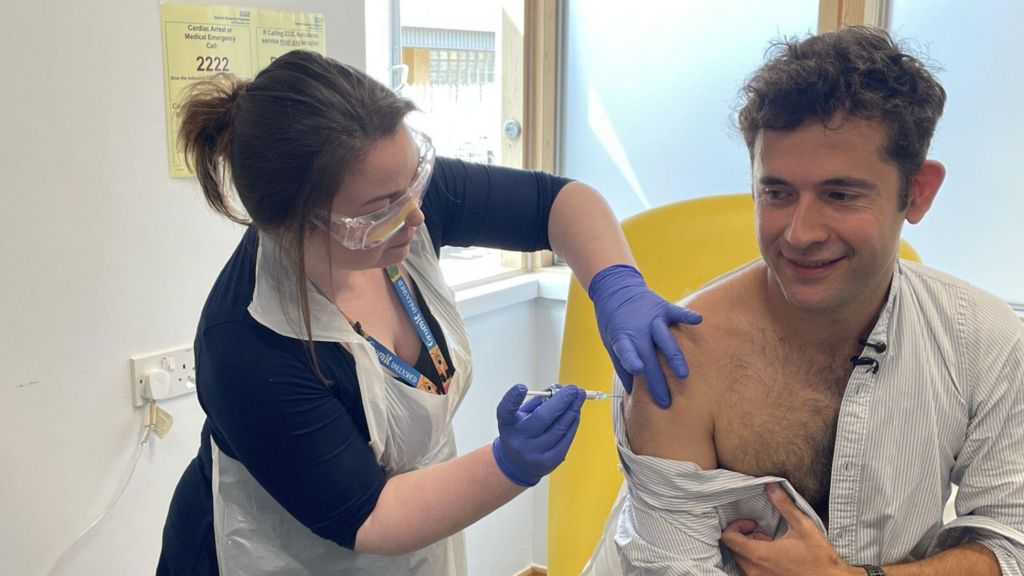
A new chapter in the global fight against Ebola opened recently at the University of Oxford, when 37-year-old British healthcare worker Ed Hunt made history as the first person in the world to receive an experimental vaccine targeting the strain currently driving a deadly outbreak in the Democratic Republic of Congo (DRC). For Hunt, the opportunity to participate was a long-awaited chance to contribute to global public health after missing out on joining COVID-19 vaccine trials due to professional constraints.
Speaking to reporters after receiving his injection, Hunt explained that graphic news coverage of the ongoing Ebola crisis in the DRC pushed him to step forward. “After seeing news from DR Congo I thought I’d like to do my bit,” he said, echoing a widespread desire among ordinary people to support frontline responses to dangerous infectious disease outbreaks.
The newly developed candidate vaccine leverages the same viral vector technology that underpinned the Oxford-AstraZeneca COVID-19 vaccine, a platform that has already been proven safe and effective for hundreds of millions of people across the globe. Remarkably, the Oxford research team completed development of the new Ebola vaccine in just eight weeks, a breakthrough timeline that researchers say builds on more than 30 years of accumulated work in vaccine technology.
Professor Teresa Lamb, who leads the Ebola vaccine research program at the University of Oxford, emphasized that there is zero risk of participants contracting Ebola from the vaccine itself. “We will not be giving anybody Ebola in this trial or any trial,” she confirmed, addressing common public concerns about experimental clinical studies. This first phase of human trials is focused on two core goals: verifying the vaccine is safe for human use, and measuring whether it triggers a robust, protective immune response against the Bundibugyo strain of Ebola – the variant responsible for the current DRC outbreak.
Currently, four candidate vaccines targeting Bundibugyo Ebola are in development globally, but the Oxford candidate is the first to advance to human trials. Existing licensed Ebola vaccines only work against the Zaire strain, offering no protection against Bundibugyo, leaving affected regions without a targeted tool to stop the current outbreak.
Hunt is the first of 50 healthy volunteers between the ages of 18 and 55 who will be enrolled in this initial safety trial in the UK. Following the completion of this phase, a second small-scale trial is scheduled to launch soon in neighboring Uganda, before a large, final efficacy study is conducted directly in the DRC where the outbreak is concentrated.
In a major step to prepare for rapid deployment if trials prove successful, India’s Serum Institute has already pre-manufactured 600,000 doses of the vaccine, allowing for immediate rollout to affected areas if the candidate is approved. As of the latest official counts, the ongoing DRC outbreak has recorded more than 2,500 confirmed Ebola cases, with over 1,000 deaths attributed to the virus, underscoring the urgent need for an effective targeted vaccine.