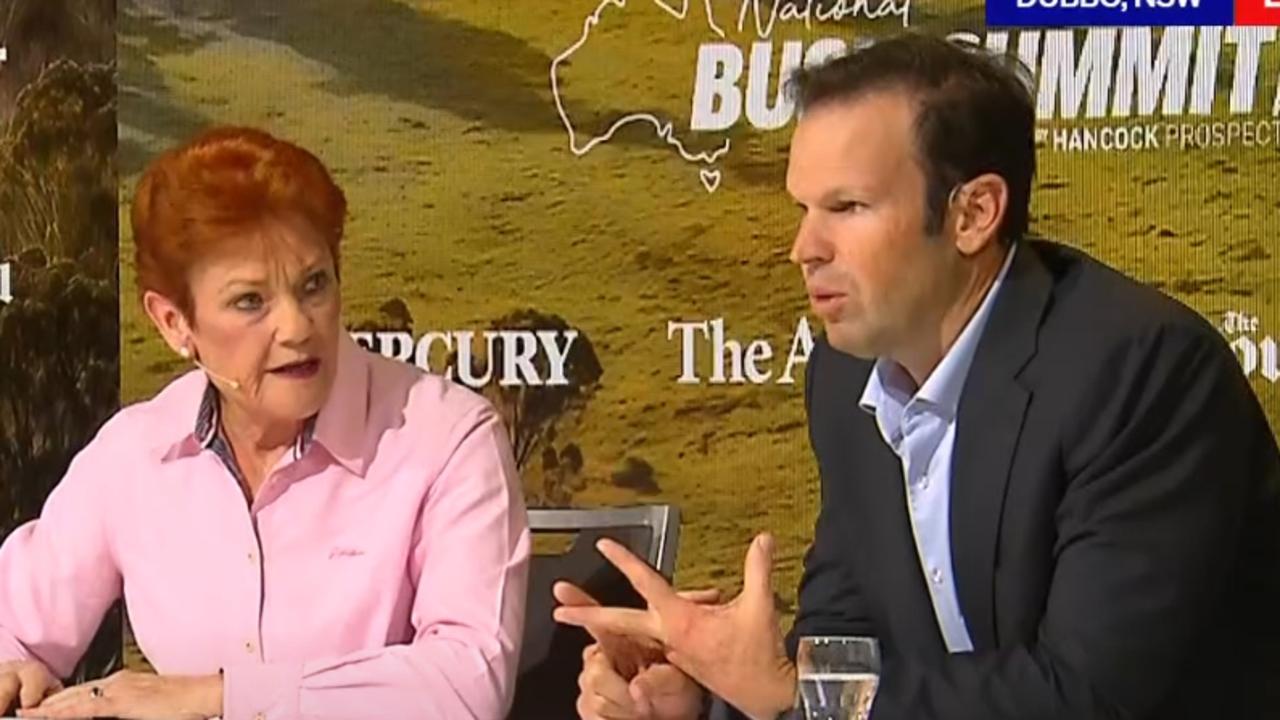
A high-stakes public confrontation between One Nation founder Pauline Hanson and new Nationals leader Matt Canavan unfolded this Thursday at the annual Bush Summit in Dubbo, located in New South Wales’ Central West. The two senior conservative politicians went head-to-head on two divisive issues: former Nationals deputy prime minister Barnaby Joyce’s late 2023 defection to One Nation, and Australia’s long-running net-zero emissions policy debate.
Canavan, who took over the Nationals leadership earlier this year from David Littleproud, opened discussion on Joyce’s party exit, acknowledging that he still considers the long-serving New England MP a personal friend. “He openly said he left because he didn’t like David Littleproud,” Canavan told the panel audience. While Canavan expressed personal disappointment in Joyce’s choice, he emphasized that his political work prioritizes policy impact over personal relationships, noting he spends long stretches away from his wife and five children to advance his policy goals. “I don’t think that’s a reasonable basis to leave a political party who put you there … the hundreds of thousands of volunteers that stayed out in the winds, out in the cold to get you elected,” he added.
Hanson immediately interjected to defend Joyce, her party’s newest lower house member, pushing back on Canavan’s framing of the defection. “Come on, Matt. He didn’t leave The Nationals party just because of David Littleproud,” she said. Canavan ultimately conceded a second core motivation, acknowledging Joyce also cited the Nationals’ adoption of a net-zero emissions target as a driving factor — though he noted the party had already scrapped that policy before Joyce left.
The confrontation quickly shifted to the broader net-zero debate, where Hanson pushed back hard against what she framed as suggestions she and One Nation are irrelevant to Australian climate politics. “It just annoys me, you know, to make me as if I’m irrelevant in this, as if I’ve got nothing to offer politics,” she said. Hanson also pushed back on the narrative that net-zero is a policy pushed by progressive parties, pointing out that ambitious renewable energy targets were first introduced under Liberal former prime minister John Howard, and the formal net-zero commitment was made under Liberal prime minister Scott Morrison — a point Canavan interrupted to clarify did not include the Paris Climate Agreement, which Hanson has long opposed. Hanson reaffirmed she has opposed Australia’s net-zero target from its inception, noting the Labor government has only continued the existing framework laid out by the previous Liberal government.
Beyond climate policy, Hanson also addressed ongoing confusion over One Nation’s controversial migration policy, which calls for cutting net overseas migration to a cap of 130,000. She clarified that One Nation’s recent lower house MP David Farley misspoke when he claimed the party’s total migration numbers would not differ greatly from the current Labor government’s targets. Hanson explained that the 130,000 cap does not include seasonal farm workers brought into Australia under the Pacific Australia Labour Mobility (PALM) scheme, arguing these workers fill critical labor gaps that keep regional Australian agricultural and abattoir sectors operational. Unlike permanent migrants and student visa holders, PALM workers are provided accommodation directly by their employing farms and businesses, Hanson said, so they do not add pressure to Australia’s strained national housing market. When pressed, she confirmed that total annual migration, including PALM scheme workers, would exceed the 130,000 net cap, framing the separate scheme as a necessary exception for rural Australia.
The public clash highlights growing tension between the Nationals and One Nation, as the smaller right-wing party targets regional-held Nationals seats ahead of Australia’s next federal election, leveraging voter discontent over climate policy and migration to win over regional electorates.