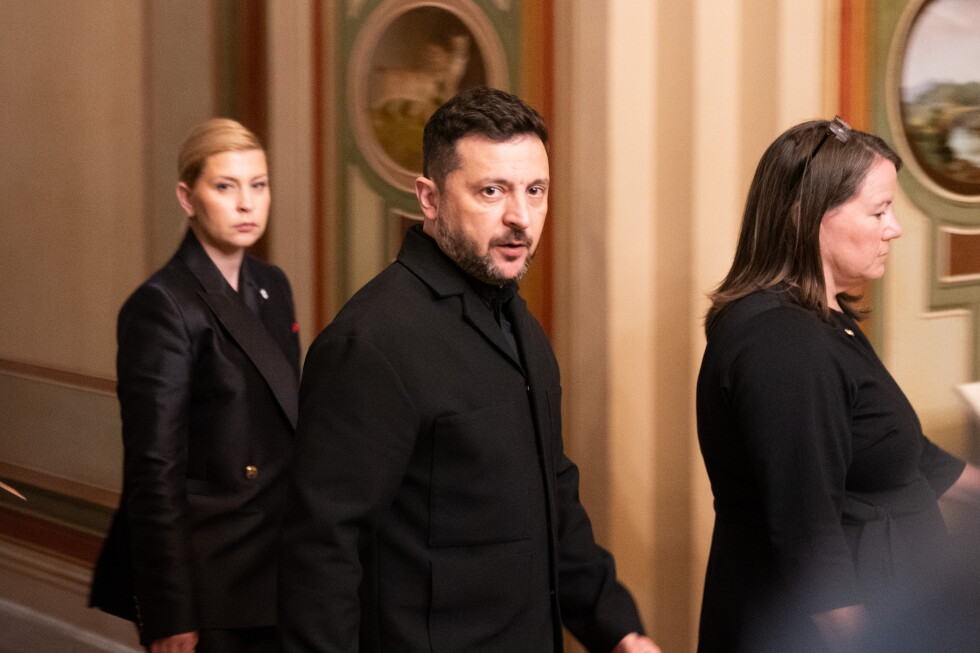
On a singular day in Washington that blended mourning and urgent diplomacy, Ukrainian President Volodymyr Zelenskyy arrived at the U.S. Capitol just hours after the funeral of the late Republican Sen. Lindsey Graham to make a direct, personal appeal for sweeping new sanctions against Russia — a last legislative effort spearheaded by Graham to cut off Moscow’s war-fighting revenue.
A rare show of bipartisan attention greeted the Ukrainian leader: half of all U.S. senators packed into a closed-door meeting, setting aside their usual mobile phone distractions to focus on Zelenskyy’s briefing. Joined by House members, attendees heard Zelenskyy lay out Ukraine’s ongoing strategy in its years-long defensive war against Russia’s full-scale invasion, detailing how Kyiv’s forces have held back Russian advances and even taken offensive action while outlining urgent unmet needs. Those needs include additional Patriot interceptor missiles, expanded access to Elon Musk’s Starlink satellite internet, updated defense licensing agreements, and, most pressingly, immediate passage of the sanctions package Graham spent a full year negotiating to advance.
Zelenskyy made the stakes clear to lawmakers, according to Sen. Jeanne Shaheen, the top Democratic member of the Senate Foreign Relations Committee. “He said, ‘We need this legislation,’” Shaheen recalled in an interview, adding that the bill’s passage is critical to the morale of both Ukraine’s frontline troops and its civilian population.
Multiple lawmakers in attendance described a palpable shift in the room, buoyed by Zelenskyy’s quiet confidence in Ukraine’s ability to persevere. “You could feel palpably in the room a sense that — Zelenskyy’s confidence of their ability to hold and to persevere,” said Rep. Steny Hoyer, Maryland’s veteran Democratic congressman and former House Democratic leader. “There was a sense in the room that, look, we can be successful.”
The legislation, later named the Lindsey O. Graham Sanctioning Russia Act, marks the most ambitious pro-Ukraine policy initiative from Congress since Donald Trump reclaimed the White House in 2025. After two years of gridlock on Ukraine policy — the last major congressional action was 2024’s supplemental aid package — the bill advanced out of the Senate the very night of Zelenskyy’s visit, with the Ukrainian leader taking an unprecedented seat in the Senate chamber to observe the vote. Lawmakers smiled, waved, and gave encouraging gestures as they cast their ballots, and the bill ultimately passed days later by a lopsided 86-11 margin, sending it to the House of Representatives for consideration.
Despite that strong Senate showing, the bill’s future remains deeply uncertain. House Speaker Mike Johnson leads a narrow Republican majority overwhelmingly reluctant to commit to new overseas initiatives aligned with U.S. foreign policy goals. Even among many Democratic lawmakers who have long supported Ukraine, concerns have emerged about the bill’s structure: it grants Trump sweeping authority to impose tariffs of up to 100 percent on any country that continues to import Russian energy, with no explicit congressional checks on how that power is used.
At its core, the legislation is designed to cut off the Kremlin’s primary source of funding for its war machine by pressuring major Russian energy customers including China and India to halt purchases of Moscow’s oil and gas. But critics across the Democratic caucus warn the open-ended tariff authority gives the Trump administration too much unregulated power, which could be used against U.S. allies and ultimately raise costs for American consumers.
“It’s important not to underestimate symbolically what this would mean,” said Daniel Balson, a policy advocate with Razom for Ukraine, a pro-Ukraine pro-democracy organization. Balson urged Congress to maintain momentum on the bill, arguing that passage would send a critical message to Kyiv that “hiccups and all, there is still an international alliance that stands behind Ukraine’s fight.”
Zelenskyy’s 2025 Capitol Hill visit marks the latest chapter in a years-long diplomatic outreach to U.S. lawmakers that has seen dramatic high points and deep periods of uncertainty. In March 2022, just days after Russia launched its full-scale invasion, Zelenskyy addressed Congress via a dramatic private video call, pleading for warplanes to defend Ukraine’s skies. That December, he traveled to Washington for a historic Christmas address to Congress, drawing comparisons to Winston Churchill’s World War II visits to Washington to rally allied support.
But by 2023, as then-Republican front-runner Trump aligned with critics of continued aid, congressional Republicans abandoned plans for a new round of Ukraine funding. After Trump won the 2024 election and returned to the Oval Office in 2025, all progress on new Ukraine aid ground to a halt. A high-profile Oval Office meeting saw Trump publicly berate Zelenskyy, blaming the Ukrainian leader’s opposition to Putin for blocking a negotiated peace. As Republican Rep. Don Bacon of Nebraska, a former Air Force brigadier general, put it: Republican support for the bill is largely held back by Trump’s stance. “This has largely hinged on President Trump,” Bacon said, noting that more Republicans would back Ukraine publicly if Trump signaled his approval.
Graham, who spent a full year negotiating with the White House to win Trump’s backing for the sanctions package, shared the news of his breakthrough with colleagues at the NATO summit in Turkey last month, before traveling on to Kyiv for a final visit to Ukraine. He died just days after returning to Washington, from an apparent torn aorta. His Democratic partner on the bill, Sen. Richard Blumenthal of Connecticut, recalled that Graham called winning Trump’s approval a “BFD” — a nod to how critical the breakthrough was for the legislation.
Top House Democrats have already raised formal objections to the bill’s open-ended tariff provisions. House Foreign Affairs Committee top Democrat Gregory Meeks of New York and Ways and Means Committee top Democrat Richard Neal of Massachusetts have both publicly pushed back on the language. More than 30 Senate Democrats supported a failed amendment to rein in the president’s tariff authority before the bill’s passage.
“This is not so much a sanctions bill as it is a massive backdoor authority for President Trump to impose more tariffs, including on our European allies, that hurt American families,” Meeks said in a statement. Even so, Hoyer, who worked with Meeks on a separate pro-Ukraine security bill that passed the House earlier this year over Johnson’s objections, is urging lawmakers not to let the opportunity slip. He argued that existing congressional and judicial checks are sufficient to limit any potential abuse of the tariff authority, and that passing the bill is critical to sending a message of support to Ukraine.
“You know there was so much negative vibes that we were sending,” Hoyer said. “We’ve got to send a letter to these courageous Ukrainians that we’re with them.”