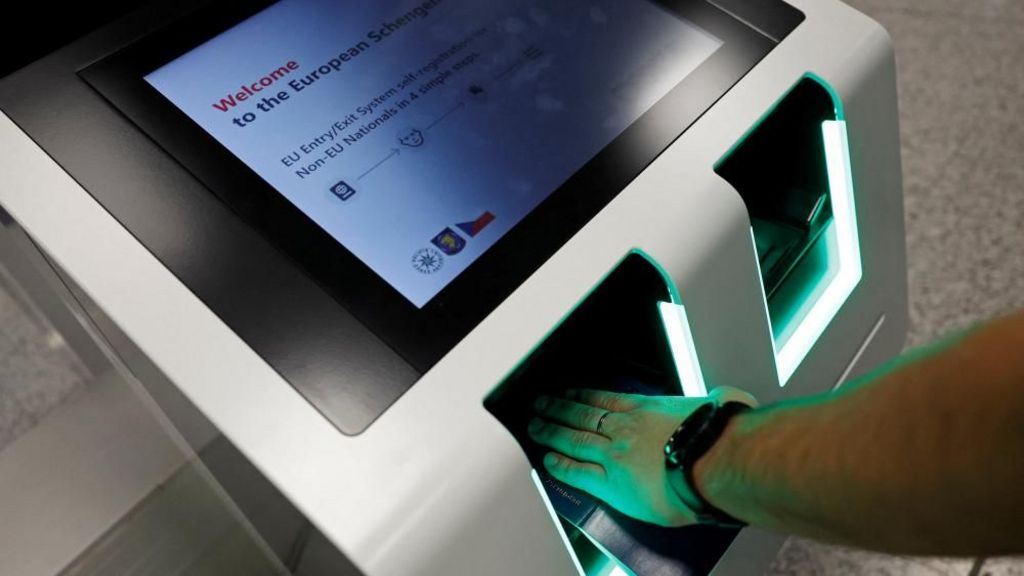
As the European Union grapples with growing travel disruption stemming from its new border management framework, the European Commission has officially confirmed that Portugal and Italy have no plans to waive new mandatory biometric screening requirements for British citizens entering the Schengen Zone.
The confirmation comes on the heels of unsubstantiated media speculation that the two Southern European nations would follow Greece’s lead, which quietly suspended the new fingerprint and facial scan checks for UK nationals earlier this spring in a bid to avoid crippling summer travel gridlock. Neither Portuguese nor Italian officials had publicly confirmed the rumors prior to the Commission’s statement.
The new Entry-Exit System (EES), the EU’s digital overhaul of border processing, requires all short-term visitors from outside the European Union and European Economic Area to register their biometric data every time they enter or exit the Schengen free travel area. First launched in October last year, the system was scheduled to reach full operational capacity by April 10 of this year. While EU officials maintain the platform has largely performed as intended, widespread traveler accounts of multi-hour delays at border checkpoints have proliferated in recent months, with UK passengers disproportionately affected. In dozens of documented cases, delayed passengers have missed departing and connecting flights entirely.
One high-profile incident last month left more than 100 EasyJet passengers stranded in Milan’s Linate Airport after they missed their flight back to Manchester, caught in what the carrier called “unacceptable” passport processing queues. A separate incident at Milan’s Bergamo Airport saw a plane full of Ryanair passengers bound for Manchester also miss their departure due to EES-related backlogs, the airline confirmed.
In response to these mounting disruptions, Greek border authorities quietly stopped conducting mandatory biometric checks for UK citizens, despite the Greek government’s public claim that it had “successfully started the full operation of the Entry-Exit System.” The Commission confirmed this week that it has opened discussions with Greek officials to clarify the country’s deviation from EU rules and remind national governments of the bloc’s existing regulatory framework. Under current EES rules, temporary, limited suspensions of screening are permitted at specific border crossings only during exceptional circumstances, but blanket exemptions for entire nationalities over extended time frames are explicitly prohibited.
The Commission added that it remains in regular communication with all EU member states, including Portugal and Italy, to coordinate EES implementation. “The Portuguese and Italian authorities confirmed that they do not intend to exempt any nationality,” a Commission spokesperson said in an official statement.
The ongoing EES-related travel chaos comes as global airlines already face cascading headwinds, including skyrocketing jet fuel prices and widespread uncertainty over fuel supply security heading into the peak summer travel season. Global carriers have already cut more than 13,000 scheduled flights for May, accounting for roughly 1% of all planned global air travel for the month. Despite the mounting disruptions, UK officials have urged holidaymakers not to cancel or alter their existing travel plans, noting that the UK faces no current fuel shortage and that government contingency plans are in place to address emerging issues.