分类: world

  • Iran turns to Pakistan land corridor as US naval pressure disrupts Gulf trade

    Iran turns to Pakistan land corridor as US naval pressure disrupts Gulf trade

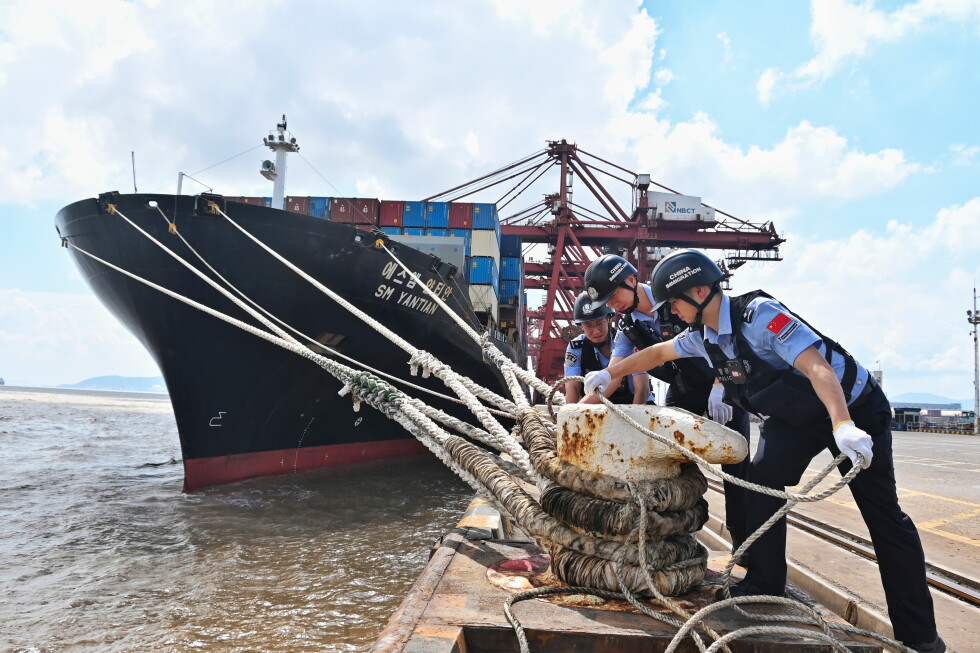
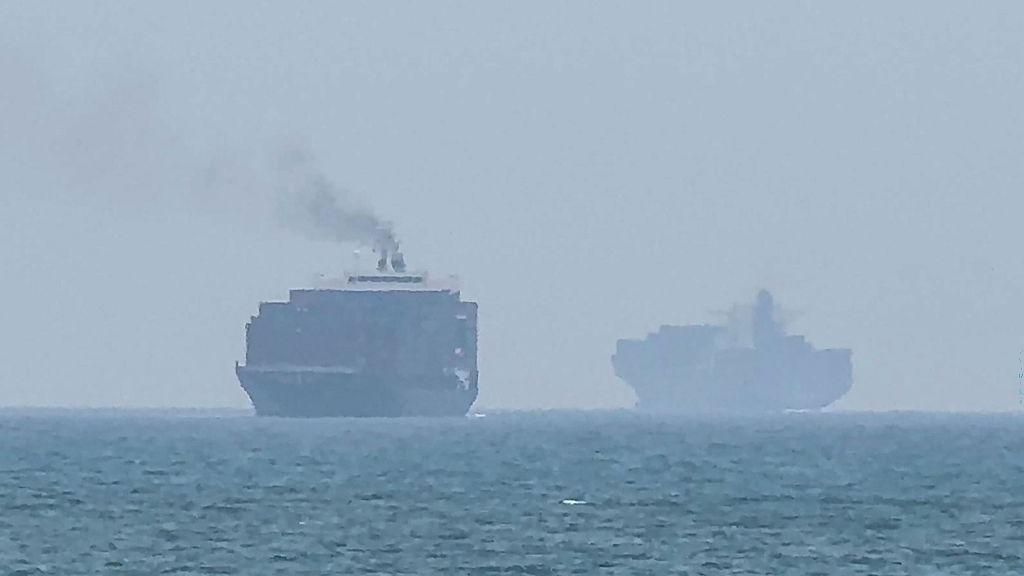
    Facing escalating US naval pressure that has crippled its maritime access to the Arabian Gulf and Persian Gulf, Iran has pivoted eastward, breathing new life into a decades-dormant overland trade corridor project with Pakistan that offers a critical alternative to blockaded sea routes. Now in its fifth week, the US blockade has thrown Iran’s regional trade into disarray: thousands of containers bound for the Islamic Republic have been stranded at Pakistan’s Karachi Port, war-risk insurance premiums for shipping passing through the Strait of Hormuz have skyrocketed, and most major carriers have suspended Iran-bound voyages entirely.

    In late April, just days after a second round of US-Iran negotiations collapsed, Pakistan’s Ministry of Commerce issued a little-noticed regulatory order, SRO 691, formally designating six new transit corridors that allow third-party cargo bound for Iran to travel overland across Pakistani territory from Pakistani ports. The move revives a bilateral road transport agreement first signed by the two nations in 2005 that sat idle for nearly 20 years, connecting Pakistan’s three major deep-water ports – Karachi, Port Qasim, and the China-backed Gwadar Port – to two Iranian border crossings in Balochistan: Gabd and Taftan. The shortest route, linking Gwadar to Gabd, cuts travel time to the border to just two to three hours, down from 18 hours over the route from Karachi.

    For years, Tehran refused to move forward with the project out of concern that expanding activity at Gwadar would draw trade away from Chabahar, Iran’s own Indian-funded deep-water port on the Gulf of Oman. But that strategic calculation shifted dramatically after the outbreak of regional conflict and the imposition of the US naval blockade, which left Chabahar exposed to growing instability. The urgency of the project was underscored by the timing of Iranian Foreign Minister Abbas Araghchi’s high-profile visit to Islamabad, where he met with Pakistani Prime Minister Shehbaz Sharif and Army Chief Asim Munir just as the corridor order was announced.

    Beyond providing immediate relief for Iran’s import crunch, the corridors open a new long-term pathway for regional trade extending all the way to Central Asia. Trial shipments, including a refrigerated cargo of meat bound for Uzbekistan, have already traversed the route, with cargo moving north from the Iranian border through Iran’s domestic road network to Central Asian markets. Analysts note that the corridor exposes a key limitation of the US maritime blockade: goods shipped from China and other major trade partners to Pakistan can be unloaded outside Iranian jurisdiction and transported overland, bypassing blockaded Iranian waters and the Strait of Hormuz entirely. Currently, Tehran is increasingly relying on a network of alternate overland and maritime routes through Pakistan, Turkey, the Caucasus, and the Caspian Sea to keep import flows moving.

    The arrangement operates in a legally ambiguous space: Pakistan does not formally enforce US sanctions on Iran, and existing US sanctions frameworks allow for limited non-US trade with Iran as long as transactions avoid explicitly sanctioned entities. To date, the White House has not issued any formal public objection to the corridor; when asked about the project, US President Donald Trump only stated he “knows everything about it” without further elaboration.

    Analysts emphasize that the new corridors are an adaptive response to wartime pressure, not a fundamental fix for Iran’s deep-seated economic challenges under sanctions. “These land routes are less a major economic transformation for Iran than a form of economic breathing space under pressure,” explained Mostafa Modabber, a South Asia-based analyst. Fatemeh Aman, an independent specialist on Iran-South Asia relations, echoed that assessment, noting that “land routes cannot match the scale, speed or profitability of maritime trade. They may reduce vulnerability at the margins, but they are unlikely to fundamentally change Iran’s broader economic challenges under sanctions and conflict conditions.”

    The project also faces significant practical and political obstacles. Pakistan grapples with underdeveloped transport infrastructure in Balochistan, pervasive corruption within customs agencies, persistent insecurity in border regions, and widespread influence from informal smuggling networks. Islamabad also walks a delicate diplomatic tightrope, balancing its economic interests with Iran against its ties to Washington, Riyadh, and other Gulf states, and remains hesitant to openly confront the US should Washington choose to intensify pressure on Iran-related trade. Even after the corridor’s formal launch, many stranded containers in Karachi continue to move slowly, as Pakistani banks and logistics firms remain wary of potential US secondary sanctions.

    Despite these challenges, the corridor carries broader strategic significance for regional trade architecture. It links Iran directly to two major integrated trade networks: the China-Pakistan Economic Corridor (CPEC) and the International North-South Transport Corridor (INSTC) that connects Iran to Russia and India. For China, Iran’s largest remaining major trading partner, the route offers a way to sustain critical supply chains without full dependence on maritime lanes vulnerable to US naval interdiction. For Pakistan, the project advances its long-held goal of positioning itself as a key transit hub connecting South Asia to Central Asia and the Middle East, while also boosting the commercial viability of Gwadar Port, the centerpiece of CPEC.

    The reactivation of the Iran-Pakistan corridors reflects a larger ongoing shift in regional trade patterns as traditional maritime lifelines through the Strait of Hormuz become increasingly contested. What began as a emergency workaround for a five-week blockade has emerged as a visible signal of how quickly regional powers are reworking trade routes to adapt to rising geopolitical tension.

  • Israel to sue New York Times for article describing its rape of Palestinians

    Israel to sue New York Times for article describing its rape of Palestinians

    A bitter legal clash is brewing between the state of Israel and one of the world’s most prominent newspapers, after The New York Times stood by a high-profile opinion column that documented allegations of systemic sexual assault and rape against Palestinian detainees held in Israeli custody.

    The confrontation moved forward this week after the paper reaffirmed its support for the reporting of veteran columnist Nicholas Kristof, prompting Israel’s Ministry of Foreign Affairs (MFA) to announce it would move forward with a defamation lawsuit against the outlet, the agency confirmed in a post on the social platform X Thursday.

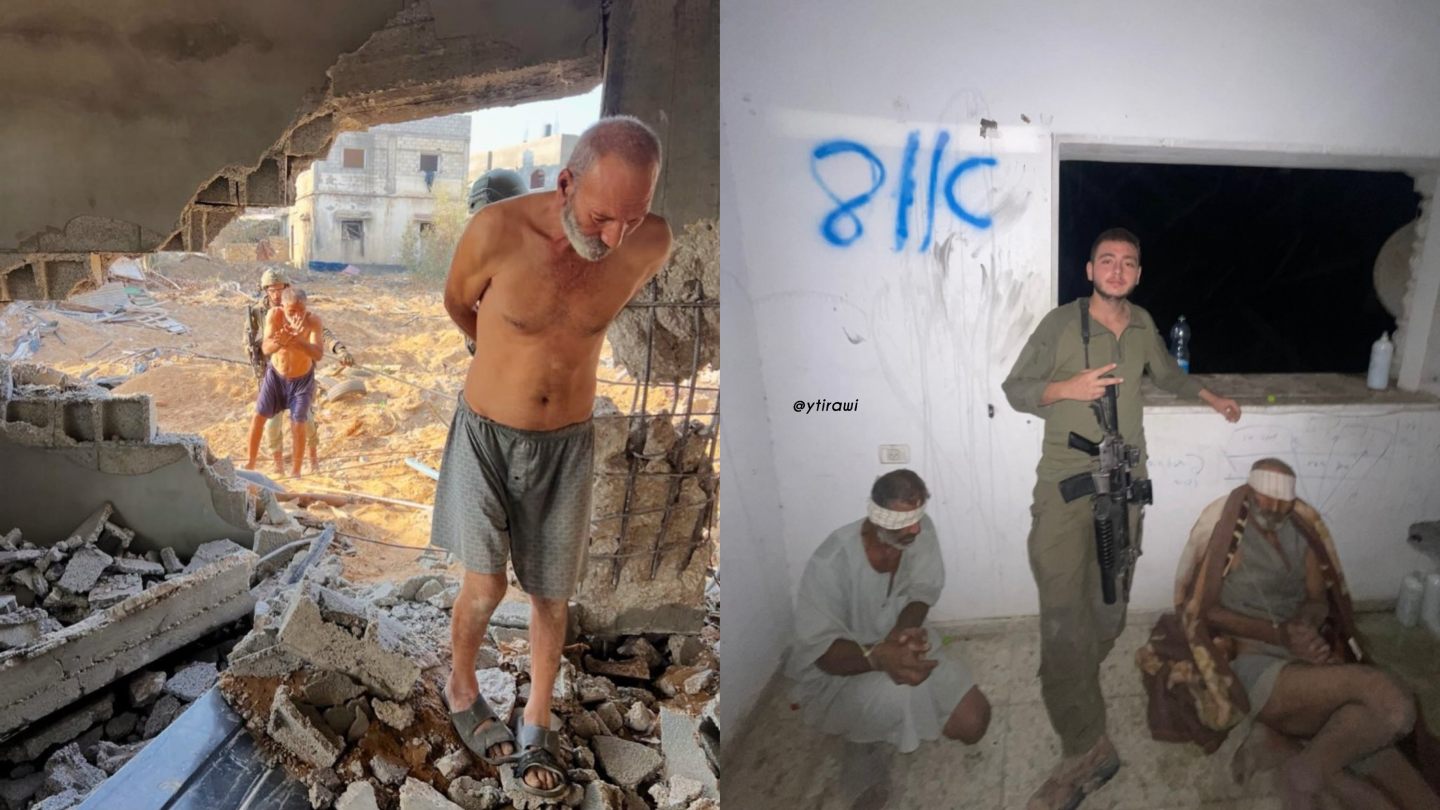
    Kristof’s deeply researched investigative opinion piece opens with a unifying call for readers: regardless of where they stand on the decades-long Israeli-Palestinian conflict, all people should be able to join in condemning sexual violence as a human rights abuse. The column centers on harrowing, first-hand testimonies from Palestinian survivors of assault by Israeli security personnel, including accounts of assault using military dogs, vegetables, and batons that left serious internal injury.

    One detailed account comes from 46-year-old Palestinian journalist Sami al-Sai, who told Kristof he was sexually assaulted by both male and female Israeli soldiers while they filmed the attack, describing being violently grabbed in his genitals until he begged for the assault to stop.

    In a statement defending the column, a New York Times spokesperson emphasized that Kristof’s work was the product of rigorous, in-depth reporting. But Israeli officials and public figures have pushed back fiercely, dismissing the allegations as a modern iteration of the medieval ‘blood libel’ – a centuries-old antisemitic falsehood that was used to justify mass violence against Jewish communities across Europe for hundreds of years.

    Following the paper’s decision to uphold the reporting, Prime Minister Benjamin Netanyahu and Foreign Minister Gideon Sa’ar have formally ordered the MFA to launch the defamation proceeding against The New York Times. In an official statement, the MFA called Kristof’s piece one of the most ‘hideous and distorted lies’ ever published against the Israeli state by a major modern media outlet.

    This is not the first time such allegations have come to light: independent outlet Middle East Eye published a similar report last month, based on investigation from the West Bank Protection Consortium. The coalition of human rights groups documented a minimum of 16 separate cases of sexual violence perpetrated by Israeli soldiers and settlers in the occupied West Bank, in a report focused on how gender-based violence is used to force Palestinian displacement from the region.

    Kristof’s reporting draws on corroborating evidence from multiple independent human rights organizations that have documented sexual violence by Israeli personnel, including Euro-Med Monitor, Save the Children, the Committee to Protect Journalists, and leading Israeli human rights group B’Tselem. The columnist also interviewed Israeli legal professionals who confirmed that the sexual abuse of Palestinian detainees is a widespread, underreported problem.

    In his column, Kristof argued that decades of systemic dehumanization of Palestinians by Israeli institutions has created conditions that enable these abuses to continue with impunity. He added that the true scale of violence is almost certainly far higher than documented, because sexual assault is deeply stigmatized in conservative Palestinian society, leaving most survivors unwilling to come forward publicly. Very few of the survivors he interviewed agreed to be named, but Kristof noted overlapping patterns in their testimonies that point to a systemic, institutional problem rather than isolated incidents.

    Kristof also drew direct connection to United States policy, noting that American taxpayer funding subsidizes the Israeli security establishment, making the U.S. complicit in the sexual violence documented in the piece.

  • Clashes erupt in Bolivia as miners set off dynamite and police fire tear gas

    Clashes erupt in Bolivia as miners set off dynamite and police fire tear gas

    Fresh violence has shaken Bolivia’s capital city of La Paz, where violent confrontations broke out Thursday between law enforcement and protesting miners, marking the second consecutive week of rolling nationwide civil unrest that threatens the young administration of President Rodrigo Paz.

    According to on-site reports, police deployed tear gas to scatter the crowd of thousands of mining workers, who had advanced toward the seat of national government, the Palacio Quemado, and set off small dynamite blasts to clear their path. The use of homemade explosives has grown increasingly frequent across recent days of unrest, as demonstrators escalate their tactics to push their demands.

    President Paz, who took office at the end of 2024, ended nearly two decades of uninterrupted single-party rule in the Andean nation when he was inaugurated, promising a new chapter of governance and reform. But just months into his term, he is facing a rapidly growing crisis that has paralyzed the capital and spread across the country.

    The mass mobilization of miners is the most high-profile in a wave of overlapping protests that have brought central La Paz to a standstill. Miners initially gathered to demand revisions to national labor policies and increased access to subsidized fuel, but as the demonstration dragged on, chants calling for Paz’s resignation grew louder among the crowd.

    The unrest has drawn in multiple groups in recent days, compounding pressure on the new government. Earlier on Thursday, thousands of rural public school teachers joined a separate march through the city center, calling for substantial pay increases. Combined with widespread road blockades erected by protest groups across the region, the overlapping mobilizations have completely choked off movement and normal activity in the capital.

    The current wave of demonstrations first began when rural farmers launched protests to oppose a recently passed law that allowed for private land to be used as collateral for mortgage loans. Responding to early pressure, President Paz announced a presidential decree Wednesday evening that formally annulled the controversial legislation and appealed directly to demonstrators to stand down and end their blockades and marches. Despite the concession, protests have only accelerated and expanded, with new groups joining the movement to push a broad set of additional grievances against the new administration.

  • Netanyahu’s boast of secret visit to UAE sparks awkward denial from Abu Dhabi

    Netanyahu’s boast of secret visit to UAE sparks awkward denial from Abu Dhabi

    In a dramatic development that has thrown the already fragile normalization alliance between Israel and the United Arab Emirates into the global spotlight, conflicting official claims over an alleged secret summit between the two nations’ leaders emerged on May 13, 2026, deep amid Israel’s ongoing war against Iran. The stark disagreement between Jerusalem and Abu Dhabi has also drawn sharp condemnation from Tehran, which has directly accused the Gulf state of complicity in the military campaign against it.

    The chain of events began when Israel’s Prime Minister’s Office made an unprecedented public announcement confirming that Prime Minister Benjamin Netanyahu had traveled secretly to the UAE for a closed-door meeting with UAE President Mohammed bin Zayed al-Nahyan, held weeks into Israel’s Operation Roaring Lion, the official codename for its military offensive against Iran. The Israeli statement framed the unpublicized meeting as a historic breakthrough in bilateral relations between the two signatories of the 2020 Abraham Accords, the first normalization deal between Israel and a Gulf Arab state.

    Within hours, however, the UAE’s Ministry of Foreign Affairs issued a categorical rebuttal of the Israeli claim. In an official statement posted to social media, the Emirati foreign ministry denied all reports of a Netanyahu visit, as well as claims of any Israeli military delegation being hosted on UAE territory. The statement emphasized that all formal relations between the UAE and Israel are conducted openly under the framework of the officially declared Abraham Accords, with no place for non-transparent or off-the-books arrangements. It added that any claims of unannounced visits or undisclosed agreements are completely baseless unless confirmed via an official statement from Emirati authorities, and called on international media outlets to uphold professional standards of accuracy and avoid spreading unvetted information or misleading political narratives.

    Despite the UAE’s full denial, multiple independent sources and evidence have backed the core of the Israeli claim. Unnamed Israeli and Arab sources cited by Middle East Eye place the meeting on March 26, held in the oasis city of Al-Ain, located near the UAE-Oman border. Independent open-source intelligence checks corroborate this timeline: on March 27, one day after the alleged meeting, Haaretz national security and open-source editor Avi Scharf posted to social media noting that two Israeli business jets, regularly used for very important person (VVIP) special travel, had landed in Al-Ain on March 26 and returned to Israel just four hours later that same evening. Subsequent independent flight tracking data confirmed that two jets departed Tel Aviv for Al-Ain on the afternoon of March 26 and returned to Israel overnight. Risk advisory firm Basha Report further identified the two aircraft as a Bombardier Global Express XRS registered in the Isle of Man and a Bombardier Global 6000 business jet. Additional unconfirmed reporting even claims that Mohammed bin Zayed personally drove Netanyahu from the airport to the meeting palace in his own private vehicle.

    This is not the first reported high-level Israeli-Emirati contact during the war: The Wall Street Journal has previously reported that Mossad Director David Barnea has made at least two trips to the UAE since the outbreak of hostilities for war coordination purposes. Middle East Eye attempted to request additional clarification from the UAE foreign ministry on its denial but received no response by the time of publication.

    The disagreement over the meeting comes against a decades-long backdrop of quiet cooperation between the UAE and Israel that predates their 2020 formal normalization. As the first Gulf state to normalize ties with Israel, the UAE has developed extensive joint military and intelligence partnerships with Israel and the United States, including a shared intelligence-sharing platform codenamed Crystal Ball designed to boost regional intelligence capabilities. Even before formal diplomatic relations were established, Israeli military and intelligence officials helped the UAE construct a network of security outposts across islands in the Red Sea and Gulf of Aden, operating under the radar for years.

    Alon Pinkas, a veteran Israeli diplomat who served as an advisor to four Israeli foreign ministers, noted that the long-running quiet cooperation predating formal normalization means the current public disagreement over the meeting is unlikely to cause permanent, irreversible damage to bilateral ties — particularly given widespread expectations that Netanyahu will leave office before the end of 2026. That said, Pinkas acknowledged that the ongoing war on Iran has already strained the relationship, as the UAE and much of the region now view Israel as an aggressive force driving regional destabilization.

    The economic and security costs of the war have fallen disproportionately heavily on the UAE, a reality acknowledged even by senior U.S. officials including Secretary of State Marco Rubio. Iran has targeted Gulf states it views as sympathetic to Israel and the U.S. in retaliation for the offensive, and the UAE has absorbed more missile attack damage than Israel itself since the war began in late February. While Israel deployed Iron Dome air defense batteries and operating personnel to the UAE to help defend against Iranian strikes — deepening practical security cooperation — the war has still hit the UAE’s core economic interests hard: its vital tourism sector has suffered sharp declines, and capital flight has hit the major financial hubs of Dubai and Abu Dhabi, even as the country maintains an alternative oil export route bypassing the Strait of Hormuz.

    On Thursday, the diplomatic fallout expanded when Iranian Foreign Minister Abbas Araghchi used a BRICS summit meeting in New Delhi to directly accuse the UAE of being complicit in the war against Iran. Araghchi noted that he had previously avoided naming the UAE publicly to preserve regional unity, but confirmed that the UAE was directly involved in the aggression against Tehran, and failed to issue any condemnation of the offensive when it first launched.

    Despite the public dispute and war-related strains, regional analysts expect the bilateral relationship between Israel and the UAE to continue deepening in the long term. Jalel Harchaoui, a leading expert on regional political economy, told Middle East Eye that the UAE remains committed to the core strategic logic of the Abraham Accords it adopted in 2020, even amid the heavy costs it has incurred since the outbreak of the war. Harchaoui argues that the damage the UAE has sustained will not shift its overall strategic course, and that the country will likely double down on its normalization partnership with Israel moving forward.

  • Israel closes Al-Aqsa for Muslims amid mass settler raids and ‘Flag March’

    Israel closes Al-Aqsa for Muslims amid mass settler raids and ‘Flag March’

    On Thursday, ahead of the annual and highly controversial ‘Flag March’ through Jerusalem’s Old City, Israeli security forces enacted sweeping restrictions that barred the vast majority of Palestinian Muslim worshippers from accessing the Al-Aqsa Mosque compound, while providing heavy armed protection for large-scale incursions by ultranationalist Israeli groups into the holy site.

    The entire Old City, located in Israel-occupied East Jerusalem, was placed under a near-complete lockdown to make way for the planned marches and incursions. Palestinian-owned commercial establishments across the area were forced to close their doors, and local Palestinian residents were ordered to remain confined to their homes.

    In an anonymous interview with Middle East Eye, a staff member from the Jerusalem Islamic Waqf — the Jordanian-administered body that oversees Al-Aqsa Mosque under longstanding regional arrangements — noted that security barriers and entry restrictions were stricter than at any point in recent memory. From the moment of pre-dawn morning prayers, Israeli authorities implemented harsh control measures at every entry gate to the compound, one of the most sacred sites in Islam.

    Israeli forces conducted invasive searches of all worshippers attempting to reach the mosque, confiscated identification documents from many, and enforced sweeping age-based bans: all Palestinian men under the age of 60 and all Palestinian women under the age of 50 were barred entry entirely. Local sources confirmed to Middle East Eye that worshippers were physically assaulted, shoved, and beaten by security personnel at multiple mosque gates. By the time pre-dawn prayers concluded, the vast majority of Palestinians had been cleared from the compound, leaving only a small contingent of Waqf staff on site.

    Shortly after the clearance, large groups of ultranationalist Israelis entered the compound under full police protection. By mid-morning, at least 800 Israelis had carried out incursions into the site, with additional groups scheduled to enter throughout the day. During the incursions, multiple participants performed openly Jewish religious rituals and prayers, and raised Israeli flags across the mosque’s central courtyard.

    The Al-Aqsa Mosque compound sits on a plateau known to Muslims as Haram al-Sharif and to Israelis as the Temple Mount. For Muslims, Al-Aqsa is the third-holiest site in Islam, while Jewish tradition holds the plateau was the location of the ancient First and Second Temples. A centuries-old status quo agreement, formally recognized by the international community, designates the entire compound as an exclusively Muslim place of worship, with full administrative authority over access, prayer, and maintenance granted to the Islamic Waqf.

    In recent years, however, the Israeli government has steadily eroded this long-standing arrangement. It has permitted near-daily incursions by ultranationalist settler groups and allowed public Jewish prayer on the compound, while systematically sidelining the Waqf’s governing authority. Thursday’s incursions included several high-profile Israeli political figures: Ariel Kallner, a sitting member of parliament from the ruling Likud party, and Yitzhak Wasserlauf, Israel’s current minister for peripheral development from the far-right Otzma Yehudit party led by Itamar Ben Gvir. Speaking after his entry to the compound, Wasserlauf claimed that ‘Jews no longer walk around the Temple Mount like thieves and no longer need to hide.’

    The large-scale incursions come as Israel marks ‘Jerusalem Day,’ a national holiday commemorating Israel’s 1967 occupation of East Jerusalem and its subsequent annexation of the territory. Alongside the raids on Al-Aqsa, the day’s events include the polarizing Flag March, which travels through the Old City, including through Palestinian-majority neighborhoods. The march has a well-documented history of racist, anti-Muslim chants, physical assaults on Palestinian residents, and vandalism of Palestinian property.

    This year’s Jerusalem Day celebrations run from sunset Thursday through nightfall Friday, an unusually timed schedule that sees the events overlap with Nakba Day — the Palestinian commemoration of the 1948 ethnic cleansing of more than 750,000 Palestinians by Zionist militias during the establishment of the state of Israel. The overlap also falls on a Friday, the holiest day of the week for Muslim prayer, when Israeli authorities have historically suspended incursions into Al-Aqsa to allow for weekly communal prayers.

    Despite this long-standing practice, a group of senior ministers and members of parliament from Israel’s ruling coalition have submitted an official appeal to the national police commissioner demanding that Israeli groups be allowed to enter the compound’s yards on Friday. In a joint letter signed by top officials including Justice Minister Yariv Levin, Defense Minister Israel Katz, and Energy Minister Eli Cohen, the politicians argued that ‘it is unacceptable that on the day marking the liberation of Jerusalem and the Temple Mount, Jews will be completely denied access to the holiest site for the Jewish people.’

    A Palestinian Jerusalem resident, speaking anonymously to Middle East Eye, expressed widespread fear among local communities that the raids will proceed on Friday, further cementing Israeli control over the contested holy site. Ir Amim, an Israeli human rights organization focused on protecting equality and accessibility in Jerusalem, has issued a strong condemnation of what it describes as growing official government backing for the Temple movement, a coalition of ultranationalist groups that organizes daily incursions into Al-Aqsa and openly calls for the destruction of the existing mosque to make way for a Jewish Third Temple.

    ‘Against the backdrop of the sweeping government support they now enjoy, Temple activists may in the coming days attempt to forcibly enter the complex, damage Muslim holy sites, or carry out attacks against Palestinians in and around the area,’ Ir Amim warned earlier this week. ‘When the police – who are meant to uphold public order – openly declare their support for the Temple movement, there is little left to restrain those groups from acting in such a manner.’

  • ‘We didn’t die’: Pilot recounts crash landing in Atlantic with 10 aboard

    ‘We didn’t die’: Pilot recounts crash landing in Atlantic with 10 aboard

    For a veteran pilot with 25 years of aviation experience, Ian Nixon had never encountered a crisis as harrowing as the mid-flight failure that left him and 10 passengers adrift for hours in the Atlantic Ocean off Florida’s eastern shore. What was meant to be a routine 20-minute inter-island flight across the Bahamas turned into a fight for survival on Tuesday, when one critical system failure cascaded into total disaster: first the navigation system cut out, followed by the aircraft’s radio, then one engine failed, and seconds later, the second engine went silent.

    Speaking to CBS News, U.S. news partner to the BBC, Nixon recalled the terrifying silence after the radio stopped working: “I wasn’t able to reach anybody on the radio for a while. I tried to call Freeport, I tried to call Miami radio. I don’t know if they were hearing me, but I didn’t get a response.”

    The flight was traveling from Marsh Harbour on the Bahamas’ Abaco Islands to Freeport on Grand Bahama. Left with no safe landing option and rapidly losing altitude, the Bahamian pilot executed a last-resort emergency maneuver known as ditching, landing the disabled aircraft in open water approximately 175 miles (289 kilometers) north of Miami. In that first moment after the plane hit the waves, Nixon said his overwhelming emotion was relief. “Once I hit the water, my first thought was, ‘We didn’t die,’” he shared.

    In the aftermath of the crash, all 11 people on board escaped the sinking plane and climbed onto a single inflatable life raft, where they would wait five hours for rescue. As the group drifted under open sky, Nixon worked to keep the passengers calm and hopeful, repeating reassurances that rescuers would arrive within minutes.

    That promise nearly proved prophetic when a passenger called out that they could hear a distant sound cutting through the air. It was a rescue helicopter from the U.S. Air Force Reserve’s 920th Rescue Wing, which had been diverted from a routine training mission after the plane’s emergency locator transmitter broadcast a distress signal to the U.S. Coast Guard, triggering the large-scale search operation.

    When rescuers spotted the life raft, Captain Rory Whipple said the toll of hours adrift was already clear: “They had already been in the raft for about five hours. You could tell just by looking at them that they were in distress – physically, mentally and emotionally.”

    The rescue team raced against a tight deadline, needing to pull all 11 survivors on board before their helicopter ran low on fuel and required refueling. For the crews involved, the outcome was nothing short of extraordinary. “I have not known anyone to survive a ditching in the ocean,” said Major Elizabeth Piowaty, an aircraft commander who took part in the mission. “And, from what I’ve seen, I mean, for all those people to survive is pretty miraculous.”

    All 11 survivors were transported to a hospital in Florida for evaluation. Only three people sustained minor injuries, and everyone escaped with their lives. Passenger Olympia Outten described the overwhelming joy of being rescued, saying: “Everybody was rejoicing to know that we get saved because we thought we were going to die. That was a scene that was just like it was a movie.”

    Bahamian aviation authorities have launched a formal investigation to determine what caused the sequence of system and engine failures that led to the crash, with no further details on potential causes released as of initial reports.

  • Israel increasing use of solitary confinement for Palestinians, including for minors

    Israel increasing use of solitary confinement for Palestinians, including for minors

    Freshly released official data obtained via a freedom of information request has laid bare a dramatic and unprecedented rise in the use of solitary confinement against Palestinian detainees held in Israeli jails, with a particularly sharp uptick recorded against child prisoners following the launch of Israel’s military campaign in Gaza in October 2023.

    The data, published this week by the Israeli-based human rights and medical advocacy group Physicians for Human Rights, paints a stark picture of rapidly deteriorating conditions inside Israeli detention facilities. It tracks a surge in solitary placements that has grown exponentially over the past three years: just one minor was placed in isolation in 2022, a figure that climbed to 50 in 2023 before skyrocketing to 290 in the first months of 2024.

    The escalation is not limited to child detainees. Official counts show the number of adult Palestinians held in solitary confinement has nearly tripled year-over-year in 2024, hitting a total of 4,493 placements. For female Palestinian detainees, the increase is equally stark: only two were held in isolation in 2022, a figure that has jumped to 25 by 2024.

    Israeli prison authorities operate two distinct frameworks for solitary confinement: punitive isolation, capped at 14 days per placement, and deterrent isolation, which can last up to six months and be renewed indefinitely by official order. Rights groups confirm the vast majority of Palestinian detainees held in isolation fall under the short-term punitive category.

    Human rights organizations have for decades categorized prolonged or routine solitary confinement as a cruel and inhumane practice, meeting the international definition of cruel, inhuman or degrading treatment. Multiple peer-reviewed studies have linked the practice to severe long-term health harms, including chronic mental health conditions, permanent memory impairment, hallucinations, and a range of chronic physical illnesses.

    Conditions for all Palestinian detainees have deteriorated sharply across the board since the Gaza campaign began, with multiple detainees and advocacy reports documenting systemic food shortages, uncontrolled spread of infectious diseases inside overcrowded facilities, and frequent incidents of violence carried out by Israeli prison guards against detainees.

    “What was once reserved as an exceptional punishment for rare infractions has become a routine practice now, even applied to minors and women,” explained Oneg Ben-Dror, a representative of Physicians for Human Rights. She added that the sudden, dramatic rise in the use of solitary confinement has triggered urgent alarms about widespread violations of Palestinian detainees’ basic human rights, as well as their immediate and long-term physical and mental well-being.

    In a response to Israeli outlet Haaretz, the Israel Prison Service defended its practices, arguing that the jurisdiction has seen a “dramatic increase” in the total number of security detainees in recent years, which includes a growing population of minor detainees. The service claimed that comparisons of prison conditions before and after October 2023 “distort reality,” stating that it operates under a policy of “custodial governance” that adheres to legal protocols when responding to breaches of institutional order or discipline.

    As of the most recent count from last month, more than 9,600 Palestinians are currently being held in Israeli jails. Of that population, at least 3,532 are being held under administrative detention, a controversial Israeli policy that allows military authorities to detain individuals indefinitely without filing formal charges or conducting a public trial, with six-month detention extensions that can be renewed repeatedly. The current prison population includes 342 minor children, 84 adult women, and 119 detainees serving life sentences.

    The total number of Palestinian detainees has nearly doubled since the launch of the Gaza campaign; pre-October 2023 counts put the prison population at roughly 5,250 Palestinians held in Israeli custody. The escalating restrictions on detainees come amid a broader shift in Israeli policy toward Palestinian prisoners: in March, Israel’s legislative body, the Knesset, approved a controversial bill permitting the execution of prisoners by a 62-48 vote, despite widespread international condemnation and calls to scrap the legislation.

    The text of the new law frames the death penalty as a punishment for anyone who “intentionally causes the death of another person with the intent to harm an Israeli citizen or resident, or to threaten the existence of the State of Israel.” Legal analysts and rights groups have highlighted that the wording of the law disproportionately targets Palestinian detainees, as Jewish Israelis who commit lethal violence against Palestinians face a maximum sentence of life imprisonment without the possibility of execution under the same legislation.

  • A surge in violence followed Trump’s cuts to USAID programs in Africa, a study finds

    A surge in violence followed Trump’s cuts to USAID programs in Africa, a study finds

    A new academic study published Thursday in the journal *Science* has uncovered a clear correlation between former U.S. President Donald Trump’s 2025 sudden decision to shut down the U.S. Agency for International Development (USAID) — a historic leading global aid provider — and a sharp, sustained rise in violent conflict across aid-dependent regions of Africa.

    For decades, USAID anchored international development and humanitarian support across Africa, channeling critical funding to fragile states grappling with insurgency, post-conflict recovery and civilian crises. The Trump administration’s dissolution of the agency terminated more than 90 percent of active foreign aid contracts, wiping out an estimated $60 billion in committed development funding. The sudden pullout disrupted ongoing aid operations, halted planned programming, and left gaps in staffing, service delivery and procurement across communities that relied entirely on USAID support, the study found.

    A team of researchers from European and American universities analyzed conflict patterns across African regions that had historically received the highest volumes of USAID assistance to reach their conclusions. While the study’s authors stop short of definitively attributing the violence increase solely to the aid cuts, they emphasize that the data confirms a key risk: large-scale, abrupt withdrawals of development aid can severely destabilize already fragile political and social contexts. Crucially, the researchers clarify the findings do not prove that increased foreign aid inherently reduces conflict — they only demonstrate the measurable destabilizing effect of sudden, unplanned disruption to long-standing aid programming.

    The study’s conclusions come amid growing alarm over rising extremist violence across Africa. A separate report released Wednesday by the Armed Conflict Location & Event Data Project (ACLED) echoed this concern, noting that jihadist-linked violence has grown steadily across the continent over the past four years, with insurgents increasingly targeting civilian populations.

    Case studies included in the new *Science* study illustrate the gaps left by USAID’s exit. In northeast Nigeria, the agency had long supported civilian victims of the Boko Haram insurgency, which has displaced millions and killed tens of thousands since 2002. In Ethiopia’s war-ravaged Tigray region, local authorities depended heavily on USAID funding to launch post-conflict recovery after a two-year civil war that claimed hundreds of thousands of lives. And in northern Ivory Coast, a frontline in regional counter-extremism efforts, USAID had committed significant resources to programs blocking the expansion of al-Qaida and Islamic State-affiliated groups.

    Outside experts warn the damage from USAID’s abrupt dissolution will outlast the funding gap itself. Nathaniel Raymond, executive director of the Humanitarian Research Lab at the Yale School of Public Health, who was not involved in the study, noted that even if funding is eventually restored, much of the institutional knowledge and on-the-ground program experience built up over decades by USAID staff has already been lost.

    Ladd Serwat, senior Africa analyst at ACLED, added that many USAID programs were designed to stop conflict from spreading across borders and into stable communities. “We now see increasing insurgency and spillover, so some of those programs may have supported these communities against insurgent threats, and now they are no longer active,” Serwat explained.

  • Over 40% of Sudan’s population face high levels of acute food insecurity, monitoring group warns

    Over 40% of Sudan’s population face high levels of acute food insecurity, monitoring group warns

    CAIRO – As Sudan’s brutal civil conflict approaches its second full year, a leading global food security monitoring body has delivered a grim new assessment, revealing that more than two-fifths of the war-ravaged nation’s population is already suffering from extreme levels of acute hunger. The Integrated Food Security Phase Classification (IPC), a global initiative that tracks and grades food insecurity worldwide, published its updated analysis Thursday, laying bare the catastrophic humanitarian fallout of the 14-month-old war between Sudan’s regular army and the Rapid Support Forces (RSF) paramilitary group.

    According to the report, nearly 19.5 million Sudanese are currently experiencing high levels of acute food insecurity. Of this vulnerable population, 135,000 people are already in the most severe IPC Phase 5, a classification defined by catastrophic food shortages, widespread starvation, acute malnutrition at critical levels, and elevated mortality from hunger and preventable disease.

    The IPC’s assessment warns that the situation is on track to worsen dramatically in the coming months, as Sudan enters the annual June-to-September lean season, when crop supplies from the previous harvest are depleted before new yields can be harvested. Looking ahead to 2026, the group projects that roughly 825,000 children under the age of five will develop severe acute malnutrition – a life-threatening condition that disproportionately kills young children in conflict zones. That figure marks a 7% rise from 2024 levels, and a 25% jump from the rates of severe child malnutrition recorded before the war erupted.

    Even with limited aid access, more than 98,500 children have already received life-saving treatment for severe acute malnutrition in the first three months of 2025, according to IPC data. But widespread gaps in healthcare and humanitarian access leave hundreds of thousands more without the care they need to survive.

    Sudan’s ongoing civil conflict ignited in April 2023, when years of festering power-sharing tensions between the national army and the RSF boiled over into open armed confrontation across the country. The fighting has already killed at least 59,000 people, displaced roughly 13 million Sudanese from their homes, and pushed vast swathes of the country to the brink of mass starvation. Currently, more than 30 million Sudanese – over two-thirds of the country’s pre-war population – require emergency humanitarian assistance to meet basic survival needs.

    While the IPC confirmed that no regions across Sudan are currently classified as being in formal famine, the organization warned that 14 local areas across three hard-hit provinces – North Darfur, South Darfur and South Kordofan – are at imminent risk of famine if conflict intensifies, food access continues to shrink, healthcare and sanitation infrastructure further collapses, and more people are forced to flee their homes. Famine was formally confirmed in two Sudanese locations last year: el-Fasher, the largest city in western Darfur, and Kadugli, the capital of South Kordofan.

    Compounding the existing crisis driven by internal conflict, Sudan’s agricultural sector – the backbone of the country’s food supply – is facing new, external pressures that threaten to deepen food shortages in the coming months. Farmers across the country are bracing for a prohibitively expensive planting season, as key input costs for fertilizer, fuel for farm machinery, and diesel for irrigation pumps have skyrocketed, driven in large part by ongoing tensions in the Middle East that have disrupted global supply chains.

    More than half of Sudan’s imported fertilizer arrives via sea routes from the Gulf region, where hundreds of commercial vessels have been stranded in recent weeks amid heightened tensions around the Strait of Hormuz. The resulting supply disruptions have pushed domestic fuel prices in Sudan up by roughly 30%, making it even harder for small-scale farmers to plant the crops that would feed millions in the coming year.

  • Inside the rise of the Haftar family’s Dubai-based ‘money man’

    Inside the rise of the Haftar family’s Dubai-based ‘money man’

    As international powers push to unify Libya’s fragmented political and military factions, a 46-year-old Libyan businessman has emerged at the center of explosive allegations linking him to a sprawling network of illicit finance, war profiteering, and smuggling that props up Khalifa Haftar’s eastern Libyan Arab Armed Forces (LAAF).

    Ahmed Gadalla, also known by the alias Ahmed Alushibe, has built a globe-spanning business empire spanning four countries, with a luxury lifestyle that matches his high-stakes commercial portfolio: he resides in Dubai, holds a citizenship-by-investment passport from Saint Kitts and Nevis, wears half-a-million-dollar luxury watches, travels exclusively on private jets, and stays at five-star central London hotels when visiting the UK. His assets include at least eight residential properties in the UAE, a $3.7 million luxury apartment in Toronto (where he maintains permanent Canadian residency and donates to elite private health institutions), and a web of controlled assets ranging from Libyan state-owned enterprises to commercial banks, oil refineries, shipping firms, and private holding companies registered in the UAE, Malta, and the United Kingdom.

    Gadalla’s rise to prominence began long before his current high-profile business dealings. A Benghazi native who earned an engineering master’s degree in the United States, he moved to Dubai as a resident in 2008, and worked selling automotive and household goods for an American firm during the 2011 uprising that toppled Muammar Gaddafi. After Gaddafi’s fall, he leveraged growing connections to Emirati business and political circles to expand his operations, making his first major international trade trip to Guangzhou, China, in 2012. Today, he openly leads the Alushibe Group, a loose collection of Dubai-based firms he controls, and holds prominent positions including chairman of a major Libyan state-owned steel company, owner of Dubai-based UDS Shipping Services LLC and Malta’s International Seaport Holdings, and director of a central London-based IT firm. UK corporate records even list him as a former co-owner of a retail off-licence in Birmingham between 2019 and 2021, listing his nationality as Kittitian and residence as the UAE. In 2023, he also acquired Benghazi’s notorious Libyan Cement Company, previously linked to fugitive Austrian executive and suspected Russian spy Jan Marsalek, whose ties to the collapse of Germany’s Wirecard remain under global investigation.

    But new, detailed reports from the United Nations Panel of Experts on Libya and U.S.-based investigative non-profit The Sentry pull back the curtain on Gadalla’s operations, alleging that his legitimate business portfolio is a front for a kleptocratic network that funnels billions in stolen Libyan public wealth to Haftar’s LAAF, which has controlled eastern Libya since 2014 with military backing from the UAE and Egypt.

    According to the reports, Gadalla climbed the ranks of eastern Libya’s political and economic system over the past decade with direct backing from Saddam Haftar, son of Khalifa Haftar, and sits at the core of a transnational network accused of money laundering, fraudulent letters of credit, fuel smuggling, and arms trafficking. Investigators allege that Gadalla used his control of multiple Libyan banks, including Wahda Bank and the Bank of Commerce & Development, to fraudulently secure hundreds of millions in letters of credit from Libya’s Central Bank with the backing of LAAF armed groups. One Benghazi-based bank controlled by Gadalla even actively blocked official investigations into the fraudulent credit schemes, the UN report found. The Sentry also claims that Gadalla’s banks helped circulate counterfeit Russian-printed Libyan dinars, destabilizing the country’s already fragile economy.

    The most serious allegations tie Gadalla directly to Haftar’s disastrous 2019–2020 offensive on Tripoli, the UN-backed national capital, which killed thousands of people and displaced hundreds of thousands. Investigators say that in 2018, ahead of the planned invasion, Haftar’s network tapped Gadalla to manage offshore financing for the operation, which drew the bulk of its funding from the UAE and smaller contributions from Saudi Arabia. In 2019, Al Masraf bank, chaired by a Haftar family economic adviser, issued $300 million in loans to three obscure Dubai-based front companies controlled by Gadalla. The funds left the accounts almost immediately, with investigators confirming they directly funded LAAF’s military operations and most likely paid for the deployment of Russian Wagner Group mercenaries, who played a key combat role in the offensive. After the offensive collapsed, the $300 million in loans were never repaid, leaving the Libyan public to shoulder the entire loss while Gadalla avoided any accountability, The Sentry reported.

    Gadalla is also linked to ongoing illicit smuggling operations stretching across the Sahel and North Africa. The UN Panel of Experts found that Gadalla purchases diverted fuel from armed groups in both eastern and western Libya, then uses his shipping network to illicitly export the fuel to the UAE for resale at massive profit. In July 2025, EU Operation Irini, the mission enforcing the UN arms embargo on Libya, intercepted the Aya 1—a container ship owned by Gadalla’s UDS Shipping, named after his daughter—en route from the UAE to Benghazi. An inspection found 12 militarized vehicles hidden among the ship’s cargo, which the UN confirmed was destined for the Rapid Support Forces (RSF), the Sudanese paramilitary currently fighting a brutal civil war in Khartoum. Gadalla is also accused of facilitating arms shipments that have been diverted to gold trafficking networks linked to the Islamic State in Niger, though he is not personally tied to that specific diversion.

    Gadalla has forcefully denied all allegations against him. In an interview with Middle East Eye, he rejected every claim made in both the UN and The Sentry reports, insisting he has always conducted business lawfully and transparently. He denied owning or controlling multiple Libyan banks, committing letter of credit fraud, financing the LAAF or the Wagner Group, engaging in fuel or arms smuggling, or owning the intercepted Aya 1 container ship. He noted that third-party investigations by global accounting firm Deloitte and Libya’s Attorney General Investigation Unit have already cleared the bank records in question, and said his legal team is formally challenging the allegations made by The Sentry, while he continues to engage with the UN Panel of Experts.

    The exposure of Gadalla’s alleged network comes at a pivotal moment for Libya, where the United States and its Western and regional allies are pushing to unify the Tripoli-based UN-backed government and Haftar’s eastern Benghazi administration after more than a decade of division. In April 2026, Libya’s rival legislative bodies approved a unified national budget for the first time since 2014, a move welcomed by all major global and regional powers including the US, EU states, the UAE, Egypt, Turkey, and Saudi Arabia. A week later, U.S. Africa Command held joint Flintlock military training exercises in Sirte, bringing together troops from both eastern and western Libya for the first time, as part of Washington’s push to reduce Russian influence in North Africa and unify Libyan security institutions.

    But investigators warn that networks like the one allegedly led by Gadalla continue to fuel a war economy that siphons off billions in public wealth, undermining efforts to build a stable, unified Libyan state. As diplomatic efforts for unification move forward, the case of Ahmed Gadalla lays bare how deeply entrenched kleptocratic and militia-linked networks have become in Libya’s post-revolution economic and political landscape.