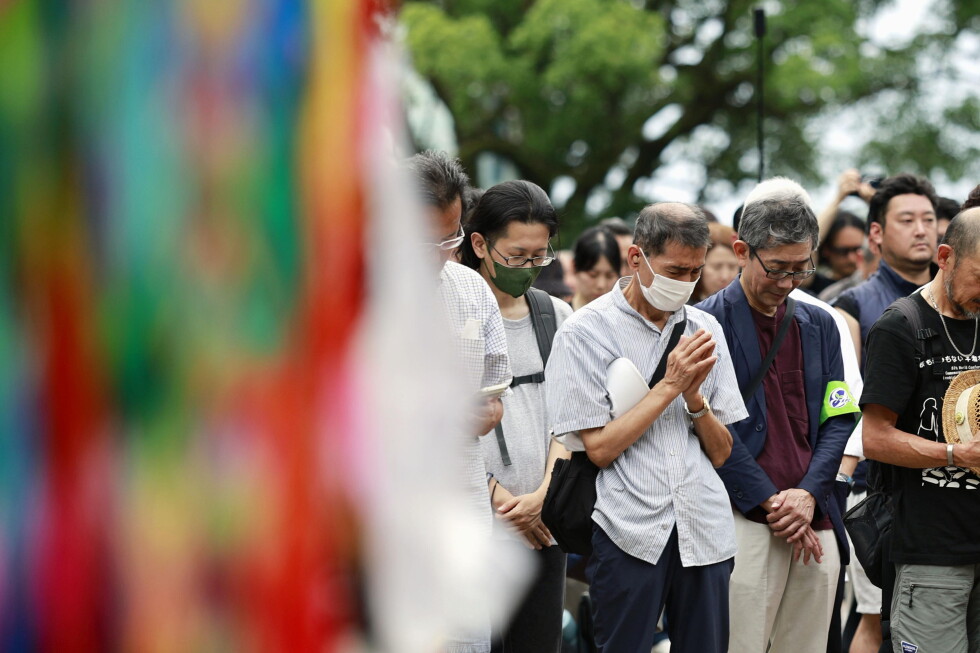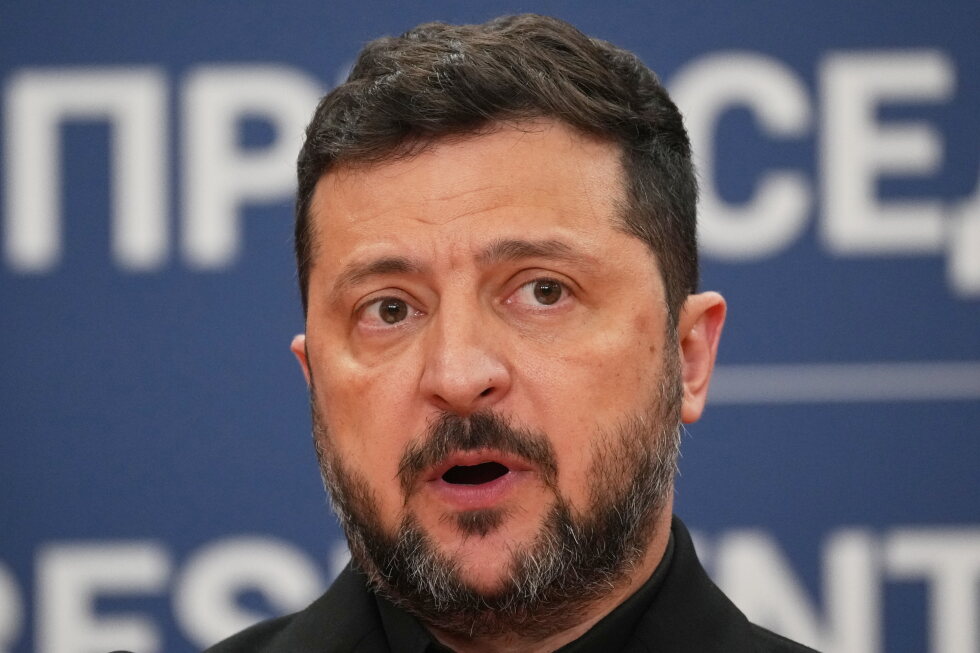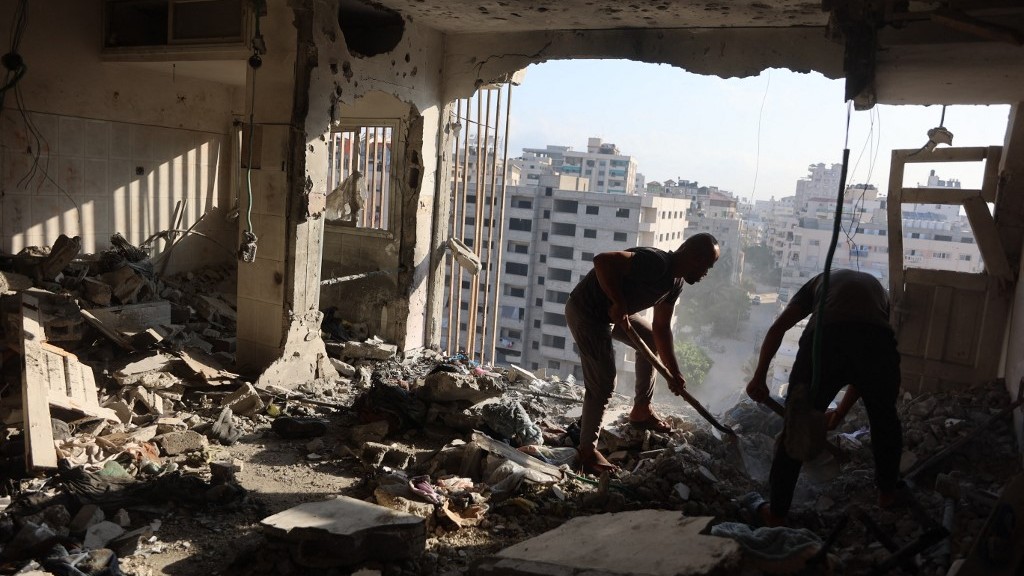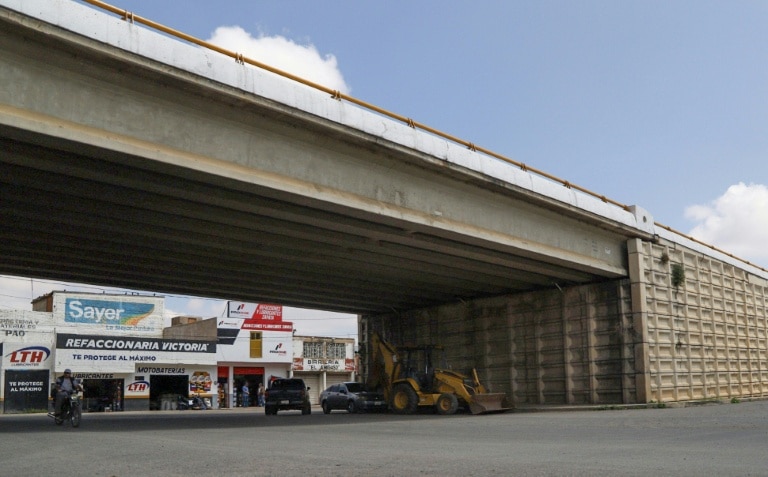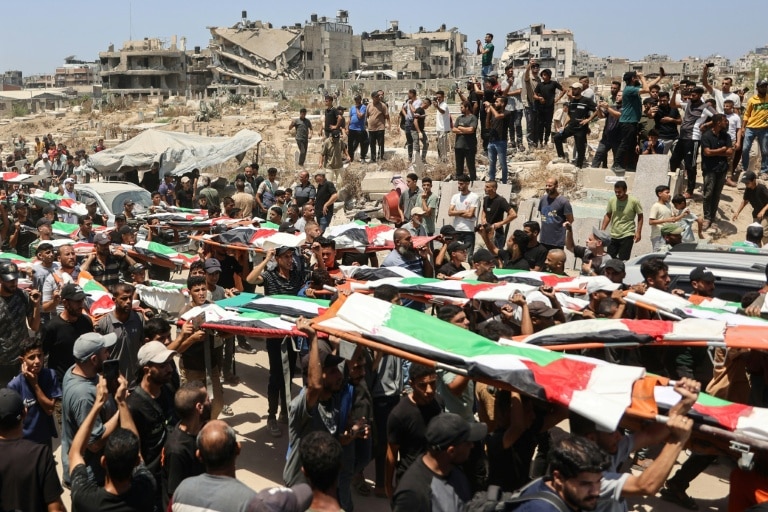
One week after former U.S. President Donald Trump first announced a massive prisoner swap between the two warring nations, Russia and Ukraine have completed the first stage of the deal, exchanging 205 prisoners of war each, officials from both Moscow and Kyiv confirmed on Friday.
分类: world
-

Death toll in attack on Kyiv apartment building now stands at 24
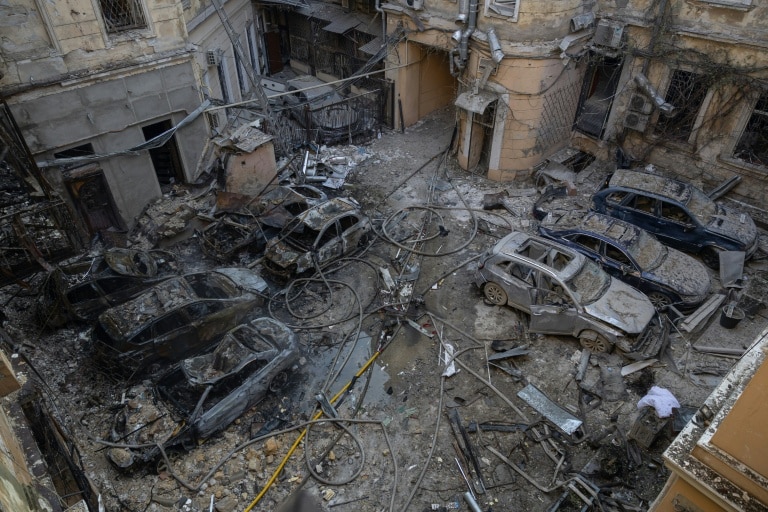
In a sharp escalation of hostilities that derails recent optimistic rhetoric of an impending end to the Russia-Ukraine war, Moscow has launched one of its largest aerial barrages since the full-scale invasion began, killing 24 civilians in a Kyiv apartment building strike and triggering reciprocal deadly drone attacks across Russian territory.
Ukrainian President Volodymyr Zelenskyy confirmed the civilian death toll from Thursday’s cruise missile strike on a nine-story residential corner block in Kyiv on Friday, noting that three of the victims were teenagers. Two children were among the 48 people wounded in the attack, which came as part of Russia’s multi-day wave of large-scale assaults. After more than 24 hours of exhaustive search and rescue operations, emergency crews completed clearing the rubble of the destroyed building, according to an update Zelenskyy posted to the social platform X.
The latest Russian offensive follows a three-day ceasefire initiative announced by former U.S. President Donald Trump, who claimed he had secured agreement from both Zelenskyy and Russian President Vladimir Putin to observe a halt to fighting between May 9 and 11. While active fighting did scale back during that 72-hour window, hostilities never fully paused. Within days of the ceasefire’s end, Russia renewed large-scale aerial attacks across Ukraine, contradicting recent public statements from both Trump and Putin that the nearly five-year-old war was moving toward a negotiated conclusion.
Zelenskyy reported that between Wednesday and the end of Thursday, Russia had launched more than 1,560 drones targeting Ukrainian populated areas, with strikes damaging roughly 180 sites nationwide — more than 50 of which were civilian residential buildings. This barrage surpasses the previous record for the largest single Russian drone attack, which saw nearly 1,000 missiles and drones fired against Ukraine between March 23 and 24 this year. The missile that destroyed the Kyiv apartment block was manufactured in the second quarter of 2025, Zelenskyy added, citing preliminary analysis of missile wreckage by Ukrainian weapons experts. This new production, he emphasized, proves Russia continues to bypass international sanctions to import critical components, raw materials and manufacturing equipment for its weapons programs. “Stopping Russia’s sanctions evasion schemes must be a genuine priority for all our partners,” Zelenskyy wrote in a separate X post Thursday night.
Kyiv declared an official day of mourning on Friday for the victims of the apartment strike, and Zelenskyy visited the blast site to meet with first responders and surviving residents.
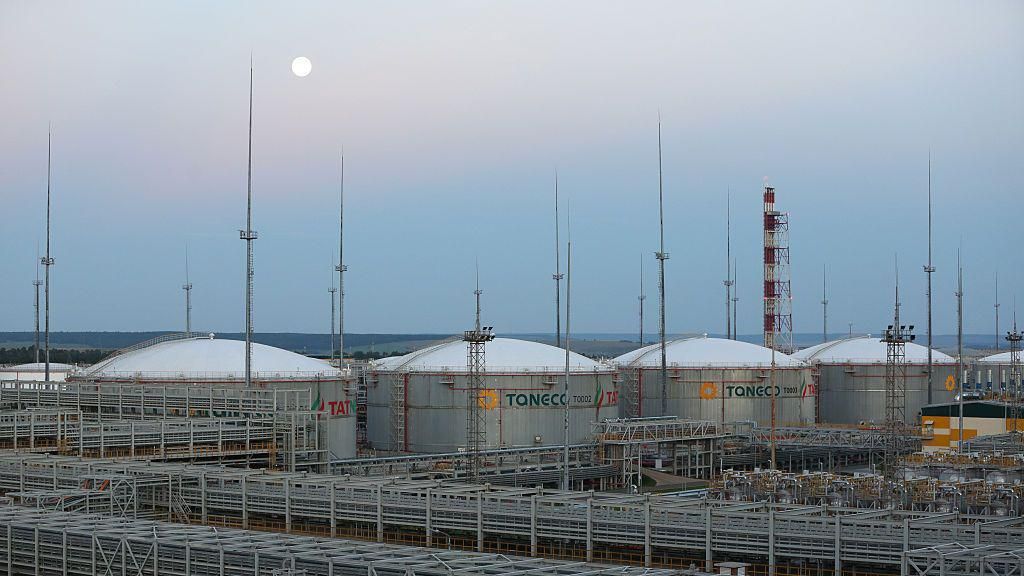
The escalation has not been one-sided: Ukraine has significantly expanded its long-range strike capabilities in recent months, and overnight Friday Russia’s Ministry of Defense announced its air defense systems had intercepted 355 Ukrainian drones in a single night — marking one of the largest single drone attacks launched by Kyiv since the start of the full-scale invasion. The attack forced temporary flight suspensions at multiple Russian airports, and a Ukrainian drone strike on the city of Ryazan, located roughly 60 miles southeast of Moscow, left four people dead including one child, according to Ryazan Governor Pavel Malkov. The strike ignited a large fire at a local oil refinery that sent thick plumes of black smoke billowing into the air, consistent with Ukraine’s recent strategy of targeting Russian energy infrastructure to cut off critical export revenue that funds Moscow’s war effort and increase domestic pressure on the Kremlin. Ukrainian officials have not issued any immediate public comment on the Ryazan strike.
Amid the spiraling violence, a rare diplomatic breakthrough brought a measure of positive development Friday: both countries confirmed a large prisoner of war exchange brokered with the assistance of the United Arab Emirates. A total of 205 prisoners from each side returned to their home countries Friday, in what Zelenskyy described as the first phase of a planned 1,000-for-1,000 swap. Many of the released Ukrainian prisoners had been held in Russian captivity since 2022, having fought in some of the war’s bloodiest and most protracted battles. Russia’s Defense Ministry officially confirmed the exchange and publicly thanked the UAE for its mediation work.
This reporting is part of ongoing comprehensive coverage of the Russia-Ukraine war from the Associated Press, with additional contributions from correspondent Lorne Hatton reporting out of Lisbon, Portugal.
-

Police find 14kg of cocaine stashed in fruit pulp shipment
A routine customs check at Melbourne Airport has uncovered one of the latest elaborate drug smuggling attempts, after law enforcement officers found 14 kilograms of cocaine carefully concealed inside a 2-tonne commercial shipment labeled as fruit pulp. The incident, which unfolded earlier this month, has sparked a nationwide appeal for information to track down the criminal syndicate behind the plot.
The international air cargo consignment touched down in Australia on May 7, and immediately raised red flags for border security officials who flagged the unusually large delivery of fruit pulp packets for further inspection. When officers began unpacking the 16 boxes that made up the shipment, they found what appeared to be thousands of sealed packets of pureed fruit. But a closer examination revealed a sophisticated hidden compartment in the packaging: the stimulant drug cocaine had been stashed discreetly between layers of the fruit pulp packaging, waiting to be moved into the domestic black market.
Forensic testing later confirmed the size of the seizure, totaling 14kg of the illicit substance, which has since been removed and taken into evidence by law enforcement. Speaking on the bust, Australian Federal Police Detective Superintendent Ray Imbriano noted that transnational criminal groups continue to adapt their smuggling tactics to avoid detection, growing increasingly creative in how they conceal illegal narcotics. Imbriano emphasized that Australian law enforcement agencies have built a comprehensive suite of detection and interception capabilities, and remain unwavering in their commitment to stopping harmful illicit substances from entering Australian communities.
Australian Border Force Acting Superintendent Claudine Lupton echoed that commitment, noting that repeated high-profile drug seizures like this one demonstrate the agency’s dedication to breaking up transnational criminal networks operating at Australia’s borders, all while ensuring that legitimate international trade flows without disruption. Lupton added that no matter how clever the concealment tactics used by criminal groups, the ABF and its partner law enforcement agencies remain focused on shielding Australian citizens from the harms of the illegal drug trade.
With the cocaine now successfully seized, investigators have shifted their focus to identifying and apprehending the people responsible for organizing the shipment. Authorities are issuing a public appeal for any information that could help track down the culprits, specifically asking anyone who has recently been approached to purchase the fruit pulp shipment, or asked to help dispose of the consignment, to come forward with details. Members of the public can share information anonymously through Crime Stoppers on the dedicated hotline 1800 333 000.
-

New Zealand’s Māori Queen meets King Charles at Buckingham Palace
In a landmark moment marking nearly two centuries of formal ties between Māori people and the British Crown, New Zealand’s newly installed Māori Queen Te Arikinui Kuini Nga Wai hono i te po has held her first official audience with King Charles III at London’s Buckingham Palace. This meeting comes two years after Te Arikinui ascended to the Māori throne in 2024, following the passing of her father Kiingi Tuheitia, the previous Māori monarch.
Earlier the same week, the Māori Queen was formally welcomed by Prince William at Windsor Castle, in a meeting that covered a broad spectrum of pressing global issues. In an Instagram post following the encounter, Prince William shared that it had been a great pleasure to welcome Te Arikinui and host her at the royal residence. A post-meeting statement from Kīngitanga, the Māori monarchy institution, confirmed that Te Arikinui used the discussion to reaffirm her conviction that indigenous knowledge and long-term, cross-generational environmental stewardship are critical tools to address the world’s most urgent environmental and social challenges.
Te Arikinui’s ascension in 2024 made her only the second Māori queen in the history of the Kīngitanga movement; the first was her grandmother, Te Arikinui Dame Te Atairangikaahu, who held the role for four decades. The institution of Māori monarchy was first established in the 19th century, when disparate Māori iwi (tribes) united to create a single unifying leadership figure modeled on the European monarchical structure. At its founding, the movement was conceived as a defensive strategy to slow widespread land loss to British colonial settlers and protect Māori cultural identity from erasure. Today, the role remains largely ceremonial, but carries enormous cultural and symbolic weight for Māori communities across New Zealand.
The historic meeting at Buckingham Palace underscores a bilateral relationship that was first formalized with the 1840 signing of the Treaty of Waitangi, one of the foundational founding documents of modern New Zealand. According to a spokesperson for Te Arikinui, the conversation between the Māori Queen and King Charles III was warm and heartfelt. It included reflections on the passing of Queen Elizabeth II, the late mother of King Charles III, alongside discussions focused on deepening and strengthening the long-standing relationship between the Māori monarchy and the British Crown.
-

Iran war energy shock drives interest in ethanol and other biofuels across hard-hit Asia
The ongoing Iran war has triggered crippling energy supply shocks across Asia, with the closure of the Strait of Hormuz — the world’s most critical energy shipping chokepoint — upending fuel access and sending prices soaring for millions of ordinary households. From the crowded streets of New Delhi to the coastal hubs of Southeast Asia, consumers are grappling with steep cost hikes and disrupted daily routines, pushing regional governments to accelerate plans to expand biofuel use as a buffer against global energy volatility.
In New Delhi, taxi driver Ravi Ranjan, who supports his wife and young child on his driving income, has seen his cooking fuel costs triple amid widespread shipping delays and supply shortages. “I used to pay 1,000 rupees ($11) for a standard LPG cylinder. Now I’m forced to pay 3,000 rupees ($31) on the black market just to put food on the table,” he explained. Halfway across the country in Chennai, advertising executive Sushmita Sankar faces similar strains: her gasoline and cooking fuel bills have skyrocketed, and the 20% ethanol-blended gasoline that is now standard at Indian pumps has cut her car’s fuel efficiency, adding extra time and stress to her already packed schedule of work and childcare.
“With prices going up and mileage dropping, I now have to spend far more time queuing to fill my tank or track down cooking gas,” Sankar said. “It’s turned a routine chore into another major source of stress.”
For India, which imports nearly 90% of its crude oil to meet domestic energy demand, the supply disruptions from the Iran war have hit every corner of the economy — from private motorists and home cooks to industrial operations reliant on natural gas. Only the country’s national power grid, powered mostly by coal with a growing share of renewables, has remained largely unaffected. Prime Minister Narendra Modi has publicly called on Indian citizens to make “nationally responsible choices” to conserve fuel, urging more carpooling, greater use of public transport, and cutting back on non-essential international travel.
To address the long-term risk of global energy shocks, New Delhi has laid out aggressive plans to ramp up domestic ethanol production and increase the share of biofuel blended into national gasoline supplies. The country already hit its 20% ethanol blending target nationwide in 2025, five years ahead of its original schedule, and policymakers are now weighing a push to 27% blending by 2030. In a policy shift that signals a major push for higher biofuel adoption, India’s transport ministry has recently proposed allowing passenger and commercial vehicles to run on blends of 85% ethanol, or even 100% pure ethanol, a move designed to pressure automakers to begin manufacturing engines compatible with these higher concentrations. To protect domestic supplies of feedstock for ethanol production, the government has also banned all sugar exports through at least September, ensuring enough raw material is available to scale up output.
Proponents frame the policy shift as a win for both energy security and climate action. “Moving toward higher ethanol blends reflects the government’s long-term vision for energy security, lower emissions, and reduced dependence on imported crude oil,” explained Chandra Kumar Jain, president of the Grain Ethanol Manufacturers Association. Data from the Institute for Energy Economics and Financial Analysis (IEEFA) shows the current 20% ethanol blend already cut India’s crude oil imports by 2.5% in 2025.
But the rapid push for higher crop-based ethanol blending has drawn sharp criticism from analysts, who warn of multiple trade-offs for consumers, food security, and the environment. Drivers already report reduced fuel mileage with existing 20% blends, and ethanol’s lower energy density means higher blends will lead to even greater efficiency losses. Environmental and energy analysts warn that diverting large volumes of corn, rice, and sugarcane — staples of India’s food system — to ethanol production could create competition for arable land, drive up food prices, and worsen existing water stress. Producing just one liter of grain-based ethanol requires between 3,000 and 10,000 liters of water, a major concern in a country already facing widespread groundwater depletion.
“It’s not clear how higher ethanol blends will perform in existing vehicle engines, and it will take years to scale up manufacturing of new engines built to handle these higher concentrations,” said Shyamasis Das, a senior researcher at the New Delhi-based Centre for Social and Economic Progress. “The broader climate benefits of crop-based ethanol are also very limited when you account for land use change and water consumption. Only ethanol produced from agricultural residues, municipal waste, and used cooking oil — materials that don’t require new land or water inputs — can truly qualify as sustainable.”
India is not alone in turning to biofuels amid the current energy crisis. Across Southeast Asia, governments are also rolling out new policies to expand biofuel blending to boost energy sovereignty and insulate their economies from global price shocks. In Indonesia, President Prabowo Subianto launched a new program in March that aims to increase biodiesel blending from 40% to 50%, with the country relying on palm oil as its primary biofuel feedstock.
“We are going in a big way to biofuel,” Subianto said. The policy also helps support Indonesia’s domestic palm oil industry by creating a larger local market for the commodity, but analysts warn that expanded production could drive new land clearing and deforestation of old-growth tropical forests.
Malaysia, another major palm oil producer, followed suit in April, approving a plan to gradually increase biodiesel blending to 15%, with a future target of 20% under consideration. “Skyrocketing fuel prices from the Iran war have revived political and public support for expanded biofuel use,” said Kuala Lumpur-based energy analyst Ahmad Rafdi Endut. “But higher blends require extensive additional testing, and many consumers are already wary of the reduced fuel efficiency that comes with higher biofuel mixes.”
Despite the sudden policy momentum driven by the Iran war energy crisis, industry analysts caution that it will still take years for higher ethanol and biodiesel blends to become widely available across Asia. Developing the full supply chain, testing new fuel formulations, and rolling out vehicles compatible with high-concentration blends all require significant lead time. Many analysts also note that biofuels are at best a temporary buffer against energy shocks, arguing that electric vehicles paired with expanded renewable energy generation represent a more sustainable long-term solution for both energy security and climate action.
“The current crisis has pushed governments to prioritize near-term energy independence, but rapid expansion of crop-based biofuels carries new long-term risks for food security and environmental protection,” said IEEFA analyst Charith Konda. “Moving forward, the focus needs to be on scaling sustainable non-crop biofuels and accelerating the transition to electric vehicles and renewables.”
-

CIA director visits Cuba as communist island runs out of oil
In an unprecedented development that marks a notable shift in high-level contact between Washington and Havana, CIA Director John Ratcliffe traveled to Cuba for meetings with senior Cuban intelligence officials this Thursday, even as the island nation formally announced it has exhausted its entire oil reserves amid a deepening U.S.-imposed fuel blockade.
The Central Intelligence Agency, which has long been at the center of more than six decades of tense geopolitical rivalry between the two countries, confirmed the visit following an official announcement from the Cuban government. Images shared by the agency on the social platform X show Ratcliffe seated across from Ramon Romero Curbelo, head of intelligence for Cuba’s Interior Ministry, alongside other senior Cuban representatives; the faces of several additional attendees were blurred for security purposes.
The high-stakes meeting unfolds against a backdrop of rapidly escalating crisis in bilateral relations, with widespread, sustained power outages crippling daily life across Cuba, a crisis directly triggered by the Trump administration’s strict fuel trade blockade. Only one oil tanker from Russia, Cuba’s long-standing strategic ally, has successfully reached the island in recent months, and even that limited supply has now been completely exhausted, Cuban Energy Minister Vicente de la O Levy confirmed in an interview with state television.
“The impact of the blockade is indeed causing us significant harm…because we are still not receiving consistent fuel supplies,” de la O Levy stated.
For years, the Trump administration has maintained an explicit goal of forcing regime change in Cuba, cutting off most economic channels and tightening trade restrictions. Recent reporting from CBS News, citing anonymous senior U.S. officials, also revealed that the administration is moving forward with plans to indict 94-year-old Raúl Castro, the former Cuban leader and brother of late revolutionary icon Fidel Castro.
Despite the deep underlying tensions, Cuban authorities framed Ratcliffe’s visit as a constructive opportunity to de-escalate friction between the two nations. In an official government statement, the meeting was characterized as taking place “in a context marked by the complexity of bilateral relations, with the aim of contributing to the political dialogue between both nations.”
Cuba used the dialogue to firmly reject long-standing U.S. accusations, stating that the exchanges “made it possible to demonstrate categorically that Cuba does not constitute a threat to U.S. national security, nor are there any legitimate reasons to include it on the list of countries that allegedly sponsor terrorism.” The statement also pushed back against recent claims of unauthorized Chinese military activity on Cuban soil, emphasizing: “Cuba has never supported any hostile activity against the United States, nor will it permit actions against any other nation to be carried out from Cuba.”
The current energy emergency is the result of a series of U.S. actions that have cut off Cuba’s last remaining major economic lifelines. In January, U.S.-backed forces removed Venezuelan strongman Nicolás Maduro from power, ending the discounted oil shipments that sustained Cuba’s economy for years, and a full fuel blockade was enforced immediately after. U.S. Secretary of State Marco Rubio has recently reiterated a $100 million humanitarian aid offer, but with a strict condition that all assistance be distributed by the Catholic Church, completely bypassing the sitting Cuban government.
Cuban President Miguel Díaz-Canel has pushed back on that framework, calling on Washington to end the decades-old trade embargo instead. “The damage could be eased in a much simpler and faster way by lifting or relaxing the blockade, since it is known that the humanitarian situation is coldly calculated and induced,” Díaz-Canel wrote in a post on X.
Remarkably, even amid soaring tensions, formal intergovernmental discussions have continued. A high-level diplomatic meeting was held in Havana on April 10, marking the first time a U.S. government plane has landed in the Cuban capital since the re-opening of diplomatic relations in 2016.
On the ground, the energy crisis has sparked growing public discontent. On Thursday, eastern Cuba was hit by a full national blackout, the latest in a string of widespread outages that have left millions without power for extended stretches. Power was partially restored to some regions later in the day, but rolling outages continue across most of the island.
AFP collected on-the-ground accounts confirming that small, spontaneous protests have broken out in residential neighborhoods across Havana. On Wednesday evening, residents of the San Miguel del Padrón suburb demonstrated by banging pots and pans, a traditional form of public protest in Cuban culture. Similar small demonstrations were reported in multiple other neighborhoods across the capital. In the western Havana district of Playa, residents chanted “Turn on the lights!” as they gathered to express their frustration.
Data compiled by AFP shows that Cuban power infrastructure is now facing record generation shortfalls, with blackouts stretching on for 12 hours or more in most regions. On Tuesday alone, 65 percent of the country’s territory was without power simultaneously.
Speaking to Fox News, Rubio doubled down on the administration’s stance, arguing that the crisis confirms the failure of Cuba’s current economic and political system. “It’s a broken, nonfunctional economy, and it’s impossible to change it. I wish it were different,” Rubio said. “I don’t think we’re going to be able to change the trajectory of Cuba as long as these people are in charge.”
-

Israelis chant threats, anti-Palestinian slogans at Jerusalem Day march
On Thursday, tens of thousands of Israeli nationalists poured through the winding cobblestone alleyways of Jerusalem’s Old City for the annual Jerusalem Day parade, an event marking Israel’s 1967 capture and unilateral annexation of East Jerusalem that has a long history of escalating into conflict. As hardcore ultranationalist marchers chanted virulently anti-Palestinian slogans including “Death to Arabs” and “May your villages burn,” most Palestinian residents of the historically contested neighborhood locked themselves inside their homes, boarding up storefronts to avoid targeted intimidation and violence.
Jerusalem Day commemorates what Israeli officialdom calls the “reunification” of the city after the 1967 Arab-Israeli War, a conflict that left Israel in control of East Jerusalem – a territory home to a majority Palestinian population that the United Nations and much of the international community have never recognized as legally annexed by Israel. For decades, the annual parade has been a flashpoint for intercommunal tension, with young ultranationalist participants regularly targeting local Palestinian communities with verbal abuse, threats, and physical assault. This year’s march unfolded against a fragile regional backdrop, coming just weeks after a ceasefire halted fighting between Israel and Hamas in Gaza that has been violated by near-daily incursions and strikes on both sides.
Local Palestinian residents described scenes of deliberate harassment and property damage during the 2024 march. Mustafa, a resident of the Old City’s Via Dolorosa, told Agence France-Presse that a group of roughly 20 ultranationalist Israeli youth forced their way into his home’s courtyard, shattering glass and breaking down doors while screaming racist chants. “If you push them, you’ll go to prison… you can’t do anything,” he explained, describing the helplessness many residents feel amid the annual show of force. Most Palestinian shop owners closed their businesses for the day, pulling down metal shutters and abandoning the busy commercial lanes of the Old City.
A small group of grassroots activists from the joint Israeli-Palestinian movement Standing Together deployed across the neighborhood to protect remaining open shops and residents from attack, but social media footage and on-the-ground reporting showed activists being shoved and surrounded by aggressive marchers. In one viral clip, young marchers hurled plastic chairs at a Palestinian shopkeeper while screaming anti-Arab slurs, before the shopkeeper responded by throwing one chair back and brandishing a stick in self-defense. One anonymous Palestinian shop owner told AFP that tensions and aggression have escalated annually: “The situation gets worse every year.”
Among the march’s high-profile participants was Israeli far-right National Security Minister Itamar Ben Gvir, who used the occasion to visit the contested Al-Aqsa Mosque compound – the third-holiest site in Islam, known to Jews as the Temple Mount and Judaism’s most sacred site. “Fifty-nine years after the liberation of Jerusalem, I raised the Israeli flag on the Temple Mount, and we can say with pride: we have restored sovereignty over the Temple Mount,” Ben Gvir wrote on his Telegram channel, as he was photographed marching alongside crowds flanked by a heavy security detail.
Many participating marchers expressed openly exclusionary views about Palestinian and non-Jewish presence in the city. Reuven, a 37-year-old who attended the parade with his young son, told AFP: “Christians and Muslims can stay here, but this city, one united city, belongs to the Jews.” The crowd also included members of Hilltop Youths, a hardline settler movement linked to routine attacks on Palestinian communities in the Israeli-occupied West Bank, one of whom stated “They have no place here” when asked about Palestinian residents. Marchers also targeted journalists covering the event, shoving reporters and blocking them from filming the unrest.
AFP correspondents on the ground confirmed that racist chants and vandalism unfolded under the direct observation of Israeli police deployed heavily across the area, with marchers pounding on the closed shutters of Palestinian shops in a deliberate show of intimidation. Not all attendees supported the aggressive rhetoric, however: a small contingent of Israeli peace activists handed out flowers to local residents to show solidarity with the Palestinian community. “It was important for me to come in order to show some solidarity with the local community and say that as a Jew, as a Zionist, as someone who wants a Jewish state here, I want them to be part of it and be part of the nation with equal rights,” said 52-year-old tech worker Ilan Perez, who traveled from the Tel Aviv suburb of Raanana to participate in the counter-protest.
-

LGBTQ campaigners denounce Eurovision ‘pinkwashing’ ahead of final
As the 2026 Eurovision Song Contest prepares to crown its winner in Saturday’s grand final in Vienna, the long-running European music spectacle has been plunged into unprecedented controversy, with queer activists leading global calls to boycott the event over what they label deliberate “pinkwashing” of Israeli state violence against Palestinians.
The controversy traces back to December 2024, when the European Broadcasting Union (EBU), Eurovision’s governing body, voted to allow Israel to compete in this year’s contest. That decision has sparked sustained protests across Europe, from mass demonstrations on the streets of host city Vienna to the expulsions of pro-Palestine campaigners who disrupted live shows, and loud public booing and chants of “stop the genocide” during Israel’s qualifying performance. Five countries — Spain, Ireland, Iceland, Slovenia and the Netherlands — have already withdrawn from the contest entirely in protest, and multiple national public broadcasters have refused to air Saturday’s final.
A flashpoint for queer criticism came in Thursday’s live semi-final broadcast, which included a pre-taped segment celebrating the contest’s long history of inclusivity for the LGBTQ+ community, a demographic that has long formed one of Eurovision’s core global audiences. For activists, the segment laid bare what they call the EBU and Israel’s coordinated campaign of reputation laundering: using the language of queer inclusivity to distract from ongoing military violence against Palestinians.
Omar Khatib, a queer Palestinian writer and organiser based in Jerusalem, framed the moment as a clear moral test for global audiences. “Either you are against genocide and against the mass killing of Palestinians, or you are willing to normalise and coexist with it,” Khatib told Middle East Eye. He argued that the myth of Eurovision’s political neutrality no longer holds up, noting that the event has become a stage where “liberalism, nationalism and colonialism intersect under the language of diversity and inclusion.” For queer Palestinian organizers, Khatib added, Israel’s participation is not just a minor entry in a music contest: it is part of a broader state propaganda push that weaponizes queer identity to legitimize state violence against Palestinian people.
In response to the EBU’s decision, thousands of LGBTQ+ viewers who have watched Eurovision for decades are now breaking that long-held habit and boycotting Saturday’s final. Queers for Palestine, a UK-based activist group that held a pro-Palestine symposium in London last month, is urging queer viewers to skip the broadcast and instead join the queer contingent at London’s annual Nakba Day demonstration, which commemorates the forced displacement of hundreds of thousands of Palestinians during the 1948 creation of the State of Israel. For those who stay home, group member Tara suggests organizing local actions: asking local queer venues to cancel their Eurovision screenings, or distributing educational leaflets to attendees explaining how the event enables what activists call Israeli settler-colonialism and genocide.
“Find those around you who want more from their queerness than annual shows of opulence dripping with blood, and set your sights again on what queerness is really all about: liberation,” Tara said. Addressing claims of hypocrisy from pro-Israel commentators, who often point to anti-LGBTQ+ policies from Palestinian political groups like Hamas, Tara pushed back on the false binary. “As queer activists, we love freedom and dignity for everyone and we want to contribute to the end of this oppression,” she said. “We, of course, also support our queer Palestinian friends and siblings when they struggle against the violence of patriarchy in their own society, as all queer people do everywhere in the world… there is quite obviously nothing hypocritical about this.”
Mainstream reporting has backed up activists’ pinkwashing claims: The New York Times revealed earlier this week that Israel has spent more than $1 million on its Eurovision participation, framing the contest as a key soft power tool to repair the country’s damaged international reputation and rally global support amid widespread condemnation of its military operations in occupied Palestinian territories. Records show Israel launched this formal promotional campaign back in 2018, as criticism of its participation grew alongside its ongoing settlement expansion and military operations.
For decades, Israel has positioned itself as a regional LGBTQ+ haven compared to neighboring countries: same-sex relations and same-sex adoption are legal in the country, and Tel Aviv has cultivated a global reputation as a leading queer travel and culture hub. But that reputation has long been challenged by critics, who note that same-sex marriage remains unlegalized in Israel, that powerful Jewish fundamentalist groups routinely push back against LGBTQ+ rights advances, and that a 2025 Pew Research Center survey found 47 percent of Israelis view homosexuality as morally unacceptable. Most notably, queer Palestinians have documented being targeted by Israeli intelligence, who routinely blackmail queer Palestinians into collaborating with Israeli occupation forces.
The boycott campaign has drawn widespread support from artists across the globe, with more than 2,000 musicians signing the “No Music For Genocide” petition calling for a full boycott of the 2026 contest. UK feminist punk band Big Joanie, which centers the experiences of Black and queer women in its work, was one of those signatories. Lead singer Stephanie Phillips said the desire to enjoy a beloved cultural event cannot override the reality of violence facing Palestinians. “I think there is definitely merit for an accusation of pinkwashing,” she said. “While I fully understand that Eurovision means a lot to the LGBTQ+ community, I also think it does not cancel out the reality that many Palestinians are living right now – there are LGBTQ+ Palestinians as well and I doubt they feel represented or seen by the choices of Eurovision.” Phillips noted that the band’s audience has been overwhelmingly supportive of their pro-Palestine stance, with only one negative incident after a show in Cologne, Germany, where an attendee aggressively confronted her for dedicating a song to the Palestinian people.
The controversy has already had a measurable impact on the contest’s global reach. Typically, Eurovision’s 25-country grand final draws more than 150 million viewers worldwide, but this year’s final is on track to be the least-watched in the event’s history. Alongside the five withdrawing countries, Spanish public television has already confirmed it will not air the final, and Slovenian and Irish public broadcasters have also pulled their broadcasts. Semi-final viewership in countries still airing the contest has already slumped sharply from previous years. As final rehearsals wrapped up in Vienna on Friday, a parallel pro-Palestine event featuring speeches and a concert was held in the city center, drawing hundreds of attendees.
Even former contest winners have sounded the alarm over the long-term damage the controversy has done to Eurovision’s reputation as a unifying cultural event. Emmelie de Forest, the Danish singer who won the 2013 contest, told Middle East Eye that the EBU’s decision has left her heartbroken. “I think it has already done a lot of damage to Eurovision, and that makes me genuinely sad to say because the contest has been such a meaningful part of my life,” she said. “I sadly think the contest is creating more division than unity. The controversy surrounding Israel’s participation, the backlash from fans and artists, the countries withdrawing and the growing distrust toward the EBU have all fundamentally changed the atmosphere around Eurovision.”
-

British Palestinians and Arabs call for ‘equal protection’ from Starmer
Ahead of Saturday’s 78th anniversary commemoration of the Nakba in central London, a coalition of prominent British Palestinian and Arab public figures has issued an open letter to Prime Minister Keir Starmer pushing for equal safety protections for their communities, pushing back against widespread false claims that their peaceful marches are hubs of hatred.
The scheduled Nakba 78 march for Palestinian justice is set to take place the same day as a far-right “Unite the Kingdom” rally organized by controversial far-right figure Tommy Robinson, a scheduling overlap that has stoked heightened security fears across Palestinian and Arab communities in the capital. London’s Metropolitan Police Service has already announced it has deployed over 4,000 officers to the events, confirming it is preparing for potential violent confrontations.
In their letter, signed by doctors, activists, academics, lawyers and other London-based community leaders from Palestinian and broader Arab backgrounds, the group stresses that pro-Palestine demonstrations are not spaces of extremism, but gatherings rooted in shared humanity and demands for justice. The signatories note that Jewish activists regularly join their marches in full safety, and no pro-Palestine processions have ever targeted Jewish houses of worship — directly contradicting repeated false accusations from senior officials and media figures.
Metropolitan Police Commissioner Mark Rowley claimed earlier this month that many pro-Palestine marches intentionally route near synagogues, a statement solidarity leaders have called deliberately dishonest and dangerous. “Our marches for Palestine are about showing solidarity with the Palestinian people in their struggle against apartheid and genocide, and to protest against British government complicity in Israel’s crimes against them,” explained Ryvka Barnard, deputy director of the Palestine Solidarity Campaign. “Our upcoming march on 16 May will be no different.”
The core grievance laid out in the letter is the stark inequality in how the British government and law enforcement address security fears for different communities. Signatories say that while other communities have received explicit public reassurance and visible security commitments from the government, Palestinian and Arab concerns about potential violence from the overlapping far-right rally have been met with silence and neglect. “It is painful to feel that our fears are treated as secondary, or worse, that our peaceful commemoration is viewed only as a policing problem,” the letter reads.
For British Palestinians, the 78th anniversary of the Nakba is not an abstract historical event: it is an ongoing, intergenerational trauma. The Nakba — meaning “catastrophe” in Arabic — refers to the 1948 forced expulsion of 750,000 Palestinians from their ancestral lands by Zionist militias to clear space for the creation of the state of Israel. This year’s march will include elderly 1948 Nakba survivors marching alongside their great-grandchildren, a visible reminder of the displacement that continues to shape Palestinian life today. As the former colonial power in Palestine, the British government played a foundational role in enabling the Nakba through the 1917 Balfour Declaration, colonial-era repression of Palestinian self-determination, and state support for the early Zionist movement.
The group’s formal demands to Starmer include parity of safety protection for Palestinian and Arab demonstrators, proactive measures to prevent far-right violence, and official recognition of the intergenerational trauma of the Nakba for British Palestinian communities.
The current Labour government led by Starmer has imposed a harsh crackdown on Palestinian solidarity activism since taking office in summer 2024. The direct action group Palestine Action has been officially banned, with its members prosecuted under terrorism legislation. Protesters speaking out against Israel’s military campaign in Gaza, which has killed more than 73,000 Palestinians to date, have repeatedly been labeled antisemites by politicians and mainstream media outlets — a claim that holds no evidential weight, given the consistent participation of large numbers of Jewish anti-war activists in pro-Palestine marches.
-

Iran turns to Pakistan land corridor as US naval pressure disrupts Gulf trade
Facing escalating US naval pressure that has crippled its maritime access to the Arabian Gulf and Persian Gulf, Iran has pivoted eastward, breathing new life into a decades-dormant overland trade corridor project with Pakistan that offers a critical alternative to blockaded sea routes. Now in its fifth week, the US blockade has thrown Iran’s regional trade into disarray: thousands of containers bound for the Islamic Republic have been stranded at Pakistan’s Karachi Port, war-risk insurance premiums for shipping passing through the Strait of Hormuz have skyrocketed, and most major carriers have suspended Iran-bound voyages entirely.
In late April, just days after a second round of US-Iran negotiations collapsed, Pakistan’s Ministry of Commerce issued a little-noticed regulatory order, SRO 691, formally designating six new transit corridors that allow third-party cargo bound for Iran to travel overland across Pakistani territory from Pakistani ports. The move revives a bilateral road transport agreement first signed by the two nations in 2005 that sat idle for nearly 20 years, connecting Pakistan’s three major deep-water ports – Karachi, Port Qasim, and the China-backed Gwadar Port – to two Iranian border crossings in Balochistan: Gabd and Taftan. The shortest route, linking Gwadar to Gabd, cuts travel time to the border to just two to three hours, down from 18 hours over the route from Karachi.
For years, Tehran refused to move forward with the project out of concern that expanding activity at Gwadar would draw trade away from Chabahar, Iran’s own Indian-funded deep-water port on the Gulf of Oman. But that strategic calculation shifted dramatically after the outbreak of regional conflict and the imposition of the US naval blockade, which left Chabahar exposed to growing instability. The urgency of the project was underscored by the timing of Iranian Foreign Minister Abbas Araghchi’s high-profile visit to Islamabad, where he met with Pakistani Prime Minister Shehbaz Sharif and Army Chief Asim Munir just as the corridor order was announced.
Beyond providing immediate relief for Iran’s import crunch, the corridors open a new long-term pathway for regional trade extending all the way to Central Asia. Trial shipments, including a refrigerated cargo of meat bound for Uzbekistan, have already traversed the route, with cargo moving north from the Iranian border through Iran’s domestic road network to Central Asian markets. Analysts note that the corridor exposes a key limitation of the US maritime blockade: goods shipped from China and other major trade partners to Pakistan can be unloaded outside Iranian jurisdiction and transported overland, bypassing blockaded Iranian waters and the Strait of Hormuz entirely. Currently, Tehran is increasingly relying on a network of alternate overland and maritime routes through Pakistan, Turkey, the Caucasus, and the Caspian Sea to keep import flows moving.
The arrangement operates in a legally ambiguous space: Pakistan does not formally enforce US sanctions on Iran, and existing US sanctions frameworks allow for limited non-US trade with Iran as long as transactions avoid explicitly sanctioned entities. To date, the White House has not issued any formal public objection to the corridor; when asked about the project, US President Donald Trump only stated he “knows everything about it” without further elaboration.
Analysts emphasize that the new corridors are an adaptive response to wartime pressure, not a fundamental fix for Iran’s deep-seated economic challenges under sanctions. “These land routes are less a major economic transformation for Iran than a form of economic breathing space under pressure,” explained Mostafa Modabber, a South Asia-based analyst. Fatemeh Aman, an independent specialist on Iran-South Asia relations, echoed that assessment, noting that “land routes cannot match the scale, speed or profitability of maritime trade. They may reduce vulnerability at the margins, but they are unlikely to fundamentally change Iran’s broader economic challenges under sanctions and conflict conditions.”
The project also faces significant practical and political obstacles. Pakistan grapples with underdeveloped transport infrastructure in Balochistan, pervasive corruption within customs agencies, persistent insecurity in border regions, and widespread influence from informal smuggling networks. Islamabad also walks a delicate diplomatic tightrope, balancing its economic interests with Iran against its ties to Washington, Riyadh, and other Gulf states, and remains hesitant to openly confront the US should Washington choose to intensify pressure on Iran-related trade. Even after the corridor’s formal launch, many stranded containers in Karachi continue to move slowly, as Pakistani banks and logistics firms remain wary of potential US secondary sanctions.
Despite these challenges, the corridor carries broader strategic significance for regional trade architecture. It links Iran directly to two major integrated trade networks: the China-Pakistan Economic Corridor (CPEC) and the International North-South Transport Corridor (INSTC) that connects Iran to Russia and India. For China, Iran’s largest remaining major trading partner, the route offers a way to sustain critical supply chains without full dependence on maritime lanes vulnerable to US naval interdiction. For Pakistan, the project advances its long-held goal of positioning itself as a key transit hub connecting South Asia to Central Asia and the Middle East, while also boosting the commercial viability of Gwadar Port, the centerpiece of CPEC.
The reactivation of the Iran-Pakistan corridors reflects a larger ongoing shift in regional trade patterns as traditional maritime lifelines through the Strait of Hormuz become increasingly contested. What began as a emergency workaround for a five-week blockade has emerged as a visible signal of how quickly regional powers are reworking trade routes to adapt to rising geopolitical tension.