In a dramatic development that has thrown the already fragile normalization alliance between Israel and the United Arab Emirates into the global spotlight, conflicting official claims over an alleged secret summit between the two nations’ leaders emerged on May 13, 2026, deep amid Israel’s ongoing war against Iran. The stark disagreement between Jerusalem and Abu Dhabi has also drawn sharp condemnation from Tehran, which has directly accused the Gulf state of complicity in the military campaign against it.
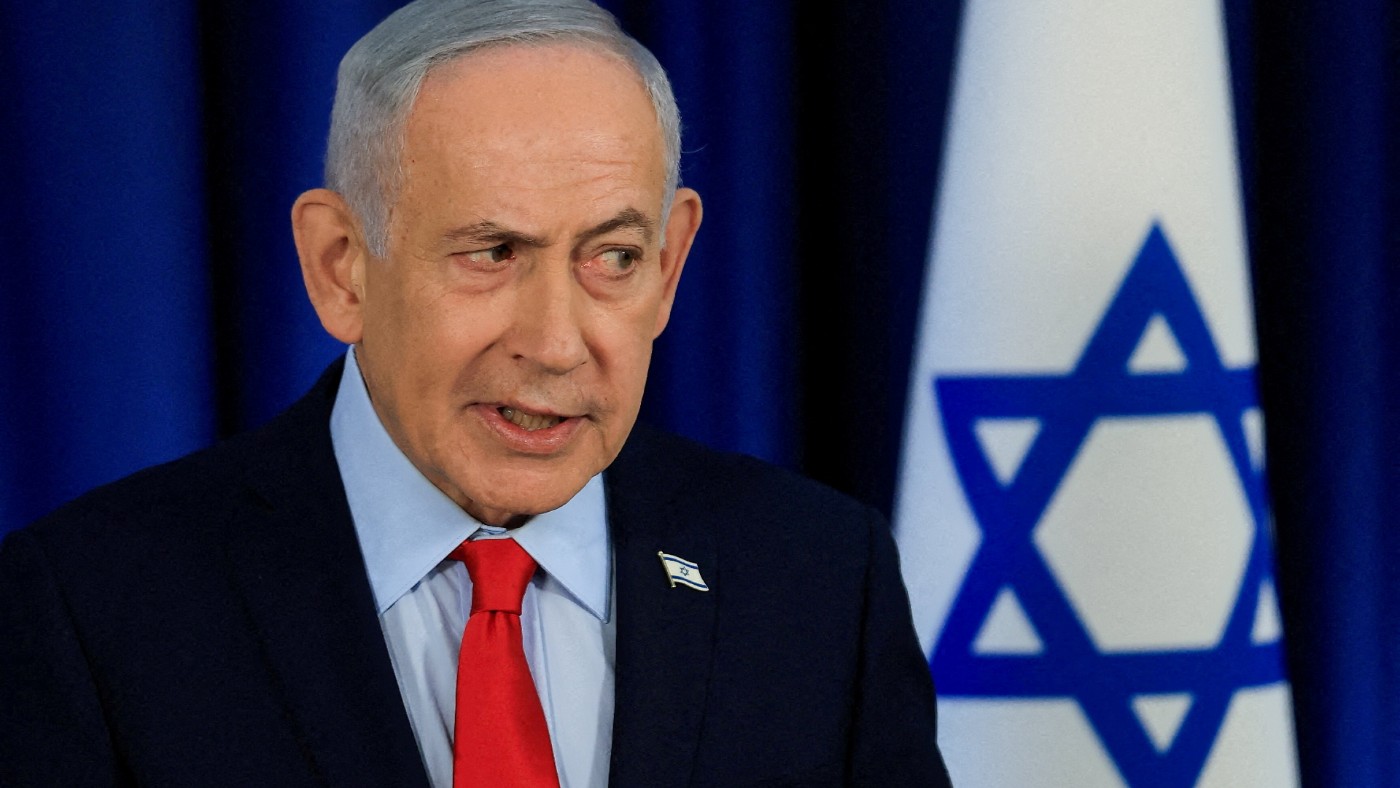
The chain of events began when Israel’s Prime Minister’s Office made an unprecedented public announcement confirming that Prime Minister Benjamin Netanyahu had traveled secretly to the UAE for a closed-door meeting with UAE President Mohammed bin Zayed al-Nahyan, held weeks into Israel’s Operation Roaring Lion, the official codename for its military offensive against Iran. The Israeli statement framed the unpublicized meeting as a historic breakthrough in bilateral relations between the two signatories of the 2020 Abraham Accords, the first normalization deal between Israel and a Gulf Arab state.
Within hours, however, the UAE’s Ministry of Foreign Affairs issued a categorical rebuttal of the Israeli claim. In an official statement posted to social media, the Emirati foreign ministry denied all reports of a Netanyahu visit, as well as claims of any Israeli military delegation being hosted on UAE territory. The statement emphasized that all formal relations between the UAE and Israel are conducted openly under the framework of the officially declared Abraham Accords, with no place for non-transparent or off-the-books arrangements. It added that any claims of unannounced visits or undisclosed agreements are completely baseless unless confirmed via an official statement from Emirati authorities, and called on international media outlets to uphold professional standards of accuracy and avoid spreading unvetted information or misleading political narratives.
Despite the UAE’s full denial, multiple independent sources and evidence have backed the core of the Israeli claim. Unnamed Israeli and Arab sources cited by Middle East Eye place the meeting on March 26, held in the oasis city of Al-Ain, located near the UAE-Oman border. Independent open-source intelligence checks corroborate this timeline: on March 27, one day after the alleged meeting, Haaretz national security and open-source editor Avi Scharf posted to social media noting that two Israeli business jets, regularly used for very important person (VVIP) special travel, had landed in Al-Ain on March 26 and returned to Israel just four hours later that same evening. Subsequent independent flight tracking data confirmed that two jets departed Tel Aviv for Al-Ain on the afternoon of March 26 and returned to Israel overnight. Risk advisory firm Basha Report further identified the two aircraft as a Bombardier Global Express XRS registered in the Isle of Man and a Bombardier Global 6000 business jet. Additional unconfirmed reporting even claims that Mohammed bin Zayed personally drove Netanyahu from the airport to the meeting palace in his own private vehicle.
This is not the first reported high-level Israeli-Emirati contact during the war: The Wall Street Journal has previously reported that Mossad Director David Barnea has made at least two trips to the UAE since the outbreak of hostilities for war coordination purposes. Middle East Eye attempted to request additional clarification from the UAE foreign ministry on its denial but received no response by the time of publication.
The disagreement over the meeting comes against a decades-long backdrop of quiet cooperation between the UAE and Israel that predates their 2020 formal normalization. As the first Gulf state to normalize ties with Israel, the UAE has developed extensive joint military and intelligence partnerships with Israel and the United States, including a shared intelligence-sharing platform codenamed Crystal Ball designed to boost regional intelligence capabilities. Even before formal diplomatic relations were established, Israeli military and intelligence officials helped the UAE construct a network of security outposts across islands in the Red Sea and Gulf of Aden, operating under the radar for years.
Alon Pinkas, a veteran Israeli diplomat who served as an advisor to four Israeli foreign ministers, noted that the long-running quiet cooperation predating formal normalization means the current public disagreement over the meeting is unlikely to cause permanent, irreversible damage to bilateral ties — particularly given widespread expectations that Netanyahu will leave office before the end of 2026. That said, Pinkas acknowledged that the ongoing war on Iran has already strained the relationship, as the UAE and much of the region now view Israel as an aggressive force driving regional destabilization.
The economic and security costs of the war have fallen disproportionately heavily on the UAE, a reality acknowledged even by senior U.S. officials including Secretary of State Marco Rubio. Iran has targeted Gulf states it views as sympathetic to Israel and the U.S. in retaliation for the offensive, and the UAE has absorbed more missile attack damage than Israel itself since the war began in late February. While Israel deployed Iron Dome air defense batteries and operating personnel to the UAE to help defend against Iranian strikes — deepening practical security cooperation — the war has still hit the UAE’s core economic interests hard: its vital tourism sector has suffered sharp declines, and capital flight has hit the major financial hubs of Dubai and Abu Dhabi, even as the country maintains an alternative oil export route bypassing the Strait of Hormuz.
On Thursday, the diplomatic fallout expanded when Iranian Foreign Minister Abbas Araghchi used a BRICS summit meeting in New Delhi to directly accuse the UAE of being complicit in the war against Iran. Araghchi noted that he had previously avoided naming the UAE publicly to preserve regional unity, but confirmed that the UAE was directly involved in the aggression against Tehran, and failed to issue any condemnation of the offensive when it first launched.
Despite the public dispute and war-related strains, regional analysts expect the bilateral relationship between Israel and the UAE to continue deepening in the long term. Jalel Harchaoui, a leading expert on regional political economy, told Middle East Eye that the UAE remains committed to the core strategic logic of the Abraham Accords it adopted in 2020, even amid the heavy costs it has incurred since the outbreak of the war. Harchaoui argues that the damage the UAE has sustained will not shift its overall strategic course, and that the country will likely double down on its normalization partnership with Israel moving forward.