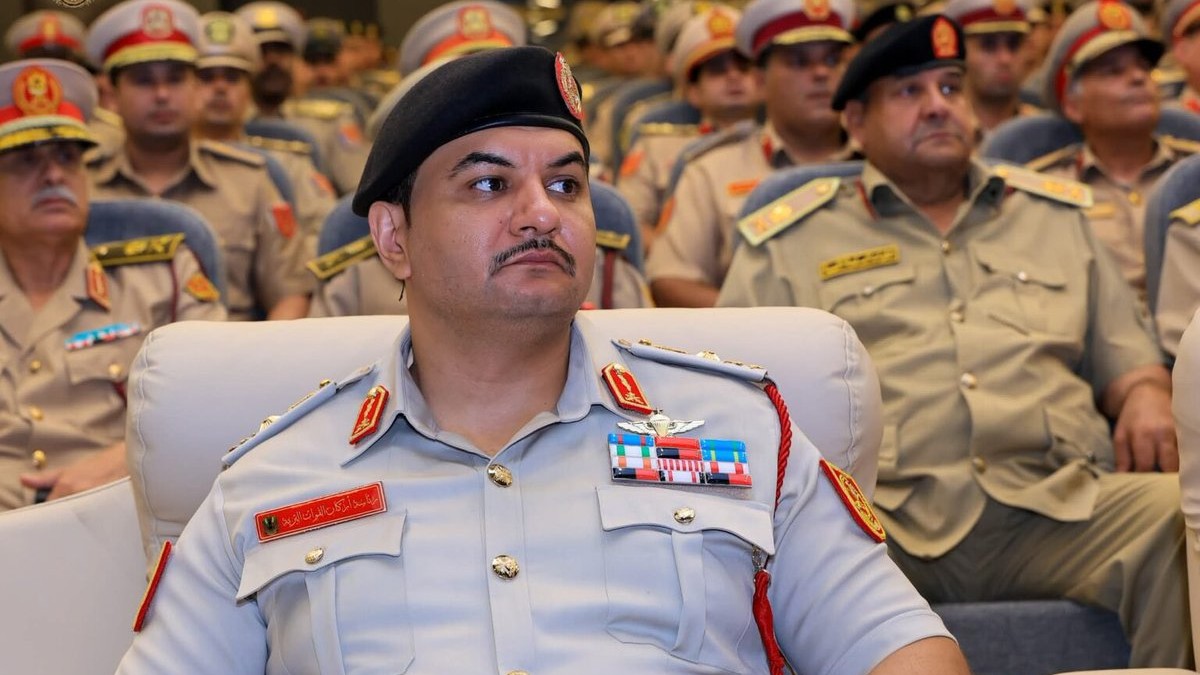
As international powers push to unify Libya’s fragmented political and military factions, a 46-year-old Libyan businessman has emerged at the center of explosive allegations linking him to a sprawling network of illicit finance, war profiteering, and smuggling that props up Khalifa Haftar’s eastern Libyan Arab Armed Forces (LAAF).
Ahmed Gadalla, also known by the alias Ahmed Alushibe, has built a globe-spanning business empire spanning four countries, with a luxury lifestyle that matches his high-stakes commercial portfolio: he resides in Dubai, holds a citizenship-by-investment passport from Saint Kitts and Nevis, wears half-a-million-dollar luxury watches, travels exclusively on private jets, and stays at five-star central London hotels when visiting the UK. His assets include at least eight residential properties in the UAE, a $3.7 million luxury apartment in Toronto (where he maintains permanent Canadian residency and donates to elite private health institutions), and a web of controlled assets ranging from Libyan state-owned enterprises to commercial banks, oil refineries, shipping firms, and private holding companies registered in the UAE, Malta, and the United Kingdom.
Gadalla’s rise to prominence began long before his current high-profile business dealings. A Benghazi native who earned an engineering master’s degree in the United States, he moved to Dubai as a resident in 2008, and worked selling automotive and household goods for an American firm during the 2011 uprising that toppled Muammar Gaddafi. After Gaddafi’s fall, he leveraged growing connections to Emirati business and political circles to expand his operations, making his first major international trade trip to Guangzhou, China, in 2012. Today, he openly leads the Alushibe Group, a loose collection of Dubai-based firms he controls, and holds prominent positions including chairman of a major Libyan state-owned steel company, owner of Dubai-based UDS Shipping Services LLC and Malta’s International Seaport Holdings, and director of a central London-based IT firm. UK corporate records even list him as a former co-owner of a retail off-licence in Birmingham between 2019 and 2021, listing his nationality as Kittitian and residence as the UAE. In 2023, he also acquired Benghazi’s notorious Libyan Cement Company, previously linked to fugitive Austrian executive and suspected Russian spy Jan Marsalek, whose ties to the collapse of Germany’s Wirecard remain under global investigation.
But new, detailed reports from the United Nations Panel of Experts on Libya and U.S.-based investigative non-profit The Sentry pull back the curtain on Gadalla’s operations, alleging that his legitimate business portfolio is a front for a kleptocratic network that funnels billions in stolen Libyan public wealth to Haftar’s LAAF, which has controlled eastern Libya since 2014 with military backing from the UAE and Egypt.
According to the reports, Gadalla climbed the ranks of eastern Libya’s political and economic system over the past decade with direct backing from Saddam Haftar, son of Khalifa Haftar, and sits at the core of a transnational network accused of money laundering, fraudulent letters of credit, fuel smuggling, and arms trafficking. Investigators allege that Gadalla used his control of multiple Libyan banks, including Wahda Bank and the Bank of Commerce & Development, to fraudulently secure hundreds of millions in letters of credit from Libya’s Central Bank with the backing of LAAF armed groups. One Benghazi-based bank controlled by Gadalla even actively blocked official investigations into the fraudulent credit schemes, the UN report found. The Sentry also claims that Gadalla’s banks helped circulate counterfeit Russian-printed Libyan dinars, destabilizing the country’s already fragile economy.
The most serious allegations tie Gadalla directly to Haftar’s disastrous 2019–2020 offensive on Tripoli, the UN-backed national capital, which killed thousands of people and displaced hundreds of thousands. Investigators say that in 2018, ahead of the planned invasion, Haftar’s network tapped Gadalla to manage offshore financing for the operation, which drew the bulk of its funding from the UAE and smaller contributions from Saudi Arabia. In 2019, Al Masraf bank, chaired by a Haftar family economic adviser, issued $300 million in loans to three obscure Dubai-based front companies controlled by Gadalla. The funds left the accounts almost immediately, with investigators confirming they directly funded LAAF’s military operations and most likely paid for the deployment of Russian Wagner Group mercenaries, who played a key combat role in the offensive. After the offensive collapsed, the $300 million in loans were never repaid, leaving the Libyan public to shoulder the entire loss while Gadalla avoided any accountability, The Sentry reported.
Gadalla is also linked to ongoing illicit smuggling operations stretching across the Sahel and North Africa. The UN Panel of Experts found that Gadalla purchases diverted fuel from armed groups in both eastern and western Libya, then uses his shipping network to illicitly export the fuel to the UAE for resale at massive profit. In July 2025, EU Operation Irini, the mission enforcing the UN arms embargo on Libya, intercepted the Aya 1—a container ship owned by Gadalla’s UDS Shipping, named after his daughter—en route from the UAE to Benghazi. An inspection found 12 militarized vehicles hidden among the ship’s cargo, which the UN confirmed was destined for the Rapid Support Forces (RSF), the Sudanese paramilitary currently fighting a brutal civil war in Khartoum. Gadalla is also accused of facilitating arms shipments that have been diverted to gold trafficking networks linked to the Islamic State in Niger, though he is not personally tied to that specific diversion.
Gadalla has forcefully denied all allegations against him. In an interview with Middle East Eye, he rejected every claim made in both the UN and The Sentry reports, insisting he has always conducted business lawfully and transparently. He denied owning or controlling multiple Libyan banks, committing letter of credit fraud, financing the LAAF or the Wagner Group, engaging in fuel or arms smuggling, or owning the intercepted Aya 1 container ship. He noted that third-party investigations by global accounting firm Deloitte and Libya’s Attorney General Investigation Unit have already cleared the bank records in question, and said his legal team is formally challenging the allegations made by The Sentry, while he continues to engage with the UN Panel of Experts.
The exposure of Gadalla’s alleged network comes at a pivotal moment for Libya, where the United States and its Western and regional allies are pushing to unify the Tripoli-based UN-backed government and Haftar’s eastern Benghazi administration after more than a decade of division. In April 2026, Libya’s rival legislative bodies approved a unified national budget for the first time since 2014, a move welcomed by all major global and regional powers including the US, EU states, the UAE, Egypt, Turkey, and Saudi Arabia. A week later, U.S. Africa Command held joint Flintlock military training exercises in Sirte, bringing together troops from both eastern and western Libya for the first time, as part of Washington’s push to reduce Russian influence in North Africa and unify Libyan security institutions.
But investigators warn that networks like the one allegedly led by Gadalla continue to fuel a war economy that siphons off billions in public wealth, undermining efforts to build a stable, unified Libyan state. As diplomatic efforts for unification move forward, the case of Ahmed Gadalla lays bare how deeply entrenched kleptocratic and militia-linked networks have become in Libya’s post-revolution economic and political landscape.