分类: world

  • Russia unleashes another aerial barrage on Ukraine as the war’s long-range strikes escalate

    Russia unleashes another aerial barrage on Ukraine as the war’s long-range strikes escalate

    Fresh waves of large-scale reciprocal long-range strikes between Russian and Ukrainian forces have sent civilian casualty numbers climbing and ratcheted up tensions in the more than four-year full-scale invasion, just days before Russian President Vladimir Putin’s scheduled meeting with Chinese President Xi Jinping in Beijing.

    Ukrainian President Volodymyr Zelenskyy confirmed Monday that Russian forces launched a massive overnight aerial assault across eight Ukrainian regions, deploying a total arsenal of 524 attack drones alongside 22 ballistic and cruise missiles. The central Dnipropetrovsk region, anchored by the major city of Dnipro, absorbed the heaviest blow from the barrage, with bombardment persisting for six consecutive hours that targeted both energy infrastructure and residential areas. Ukraine’s State Emergency Service reported at least 26 wounded civilians across the region, including two children. Additional structural damage and casualties were recorded in Ukraine’s Odesa, Chernihiv, and Zaporizhzhia regions, bringing the total number of injured civilians across the country to more than two dozen, including three children overall. This latest attack follows a string of intensifying large-scale Russian strikes that gained momentum after a brief May 9-11 ceasefire called at the request of former U.S. President Donald Trump, a proposal that failed to produce any lasting reduction in hostilities. Just one week prior, a multi-day Russian bombardment flattened a residential apartment building in Kyiv, killing 24 people. To date, U.S.-led diplomatic efforts to broker a lasting peace settlement have yet to yield tangible progress, with no formal negotiations or draft agreement currently in development.

    The escalation is not one-sided: just one day before Russia’s latest attack, Ukraine carried out one of its largest cross-border drone strikes on Russian territory to date. Russian local authorities confirmed Sunday that the attack killed at least four people, three of whom died in suburbs near Moscow, and left a dozen more injured. Over more than four years of full-scale conflict, Ukraine has methodically built up its domestic long-range strike capabilities, allowing it to consistently target key assets deep inside Russia, including critical oil infrastructure that forms the backbone of the Russian federal budget. These deep strikes have drawn widespread attention from the Russian public and increased domestic pressure on Putin, who made the questionable claim earlier this month that the war was nearing its conclusion even as his ground forces struggle to secure significant territorial gains across the front line.

    Zelenskyy framed these expanding capabilities as a transformative turning point in the conflict. In a post to the social platform X Sunday evening, he noted, “Our long-range capabilities are significantly changing the situation — and, more broadly, the world’s perception of Russia’s war. Many partners are now signaling that they see what is happening and how everything has changed — both in attitudes toward this war and in the reachability of Russian targets on Russian territory.”

    Russian defense officials pushed back on Sunday, announcing that their air defense systems had intercepted or jammed more than 1,000 Ukrainian drones over the preceding 24-hour period, with roughly 80 of those unmanned vehicles headed toward the Moscow region. Separately, the ministry confirmed Monday that between late Sunday and early Monday, air defenses shot down a total of 50 Ukrainian drones across multiple regions.

    The rising violence comes as Putin prepares to travel to Beijing this week for high-level talks with Xi. In the years since Russia launched its full-scale invasion, political and economic cooperation between Moscow and Beijing has deepened substantially, even as most Western nations have moved to diplomatically and economically isolate the Kremlin.

    This reporting draws from on-the-field contributions from AP correspondent Henry Hatton, based in Lisbon, Portugal. Full coverage of the Russia-Ukraine conflict is available on AP News’ dedicated conflict hub.

  • Israeli troops begin intercepting vessels from a flotilla trying to breach the Gaza blockade

    Israeli troops begin intercepting vessels from a flotilla trying to breach the Gaza blockade

    In a tense escalation of long-running tensions over the Israeli-imposed Gaza blockade, the Israeli military initiated interception operations against multiple vessels belonging to the Global Sumud Flotilla early Monday morning. This activist-led fleet has been sailing toward Gaza’s coast in a deliberate attempt to challenge the years-long blockade that has crippled the territory’s civilian economy and access to basic goods.

    The 50-plus vessel fleet departed from Turkey’s Marmaris port last week, marking what organizers framed as the final leg of their high-stakes voyage to Gaza. Live streaming footage broadcast from one of the intercepted vessels captured the chaotic moments before boarding: activists were seen donning life vests and raising their hands in a non-violent demonstration as an Israeli military boat carrying tactical troops approached the civilian vessel. After Israeli commandos boarded the flotilla ship, the live feed cut off abruptly, cutting off public view of the ongoing operation. The majority of the fleet’s vessels remain anchored off the coast of Cyprus as the interception unfolds.

    One hour before military forces began moving in, Israel’s Foreign Ministry issued a public warning to all participating activists, urging them to “change course and turn back immediately.” On the social platform X, the ministry dismissed the effort as a deliberate act of provocation, claiming: “Once again, a provocation for the sake of provocation: another so-called ‘humanitarian aid flotilla’ with no humanitarian aid.” The Israeli military has declined to issue any on-the-record statements regarding the details or progress of the ongoing interception operation.

    This latest confrontation comes months after a similar incident in April, when Israeli forces intercepted more than 20 flotilla vessels near the southern Greek island of Crete, detaining roughly 175 participating activists. That prior interception drew widespread international condemnation, sparked global protests, and reignited legal debate over the legality of blockade enforcement actions carried out by nations in international waters. Israeli officials defended their early intervention in the April incident, citing the large size of the original flotilla as a security justification.

    In the aftermath of the April interception, Israeli authorities detained two participating activists for extended questioning: Saif Abukeshek, a Spanish-Swedish citizen of Palestinian descent, and Thiago Ávila, a Brazilian national. The pair accused Israeli security personnel of subjecting them to torture during their detention—a claim Israeli officials have outright denied. Both Brazil and Spain publicly condemned Israel’s actions, labeling the detainment “kidnapping” of their citizens. After several days in custody, the two activists were finally deported from Israel this past Sunday.

    Following the April interception, flotilla organizers regrouped, repaired their network, and added new participating vessels to the effort for this latest attempt. Organizers confirm that nearly 500 activists from 45 different countries around the world are currently taking part in the mission to break the Gaza blockade, underscoring the broad international support for the effort to challenge Israeli restrictions on the territory.

  • India’s strategic $9 bn megaport plan for pristine island

    India’s strategic $9 bn megaport plan for pristine island

    Deep in the Andaman Sea, bulldozers have begun clearing old-growth rainforest on Great Nicobar Island, clearing ground for one of India’s most ambitious and controversial infrastructure initiatives ever conceived: a $9 billion megaport, new airport networks, dual-use military installations, and an entirely new planned city. Positioned just off the Strait of Malacca, the global shipping lane that carries roughly 30% of annual world trade, the project is the cornerstone of New Delhi’s efforts to counter China’s growing influence across the Indian Ocean, while transforming the remote archipelago into a major Indo-Pacific connectivity hub. From a geostrategic perspective, the location is unmatched: Great Nicobar sits less than 175 kilometers from Indonesia, far closer to Southeast Asia than any site on India’s mainland. Prime Minister Narendra Modi framed the initiative in September as a project of national, defense, and strategic importance that will reposition the region as a linchpin for maritime and air connectivity across the Indian Ocean.

    The full scope of the plan extends far beyond the $4 billion first phase, which will deliver a deep-water container port at Galathea Bay and an airport at Campbell Bay, scheduled for completion within three years. Once fully operational, the port will handle more than 20 million twenty-foot equivalent units of cargo, earning it a place among India’s three largest container terminals. Devendra Kumar Joshi, the Andaman and Nicobar Islands governor and a former Indian navy admiral, projects the facility could eventually compete with Singapore and Malaysia’s Port Klang to become the leading container handling hub for the entire Indo-Pacific. Across the 836-island archipelago, plans call for expanding existing naval and air infrastructure, including two new airports and upgraded 3-kilometer runways capable of handling heavy military cargo aircraft. All new and updated runways will be dual-use, serving both civilian and military operations, with one upgraded runway on Car Nicobar already inaugurated by India’s Chief of Defence Staff in January. Most details of the military component of the project remain classified, but security analysts frame Great Nicobar’s location as a game-changer for Indian defense posture. New Delhi-based security expert Nitin Gokhale describes the island as “India’s unsinkable aircraft carrier,” noting that its position creates a permanent strategic advantage by allowing India to monitor activity across the region, a capability that redefines India’s security paradigm in the Indo-Pacific. The project is explicitly aligned with India’s Act East policy, designed to counter China’s so-called “string of pearls” strategy of developing port and military infrastructure across the Indian Ocean to secure its own economic and strategic interests.

    Indian officials have repeatedly pushed back against criticism, emphasizing that the project meets all national environmental regulations and includes dedicated protected zones to safeguard Indigenous communities, unique wildlife, and fragile ecosystems. India’s top environmental court ruled in 2023 that it found no justifiable reason to block the project, specifically noting its strategic importance in countering Chinese influence. Environment Minister Bhupender Yadav has insisted the initiative “poses no threat to the island’s tribal groups, does not come in the way of any species, and does not jeopardise the eco-sensitivity of the region.”

    But the massive development has sparked fierce pushback from environmentalists, Indigenous leaders, and local residents, who warn that the costs far outweigh any potential economic or strategic benefits. Roughly 95% of Great Nicobar’s 910 square kilometers is undisturbed, biologically under-explored old-growth forest home to dozens of endemic species found nowhere else on Earth. The project will require clearing nearly 20% of the island’s total land area. Most alarming to rights groups is the threat to Great Nicobar’s Indigenous populations, which total around 1,200 people including the hunter-gatherer Shompen people—one of the most isolated communities on the planet, who almost entirely avoid contact with outsiders—and the Nicobarese. London-based rights organization Survival International has warned that the project threatens “genocide in the name of ‘mega-development’” for these communities.

    Critics also dismiss the government’s environmental mitigation plan, which proposes replanting deforestation offsets thousands of kilometers away in the northern Indian state of Haryana. Manish Chandi, a researcher who has worked extensively with Indigenous communities on Great Nicobar, called the offset plan “nonsense”, noting “We are removing crocodiles from their natural habitat, and saying we are going to conserve them.” Chandi also questioned the economic rationale of the massive investment, saying there is no clear roadmap for recovering the $9 billion price tag. Beyond the port and military infrastructure, the plan includes a 161-square-kilometer new planned city, a combined gas and solar power plant, and large-scale tourism development. Current projections show the island’s population jumping from just 9,000 today to more than 335,000 by 2055, with annual tourist arrivals reaching 1 million by the same date.

    Indigenous leaders warn that the project will erase millennia-old traditional cultures that are deeply tied to the island’s land. “If we lose control of these lands, our culture too will be lost,” said Barnabas Manju, the most senior Nicobarese leader. Even mainland Indian settlers who have lived on the island for generations oppose the plan, many facing displacement without fair compensation. Sharda Devi, a 55-year-old daughter of one of the first mainland settlers who moved to Great Nicobar in 1969, told AFP the government will seize 11 acres of land allocated to her father without offering replacement land or adequate payment. Her neighbor Kusum Mishra, 71, who arrived on the island 50 years ago, called the offered compensation “petty”, saying “they are uprooting us and destroying our lives.”

    Hundreds of kilometers north on Little Andaman, the ripple effects of the broader development push are already being felt, as the government prepares for the “next developmental thrust” after Great Nicobar, per Governor Joshi. The Onge community, one of the archipelago’s most vulnerable Indigenous groups, numbers just 143 surviving members today. Many still maintain their traditional way of life, fishing in intact coral reefs and hunting in protected forest lands, but a growing number of young community members are engaging with the outside world, drawn by new opportunities. Last year, local police began recruiting more than 500 young Indigenous people from across the archipelago to serve as police homeguards, framing the initiative as a way to create local opportunity while leveraging their intimate knowledge of the islands. Raja, one of the first Onge recruits, said his steady salary has inspired other young community members to join, drawn by the chance to travel beyond their isolated villages and see the wider world. His friend Jhaj, another Onge recruit, recently made a major methamphetamine seizure of seven kilograms, catching drug traffickers who operate along the Andaman Sea route from Myanmar. Ashish Biswas, who works for the government-backed Indigenous advocacy group Andaman Adim Janjati Vikas Samiti, said the development brings both risks and opportunities. “These developments point to better things on the horizon,” he said, pointing to growing interest in education among young Indigenous people following the example of Jhaj and Raja.

  • An Australian journalist turns her harrowing China prison ordeal into a memoir and play

    An Australian journalist turns her harrowing China prison ordeal into a memoir and play

    Almost eight months after being deported from China following three years of detention, Australian journalist Cheng Lei is methodically rebuilding her life in her current home of Melbourne, turning her experience of imprisonment into creative work and a platform to advocate for others still detained under China’s justice system.

    Cheng first moved to Australia from China with her parents as a 10-year-old, eventually becoming a naturalized Australian citizen. At 25, she left a career as an accountant to pursue her passion for bilingual journalism, and over two decades of work across Asia, rose to become a high-profile anchor for the English-language *Global Business* program on Chinese state broadcaster CCTV.

    That stable, public career came to an abrupt end in August 2020. At CCTV’s Beijing headquarters, state security agents took Cheng into custody, accusing her of leaking state secrets to foreign organizations. She was blindfolded and transferred to an unknown detention location. In October 2023, a Beijing court convicted her of the charges and handed down a sentence of two years and 11 months — a term she had already nearly completed behind bars by the time the ruling was issued.

    According to Cheng’s memoir, the offense that led to her conviction amounted to a seven-minute premature release of data from former Chinese Premier Li Keqiang’s 2020 annual government work report. The early disclosure revealed that China would not set a formal GDP growth target that year amid uncertainty caused by the COVID-19 pandemic, a decision that was already unusual. Cheng maintains she had no knowledge of any media embargo surrounding the report at the time of the incident.

    The journalist says she believes her detention was a case of hostage diplomacy, linked to Australia’s call for an independent international investigation into the origins of COVID-19. In April 2020, then-Australian Foreign Minister Marise Payne publicly called for the inquiry; Chinese state security opened its investigation into Cheng just four days later. “Why me? Why that time? All these questions I’m still asking,” Cheng told the Associated Press in a recent interview.

    Relations between Canberra and Beijing had already been tense before the pandemic, but the global health crisis plunged the fraught bilateral relationship to its lowest point in decades. After Australia called for the COVID origins probe, Beijing halted direct communications with senior Australian government ministers and imposed official and unofficial trade bans on a range of Australian exports, including wine, coal, barley and lobster. Tensions only began to ease after Australia’s conservative government, which had drawn Beijing’s ire, was voted out of power and replaced by the current center-left Labor government in 2022, after which most trade restrictions were gradually lifted.

    Long before Cheng’s arrest, the Australian government had issued official warnings to its citizens about the risk of arbitrary detention in China. In the months after she was taken into custody, all Australian journalists based in China ultimately left the country, following high-stakes diplomatic standoffs in 2020.

    Since her release and deportation in October 2023, Cheng has thrown herself into multiple creative pursuits to process her experience and amplify the voices of people who cannot speak for themselves. She has published a memoir about her detention, and is currently preparing for the world premiere of her autobiographical play *1154 Days*, scheduled to open in Melbourne on May 28. The play explores how the mind adapts, resists, and creates connection even under extreme conditions of deprivation and surveillance. Cheng says during her months in isolation, she built entire television programs in her mind, invented memory games, and found small ways to connect with her cellmates and even her captors.

    “When your life gets shattered and you lose so many things that used to define you, you do have a kind of freedom to reorganize your atoms and create a new you,” Cheng explained during rehearsals for the production. “For me, it’s a fuller appreciation of life and much more adventurousness and also a serene sort of quiet fearlessness.”

    Beyond theater and writing, Cheng has also branched out into stand-up comedy, making her first stage appearance in Melbourne in June 2024 alongside Chinese-Australian writer and activist Vicky Xu, eight months after her release. She performed a five-minute set at the Melbourne International Comedy Festival’s RAW competition for new performers earlier this year, and says humor was a critical tool for survival during her detention. “If you can’t joke about incarceration, then you have no sense of humor,” she told the *Australian Financial Review*. “Humor got me through much of it and brightened the cell for me and my cellmates.” She now jokes that she has more source material for her comedy than most performers: “Life is a tragic comedy and we should mine it. I just have a bit more material than others.”

    Cheng now lives in Melbourne with her two teenage children, who were stranded in Australia visiting family when China closed its borders at the start of the pandemic, months before her arrest. For Cheng, her new creative projects are not just a way to heal — she says she has a responsibility to speak out for other detainees still held in China, including fellow Australian citizen Yang Hengjun, a Chinese-born democracy blogger who was sentenced to a suspended death penalty for espionage in 2024. Yang has been in detention since he returned to China from the United States in 2019, and his supporters warn his failing health means he is unlikely to survive a life sentence, which a court is expected to greenlight in the coming weeks.

    Australian officials have repeatedly raised Cheng’s case at high-level bilateral meetings with Beijing, and continue to push for Yang’s release. Cheng says her own experience of the Chinese prison system has given her a unique window into its harsh, opaque practices. The hardest part of her detention was the first six months, spent under Residential Surveillance at a Designated Location (RSDL), a system where detainees are held in complete isolation, under constant surveillance, with strict limits on movement and enforced silence, designed to break suspects to force guilty pleas. Even after six months in that system, Cheng only received credit for three months toward her eventual sentence.

    “I know people who are still going through RSDL, or unfair, unjust, arbitrary detention in China. Or being sentenced to ludicrous, harsh sentences for standing up for other people, for standing up for human rights,” Cheng said. “They would want this story to be told because they don’t have a voice. And for the people who are too scared to talk because their families are hostages in China, this is for them too.”

    The play *1154 Days* seeks to cut through official narratives, Cheng explains, allowing audiences to see beyond Beijing’s public framing of itself as a rule-of-law society and reliable global partner. “It’s about how it feels to have everything taken away from you. How it feels to be with three other people all the time in the same little cell for three years, how it feels to be watched every minute of the day and how it feels to finally regain your freedom,” she said.

  • Moment two fighter jets collide mid-air at US air show

    Moment two fighter jets collide mid-air at US air show

    A dramatic mid-air collision between two fighter jets unfolded at a United States air show over the weekend, leaving onlookers stunned but avoiding what could have been a catastrophic loss of life. The two aircraft involved in the incident belonged to the US Navy, and each carried two crew members aboard at the time of the crash.

    In what emergency officials are calling a remarkable turn of events, all four crew members successfully ejected from their damaged aircraft before the jets crashed. Immediately following the collision, local emergency response teams rushed to the scene to provide medical care and secure the crash site.

    As of the latest official update from military authorities, all four ejected personnel are receiving medical treatment, and their conditions are listed as stable. Investigations are already underway to determine the root cause of the collision, with officials set to review air show footage, interview witnesses, and examine the wreckage of the two jets to piece together exactly what led to the mid-air incident. No injuries to spectators on the ground have been reported so far.

  • International dive group joins Maldives search for missing Italians

    International dive group joins Maldives search for missing Italians

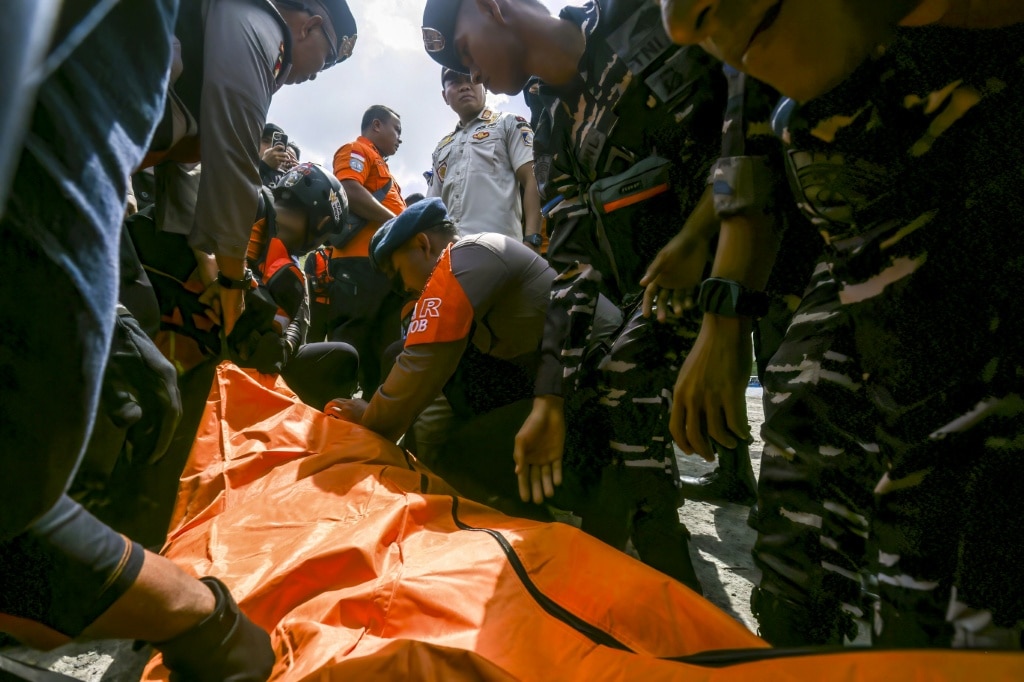
    One of the deadliest diving accidents in the history of the Maldives, a top Indian Ocean diving destination, has triggered a wide-ranging multinational recovery effort, with an international dive safety organization deploying specialist personnel to assist in locating four missing Italian nationals. The tragedy, which unfolded last Thursday, unfolded when a group of five Italian divers got into distress while exploring a deep submerged cave in a remote stretch of the Maldives’ waters. By the end of the same day, local authorities had only recovered one of the five victims’ bodies, leaving four still unaccounted for deep inside the cave system. The disaster compounded when a Maldivian National Defence Force rescue diver, Staff Sergeant Mohamed Mahudhy, developed life-threatening decompression complications during an initial search mission, and passed away in a local hospital on Saturday. Following the diver’s death, the initial search operation was temporarily paused.

    According to Mohamed Hussain Shareef, chief spokesperson for the Maldivian government, the international community has already stepped forward to offer support for the challenging high-risk recovery operation. Italy, the United Kingdom, and Australia had already deployed assets and personnel to assist before Sunday. On that same day, three specialist diving experts from Divers Alert Network (DAN), an international dive safety group commissioned by the Italian government, arrived in the Maldives to join the mission, with their active deployment on the search expected to start Monday. The United States has also extended an offer of assistance to the Maldivian government. Currently, all international support efforts are coordinated jointly between DAN and the Maldivian Coast Guard, which has dispatched its largest operational vessel to the remote search site to facilitate operations.

    The single recovered Italian victim was pulled from the cave at an approximate depth of 60 meters, a depth that poses extreme risk even to highly experienced technical divers, making the ongoing recovery operation particularly challenging. On Saturday night, the Maldives held a full military honors funeral for Staff Sergeant Mahudhy, honoring his sacrifice during the rescue mission. In comments to Agence France-Presse, Shareef expressed the shared grief of both the Maldivian and Italian people: “We are very sad about the tragic loss of the Italians. We are also very saddened by the loss of our own diver. We are two nations united in grief.”

    Italy’s foreign ministry has confirmed the five Italian deaths, and the University of Genoa has released details identifying the victims: the group includes a marine biology professor from the institution, the professor’s daughter, and two early-career researchers from the university. In the wake of the disaster, Maldivian regulators took swift administrative action on Saturday, suspending the operating license of the luxury live-aboard dive vessel that the Italian group had departed from for the fatal dive.

    As a nation made up of more than 1,100 low-lying coral islands and atolls spread across 800 kilometers of the Indian Ocean along the equator, tourism anchored around pristine coastal and marine environments is the single largest contributor to the Maldivian economy. The country’s crystal-clear turquoise waters, unspoiled beaches, and vibrant diverse coral reefs draw recreational divers and snorkelers from across the globe, many of whom choose to stay on secluded island resorts or live-aboard dive vessels that access remote, unspoiled dive sites. While a small number of diving-related fatalities have been recorded in the Maldives in recent years, official data shows that such accidents remain relatively uncommon in the country’s thriving adventure tourism sector.

  • Inside the ‘kill-zone’ on Ukraine’s front line, where new weapons have transformed war

    Inside the ‘kill-zone’ on Ukraine’s front line, where new weapons have transformed war

    Deep in the desolate frontline landscape outside Kostyantynivka, one of eastern Ukraine’s most hotly contested hotspots, a Ukrainian infantryman known only as Kenya sat trapped in a cramped forward foxhole for 225 straight days. Cut off from rotation by the constant, deadly threat of Russian surveillance and attack drones, five attempted relief efforts by his unit failed to reach him. By the time he finally escaped, months of immobility had left his muscles so atrophied he could barely stand, requiring a grueling two-day, 11-kilometer trek through minefields and under constant drone watch to reach the safety of his 93rd Brigade headquarters.

    Kostyantynivka has emerged as a critical linchpin in Russia’s long-stated campaign to seize full control of the Donbas region, a priority goal Moscow has targeted for completion this year, according to Ukrainian intelligence. If the strategic city falls to Russian forces, it will open up three-pronged access from the north, east, and south to the last remaining major Ukrainian strongholds in Donbas: Kramatorsk and Sloviansk. President Volodymyr Zelenskyy has warned that the Kremlin is preparing a large-scale new offensive this summer to push for these gains. Still, Russia’s advance has slowed considerably in recent months: Ukrainian conflict monitoring outlet DeepStatedata reports that Russian territorial gains in Donbas fell by half between March and April 2026, to just one-sixth of the territory Moscow captured in December 2025. The U.S.-based Institute for the Study of War further notes that Russia lost more territory than it gained in Ukraine last month, in part due to renewed Ukrainian strikes on Russian supply lines and logistics networks.

    For the soldiers of the 93rd Brigade tasked with holding Kostyantynivka’s outskirts, the current conflict represents a striking paradox of 21st-century warfare. While drones have replaced mass tank assaults and large infantry charges as the primary source of firepower and surveillance, the fundamental rule of warfare remains unchanged: no territory can be permanently held without boots on the ground. Drones cannot seize and hold fortified positions, control high ground or strategic river crossings, so small teams of infantry are still required to garrison forward outposts in the so-called “kill zone” — a wide, unpopulated grey area along the front where every moving object is hunted by remote-controlled drones from both sides.

    In this new landscape of combat, speed matters far more than heavy armor for survival. Assaults are no longer carried out by massive columns; instead, small teams of two or three soldiers cross open terrain on foot, motorbikes, bicycles, or even horseback to avoid detection. For the troops stuck in forward dugouts, daily life is a relentless battle against deprivation and fear. All overland supply routes to the kill zone are cut off, so food and ammunition must be ferried in by small delivery drones — a precarious system that often fails when drones are shot down or jammed, leaving garrisons with intermittent supplies. Kenya told reporters that mice infested his foxhole, gnawing through all non-canned food stores, and the most critical shortage his unit faced was clean drinking water. For him, a rare rainstorm was a moment to remember: it let him strip down and wash after months without clean water. During the winter, when temperatures plummeted to -25°C, worn-out sleeping bags offered little protection against frozen ground and concrete basement floors. Khani, another 93rd Brigade soldier who spent 122 days in a forward outpost, lost a comrade to hypothermia during the cold snap.

    Khani’s own story of survival illustrates the constant, close-quarters danger these troops face. His position in the basement of a ruined two-story home was detected by Russian drones, which directed heavy artillery fire to collapse the building. When Russian troops approached, Khani and his partner opened fire, triggering a coordinated assault: drone strikes, followed by a fiber-optic guided drone that infiltrated the basement before becoming tangled in its own wiring. Khani disabled the drone by shooting its cable reel, cutting its connection to the Russian pilot. Two Russian soldiers then stormed the remains of the basement, detonating anti-tank mines to collapse the entrance and leaving the pair for dead. The two men escaped via a hidden emergency exit they had dug months earlier. Another soldier, Granata, who recently exited the front after 110 days of garrison duty, recalled an incident where Russian forces used a gas-filled explosive to force his team out, leaving his partner severely wounded.

    Even as Ukraine targets Russian logistics to slow the impending summer offensive, frontline infantry like Kenya, Khani and Granata remain the backbone of Ukrainian defense in Donbas. Every time troops leave their dugouts for rotation or resupply, they risk their lives, and even basic movement requires hiding from thermal cameras with short-lived anti-drone cloaks that last barely 20 minutes. “Every time when we had to come out of our positions, we prayed we would come back alive,” Kenya said. Without these small, exposed garrisons holding every kilometer of the front line, Khani says, the entire defensive line would crumble. The experience of these soldiers confirms that even in an era of AI-guided drones and remote warfare, the human cost of holding territory remains as high as ever.

  • Trump issues dire warning to Iran to accept peace deal

    Trump issues dire warning to Iran to accept peace deal

    Escalating tensions across the Middle East reached a new boiling point on Sunday, as former President Donald Trump delivered a stark ultimatum to Iran, demanding Tehran immediately accept a U.S.-brokered peace deal or face catastrophic consequences that would leave the Islamic republic “nothing left.”

    The regional conflict, which began on February 28 when joint U.S. and Israeli military forces launched large-scale strikes against Iran, has remained deadlocked for weeks, failing to produce any breakthrough toward de-escalation even as it sends shockwaves through global energy markets and upends security across the Middle East. In a post published Sunday on his Truth Social platform, Trump doubled down on pressure against Tehran, writing, “For Iran, the Clock is Ticking, and they better get moving, FAST, or there won’t be anything left of them. TIME IS OF THE ESSENCE!”

    Beyond the core U.S.-Iran conflict, the war has triggered widespread secondary instability across the region. It has effectively blocked the Strait of Hormuz, the strategic global chokepoint through which roughly 20% of the world’s peacetime oil exports pass. It has also dragged neighboring Israel and Lebanon into a violent parallel confrontation, even as fragile ceasefires hold in name on multiple fronts.

    Iran, which provides military and financial support to the Lebanese militant group Hezbollah, has set a precondition of a permanent ceasefire in southern Lebanon before it will enter any broader peace negotiations with the U.S. That demand comes as Trump has grown increasingly frustrated by Tehran’s refusal to accept terms on Washington’s schedule.

    The situation on the Lebanese border remained deadly over the weekend, despite a recently extended ceasefire between Israel and Hezbollah. An unnamed Israeli military official confirmed Sunday that Hezbollah launched approximately 200 projectiles at Israeli territory and military positions over the previous 48 hours. In response, new Israeli airstrikes across southern Lebanon killed five people, including two children, according to Lebanon’s health ministry. Lebanese official data underscores the scale of the human toll: since the broader regional war began, more than 2,900 people have been killed in Lebanon, with 400 of those deaths occurring after a partial truce took effect on April 17.

    While a bilateral truce between Washington and Tehran went into effect on April 8, peace negotiations have remained completely stalled, with low-level sporadic attacks continuing across multiple fronts. On Sunday, Iranian state media pushed back against U.S. negotiating positions, reporting that Washington had failed to offer any concrete concessions in its latest response to Iran’s proposed negotiation agenda.

    According to Iran’s semi-official Fars News Agency, the U.S. delivered a five-point proposal that includes extreme demands: requiring Iran to operate only a single nuclear facility and transfer its entire stockpile of highly enriched uranium to U.S. control. The report added that Washington has also refused to release even 25% of the billions of dollars in Iranian assets frozen abroad, and has rejected any calls for reparations to cover war-related damage to Iranian infrastructure. Another major Iranian state outlet, Mehr News Agency, summed up Tehran’s view of the negotiation impasse, noting that “the United States, offering no tangible concessions, wants to obtain concessions that it failed to obtain during the war, which will lead to an impasse in the negotiations.”

    Unrest spread beyond the core conflict zones on Sunday, as authorities in the United Arab Emirates confirmed that a drone strike sparked a fire near a nuclear power plant in Abu Dhabi. Officials reported no injuries and no disruption to plant operations or radiation levels, but the attack underscores the spread of violence to Gulf states. The strike follows a pattern of recent attacks linked to Iranian-backed armed groups, which maintain drone-equipped factions in Iraq, while Tehran’s Yemeni ally the Houthi movement also operates advanced combat drones capable of long-range strikes.

    Diplomatic efforts to break the impasse continued Sunday, with Pakistan stepping in as a third-party mediator. Pakistani Interior Minister Mohsin Naqvi held talks in Tehran with Iran’s chief negotiator and parliament speaker Mohammad Bagher Ghalibaf. Following the meeting, Ghalibaf emphasized the far-reaching destabilizing impact of the U.S.-Israeli war on the entire Middle East. “Some governments in the region believed that the presence of the United States would bring them security, but recent events showed that this presence is not only incapable of providing security, but also creates the grounds for insecurity,” he said in a social media statement.

    Earlier this week, Trump held a high-stakes summit with Chinese President Xi Jinping where the Iran conflict was a core topic of discussion, but the meeting produced little visible progress toward a diplomatic resolution. Trump claimed after the meeting that Xi assured him China would not provide military assistance to Iran. For its part, the Chinese Foreign Ministry released a statement Friday calling for the immediate reopening of global shipping lanes through the Strait of Hormuz, aligning with global calls to restore critical energy trade routes.

  • Latest militant attacks on schools in Nigeria leave more than 80 children missing, officials say

    Latest militant attacks on schools in Nigeria leave more than 80 children missing, officials say

    ABUJA, Nigeria – A spate of coordinated militant attacks targeting educational institutions across Nigeria has left more than 80 schoolchildren unaccounted for, local authorities and global human rights organization Amnesty International confirmed Sunday. The abductions mark the latest escalation of a persistent crisis of school kidnappings that has plagued the West African nation, where federal security forces are already engaged in prolonged counterinsurgency operations against multiple jihadi factions and other armed criminal groups.

    The first documented assault unfolded between Wednesday and Thursday in the remote Askira Uba and Chibok local government areas of Borno State, Nigeria’s conflict-ravaged northeastern border region. According to official reports, 42 children were abducted from a local primary school in this strike. Amnesty International pinpointed the attack location as Mussa village, a settlement positioned on the edge of Sambisa Forest – the historic core stronghold for Boko Haram, the long-running insurgent group, and its offshoot, the Islamic State-aligned faction Islamic State West Africa Province (ISWAP).

    Just two days later, a separate pair of attacks hit secondary schools in southwestern Nigeria’s Oyo State, an area where large-scale school abductions have historically been extremely rare. Though Amnesty’s Nigeria office initially put the number of abducted children from the two Oyo State schools at no fewer than 40, local government official Peter Wabba from Mussa confirmed Sunday that updated community counts place the total at 48. The attacks were carried out just hours apart from one another, in the Oriire local government area roughly 220 kilometers outside Nigeria’s commercial hub, Lagos.

    In its public statement Sunday, Amnesty International issued a stark warning about the cascading social costs of the persistent abduction crisis. The organization noted that widespread fear of kidnapping has already driven thousands of children out of Nigeria’s educational system, with many families pulling underage girls out of classrooms specifically and forcing them into early marriage as a desperate protective measure against attack.

    Local families of the missing children expressed growing frustration with the pace of official response. “The government is assuring us that they are doing their possible best to see that these children are rescued but up till now, we are still waiting,” Wabba told the Associated Press in an interview Sunday. Amnesty further criticized Nigerian authorities for longstanding failures to follow through on commitments to address the crisis, saying that officials “never fulfill promises to investigate the incidents and bring the perpetrators to justice,” adding, “Victims and their families continue to be denied access to justice.”

    Security officials have made limited progress in the Oyo State case, however. On Saturday, police spokesperson Ayanlade Olayinka confirmed to AP that three suspected gunmen linked to the Oyo attacks had been taken into custody. Olayinka said community members identified the suspects, who were subsequently arrested by local law enforcement. Police have not yet clarified whether additional suspects remain at large in the incident.

    Mass school abductions have become one of the most visible markers of systemic insecurity across Nigeria, Africa’s most populous country. While kidnappings for ransom and insurgency-driven abductions are most common in the country’s northern regions, the recent attacks in the southwest mark a troubling expansion of the crisis into previously low-risk areas. In 2023 alone, two high-profile mass school abductions in northern Nigeria shook national public opinion, with more than 300 children taken captive in separate incidents. Security analysts point to a clear strategic logic driving the targeting of schools: armed gangs and insurgent factions view soft, unguarded educational institutions as high-impact targets that generate widespread media and government attention, advancing their political and financial goals.

  • ‘Fight relentlessly’: Ukraine commander vows strikes into Russia

    ‘Fight relentlessly’: Ukraine commander vows strikes into Russia

    In an underground command center tucked away from Russian surveillance, the head of Ukraine’s unmanned combat forces, Robert Brovdi — who goes by the call sign “Madyar” — spends his days mapping out a growing campaign of long-range strikes deep inside Russian territory. For Brovdi, these escalating attacks are not just military strategy: they are deliberate retribution for Moscow’s full-scale invasion of Ukraine.

    In an exclusive interview with Agence France-Presse conducted ahead of one of the war’s largest drone barrages, Brovdi laid out the strategic logic and expanding scope of Ukraine’s deep-strike campaign. In the wave of attacks that followed the interview, Kyiv launched nearly 600 drones across Russia, leaving four people dead.

    Brovdi and other Ukrainian officials frame the strikes as a targeted effort to undermine Russia’s war capacity, prioritizing two key types of infrastructure: defense manufacturing sites and oil storage and processing facilities. By crippling these assets, Ukraine aims to cut off the resources Russia relies on to sustain its invasion.

    “All sources that fund Putin’s war effort have become legitimate, priority military targets anywhere in the occupying country’s territory, from the south to the Urals and even Siberia,” Brovdi stated.

    Over the past several months, Ukraine has dramatically expanded its deep-strike operations, launching attacks more frequently and hitting targets farther from the shared border than ever before. Kyiv estimates that attacks on major sites including the ports of Tuapse and Primorsk have caused billions of dollars in damage, while Russian officials have confirmed multiple civilian and military casualties from the strikes.

    Brovdi identified three core drivers behind Ukraine’s new, more aggressive approach to cross-border strikes: greater access to resources to build and deploy long-range drones, a deliberate strategic shift to disrupt Russia’s war machine at its source, and the gradual weakening of Russia’s integrated air defense network.

    “The enemy built a multi-layered wall of air defenses, and we had to cut a door through it to get inside,” he explained. Starting in December 2025, his forces launched a systematic campaign to pick apart Russian air defense systems, prioritizing their destruction to clear a path for deeper strikes. While Brovdi acknowledged that destroying the entire national air defense network remains a distant goal, he said the campaign has already yielded tangible results.

    “We’ve gotten to the point that there isn’t much more air defense left to destroy to open up access to almost all of Russian territory,” he said. “With such a vast land mass full of high-value sensitive targets, the enemy can never predict where we will strike next.”

    Ukrainian President Volodymyr Zelensky has defended the cross-border strikes as a legitimate right of self-defense, following a massive Russian missile attack on Kyiv earlier this month that killed 24 civilians.

    On the night of the large-scale barrage that followed Brovdi’s interview, AFP reporters on the ground observed Ukrainian drone operators preparing long-range unmanned aerial vehicles for launch in total darkness, working only by the faint glow of red flashlights. The drones, which resemble small fixed-wing aircraft, lifted off into the night leaving trails of orange flame behind them. After the attack, Ukraine’s Security Service (SBU) confirmed that the strikes demonstrated even the heavily fortified Moscow region is no longer beyond Ukraine’s reach.

    The growing threat of Ukrainian strikes has already caused palpable disruption in Russia. Earlier this year, Moscow significantly scaled back its annual May 9 Victory Day parade, the country’s most important symbolic military celebration. For the first time in almost 20 years, no military hardware was displayed along Red Square. Russian authorities had previously warned Kyiv against striking the celebration, threatening severe retaliation — until former U.S. President Donald Trump announced a three-day ceasefire would take effect, paired with a planned major prisoner swap of 1,000 POWs from each side.

    Brovdi explained his decision to hold off on planned strikes targeting the parade celebrations, posing a rhetorical question about the trade-offs of such an attack: “Is a dramatic image of explosions in the heart of the war, in central Moscow, worth more than 1,000 lives that could be saved in the prisoner swap? Is it worth risking our relationship with the Americans?” A delay of just a few days made no meaningful difference to the overall campaign, he added.

    Looking ahead, Brovdi vowed that Ukraine would continue its campaign of strikes without letup, relying on unpredictability to keep Russian defenses off balance. “Surprise is like that children’s shooting gallery game, where the bunny pops up out of different windows one after another — you have to be fast to catch it,” he said. “We will fight relentlessly.”