分类: world

  • ‘Like madmen’: Palestinian family attacked in their sleep by Israeli settlers

    ‘Like madmen’: Palestinian family attacked in their sleep by Israeli settlers

    In the pre-dawn darkness of Sunday, a brutal assault by dozens of Israeli settlers upended the life of the Shalalda family in the al-Daraja region, just east of the West Bank city of Hebron, leaving four family members injured and deepening a long-running pattern of settler intimidation designed to push Palestinians off their ancestral land.

    The attack began around 3 a.m., when Mohammed Shalalda, who was sleeping on the roof of his family’s decades-old home, woke to the sound of intruders. Before he could fully register what was happening, more than 15 settlers dragged him from his sleeping spot, beating him repeatedly with kicks and wooden clubs even as his blood soaked the ground.

    “I started screaming to wake the residents and rescue me, but the settlers put a blanket over me and continued beating me violently. I was bleeding, and I didn’t know where the bleeding was coming from; my whole body was their prey,” Shalalda told independent outlet Middle East Eye in an interview after the assault.

    During the beating, the settlers repeatedly demanded Shalalda tell them where the family’s sheep were kept. When he answered the family had no sheep present that night, they intensified the attack, spraying tear gas directly into his face from canisters they had brought to the scene.

    Hearing his brother’s screams from inside the home, 36-year-old Amer Shalalda rushed outside to intervene. The settlers turned on him too, beating him severely before tying a rope around his neck. Seeing his brother being attacked, a badly injured Mohammed Shalalda shouted at the group, prompting one settler to pull a knife from his pocket and stab Shalalda in the leg — the same leg that was targeted in a previous settler attack.

    As neighbors attempted to intervene, the number of attacking settlers grew, eventually splitting into five separate groups of at least 10 people each. Inside the home, 60-year-old Suad Shalalda and her 20-year-old daughter Arwa, who had been woken by the screams of Mohammed and Amer, initially hid inside, too afraid of being attacked to venture outside. Their safety did not last, however: the settlers soon stormed the home, ransacking every room.

    Arwa Shalalda grabbed her phone to call for emergency help, but a settler snatched the device from her hand before she could make a call. When Suad Shalalda pushed the intruder away to protect her daughter, he shoved her forcefully into a wall, cutting her head open when her skull struck the plaster. Another settler struck Arwa in the head, leaving a deep gash, before the group sprayed gas directly into the women’s faces, targeting their eyes. Before leaving, the settlers smashed all mobile phones they found in the home to eliminate any evidence of the attack.

    Eventually, a growing crowd of local residents gathered to chase the settlers off the property. The attackers fled before they could steal the family’s livestock, but not before leaving a trail of injury and destruction across the home.

    The Shalalda family has lived and worked as livestock farmers in al-Daraja for more than 35 years, but they have faced repeated, near-fatal attacks from Israeli settlers seeking to claim the land for settlement expansion. Despite the violence, the family says they have no intention of leaving the only home they have ever known.

    “There’s no leaving from here. We have nowhere else to live but this area where we built our homes, raise our sheep, and make our living from farming. This attack is not the first against us, and it won’t be the last,” Mohammed Shalalda said. Suad Shalalda added that leaving would only achieve the goal of far-right Israeli National Security Minister Itamar Ben Gvir, whose policies have enabled and encouraged settler harassment of Palestinian communities across the West Bank. “They were like madmen, wreaking havoc in the house. I didn’t know what to do,” she told Middle East Eye.

    Al-Daraja is an open rural agricultural area on the eastern edge of Sair, bordering desert grazing lands, and holds strategic value for its fertile farmland, designated grazing areas, and historic herding routes. In recent years, and especially since October 2023, the eastern districts of Sair — including al-Daraja, Wadi Sair, and Jorat al-Khail — have emerged as major flashpoints for rising settler violence, as groups push to expand existing settlement outposts and the nearby formal settlements of Asfar and Kodovim.

    Settlers in the region have carried out a systematic campaign of intimidation to force Palestinian communities out: they block farmers and herders from accessing their land, remove residents at gunpoint from grazing areas and agricultural roads, set fire to olive, almond, and grape orchards, cut down mature trees with chainsaws, steal livestock, and harass Bedouin and pastoral communities to pressure small Palestinian population centers to relocate.

    Data from a recent report by the Palestine Liberation Organisation’s (PLO) Department of Labour and Planning underscores the dramatic surge in this violence. The report recorded 799 separate attacks by Israeli settlers against Palestinian civilians and their property in April 2025, representing a 135% increase compared to the same month in 2024. Between the start of 2025 and early May, 18 Palestinians have been killed by settlers, most from gunshot wounds. In April alone, there were 37 separate shooting attacks targeting Palestinians, settlers uprooted or destroyed 2,414 Palestinian-owned trees, and stole or slaughtered 488 head of livestock belonging to local farmers. Settlers also damaged 53 vehicles by arson and stone throwing, burned and destroyed five Palestinian homes, agricultural facilities, and service structures near Jerusalem and Nablus, and attempted to establish 20 new settlement outposts in April — the highest number of new outpost attempts recorded in a single month.

    As of the end of 2024, approximately 778,000 Israeli settlers reside in occupied East Jerusalem and the West Bank, alongside an estimated 3.4 million Palestinians, according to United Nations data. The surge in settler violence has been widely linked to the expansionist policies of Israel’s current far-right government, which has relaxed restrictions on settler activity and formalized dozens of previously unauthorized outposts.

  • Trump says he called off new Iran attack at request of Gulf states

    Trump says he called off new Iran attack at request of Gulf states

    Less than 24 hours before a planned American military assault on Iran was set to launch, U.S. President Donald Trump announced Friday he had paused the operation following appeals from three key Gulf Arab nations, saying that constructive negotiations are now underway to reach a widely acceptable deal.

    In a public statement posted to his Truth Social platform, Trump clarified that the heads of state of Qatar, Saudi Arabia, and the United Arab Emirates personally requested the delay in military action. He added that U.S. officials have been told a final agreement that meets Washington’s core demands is within reach, emphasizing a non-negotiable red line: “NO NUCLEAR WEAPONS FOR IRAN!”

    Even as he paused the strike, Trump maintained a firm posture of deterrence. He warned that all branches of the U.S. military remain on high alert, ready to execute a large-scale, full-scale attack against Iran on extremely short notice if negotiations fail to deliver a satisfactory outcome.

    As of Friday evening, Iranian officials had not issued any public response to Trump’s latest comments.

    The current tension traces back to late February, when joint Israeli and United States forces launched extensive air strikes across Iranian territory. In retaliation, Tehran deployed drones and missiles to target Israeli positions and American military assets located across Gulf nations.

    An April ceasefire, negotiated to create space for diplomatic talks aimed at ending the open conflict, has broadly held. While occasional cross-border exchanges of fire have been reported, neither side has resumed large-scale offensive operations since the truce went into effect.

    One major sticking point remains the Strait of Hormuz, the world’s most critical energy chokepoint. Iran has maintained effective control of the waterway, effectively closing it to commercial transit since the outbreak of hostilities. Approximately 20% of global oil supplies and a large share of the world’s liquefied natural gas pass through the strait, and Iran’s closure in retaliation for U.S.-Israeli strikes has caused a sharp spike in global energy prices.

    In response to the Hormuz closure and to pressure Tehran into concessions, the United States has implemented a strict naval blockade of major Iranian ports, cutting off much of the country’s normal maritime trade.

  • Brazilian court to rule on whether Belo Sun’s Amazon gold mine stays suspended

    Brazilian court to rule on whether Belo Sun’s Amazon gold mine stays suspended

    On Wednesday, a Brazilian federal court in Brasilia is set to issue a landmark ruling that will shape the future of the highly contested Volta Grande gold mining project, developed by Canadian firm Belo Sun in the heart of the Brazilian Amazon. The core legal question before the court is which level of government holds the authority to issue critical environmental licenses for the venture: the federal government, or the northern state of Para, where the proposed mine is located.

    First proposed in 2012, the Volta Grande project is positioned along the banks of the Xingu River, roughly 12 miles from the Belo Monte Dam—currently the world’s third-largest hydroelectric facility. Operations at Belo Monte have already drastically reduced the Xingu’s water flow, bringing severe disruption to local and Indigenous communities that rely on the river. If approved, Volta Grande would become the largest gold mining operation in the Brazilian Amazon. According to Belo Sun’s 2015 feasibility analysis, the company plans to extract 3.52 million ounces of gold over 17 years, moving more than 600 million tons of earth across a 24-square-kilometer site that would clear 309 acres of intact Amazon rainforest.

    Environmental and community advocates have spent years warning of the severe risks posed by the project. A 2021 independent assessment conducted by scientists from the University of Sao Paulo and the University of Amazonas concluded the venture carried unacceptable risks and should be blocked entirely. The researchers’ top concern is the project’s planned tailings dam, which will store toxic mining waste directly above a water channel connected to the Xingu. A failure of this structure would release poisonous runoff into the river in a matter of hours, endangering the lives of Indigenous and riverine populations and destroying the region’s unique aquatic ecosystem.

    Data from the nonprofit Amazon Watch cited by federal prosecutors estimates the project would generate a total of 3.7 million tons of carbon dioxide emissions, a major contribution to global climate change, based on a calculation of one ton of CO2 for every 28 grams of extracted gold. The Articulation of Indigenous Peoples of Brazil (Apib) also reports the mine would displace 813 families, many of whom are already suffering from persistent droughts triggered by the Belo Monte Dam’s diversion of the Xingu’s flow.

    Legal battles over the project’s licensing have dragged on for more than a decade. Opposition emerged as early as 2013, when prosecutors filed a motion to halt the licensing process over the failure to conduct required consultations with affected Indigenous groups. In 2017, a full federal court panel ruled in favor of opponents, mandating that the project secure federal approval and complete formal Indigenous consultation before moving forward. But in 2025, a panel of justices overturned that 2017 ruling and returned licensing authority to the state of Para. Prosecutors have since appealed the decision, arguing the 2025 ruling amounted to an unauthorized new trial without proper procedure. It is this appeal that the court will decide on Wednesday.

    Last December, the Juruna and Arara Indigenous communities of the Xingu released a public open letter reaffirming that they have never granted consent for the project, a requirement laid out in the 2017 court order. In a statement provided to the Associated Press, Belo Sun countered that it has completed all required consultation processes, following protocols established by the affected communities and overseen by Brazilian regulatory authorities.

    Federal prosecutors leading the appeal argue that the project’s cross-jurisdictional impacts make licensing a federal responsibility. The mine would affect federal Indigenous territories, the Xingu—a federally protected waterway—and the federal government-built Belo Monte Dam. “From the start, as we did in Belo Monte, we have argued that the licensing falls under federal jurisdiction because it affects Indigenous lands and a federal river,” explained Felício Pontes Jr., the federal prosecutor handling the case. He emphasized that the combined cumulative impacts of the dam and the proposed mine are a core issue, noting that Brazilian courts have already ruled that Belo Monte’s actual environmental and social harms far exceeded initial projections.

    In recent rulings related to the dam, courts have ordered the dam’s operator, Norte Energia, to compensate affected communities, provide clean drinking water to households whose natural water sources dried up after the dam’s construction, and re-evaluate the volume of water diverted from the Xingu to power the dam’s turbines. “This could create a major conflict if there isn’t a single authority licensing both projects, given the impacts one project has on the other,” Pontes added.

    The ruling on Wednesday will set the immediate path for the project. If the court sides with prosecutors and returns licensing authority to the federal government, the 2025 environmental approvals granted by Para state could be invalidated. Regardless of the outcome, legal challenges are expected to continue: multiple other lawsuits questioning the project’s legality are still pending in Brazilian courts.

    Ahead of the court’s decision, Belo Sun announced it has launched new technical studies for the project to address regulatory concerns. On May 12, the company confirmed it had hired an independent mining consultancy to review and update the technical analysis required for an Installation License. The work will identify needed project improvements, update the definitive feasibility study, and develop a phased implementation plan, with completion expected by the third quarter of 2026. Belo Sun has stated that the Volta Grande project remains subject to all environmental licensing requirements set by Brazil’s competent regulatory and judicial bodies.

    This coverage of climate and environmental issues is supported by funding from multiple private foundations, with the AP retaining full editorial control over all content.

  • Iran’s nuclear project is ‘unchanged’, says senior ex-Israeli intelligence officer

    Iran’s nuclear project is ‘unchanged’, says senior ex-Israeli intelligence officer

    A stark, bombshell assessment from a former senior Israeli intelligence leader who held a command role during the ongoing US-Israeli war on Iran has pulled back the curtain on a major gap between official allied rhetoric and on-the-ground reality: Iran’s core nuclear infrastructure remains fundamentally intact, despite months of coordinated military strikes.

    Tamir Hayman, currently serving as executive director of Israel’s leading think tank the Institute for National Security Studies, occupied a senior position in Israeli military intelligence through the first two months of the bilateral conflict. His unvarnished findings were laid out in a new policy paper published Sunday, with initial reporting on the analysis first published by Israeli newspaper Haaretz.

    Hayman’s analysis acknowledges that Israeli and US forces secured limited tactical gains from strikes that began in February 2025 and included a 12-day Israeli air campaign in June that targeted deep inside Iranian territory. But he confirms the war’s two central stated objectives—removing the current Islamic Republic government and eliminating Iran’s nuclear program—remain unfulfilled.

    Specifically, the June 2025 Israeli offensive “failed to establish a permanent solution, and Iran demonstrated a rapid and dangerous recovery capability,” Hayman wrote. While the US carried out its first ever direct strikes on Iranian soil during the conflict, damaging three major nuclear sites, Hayman documents that Tehran has already made significant progress restoring its facilities. Key among these recovery efforts is work to rebuild the Fordow enrichment site and speed up construction of a deeply buried site near Natanz known as “Pickaxe Mountain,” which is reportedly engineered to withstand aerial bombardment.

    Beyond nuclear infrastructure, Hayman adds that Iran has sustained a breakneck pace of ballistic missile production, turning out approximately 125 new missiles each month. At the outbreak of the 2025 war, the country already had an accumulated stockpile of 2,500 missiles. The former intelligence official also notes Iran has led a major rebuilding of the Lebanese militant group Hezbollah, which suffered severe casualties in its 2023–2024 conflict with Israel. Tehran has doubled Hezbollah’s operating budget and kept arms supply routes through Syria open, even after the collapse of Bashar al-Assad’s government.

    Hayman explains that Israel’s split strategic goals have been undermined by a structural shift in Iran’s leadership following the assassination of former supreme leader Ayatollah Ali Khamenei. After Mojtaba Khamenei succeeded his father, Iran’s leadership transitioned to a highly decentralized command structure that has made it far harder for allied strikes to decapitate the regime. He also points out that Tehran’s decision to close the Strait of Hormuz—a critical chokepoint through which 20% of the world’s oil and liquefied natural gas flows—gave it major global leverage, forcing the US and international community to shift their priorities to stabilizing energy markets.

    The Israeli former official details that after the assassination of top Iranian leaders, the second phase of the allied campaign was meant to use an unprecedented new approach to destroy Iran’s nuclear program. “The ultimate ‘crown jewel’ – the destruction of the nuclear program – was not fully realised by the time the first lull took effect,” he wrote. Critically, Hayman adds that the new supreme leader Mojtaba Khamenei holds harder-line ideological views than his father, and does not feel bound by the elder Khamenei’s religious edict banning the development of nuclear weapons. “Iran has endured two major wars within a single year, and its leadership’s likely conclusion is that only nuclear deterrence can prevent the next war,” he argued.

    Hayman’s findings do not stand alone: just one week before the release of his policy paper, The New York Times published a report based on classified US intelligence assessments that reached nearly identical conclusions. The assessments, completed earlier this month, contradict repeated public claims from the US and its allies that Iran’s military capabilities have been decimated. According to the Times’ reporting, Iran has regained operational access to 30 out of 33 missile sites located along the Strait of Hormuz, allowing it to once again threaten international commercial shipping and US naval vessels transiting the waterway.

    Anonymous sources familiar with the intelligence assessment told the outlet that Tehran can already move mobile missile launchers within these sites to concealed locations, and in some cases launch missiles directly from the facility launch pads. The US intelligence document estimates that 70% of Iran’s mobile missile launchers remain operational across the country, and the country retains approximately 70% of its pre-war missile stockpile. US military analysts using satellite imagery and other surveillance tools also concluded that Iran has restored access to roughly 90% of its underground missile storage and launch facilities, most of which are now either fully or partially operational.

    These findings directly contradict public statements from US President Donald Trump and other senior US administration officials, who have repeatedly claimed the offensive “decimated” Iran’s military and nuclear infrastructure. When asked to respond to The New York Times report, a White House spokesperson doubled down on the administration’s position, reiterating that Iran had been “crushed” and claiming anyone who believes Iran has rebuilt its military capabilities is either “delusional or a mouthpiece” for Iran’s Islamic Revolutionary Guards Corps.

    The US and Israel launched the current conflict on February 28 with a massive opening wave of strikes across Iran. In response, Tehran launched retaliatory strikes targeting Israeli and Gulf Arab states and carried through on its threat to close the Strait of Hormuz, disrupting global energy supplies.

  • Israel raid of Gaza-bound flotilla near Cyprus sparks outrage

    Israel raid of Gaza-bound flotilla near Cyprus sparks outrage

    In a fresh escalation of actions against humanitarian missions targeting the besieged Gaza Strip, Israeli naval commandos have launched a raid on multiple vessels belonging to the Gaza-bound Global Sumud Flotilla, carrying out the interception in international waters off the coast of Cyprus. The incident comes just four days after the 54-vessel convoy departed Marmaris, Turkey, with the core goal of breaking Israel’s years-long air, land and sea blockade on Gaza that has pushed the enclave into a catastrophic humanitarian collapse.

    In an official statement shared with Middle East Eye shortly after the incursion began, the Global Sumud Flotilla organizing committee confirmed that its entire fleet is currently surrounded and actively targeted by Israeli warships, located approximately 250 nautical miles off Gaza’s coast. The mission described the military encirclement as the opening of yet another unlawful act of aggression on the high seas. Footage released from the scene shows Israeli military vessels circling small civilian aid boats before moving in to seize control of the craft, with activists confirming on the social platform X that Israeli soldiers began boarding the first seized vessel in broad daylight.

    Local Israeli media had already pre-announced the military’s interception plans, noting that the flotilla was projected to reach Gaza’s territorial waters within 48 hours of the raid. Israeli officials have confirmed that all 100 activists on board the seized vessels have been arrested, and the boats will be towed to Israel’s southern Ashdod port for processing. Ahead of the interception, Israeli Prime Minister Benjamin Netanyahu held high-level security consultations with top military and political leaders on Sunday to coordinate the operation, according to Israeli newspaper Israel Hayom. Another leading Israeli outlet, Yedioth Ahronoth, cited an unnamed official source stating that Israeli forces would “control all participants” and transfer detained activists to a so-called “floating prison” while the vessels are impounded.

    This latest interception is not an isolated incident: just one month prior in late April, Israeli naval forces carried out an almost identical raid on another Gaza-bound aid convoy off the coast of Greece, hundreds of nautical miles from the Gaza border. In that earlier attack, roughly 200 activists were detained, multiple vessels were deliberately and systematically disabled to render them immobile, and activists were left stranded in open water. Activists who participated in the April mission reported that Israeli military speedboats approached the convoy before the raid, soldiers pointed laser targeting devices and semi-automatic firearms at unarmed civilian crew members, ordered all on deck to crawl with hands and knees on the ground, and jammed all vessel communications systems to block calls for assistance.

    The Monday raid has already triggered widespread international condemnation, with Turkey’s foreign ministry leading diplomatic pushback against the action. In a formal statement, the Turkish government stressed that “Israel’s attacks and intimidation policies will in no way prevent the international community’s pursuit of justice and solidarity with the Palestinian people,” calling on Israel to immediately halt the ongoing operation and release all detained activists.

    The interception comes amid an ongoing catastrophic humanitarian crisis in Gaza, triggered by Israel’s large-scale military incursion that began in October 2023. To date, official Palestinian health data records at least 72,769 Palestinians killed in Israeli bombardment and ground operations, with thousands more still missing and presumed dead beneath the rubble of destroyed buildings. Israel’s total blockade of the enclave has cut off access to food, clean water, electricity and life-saving humanitarian aid, leading the United Nations and global humanitarian agencies to declare full-scale famine in multiple northern Gaza districts. The vast majority of Gaza’s hospitals, residential homes and schools have been completely destroyed in sustained air and ground attacks. Even after a temporary ceasefire was agreed in October 2023, Israeli air strikes have killed more than 800 additional Palestinians in Gaza, and Israel has continued to violate ceasefire terms by maintaining strict restrictions on aid entry, leaving the territory’s humanitarian emergency completely unresolved.

    Organizers of the Global Sumud Flotilla reiterated in their statement that Israel’s repeated interceptions of unarmed aid convoys in international waters demonstrate a deliberate and systematic disregard for core tenets of international maritime law, the fundamental right to freedom of navigation on the high seas, and the United Nations Convention on the Law of the Sea (UNCLOS), a binding international agreement that Israel is a party to.

  • French judge to probe complaints against Saudi crown prince over Khashoggi killing

    French judge to probe complaints against Saudi crown prince over Khashoggi killing

    Nearly six years after the brutal assassination of Saudi dissident journalist Jamal Khashoggi inside Saudi Arabia’s Istanbul consulate, a French investigating judge will move forward with a formal probe into the killing, multiple sources confirmed to Agence France-Presse on Saturday. The long-awaited investigation follows a years-long legal battle launched by global human rights and press freedom organizations that have accused Saudi Arabia’s de facto leader, Crown Prince Mohammed bin Salman, of direct involvement in the murder.

    Khashoggi, a contributing columnist for The Washington Post and reporter for Middle East Eye who was known for his critical reporting on the Saudi regime, was killed by Saudi agents shortly after he entered the consulate on October 2, 2018. His body was dismembered, and no remains have ever been recovered. In 2021, a declassified U.S. intelligence report publicly concluded that bin Salman had personally ordered the assassination, a finding the crown prince has repeatedly denied, though he has acknowledged the killing occurred on his watch. During a 2025 White House meeting with former U.S. President Donald Trump, he described the incident as “a huge mistake.”

    The legal push in France began in July 2022, when two organizations — Switzerland-based NGO Trial International and Democracy for the Arab World Now (Dawn), an advocacy group Khashoggi founded just months before his death — filed an official criminal complaint accusing bin Salman of complicity in torture, enforced disappearance, and premeditated murder, claiming he directly “ordered the assassination by asphyxiation.” Reporters Without Borders (RSF) later joined the complaint. For years, France’s public prosecutor’s office blocked the investigation, arguing the NGOs’ claims were legally inadmissible. That changed last week, when the Paris Court of Appeal ruled the complaints meet the threshold for investigation, noting that “the possibility that the case could be classified as a crime against humanity could not be ruled out” before a formal probe is completed.

    The case has now been assigned to an investigating judge with specialized expertise in prosecuting crimes against humanity. The judge’s core mandate will be to examine whether the assassination was part of a coordinated, state-level campaign by the Saudi government targeting political dissidents, which would qualify as a widespread or systematic attack against a civilian population under international criminal law.

    While Dawn was unable to gain formal status as a civil party to the proceedings, the organization welcomed the court’s ruling as a critical milestone for accountability. “The crime committed against Jamal Khashoggi is an abominable crime decided and planned at the highest levels of the Saudi state, which had a journalist executed who was a dissenting and independent voice,” said Emmanuel Daoud, legal counsel for RSF. Henri Thulliez, a lawyer representing Trial International, emphasized that France is legally obligated to pursue allegations of torture and enforced disappearance when suspects are present on its territory, adding that “there should no longer be any obstacle to opening a judicial inquiry into the atrocious crime against Jamal Khashoggi.”

    The 2018 killing sparked global condemnation from world leaders, press freedom advocates, and human rights groups, who widely criticized Saudi Arabia’s internal domestic trial over the incident as a sham. The closed-door 2018 trial sentenced five defendants to death and explicitly cleared bin Salman of any involvement, a outcome that rights groups dismissed as an “antithesis of justice” and “a mockery.” For years after the killing, bin Salman faced informal diplomatic isolation among Western leaders, though that has gradually eased in recent years amid shifting geopolitical priorities.

    This development marks the first formal judicial investigation by a Western country into the case, opening a new chapter in the multi-year push for accountability for Khashoggi’s killing.

  • Israel advances plan to seize Palestinian property near Al-Aqsa Mosque

    Israel advances plan to seize Palestinian property near Al-Aqsa Mosque

    The Israeli government has moved forward with long-dormant plans to seize privately owned Palestinian property in the sensitive area surrounding Jerusalem’s Old City Al-Aqsa Mosque, a step Palestinian leaders and residents decry as a deliberate push to “Judaise” the contested holy city.

    On Sunday, Israeli cabinet ministers voted unanimously to establish a cross-governmental working group tasked with clearing legal and bureaucratic barriers to enacting decades-old expropriation orders for properties along Chain Gate (known locally as Bab al-Silsila), the primary pedestrian corridor leading directly to the western entrances of Al-Aqsa Mosque.

    Israeli officials and national Hebrew media frame the move as a routine measure to solidify Israeli sovereignty over the Old City and create connected thoroughfares linking Jaffa Gate, the Jewish Quarter and the Western Wall. Israeli government accounts frame the step as the finalization of a 1960s land seizure process, launched shortly after Israel occupied and annexed East Jerusalem in the 1967 Six-Day War. Official government documents repeatedly reference the need to “implement” long-overdue historic confiscation orders, noting the new inter-ministerial panel will resolve decades of legal and planning delays that kept the orders from being enacted.

    Jerusalem municipal officials estimate the orders would impact approximately 15 to 20 Palestinian-owned residential homes and commercial storefronts located along the corridor. Stretching through one of the Old City’s most densely populated and politically sensitive districts, the narrow stone-paved Chain Gate route is flanked by centuries-old Islamic educational institutions, Mamluk and Ottoman-era historical structures, local shops and small family-owned restaurants, according to Sheikh Ekrima Sabri, the senior imam of Al-Aqsa Mosque. Sabri emphasized that most of the targeted properties are tied to Islamic waqf endowments and longstanding religious institutions that surround the Al-Aqsa Mosque compound, one of the most sacred sites in Islam.

    “Every measure carried out by the occupation serves the project of changing Jerusalem’s identity,” Sabri told independent regional outlet Middle East Eye, labeling the latest decision as yet another deliberate attempt to erase Palestinian and Islamic identity from the city.

    The approval of the confiscation plan comes at a moment of already soaring friction across occupied East Jerusalem, as Palestinians grow increasingly alarmed that Israeli authorities are ramping up territorial and demographic changes in the Old City while global attention is fixed on the ongoing war in Gaza and widening regional escalation. Palestinian officials and community activists argue that the global focus on the Gaza conflict has significantly reduced international scrutiny of Israeli policy shifts in Jerusalem, creating a window of opportunity for accelerated land seizures.

    Khalil Tawfikji, a leading Jerusalem affairs analyst, explained that the targeted properties were first formally seized shortly after the 1967 occupation under Israeli legislation designed for expropriation for “public benefit” – a legal tool typically reserved for building schools, hospitals and public infrastructure, but which was instead deployed to transfer vast swathes of the Old City into Israeli state ownership.

    “These properties were confiscated in the name of public benefit, but the public they meant was the Israeli public,” Tawfikji told Middle East Eye. “Not the Palestinian, Muslim, or Christian public.” Over the decades following the 1967 occupation, most Palestinian families living in the Bab al-Silsila area were gradually displaced, leaving only a small handful of Palestinian residents and business owners remaining today. Tawfikji pointed to the timing of the latest move as particularly significant, arguing Israeli leaders are actively exploiting the current distracted regional and international climate to consolidate full control over one of the Old City’s most geographically and politically strategic corridors. Already, he noted, Israeli settlers have occupied the upper floors of several targeted buildings, while Palestinian shopkeepers continue to operate on the ground level.

    “This is about reshaping the area,” Tawfikji said. “Whoever controls the Old City controls the narrative presented to the world. Controlling this space means controlling the image of Jerusalem before the world.” The Bab al-Silsila corridor holds unique strategic importance not only for its direct access to Al-Aqsa Mosque and the Western Wall, but also for its proximity to the Via Dolorosa, the iconic Christian pilgrimage route that marks the path Jesus is believed to have walked to his crucifixion. “The Old City is where the three religions meet. For Christians, there is the Way of Sorrows; for Muslims, Al-Aqsa Mosque; and for Jews, the Western Wall,” Tawfikji added.

    The Israeli government proposal also outlines a plan to create what it calls a “continuous urban space” that connects disparate sections of the Jewish Quarter and creates unbroken access routes to the Western Wall. Sabri reported that Palestinian and Islamic officials are currently mobilizing to block the confiscation plan through both domestic legal challenges and international diplomatic outreach, including coordination with Jordanian officials who hold formal jurisdiction over the Jerusalem Islamic waqf. “There are political and diplomatic efforts taking place,” Sabri confirmed.

    For many Palestinian residents of Jerusalem, however, the anxiety surrounding the decision goes far beyond the specific properties at risk, reflecting broader fears of the steady erosion of Palestinian presence and identity around Al-Aqsa Mosque and across the Old City as a whole. The inter-ministerial working group is scheduled to deliver its recommendations for implementing the confiscation orders within the coming months.

  • Exclusive: ICC prosecutor’s office seeks arrest warrant for Israel’s Smotrich

    Exclusive: ICC prosecutor’s office seeks arrest warrant for Israel’s Smotrich

    In a development that deepens the International Criminal Court’s controversial investigation into alleged crimes against Palestinians in the occupied West Bank, sources familiar with the process have confirmed to Middle East Eye that the ICC Office of the Prosecutor submitted a confidential arrest warrant application last month for Israeli Finance Minister Bezalel Smotrich.

    Contrary to earlier Israeli media reports that claimed five warrant applications had been filed against senior Israeli officials over the weekend, MEE has verified those claims are inaccurate. While an evidence review was held last Wednesday to advance potential applications for two additional figures—including Israeli National Security Minister Itamar Ben Gvir—those documents have not yet been formally submitted to the court.

    The charges laid out against Smotrich in the pending application are unprecedented for an international court. They include the war crimes and crimes against humanity of forced population transfer of Israeli civilians into occupied territory, forced displacement of Palestinian civilians, along with the crimes against humanity of persecution and apartheid. If the ICC Pre-Trial Chamber approves the warrant, it will mark the first time an international court has issued an arrest warrant on apartheid charges against a sitting senior government official.

    The application was formally logged with the court on April 2, capping months of growing pressure from Palestinian authorities for the prosecutor’s office to take action against Smotrich and Ben Gvir. In a March letter to ICC deputy prosecutors obtained by MEE, the Palestinian Mission to The Hague submitted new, detailed evidence documenting alleged war crimes and crimes against humanity committed by Israeli occupation forces and unauthorized Israeli settlers in the West Bank. The letter also emphasized that Israeli domestic judicial authorities have refused to initiate credible prosecutions for the alleged offenses.

    “The urgency to take action now cannot be overstated in any way, with the erasure and the destruction of the Palestinian people, as manifested by an illegal occupant, materializing by the day,” the mission’s letter stated.

    When MEE reached out to the ICC Office of the Prosecutor for comment on the Smotrich application, a spokesperson declined to directly confirm or deny the filing, stopping short of an explicit denial. Citing the court’s November 2024 amended regulations, which require all arrest warrant applications to remain classified under seal unless ICC judges explicitly authorize public disclosure, the spokesperson explained the court cannot address questions about any alleged warrant request.

    “The Office of the Prosecutor of the ICC is unable to comment on questions related to any alleged application for a warrant of arrest,” the spokesperson said.

    In an earlier statement to Reuters on Sunday, ICC spokesperson Oriane Maillet said the court “denies the issuance of new arrest warrants in the situation in the state of Palestine.” Legal analysts note this comment is inconsistent with the court’s own secrecy rules, as the regulation bars any public comment on the existence or status of pending applications, and the denial only addresses whether a warrant has been issued, not whether an application has been filed. Per MEE’s reporting, the OTP’s official current communications policy is to decline to either confirm or deny existence of any pending arrest warrant applications, bringing the earlier public denial out of step with established procedure.

    If judges ultimately approve the warrant for Smotrich, he will become the third senior Israeli official to face an ICC arrest warrant. The court issued warrants for Israeli Prime Minister Benjamin Netanyahu and former Defense Minister Yoav Gallant in November 2024 over alleged war crimes connected to the 2023-2025 Gaza campaign, a move that triggered an aggressive retaliatory campaign from Israel and the United States, which has targeted the court with threats and sanctions to force an end to the investigation.

    Since the start of the second Trump administration in February 2025, the U.S. has imposed sweeping financial and visa sanctions on ICC Chief Prosecutor Karim Khan, his two deputy prosecutors, eight sitting ICC judges, the United Nations Special Rapporteur on Palestine, and three leading Palestinian human rights organizations, all tied to the court’s investigation. All three pre-trial judges who approved the Netanyahu and Gallant warrants—Reine Alapini-Gansou of Benin, Beti Hohler of Slovenia, and Nicolas Guillou of France—have been targeted with U.S. sanctions. Despite the personal disruption the measures have caused, the three judges have continued their official duties, including their current review of the Smotrich application. The U.S. has also threatened to impose full sanctions on the ICC as an institution, a step court insiders have described as a catastrophic “doomsday scenario” for the court’s functionality.

    The court is currently navigating two procedural challenges brought by Israel: one challenging the ICC’s very jurisdiction over the Palestinian territories, and a separate November 17 complaint seeking to disqualify the chief prosecutor over unsubstantiated claims of bias against Israel. It remains unclear how long pre-trial judges will take to issue a ruling on the Smotrich application.

    Historically, ICC pre-trial chambers take several months to review and rule on warrant applications, though timelines have varied widely. The court approved warrants for Russian President Vladimir Putin and former Philippines President Rodrigo Duterte in roughly one month each, while the Netanyahu and Gallant applications took six months to process. As of the latest updates, the Smotrich application has not received final judicial approval, and a final decision could still be months away.

    It is important to clarify the distinct two-stage process for arrest warrants at the ICC, which separates investigative work from judicial review. The OTP, which is currently led by the two deputy prosecutors while Khan remains on a leave of absence, conducts all investigative work, collects evidence, and builds the prosecutorial case. Once the OTP determines the legal threshold for a warrant has been met, it submits a formal application laying out the alleged crimes and the evidence connecting the suspect to those offenses. The application is then transferred to the Pre-Trial Chamber, a three-judge panel, which independently reviews the prosecution’s evidence to determine if there are “reasonable grounds to believe” the suspect committed a crime falling within the court’s jurisdiction. The panel can approve a warrant on any subset of the proposed charges, approve all charges, or reject the application entirely.

    MEE first reported last year that Chief Prosecutor Khan had prepared draft warrant applications for both Ben Gvir and Smotrich ahead of his May 2024 leave. The applications were delayed by the acting deputy prosecutors leading the office in Khan’s absence, in large part due to existing threats of U.S. sanctions. Just days after MEE published that initial report, the Trump administration imposed sanctions on the two deputy prosecutors.

    Smotrich and Ben Gvir have faced growing international consequences for their policies toward Palestinians since June 2025, when a coordinated global sanctions campaign targeted both men over repeated public statements and policy actions that multiple governments have characterized as advocating ethnic cleansing and extermination of Palestinian communities. Both ministers are residents of Israeli settlements in the occupied West Bank, which are universally recognized as illegal under international law, and both have publicly pushed for full Israeli annexation of the West Bank and the resettlement of Israeli civilians in the Gaza Strip following the 2023-2025 war.

    In June 2025, the United Kingdom, Canada, Australia, New Zealand, and Norway jointly imposed national sanctions on the two ministers, freezing any assets they hold in those jurisdictions and issuing entry bans. “The ministers have incited extremist violence and serious abuses of Palestinian human rights,” then-UK Foreign Secretary David Lammy said at the time. Under the UK sanctions regime, it is a criminal offense to provide any funds to either man, and they are barred from holding or promoting interests in any UK-registered company.

    Multiple other Western nations have followed suit with their own restrictions. In July 2025, Slovenia became the first European Union member state to declare both men persona non grata, while the Netherlands, Belgium, and Spain have implemented national travel bans. The Dutch entry ban applies across the entire 29-nation Schengen Area, which allows for free movement between participating states.

    An EU-wide sanctions proposal targeting Ben Gvir and Smotrich has been under consideration for nearly two years. Then-EU High Representative for Foreign Policy Josep Borrell first introduced the proposal in August 2024, describing the ministers’ statements as “incitement to war crimes,” but the measure failed after it could not secure the required unanimity among all EU member states. Current High Representative Kaja Kallas revived the initiative, and in September 2025 the European Commission formally proposed a broader package that included a partial suspension of the EU-Israel Association Agreement, alongside targeted sanctions against Hamas leaders, violent extremist Israeli settlers, and the two Israeli cabinet ministers.

    On May 11, the EU Foreign Affairs Council reached an agreement to sanction unauthorized settler organizations and Hamas leaders, but removed both Smotrich and Ben Gvir from the sanctions list after Germany, Italy, Austria, the Czech Republic, and Hungary publicly confirmed they would not support including the ministers. The U.S. has consistently opposed all international sanctions on the two ministers, with U.S. Secretary of State Marco Rubio publicly urging allied nations to reverse their existing sanctions, while the Trump administration has imposed sanctions on ICC officials to pressure the court to abandon its Israel-related investigations.

  • Bodies of missing Italian divers found in Maldives

    Bodies of missing Italian divers found in Maldives

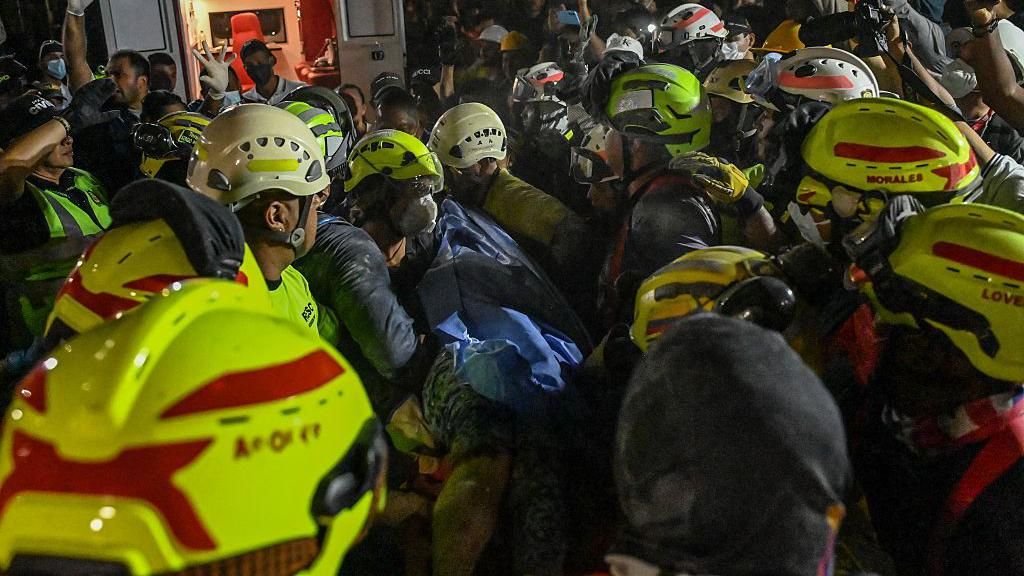
    A devastating scuba diving accident in the Maldives, one of the Indian Ocean’s most popular tropical tourist destinations, has left six people dead, marking the deadliest single diving incident in the nation’s modern history. Last Thursday, a group of five Italian divers entered the water at Vaavu Atoll, roughly 62 miles south of the capital city of Male, and never resurfaced as scheduled. Now, officials have confirmed to the BBC that a joint search team made up of elite Finnish and Maldivian rescue divers has located the remains of the four still-missing members of the group, trapped inside a narrow underwater cave 60 meters below the surface.

    The fifth Italian diver’s body was recovered just hours after the group failed to return to their boat on Thursday. But the tragedy deepened on Saturday, when a Maldivian military Staff Sergeant Mohamed Mahdhee, a rescue diver part of the eight-person search team, went missing during the operation. When Mahdhee failed to surface with his teammates, they immediately conducted an emergency search and found him unconscious, and he could not be revived.

    The recovered Italian victims include two researchers from the University of Genoa: marine science professor Monica Montefalcone, and research fellow Muriel Oddenino, who had traveled to the Maldives to conduct field work on how climate change is impacting coral reef biodiversity. Also killed were Montefalcone’s daughter, Giorgia Sommacal, a University of Genoa student, recent graduate Federico Gualtieri, and boat operations manager and lead diving instructor Gianluca Benedetti — the first victim whose body was retrieved after the accident.

    At the time of the dive, local authorities had issued a yellow weather warning for the area, noting rough sea conditions that posed heightened risks for small vessels and divers. Mohamed Hossain Shareef, a spokesperson for the Maldivian government, confirmed that the research team held a valid scientific permit, active through the end of that week, that allowed diving to a maximum depth of 50 meters across multiple atolls, including Vaavu. The permit specifically approved their work studying coral, but did not mention any plan to explore the nearby cave, whose opening sits 47 meters below the ocean surface.

    Irregularities have already emerged around the dive: only three of the five Italian divers were listed as research personnel on the permit, and Sommacal and Benedetti were not included in the approved mission. In a statement to the BBC, the University of Genoa clarified that it had never authorized any deep-sea diving activity as part of the team’s approved research mission. Officials at the university noted that any permit requests submitted to Maldivian authorities for the dive were made outside the bounds of the officially approved research mission, and that the fatal cave dive was undertaken by the group in a personal capacity, separate from their academic work. The university also expressed profound sorrow over the loss of life, extending its condolences to the families of all the deceased.

    Recovery operations are set to unfold over the coming days, Shareef confirmed. Two of the four trapped bodies are scheduled to be brought to the surface on Tuesday, with the remaining two to be recovered the following day. The four located remains are trapped in the third and furthest chamber of the cave, requiring specialized additional dives to extract them safely. An official investigation is currently ongoing to determine the full sequence of events and root causes that led to the accident.

  • Strike over high fuel prices paralyses transport in Kenya

    Strike over high fuel prices paralyses transport in Kenya

    A nationwide strike by Kenya’s public transport operators has brought major parts of the East African nation to a standstill, as thousands of commuters are left stranded and economic activity grinds to a halt over a record-breaking jump in fuel prices that has deepened an already severe cost-of-living crisis.

    The industrial action, organized by the country’s Transport Sector Alliance (TSA), was launched days after Kenya’s Energy and Petroleum Regulatory Authority (Epra) implemented a more than 20% increase in petroleum prices, pushing rates to all-time highs. As of last Thursday, diesel climbed to 242 Kenyan shillings ($1.80, £1.40) per liter, while petrol rose to $1.65 per liter.

    By Monday morning, key arterial roads in the capital Nairobi were nearly deserted. With nearly all public transit vehicles — including the ubiquitous local matatu minibuses — adhering to the shutdown, thousands of workers and students were forced to walk for miles to reach their destinations, while many businesses kept their doors closed and schools across affected regions advised students to stay home. Local television footage captured demonstrators barricading major thoroughfares and lighting bonfires to block vehicle access, with scattered reports of protesters harassing private motorists who defied the strike call. In multiple areas of Nairobi and other parts of the country, clashes broke out between security forces and demonstrators, with police deploying tear gas to disperse crowds. Ahead of the strike, law enforcement had already announced heightened security deployments and warned participants against engaging in disorderly conduct.

    The TSA, which coordinated the shutdown, extended the strike’s scope beyond transport operators, framing it as a collective action for all Kenyan households struggling with soaring living costs. In an official statement, the alliance said the industrial action was intended to pressure the government to reverse last week’s price hike and implement an overall 35% reduction in fuel costs. It accused the Kenyan government of failing to take meaningful action to protect ordinary citizens from the spiraling cost of fuel, which has already driven up prices for food, public transit fares, and nearly all other essential goods and services.

    The current fuel crisis stems from global supply chain disruptions tied to the US-Israel conflict with Iran that began in late February. Like many other sub-Saharan African nations, Kenya depends almost entirely on fuel imports from the Gulf region, a supply route thrown off balance by instability around the Strait of Hormuz — the strategic chokepoint through which roughly one-fifth of the world’s daily oil supplies pass. While a ceasefire has been agreed, the strait remains blocked, keeping global oil prices elevated and passing higher costs directly on to Kenyan consumers.

    Kenyan officials have acknowledged the hardship caused by the price increase, but rejected the strikers’ demands and condemned the industrial action. Treasury Cabinet Secretary John Mbadi told local NTV on Monday that the fuel price hike was “unfortunate” and acknowledged that it was weighing heavily on the national economy. However, he argued that the strike was “completely uncalled for”, noting that the price surge is a global issue that cannot be resolved with domestic disruptive action. “Why are we trying to solve a global problem using domestic means?” Mbadi asked.

    The government has already taken one limited step to ease fuel costs: last month, it cut value-added tax on fuel from 16% to 8%, a reduction that is set to remain in place until July. But critics and advocacy groups say the move has not gone far enough to offset the massive price increases that have pushed household budgets to breaking point across the country.