分类: world

  • Mali’s new turmoil tests Algerian bid to reclaim mediator role in the Sahel

    Mali’s new turmoil tests Algerian bid to reclaim mediator role in the Sahel

    The recent surge of large-scale armed attacks in northern Mali that has significantly weakened the ruling junta has reignited a long-standing debate across the Sahel: will Algeria, once the preeminent diplomatic mediator for the region, be able to reclaim its influential role – a possibility that many actors in Bamako openly question today.

    On April 25, a coordinated alliance of two powerful groups launched a surprise offensive against Malian military and government installations. The coalition brings together the Azawad Liberation Front (FLA), a Tuareg separatist movement fighting for independence for Mali’s northern Azawad region, and Jama’at Nusrat al-Islam wal-Muslimin (JNIM), an al-Qaeda-affiliated militant coalition. By the end of the assault, the alliance had seized strategic population centers including the key northern town of Kidal, captured multiple major army bases, imposed a de facto blockade on national capital Bamako, and killed Malian Defense Minister Sadio Camara. The attack marks the most severe threat to the junta that seized power in a 2020 coup since it took control of the country.

    Across the border in neighboring Algeria, the rapid upheaval in Mali has sparked a mix of urgent concern and cautious strategic expectation. For years, Algeria’s diplomatic clout in Mali has steadily eroded, but the new crisis has opened a window for Algiers to reassert its long-held role as a regional crisis manager.

    Algeria’s diplomatic legacy in Mali stretches back decades, with its most landmark achievement being the brokering of the 2015 Algiers Peace Agreement, a deal designed to address the long-simmering political and social grievances that fuel conflict in northern Mali. However, bilateral relations between Algiers and Bamako collapsed dramatically after the August 2020 military coup that ousted Mali’s democratically elected civilian government led by President Ibrahim Boubacar Keita. In 2024, Mali’s junta formally withdrew from the 2015 peace accord, and has repeatedly levied accusations that Algeria maintains improper clandestine ties with northern separatist and militant rebel groups.

    Algeria has consistently rejected these claims, arguing that its open contacts with a full range of Malian stakeholders are intended solely to keep diplomatic communication channels open and prevent further violent escalation of the conflict. For Algiers, reclaiming influence in Mali is not just a matter of regional diplomatic prestige – it is a critical national security priority. The two countries share a 1,370-kilometer undefended border, and Algiers views sustained stability in Mali as central to protecting its own territory from cross-border threats including militant insurgency, arms trafficking, and irregular migration. Algerian policymakers have long warned that any further collapse of control in northern Mali could spill over to destabilize Algeria’s own restive southern regions.

    Toufik Gouider, an Algerian international relations researcher and writer, explained to Middle East Eye that Algeria’s policy is rooted in a core strategic premise: “Mali’s security and stability are part of Algeria’s own security and stability.” Gouider added that Algeria considers preserving Mali’s territorial integrity to be a non-negotiable strategic interest, as fragmentation in the north would almost certainly create instability that spreads across the border.

    The April 2025 offensive has laid bare the persistent fragility of Mali’s security situation, even after more than a decade of sustained military operations against separatist and militant groups. Mali’s ongoing crisis first erupted in 2012, when a Tuareg separatist rebellion in the north was rapidly co-opted by al-Qaeda and Islamic State-linked militant groups to expand their influence, spiraling into a persistent civil war that has ebbed and flowed for 13 years.

    Since taking power in 2020, Mali’s junta has prioritized a purely military strategy to reassert full state control over the entire country. The recent successful rebel offensive has demonstrated that the core threat to state authority remains far from eliminated. “The latest events have reinforced the belief that military solutions alone are insufficient, and that lasting stability cannot be achieved without an inclusive political dialogue that takes into account local specificities and social balances in the region,” Algerian political analyst Sadek Amin told Middle East Eye.

    Amin added that abandoning the 2015 Algiers Agreement marked a retreat from the only existing political framework that, for all its flaws and implementation delays, offered a realistic path to preserving Mali’s territorial unity and stabilizing the broader Sahel region. The 2015 accord, signed in Algiers under United Nations oversight, remains Algeria’s most consequential diplomatic achievement in the Sahel. It established a framework for greater political decentralization in northern Mali, and the integration of former rebel fighters into national state institutions, in exchange for armed groups laying down their weapons. While full implementation of the deal stalled for years due to political disagreements on both sides, most diplomats and regional analysts continued to view it as the most comprehensive framework for addressing the root causes of Mali’s conflict.

    “The Algiers Agreement was the only framework that brought the Malian parties to the same table,” Malian journalist Omar al-Ansari told MEE, noting that Mali’s current junta deliberately undermined the accord by prioritizing a military-only approach to ending the conflict. Mali’s military authorities formally exited the agreement in January 2024, justifying the move by claiming the accord no longer aligned with the country’s modern sovereignty and security priorities.

    Bilateral tensions between the two neighbors escalated even further in early 2025, when Algerian air defense forces shot down a Malian military drone near the shared border. Algiers stated the drone had violated Algerian airspace, while Bamako called the incident a deliberate and serious act of escalation. In the wake of the incident, anti-Algeria protests erupted outside the Algerian embassy in Bamako, with demonstrators holding signs accusing Algeria of supporting terrorism.

    Following the April 2025 rebel offensive, Algerian Foreign Minister Ahmed Attaf reaffirmed his country’s long-held position, stating that Algeria remains “committed to the territorial integrity of Mali, the unity of its people and its institutions”, while restating Algiers’s “categorical rejection of all forms and manifestations of terrorism”. Despite this official public stance, Malian government officials and independent commentators continue to accuse Algeria of practicing a double standard: publicly endorsing Mali’s territorial unity while maintaining close ties to separatist and armed political actors in the north, including leaders of groups that have previously waged armed rebellion against the Bamako central government.

    Bamako argues that these covert contacts allow Algeria to gain unfair leverage over Malian domestic affairs, directly undermining any claim Algeria might have to being a neutral, trusted mediator. A senior Malian official, who spoke to MEE on condition of anonymity, said Algeria has “largely lost its credibility” with Mali’s current ruling authorities. The source added that Bamako views Algeria’s continued contacts with rebel groups and opposition figures as an attempt to preserve its own regional influence, rather than a good-faith neutral mediation effort, and acknowledged that Algiers’s policy is also driven by its own goal of securing its southern border.

    Malian journalist Ibrahim Toure confirmed that widespread anti-Algeria sentiment has taken hold among both officials and the public in Bamako, noting that the junta also believes several individuals wanted by Malian authorities on terrorism charges are residing openly in Algeria. “Algeria currently enjoys no credibility as a mediator, neither with the government nor with a large segment of Malian public opinion,” Toure told MEE.

    Algerian analysts have uniformly rejected allegations that Algiers is covertly aiding armed groups against the Malian junta. “These ties are not evidence of double standards, but rather a natural extension of cross-border social, cultural and historical links,” Amin explained, pointing in particular to the transnational Tuareg community, whose traditional lands span multiple countries across the Sahara. He added that maintaining open contacts with all local actors is “a necessity linked to protecting border stability and preventing the spread of chaos and extremist groups”. Gouider echoed this position, emphasizing that Algeria “supports Mali’s unity wholeheartedly”, and that its advocacy for greater representation of northern communities is aimed at securing their full political and institutional inclusion in the Malian state.

    Since the 2020 coup, Mali has completely overhauled its international security partnerships, ending long-standing military cooperation with former colonial ruler France and United Nations peacekeeping forces, while rapidly deepening security ties with Russia, which has become the junta’s primary external military backer. Russia’s presence in Mali is led by the Africa Corps, a state-run paramilitary organization that replaced the Wagner Group after the death of its leader Yevgeny Prigozhin.

    Agence France-Presse reported last month that Algeria may already have played a quiet, off-the-record mediating role during the recent fighting around Kidal, helping to negotiate a safe corridor that allowed Russian forces to withdraw from the embattled town. According to Gouider, Mali’s deepening strategic partnership with Moscow has narrowed Algeria’s room for diplomatic maneuver, but it has not erased the country’s long-standing traditional role as a regional crisis manager, thanks to Algiers’s decades of on-the-ground experience addressing conflict in the Sahel.

    Gouider added that Algeria has taken active diplomatic steps in recent months to counter regional alignments that Algiers views as attempts to marginalize its influence in the Sahel. Most notably, he pointed to the Alliance of Sahel States, a bloc formed in September 2023 by Mali, Niger, and Burkina Faso to coordinate political and security policy outside of traditional West African regional frameworks. Gouider said Algeria has launched diplomatic outreach to reopen communication channels with multiple regional capitals, to prevent this new bloc from evolving into a political axis hostile to Algeria’s interests or one that would exclude Algeria from its historic role managing Sahel crises. These efforts, Gouider argued, have allowed Algeria to preserve its status as a key regional actor despite ongoing high tensions with Bamako.

    Even amid widespread distrust in Mali, many regional observers acknowledge that Algiers still retains significant diplomatic and historical capital in the Malian conflict, thanks to its long-standing ties with all armed and political stakeholders across the Sahel. Ansari, the Malian journalist, argued that Algeria “remains the regional actor best placed to play a mediating role in Mali”, citing Algiers’s unmatched depth of understanding of local political and social dynamics.

    At its core, however, the question facing Algeria and the Sahel today is no longer whether Algeria can retain influence in Mali – it is whether the ruling junta in Bamako is willing to accept Algerian influence and mediation once again. The anonymous senior Malian official told MEE that for Algeria to resume any meaningful mediating role, Algiers must first adapt to the new political reality in Bamako and work to rebuild shattered bilateral trust. “Any meaningful mediating role will depend on Algiers’s ability to adapt to the new realities in Bamako and rebuild trust,” the official said.

  • Next power move in China’s SE Asia strategy is nuclear

    Next power move in China’s SE Asia strategy is nuclear

    Across Southeast Asia, a quiet but transformative shift is underway: nations across the region are reembracing nuclear power as a core component of their long-term development strategies, and China has positioned itself at the center of this emerging energy landscape, turning its growing nuclear industrial capacity into a pivotal tool of geopolitical influence.

    A decade ago, large-scale nuclear development across Southeast Asia was widely seen as politically unfeasible. Today, however, the urgent pressures of climate action, rapid industrial growth, expanding artificial intelligence infrastructure, and soaring domestic electricity demand have pushed governments to prioritize low-carbon baseload power, moving nuclear energy from a marginal option to a central policy priority. The regional shift is already visible in concrete planning: Vietnam signed a construction agreement with Russia for the Ninh Thuan 1 nuclear power plant in March 2026; the Philippines and Indonesia have set targets to operationalize their first commercial reactors by the early 2030s; and Malaysia, Thailand, and Singapore are actively evaluating small modular reactor technologies for future energy development.

    While established nuclear exporters including France, Russia, South Korea, and the United States remain active in the region, Beijing has emerged as the most consequential long-term partner for Southeast Asian nations, backed by unmatched advantages in financing, industrial scale, and state-backed delivery capacity that few competitors can replicate. Unlike traditional infrastructure projects, nuclear partnerships are not short-term commercial transactions: they are strategic commitments that span more than 50 years, shaping everything from a nation’s long-term fuel dependency and industrial regulatory standards to its broader geopolitical alignment.

    China’s rise as a global nuclear export leader is the product of decades of deliberate industrial investment and technological accumulation. As of 2026, China operates 61 commercial nuclear reactors with an additional 36 under construction, giving it the world’s third-largest operating reactor fleet while leading global nuclear construction activity. Unlike many Western nuclear industries that stagnated in the post-Cold War era, China sustained consistent investment across reactor engineering, domestic manufacturing, and workforce development, allowing it to localize approximately 90% of all reactor component production within its borders.

    This deep domestic localization has cut supply chain risks, reduced manufacturing costs, and enabled Chinese nuclear firms to offer fully integrated turnkey packages that cover every stage of a project: engineering, procurement, construction, financing, workforce training, and long-term fuel supply. Rather than exporting standalone reactors, China effectively exports complete, self-sustaining nuclear ecosystems. The flagship of this export strategy is the Hualong One (HPR1000), a third-generation pressurized-water reactor co-developed by China’s two top nuclear operators, China National Nuclear Corporation and China General Nuclear Power Group. With more than 40 units already operational or under construction globally, the Hualong One has become one of the world’s most widely deployed modern reactor designs, featuring advanced safety systems and a 1,100 megawatt generation capacity per unit, enough to power roughly one million households. For developing economies grappling with persistent electricity deficits and rapid industrial expansion, this combination of cost, capacity, and fully integrated service is uniquely compelling.

    Beyond comprehensive offerings, China’s appeal to Southeast Asian nations stems from its ability to deliver projects quickly and affordably. Western nuclear projects are frequently plagued by costly overruns and multi-year delays, while Russia faces growing international geopolitical constraints that limit its export reach, and South Korea lacks the large-scale financing capacity China can offer through its state-led development model. Beijing has already set an ambitious target of exporting 30 reactors to Belt and Road Initiative partner countries by 2030, an initiative valued at an estimated 1 trillion yuan (US$145 billion). Chinese nuclear cooperation already spans multiple continents, with active projects and agreements in Pakistan, Argentina, Kenya, Kazakhstan, and Saudi Arabia, demonstrating the global scale of its export push. For Southeast Asian governments working against tight development timelines to meet growing energy demand, this reliable, fast-tracked model is a major advantage.

    Yet the opportunities presented by Chinese nuclear technology come with unavoidable strategic risks that regional governments cannot dismiss. Nuclear infrastructure creates unusually deep, long-term dependencies for recipient nations: reactor lifespans regularly exceed 40 years, and fuel supply, technical upgrades, and spent fuel management remain tied to the original vendor for decades. This structural dependency is amplified by the limited number of countries that possess industrial-scale uranium enrichment capacity. While Russia currently dominates global low-enriched uranium supplies, China is rapidly expanding its own domestic fuel cycle infrastructure to support its growing export business, meaning future recipient nations could become dependent on Beijing not just for construction, but for long-term fuel access and consistent operational capacity.

    Technology lock-in may prove even more impactful than fuel dependency over time. Unlike traditional infrastructure such as ports or industrial parks, integrated nuclear ecosystems are extremely difficult to restructure or replace once technological and institutional dependency becomes embedded over decades. Maintenance systems, engineering standards, and regulatory frameworks remain aligned with the original supplier, gradually shaping a nation’s long-term industrial priorities and geopolitical orientation. In effect, China exports far more than power generation infrastructure: it exports sustained, long-term strategic influence.

    This does not inherently imply malicious intent; all major nuclear exporters create similar structural dependencies through their supply relationships. But what makes China’s position unique is its combination of reactor exports, Belt and Road infrastructure financing, cross-border industrial integration, and broader geopolitical outreach, making the long-term strategic implications far more significant for regional states. For Southeast Asian nations seeking to maintain strategic autonomy amid intensifying US-China great power competition, this dynamic creates a difficult balancing act. Washington already views competition over critical infrastructure in maritime Southeast Asia through a strategic lens, as Chinese-backed energy, port, and digital projects expand across the region. Chinese nuclear diplomacy could therefore become a new front in broader Indo-Pacific competition over influence, technological standards, and long-term regional alignment.

    In response, most ASEAN governments are expected to pursue a hedging strategy rather than aligning exclusively with any single nuclear supplier. Maritime Southeast Asian nations such as Indonesia and the Philippines are likely to pursue diversified technology partnerships with multiple exporters, while mainland Southeast Asian economies may become more deeply integrated into Chinese nuclear industrial and financing ecosystems. This divergence could eventually lead to competing nuclear technological ecosystems across the region, where infrastructure standards and fuel supply arrangements reflect broader geopolitical blocs, adding a new layer of fragmentation to ongoing Indo-Pacific great power competition.

    China is also investing heavily in next-generation nuclear technology, most notably thorium molten-salt reactors. In June 2024, China’s Wuwei Thorium Molten Salt Reactor reached full operational capacity, marking a key milestone in the commercial development of this advanced reactor technology. While thorium is promoted as a safer and more sustainable alternative to conventional uranium-based nuclear power, its long-term geopolitical impact may be far more significant than its technical benefits. If China becomes the first major exporter of commercially viable thorium reactors, it could secure substantial influence over global nuclear technology standards across much of the developing world.

    It is important to note that framing Southeast Asian nations as passive recipients of Chinese influence oversimplifies the complex regional dynamic. Many regional governments are pursuing nuclear partnerships with China specifically to accelerate domestic technological learning and build domestic industrial capacity. Thailand offers a clear example of this approach: in 2015, Thai utility Ratchaburi Electricity Generating Holding acquired a 10% stake in two Hualong One reactors at China’s Fangchenggang nuclear site in Guangxi province, while Chinese institutions trained a new generation of Thai nuclear engineering professionals. This early cooperation laid the groundwork for a 2025 bilateral memorandum on peaceful nuclear energy cooperation between Beijing and Bangkok. Notably, China itself followed a similar developmental path: its modern nuclear industry was built through technological absorption from Canadian, French, Russian, and American designs before it eventually developed fully indigenous reactor technology with domestic intellectual property rights. Many Southeast Asian states now hope to replicate this model, leveraging initial foreign partnerships to gradually build their own domestic expertise, regulatory capacity, and industrial capability.

    The core challenge for regional governments will be maintaining strategic diversification. If nations become overly dependent on any single supplier—whether China, Russia, or Western vendors—their long-term strategic flexibility could be significantly eroded over time. Today, Southeast Asia’s nuclear revival is no longer solely a story about decarbonization and meeting rising electricity demand. It is increasingly tied to regional industrial competitiveness, technological sovereignty, expanding AI infrastructure, and geopolitical positioning. For China, successful expansion of nuclear exports strengthens its global industrial reach, extends its geopolitical influence, and reinforces its image as a leading provider of advanced technological solutions for developing economies. For Southeast Asian governments, Chinese nuclear cooperation delivers access to financing, rapid project deployment, and industrial learning opportunities that few other exporters can currently match. Ultimately, the actors that come to dominate Southeast Asia’s future nuclear infrastructure will likely shape the balance of technological and geopolitical influence across the Indo-Pacific for the rest of the 21st century.

  • Iran condemns US strikes as ‘gross violation’ of ceasefire

    Iran condemns US strikes as ‘gross violation’ of ceasefire

    Weeks after a fragile truce halted large-scale conflict between Iran and the United States, a new round of US air strikes near the strategic Strait of Hormuz has thrown ongoing peace negotiations into uncertainty, with Tehran condemning the attack as a blatant breach of the ceasefire agreement.

    The US Central Command (Centcom) confirmed the Monday strikes in southern Iran, framing the operation as necessary self-defense targeting Iranian missile installations and boats suspected of preparing to lay mines. While Centcom did not release exact location details, an unnamed official speaking to The New York Times confirmed the targets were located in the vicinity of Bandar Abbas, Iran’s key southern port city that hosts a major naval base along the Strait of Hormuz. Local Iranian officials initially reported hearing large explosions in the area and launched an immediate investigation into the incident.

    In an official statement following the strikes, Iran’s foreign ministry labeled the US action an “aggressive and unjustified” gross violation of the ceasefire that took effect on April 8. The ministry held Washington fully accountable for any consequences stemming from the operation in Hormozgan province, the coastal region that borders the world’s most critical energy chokepoint. Iran has blocked shipping through the strait since the conflict began, a move that triggered a sharp spike in global energy prices. “Without a doubt, the Islamic Republic of Iran will not leave any evil unanswered and will not hesitate to defend the Iranian nation,” the statement added. In a subsequent development, Iran’s Islamic Revolutionary Guard Corps (IRGC) claimed it had shot down an American drone and opened fire on a US fighter jet that entered Iranian airspace, though the group did not provide a timeline for the encounter.

    The conflict dates back to February 28, when the United States and Israel launched a wave of deadly opening attacks against Iran, including an operation that killed Iran’s supreme leader. After three weeks of intense fighting, the two sides reached a ceasefire agreement that has held largely intact for over a month, with only one major clash recorded earlier in May. The strikes come at a critical juncture, as diplomatic negotiators have been holding multi-party talks aimed at extending the existing truce and eventually reaching a permanent end to the open conflict.

    Details of the proposed preliminary deal have emerged in recent days: rather than a full permanent settlement, the parties are negotiating a memorandum of understanding that would include a 60-day extension of the ceasefire, the reopening of the Strait of Hormuz to commercial shipping, and a framework for future negotiations on Iran’s controversial nuclear program. The core sticking point in the talks remains Tehran’s demand for the release of billions of dollars in Iranian assets that have been frozen by foreign governments. Additional points of contention center on the future of Iran’s stockpile of highly enriched uranium, which the US, Israel and Western nations claim is intended for nuclear weapons development – an assertion Iran has repeatedly denied, maintaining its nuclear program is exclusively for peaceful energy and medical purposes.

    US leadership has sent mixed signals on the status of negotiations in recent days. Over the weekend, former President Donald Trump first indicated a deal was close at hand, then reversed course saying he had instructed American negotiators to avoid rushing into an agreement. Secretary of State Marco Rubio has clarified that a final agreement remains achievable, but will require several more days of negotiations. On Monday, Iranian officials acknowledged that some incremental progress has been made, but added that a finalized deal is not imminent.

    The majority of peace negotiations to date have been mediated by Pakistan, but this week Iranian negotiators shifted to talks facilitated by Qatari mediators in Doha. A source briefed on the Doha talks confirmed to Reuters that Iran’s central bank governor joined Monday’s negotiating session to lead discussions on the issue of frozen assets, with talks also focusing heavily on the status of Iran’s uranium program and the future of the Strait of Hormuz. At this stage, it remains unclear how the Monday strikes will impact the trajectory of the diplomatic process, leaving regional stability and global energy markets in a state of heightened uncertainty.

  • Rights group accuses UAE of being transit point for mercenaries on way to Sudan

    Rights group accuses UAE of being transit point for mercenaries on way to Sudan

    Two years into Sudan’s devastating civil war, a damning new investigation from global human rights watchdog Human Rights Watch (HRW) has uncovered an elaborate cross-border network that recruited Colombian former soldiers to fight alongside the Rapid Support Forces (RSF), the paramilitary group accused of widespread war crimes across the conflict-torn nation. The report directly ties the recruitment operation to a company based in the United Arab Emirates, with mercenaries transiting and training at official UAE military facilities before being deployed to frontline combat zones where mass atrocities have been documented.

    Sudan’s conflict ignited on April 15, 2023, when long-simmering tensions between the RSF, led by Gen Mohamed Hamdan Dagalo, and the country’s official national army boiled over into open armed conflict. Since fighting began, UN and independent estimates place the death toll at more than 150,000 people, with over 12.9 million Sudanese displaced from their homes—millions of whom have fled across international borders into neighboring countries such as Chad to escape the violence. The RSF has seized control of large swathes of western Sudan’s Darfur region and made major territorial gains in other parts of the country, including the key city of el-Fasher, which fell to RSF forces last year amid reports of systemic mass killing.

    HRW’s investigation, carried out between March and September 2025, drew on first-hand interviews with multiple Colombian mercenaries who participated in the deployment, alongside forensic analysis of social media content, videos, and photos to verify travel routes, locations, and military equipment. The findings align with earlier research published last month by independent security analysis firm Conflict Insights Group, which first flagged the presence of Colombian mercenaries in RSF-controlled Darfur.

    According to mercenary testimonies collected by HRW, the recruitment network targeted retired Colombian army personnel with deceptive job advertisements offering work as drone pilots in Africa. Once recruited, fighters traveled through a string of transit airports across the UAE, Libya, Chad, and Somalia, before heading to Darfur frontlines. Multiple mercenaries described off-the-books travel through Abu Dhabi, with no entry stamps placed in their passports, before being transferred directly to UAE military bases for training. “They didn’t stamp our passports,” one unnamed mercenary told HRW. “We went in and went out and there was a bus waiting for us to take us to a military base.”

    The report confirms that recruits received tactical and technical training at two UAE military facilities in Ghiyathi and Al Wathba, run by the Abu Dhabi-based firm that organized the operation. Once deployed to Sudan, the Colombian contractors filled a range of combat roles for the RSF, serving as infantry troops, artillery operators, drone pilots, vehicle crew, and combat instructors for RSF fighters. Crucially, HRW has documented multiple eyewitness accounts placing Colombian mercenaries in el-Fasher during the mass killings that followed the RSF’s capture of the city in 2025. The UN Human Rights Office has confirmed that more than 6,000 civilians were killed in just the first three days of the RSF’s offensive on the city.

    Six el-Fasher residents interviewed by HRW in late 2025 confirmed they observed men they believed to be Colombians operating alongside RSF fighters during the October 2025 mass killings. One survivor detained by RSF forces told investigators he saw foreign fighters standing by silently as RSF fighters opened fire on unarmed civilian crowds. Another witness reported seeing white fighters alongside RSF militants who killed three civilians, noting: “They were there when the executions happened, but they didn’t execute.” After international outcry over the el-Fasher atrocities, RSF leader Dagalo announced a domestic investigation into alleged violations by his fighters, but no independent accountability has been delivered to date.

    HRW investigators also recovered unused UAE armed forces munitions from locations where Colombian mercenaries were captured inside Sudan. While the weapons were originally manufactured in Serbia and Bulgaria, HRW confirmed they had been purchased by the UAE prior to being diverted to RSF forces in Sudan.

    The UAE has repeatedly and forcefully denied all allegations of state backing for the RSF or enabling mercenary recruitment through its territory. In an official statement to the BBC, the UAE’s Ministry of Foreign Affairs said: “The UAE does not permit its territory to be used for the recruitment, training, financing or transit of foreign fighters to any conflict, including Sudan.” The government added that relevant Emirati authorities have opened investigations into all public claims of involvement by Emirati-based entities, noting that any unauthorised support for armed non-state groups violates UAE law and would result in criminal prosecution. The UAE also reaffirmed its public commitment to facilitating a lasting ceasefire in Sudan and supporting an inclusive transition to a civilian-led government to end the country’s suffering.

    International action on the issue has already begun: in December 2025, the United States imposed targeted sanctions on a network of Colombian individuals and entities that US authorities confirmed were recruiting and training former Colombian soldiers to deploy to Sudan. HRW is now calling on the United Nations, African Union, and the governments of the US and UK to publicly condemn the alleged UAE role in the conflict and hold all actors accountable for facilitating atrocities in Sudan. Colombian President Gustavo Petro has previously condemned the cross-border mercenary trade, calling Colombian fighters deployed to foreign conflicts “spectres of death” and describing their recruitment as a “form of human trafficking”.

  • Russia ramps up threats against Ukraine. What does that say about the war?

    Russia ramps up threats against Ukraine. What does that say about the war?

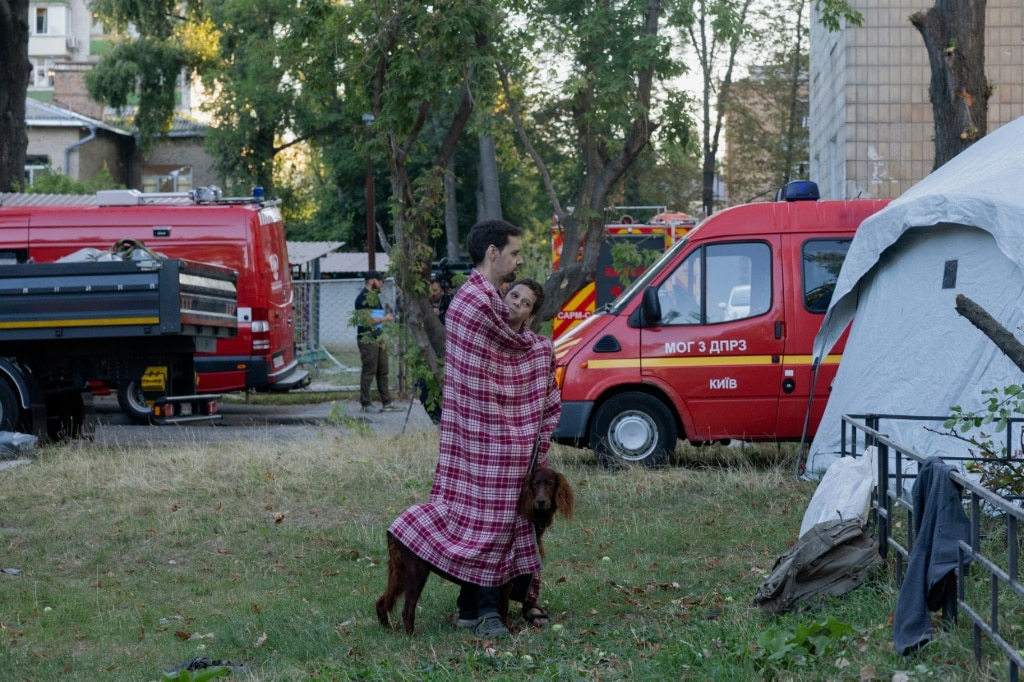
    Over the weekend, the Russian military launched one of its largest recent bombardment campaigns against Ukraine’s capital Kyiv, following the attack with explicit new threats of consistent, systematic targeting of Ukrainian military infrastructure in the city. Alongside its warnings of intensified strikes, Moscow has urged foreign nationals and diplomatic personnel to evacuate Kyiv immediately, stoking fears of a dramatic escalation in the four-year full-scale invasion that has reshaped eastern Europe’s security landscape.

    On the surface, these threats carry an ominous tone that has prompted global observers to question whether a new phase of open conflict is imminent. But as Ukrainian officials point out, the reality on the ground holds much that is familiar: for more than four years, Russian forces have targeted Ukrainian population centers and infrastructure on a weekly basis, and Kyiv has faced regular bombardments since the full-scale invasion began in February 2022. Ukraine’s foreign ministry has assessed that the overall level of security threat to Kyiv and other Ukrainian cities remains unchanged from what it has been over the past months and years.

    What is new, however, is the explicit framing Moscow has given to its planned strikes, a shift tied directly to a recent incident in the Russian-occupied Luhansk region. Last week, Moscow accused Ukrainian forces of deliberately carrying out a lethal strike that killed 21 civilians in the town of Starobilsk, framing the attack as an intentional massacre of students. Ukraine has rejected that claim, asserting it only targeted a legitimate Russian military facility in the occupied territory. For the first time in recent months, the Kremlin is holding up the alleged civilian casualty event as formal justification for large-scale retaliation against Kyiv – a departure from its usual pattern of launching strikes without extensive public justification, and a contrast to its longstanding lack of public remorse for civilian casualties caused by its own military operations across Ukraine.

    Analysts and Ukrainian officials have offered multiple interpretations of what is driving this new rhetorical escalation. Ivan Stupak, a military analyst and former Ukrainian intelligence officer, argues that the shift in messaging reflects growing problems with Russian domestic narrative control. “When you have problems with the economy and Russian society, then there’s pressure for revenge,” he explained.

    Andrii Kovalenko, a member of Ukraine’s National Security and Defence Council, outlined three additional factors unrelated to the Starobilsk incident that he believes explain the new threats. First, he argues, the heightened rhetoric stems directly from Russia’s persistent lack of strategic progress on the front lines. With no major territorial gains to show for months of fighting, the Kremlin is turning to psychological pressure to break Ukrainian public morale. Second, the warning to foreign diplomats to leave Kyiv is a deliberate attempt to pressure Ukraine’s Western allies, whose continued political and military support Moscow has long identified as a core barrier to achieving its war aims. Third, Kovalenko says the threats serve as a deliberate distraction from Ukraine’s growing ability to carry out long-range strikes on Russian territory and its incremental progress reclaiming occupied Ukrainian land.

    These assessments align with broader analysis from international defense and security research institutes. The Washington-based Institute for the Study of War has concluded that the trajectory of the war, now entering its fifth year, is currently shifting in favor of Ukrainian forces. Russia is losing far more soldiers than it is able to recruit each month, with casualty numbers outpacing monthly recruitment for five consecutive months, as Russian command continues to throw troops into costly offensives that yield minimal territorial gains.

    Nigel Gould-Davies, a senior fellow at the International Institute of Strategic Studies, notes that these battlefield losses have left the Kremlin facing a fateful choice. As Russia confronts growing constraints on both its military industrial output and available manpower, it will soon have to decide whether to order a forced mobilization of the country’s economy and society to sustain the war effort. Forcing mass conscription and economic restructuring, Gould-Davies warns, would be deeply disruptive and extremely unpopular among the Russian public, carrying significant risks to the Kremlin’s domestic stability.

    Despite these signs of growing Russian weakness, the immediate threat to Kyiv remains acute. The capital is still clearing damage from the large-scale weekend retaliatory strike that saw Russia launch nearly 600 drones and 90 missiles, the vast majority aimed at Kyiv. While Ukrainian air defenses intercepted most of the drones, 35 missiles successfully struck targets. In a notable display of new weapons deployment, Russia used at least one of its new Oreshnik hypersonic missiles, a system fitted with six independent warheads that is extremely difficult for conventional air defense systems to intercept. Stupak argues that the deployment of the new missile so far has been primarily for propaganda purposes, noting that Russian Oreshnik tests over Ukraine have so far used inert warheads and caused limited damage.

    Still, Kyiv faces growing challenges in defending against repeated large-scale Russian strikes. Ukrainian officials have repeatedly warned that critical air defense interceptor missiles are in dangerously short supply, and US-made Patriot systems – the only weapon currently in Ukraine’s arsenal proven effective at intercepting Russian ballistic missiles – remain far less numerous than needed. Ukrainian President Volodymyr Zelensky has recently renewed urgent appeals to Western allies to deliver additional air defense systems and interceptor missiles to shore up Kyiv’s defenses.

    While analysts agree that the Kremlin’s escalating threats stem in large part from growing desperation over the course of the war, that desperation does not make the threat to Ukraine any less severe. For Kyiv and its international backers, Russia’s worsening position on the battlefield may only make the coming months more dangerous.

  • Pilgrims pray on Mount Arafat as hajj reaches peak

    Pilgrims pray on Mount Arafat as hajj reaches peak

    On Tuesday, millions of Muslim worshippers from across the globe gathered on Saudi Arabia’s Mount Arafat to mark the sacred climax of the annual hajj pilgrimage, turning the rocky desert hill near Mecca into a sea of faith as they fulfilled one of Islam’s most fundamental obligations, even as regional conflict and record-breaking heat created unprecedented challenges for organizers and pilgrims alike.

    This year’s gathering drew more than 1.5 million total participants, a figure that reflects strong international turnout despite ongoing armed conflict in the Middle East sparked by recent US-Israeli strikes on Iran. In response to those attacks, Tehran launched retaliatory drone and ballistic missile strikes targeting key infrastructure and energy facilities across the Gulf region, including sites within Saudi Arabia, creating widespread uncertainty that impacted travel plans for many Iranian pilgrims. Official data shows just over 30,000 Iranians have completed the journey this year, equal to roughly one-third of the 86,000 pilgrims the country originally expected to send. Iran’s state-run IRNA news agency confirmed that the reduced numbers are a direct result of the ongoing wartime situation. Even amid this regional unrest, Saudi officials noted over the weekend that overall international participation this year still exceeds the total recorded in 2024.

    From the first break of dawn, worshippers clad in the traditional seamless white ihram garments gathered on the 70-meter hill, which holds profound religious significance: it is the site where the Prophet Muhammad is believed to have delivered his final farewell sermon more than 1,400 years ago, outlining the core principles of the Islamic faith. Pilgrims recited verses from the Quran and offered personal prayers, enduring searing desert temperatures that reached as high as 44 degrees Celsius in Mecca over recent days. For many, the moment marked the fulfillment of a lifelong spiritual goal.

    “It is an indescribable feeling,” shared Ahmed Abu al-Ezz, a 35-year-old Egyptian engineer making his first hajj journey as he approached the hill. “This is something I have dreamed of my entire life, and to be here now is beyond words.”

    To support the massive crowd of pilgrims traveling to the site, volunteer teams distributed free bottled water, portable parasols, and pre-prepared food packages, while security and medical support helicopters regularly patrolled the airspace above the gathering to monitor conditions and respond to emergencies.

    Hajj is one of the five central pillars of Islam, a religious obligation that every physically and financially able Muslim must complete at least once in their lifetime. This year’s gathering presented unique heat-related challenges, amplified by human-caused climate change, which scientists confirm is increasing the frequency and intensity of extreme heatwaves across the globe. Unlike female pilgrims, male worshippers are prohibited from wearing head coverings during hajj rituals, forcing many to rely on portable umbrellas to block the blistering midday sun.

    Saudi authorities have implemented sweeping heat safety reforms since the 2024 hajj, when temperatures soaring above 50 degrees Celsius contributed to the deaths of more than 1,300 pilgrims. Upgrades for 2025 include expanded shaded walkways and gathering areas, as well as the deployment of thousands of additional trained medical personnel. The Saudi Ministry of Health confirmed it has mobilized more than 50,000 healthcare workers and 3,000 ambulances across the pilgrimage route to treat heat exhaustion and other medical emergencies.

    Following the day of prayer on Mount Arafat, pilgrims will travel to the nearby plain of Muzdalifah to spend the night in open air, collecting small pebbles that will be used for the symbolic “stoning of the devil” ritual in the valley of Mina, which is scheduled to begin on Wednesday. The full sequence of hajj rituals typically takes five days or more to complete, tracing the exact path Prophet Muhammad took during his final pilgrimage in 632 CE.

    For the Al Saud royal family, which rules Saudi Arabia and holds the ceremonial title of “Custodian of the Two Holy Mosques” (referring to the sacred sites in Mecca and Medina), successful organization of the annual hajj has long been a core source of domestic and international political legitimacy.

  • Trump approves emergency declaration over California chemical leak

    Trump approves emergency declaration over California chemical leak

    On May 23, 2026, a dangerous chemical incident at a GKN Aerospace facility in Garden Grove, Southern California, triggered widespread disruption that displaced nearly 50,000 Orange County residents just days before U.S. President Donald Trump greenlit a federal emergency declaration to boost response efforts. The unfolding crisis, which began when a 34,000-gallon storage tank holding highly flammable methyl methacrylate — an industrial chemical key to acrylic plastic manufacturing — began overheating and releasing toxic vapor, prompted immediate mandatory evacuation orders across six local communities: Garden Grove, Anaheim, Buena Park, Cypress, Stanton and Westminster.

  • Tea, opera and friendship brew cultural connections in Los Angeles

    Tea, opera and friendship brew cultural connections in Los Angeles

    On the occasion of International Tea Day, the Chinese Consulate General in Los Angeles opened its doors to a diverse cross-section of attendees—from government officials and cultural creators to academics and local residents—for an immersive celebration that wove together traditional Chinese tea art, performing arts and grassroots dialogue, with the goal of strengthening mutual understanding between the Chinese and American peoples.

    One of the event’s standout guests was Ghaffar Pourazar, a performer widely known by his affectionate nickname the “Western Monkey King”. Born to Azerbaijani-Iranian parents and raised in the United Kingdom, Pourazar once built a career as a computer animator in London. That all changed in 1993, when the then 32-year-old saw a Peking Opera performance for the first time, and made the life-altering decision to pivot entirely to the study and performance of the traditional Chinese art form.

    “I put away my other life. I said goodbye to my friends and my family. I said I want to do this,” Pourazar shared during the celebration, after performing a stirring excerpt from *Uproar in Heaven*, the classic Peking Opera retelling of *Journey to the West*. For Pourazar, the iconic Monkey King character is far more than a stage role: it mirrors his own decades-long journey of chasing a cross-cultural passion. “The monkey follows the dream, and that’s why I love this character, but also that is why Chinese people love this character,” he explained.

    Over decades of dedicated practice, Pourazar has become a leading cross-cultural ambassador for Peking Opera, drawn to the art form’s one-of-a-kind fusion of martial arts philosophy, acrobatics, vocal performance and dramatic storytelling. “For hundreds of years, Chinese culture has brought the philosophy of martial arts like tai chi together with opera action,” he noted. “The actors are not only able to sing and dance, but they’re also martial acrobats.” Today, his deep bond with Chinese culture is a core part of his personal identity: “I am Azerbaijani, Iranian, British, I was raised in England, but I feel more Chinese than others,” he said.

    Beyond performances, the event centered tea—an iconic Chinese cultural export that organizers framed as both a symbol of shared history and a practical platform for people-to-people dialogue. In his opening remarks, Guo Shaochun, Chinese Consul General in Los Angeles, emphasized tea’s unique role as a bridge between cultures, and expressed hope that the event would help more Americans gain nuanced insight into Chinese culture and the Chinese people’s shared aspirations for a better life.

    Attendees had the chance to sample a range of Chinese teas, including aged Pu’er from Yunnan province, a region celebrated for its centuries-old tea cultivation traditions and diverse ethnic cultural heritage. Guo highlighted that just as Chinese people have long cherished tea and American people favor coffee, the two nations each hold distinct cultural traditions, lifestyles and values. Rather than creating division, he argued, these differences should be celebrated as a source of mutual enrichment.

    “The people of China and the United States are both great peoples,” Guo said. “It is these differences that make our world rich and colorful, and inspire us to better understand and appreciate one another.” He also referenced the recent high-level meeting between Chinese President Xi Jinping and US President Donald Trump during Trump’s state visit to China, noting that both leaders had reaffirmed their commitment to building a constructive China-US relationship rooted in strategic stability.

    Leticia Perez, a member of California’s Kern County Board of Supervisors, reaffirmed her support for continued people-to-people and economic collaboration between the two nations. “I’m a big fan of Chinese culture,” Perez said. “I want to reaffirm my own commitment to be part of the ongoing conversation of peace building and mutually beneficial economic cooperation between the United States and China.” She also praised China’s consistent call for peace and cooperation amid rising global geopolitical tensions.

    The full day of cultural programming included additional performances of traditional Chinese folk songs and instrumental pieces played on the pipa and bamboo flute, alongside hands-on demonstrations of Chinese calligraphy and traditional dough figurine folk art. Senior tea master and Chinese tea culture ambassador Luo Ping guided attendees through a formal traditional tea ceremony, walking guests through the classification of Chinese teas and explaining their deep cultural roots and documented health benefits.

    For many American attendees, the event offered a rare, intimate opportunity to engage with Chinese culture beyond mainstream media narratives. Joshua Goldhaber, vice-dean of graduate research education at Cedars-Sinai Health Sciences University, said he left with a new appreciation for tea’s cultural meaning and the shared values of friendship and cooperation between the two countries. “It was a very warm feeling,” Goldhaber said. “I look forward to more opportunities to immerse in Chinese culture and educational exchange.”

    Douglas Smith, a visual effects supervisor with experience working on both Hollywood and Chinese film productions, echoed that optimism for future cross-cultural and creative collaboration. “Communication between countries is always the best thing that can happen,” Smith said. “Misunderstandings happen with the lack of communication, so whenever that can happen, it’s a very positive thing.”

  • Exceptionally early heat wave shatters records and brings deaths in Europe

    Exceptionally early heat wave shatters records and brings deaths in Europe

    An extraordinary early-season heatwave is sweeping across large swathes of Western Europe, breaking long-standing temperature benchmarks, forcing emergency responders into action, and leaving multiple people dead amid widespread government warnings of life-threatening risks. The extreme heat, which has arrived far earlier than typical seasonal peaks, has put both communities and infrastructure under unaccustomed strain, as climate experts link the off-season extreme weather to accelerating global warming.

    In the United Kingdom, the unprecedented heat delivered the hottest May day in the nation’s recorded history on Monday, with thermometers reaching 34.8°C (94.6°F) at London’s Kew Gardens. This reading obliterated the previous 91-year-old record of 32.8°C (91.4°F), which had stood shared since 1922 and 1944. The extreme conditions extended overnight, with London logging a rare “tropical night” where temperatures never dropped below 20°C (68°F), offering no reprieve from the swelter. Forecasters with the UK Met Office projected temperatures in southern England could climb as high as 35°C (95°F) on Tuesday.

    The brutal heat has already resulted in fatalities across the UK. Police confirmed a 13-year-old boy died Monday after getting into distress while swimming in a reservoir near Halifax, in northern England. In the Scottish capital of Edinburgh, firefighters worked around the clock to contain a large out-of-control grass fire that broke out on Arthur’s Seat, the iconic rocky hill that overlooks the city, sending large plumes of dark smoke billowing over the urban area.

    For London commuters returning to work after a three-day holiday weekend that drew crowds to beaches, parks and public pools, Tuesday brought fresh misery. Many underground carriages lack air conditioning, leaving rush-hour passengers sweltering in the stagnant heat. Train service to and from the busy Waterloo Station was further disrupted by a smoke incident on the tracks.

    UK health officials have activated an amber health alert covering most of the country through Wednesday morning, warning of elevated health risks, particularly for vulnerable groups including elderly people who are more susceptible to heat stroke and dehydration. Unlike warmer-climate nations, the UK’s historically mild temperatures mean most residential homes, schools and commercial buildings are not equipped with air conditioning, leaving millions without a reliable way to cool down. The early arrival of the extreme heat has also heightened water safety risks: the annual summer lifeguard patrol schedule at popular coastal swimming spots has not yet begun, leaving unguarded waters more dangerous for thrill-seekers looking to cool off.

    Across the English Channel, France is also facing record-breaking heat for the month of May, with temperatures soaring well above 30°C (86°F) across most of the nation. French government spokeswoman Maud Bregeon confirmed at least seven deaths have been linked to the extreme heat so far: five people drowned while trying to cool off, and two others died during organized sports competitions. On the country’s Atlantic coast, where popular beaches face persistent risks from powerful riptides, emergency responders handled a surge of water rescues over the weekend, including two fatal drownings on Sunday at resorts in the Gironde region. Regional prefect Sophie Brocas issued an urgent call for beachgoers to practice “the utmost caution” in the dangerous conditions.

    Climate scientists have long warned that human-caused global warming is increasing the frequency and severity of extreme weather events across the globe. Today, these unprecedented, deadly weather events are striking at uncharacteristic times of year and in regions unaccustomed to such extremes, expanding the population exposed to preventable heat-related harm.

  • Russia maintains attacks on Ukraine as Kyiv warned to brace for possible major barrage

    Russia maintains attacks on Ukraine as Kyiv warned to brace for possible major barrage

    In a major escalation of aerial attacks on Ukraine, Russian forces launched more than 100 drones alongside two ballistic missiles against Ukrainian targets overnight, Ukraine’s Air Force confirmed Tuesday. The attack came just one day after Moscow issued explicit warnings of impending large-scale strikes on the Ukrainian capital, prompting evacuation calls for foreign nationals and diplomatic staff — a threat Ukrainian officials dismissed as nothing new to their experience of nearly three years of constant Russian attacks.

    On Monday, Russian authorities urged all foreign citizens, including diplomatic personnel stationed in Kyiv, to evacuate the capital immediately, advising local residents to avoid all military and government infrastructure amid preparations for what it called “systemic strikes” against the city. In a diplomatic readout, Russia’s Foreign Ministry confirmed that Foreign Minister Sergey Lavrov raised the call for U.S. diplomatic evacuation during a phone call with U.S. Secretary of State Marco Rubio. While Rubio did not confirm whether the U.S. State Department would comply with the demand, he expressed concern during an official trip to India that the ongoing “terrible” conflict in Ukraine could spiral into further escalation.

    The current Trump administration has spent more than a year pursuing diplomatic efforts to end the full-scale war that began with Russia’s February 2022 invasion of Ukraine. To date, those negotiations have produced no major breakthrough, and talks have been paused entirely as Washington redirects its strategic focus to the ongoing conflict with Iran.

    Despite Moscow’s stark warnings, no diplomatic missions have announced plans to withdraw from Kyiv. The European Union, French and Polish embassies have all issued public statements confirming they will remain in the capital. Ukrainian Foreign Ministry officials pushed back on Moscow’s threat assessment Monday, noting that the level of security risk to Kyiv and other Ukrainian urban centers remains unchanged from what the country has navigated for months and years. Russia has carried out continuous missile and drone strikes on Ukrainian population centers since the full-scale invasion began, they added, and Ukraine stands ready to provide additional security support to any diplomatic mission that requests it.

    Moscow framed its massive weekend attack — the largest single missile strike of 2025 — as retaliation for a deadly Ukrainian drone strike on a building in Starobilsk, a Luhansk region city under Russian occupation. Russia claimed the strike hit a college dormitory, but Ukraine’s General Staff corrected the account, confirming the target was the local headquarters of a Russian special military drone unit.

    A key vulnerability for Ukraine’s defense remains a critical shortage of air defense interceptors needed to stop Russian ballistic missile attacks, Ukrainian President Volodymyr Zelenskyy confirmed Monday. In a social media statement, Zelenskyy noted that advanced U.S.-manufactured air defense systems, which Ukraine relies on to counter Russian ballistic threats, are in short supply due to competing defense demands from the Iran war. “Unfortunately, there has been no progress for a long time with America on expanding the production of anti-ballistic capabilities,” Zelenskyy wrote. He added that Kyiv is now working closely with European partners to scale up domestic production of anti-ballistic defenses to meet battlefield needs.

    Despite the air defense shortfall, Zelenskyy noted that Ukrainian forces have made incremental battlefield gains in recent months that have allowed them to stabilize the 1,250-kilometer front line stretching across eastern and southern Ukraine, demonstrating that Kyiv’s military is able to hold its position against Russia’s larger force.

    Independent analysis from the Institute for the Study of War (ISW), a Washington-based security think tank, finds that Russia’s planned spring offensive is already struggling to make gains, as mid-range Ukrainian drone strikes repeatedly disrupt Russian rear-echelon supply lines. The think tank noted Monday that Moscow’s public warnings of massive upcoming strikes on Kyiv are largely a distraction tactic, designed to draw public attention away from poor Russian battlefield performance and growing domestic economic pressure caused by war spending and international sanctions.

    This report featured contributions from correspondent Hatton in Lisbon, Portugal, and Elise Morton in London, and is part of AP’s ongoing coverage of the Russia-Ukraine war.