分类: world

  • Climbers meet in Nepal to discuss the challenges of scaling Mount Everest

    Climbers meet in Nepal to discuss the challenges of scaling Mount Everest

    Hundreds of mountaineering professionals, climbing enthusiasts and government representatives convened in Kathmandu, Nepal this Wednesday for the first-ever Everest Summiteers Summit, a landmark gathering focused on tackling the growing set of threats facing the world’s highest peak as climbing booms and global warming reshapes its terrain. The convening comes amid what experts and local officials describe as the most crowded spring climbing season in Everest’s recorded history, with hundreds of climbers and their supporting Sherpa guides queuing to reach the 8,849-meter summit in just the first few weeks of the season.

    This year, Nepal’s Department of Tourism issued a historic 494 climbing permits to foreign mountaineers, and preliminary estimates indicate that more than 900 people have already reached the summit — a new all-time high for the annual spring climbing window. Official final figures will be released after the season concludes later this month, but the unprecedented volume of climbers has already sparked urgent calls for reform from seasoned mountaineers who have spent decades on the mountain.

    Kami Rita Sherpa, the Sherpa guide who just set a new global record for the most Everest summits with 32 successful ascents, used the summit to push for immediate government action to cap permit numbers. “Nepal should only allow no more than 250 climber permits issued for the Nepal-facing side of the mountain,” he told attendees. “A hard limit on numbers would be the best step forward to protect everyone on the mountain.”

    Overcrowding is not a new issue, but viral images from recent climbing seasons have laid bare the severity of the problem: queues of hundreds of climbers clipped to fixed ropes, stuck in hours-long “traffic jams” waiting for their turn to reach the summit, a scenario that dramatically increases the risk of exhaustion, frostbite and fatal accidents at extreme altitude.

    Beyond crowd-related safety risks, delegates also focused on the persistent challenge of waste management on the 29,032-foot peak. During the current season alone, roughly 3,000 people — climbers, guides, support workers and porters — are operating across Everest’s base camps and climbing routes. While Nepal has enforced strict regulations requiring climbers to carry out all of their waste under penalty of losing their $4,000 garbage deposit, tons of discarded equipment, food packaging and human waste still remain on the mountain’s slopes each season after climbing teams pack up their camps.

    Renowned Chinese climber He Jing emphasized that preserving the Himalayas’ fragile ecosystem must remain a core priority for the global climbing community. “We should carry all our rubbish off the mountain, and we all have a responsibility to protect our Himalayas,” she said during the summit’s panel discussion.

    Delegates also addressed another gap in current regulation: the lack of required experience for aspiring Everest climbers. Currently, any applicant can secure a permit by paying the $11,000 government fee, regardless of their prior high-altitude climbing experience. Many seasoned climbers say the rise of social media has fueled a boom in inexperienced climbers who underestimate the extreme danger of an Everest expedition.

    Nathaniel Douglas, a seasoned climber from Seattle, who spoke to the Associated Press on the sidelines of the conference, noted that many first-time aspirants develop unrealistic expectations from curated social media content. “They really don’t understand what mountaineering actually demands, what it truly takes to summit Mount Everest and get back down safely,” he explained. In response to this gap, Nepal’s government is currently drafting new regulations that will require all permit applicants to document prior high-altitude climbing experience before being approved.

    The final major risk highlighted by attendees is the growing instability of the mountain caused by rising global temperatures. British mountaineer Adriana Brownlee, the youngest woman to successfully summit all 14 of the world’s 8,000-meter peaks, explained that warmer temperatures are accelerating melt in glacial features like the Khumbu Icefall, a notoriously dangerous section of the popular southern route to Everest’s summit.

    “Every year, the Khumbu Icefall grows more unstable because of global warming,” Brownlee said. “Meltwater under the ice is moving faster, which makes seracs — massive ice blocks — far more likely to collapse as the underlying structure shifts.” Last month, just before the start of the main climbing window, a massive unstable serac hanging directly over the route just above base camp forced officials to delay all climbs through the icefall for more than a week, a clear warning of the growing risks posed by a changing climate.

  • A bitter Eid al-Adha in Mali’s capital as al-Qaida-linked blockade sends sheep prices soaring

    A bitter Eid al-Adha in Mali’s capital as al-Qaida-linked blockade sends sheep prices soaring

    As millions of Muslims across the globe gear up for the annual Eid al-Adha festival of sacrifice, the holy occasion is tinged with heartbreak and hardship in Bamako, the capital of conflict-stricken Mali. A months-long blockade enforced by al-Qaida-affarmed insurgents has sent livestock prices skyrocketing, pushing the holiday’s central religious ritual — slaughtering an animal and distributing its meat to low-income communities — out of reach for countless local families.

    The crisis stems directly from a blockade of major supply routes into Bamako announced earlier this month by Jama’at Nusrat al-Islam wal-Muslimin (JNIM), the main al-Qaida-linked militant group operating in the Sahel. The fighters have systematically targeted and burned convoys of commercial trucks carrying goods and fuel heading toward the capital, choking off the steady flow of supplies the landlocked nation depends on. Unlike many neighboring coastal countries, Mali has no direct access to international seaports, so nearly all essential goods, from fuel to livestock, are trucked in from neighbors including Senegal and Ivory Coast.

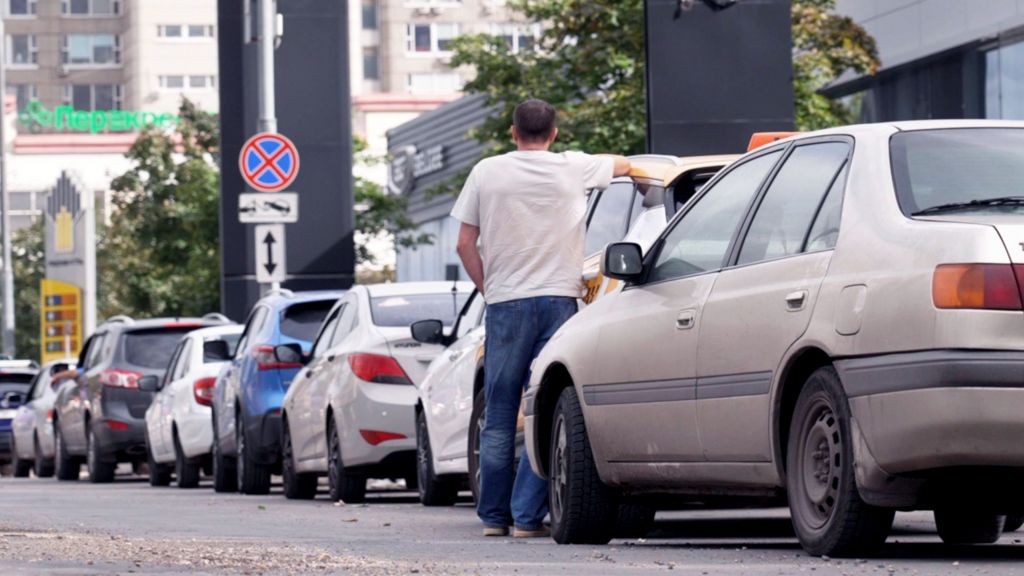
    Analysts note the blockade is a deliberate strategic move: militants aim to cripple the national economy to erode public trust in the ruling military junta, which seized power in a 2020 coup. The blockade is not entirely sealed — insurgents avoid maintaining permanent roadblocks for fear of retaliation from Malian government forces, allowing small volumes of goods to trickle into the city. This limited flow has so far prevented a total breakdown of food access, but it has been enough to send prices of key goods including meat soaring and create widespread fuel shortages, forcing residents to queue for hours at the handful of gas stations still open.

    This is not a sudden disruption. JNIM has already enforced a stifling blockade on oil imports into the country since September 2025, laying the groundwork for the current crisis ahead of the major holiday. For ordinary Bamako residents, the impact hits closest to home during Eid al-Adha, where the sacrifice of a sheep is a centuries-old central tradition.

    Mountaga Touré, a 38-year-old local teacher, told reporters he visited multiple livestock markets across the city before abandoning his plan to purchase a sheep for his family. Since the blockade took effect, prices have jumped by nearly 50%: a small sheep that previously cost roughly $177 now sells for $266 or more, out of his budget. To adapt, many families in Bamako’s neighborhoods have begun pooling funds to buy cows instead of the traditional individual sheep, a last-minute adjustment to ensure they can still have meat for the holiday.

    The current blockade follows a sweeping wave of coordinated attacks across Mali carried out by separatist and jihadi forces last month — the largest large-scale offensive the country has seen in more than 10 years of ongoing insurgency. Mali has been grappling with overlapping crises for over a decade: a separatist rebellion in the northern regions, paired with expanding insurgencies led by militants affiliated with both al-Qaida and the Islamic State group. After the 2020 military coup, the ruling junta cut ties with Western security partners and turned to Russia for military support against the insurgency. But analysts confirm that security conditions across the country have deteriorated sharply in recent months, with a record high number of militant attacks recorded. Both government forces and Russian mercenary groups have also faced accusations of extrajudicial killings of civilian residents suspected of collaborating with insurgents.

    At present, the Malian army, backed by Russian Africa Corps mercenaries, has attempted to circumvent the blockade by providing armed escorts for supply convoys heading to Bamako’s markets. Military officials regularly announce strikes on militant-held positions to clear routes. But residents and traders say these efforts have not been enough to restore steady, adequate supply to the capital.

    Amadou Cissé, a 45-year-old livestock trader who has specialized in supplying Eid sheep for Bamako markets for years, explained that under normal circumstances he would bring up to 200 sheep to the capital for the holiday (known locally as Tabaski) each year. This year, he has only managed to transport 50, because limited space on army-escorted convoys restricts how much livestock he can move. Most of his ordered sheep remain stranded in Diema, a major livestock producing town 215 miles west of Bamako. “I was told more escorted convoys would be organized, but so far none have left Diema, so I doubt the sheep will arrive before the holiday,” Cissé said.

    Drissa Traoré, another Bamako-based sheep seller with more than a decade of experience, confirmed that overall supply has dropped by 50% compared to typical Eid seasons. “This year, we have barely half the number of sheep we usually have during Tabaski,” he said.

    Beyond disrupting holiday meals, the insecurity has upended long-held holiday travel traditions. Sidi Diarra, an employee at a major Bamako financial institution, typically travels 240 kilometers to the city of Segou each year to celebrate Eid with his parents. This year, he has canceled his plans out of fear of militant attacks along the route. “This year, I am afraid to go because of attacks by extremist groups. It is safer to stay in Bamako,” he said.

  • Pilgrims ‘stone the devil’ at hajj gripped by intense heat

    Pilgrims ‘stone the devil’ at hajj gripped by intense heat

    The 2025 Hajj pilgrimage reached its dramatic climax on Wednesday, as more than 1.7 million Muslim worshippers gathered in Saudi Arabia’s Mina Valley to carry out the iconic ‘stoning of the devil’ ritual, confronting both searing desert temperatures and heightened regional geopolitical unrest.

  • Former member of German militant group jailed for armed robberies after decades on the run

    Former member of German militant group jailed for armed robberies after decades on the run

    After more than three decades evading law enforcement and a high-profile trial, a one-time leading member of Germany’s infamous militant Red Army Faction (RAF) has received a 13-year prison sentence for orchestrating and carrying out a series of violent armed robberies spanning 17 years.

    Sixty-seven-year-old Daniela Klette, who spent over 30 years as a fugitive following the disbandment of the RAF, was only apprehended in February 2024 during a raid on a quiet residential apartment in Berlin’s Kreuzberg district. Found living under a false identity using a foreign passport, Klette was quickly transferred to Lower Saxony – the region where the majority of her criminal offenses took place – to face trial later that same year.

    The Red Army Faction, also widely known by its alternate name the Baader-Meinhof Gang, carried out a decades-long campaign of politically motivated violence across West Germany from the early 1970s through the early 1990s, which included bombings, assassinations, and kidnappings. The group formally disbanded in the early 1990s, but Klette and two other former faction members remained at large, turning to a string of armed robberies to fund their life off the grid.

    In a verdict delivered Wednesday at the Verden regional court in Lower Saxony, judges found Klette guilty on multiple charges: aggravated robbery, violations of Germany’s strict weapons laws, and several other related criminal offenses connected to eight separate raids carried out between 1999 and 2016. Klette’s defense team had pushed for a full acquittal during the proceedings, but the prosecution’s evidence linking her to the crime spree proved overwhelming.

    Court documents confirm Klette carried out each robbery alongside two other former RAF affiliates: Burkhard Garweg and Ernst-Volker Staub, both of whom remain at large as of the verdict. The crime spree began in July 1999 in the western German city of Duisburg, when masked attackers rammed an armored cash transport van, threatened security guards with firearms and a grenade launcher, and escaped with an undisclosed large sum of cash. The final recorded robbery took place near Braunschweig in June 2016, when the gang stole nearly €1.4 million (approximately £1.2 million) from another armored van.

    Notably, prosecutors noted during the trial that despite decades on the run, Klette made no deliberate effort to conceal her true identity from acquaintances in her Berlin neighborhood, allowing investigators to eventually track her down after years of cold leads.

  • Philippine bishop and ex-ICC judge lead new inquiry into thousands of Duterte-era killings

    Philippine bishop and ex-ICC judge lead new inquiry into thousands of Duterte-era killings

    MANILA, Philippines — Nearly three years after Rodrigo Duterte stepped down from his six-year presidential term, a new independent fact-finding initiative led by one of the country’s top Roman Catholic leaders is breaking the long-standing silence surrounding the former president’s controversial and deadly anti-narcotics crackdown. On Wednesday, the coalition launched the non-governmental EJK Truth Commission, an independent body tasked with documenting witness testimonies, compiling physical evidence, and formalizing a public record of the thousands of extrajudicial killings tied to the drug war — work that will be made available to domestic and international prosecutors pursuing accountability.

    The crackdown, which Duterte oversaw from 2016 to 2022, left an estimated thousands of mostly low-income suspected drug users and dealers dead, according to human rights monitoring groups. The campaign drew global condemnation from Western governments and human rights organizations over the scale of unlawful killings. Last year, Duterte was taken into custody to face charges of crimes against humanity before the International Criminal Court (ICC) based in The Hague, Netherlands. Ronald dela Rosa, Duterte’s staunch political ally and the former national police chief who first implemented the anti-drug crackdown, is named as a co-perpetrator in the ICC case and has an active arrest warrant against him. Philippine authorities have pledged to execute the warrant and transfer dela Rosa to the global court, but the senator has evaded capture and remains in hiding. Both Duterte and dela Rosa have repeatedly denied authorizing extrajudicial killings, though Duterte openly issued public death threats against drug suspects throughout his presidency.

    To date, human rights groups note that the vast majority of police officers directly implicated in the killings have never faced formal investigation, with only a tiny number ever convicted on charges related to the crackdown. For many victim families, systemic delays and institutional cover-ups have prevented them from accessing justice for years. “This is long overdue,” Cardinal Pablo Virgilio David, the commission’s founder, told reporters during a Manila news conference. David emphasized that the new body is not focused solely on prosecution: it aims to provide closure for victims’ families, offer a pathway to accountability for repentant law enforcement officers, and support national healing. “This is an opportunity for a catharsis … so we can recover our dignity as a country,” David said. “Ultimately, what we aspire for is healing not only for the victims but also our institutions.”

    Heading the commission’s fact-finding work is Raul Pangalangan, a highly respected Philippine legal scholar and former ICC judge. Pangalangan explained that the body’s core mission is to ensure the experiences of victims, survivors and bereaved families are not erased: “It was created to ensure that the stories of victims, survivors and families are heard, verified and preserved.” The commission plans to hold public hearings across the country to collect testimonies, breaking what Pangalangan called a years-long “conspiracy of silence” that allowed the killings to continue without accountability. “These things happened because everybody looked the other way,” he added.

    The commission will share its verified findings with domestic and international justice and human rights bodies, enabling prosecuting authorities to use the evidence to advance cases against implicated officials and law enforcers. David has called on civil society organizations, academic institutions, religious groups and other stakeholders to support the initiative, noting that a large German charitable foundation has already committed funding to support the commission’s work.

    Still, commission members acknowledge the work will face significant barriers, years after most of the killings took place. Raquel Fortun, a forensic pathologist at the state-run University of the Philippines and a commission member, told the Associated Press that many implicated law enforcement officials have actively taken steps to cover up evidence of unlawful killings. She gave the example of 13 exhumed remains of drug suspects, whose original death certificates issued during Duterte’s term listed natural causes such as heart attack and pneumonia as their cause of death. “When I examined the remains, I found that they were hit by gunfire,” Fortun confirmed. That pattern of falsified records, she added, underscores how difficult it will be to reconstruct an accurate account of the drug war’s death toll and responsibility for the killings.

  • Iran says ‘low’ possibility of return to war with US

    Iran says ‘low’ possibility of return to war with US

    Tensions across the Middle East remain at a fever pitch this week, even as a senior Iranian military official has downplayed the risk of a return to open war between Tehran and Washington. The cautious assessment comes just days after fresh cross-border hostilities violated the fragile ceasefire that has held between the two sides since April, raising new fears of a wider regional escalation.

    Mohammad Akbarzadeh, deputy political chief of Iran’s Islamic Revolutionary Guard Corps (IRGC) Navy, told state-owned Tasnim News Agency on Wednesday that the possibility of full-scale conflict with the United States remains low, citing what he described as growing weakness among American forces. “The possibility of war is low because of the enemy’s weakness, the armed forces are lying in wait with full magazines,” Akbarzadeh said. He issued a stark warning to any potential aggressors, adding: “Do not doubt that we will turn the area from Chabahar to Mahshahr into a graveyard for aggressors,” referencing the two coastal cities that bookend Iran’s 1,000-mile southern coastline along the Gulf of Oman and Persian Gulf.

    Akbarzadeh’s comments came one day after Iranian officials accused the U.S. of multiple deliberate violations of the April ceasefire, following the downing of an American drone that entered Iranian airspace near the key Strait of Hormuz and anti-aircraft fire directed at a U.S. F-35 fighter jet. Hours before those Iranian defensive actions, U.S. Central Command (CENTCOM) spokesperson Captain Tim Hawkins confirmed that American forces had carried out new self-defense strikes against targets in southern Iran. “US forces conducted self-defence strikes in southern Iran today to protect our troops from threats posed by Iranian forces,” Hawkins said, confirming that the strikes targeted Iranian missile launch sites and boats suspected of attempting to lay naval mines, offering few additional details.

    The Iranian foreign ministry issued a formal condemnation of the strikes, noting that the “US terrorist army, continuing its illegal and unjustified actions since the ceasefire… has, in the past 48 hours, committed a gross violation of the ceasefire in the Hormozgan region.” The statement added that Tehran “will not leave any evil unanswered and will not hesitate to defend the Iranian nation,” without specifying what form retaliation would take.

    Peace talks between Washington and Tehran have been ongoing for weeks, with Pakistan leading third-party mediation efforts to end the regional war that erupted in late February, when U.S. and Israeli forces launched opening strikes against Iranian targets across the Middle East. The conflict quickly spread across multiple fronts, upended global energy markets, and pushed the region to the brink of a catastrophic regional war. As of this week, both sides remain deadlocked on core sticking points, including control of the Strait of Hormuz – the world’s most critical chokepoint for global oil and liquified natural gas shipments – and the future of Iran’s nuclear program. Neither side has shown willingness to compromise on these core issues, despite the fact that the conflict has failed to produce a clear winner for either camp. After Iran blockaded the Strait of Hormuz in retaliation for the opening strikes, the U.S. responded with its own counter-blockade of major Iranian export ports. Tehran has also announced plans to impose new “navigational fees” on commercial shipping passing through the waterway, a move that has already rattled energy markets.

    U.S. Secretary of State Marco Rubio maintained on Tuesday that a final peace deal remains achievable, repeating Washington’s demand that the Strait of Hormuz must be reopened to full commercial navigation “one way or the other.” Iranian officials confirmed this week that they are working to finalize a 14-point framework for a peace agreement, and Iranian President Masoud Pezeshkian told Qatari ruler Sheikh Tamim bin Hamad Al Thani in a Tuesday phone call that Tehran remains “ready to reach a respectful framework to end the war,” according to Iranian state broadcaster IRIB. A top Iranian negotiating delegation returned from a two-day exploratory visit to Qatar on Tuesday, signaling continued behind-the-scenes progress toward a potential agreement.

    In a written statement marking the start of the Eid al-Adha holiday, Iran’s supreme leader Ayatollah Mojtaba Khamenei argued that U.S. influence across the Middle East is steadily eroding. He warned regional countries against hosting American military bases that can be used to launch attacks on Iranian targets, saying: “the United States, in addition to no longer having any safe haven in the region for aggression and the establishment of military bases, is moving further and further away from its former position with each passing day.”

    The spillover of the wider conflict has continued to escalate in southern Lebanon, where a separate ceasefire between Israel and Iran-aligned militant group Hezbollah has failed to stop regular deadly violence. On Tuesday, Israeli air and ground strikes killed 31 people across southern Lebanon, including at least four children, according to Lebanon’s health ministry. Israeli Prime Minister Benjamin Netanyahu vowed Monday to “crush” Hezbollah, and a senior Israeli military official confirmed to AFP on Wednesday that Israeli forces are expanding ground operations deeper into Lebanese territory, far from the shared border. Iran has made it a core demand of any U.S.-Iran peace deal that any final accord must also cover the Lebanese front, a condition Israel has so far rejected.

    Global financial markets reacted with cautious optimism to ongoing diplomatic efforts this week, with major stock indexes ending the trading day mixed amid hopes that a final agreement can be reached to de-escalate the crisis.

  • Berlin police arrest man suspected of being an accomplice to Holocaust Memorial stabbing

    Berlin police arrest man suspected of being an accomplice to Holocaust Memorial stabbing

    BERLIN – German law enforcement officials have taken a suspected accomplice in a 2025 terror-related stabbing attack at Berlin’s iconic Holocaust Memorial into custody, more than a year after the violent incident left a Spanish tourist seriously injured. Federal public prosecutors announced Wednesday that the suspect, a Syrian national identified only as Khalaf A. in compliance with Germany’s strict personal privacy regulations, faces formal charges of accessory to attempted murder and aggravated bodily harm.

    According to the prosecution’s official statement, evidence indicates Khalaf A. spent the full afternoon of February 20, 2025 — the day ahead of the stabbing attack — with the perpetrator of the violence, Wassim Al M., also a Syrian citizen who was convicted of his role in the attack earlier this year. During that meeting, prosecutors confirm Khalaf A. actively encouraged Wassim Al M. to move forward with his planned attack.

    Wassim Al M. was found guilty by the Berlin District Court in March on a multi-count indictment that included attempted murder and attempted membership in a proscribed foreign terrorist organization. He was sentenced to a 13-year prison term, the maximum penalty available under the convictions. Court documents from the trial confirm Wassim Al M. traveled from his residence in Leipzig to central Berlin specifically to carry out an attack on behalf of the Islamic State terror group.

    Presiding judge Doris Husch explained during the sentencing proceedings that the perpetrator deliberately selected the Memorial to the Murdered Jews of Europe as his target because “he believed he would find people of Jewish faith there.” After carrying out the throat stabbing of the Spanish tourist, witnesses confirm he shouted “Allahu akbar,” or “God is great,” as he claimed the attack for the terror organization.

    The Memorial to the Murdered Jews of Europe, one of Germany’s most prominent sites of national memory, sits just steps from the Brandenburg Gate in central Berlin. The sprawling memorial consists of 2,700 uneven gray concrete slabs, erected to honor the 6 million Jewish people murdered by the Nazi regime during the Holocaust.

    The 2025 attack took place just 48 hours before a critical German federal parliamentary election, a contest where migration policy had emerged as the defining campaign issue. The debate over immigration had been intensified by a string of deadly attacks carried out by recent immigrant arrivals in the months leading up to the vote.

  • Penpa Tsering sworn in for a second term to lead Tibet’s government-in-exile

    Penpa Tsering sworn in for a second term to lead Tibet’s government-in-exile

    DHARAMSHALA, India – On Wednesday, Penpa Tsering formally took the oath of office for his second consecutive five-year term as the elected president of the Central Tibetan Administration, the body that functions as Tibet’s government-in-exile based in the northern Indian hill town of Dharamshala. The 58-year-old leader first assumed the top executive post in 2021, after securing an initial victory in exile community elections, and won re-election in February’s vote that was open to Tibetans residing across India and other countries around the globe. Tsering’s long career in Tibetan exile governance stretches back to 1996, when he won his first seat in the Tibetan Parliament-in-Exile, and he went on to serve as the body’s speaker from 2008 until his election to the presidency.

    Founded in 1959 after the 14th Dalai Lama fled into exile, the Central Tibetan Administration – formerly known as the Tibetan government-in-exile – operates as a full decentralized governance structure with separate executive, judicial, and legislative branches to serve the global Tibetan exile community, which numbers roughly 150,000 people around the world. This year’s February election marked the fourth direct vote for the exile leadership, a milestone that comes 13 years after the Dalai Lama, Tibet’s revered spiritual leader, formally devolved all governing authority to the elected leadership and stepped back from any formal role in the administration.

    The swearing-in ceremony unfolded with traditional Tibetan Buddhist ritual, with the 89-year-old Dalai Lama escorted to the event venue by a procession of red-robed monks, accompanied by the sound of ceremonial drums and chanted prayers. In front of an audience of hundreds of monks, community leaders, and ordinary Tibetans, Yeshi Wangmo, Chief Justice Commissioner of the Tibetan Supreme Justice Commission, administered the oath of office to Tsering.

    In his first public remarks after taking office, Tsering reaffirmed the exile administration’s longstanding commitment to the Middle Way Policy, a framework first articulated by the Dalai Lama that seeks a negotiated resolution of the Tibet issue through nonviolent means and bilateral dialogue with Beijing, with the goal of achieving a lasting mutually beneficial outcome for all parties. “Until a resolution is achieved, we will continue the back-channel communications with caution and steadiness with the Chinese government,” Tsering stated in his address.

    The inauguration comes against a backdrop of long-running geopolitical and diplomatic tensions surrounding the status of Tibet. China maintains that Tibet has been an inalienable part of its sovereign territory since the mid-13th century, and that the Chinese Communist Party has administered the Himalayan region since 1951. However, a large share of the global Tibetan community rejects this claim, arguing that Tibet functioned as an effectively independent state for most of its modern history, and that Beijing has systematically exploited the region’s rich natural resources while eroding and suppressing its distinct cultural and religious identity.

    The Chinese government does not recognize the legitimacy of the Central Tibetan Administration, and has not held formal dialogue with envoys representing the Dalai Lama since 2010. While India officially recognizes Chinese sovereignty over Tibet, it has allowed the Tibetan exile administration to maintain its headquarters in Dharamshala since the 1950s. Beijing has long accused the Dalai Lama of pursuing a secret agenda to separate Tibet from China, a claim the spiritual leader has repeatedly denied, noting that the Middle Way Policy does not seek full independence but rather genuine autonomy for Tibet within the Chinese constitutional framework. Still, a growing number of radical Tibetan community groups have pushed for full independence in recent years, as the lack of progress in talks with Beijing has left many exiles frustrated with the existing policy framework.

    In the lead-up to this week’s inauguration, Yu Jing, a spokesperson for the Chinese Embassy in New Delhi, issued a formal rejection of the exile body’s legitimacy, claiming that “it is not recognized by any sovereign country in the world” and has no authority to speak on behalf of the Tibetan people or oversee the future reincarnation process of the Dalai Lama. The question of the Dalai Lama’s succession has emerged as a major point of tension in recent years: on his 90th birthday last year, the spiritual leader publicly asserted that Chinese authorities would have no legitimate role in selecting his successor after his death, and that the centuries-old institution of the Dalai Lama would continue regardless of Beijing’s objections.

  • First Ghanaians set to be repatriated from South Africa over anti-immigrant protests

    First Ghanaians set to be repatriated from South Africa over anti-immigrant protests

    In the early hours of Wednesday, the first cohort of Ghanaian citizens began their journey home from South Africa, amid growing fears of renewed xenophobic violence sparked by a recent wave of anti-illegal immigration protests across the country. Dozens of buses chartered by the Ghanaian embassy arrived at Johannesburg’s OR Tambo International Airport by 3 a.m. local time, dropping off hundreds of departing passengers spanning all age groups, including men, women, and children. A small subset of travelers was transported separately in a police van, kept isolated from the main group under constant police observation, according to on-the-ground reporting from the BBC.

    This mass repatriation effort comes in response to weeks of demonstrations led by March and March, a grassroots citizen movement pushing for stricter South African immigration reform. The group has set a June 30 deadline for all undocumented migrants to leave the country, a timeline that has stoked widespread anxiety among foreign residents. Among those departing is Rudolph, a Ghanaian small business owner who has operated a hair salon in South Africa for a decade. In a rare interview with the BBC, Rudolph explained that the shifting social climate had made staying in the country untenable. “It’s not comfortable for us to stay here anymore, so we have to go. I think we will find peace at home,” he said, echoing the fears of many other foreign residents. He added that the protests, which originated in Durban before spreading to multiple other provinces, could easily escalate into targeted violence ahead of the deadline, and that he had no plans to ever return to South Africa.

    Ghanaian authorities confirmed that only 300 of the roughly 800 registered citizens would depart on Wednesday, with the remaining travelers undergoing additional security and eligibility screenings before boarding future flights. Officials estimate that roughly 25,000 Ghanaians currently reside in South Africa, a large portion of whom have been affected by the recent unrest. Ghanaian High Commissioner Benjamin Quashie emphasized that the repatriation effort is rooted in the government’s core responsibility to protect its citizens abroad. “The Ghanaian government listened to the plight of its citizens in South Africa, who felt that their lives were in danger, who felt like the economic activity that they were engaging in had come to a standstill, who felt unwelcome in this country, and it is the responsibility of every government to ensure that its citizens are taken care of both home and abroad,” Quashie told the BBC.

    Quashie also outlined the Ghanaian government’s plan to support returning citizens, noting that a comprehensive reintegration strategy is already in place to help returnees reestablish their businesses and livelihoods back home. He added that the effort also aligns with South Africa’s own goals around immigration management: “The government is willing to establish them into whatever business they were doing in South Africa. In a way, we’re also helping the South African economy, because it’s clear that some of them are undocumented. So taking them out of here will let them know that we are not people who condone undocumented people in countries.”

    Political analysts have pointed to upcoming local elections scheduled for November as a potential driving factor behind the recent resurgence of anti-migrant sentiment in South Africa. The country has a bloody history of large-scale xenophobic violence: in 2008, attacks targeting foreign nationals left 62 people dead, and another 12 people were killed in similar unrest in 2019. Organizers of the current wave of protests have maintained that their demonstrations have been entirely peaceful, a claim echoed in recent statements from the South African government. Earlier this month, government officials condemned any criminal targeting of foreign residents while acknowledging that the country faces legitimate challenges around managing undocumented immigration that must be addressed.

  • For one Ukrainian war amputee, rebuilding is painful after a Russian strike killed her husband

    For one Ukrainian war amputee, rebuilding is painful after a Russian strike killed her husband

    In the central Ukrainian city of Kryvyi Rih, 50-year-old Iryna Nakonechna carries a quiet, unbreakable resolve forged in unthinkable tragedy. Last year, a Russian missile strike took everything she once knew: it killed her husband Serhii Nakonechnyi and tore away her left leg, leaving her with lasting mobility damage to her arms.

    In the immediate aftermath of the attack, which struck as the couple enjoyed an unseasonably warm post-dinner stroll near a downtown hotel on March 5, 2025, Nakonechna made a deliberate choice to let go of the life she had shared with Serhii. She cut off her long dark wavy hair, cleared almost every memento—furniture, clothing, personal trinkets, and most photos—from the apartment they once shared. Only one portrait of the couple remains, a quiet anchor to the past while she forges a new future. “Shedding my old identity was the only way I could endure the painful reinvention I needed to build a new life with my prosthetic,” she explains.

    Today, Nakonechna cuts a sharp, vibrant figure: her signature pixie cut frames a face lit by quick, loud laughter, and bold red cat-eye glasses sit atop her nose. But beneath her effervescent wit lies a deep, unspoken grief that is rarely centered in mainstream narratives of wartime resilience. She is one of tens of thousands of Ukrainians—both soldiers and civilians—who have lost limbs to Russia’s full-scale invasion, a growing population whose invisible wounds often go unmentioned.

    The exact number of Ukrainian war amputees remains unknown, but the count climbs steadily every day. Landmines planted across occupied territory, relentless artillery barrages, and ongoing missile and drone strikes continue to inflict catastrophic, life-altering injuries on people across the country. This surge has pushed Ukraine to rapidly expand rehabilitation and prosthetic services, and it has reshaped Ukrainian society at large: prosthetic limbs are no longer hidden, but have emerged as bold, visible symbols of survival and defiance against aggression.

    For Nakonechna, the journey of recovery is both physical and psychological. She still walks with a cane, learning to trust the prosthetic that extends to her upper thigh, and her injured arms leave her unable to lift heavy objects. Every week, she attends an hour-long physical therapy session with Anastasiia Stetsenko, a therapist who is guiding her toward the next milestone: walking without assistance.

    Their sessions follow a gentle but rigorous routine. Nakonechna begins by removing her prosthetic to rest it against the wall, then moves through seated weight lifts timed to her breathing, slow circular rotations of her residual limb to test range of motion, and eventually squats while gripping a ballet barre—one of the hardest movements to relearn. When exercises grow grueling, Nakonechna jokes with Stetsenko, calling her therapist a “demon” and quips that the routine feels like an extreme sport. When challenged to attempt a difficult squat, she laughs and deadpans, “I will respond as my grandson would: Just no.” The room fills with shared laughter, the dynamic between the two women far closer to old friends than clinician and patient.

    The work is not just about building physical strength; it is about rebuilding the confidence to complete everyday tasks most people take for granted: climbing stairs, bending to pick up a dropped item, navigating cracked, uneven city streets, and chasing her 2-year-old grandson Tymofii across a playground.

    That fateful March day stripped Nakonechna of more than her limb and her husband. After the missile detonated, throwing the couple dozens of meters apart, she woke to find herself separated from Serhii, admitted to a different hospital. He died the next day, and she never got to say goodbye. “I wasn’t even at his funeral,” she says quietly. For two months, she endured two surgeries a week, her days blurring into a fog of pain and recovery. By May, she could finally sit up on her own—a small relief, but only the first step of a far longer journey.

    Now, the apartment she once shared with Serhii is almost unrecognizable from its former self. “I had to get rid of everything from the past,” she says. “I had to focus on living my life, even if it was only half the life I had before.” She invited her 77-year-old mother, who lives with dementia, to move in, and builds small moments of joy around their daily routines. The one thing she still grieves is that she cannot lift her grandson into her arms. Not long ago, Tymofii stuck a cartoon sticker of a capybara wearing a prosthetic leg onto her prosthetic—she has never peeled it off.

    A skilled craftswoman, Nakonechna found a new purpose through Superhumans, a modern Ukrainian trauma center that specializes in prosthetics and rehabilitation for war survivors. She began knitting small toy capybaras, a gentle animal that has become an unofficial symbol of resilience for Ukrainian amputees. The trend started when veterans began placing capybara toys and stickers on their prosthetics to put strangers at ease; over time, the fuzzy, playful animal has grown to represent the quiet determination to reclaim joy after utter devastation.

    Nakonechna’s hand-knit capybaras quickly became popular with other survivors, and she spends hours every week working on the toys. For her, the repetitive craft is a form of healing: “When I count the stitches, I think only about the stitches, not about the life that could have been and unfortunately is not,” she says. Her favorite part of the process is assembling the pieces, turning separate bits of yarn into a whole, finished toy—a small mirror of the work she is doing on herself.

    Recently, she notched a small but transformative personal victory: for the first time since her injury, she put on a pair of shorts and went out in public, no longer hiding her prosthetic from the world. The small act marked a huge internal shift. “I accepted myself as I am,” she says.

    For Nakonechna, and for thousands of Ukrainian amputees like her, resilience is not just about surviving. It is about learning to live with invisible wounds, rebuilding an identity from scratch, and finding small, precious moments of joy in a life forever changed by war.