分类: world

  • More climate records under threat as spring heatwave bakes western Europe

    More climate records under threat as spring heatwave bakes western Europe

    An unprecedented early-spring heatwave, driven by a massive African heat dome trapped over Western Europe by a persistent high-pressure system, has smashed all-time May temperature records across the continent, leaving at least seven people dead and forcing emergency restrictions on outdoor work. Temperatures this week have surged far above the seasonal averages normally seen only in the height of summer, confirming what climate scientists have warned for decades: human-caused climate change is turning extreme heat events into the new normal.

    On Monday, multiple Western European nations recorded their hottest May days in documented history. The United Kingdom’s Met Office confirmed a new national May high of 34.8°C at London’s Kew Gardens, a full two degrees hotter than the previous record set decades earlier. Across the Irish Sea, two Irish weather stations hit a record 28.8°C, while Scotland saw temperatures climb to 25°C — conditions that sparked a large grass fire near Edinburgh’s iconic Arthur’s Seat, sending plumes of smoke across the capital.

    In France, the heat was even more extreme. Meteo-France officially declared Monday the hottest May day since national temperature tracking began, with Paris’s Roland Garros tennis tournament seeing spectators swelter through 33°C conditions. Forecasts called for even higher mercury on Tuesday, with highs forecast to reach 33°C to 36°C across much of the country, and the abnormal heat expected to hold through the end of the week. The extreme warmth has already had deadly consequences: French government spokesperson Maud Bregeon confirmed Tuesday that at least seven deaths have been directly or indirectly tied to the heatwave, five of which were drownings.

    The deaths occurred as thousands of heat-fatigued residents flocked to beaches and coastal waters to cool off, despite the fact that most areas do not begin lifeguard patrols until July. For many beachgoers, the unseasonal heat brought unexpected risk. “We were just wondering this morning whether the beach was supervised,” Thomas Dupuy, who was visiting an Anglet beach with his two young non-swimming children, told AFP. “I’m extremely careful for myself, for my children… We know the currents can pull you out, the Atlantic beaches are dangerous.”

    The extreme conditions extend far beyond France and the UK. Spain’s State Meteorological Agency (Aemet) warned that extraordinarily high temperatures for this time of year will persist across most of the country all week, with southwestern regions facing widespread tropical nights — when temperatures stay above 20°C — and peak highs of 36°C to 38°C between Wednesday and Friday. Further east, Italy’s Lazio region, which includes the capital Rome, implemented emergency rules banning prolonged outdoor work in direct sunlight between 12:30 p.m. and 4:00 p.m. to protect workers from heat exhaustion and heat stroke.

    Climate scientists say the record-breaking heatwave is a clear demonstration of human-driven climate change already reshaping Europe’s weather patterns. A recent joint report from the European Copernicus Climate Change Service and the World Meteorological Organization confirms that since the 1980s, Europe has warmed twice as fast as the global average, and heatwaves have become increasingly frequent and severe across more than 95 percent of the continent. Greg Dewhurst, a meteorologist with the UK Met Office, told AFP that the surge in extreme May temperatures is “a good indication of climate change in action” and that such early-season heat events are increasingly likely to become “the new norm.” While the UK is forecast to see temperatures cool later this week, the early arrival of extreme heat has underscored the growing threat of climate-fueled weather extremes across the continent.

  • Heat dome over Europe scorches UK, Ireland, France and Spain

    Heat dome over Europe scorches UK, Ireland, France and Spain

    An unseasonal, record-shattering heat dome has settled over Western Europe, bringing sweltering temperatures far above average May norms and triggering public health warnings across the United Kingdom, Ireland, France, Spain and Italy this week. The event, which follows decades of climate research linking rising global temperatures to more frequent extreme heat events, has already forced work restrictions, disrupted public activities, and renewed urgent calls for infrastructure adaptation to a warming climate.

    Meteorologists trace the extreme heat to a mass of warm air originating from northern Africa that has become trapped under a stable high-pressure system over Western Europe — a weather pattern commonly referred to as a heat dome. This system, which typically brings such extreme heat only in the peak of summer months of July and August, has pushed temperatures 15 to 18 degrees above typical mid-spring averages across most of the affected region.

    On Monday, the first full day of the heat surge, multiple countries logged all-time May temperature records. The UK’s Met Office confirmed that a high of 34.8C was recorded at London’s Kew Gardens, smashing the previous national May record by a full 2 degrees Celsius. “This heat would be exceptional in the UK even in mid-summer, let alone May,” the agency said in a post on social media platform X. In Ireland, two weather stations in the southwest and south of the country — Killarney and Clonmel, respectively — tied a new national May record of 28.8C. Meteo-France also confirmed that Monday was the hottest May day recorded in the country since national temperature tracking began.

    Local impacts of the unexpected heat have already been severe. In the French capital of Paris, a 10-kilometer running race over the weekend left one participant dead and 10 others hospitalized in critical condition. At the ongoing Roland-Garros tennis open in Paris, spectators fainted and struggled with the sweltering conditions on open courts. A grass fire broke out near Edinburgh’s iconic Arthur’s Seat, sending thick plumes of smoke across the Scottish capital, where temperatures hit an unseasonal 25C. Beaches in southwestern France have filled with heat-seeking visitors weeks earlier than the typical summer tourist season, while farmers across the region reported that crop harvests are progressing far ahead of schedule due to the early heat.

    In response to the dangerous conditions, authorities have implemented emergency restrictions. Italy’s Lazio region, which is home to the capital Rome, approved early implementation of seasonal rules banning outdoor work in direct sunlight between 12:30 pm and 4:00 pm, putting the rule in effect more than two weeks earlier than the 2022 start date. The restrictions apply to construction sites, agricultural work, and logistics operations, and will remain in place through mid-September. Spanish meteorological agency Aemet warned that extraordinarily high temperatures would persist across most of the country (excluding the offshore Canary Islands) through the end of the week, with widespread tropical nights — when temperatures remain above 20C overnight — forecast for southwestern Spain starting Wednesday, and peak temperatures between 36C and 38C from Wednesday through Friday. French Prime Minister Sebastien Lecornu has called an emergency meeting with top cabinet ministers Thursday to coordinate the national government’s heatwave response preparations.

    Climate scientists and weather experts have repeatedly emphasized that this extreme early heat event is directly tied to human-caused climate change, noting that Europe is warming faster than the global average, making extreme heat events more frequent, more severe, and more likely to occur outside the traditional summer peak. “This is a good indication of climate change in action,” UK Met Office meteorologist Greg Dewhurst told reporters from Agence France-Presse, adding that such out-of-season extreme heat events are likely to become the new normal in coming years.

    Last week, leading UK climate advisers issued a stark warning to the national government, noting that much of the country’s core public infrastructure — including schools, hospitals, and transport networks — was designed for a climate that no longer exists, and urged urgent upgrades to adapt to rising average temperatures and more frequent extreme heat events. The UK already made global headlines in 2022 when it recorded its first ever temperature above 40C, a milestone that many climate scientists said was a clear warning sign of accelerating climate change impacts.

    For many residents and visitors across Western Europe, the unexpected early heat has been a jarring experience. “The weather here, it’s like a mini version of hell. It’s boiling. It’s like really hot,” 10-year-old visitor Liza Nizki told reporters in London, where average May temperatures typically hover between 17C and 18C. Long-term London resident Lindy Brand-Daloze, a 66-year-old Australian who has lived in the UK for 12 years, framed the extreme heat as a new reality the public must adapt to. “It’s warm, but it’s climate change, isn’t it? So you know, we have probably got to get used to this.” Forecasters with the UK Met Office do expect temperatures to cool off later this week as the heat dome shifts eastward, but experts warn more extreme early heat events can be expected in coming years as global temperatures continue to rise.

  • Rubio says US ready to mediate as Moscow steps up Kyiv threats

    Rubio says US ready to mediate as Moscow steps up Kyiv threats

    Four years into the full-scale Russian invasion of Ukraine, a sharp new escalation of tensions has pushed the long-running conflict back to the center of global attention, with Washington throwing its weight behind renewed efforts to broker a ceasefire. In the wake of Moscow’s explicit threats to launch systematic, large-scale attacks on the Ukrainian capital Kyiv — including explicit warnings for foreign diplomatic staff to evacuate immediately — US Secretary of State Marco Rubio announced Tuesday that the United States remains fully prepared to facilitate an end to the war.

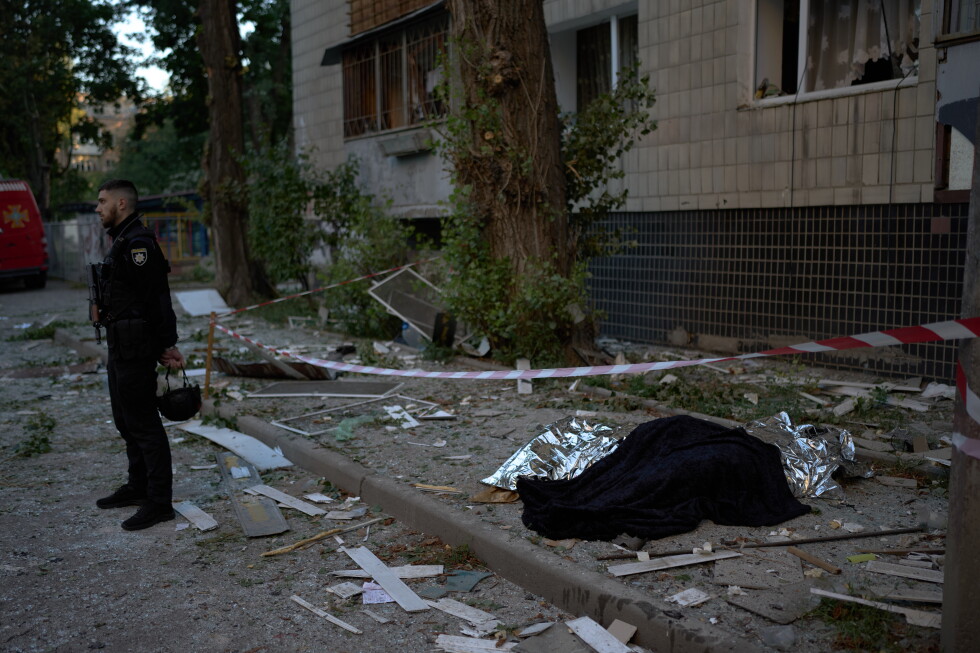
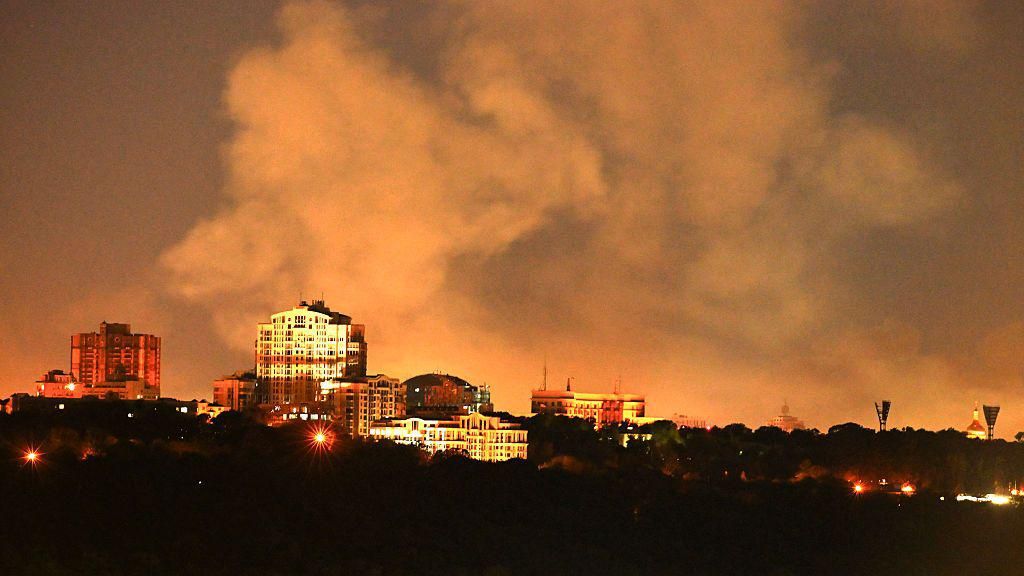
    The latest cycle of violence began after Russia accused Ukrainian forces of striking a vocational school in the Moscow-occupied Lugansk region, an attack that Moscow claimed killed 21 people. Following the incident, Russian President Vladimir Putin ordered his military to carry out retaliatory strikes, triggering a massive weekend barrage across Ukraine that included dozens of drones, conventional missiles, and the deployment of Russia’s advanced Oreshnik hypersonic missile. According to Russian specifications, the Oreshnik can reach speeds of up to Mach 10 and is designed to carry nuclear warheads. The barrage left four people dead in Kyiv, caused widespread damage to civilian infrastructure, and claimed an additional life in the southern port city of Odesa early Tuesday, regional official Sergii Krasylenko confirmed in a Telegram post.

    In a statement released after the strikes, Russia’s Foreign Ministry formalized the new escalation, confirming that Russian armed forces would begin targeting Ukrainian military-industrial sites, decision-making hubs, and military command posts across Kyiv. The ministry explicitly urged all foreign citizens, including diplomatic personnel and staff of international organizations, to leave the capital immediately. Russian Foreign Minister Sergei Lavrov relayed this warning directly to Rubio during a phone call between the two top diplomats on Monday, though Rubio clarified Tuesday that the evacuation notice was circulated to all foreign embassies in Kyiv, not just the US mission.

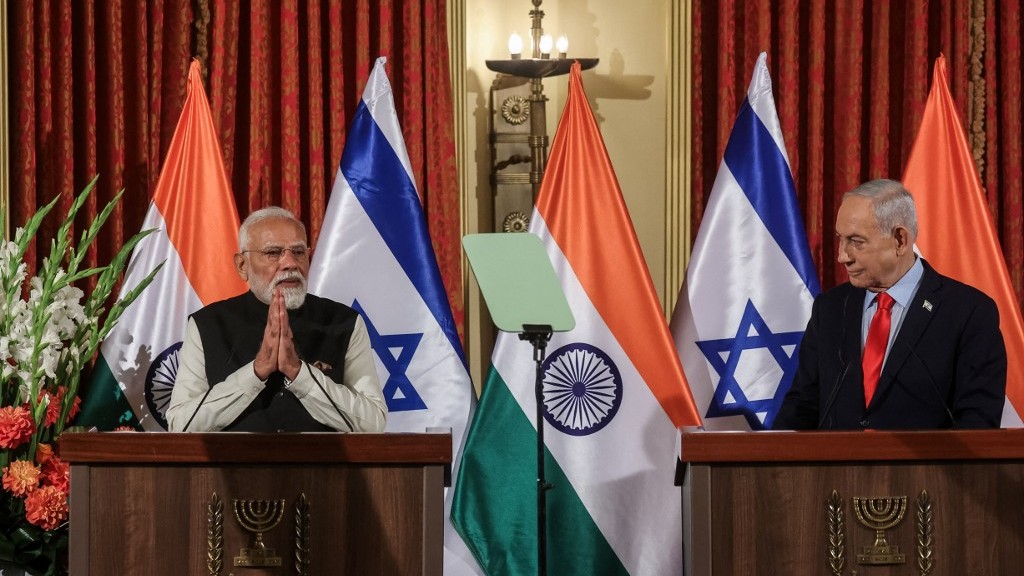
    Speaking to reporters during an official visit to India, Rubio framed the latest upsurge in violence as a painful reminder of the human cost of the prolonged conflict. “Every time you see these big strikes from one side or the other, it’s a reminder of why this is a terrible war that’s now gone on longer than the Second World War, and it needs to come to an end,” Rubio said. “The US stands ready and prepared to help do whatever we can to help facilitate the end of this war, and hopefully the opportunity will present itself at some point.”

    This is not the first time Moscow has issued evacuation warnings for foreign personnel in Kyiv. Earlier this month, Russia issued a similar threat of massive strikes on central Kyiv if Ukraine attempted to disrupt the annual military parade on Moscow’s Red Square. On both occasions, Western diplomatic missions and Ukrainian officials have flatly rejected the warnings, framing them as little more than coercive rhetoric designed to sow panic. “We’re used to Putin’s threats. It is out of the question to evacuate,” a French Foreign Ministry spokesperson said Monday. The European Union’s ambassador to Kyiv echoed that sentiment in a Facebook post, writing simply, “We are not going anywhere.”

    Ukrainian Foreign Minister Andriy Sybiga echoed the defiance, urging international partners not to give in to what he called Russian blackmail. Russia launched its full-scale invasion of Ukraine in February 2022, and the conflict has since become the deadliest armed conflict in Europe since World War II. US-led diplomatic efforts to negotiate a ceasefire have stalled in recent months, largely sidelined by competing international crises including the ongoing conflict in the Middle East.

  • Trump calls for ‘mandatory’ adherence to Abraham Accords in Iran ceasefire talks

    Trump calls for ‘mandatory’ adherence to Abraham Accords in Iran ceasefire talks

    In a sudden and unexpected move that upended weeks of growing optimism around a negotiated end to the ongoing US-Iran conflict, former and current US President Donald Trump announced a new non-negotiable condition on Monday: any final deal must include the normalization of diplomatic relations between Israel and a slate of Muslim-majority nations, led by Saudi Arabia. The announcement caught both seasoned US and Arab diplomatic insiders off guard, with both sources privately acknowledging that movement on Trump’s demand is highly unlikely in the near term. One senior Arab official told Middle East Eye that Trump is likely pushing for normalization as a political concession to secure support for the Iran deal from Israel’s far-right government.

    Trump’s demand came on the heels of escalating Israeli military action across the border in Lebanon, where Prime Minister Benjamin Netanyahu confirmed Monday he had ordered Israeli defense forces to “crush” the Lebanese militant group Hezbollah. Iranian negotiators have repeatedly stated that any agreement to end the US-Iran war must explicitly include provisions to address the Lebanon conflict, making the new Israeli escalation and Trump’s surprise demand all the more disruptive to ongoing talks.

    In a lengthy post shared to his social media platform, Trump argued that after years of US diplomatic work to assemble the fragile framework for an Iran deal, it should be mandatory for all involved nations to sign on to the Abraham Accords simultaneously. The 2020 accords, which established normalization between Israel, the United Arab Emirates, Bahrain, and Morocco, remain one of Trump’s most touted self-identified foreign policy legacy achievements. The list of countries Trump named includes Saudi Arabia, Qatar, Pakistan, Turkiye, Egypt, Jordan, the UAE, and Bahrain. Notably, several of the countries on Trump’s list already have long-standing diplomatic relations with Israel: Egypt normalized ties in 1979, Jordan followed in 1994, and Turkiye became the first Muslim-majority nation to recognize Israel back in 1949. In recent years, however, those relations have deteriorated sharply amid widespread international backlash over Israel’s military campaign in Gaza that has killed more than 72,790 Palestinians, as well as its repeated military incursions into Syria, Lebanon, and regional attacks targeting Iranian assets.

    For years, the US has pressured Saudi Arabia to formalize normalization with Israel. Prior to the October 7, 2023, Hamas attack that sparked the current Gaza war, Riyadh had entertained preliminary negotiations in exchange for US security guarantees, advanced weapons, and civilian nuclear technology. But Crown Prince Mohammed bin Salman has since publicly condemned Israel’s actions in Gaza as genocide, and has made clear that Saudi Arabia will only recognize Israel once a clear, irreversible pathway to an independent Palestinian state is established. Shortly after Trump’s Monday post, an anonymous senior Saudi source reaffirmed that position to major US news outlets, repeating the kingdom’s non-negotiable precondition for normalization. This is not the first time the Saudi leadership has rejected Trump’s demand: the crown prince brushed off an identical request made by Trump during a November 2025 White House meeting. Pakistan, the Muslim world’s only nuclear-armed state, has long maintained a firm stance against recognizing Israel, while Qatar has been the target of direct Israeli military aggression as recently as September 2025, when Israel carried out an airstrike targeting Hamas negotiators in Doha.

    Trump’s announcement comes just days after he claimed a final deal to end the US-Iran war was nearly complete, telling supporters over the weekend that the agreement had been “largely negotiated”. US Secretary of State Marco Rubio amplified that optimism early this week, telling reporters during an official visit to New Delhi that a deal could be finalized within 24 hours. Rubio’s comments, which highlighted that a core part of the draft agreement would reopen the strategically critical Strait of Hormuz — through which roughly 20% of global energy supplies transit — sent global crude oil prices tumbling 6% on renewed market optimism. Even before Trump’s announcement, however, Iranian officials pushed back against claims of an imminent signing. Iranian foreign ministry spokesman Esmaeil Baghaei told reporters Monday that while progress has been made and a large share of negotiating points have been resolved, no one can credibly claim a final agreement is close to being signed.

    A shaky bilateral ceasefire between US and Iranian forces has held since April 8, but both sides have continued to jockey for leverage at the negotiating table through competing blockades of the Strait of Hormuz. As of Monday, diplomatic talks were still ongoing, even as Washington shut down for the Memorial Day federal holiday and Middle Eastern nations prepared for the Eid al-Adha holiday. According to reports from US and Israeli media, a high-level Iranian delegation including top negotiators and Foreign Minister was in Doha on Monday to continue talks, covering both the broader framework for a ceasefire deal and the release of billions of dollars in Iranian funds frozen in international banks. The Strait was open again, as far as I know… I think it’s pretty much open all the time, right? Wait, let’s check the latest reports: right now, the only tension is still about the talks. Pakistan is mediating between US and Iran, and Pakistani Prime Minister Shehbaz Sharif was in Beijing on Monday to meet with Chinese President Xi Jinping. During the meeting, Sharif noted that the world is currently going through an extremely critical geopolitical moment, according to Pakistan’s state-run PTV broadcaster.

    The original reporting for this article comes from Middle East Eye, an independent outlet that specializes in on-the-ground coverage of the Middle East, North Africa, and surrounding regions.

  • UAE accused of training Colombian mercenaries for Sudan’s war

    UAE accused of training Colombian mercenaries for Sudan’s war

    On Tuesday, Human Rights Watch (HRW) released a damning new investigation that adds significant weight to mounting international allegations that the United Arab Emirates (UAE) has offered direct military and financial backing to Sudan’s Rapid Support Forces (RSF), a paramilitary group already widely charged with perpetrating war crimes, crimes against humanity, and acts of genocide in Sudan’s ongoing catastrophic civil conflict.

    The 18-month-long conflict, which erupted in April 2023, grew out of a bitter power struggle between Sudan’s formal national military and the RSF, an organization with deep roots in the brutal Janjaweed Arab militias that carried out mass atrocities in Sudan’s Darfur region in the early 2000s. The fighting quickly spread from the capital Khartoum across the vast northeastern African nation, leaving a trail of devastation and death. Conflict tracking group ACLED estimates at least 59,000 people have been killed to date, a figure researchers acknowledge is almost certainly a major undercount due to restricted access to war zones.

    HRW’s latest report details that hundreds of Colombian private military contractors were trained by Emirati personnel at two UAE facilities: one in the Al Dhafra region, roughly 155 miles west of Abu Dhabi, and a second site within Abu Dhabi itself. After completing their training, the mercenaries were deployed to Sudan to fight alongside RSF units, the investigation found.

    One unnamed Colombian mercenary interviewed by HRW told researchers he personally helped train RSF recruits at camps near Nyala, the capital of South Darfur, as early as April 2023. He added that many of the trainees he instructed were underage young children. HRW’s findings were corroborated by interviews with a second Colombian mercenary, multiple former Colombian military officers, and cross-referenced with open source intelligence and previous United Nations reporting.

    A September 2024 report from a UN expert panel to the UN Security Council already confirmed that Colombian mercenaries have operated across multiple key conflict zones in Sudan, including Khartoum, its twin city Omdurman, Darfur, and Kordofan. The UN experts documented that the contractors took on direct combat roles, operating RSF drones, artillery, and armored vehicles, and participating in offensive ground attacks. These accounts were even implicitly confirmed by RSF commander Gen. Mohammed Hamdan Dagalo, who acknowledged in a February 2025 video statement that Colombian mercenaries had assisted his forces with drone operations.

    According to HRW, the mercenary deployment was organized by Global Security Services Group, an Abu Dhabi-based private security firm chaired by Emirati national Mohammed Hamdan Al-Zaabi. Neither Emirati authorities nor the firm responded to HRW’s requests for comment. However, in response to questions from The Associated Press, the UAE Foreign Ministry issued a full denial of the allegations.

    “The UAE does not permit its territory to be used for the recruitment, training, financing or transit of foreign fighters to any conflict, including Sudan,” the ministry stated. It added that any private individual or entity, whether Emirati or foreign, that provides support to non-state armed groups “would be doing so without state authorization, in violation of Emirati law, and would be subject to criminal investigation and prosecution.”

    HRW said it has verified geolocated video footage showing Colombian mercenaries fighting alongside RSF forces during the group’s October 2024 capture of el-Fasher, the capital of North Darfur. The UN-commissioned expert panel described the el-Fasher offensive as bearing all the “hallmarks of genocide,” with at least 6,000 people killed in just three days of fighting, per UN estimates.

    Mausi Segun, executive director of HRW’s Africa Division, emphasized that the mercenary recruitment builds on a growing body of irrefutable evidence of UAE complicity in RSF atrocities. “The recruitment of Colombian private military contractors adds to a growing body of evidence that the UAE provides military support to the Rapid Support Forces, which have repeatedly carried out heinous atrocities in Sudan,” Segun said.

    The rights group is calling on the international community, including the European Union, to pressure the UAE to end all support for the RSF by suspending bilateral military cooperation and arms sales to the Gulf state. “Other countries need to stop accepting the UAE’s blanket denials of support to the RSF which fly in the face of the facts, and should put an end to its impunity for war crimes and crimes against humanity,” Segun added.

    To date, the United States has imposed sanctions on multiple individuals and companies based in Bogota, Colombia, for their alleged role in recruiting and deploying mercenaries to fight alongside the RSF. However, Washington has yet to take action addressing the well-documented allegations of UAE support for the RSF, which the U.S. State Department has itself accused of carrying out widespread “summary executions, ethnically motivated attacks, sexual and gender-based violence, and torture throughout areas under its control” during the conflict.

  • Rescuers race to free seven people trapped in flooded Laos cave

    Rescuers race to free seven people trapped in flooded Laos cave

    A high-stakes rescue operation is unfolding in central Laos, where rescuers are battling treacherous conditions to reach seven people who have been trapped in a flooded cave system for almost a full week. The trapped group, made up of local villagers from Xaysomboun Province, entered the cave last Wednesday to hunt for gold deposits and wild game, but sudden rainstorms and subsequent landslides sealed off the only entrance, leaving them cut off from the outside world. One person who managed to escape the cave in the early hours of the incident was able to alert local authorities, triggering the massive multi-national response now underway.

    The cave system, a deep underground network long used by local villagers searching for gold, presents extreme challenges to rescue teams. According to rescuers on site, many connecting passageways measure barely 50 centimeters (20 inches) across, forcing divers and recovery teams to crawl through sharp, debris-strewn gaps that are almost entirely filled with murky floodwater. Rescue teams are currently working around the clock to pump standing water out of the cave system to open up accessible routes to the deeper chambers where the villagers are believed to be stuck.

    Drawing on experience from one of the most famous cave rescues in modern history, several veterans of the 2018 Tham Luang cave rescue in northern Thailand have joined the current effort. Among them is Kengkard Bongkawong, a member of Thailand’s Metta Tham Rescue unit who helped extract 12 young football players and their coach after they spent 18 days trapped in a flooded Chiang Rai cave. So far, rescuers have not been able to detect any confirmed signs of life from the trapped seven, but Kengkard remains optimistic in an interview with The Guardian, noting that “we are confident that they are still alive because there is still air in the cave”.

    Describing the brutal conditions of the search, Kengkard explained that the route itself is not geographically complex, but the extreme narrowness and sharp rock formations make progress agonizingly slow. “It’s so narrow that we have to crawl and tilt to pass through. Also, the rocks are really sharp,” he said. The 2018 Tham Luang rescue, which drew global headlines and involved more than 10,000 responders from 17 countries, has since been immortalized in multiple feature films and documentaries, including Ron Howard’s *Thirteen Lives* and the National Geographic documentary *The Rescue*. Today, that same hard-won expertise is being put to the test as teams race against the clock to bring the Laotian villagers home safely.

  • Israel steps up Lebanon strikes as Netanyahu escalates offensive

    Israel steps up Lebanon strikes as Netanyahu escalates offensive

    On Monday, the Israeli military ramped up its air and ground strikes across Lebanon, acting on Prime Minister Benjamin Netanyahu’s direct order to escalate operations with the stated goal of crushing Iran-backed Hezbollah. This escalation comes even as international diplomacy moves forward to end broader regional conflict, including a potential deal that would de-escalate the Lebanon front where clashes have persisted since early March.

    Though a formal ceasefire was implemented on April 17, cross-border fire between Israeli forces and Hezbollah has remained a near-daily occurrence. In a pre-recorded video statement published to his Telegram channel, Netanyahu confirmed his administration’s push for expanded military action. “I have ordered an even greater acceleration of our operations,” he said. “It is true that they are attacking us with drones, including fibre-optic drones, but we have teams working on countermeasures and we will solve this issue… We will intensify our blows, increase our firepower, and we will crush them.”

    Witnesses with Agence France-Presse reported streams of civilian residents fleeing the southern suburbs of Beirut, a longstanding Hezbollah stronghold, shortly after Netanyahu’s announcement. Lebanon’s official National News Agency (NNA) confirmed that the Israeli Air Force carried out multiple successive strikes in the eastern Bekaa Valley by Monday evening. Earlier in the day, dozens of airstrikes targeted a string of towns and villages across southern Lebanon, killing three people in separate strikes on two passenger vehicles and a motorcycle. Additional strikes later hit communities near the ancient coastal city of Tyre, following evacuation orders issued by Israel for 10 southern Lebanese villages.

    Israeli military officials justified the escalation by pointing to repeated ceasefire violations by Hezbollah. “In light of Hezbollah’s violation of the ceasefire agreement, the Israel Defense Forces are compelled to operate against it with force,” Avichay Adraee, the IDF’s Arabic-language spokesperson, wrote in a social media post that listed the targeted villages. Hezbollah has continued to launch drone strikes targeting Israeli positions along the border and inside Israeli-occupied Lebanese territory, including multiple attacks on Monday. Late Monday, the group issued a statement confirming it had targeted three military barracks and one outpost in northern Israel, framing the strike as retaliation for Israeli violations of the truce.

    Data from Lebanese public authorities shows that Israeli strikes have killed more than 3,100 people in Lebanon since hostilities resumed in early March. On the Israeli side, the military announced Monday that one additional soldier had been killed in combat in southern Lebanon the previous day, bringing the total death toll for Israeli service members to 23 since clashes with Hezbollah began. One civilian defense contractor has also been killed in the fighting.

    The push for escalation has been amplified by two of Netanyahu’s far-right coalition partners, who are calling for a dramatic expansion of the offensive deep into Lebanese territory. Finance Minister Bezalel Smotrich, a resident of an illegal settlement in the occupied West Bank, wrote on Telegram that “there is an urgent need to put an end to the threat posed by Hezbollah’s explosive drones.” He added, “For every explosive drone strike, 10 buildings must fall in Beirut.” National Security Minister Itamar Ben Gvir echoed the call, demanding a “return to intensive warfare” and an Israeli takeover of the Zahrani River, a waterway located far north of the Litani River, which the IDF has currently named as the southern boundary of its Hezbollah-clearing operation. Israeli forces currently control a roughly 10-kilometer deep strip of territory inside southern Lebanon.

    Meanwhile, diplomatic efforts to broker a long-term settlement remain underway. Lebanese President Joseph Aoun reaffirmed his stance Monday that Lebanon will proceed with talks with Israel, and added that his demand for a full Israeli withdrawal from all southern Lebanese territory is “non-negotiable.” Lebanon and Israel, which have never maintained formal diplomatic relations, are set to hold a new round of negotiations in Washington on June 2 and 3, preceded by a meeting of top military officials from both sides at the Pentagon on May 29. On Sunday evening, Hezbollah’s deputy leader Naim Qassem reiterated the movement’s firm opposition to direct negotiations between Lebanon and Israel, and repeated its refusal to disarm, sticking to longstanding positions that have complicated diplomatic progress. The unfolding escalation has also raised new uncertainty for ongoing talks between the U.S. and Iran, which are currently working to finalize a broader agreement to end all hostilities across the Middle East, including on the Lebanese frontier.

  • Lebanese cling to memories of Liberation Day as Israel reoccupies the south

    Lebanese cling to memories of Liberation Day as Israel reoccupies the south

    On May 25, 2000, 19-year-old Abeer received the historic news that southern Lebanon had finally been freed after 18 years of brutal Israeli occupation. Within hours, she and her family packed their belongings and left Beirut, heading south to their ancestral hometown of Kfar Kila – a centuries-old village sitting directly on the tense Lebanon-Israel border. Recalling that moment decades later, Abeer, now an events coordinator working with musicians, says the joy she felt that day was unlike anything she had ever experienced.\n\nToday, 26 years after that landmark liberation, Abeer is once again displaced. Relentless Israeli bombardment across southern Lebanon forced her to flee her home in Nabatieh, and she now resides in a makeshift tent in Beirut’s Biel district, sharing the small space with her two dogs. Since Israel launched its current military campaign against Lebanon on March 2, the conflict has displaced more than one million Lebanese people. Hundreds of thousands remain barred from returning to their properties, as Israeli troops continue to hold dozens of southern villages under occupation, while 45 percent of all towns across southern Lebanon have suffered severe damage or been completely destroyed.\n\nSitting just outside her temporary tent home, Abeer says she longs to return to Kfar Kila, and holds out hope that the south will be liberated for a second time. “We need to remember this day because we were victorious and hopefully we will be again. They have turned Kfar Kila into a football field,” she told reporters from Middle East Eye. Over the past two and a half years, repeated Israeli airstrikes and ground operations have gradually leveled Kfar Kila along with more than a dozen other villages along the southern border. “Our grandparents, my mother and father are buried in Kfar Kila,” Abeer said. “I pray we can return to them, to our homes and to our work.”\n\nThe long arc of Israeli incursion into Lebanon stretches back decades. In 1967’s Six Day War, Israel seized the Chebaa Farms region, followed by the 1978 Operation Litani invasion, and a larger 1982 ground incursion launched with the stated goal of dismantling the Palestinian Liberation Organization. Then-Israeli Defense Minister Ariel Sharon convinced parliament to approve Operation Peace for Galilee, claiming troops would advance no more than 40 kilometers into Lebanese territory and the operation would conclude in just two to three days. Instead, Israeli forces pushed all the way to Beirut, occupied the capital for three years, then withdrew to a buffer zone in southern Lebanon where they remained for an additional 15 years. A sustained guerrilla resistance campaign led by Hezbollah through the 1990s, targeting Israeli positions and their allied South Lebanon Army militia, ultimately forced full Israeli withdrawal from the south in May 2000.\n\nThis cycle of occupation and resistance is personal history for 28-year-old political activist Tarek Serhan, who holds a master’s degree in human rights. Though Serhan was only two years old when the 2000 liberation was declared, he remains deeply connected to the south, with family roots in Dweir, a village in the Nabatieh district, and upbringing in Beirut’s southern Dahieh suburb. Today, he shares a small Beirut apartment with his dog Lexy, the entrance of which is decorated with a Lebanese flag. The apartment has also become a refuge for his parents and grandmother, who fled intense Israeli bombardment of Dahieh to stay with him. Serhan makes regular trips back to Dweir and neighboring villages to attend funerals and offer condolences to families who have lost loved ones.\n\nEven amid ongoing violence, Serhan says he has been struck by the steady resilience of southern Lebanese communities. “When I was in the village three or four weeks ago, people were not afraid,” he said. “They were carrying the martyrs on their shoulders during the procession, in the middle of the village, under warplanes and bombardment. My heart was full, honestly.”\n\nAccording to Lebanon’s Ministry of Public Health, Israeli strikes across Lebanon have killed 3,151 people and wounded 9,571 more since the current conflict began. Despite a formal ceasefire agreement reached on April 16, Israel continues to carry out daily strikes and enforce mandatory evacuation orders across southern Lebanon, with civilians, journalists, medical workers, and civil defense teams repeatedly targeted, often in deadly double-tap attacks. Hezbollah has continued to launch retaliatory strikes against Israeli occupation troops and targets inside Israeli territory.\n\nAmid the reoccupation, bombardment, and near-constant presence of Israeli drones over Beirut, some have questioned whether the annual marking of Resistance and Liberation Day, the holiday commemorating the 2000 Israeli withdrawal, is appropriate this year. For Serhan, marking the holiday is a non-negotiable national duty. “We have this country due to people’s sacrifices. These aren’t just words. Liberation cost lives, families, time that detainees spent in prison, people who are living to this day with physical pain or disabilities,” he said. “Lebanese were resisting from all areas and all sects. Liberation happened. It’s part of history. It cannot be erased. As Lebanese we have a responsibility to show the danger of the Zionists on our border. We need more education and awareness for all people, especially the youth, to know the history and know what has happened to Lebanese like them.”\n\nIn the small northern Lebanese town of Karm Saddeh, near Ehden, one extended family has worked tirelessly to keep the memory of the 2000 liberation alive for younger generations. In May 2000, the entire clan – grandparents, aunts, uncles, and cousins – boarded a bus and traveled south to see the newly liberated lands and join the celebrations. For Dominic, the family’s son who was just eight years old at the time, the trip was a formative experience. Now a designer living in Beirut, Dominic says his mother instilled in him a deep connection to the south from childhood. “I’m very much from the north, and my heart is very much in the south. That’s what my mother always told me as a kid,” he said. “I love my village, and the south feels like my village but greener, more natural. Southerners are a lot like northerners, but even more hospitable.”\n\nDominic believes that Liberation Day should be commemorated across an entire week, just as the original 2000 celebrations unfolded. “It was a week of celebrations in 2000. A week of people returning to their land. Let’s take a week to remember what happened, why it happened, and what happened after,” he said. The family made the same trip south to reconnect with their land after the 2006 July war, and their commitment to honoring the liberation remains unshaken.\n\nAs Tel Aviv and Beirut hold their first direct diplomatic talks in decades, some Lebanese have publicly expressed support for the prospect of formal peace and normalization with Israel. But for Dominic, normalization with Israel was never an acceptable option after the 2006 war, and it remains off the table today, 25 years after liberation. If he had his way, Lebanese people from every region of the country would travel south to mark the day, even amid the threat of bombardment, as an act of national solidarity.\n\n“We have festivals for cherries and apples that many attend. They matter because they connect people to the land,” he noted. “But the south is the land, and the most precious olive trees in the world grow there. It’s one of the most important parts of our culture. Maybe next year we can hold an olive festival on the border with Palestine – and maybe Palestinians can come too.”’

  • Delhi’s most exclusive club is under threat of shutdown – can it survive?

    Delhi’s most exclusive club is under threat of shutdown – can it survive?

    For more than a century, the Delhi Gymkhana Club has stood as more than just an exclusive recreational space in the heart of India’s capital. Tucked away on 27.3 acres of prime central land along Safdarjung Road, a stone’s throw from the prime minister’s official residence, this cream-coloured colonial-era clubhouse has long been a quiet hub where retired generals, senior bureaucrats, and old-money business families cut informal deals over whisky sodas and grilled kebabs. For generations, its reputation for grandeur and exclusivity has stretched far beyond its locked gates, even to the majority of Delhi residents who have never crossed its threshold. Today, that storied, slow-moving world faces an uncertain future after India’s federal government, which owns the land the 113-year-old institution sits on, issued an eviction order demanding the club vacate the premises by June 5. The government justifies the move, noting the site is a “highly sensitive and strategic” zone, and that the land is required for new defence infrastructure and critical public security projects. The lease termination, the government added, is effective immediately. Club members have formally challenged the order in India’s court system, with the first hearing scheduled for Tuesday. The eviction notice, which comes after years of heightened scrutiny of elite closed institutions by Prime Minister Narendra Modi’s administration, has reignited fierce public debates across the country over inherited privilege, urban heritage preservation, and public land use. It has also sparked an unexpected wave of public nostalgia, with many Delhi residents expressing quiet affection for a space they long claimed to resent. Joining the Gymkhana Club has always been notoriously difficult, with exclusivity enforced more through strict gatekeeping than prohibitive membership costs. Prospective members must be nominated and seconded by existing members before a managing committee votes on their approval. For decades, the process has heavily favored senior civil servants and military officers, leaving only a small fraction of openings for applicants from other backgrounds. Critics argue this closed system has entrenched social inequality, even as it has made Gymkhana membership one of the most sought-after status symbols in Delhi. Still, for many Delhiites, the club represents a rare unchanging fragment of the capital’s elite colonial and post-independence past, preserved through small, beloved rituals: liveried waiters circulating at dusk, gin and lime served on wide shaded verandas, elderly retired officials and diplomats lingering for hours under the shade of ancient neem trees. “It is one of the few structures in Delhi that has remained untouched while the city outside changed completely,” a senior Delhi-based journalist, who never held a club membership, told the BBC. “But now I feel like stepping in once.” Founded in 1913 as the Imperial Delhi Gymkhana Club, the institution was born alongside the construction of New Delhi, after the British colonial government shifted India’s capital from Calcutta (now Kolkata) to Delhi. It first operated out of Coronation Grounds in the Civil Lines neighborhood, serving exclusively British colonial administrators and military officers, before being allocated its current Safdarjung Road site in 1928. The existing clubhouse, designed in the 1930s by celebrated British architect Robert Tor Russell — who also designed New Delhi’s iconic Connaught Place commercial district — embodies the classic colonial architecture of early central Delhi, with deep verandas, lofty high ceilings, and pale facades opening onto sprawling tree-lined lawns. Inside the club’s walls, time has long moved at a different pace: crisp white tennis attire drying under the afternoon sun, quiet bridge games drifting through rooms that still hold faint traces of cigarette smoke and talcum powder, elderly members turning through newspapers under slow-turning vintage ceiling fans. Intimate layers of history are woven into every corner of the space. In its early decades, a small number of Westernized Indian Civil Service officers — among the only Indians granted access to elite colonial social circles — learned ballroom dancing and British social etiquette at the club as they navigated the unwritten rules of imperial society. In 1947, as the British Indian Army was split between the newly independent nations of India and Pakistan, officers from regiments marked for separation gathered at the club for one final round of farewell drinks before the border split them apart forever. That enduring image of shared camaraderie amid historic change helps explain why the prospect of the club’s closure has stirred such deep emotion across Delhi. As historian Narayani Gupta once noted, cities are layered entities, and each generation leaves its indelible mark on the spaces it occupies. Places like the Gymkhana become living repositories of collective memory, holding traces of every era that passed through their gates. In the final decades of British rule and the early years of independence, the club remained tightly intertwined with the capital’s political life. Speaking at the institution’s 2013 centenary celebrations, then-Indian President Pranab Mukherjee recalled that Mahatma Gandhi and Lord Irwin, the Viceroy of India at the time, held a critical private meeting at the club that ultimately led to the landmark Gandhi-Irwin Pact. After independence in 1947, the club dropped “Imperial” from its official name, but much of its old-world atmosphere remained intact: strict formal dress codes, worn vintage carpets, pre-dinner drinks, and long-tenured waiters who served multiple generations of the same families. Over the decades, the Delhi Gymkhana Club also became synonymous with a particular brand of inherited elite privilege in the capital. Its notoriously multi-decade waiting lists entered Delhi folklore, while critics framed it as a symbol of power shaped by nepotism, personal networks, and family legacy rather than merit. A retired Indian Police Service officer told the BBC it took 18 years from his application to secure membership. “When I applied, I was fascinated by the idea,” he said. “By the time I became one, I was totally indifferent and rarely visited it.” For Ghazal Tansir, a Delhi-based doctor who hosted her 2019 wedding reception at the club through a relative’s membership, it remains “a preserved, undisturbed little nook of memories.” The club’s longstanding exclusivity drew increasing government scrutiny after Modi’s Bharatiya Janata Party (BJP) took power in 2014, campaigning on a promise to shift power away from Delhi’s entrenched English-speaking elite. After government inspections in 2016 and 2019, the Ministry of Corporate Affairs filed a case with a national tribunal in 2020, alleging the club had committed financial irregularities and violated longstanding membership rules. Two years later, the tribunal dissolved the club’s elected governing committee and allowed the government to appoint its own administrators to run the institution, a decision that drew sharp pushback from club members. The latest eviction order has once again split public and expert opinion across India. Kiran Bedi, a former top Indian police officer who once ran as the BJP’s chief ministerial candidate for Delhi, called the eviction “unfortunate and tragic,” framing the Gymkhana as an irreplaceable part of the capital’s sporting and institutional heritage. Historian Swapna Liddle acknowledged the club’s elitist colonial origins, but argued that reform, not closure, would have been a better path forward. “Instead of just saying ‘let it not exist’, you [the government] could have asked how it could be changed and made meaningful for more people,” she said. Other observers take a harder line against the institution. Veteran journalist Prabhu Chawla has criticized clubs like the Gymkhana as exclusionary entities that occupy heavily subsidized public land for the benefit of a tiny elite. Former diplomat KC Singh pushed back on that critique, noting that for much of the club’s history, it provided affordable recreational space for civil servants and military officers who earned modest government salaries. BJP spokesperson RP Singh rejected claims that the government is unfairly targeting the historic club. “It is a property leased by the government,” he told the BBC. “Everything has happened according to the rule book and relevant laws.” Beneath the legal and political disagreements, however, runs a deep undercurrent of emotional response, tied to collective memory and the loss of historic space in a city that is constantly remaking itself. For decades, Delhi has undergone rapid transformation, and nearly every long-term resident can point to a list of beloved lost landmarks: the iconic Regal Cinema, the historic old Coffee House, the legendary Urdu book markets of Daryaganj, the open winter evenings at India Gate before widespread security barricades reshaped the central city. Through all that churn, a small handful of spaces managed to outlast the change. The Gymkhana Club was one of those rare constants. It survived British colonial rule, the bloodshed of Partition, the turbulence of independence, and Delhi’s transformation into a sprawling 32 million-person megacity. If the club ultimately loses its legal challenge and is forced to leave its historic home, Delhi will still have no shortage of newer private clubs, luxury hotels, and trendy restaurants. But as many observers point out, the capital will lose something far less tangible: one of the last remaining spaces where the old, slow, layered version of Delhi still feels alive.

  • Brazilian government commits $617.5M to Amazon ecological investment

    Brazilian government commits $617.5M to Amazon ecological investment

    SAO PAULO – In a bold move to advance sustainable development in the world’s largest tropical rainforest, the Brazilian government announced Monday a 3.1 billion reais ($617.5 million) commitment to drive ecological investment across the Amazon region. This injection of public funds expands Eco Invest, a federal sustainable finance program first unveiled during Brazil’s hosting of the COP30 United Nations climate summit last year.

    The allocated resources are earmarked for private and cooperative enterprises that align with three core priorities: scaling sustainable tourism, upgrading critical regional infrastructure, and growing the Amazon’s bioeconomy – an economic framework centered on sustainable use of native natural resources that keeps standing forest intact.

    Eco Invest operates on an innovative blended finance model: Brazil’s National Treasury provides low-interest loans to participating commercial banks at an annual rate of just 1%. In exchange, partner banks are required to mobilize at least four times the public loan amount in private sector investment, with foreign investors required to make up no less than 60% of that private capital. In the latest round of Eco Invest funding auctions, eight commercial banks pledged an additional 10.1 billion reais ($2 billion) in private capital alongside the government’s new 3.1 billion reais commitment. To date, the program has amassed a combined 140 billion reais ($28 billion) in public and private resourcesto invest across the region.

    Carina Pimenta, national secretary for bioeconomy at Brazil’s Ministry of Environment and Climate Change, outlined the on-the-ground impact of the new funding. She explained that the low-cost credit will support small producer cooperatives harvesting native Amazon goods such as acai berries and Brazil nuts, while also financing sustainable tourism infrastructure in protected conservation areas.

    Stretching across nine Brazilian states, the Amazon rainforest, which more than 60% lies within Brazil’s borders, is a critical global climate regulator, absorbing millions of tons of carbon annually and stabilizing global weather patterns. Much of the Brazilian Amazon is located in the country’s poorest regions, where historically high perceived risk and large upfront project costs have deterred private investors from backing sustainable ventures. Launched in 2024 under President Luiz Inácio Lula da Silva’s administration, Eco Invest was designed to de-risk these projects through public credit guarantees, opening the door for private capital to flow into forest-positive economic activity.

    Brazil’s Environment Minister João Paulo Capobianco emphasized that the program is central to Brazil’s goal of reaching net-zero carbon emissions by 2050. By creating tangible financial incentives for non-extractive, deforestation-free economic activity in the Amazon, Eco Invest offers a viable alternative to the region’s historical reliance on forest-clearing for agricultural expansion. Capobianco noted that since Lula took office in 2023, Brazil has successfully cut Amazon deforestation rates without sacrificing overall agricultural productivity, proving that climate action and economic growth can coexist.

    Monday’s investment announcement comes on the heels of a troubling week for Brazil’s environmental agenda. Last week, Brazil’s lower house of Congress – which holds a conservative majority closely aligned with powerful national agribusiness interests – fast-tracked a package of bills that roll back key environmental protections. One controversial provision would restrict the use of satellite monitoring, a core enforcement tool that Brazil’s environmental enforcement agency IBAMA credits with driving a roughly 50% drop in Amazon deforestation since 2023, to penalize illegal deforestation.

    While the rollback bills still require approval from the Senate and a signature from President Lula to become law, they have sparked widespread alarm among environmental advocates. On Monday, the Climate Observatory, a leading coalition of Brazilian environmental non-governmental organizations, issued a statement warning that the measures weaken oversight, territorial protection, and national environmental governance. By eroding these systems, the network argued, the bills will undermine Brazil’s ability to mitigate and adapt to the social, economic, and climate impacts of global warming.

    Addressing growing concerns about policy inconsistency, Capobianco reaffirmed the federal government’s unwavering commitment to meeting Brazil’s international climate pledges, despite the congressional pushback. “We will show that Brazil remains on a path of controlling and reducing deforestation,” he stated.

    This coverage of climate and environmental issues from The Associated Press receives financial support from multiple private foundations, with AP retaining full editorial control over all content.