分类: world

  • Israel plants flag on medieval castle, pushes Lebanon ground operation

    Israel plants flag on medieval castle, pushes Lebanon ground operation

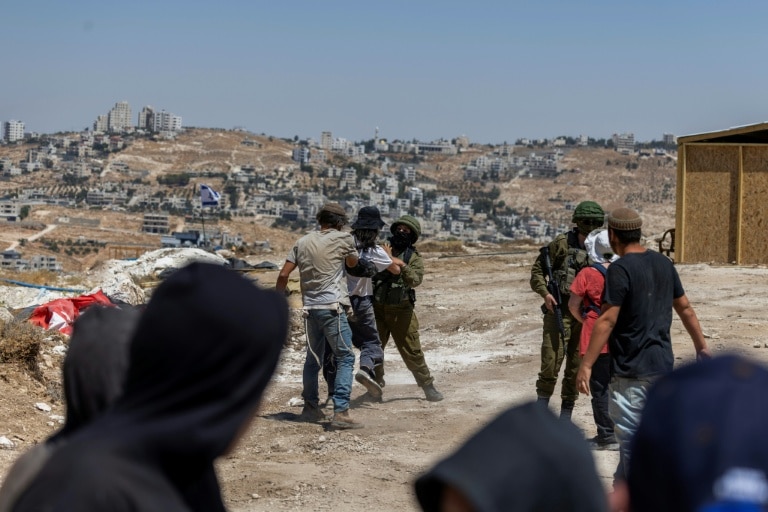
    In a significant escalation of its cross-border conflict with Hezbollah, Israeli forces have raised the national flag over the medieval Beaufort Castle in southern Lebanon as part of a broader expansion of ground operations deeper into Lebanese territory, official announcements and on-the-ground reporting confirmed Friday.

    Agence France-Presse correspondents on site observed the Israeli banner flying above the centuries-old fortress, with the sound of artillery shelling echoing across the surrounding hills and plumes of smoke rising from nearby areas. The site holds deep strategic and historical significance for both sides: it served as a key Israeli military base during the country’s 22-year occupation of southern Lebanon that ended in 2000, and it was the site of a famous 1982 battle during the First Lebanon War.

    Israeli Defence Minister Israel Katz confirmed the capture of the strategic high point in a social media post Friday, timed to coincide with the annual commemoration of Israeli soldiers killed in the 1982 First Lebanon War. “Forty-four years after the heroic Battle of Beaufort, and on this day commemorating the soldiers who fell in the First Lebanon War, our troops have returned to the summit of Beaufort and once again raised the Israeli flag there,” Katz wrote. He added that under the direction of Prime Minister Benjamin Netanyahu and his own leadership, the Israel Defense Forces (IDF) had crossed the Litani River and seized Beaufort Ridge, a position that provides sweeping panoramic views of southern Lebanon and northern Israel’s Galilee region. “This is one of the most important strategic points for defending the communities of the Galilee and safeguarding the security of our forces,” Katz noted.

    The advance on Beaufort came alongside a mass evacuation order issued by the IDF for all civilian areas south of the Zahrani River, a waterway located roughly 25 miles north of the Israel-Lebanon border, north of the Litani River. The military warned it is conducting targeted operations against the Iran-backed Hezbollah armed group, which has launched near-daily attacks on northern Israel since the outbreak of the Israel-Hamas war in 2023. “Anyone present near Hezbollah elements, facilities, or combat means endangers their life. Any building used by Hezbollah for military purposes may become subject to targeting!” IDF spokesman Avichay Adraee wrote in a social media statement.

    On Saturday, the IDF confirmed that a large contingent of ground troops had launched offensive operations to push its forward defense line deeper into Lebanon, with operations expanding into additional areas of the southern part of the country. Lebanese Prime Minister Nawaf Salam has condemned the expanded offensive as a deliberate “scorched-earth policy and collective punishment” targeting Lebanese civilians. “It is destroying towns and villages, and forcing their inhabitants into exile,” Salam said, urging an immediate ceasefire to halt the violence.

    The military escalation comes amid ongoing diplomatic efforts to de-escalate the conflict, with U.S.-brokered security talks between Israeli and Lebanese military delegations held in Washington Friday, with additional political negotiations scheduled for next week. Salam acknowledged that the outcome of the negotiations remains uncertain, but called the diplomatic track “the least costly path for our country and our people.”

    A nominally binding truce between Israel and Hezbollah was supposed to enter into force on April 17, but the agreement has been almost universally violated by both sides. Each side accuses the other of daily breaches of the ceasefire, using the other’s attacks to justify retaliatory strikes. The U.S. statement issued after Friday’s talks made no public mention of the failed truce, only noting that “productive military-to-military discussions” would lay groundwork for next week’s political negotiations. Hezbollah has repeatedly voiced firm opposition to direct bilateral talks with Israel.

    On Saturday, Hezbollah announced it had launched multiple coordinated attacks targeting northern Israeli positions and engaged in direct ground clashes with IDF troops in several towns across southern Lebanon, including Zawtar al-Sharqiyah, Yohmor al-Shaqif and Dibbine. The group claimed Israeli forces had “not yet succeeded in taking control of the towns” amid the fighting.

    The IDF reported that more than 25 projectiles were fired from Lebanese territory into northern Israel on Saturday, triggering air raid sirens in the northern cities of Karmiel and Safed — the first time sirens have sounded in those urban centers since the April truce went into effect. Public broadcaster Kan released user-generated footage showing rockets falling into the Mediterranean Sea off the coast of Nahariya, a northern Israeli coastal city near the border, forcing panicked beachgoers to flee the area.

    On Sunday, the IDF confirmed that one Israeli soldier had been killed a day earlier in a Hezbollah explosive drone attack, pushing the total number of Israeli military personnel killed in operations in Lebanon since early March to 25. According to Lebanon’s Ministry of Public Health, Israeli attacks across southern Lebanon have killed more than 3,371 Lebanese people since March 2, the vast majority of whom are civilians.

  • Iran war forces farmers seek fertilizer alternatives from cow dung to compost

    Iran war forces farmers seek fertilizer alternatives from cow dung to compost

    Geopolitical upheaval in the Middle East has sent shockwaves through global agricultural markets, sending chemical fertilizer prices soaring and pushing smallholder and commercial farmers alike across multiple continents to accelerate a shift toward organic and bio-based alternatives. For farmers in Senegal, one of West Africa’s most food-dependent nations, the impact of tensions around the Strait of Hormuz has been felt almost immediately after U.S. missile strikes on Iran earlier this year. Since the outbreak of conflict in late February, domestic fertilizer prices in the country have jumped 40%, creating an unprecedented crisis for small-scale producers reliant on imported agricultural inputs.

    Abou Sow, a Senegalese farmer who made the switch from chemical fertilizers to organic compost eight years ago, has been far better insulated from the price shock than many of his neighbors. Today, he leads a grassroots movement urging local farmers to source manure from regional livestock herders and teaches hands-on composting techniques, pointing to wriggling earthworms in finished compost as a key marker of nutrient-rich soil. “We can’t afford to wait for a ceasefire,” Sow said. “It’s simply too risky to depend on imported chemical fertilizers when global supply chains are so unstable.”

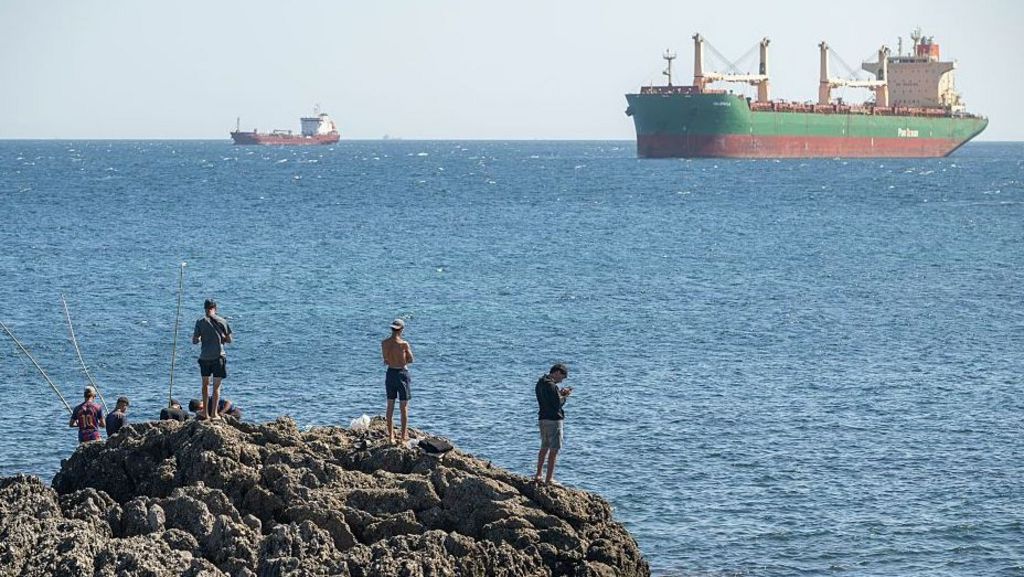
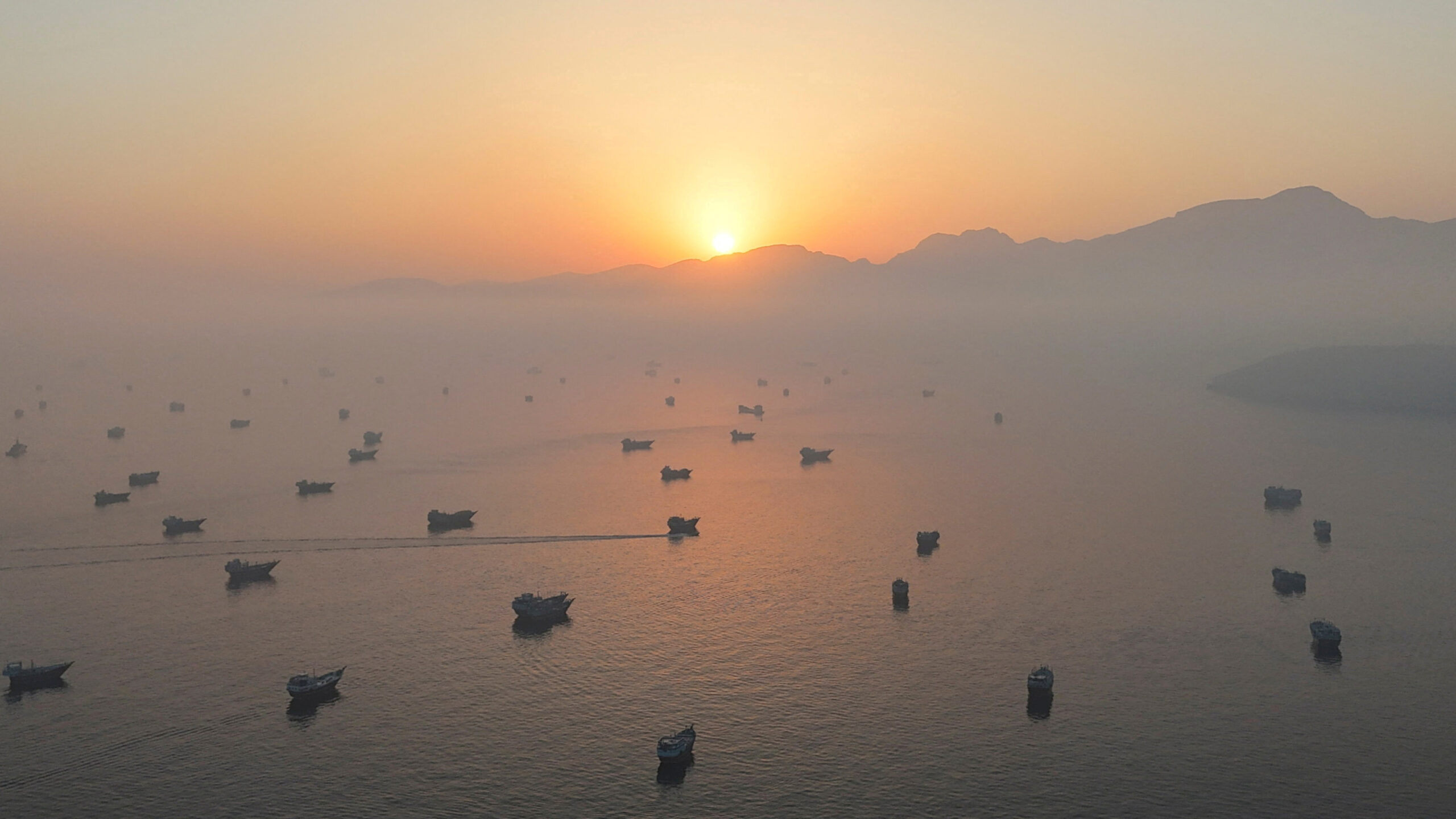
    The disruption stems from Iran’s control over the Strait of Hormuz, a critical global shipping chokepoint that impacts both natural gas supplies – a core input for chemical fertilizer production – and global maritime trade. Data confirms the scope of the crisis: the Gulf region accounts for 30% of all globally traded chemical fertilizer, and the World Bank’s global fertilizer price index has recorded a 50% price increase since tensions escalated. The global food security community has sounded the alarm, with Maximo Torero, chief economist at the United Nations Food and Agriculture Organization, warning “the clock is ticking very hard” as risks to global food supplies mount.

    Beyond easing supply chain dependency, experts note that a global shift away from chemical fertilizers carries major environmental benefits. The production and application of synthetic fertilizers generate substantial greenhouse gas emissions, the primary driver of anthropogenic climate change. In contrast, organic and natural fertilizers sequester carbon in soil and reduce the water pollution caused by chemical runoff from agricultural lands. “It’s good for the planet because you’re weaning food production off fossil fuels,” explained Susan Chomba, a member of the International Panel of Experts on Sustainable Food Systems, an independent global think tank.

    Senegal, which imports 125,000 tons of chemical fertilizer annually, illustrates the uneven nature of the transition. While Senegalese Agriculture Minister Mabouba Diagne has stated the government secured enough chemical fertilizer for the current growing season, many farmers report that supplies are increasingly hard to access on the ground. Farmer Aliou Fall blames the U.S. for the crisis, arguing “He [Donald Trump] brings war to the world and he doesn’t even think about it. Now farmers are suffering.”

    For Sow, proximity to a regional sheep-rearing community has kept his compost supplies steady: he applies six tons of organic compost to his fields each year, avoiding the sticker shock of synthetic inputs. But access remains a major barrier in remote rural areas, where sourcing and transporting large volumes of manure is logistically and financially unfeasible. Sow warns that without broader support, some vulnerable smallholders may be forced to abandon their fields entirely this growing season.

    Industry-backed alternatives are already gaining traction across the continent: biofertilizers, which contain naturally occurring bacteria and microorganisms that help crops draw essential nitrogen from air and soil, offer a scalable solution. A growing number of African firms now produce commercial-scale compost from municipal organic waste, turning discarded food scraps into nutrient-rich fertilizer. In response to the crisis, the Senegalese government announced a program in April to subsidize and distribute 30,000 tons of organic fertilizer to smallholders, but Sow argues the support is far from sufficient to meet growing demand.

    Systemic barriers continue to slow the global transition, experts note. The Organization for Economic Co-operation and Development estimates that governments around the world spend $700 billion annually on agricultural subsidies, with the vast majority directed toward supporting synthetic fertilizer production and distribution. This policy landscape keeps chemical fertilizer artificially cheap and makes sustainable alternatives less cost-competitive for producers. “You’re incentivizing the wrong sort of products,” Chomba said of the current subsidy structure.

    The trend toward alternative fertilizers is playing out across major agricultural economies globally. In Brazil, one of the world’s top exporters of soybeans, coffee, sugarcane, and beef, more than 80% of all chemical fertilizer is imported, leaving the sector extremely exposed to global price shocks. Luis Barbieri, founder of the Brazilian Folio Institute that connects farmers and agricultural researchers, reports that fertilizer prices in the country have risen 50% since the outbreak of the Iran conflict. “Whenever we have a war, farmers’ use of biofertilizers is turbocharged,” Barbieri said.

    Notably, chemical fertilizers have long been less effective in Brazil’s tropical climate: high temperatures and heavy rainfall accelerate runoff, reducing their impact on crop yields. Brazil’s state-run agricultural research corporation Embrapa reports that the country’s biofertilizer sector grew 15% between 2023 and 2024, and flexible national patent laws allow smallholders to produce their own biofertilizers on-farm at a fraction of the cost of imported synthetic alternatives. The pace of transition varies widely, however: in Mexico, progress has been glacial, due to persistent government subsidies for chemical fertilizer and a lack of public funding for sustainable alternatives, according to Gerardo Noriega, a research professor at the Autonomous University of Chapingo and one of Mexico’s leading advocates for organic fertilization. Even so, Noriega predicts the current global crisis “may force (farmers) to adopt organic fertilizers more quickly than they had imagined.”

    In India, another major agricultural economy that imports 60% of its fertilizer from the Gulf region, the central government has launched a national push to scale natural farming. In the southern states of Telangana and Andhra Pradesh, more than 1.7 million farmers have already shifted to natural systems that rely on on-farm organic inputs rather than commercial synthetic fertilizers. Manohara Chari, a farmer in Telangana, now produces jivamrita – a nutrient-dense fertilizer blend made from cow dung, cow urine, flour, soil, and jaggery – to replace the synthetic products he used for decades. “We do not depend on companies,” Chari said, explaining the self-sufficiency of the natural farming model.

    Earlier this year, Indian Prime Minister Narendra Modi launched a national mission to scale natural farming across the country, setting a target of cutting chemical fertilizer use by 50% within the coming years. The Indian government has already spent heavily to subsidize imported chemical fertilizer and secure alternative supply chains to offset the Gulf disruption, but agricultural scientists report growing farmer interest in low-input natural farming since the conflict began. “There’s certainly been more interest this year in natural farming, especially after the Middle East conflict began,” said G.V. Ramanjaneyulu, an agricultural scientist with the Center for Sustainable Agriculture. Many farmers are now setting aside test plots on their land to trial natural methods before committing to a full transition.

    The shift to natural farming does require additional on-farm labor and a multiyear transition period as soil health regenerates, and farmers say government policy remains misaligned to support the change. Chari argues that redirecting even a small share of existing chemical fertilizer subsidies to support natural farmers would drive a much faster, broader transition across the country. The current global supply crisis, producers and experts agree, has created an urgent opening to reorient global agricultural policy toward more resilient, sustainable systems that benefit both smallholders and the climate.

  • Concerns mount that Belarus could be a launchpad for a new Russian offensive in Ukraine

    Concerns mount that Belarus could be a launchpad for a new Russian offensive in Ukraine

    More than three years after Russian forces launched their full-scale invasion of Ukraine from Belarusian territory, Kyiv and Western capitals are sounding new alarms that Alexander Lukashenko, Belarus’ long-ruling authoritarian leader, could open a new front for the Kremlin by allowing Moscow to again use his country as a launchpad for aggression.

    When Putin launched his full-scale invasion on February 24, 2022, tens of thousands of Russian troops massed in northern Belarus under the pretense of joint military drills, then launched a rapid push south toward Kyiv, just 90 kilometers from the Belarusian border. Putin’s bid for a quick capture of the Ukrainian capital crumbled in the face of fierce Ukrainian resistance, with stretched-out Russian armored convoys sitting vulnerable to ambushes along narrow highways. Just over a month into the invasion, heavily damaged Russian forces with crumbling supply lines retreated from northern Ukraine, a move the Kremlin framed as a “goodwill gesture” amid early peace efforts. Those early peace talks were actually hosted on Belarusian territory, bringing Russian and Ukrainian delegates together for the first negotiation before talks shifted to Istanbul, where no breakthrough agreement was ever reached.

    Unlike the opening days of the war, Belarus has not deployed its own troops to fight in Ukraine, but Lukashenko’s regime has become an integral, often overlooked pillar of Putin’s war effort. Over nearly three years of conflict, Minsk has opened its borders to host Russian military infrastructure, tactical nuclear weapons, and training grounds for Russian troops, offered its hospitals to treat wounded Russian soldiers, and integrated its domestic manufacturing sector into Russia’s war supply chain.

    Ukrainian sanctions envoy Vladyslav Vlasiuk confirmed that fragments of a Russian Oreshnik ballistic missile fired at Ukraine in May contained microchips manufactured in Belarus. The Belarusian opposition military monitoring group BELPOL, made up of former military and law enforcement officers who oppose Lukashenko, estimates more than 500 Belarusian industrial plants are currently involved in producing weapons components, repairing Russian military equipment, and providing logistics support for Moscow’s campaign. The group’s head, Uladzimir Zhyhar, told reporters that “Lukashenko’s regime is quite seriously involved in the war. Lukashenko is helping Russia in every way he can.”

    Zhyhar added that new infrastructure construction, including a large-scale firing range and barracks capable of housing thousands of troops, is already underway in Belarus’ Gomel region along the Ukrainian border. This ongoing military buildup has forced Kyiv to divert tens of thousands of troops from the main 1,000-kilometer front line in eastern and southern Ukraine to defend its northern border, stretching Ukrainian defensive resources thin.

    Beyond conventional military support, Belarus has become a core part of Russia’s nuclear deterrence posture in Europe. Geographically, Belarus shares borders with three NATO member states — Latvia, Lithuania, and Poland — making it a strategically critical outpost for the Kremlin. In 2024, Moscow updated its nuclear doctrine to place Belarus firmly under Russia’s nuclear umbrella, and announced that it had deployed its new nuclear-capable Oreshnik intermediate-range missile system to Belarusian territory. Russia has already used conventionally armed variants of the Oreshnik to strike targets inside Ukraine three times in the last six months. Earlier this month, Moscow and Minsk held large-scale joint nuclear force drills that simulated delivering nuclear warheads to missile units and preparing for a launch, with a joint Belarusian-Russian crew test-firing a nuclear-capable Iskander missile from a southern Russian range.

    “Belarus lacks military sovereignty, and as soon as Moscow sees it as necessary for its strategy, Moscow will naturally use Belarus as a launchpad for a new invasion of Ukraine or some kind of armed conflict with NATO countries,” Zhyhar explained, noting that Belarus offers a “very convenient springboard” for any new northern push toward Kyiv.

    Last week, Ukrainian President Volodymyr Zelenskyy confirmed that Kyiv’s intelligence services had detected a sharp increase in Russian efforts to push Belarus into deeper direct involvement in the war, and prepare for new offensive operations launched from Belarusian territory. Zelenskyy said potential targets include the Chernihiv-Kyiv corridor in northern Ukraine, or even a strike against a NATO member state sharing a border with Belarus. In response, Zelenskyy has ordered Ukrainian military and security agencies to strengthen northern border fortifications and prepare a coordinated defensive response.

    Both Lukashenko and senior Russian officials have rejected Kyiv’s warnings. Lukashenko has insisted Belarus has no plans to enter the war unless it is directly attacked, while Russian Security Council Secretary Sergei Shoigu dismissed Zelenskyy’s claims as a fearmongering tactic designed to pressure Western allies into sending more military aid to Kyiv.

    Even so, the growing risk has prompted unprecedented diplomatic outreach from Western powers. On May 24, French President Emmanuel Macron held his first call with Lukashenko since the 2022 invasion to warn of the severe risks if Belarus is dragged deeper into the conflict. Lukashenko responded by announcing he would host a French envoy the following week to discuss European security and potential easing of European Union sanctions on Minsk.

    Ukrainian border guard spokesperson Andrii Demchenko noted that while intelligence confirms Russia is increasing pressure on Lukashenko to enter the war directly, Ukrainian forces have not yet detected a large-scale buildup of Russian or Belarusian troops and equipment along the border. Belarusian opposition leader-in-exile Sviatlana Tsikhanouskaya, who visited Kyiv last week, emphasized that “Belarus must never again become a springboard for aggression. Russian tanks must never again march through Belarus to Chernihiv, Zhitomir, Rivne, or Kyiv. Ukraine is fighting for itself and for all the peoples who have lived in the shadow of empire for too long. It is fighting for the right to live in peace. And the fate of my country, Belarus, also depends on Ukraine’s success.”

    Independent military analysts based in Minsk argue that a large-scale offensive launched from Belarus is militarily unlikely at this stage. Belarus has just under 49,000 active-duty troops, a fraction of Russia’s 1.5 million active force, and while Minsk could theoretically mobilize up to 290,000 reservists, those forces lack modern weapons and sufficient training to conduct offensive operations. Minsk-based military analyst Alexander Alesin estimates an offensive would require mobilizing as many as 500,000 personnel — a move that would cripple Belarus’ domestic economy and require massive Russian arms supplies to equip the force.

    “Even with a small force, the Ukrainians can easily defend themselves and inflict heavy losses on the Belarusian army,” Alesin said, noting that Ukraine has already built layered heavy fortifications along the entire border and planted extensive minefields that would slow any incursion. Alesin added that Lukashenko has little incentive to pursue direct involvement, pointing out that the Belarusian leader benefits greatly from his current role as a quiet supplier to Russia’s war machine. “The last thing Lukashenko wants is to fight, and he’ll cling to his current position at any cost, so he can avoid fighting while profiting handsomely from the war,” Alesin said.

  • Euphrates flooding displaces thousands in Syria’s Deir Ezzor

    Euphrates flooding displaces thousands in Syria’s Deir Ezzor

    A devastating flood event triggered by sharply rising water levels along the Euphrates River has left more than 2,400 families across Syria’s eastern Deir Ezzor province grappling with widespread disruption, submerging entire rural villages, destroying critical farmland, and cutting off access to basic life-sustaining services across the hard-hit region.

    The flood crisis, which has been most severe in Deir Ezzor and neighboring Raqqa governorate since the unexpected water surge began on May 26, has been officially attributed by Syria’s Ministry of Energy to two key factors: unusually heavy rainfall across the river basin this season, and the opening of floodgates on upstream dams located in Turkish territory along the Euphrates.

    Labeling the sudden increase in cross-border water flows as “unprecedented”, the Ministry of Energy confirmed that it took the emergency step of opening three spillway gates at Syria’s own Euphrates Dam — a measure not required for more than three decades — to reduce dangerous structural pressure on the key infrastructure.

    By the end of the first week of the crisis, Syrian authorities announced that diplomatic and technical coordination between the Syrian government and their Turkish counterparts had yielded progress, with Turkey beginning to reduce the volume of water released into Syrian territory via the river.

    In a public video statement posted to the social platform X, Syrian Energy Minister Mohammad al-Bashir confirmed that water levels along the entire stretch of the Euphrates running through Syria are gradually stabilizing after the emergency structural measures implemented at the country’s main Euphrates Dam. He added that government monitoring teams will remain deployed around the clock to track water conditions until levels return to their normal, safe range.

    Tragedy struck in the early hours of the flood emergency, when three children lost their lives after entering the swollen Euphrates to swim, despite repeated public warnings issued by Syria’s Emergency and Disaster Management Minister Raed al-Saleh to avoid all contact with the dangerous rising waters.

    Beyond the fatal incident, the swelling floodwaters forced dozens of households to flee their inundated residences, and left multiple small villages partially cut off from the outside world after key access roads and river crossing structures were damaged or swept away by the current.

    In response to the crisis, Syrian emergency response teams have been deployed across the affected region to carry out urgent work: reinforcing vulnerable riverbanks to prevent further breach, coordinating the evacuation of residents from high-risk low-lying areas, and conducting systematic assessments of damage to public and private infrastructure.

    On Friday, al-Saleh issued an official update confirming that water levels across the affected stretch of the Euphrates have returned to normal baseline, and no new instances of uncontrolled flooding have been recorded across the region.

    To wrap up the first week of the emergency response, Syrian President Ahmed al-Sharaa traveled to Deir Ezzor province on Friday alongside a full senior ministerial delegation, to conduct an on-site assessment of the flood damage and meet with affected communities to review their immediate humanitarian needs.

    This reporting was originally published by Middle East Eye, an outlet that provides independent, in-depth coverage of events across the Middle East, North Africa, and surrounding regions.

  • Israel issues new expulsion orders as forces press deeper into Lebanon

    Israel issues new expulsion orders as forces press deeper into Lebanon

    On Saturday, Israel’s military carried out a provocative new step in its expanding campaign in southern Lebanon, issuing formal expulsion orders forcing residents from 13 villages in the border region. This action came just one day after Israeli Prime Minister Benjamin Netanyahu confirmed that Israeli troops had pushed deeper into Lebanese territory than ever before in the current conflict.

    Netanyahu’s announcement made explicit what military officials had signaled earlier in the week: Israeli ground forces had advanced beyond the Litani River, a key geographic marker that sits roughly 30 kilometers north of the official Lebanon-Israel border. “Our forces have crossed the Litani and advanced to controlling positions,” the prime minister stated publicly.

    This escalating military push unfolds against a backdrop of planned diplomatic negotiations set to kick off early next week, mediated by the United States. The talks, which will be the fourth round of negotiations since April 14, were preceded by a security meeting between Lebanese and Israeli military delegations held at the Pentagon in Washington DC this past Friday.

    According to Lebanese broadcaster Al Mayadeen, which cited an anonymous senior Lebanese official, Israeli negotiators rejected a core Lebanese demand for a full Israeli withdrawal from occupied Lebanese territory during Friday’s talks. The outlet also reported that Israel is insisting on the full dissolution of Hezbollah as a condition for any deal, a non-starter for Lebanese negotiating teams.

    Despite a nominal ceasefire that has been formally in place since April 17, Israel has maintained relentless heavy airstrikes and artillery bombardment across southern and eastern Lebanon. Just this week, the Israeli military confirmed it had expanded ground operations beyond an already established occupied security zone that already included dozens of southern Lebanese villages.

    The human cost of Israel’s military campaign, which launched on March 2, continues to mount. Lebanon’s Ministry of Public Health reports that at least 3,355 people have been killed in Israeli attacks to date, with 31 additional fatalities recorded between Thursday and Saturday. Thursday marked a significant escalation of its own, when Israel carried out its first airstrike near the Lebanese capital Beirut in several weeks.

    More than 1 million Lebanese people have been displaced by the campaign, which has leveled entire residential towns and cities, shattered critical public infrastructure, and pushed Lebanon’s already fragile humanitarian system into catastrophic collapse.

    On the Lebanese side, the armed group Hezbollah has continued to mount coordinated retaliatory operations against Israeli targets. On Saturday alone, the group announced three separate attacks: it launched rocket barrages targeting the northern Israeli town of Kiryat Shmona, fired a precision missile at the air traffic control unit at Israel’s Meron Air Base – a key Israeli Air Force surveillance and command outpost located just 8 kilometers from the Lebanese border – and ambushed Israeli infantry troops near the southern Lebanese village of Ghandouriyeh, forcing the attacking unit to retreat. The group also stated it carried out a targeted strike on advancing Israeli troops near the historic Beaufort Castle (known locally as Qalaat al-Shaqif), a site that served as an Israeli military base during Israel’s 22-year occupation of southern Lebanon that ended in 2000.

  • ‘No-one feels safe now’: Residents of Romanian city hit by drone share fears

    ‘No-one feels safe now’: Residents of Romanian city hit by drone share fears

    For many Romanians, the full-scale Russian invasion of Ukraine has stopped being a distant conflict unfolding across a border. It has arrived on their doorsteps, leaving a gaping hole in an apartment building and a population gripped by anxiety over future attacks. The incident in the northeastern Romanian city of Galati, which occurred in the early hours of Friday while most residents were asleep, marks the most severe incursion of the war into NATO and European Union member Romania since Russia launched its full-scale invasion in 2022. On Saturday, reporters climbed 11 stories to the building’s damaged roof, where a jagged, two-meter wide concrete puncture from the downed drone was covered with a temporary plastic tarp. The blast sparked an immediate fire that left the apartment directly below the roof heavily damaged, and a mother and her teenage son were hospitalized with bruising and minor burns. Disaster experts and local residents have emphasized that the outcome could have been far deadlier: the drone struck the building’s concrete lift shaft, which absorbed the majority of the explosion’s force. If the strike had hit a residential side of the structure, an entire floor or more could have been destroyed. Costel Patrichi, the building’s resident manager, described the chaotic morning of the incident. Just before 2 a.m., his phone buzzed with an official air threat alert warning that an unidentified drone was moving toward the city from the nearby Ukrainian border, located only a few dozen miles away. Seconds after the alert arrived, a deafening explosion shook the entire building. Like many Galati residents, Patrichi expressed deep frustration at the failure of Romanian air defenses to intercept the incoming drone. “They told us we are protected by NATO, not to worry. But look where we are now!” he told reporters. He added that the strike has shattered any sense of safety for local residents: “Now I’m afraid. If I go back to my flat tonight, I will sleep with fear. Because this could happen again.” This pervasive sense of vulnerability echoes the constant fear that Ukrainian civilians face nightly, as Russian attack drones regularly target residential infrastructure across the country, killing civilians and destroying homes. But for Romania, a NATO member, the strike represents a dangerous new escalation of the war. Moscow has repeatedly denied any connection to the drone, with Russian President Vladimir Putin claiming there is no evidence linking the weapon to Russian forces. But Romanian officials have pushed back firmly against these denials, confirming the drone is a Russian-produced Geran-2, also widely known as a Shahed. Romanian President Klaus Iohannis told the BBC that the identification is unambiguous: this was a Russian drone, matching the design of another unexploded Russian drone that crashed in Romanian territory just four to five weeks prior. The drones in the region are part of a sustained Russian campaign targeting key Ukrainian Danube River ports, which serve as a critical export hub for Ukrainian grain. On the day of the Galati strike, Romanian defense officials tracked a swarm of 43 Russian drones moving west along the border. According to Iohannis, one of the drones was damaged by Ukrainian air defenses, veered off course, and crossed into Romanian territory before striking the apartment building. NATO allies have formally condemned the incident, calling Russia’s conduct in the war reckless and blaming Moscow’s unprovoked aggression for the incursion. But the international response has been marked by deliberate caution, as leaders work to avoid a direct military confrontation between nuclear-armed Russia and the 31-member alliance. Bucharest government officials confirmed that they briefly considered invoking Article 4 of the NATO treaty, which would trigger an emergency collective security consultation, but rejected the move to prevent widespread public panic. The more drastic step of invoking Article 5 – NATO’s collective mutual defense clause, which defines an attack on one member as an attack on all – has not been put forward for discussion, as no alliance member has accused Russia of launching a deliberate attack on Romanian territory. In response to the strike, Romania has ordered the closure of a Russian consulate in the Black Sea port city of Constanta as a formal diplomatic warning. Iohannis noted that the next step in Romania’s planned diplomatic escalation would be the expulsion of Russia’s ambassador to Bucharest, but no such move has been ordered as of yet. Bucharest has also called on NATO to accelerate the delivery of promised additional air defense equipment to Romania’s eastern border region, and the Romanian government has moved forward with plans to acquire its own fleet of attack drones, including future joint development projects with Ukrainian defense firms. The European Union has also accelerated work on a new round of economic sanctions targeting Moscow. For residents of Galati, diplomatic maneuvers and sanctions have done little to ease the constant sense of danger. Adrian, a local resident who surveyed damage to his family’s apartment in the struck building, called the incident “insane”, noting that the strike occurred in a dense residential neighborhood in the middle of the city. “No-one feels safe now,” he said. Adrian placed full blame for the incident on Russia and Vladimir Putin, adding that existing international sanctions have done little to deter Russian aggression. “But I don’t think the sanctions are enough,” he said. “Because they could take everything from Russia, and they would still attack.” As the war enters its fourth year, the risk of the conflict spilling beyond Ukraine’s borders into neighboring NATO territory is higher than it has ever been, and ordinary Romanians on the front lines of the border region are left living with the constant possibility of another strike.

  • ‘I will sleep with fear’: Romanians shaken after block of flats hit by drone

    ‘I will sleep with fear’: Romanians shaken after block of flats hit by drone

    On Friday, a Russian drone crashed into a residential apartment block in Romania, triggering a destructive blaze and leaving two people with injuries, according to official statements from Romanian authorities. The incident has sent waves of anxiety and unease across local communities, with many residents saying they now face an uncertain future marred by constant fear of further attacks. One local resident summed up the widespread mood of trepidation, saying, “I will sleep with fear” going forward. The strike comes amid heightened regional tensions following months of cross-border drone and missile incidents linked to the ongoing conflict in Ukraine, which shares a long border with NATO member Romania. Emergency services were quick to respond, extinguishing the fire and launching an investigation into the exact origins of the drone and how it crossed into Romanian territory. Romanian officials have yet to release a full public account of the strike’s trajectory, but the incident has already sparked renewed discussion among NATO allies about reinforcing eastern flank security to deter further accidental or intentional incursions into alliance territory. For residents of the affected building and surrounding neighborhoods, the immediate impact has been deeply personal, with many displaced from their homes and left grappling with property damage and emotional trauma.

  • Four more men freed from flooded Laos cave

    Four more men freed from flooded Laos cave

    In a remote mountainous region of central Laos, a dramatic 10-day rescue operation has resulted in the safe extraction of four men who were trapped underground after flash floods flooded a narrow cave system, Thai rescue officials confirmed Thursday. The four survivors emerged from the dangerous cave network a full 24 hours after rescuers pulled a fifth man to safety last week.

    The group of seven, all Lao nationals, had ventured deep into the interconnected tunnels of the cave in Xaysomboun province in search of gold deposits on May 20. Within hours of entering, sudden flash floods surged through the cave, collapsing access routes and cutting the group off from the outside world, leaving them stranded in total darkness hundreds of meters from the entrance.

    Rescue teams, including highly trained specialist divers, were deployed immediately to the remote site, but their efforts were hampered by extremely challenging conditions. The cave system is not only extremely deep but also remarkably narrow, with some passageways measuring just 50 centimeters, or 20 inches, wide. Tight spaces and ongoing water hazards slowed progress as search teams worked systematically through the winding tunnels.

    By Wednesday, rescuers had located five alive members of the original group. Following the successful rescue of the first man on Wednesday, the remaining four were brought out to safety on Thursday. Even as rescue teams celebrate the successful recovery of the five survivors, the operation continues: two members of the original group remain unaccounted for, with search teams continuing to comb the cave system for any sign of the missing men.

  • Rescuers work to free 4 men who remain trapped in flooded Laos cave and search for 2 still missing

    Rescuers work to free 4 men who remain trapped in flooded Laos cave and search for 2 still missing

    In a remote, rugged stretch of central Laos, an international team of rescue specialists is racing against harsh conditions to pull four surviving trapped villagers out of a flooded cave system, 10 days after flash floods cut off their exit. One of the five men found alive earlier this week was successfully evacuated to safety on Friday, capping days of dangerous preparation, as crews continue searching for two other missing villagers who remain unaccounted for.

    The chain of events that led to the crisis began last week, when a group of seven local villagers entered the remote cave in Xaisomboun Province, roughly 120 kilometers north of the capital Vientiane, in search of valuable minerals. Unexpected flash floods rushed through the cave system, sealing off the only exit and trapping the entire group. Only one man managed to escape the rising waters quickly enough to alert local authorities to the emergency, setting the large-scale rescue effort in motion.

    Three days ago, rescuers made a hopeful breakthrough: they located five of the six remaining trapped men alive, identified only by their first names: Khamla, Mued, Ee, Ing and Laen. Crews immediately delivered life-sustaining supplies to the stranded men, including clean drinking water, soft food and thermal foil blankets to ward off hypothermia in the cool, damp cave environment. Despite the aid, on-site footage shows the men’s health and physical conditions have continued to decline after more than a week trapped underground.

    Friday brought the first major success of the operation. After months of preparation and hours of careful navigation through the cave’s flooded passages, crews extracted the first survivor in an operation that took roughly 30 minutes. On-site videos captured the tense moment of his emergence: the man exited the cave’s dark water alongside an expert cave diver, gasping for air before slowly pulling himself through a narrow, partially flooded passageway. When he finally reached stable ground, he struggled to stand steadily on unsteady legs. Rescuers noted he had suffered injuries to his hands, quickly wrapped him in a thermal blanket to stabilize his body temperature, and assisted him to a waiting medical team. A second video showed the man being helped out of the cave’s main entrance, a headlamp strapped to his forehead, supported by two rescue workers as he moved into the care of waiting medics amid a crowd of on-site responders. It has not been publicly confirmed which of the five identified survivors was the first to be evacuated.

    Crews decided to hold off on evacuating the four remaining surviving men on Friday, as they determined the men were not yet physically ready to make the dangerous journey out. Instead, rescue teams worked overnight and through Saturday to drain more flood water from the cave system, with the goal of completing the extractions of the remaining four survivors later the same day. One participating Thai cave diver, Norrased Palasing, reaffirmed the team’s commitment in a Facebook post Saturday, writing “One person has made it out safely, and we will not stop until the remaining four make it home too.”

    The rescue effort has drawn international support and expertise. Local Laotian rescue teams have been joined by specialist responders from neighboring Thailand, as well as crews from Japan and Malaysia, with additional specialists from Indonesia, France and Australia also arriving at the remote site. Notably, many of the participating Thai divers and rescue leaders took part in the dramatic 2018 Tham Luang cave rescue, which successfully extracted 12 trapped schoolboys and their soccer coach from a flooded northern Thai cave, giving the team extensive experience in complex underground cave rescues.

    Even with this expertise, the operation remains extraordinarily high-risk. In a video recorded just an hour before the first evacuation began on Friday, Thai rescuer Kengkaj Bongkawong of the Metta Tham Rescue Kalasin detailed the extreme challenges crews face inside the cave. The rescue’s forward operating base is set up in a large chamber deep inside the cave, which can only be reached by navigating more than 200 meters of twisting, narrow passages with sharp jagged rock walls, most of which are fully submerged. From that staging area, divers must complete an additional 30-meter dive through a fully flooded tunnel to reach the chamber where the survivors are trapped.

    “To dive in a cave, there are issues with the temperature, narrow areas, control of movement, and managing the panic of the survivor, which will be difficult, but we have to do it,” Kengkaj explained. The greatest danger comes when guiding untrained survivors through zero-visibility flood waters, a task that carries significant risk of disorientation and panic for both the survivors and the rescue team. To prepare, divers have spent days training the trapped men in basic diving safety: on-site footage shows Norrased Palasing and Finnish diver Mikko Paasi walking the men through how to use diving breathing equipment, emphasizing the critical rule of breathing only through the mouth while underwater.

    Alongside the effort to extract the four remaining survivors, crews are also preparing to search deeper into the cave system for the two missing villagers. Kengkaj said teams plan to explore a section of the cave 20 to 25 meters beyond the chamber where the five survivors were found, a region that is even more deeply flooded than the area where the men were trapped. “That area has a lot of water. The water goes there because it’s even deeper than this place,” he noted.

  • President of Myanmar’s military-backed government visits India

    President of Myanmar’s military-backed government visits India

    On Saturday, the head of Myanmar’s military-aligned administration launched an official diplomatic trip to India, a critical regional partner for the Southeast Asian nation, with a packed agenda of high-level talks focused on deepening bilateral cooperation. This trip marks Min Aung Hlaing’s first visit to neighboring India since he was inaugurated as Myanmar’s president in April, following a widely criticized election that opponents argue was carefully staged to cement the military’s ongoing authoritarian hold on national power. His most recent prior trip to India took place in 2019, when he served as the country’s military chief.

    Myanmar state-controlled MRTV confirmed that Min Aung Hlaing, accompanied by a delegation of senior cabinet members, departed Naypyitaw, Myanmar’s capital, on Saturday morning. The delegation landed at Gaya International Airport in Bihar, an eastern Indian state located close to Bodh Gaya, one of the most sacred pilgrimage sites for Buddhist communities worldwide. Over the course of the visit, Min Aung Hlaing is scheduled to hold formal meetings with India’s top leadership, including President Droupadi Murmu and Prime Minister Narendra Modi, as well as senior government officials and leaders of Indian business associations. The talks are expected to cover opportunities to expand collaboration across economic, religious, cultural and social sectors, alongside plans to inspect key joint infrastructure projects in the region.

    For decades, New Delhi has maintained open diplomatic and economic ties with Myanmar’s successive military-backed governments, a policy that has continued even after the 2021 military coup that ousted the elected civilian government led by Aung San Suu Kyi. Following the coup, Western nations imposed sweeping economic and diplomatic sanctions on the junta, after military forces launched a brutal crackdown on political opponents that escalated into a nationwide armed conflict and a massive humanitarian catastrophe.

    Geopolitically, Myanmar holds major strategic importance for India’s regional security agenda. The two countries share a 1,643-kilometer land border and a contiguous maritime boundary in the Bay of Bengal. For years, New Delhi and the Myanmar military have collaborated on cross-border security operations and intelligence sharing to counter separatist insurgent groups that operate along their shared frontier. India currently also hosts tens of thousands of Myanmar refugees, most of whom have fled escalating violence in Myanmar’s northwestern Chin State and other conflict-wracked regions.

    Despite the diplomatic and security rationale for the visit, the decision to host Min Aung Hlaing has drawn sharp criticism from pro-democracy and human rights activists, who warn that the trip will grant undeserved international legitimacy to a junta accused of widespread human rights abuses. In a pre-trip emailed statement released Friday, Yadanar Maung, a spokesperson for activist group Justice For Myanmar, called Min Aung Hlaing a war criminal waging a campaign of terror against the people of Myanmar, and condemned India’s choice to welcome him. Yadanar Maung noted that India has a long history of supporting Myanmar’s military through official training programs and deep economic ties, and called on New Delhi to reverse its policy. “India must change course, stop awarding false legitimacy to the junta, stop profiting from the military’s campaign of terror against the people, and instead support the Myanmar people who are struggling and sacrificing daily for federal democracy,” the statement read.