On Saturday, Israel’s military carried out a provocative new step in its expanding campaign in southern Lebanon, issuing formal expulsion orders forcing residents from 13 villages in the border region. This action came just one day after Israeli Prime Minister Benjamin Netanyahu confirmed that Israeli troops had pushed deeper into Lebanese territory than ever before in the current conflict.
Netanyahu’s announcement made explicit what military officials had signaled earlier in the week: Israeli ground forces had advanced beyond the Litani River, a key geographic marker that sits roughly 30 kilometers north of the official Lebanon-Israel border. “Our forces have crossed the Litani and advanced to controlling positions,” the prime minister stated publicly.
This escalating military push unfolds against a backdrop of planned diplomatic negotiations set to kick off early next week, mediated by the United States. The talks, which will be the fourth round of negotiations since April 14, were preceded by a security meeting between Lebanese and Israeli military delegations held at the Pentagon in Washington DC this past Friday.
According to Lebanese broadcaster Al Mayadeen, which cited an anonymous senior Lebanese official, Israeli negotiators rejected a core Lebanese demand for a full Israeli withdrawal from occupied Lebanese territory during Friday’s talks. The outlet also reported that Israel is insisting on the full dissolution of Hezbollah as a condition for any deal, a non-starter for Lebanese negotiating teams.
Despite a nominal ceasefire that has been formally in place since April 17, Israel has maintained relentless heavy airstrikes and artillery bombardment across southern and eastern Lebanon. Just this week, the Israeli military confirmed it had expanded ground operations beyond an already established occupied security zone that already included dozens of southern Lebanese villages.
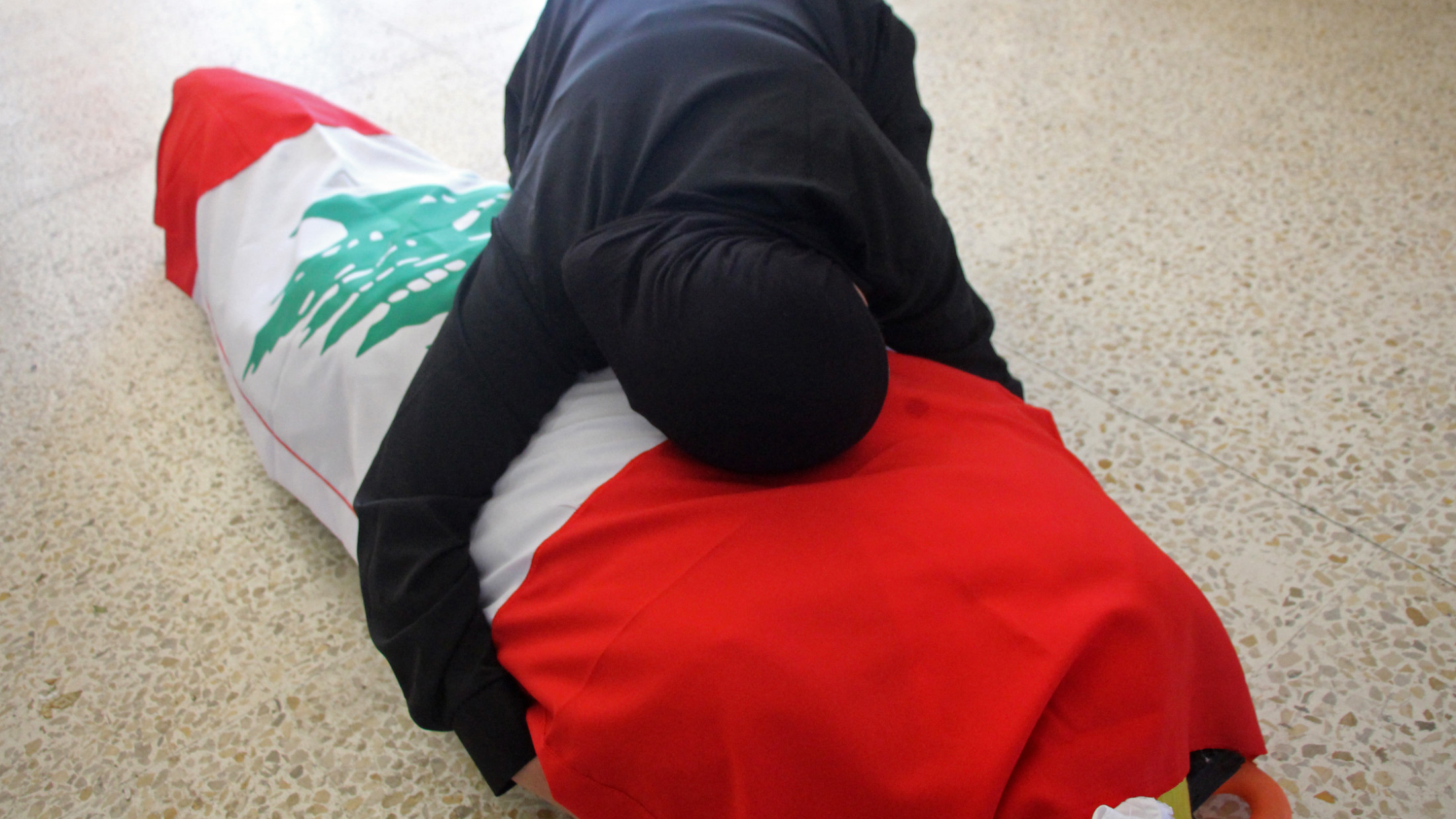
The human cost of Israel’s military campaign, which launched on March 2, continues to mount. Lebanon’s Ministry of Public Health reports that at least 3,355 people have been killed in Israeli attacks to date, with 31 additional fatalities recorded between Thursday and Saturday. Thursday marked a significant escalation of its own, when Israel carried out its first airstrike near the Lebanese capital Beirut in several weeks.
More than 1 million Lebanese people have been displaced by the campaign, which has leveled entire residential towns and cities, shattered critical public infrastructure, and pushed Lebanon’s already fragile humanitarian system into catastrophic collapse.
On the Lebanese side, the armed group Hezbollah has continued to mount coordinated retaliatory operations against Israeli targets. On Saturday alone, the group announced three separate attacks: it launched rocket barrages targeting the northern Israeli town of Kiryat Shmona, fired a precision missile at the air traffic control unit at Israel’s Meron Air Base – a key Israeli Air Force surveillance and command outpost located just 8 kilometers from the Lebanese border – and ambushed Israeli infantry troops near the southern Lebanese village of Ghandouriyeh, forcing the attacking unit to retreat. The group also stated it carried out a targeted strike on advancing Israeli troops near the historic Beaufort Castle (known locally as Qalaat al-Shaqif), a site that served as an Israeli military base during Israel’s 22-year occupation of southern Lebanon that ended in 2000.