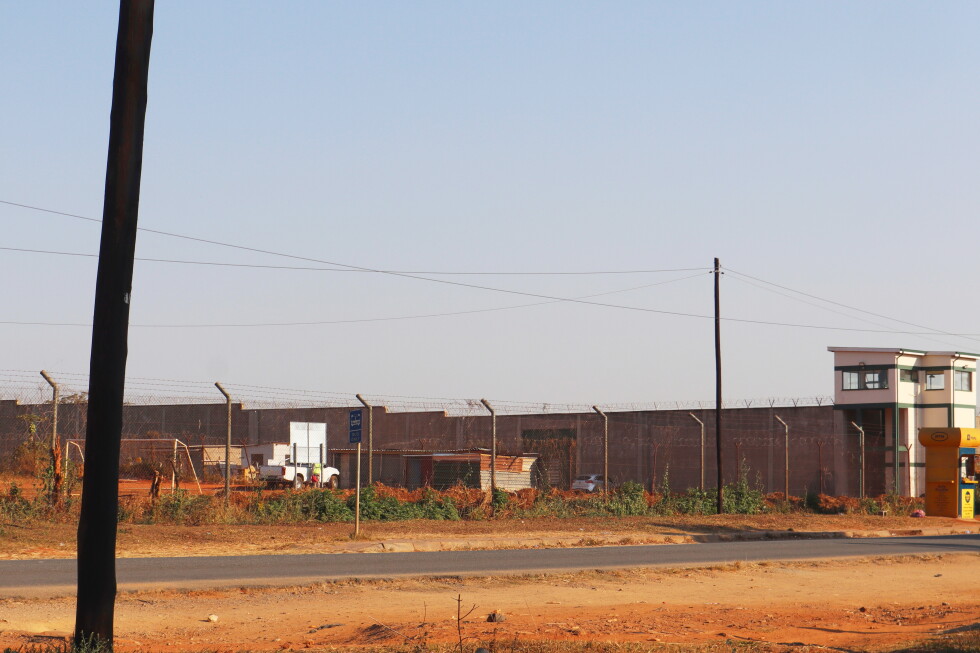
JOHANNESBURG – Authorities in the southern African kingdom of Eswatini have confirmed that two additional Latin American migrants deported from the United States have entered the country, marking the fifth group of deportees transferred under a controversial bilateral agreement that has sparked fierce condemnation from human rights organizations across the globe. In a statement released late Thursday, Eswatini’s government confirmed the pair are classified as “third-party nationals”, meaning they are not citizens of Eswatini, and their arrival followed prearranged consultations and terms set by Washington and Mbabane. This latest arrival comes after the first group of deportees was sent to the landlocked nation back in July 2025. Several earlier deportees transferred to Eswatini have already been moved onward to their home countries: a Jamaican national was repatriated to Jamaica in September, while a Cambodian man who spent five months detained in a maximum-security Eswatini prison was released for repatriation in March. Eswatini officials have not released any identifying information about the two most recent arrivals, nor have they disclosed their full nationalities (beyond confirming they are from Latin America) or how long they will be required to stay in the country. According to immigration advocates, this latest transfer is part of a broader, often underreported network of secret agreements struck by the Trump administration as part of its aggressive nationwide immigration crackdown. Through these deals, the U.S. has deported thousands of migrants to more than 20 countries that are not the migrants’ countries of origin. Around 11 of these third-country deportation agreements are with sub-Saharan African nations, including Rwanda, Ghana, Cameroon, the Democratic Republic of Congo, Uganda, Sierra Leone, and the Central African Republic. Immigration legal experts warn that the practice functions as a deliberate legal loophole, allowing the U.S. to indirectly send asylum seekers back to the high-risk countries they originally fled, circumventing international refugee protection laws. The Trump administration’s selection of partner nations for the scheme has also drawn sharp scrutiny, as many of the African countries selected, Eswatini included, are widely labeled as repressive regimes with documented poor human rights records. Eswatini is ruled by King Mswati III, who has faced persistent international accusations of violently cracking down on domestic pro-democracy opposition movements and civil society organizing. The program has expanded rapidly in recent months: Liberia has emerged as a key hub for the Trump administration’s third-country deportation strategy after agreeing to accept up to 1,200 migrants, one of the largest caps for any partner nation, and welcomed its first cohort of deportees earlier this month. In July 2025, Jamaica’s government confirmed that two of the three Jamaican citizens previously deported to Eswatini had formally rejected offers to be repatriated to their Caribbean home. Locally and regionally, pro-democracy groups and civil rights organizations have mounted sustained opposition to Eswatini’s secret deal with the U.S., organizing cross-border protests, filing legal challenges to the agreement in domestic and regional courts, and building widespread public opposition to the policy. The controversial scheme continues to draw international condemnation for its disregard for migrant rights and its reliance on partnerships with repressive governments.
分类: world
-
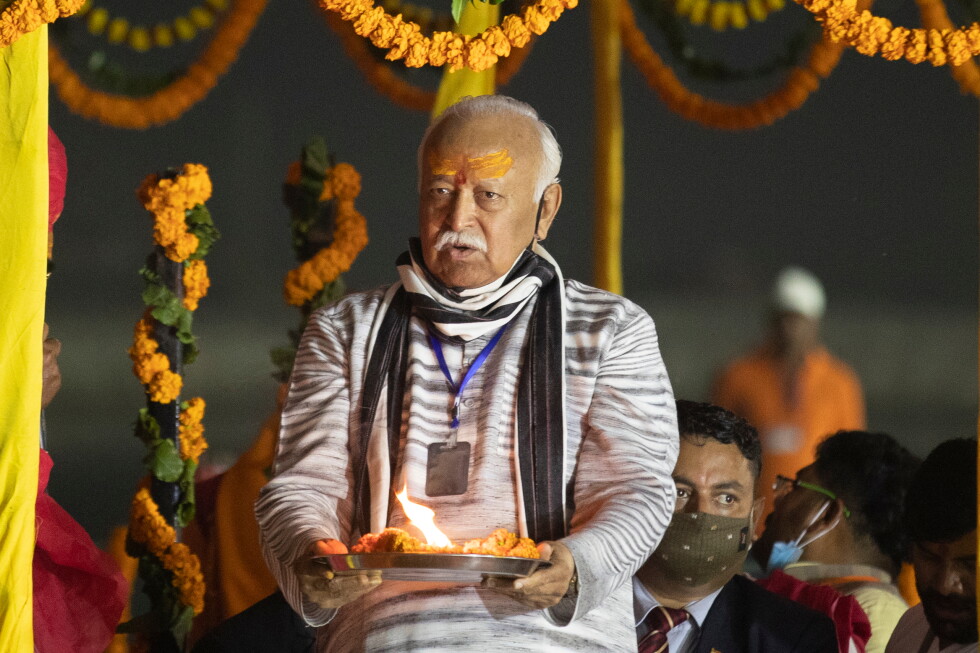
Hindu nationalist leader spurs protests and calls for sanctions ahead of New York City speech
A planned Saturday address at New York City’s iconic Madison Square Garden by Mohan Bhagwat, chief of India’s Rashtriya Swayamsevak Sangh (RSS), has sparked fierce public opposition, drawing protests from interfaith groups, a formal denunciation from the city’s mayor, and a call for U.S. government sanctions from a federal religious freedom commission.
The RSS, a century-old right-wing Hindu nationalist organization, is widely recognized as the ideological backbone of India’s ruling Bharatiya Janata Party (BJP), led by Prime Minister Narendra Modi—who himself rose through the ranks of the paramilitary group. Critics have long accused the RSS of advancing Hindutva, a political ideology that frames Indian national identity exclusively through Hindu values, while fostering systemic intolerance against religious minorities and enabling documented human rights violations, including targeted mob violence, the demolition of minority religious sites, and the bulldozing of properties owned by Muslim communities.
Organized by American Hindus for Engagement and Dialogue and co-sponsored by more than 200 Hindu American groups, the event is branded as the “Universal Oneness Celebration,” rooted in the ancient Sanskrit concept of Vasudhaiva Kutumbakam, or “the world is one family.” Organizers say the gathering builds on the themes of the Hindu festival Rakshabandhan, expanding its celebration of familial bonds to a global call for collective responsibility across communities, nations, and the natural world. Expected attendees include entrepreneurs, educators, artists, youth leaders, faith and public officials, and representatives from Hindu temples and yoga centers, with an estimated 5,000 people in attendance. Organizers have declined to respond to interview requests from The Associated Press.
Opposition to the event has moved quickly across political and civil society lines. New York Mayor Zohran Mamdani this week publicly condemned the gathering, arguing that RSS’s core ideology is exclusionary and fundamentally incompatible with New York’s longstanding commitment to pluralism. On Wednesday, the U.S. Commission on International Religious Freedom (USCIRF), a nonpartisan federal advisory body, called on the U.S. government to impose sanctions on RSS members and revoke Bhagwat’s visa over allegations of ongoing religious freedom abuses tied to the organization. India’s Ministry of External Affairs swiftly rejected the commission’s statement, dismissing USCIRF as a biased body with no credibility to comment on India’s internal affairs.
A coalition of interfaith and civil rights groups—including Hindus for Human Rights, the Indian American Muslim Council, and the Interfaith Center of New York—held a protest press conference outside New York City Hall on Tuesday, demanding the event be canceled entirely. Sunita Viswanath, executive director of Hindus for Human Rights, noted that 61 interfaith and secular organizations have signed an open letter opposing the gathering, and hundreds of opponents will gather outside the venue Saturday to deliver a clear message: the RSS and its Hindutva ideology do not speak for all Hindus or people of Indian origin.
“Even if a majority of the Indian diaspora does not support Hindu nationalism, too few have spoken out publicly against it,” Viswanath said. “Our only option is to show up again and again with love, with the intention that our love will drown out the hate spread by these organizations.”
The event has laid bare deep divisions within the 5 million-strong Indian American community around issues of Hindu nationalism and the BJP’s rule. While the RSS maintains more than 250 local centers and youth chapters across the U.S. and enjoys broad support from many Indian American voters aligned with Modi, opponents have organized widespread resistance. One Muslim Indian American activist, Safa Ahmed, plans to travel from North Carolina to join Saturday’s protests, saying she is deeply disturbed by the large turnout expected for a leader she says promotes a politics of hate.
“That is very disturbing to me as an Indian American Muslim,” Ahmed said, though she added she has been encouraged by growing pushback against Hindutva from progressive Hindus, Sikhs, Christians, and Dalits—who have faced systemic caste discrimination in India for generations.
The Hindu American Foundation, a nonprofit advocacy group for U.S. Hindus, has pushed back against criticism of the event, calling on attendees to remain vigilant and civil while condemning Mayor Mamdani’s public opposition. “The mayor should honor his sworn duty to protect all New Yorkers, regardless of their national origin, religion or political beliefs,” the group said in a Wednesday statement.
Many analysts frame Bhagwat’s high-profile New York appearance as part of a deliberate multi-year public relations campaign by the RSS to soften its international image, as the BJP it spawned enters its third consecutive term governing the world’s largest democracy. Bill Drexel, a Hudson Institute senior fellow specializing in U.S.-India relations, noted that Bhagwat has toned down some of his more provocative public rhetoric in recent years, marking a new phase of the group’s global outreach.
“RSS is an organization with a uniquely complex history that is tied intrinsically to Indian politics, so it is hard to compare to more familiar political or religious movements in the U.S.,” Drexel explained. “We are seeing a new chapter in how they engage with the outside world. They grew as a grassroots movement for decades, and now that the political party they created holds national power, they face a new set of expectations and responsibilities.”
RSS national spokesperson Sunil Ambekar defended the gathering in a statement posted to X, writing that Bhagwat would “communicate with a diverse, multicultural, and multifaith audience” during his address. “Organized in the spirit of open dialogue and mutual respect, the event reflects Bharatiya (Indian) ethos which is fundamentally inclusive and welcoming to all,” Ambekar said. “This initiative aligns with RSS’s longstanding tradition of engaging with varied communities across India and the world to foster understanding and shared purpose.”
But critics like Viswanath reject the group’s framing of the event as a sincere push for inclusive dialogue, arguing the core ideology of Hindutva remains unchanged. “I just don’t buy it,” she said. “It’s still the same Hindutva ideology.”
-
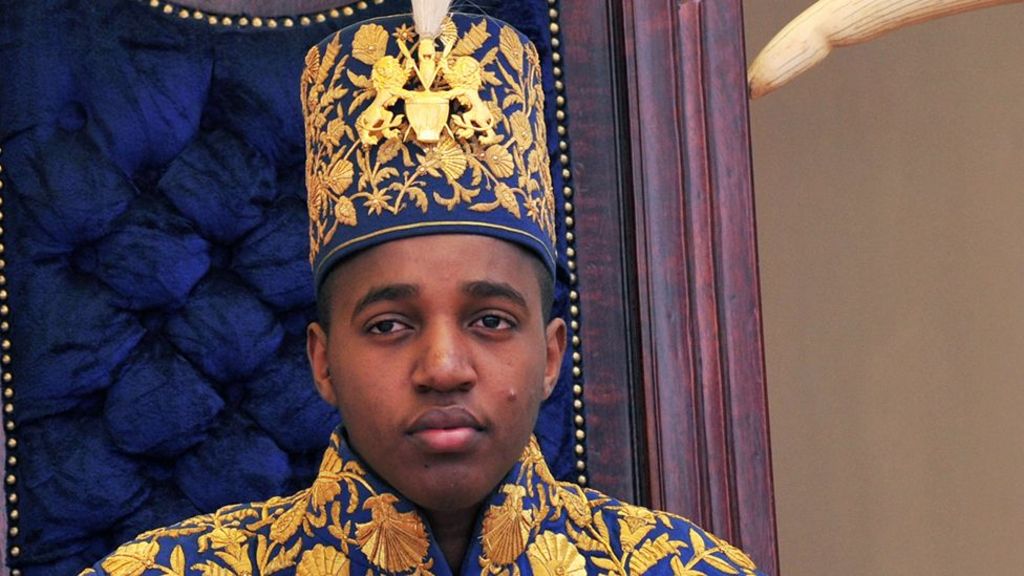
World’s youngest reigning monarch dies aged 34
One of Africa’s most well-known traditional rulers, King Oyo Nyimba Kabamba Iguru Rukidi IV of Uganda’s Tooro Kingdom, who held the Guinness World Record as the world’s youngest reigning monarch, has passed away at the age of 34. His death was officially announced by the Tooro Kingdom’s prime minister, marking the end of a 31-year reign that shaped cultural and social life for millions of people in western Uganda.
King Oyo inherited the throne in 1995 at just 3 years old, following the sudden death of his father, the previous Tooro monarch. Because of his young age, a regency council led by the queen mother governed the kingdom on his behalf for 15 years, until he reached adulthood. His formal coronation was held in 2010, when he turned 18, drawing global attention to the centuries-old traditional institution.
As a constitutional monarchy within Uganda’s republican political framework, the Tooro Kingdom holds no formal governing power, but it retains deep cultural influence over the more than 2 million people who identify as Tooro citizens. King Oyo built a reputation as a progressive young leader, championing a range of social causes that resonated across generations. He prioritized youth empowerment, expanded access to education across the kingdom, raised public awareness of HIV/AIDS, and spearheaded local initiatives for climate conservation, endearing him to his subjects and national leaders alike.
To date, the Tooro royal household has not released an official statement on the cause of King Oyo’s death. However, unnamed senior Ugandan government sources cited in local Ugandan media outlets report that the monarch had been suffering from a critical illness and had recently traveled to the United States to seek specialized medical treatment. His death was first announced publicly this Thursday.
In an official address announcing the passing, Tooro Prime Minister Calvin Armstrong Rwomiire Akiiki described the king’s death as an “immeasurable loss” for both the royal family and the entire Tooro community. “I call upon all the people of Tooro to remain united, calm and prayerful during this profoundly difficult time. May His Majesty the King rest in eternal peace,” Akiiki said in a follow-up statement Friday.
The Tooro Kingdom follows a strict hereditary system of succession, and Akiiki moved quickly to reassure the public that the line of succession remains secure. Though King Oyo never entered an official marriage, he left behind a male heir who will ascend to the throne. Akiiki confirmed that the heir’s identity will be formally announced to the public at a future date, in line with Tooro’s long-standing traditional customs and protocols.
Reactions to King Oyo’s death have poured in from across Uganda. The Buganda Kingdom, the country’s largest and most politically influential traditional institution, issued a statement of mourning, noting that King Oyo was a unifying, valuable figure for all of Uganda’s cultural communities.
King Oyo was the 13th ruler of the Tooro Kingdom, which was first founded in the early 19th century, and his 31-year reign saw the institution adapt to modern social and political changes while retaining its core cultural identity.
-
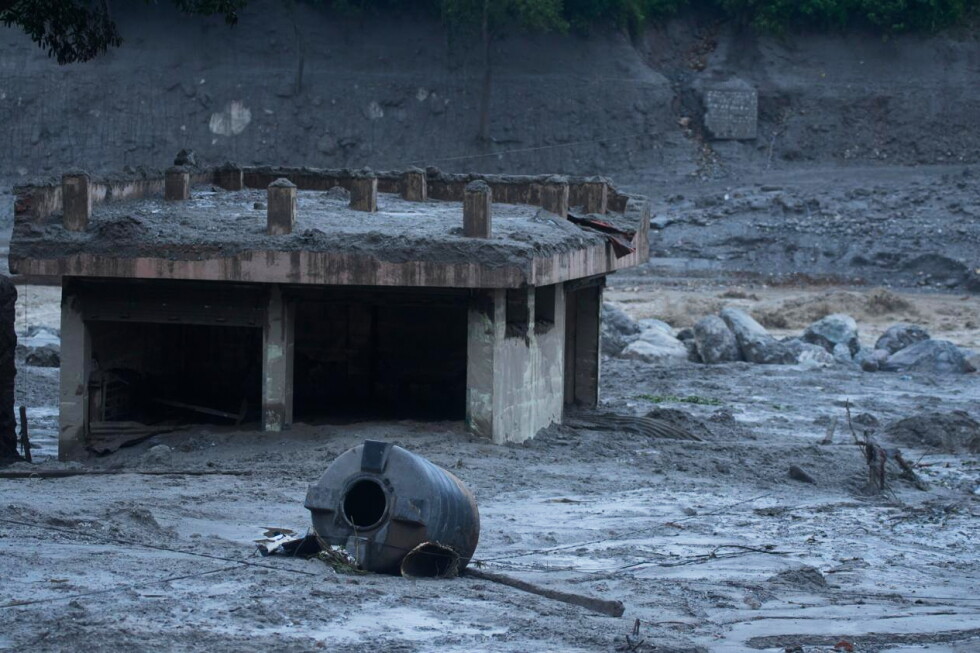
How to help after Nepal and Tibet’s catastrophic floods
A catastrophic glacier collapse that triggered massive, multi-story mud and water torrents has left hundreds dead or missing along the Nepal-China border, as rescue teams continue scouring ravaged communities for survivors and humanitarian organizations across the globe mobilize to deliver urgent aid.
The disaster, which struck on Wednesday, destroyed critical infrastructure across the affected region, washing out countless roads and bridges and forcing the Nepalese army to rely on helicopter operations to reach stranded communities and evacuate survivors.
For disaster-prone Nepal, which consistently ranks among the highest countries globally on international disaster vulnerability indexes for risks ranging from earthquakes and floods to drought and wildfire, advance preparations by humanitarian groups have enabled a faster than expected response. U.S.-based humanitarian nonprofit Direct Relief, which provides medical supplies and healthcare access to disaster-affected regions, had pre-positioned emergency stockpiles across Nepal in anticipation of the annual monsoon season, putting critical resources within reach immediately after the floodwaters struck.
Dan Hovey, Direct Relief’s vice president of emergency response, announced Thursday that the organization was already preparing additional shipments of aid to send to the impacted region, with new public donations set to sustain the group’s support through the months-long recovery process ahead. “This is going to be a long recovery process,” Hovey emphasized.
Humanitarian coordinating bodies have noted that flexible cash donations are currently the most pressing need, as they allow local agencies and grassroots nonprofits to adapt funding to the most urgent, evolving needs on the ground. A range of international and U.S.-based organizations with long-standing operations in Nepal have already launched active response efforts:
– All Hands & Hearts, a disaster recovery nonprofit that has operated in Nepal since the 2015 Gorkha earthquake, is delivering immediate emergency relief while preparing to resume its longstanding work rebuilding damaged schools and residential homes.
– Catholic Relief Services, an international humanitarian agency, has partnered with local affiliate Caritas Nepal to deliver emergency aid and social services, while deploying additional dedicated response teams to support search and relief operations.
– Global Giving, a grassroots support nonprofit, has launched the dedicated Nepal Flood Relief Fund targeting $1.5 million in donations, to provide flexible funding for search and rescue operations, emergency response, and longer-term infrastructure reconstruction and recovery projects.
– Humanity & Inclusion, an international organization focused on vulnerable and crisis-affected communities, is already distributing emergency survival supplies across the region and providing critical rehabilitation support to injured survivors in local hospitals.
– Save the Children, a global child-focused humanitarian nonprofit, has delivered cooking kits, mosquito nets and blankets to 1,000 impacted households, and is working closely with national and local authorities to expand its response as needs are assessed.
– World Central Kitchen, celebrity chef Jose Andres’ food security nonprofit, is already providing hot meals to survivors through local partner networks, and is preparing to scale up its full distribution network to deliver more food to the impacted border region.This coverage of global philanthropy and disaster response is produced by the Associated Press through a collaboration with The Conversation US, supported by funding from Lilly Endowment Inc. The AP maintains sole editorial control over all content.
-

Russian drones batter Ukraine’s Kyiv region, hitting apartments and warehouses for a second day
For the second consecutive day, Russian forces have unleashed a wave of drone strikes on Ukraine’s Kyiv region, leaving civilian infrastructure damaged and civilian life upended amid a broader escalation of aerial attacks that has spread to both Ukrainian and Russian territory four years after Moscow’s full-scale invasion.
Regional and national Ukrainian officials confirmed that the Friday assault damaged more than a dozen apartment blocks, 16 private residences, 14 storage facilities and 16 vehicles across Kyiv region. Emergency responders faced a deliberate secondary hazard: a second drone targeted the same site after first responders arrived, a tactic known as a “double tap” designed to kill rescue workers. As of Friday, the attacks had left one person dead and two injured in Kyiv region, with additional casualties reported across other parts of Ukraine.
The assault extended the disruption that began a day earlier, when a 15-hour air raid lockdown shut down normal activity across the Ukrainian capital. Ukrainian Foreign Ministry officials noted that such prolonged disruptions have become a daily reality for communities near the front lines, and the latest strikes have already inflicted lasting harm on civilian life and economic activity. Kyiv regional authorities also warned of degraded air quality following the strikes, urging residents in affected areas to stay indoors with windows closed and limit outdoor exposure.
Ukrainian defense and intelligence officials say the current wave of drone attacks follows a deliberate strategy: launching incremental waves of fast, jet-powered drones to exhaust Ukraine’s air defense systems and wear down civilian morale. “The goal is to exhaust air defenses and the population,” Andrii Kovalenko, head of Ukraine’s Center for Countering Disinformation at the National Security and Defense Council, wrote on social media Friday. This seasonal escalation aligns with what Ukrainian officials call Russia’s annual “weaponize winter” campaign, which targets the country’s critical energy infrastructure to force hardship on Ukrainian civilians ahead of the cold months.
The threat of prolonged winter outages is most acute in the southern Kherson region, 70% of which remains under Russian occupation. A Russian glide bomb strike this week already forced a key combined heat and power plant offline, and regional officials are warning of weeks or even months of total power and heating loss this winter. In a Thursday social media statement, Oleksandr Prokudin, head of the Kherson regional military administration, urged tens of thousands of remaining residents to relocate to safer parts of Ukraine, noting that Russian strikes on critical infrastructure have increased sharply in recent months. Since the start of July, Russian forces have dropped 170 glide bombs on the region — more than the total in the first half of 2024. Over the past two months alone, Russia has launched more than 1,700 attack drones against Kherson’s infrastructure, with more than 6,500 small drone strikes recorded in just the past week. Prokudin confirmed regional authorities will provide full support for evacuations, including transportation, resettlement and social services for residents who choose to leave.
Beyond the immediate human cost, the persistent Russian airstrikes are already dragging down Ukraine’s economic outlook. The Ukrainian Ministry of Economy has revised its 2026 GDP growth forecast downward, cutting the projected growth rate from an earlier estimate of 1.3% to just 0.8% due to persistent damage to energy and logistics infrastructure, as well as Russia’s ongoing blockade of Black Sea grain exports. Economy Minister Oleksandr Kravchenko told local news outlet Interfax-Ukraine that while Ukraine posted modest growth in the second quarter of 2024 following 0.6% expansion in the first quarter, further growth remains constrained by the persistent assault on critical infrastructure.
The latest escalation has not been limited to Ukrainian territory. Overnight into Friday, Ukraine’s air force recorded 164 Russian drones launched across Ukrainian territory. Separately, a Russian glide bomb attack on the northern Sumy region killed a 61-year-old man and wounded seven more.
In response, Ukraine has stepped up its own drone campaign targeting Russian energy infrastructure, continuing a months-long push to disrupt Russia’s oil and fuel production. Overnight, Ukraine’s General Staff confirmed a successful strike on the Slavneft-YANOS oil refinery in Russia’s Yaroslavl region, roughly 600 miles from the Ukrainian border, which sparked a large fire at the facility that produces gasoline, diesel, aviation fuel, lubricants and other petroleum products. Russian regional governor Mikhail Yevrayev confirmed the Friday morning attack left one person dead and 27 injured, including 10 who were wounded when drone debris hit a public bus.
Additional Ukrainian drone strikes were reported across multiple Russian regions on Friday. In the Moscow region, a drone hit a local supermarket, damaging the building and shattering windows at a nearby outpatient clinic, according to regional governor Andrei Vorobyov. In Sevastopol, the major port city on the illegally annexed Crimean Peninsula, a drone strike caused extensive damage to a five-story residential building, leaving four people wounded, Russian-installed regional governor Mikhail Razvozhayev reported. The Russian Defense Ministry claimed its air defenses shot down 512 Ukrainian drones overnight across 18 Russian regions, as well as over Crimea and Black Sea waters.
Moscow has not yet commented on the latest strikes on Kyiv beyond its initial statement confirming it hit a target in Kyiv region that it claimed stored Ukrainian cruise missiles and rocket fuel. Ukrainian officials have not verified this claim, and the Associated Press could not independently confirm the Russian assertion. Past Russian strikes on Kyiv warehouses have hit facilities storing food, books and other civilian goods, rather than exclusively military targets.
-

A Dutch court convicts a Rwandan man over his home country’s 1994 genocide, sentences him to life
THE HAGUE, Netherlands — In a landmark ruling that closes a decades-long chapter of impunity for atrocities linked to Rwanda’s 1994 genocide, a Dutch court on Friday convicted a 66-year-old Rwandan man of participating in the mass killing campaign and sentenced him to life in prison. According to a written statement released by The Hague District Court following the verdict, the unnamed defendant played an active role in coordinated violent attacks across two majority-Tutsi communities. During these assaults, attackers looted and burned civilian homes, and the defendant himself directly threw a grenade into a large group of Tutsis who had sought refuge in a local soccer stadium. In its official ruling, the court emphasized that the defendant’s actions demonstrated a profound disregard for the fundamental value of human life and human dignity. Judges noted that a lifelong prison term was the only sentence proportionate to the unfathomable suffering the defendant inflicted on genocide victims and their surviving families. The 1994 Rwandan genocide, orchestrated by extremist Hutu political leaders, resulted in the systematic mass murder of more than 800,000 people, the vast majority of whom were ethnic Tutsis, alongside thousands of moderate Hutus who opposed the slaughter. In the decades immediately following the genocide, a United Nations-backed international war crimes tribunal was established to prosecute high-level perpetrators of the atrocities; that tribunal completed its mandate and ceased operations years ago, though many lower-level participants who fled Rwanda have faced prosecution in foreign national courts in the years since. After the genocide ended, the defendant fled Rwanda and built a new life in the Netherlands, where he was ultimately taken into custody and put on trial under Dutch national jurisdiction for war crimes and crimes against humanity. Friday’s conviction came after a multi-year investigation led by Dutch law enforcement, during which investigators and an examining judge interviewed more than 30 witnesses — the vast majority of whom still reside in Rwanda. Earlier this year, nine genocide survivors and immediate family members of victims traveled to the Netherlands to attend the trial proceedings, bringing their firsthand accounts of loss to the court.
-
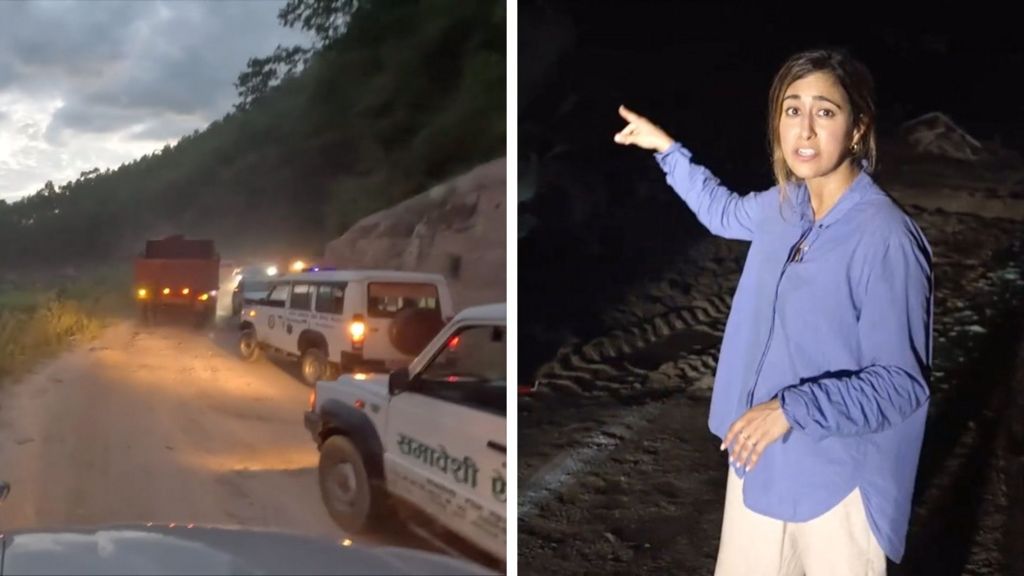
Blocked roads and devastation as BBC drives to site of Nepal floods
A first-hand reporting journey through Nepal’s flood-ravaged terrain has laid bare the full scale of the disaster unfolding across the country, as the BBC’s South Asia correspondent Azadeh Moshiri documents the grim aftermath while traveling from the capital Kathmandu to the hard-hit town of Trishuli.
What should have been a routine overland trip between the two population centers has been transformed into a sobering passage through a landscape altered by catastrophic flooding. Moshiri’s route is repeatedly interrupted by sections of road washed out or blocked by landslides and debris triggered by the swollen waterways that have overrun their banks. Every mile of the journey reveals new signs of destruction: damaged infrastructure, submerged settlements along the Trishuli River, and scattered personal belongings washed downstream by the rushing floodwaters.
Most striking of all is the steady stream of emergency vehicles moving along the cleared sections of the highway: ambulances rushing to evacuate trapped survivors and hearses carrying the remains of those who have lost their lives to the disaster. The continuous procession underscores the heavy human cost of the floods, which have displaced thousands and left communities scrambling to mount rescue and recovery operations.
Local disaster response teams have been working around the clock to clear blocked routes and reach cut-off communities, but the scale of the infrastructure damage has slowed progress, leaving many remote areas still waiting for aid. This on-the-ground reporting from the disaster zone offers a raw, unfiltered look at the immediate aftermath of one of the most significant flood events to hit Nepal in recent years.
-
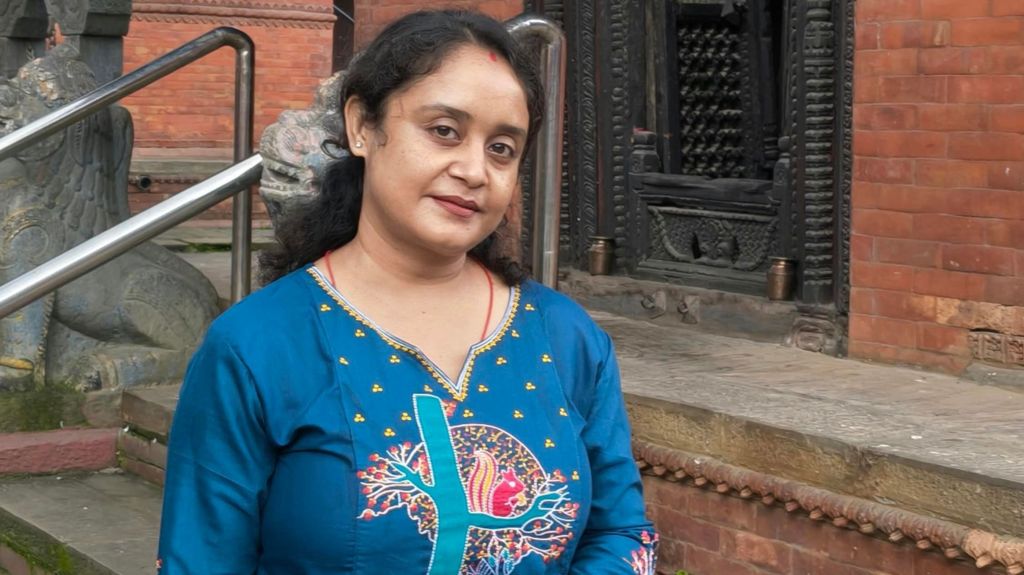
She was about to cross into Tibet for a long-awaited pilgrimage – then her messages stopped
It has been days since deadly flash floods tore through the Himalayan border region between Nepal and Tibet, but for the families of two missing Indian pilgrims, the agony of uncertainty has only deepened. At least 290 Indians are among the hundreds reported unaccounted for after the disaster, which has already claimed 475 confirmed lives, leaving dozens of families clinging to hope and begging for clear information about their loved ones.
Among the missing is 43-year-old Subhrasree Chakraborty, a critical care medical technologist from Kolkata whose lifelong dream was to complete the pilgrimage to Mount Kailash, the sacred Himalayan site revered as the home of Hindu god Shiva. For years after the pilgrimage was halted first by the COVID-19 pandemic and then by cross-border tensions between India and China, Subhrasree waited for her chance to go. When routes reopened last year, she quickly booked her spot on the tour, leaving her husband Sudipto Bhattacharya at home to follow along via her messages.
Subhrasree’s journey began on August 21, when she boarded the Mithila Express from Kolkata, crossing into Nepal the next day and reaching Kathmandu that same night. For three days, she explored the ancient capital, sending home glowing photos of herself smiling in temple courtyards and posing against the historic architecture of Durbar Square. She told Bhattacharya, a government officer, that the Nepalese countryside was more beautiful than she had imagined, and that she could not wait for the next leg of the trip north.
On August 25, Subhrasree’s group departed Kathmandu by bus for Syabrubesi, a small mountain settlement 122 kilometers north that serves as the primary gateway to the Langtang trekking region and the Mount Kailash pilgrimage route. The 12-hour journey was interrupted by a four-hour delay after a landslide blocked the road, which Nepalese army crews eventually cleared. Even with the setback, Subhrasree told her husband the weather was clear and warm, with only occasional light rain, giving no hint of the disaster that would strike less than 24 hours later.
Early on the morning of August 26, Subhrasree left her hotel just after 7 a.m. local time. She spoke to Bhattacharya by phone shortly after departure, and the pair continued to exchange messages as the group approached the border. At 7:57 a.m. local time (2:27 a.m. GMT), she sent Bhattacharya her final message: a photo of her passport stamped with Nepal immigration clearance, and a note that the group was waiting to cross into Chinese-controlled Tibet. Six minutes later, at 8:03 a.m., all communication stopped.
Bhattacharya says he initially expected the silence, noting that connectivity is notoriously spotty on the Tibetan side of the border. He waited for hours for another update, until mid-afternoon when he saw breaking news of the flash floods hitting the border region. He began calling every number he had for members of Subhrasree’s 30-person group, the tour operator, and the two group managers – none answered. To date, he has received no official confirmation of whether Subhrasree crossed into Chinese territory before the floods struck, whether she was rescued, or if she is among the missing or dead.
“After 08:03am, what happened? We don’t know anything,” Bhattacharya said in an interview. “Have they been rescued? Was this group among those rescued in China? We want to know more. Please get me a list from the Chinese government – missing, dead and rescued. We need an update. What do I tell you? Sleepless nights, working on the phone.”
Subhrasree is not alone in being unaccounted for. Fifty-four-year-old Rina Banerjee, an unmarried private tutor and experienced hiker also from Kolkata, was part of the same pilgrimage group and has not been heard from since the floods. Rina had long dreamed of visiting Mount Kailash, and had gone on multiple mountain hiking trips with her family before, her nephew Dwaipayan Mukherjee says.
Like Subhrasree, Rina’s journey went smoothly until the morning of August 26. The family spoke to her via video call while she stayed in Kathmandu, and she told them she was happy to finally take the trip she had planned for so long. She even shared details of the four-hour landslide delay on the drive from Kathmandu to Syabrubesi. On the morning of the floods, the tour operator shared a group photo showing Rina outside the Nepal immigration center, already having received her exit stamp.
Since that photo was sent, there has been nothing but silence. “I don’t know whether they crossed the border or not,” Mukherjee said. “Whether they were on the Chinese side or the Nepal side, we are still wondering.”
The Mount Kailash pilgrimage draws thousands of Indian devotees every year, after years of pandemic and cross-border tension halted travel completely. Routes only resumed last year, giving hundreds of long-waiting pilgrims like Subhrasree and Rina the chance to fulfill their lifelong spiritual goal.
Today, both women’s names appear on the Nepalese government’s official list of 537 people missing following the floods. The Kolkata-based tour operator that organized their trip says it still has no information about the fate of the group, leaving their families with no answers and only one unanswered question lingering: did they make it across the border before the floods hit?
-

A look back at the King who broke with tradition
The Norwegian royal household has confirmed the passing of King Harald V at the age of 89, bringing an end to a decades-long reign that reshaped the role of the Scandinavian monarchy in modern society. The king died after receiving ongoing medical care for a serious bacterial blood infection, a condition that had weakened his health in his final weeks.
Harald V’s reign, which spanned more than three decades, was defined by a series of deliberate breaks from centuries-old royal convention that endeared him to the Norwegian public and modernized the institution. Long before progressive shifts became common among European royal houses, Harald opened the monarchy to public scrutiny, prioritized accessibility over rigid formality, and championed causes that aligned with the evolving values of Norwegian society. Unlike his predecessors, who maintained a distant, aloof public image, he frequently engaged with ordinary citizens, spoke openly on issues of national importance, and supported greater transparency in royal affairs.
Born into the Norwegian royal family in 1937, Harald ascended to the throne in 1991 following the death of his father, King Olav V. From the earliest days of his reign, he signaled his intent to adapt the monarchy to 21st-century expectations. He reduced the size of the royal household’s public budget, pushed for greater environmental action decades before climate change became a mainstream global priority, and publicly supported gender equality within the line of succession, changing long-standing rules to prioritize the order of birth over gender for future heirs.
Tributes have begun pouring in from across Norway and around the globe, with political leaders, public figures, and ordinary citizens honoring his legacy as a unifying force for the nation. As Norway enters a new era under the reign of his son, Crown Prince Haakon, Harald V’s legacy as a monarch who modernized a centuries-old institution without abandoning its core connection to the people will continue to shape the Norwegian monarchy for generations to come.
-
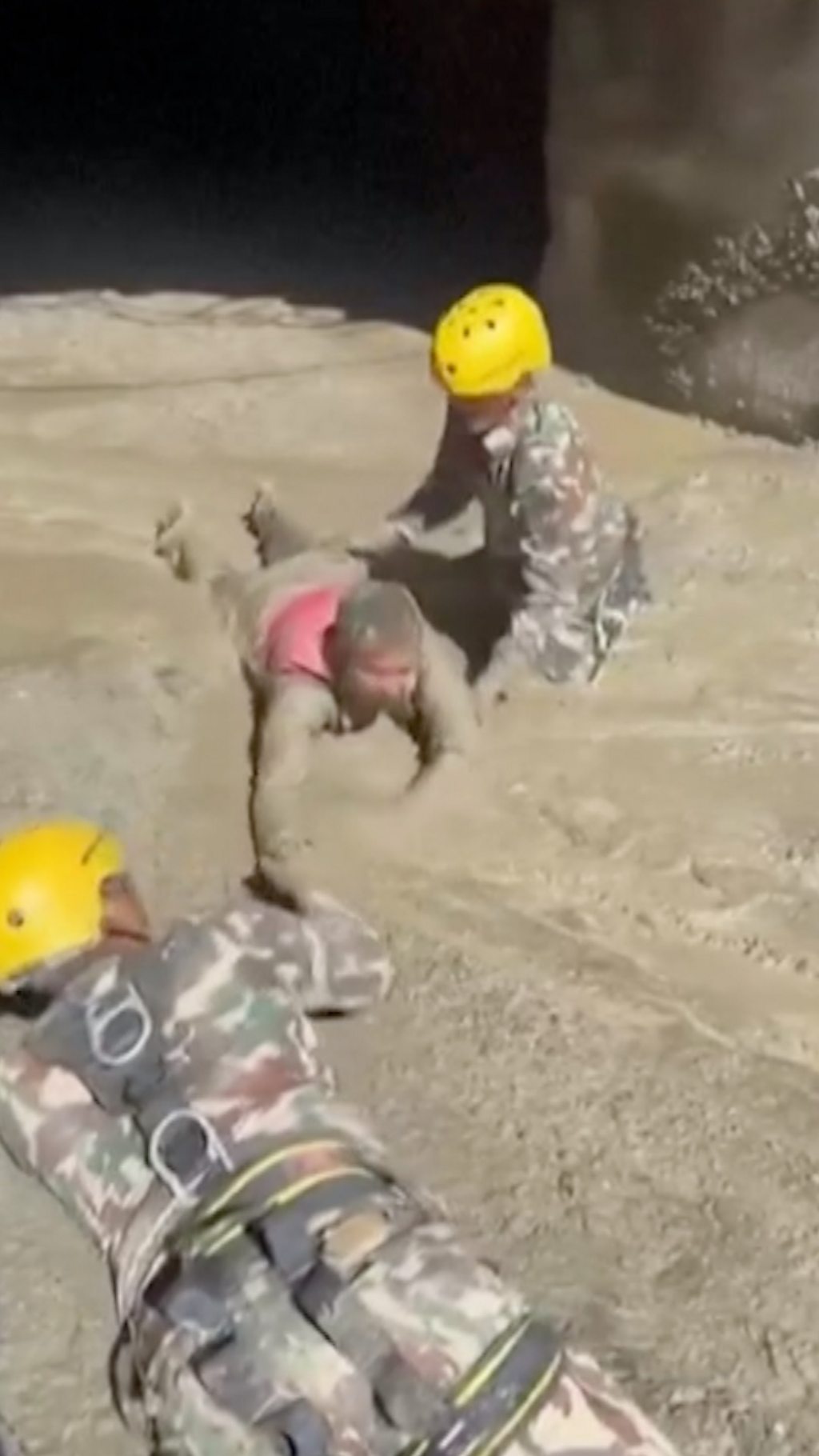
Nepal army rescues survivors from hydropower tunnel
A major rescue operation is underway in northern Nepal after over 100 people were trapped inside an under-construction hydropower tunnel in the district of Rasuwa, according to official statements. The Nepalese Army has been deployed to lead urgent efforts to pull surviving victims out of the collapsed and blocked passage, with local emergency services also on site to support the mission.
The incident has triggered urgent concern across the country, as rescuers work against challenging conditions including unstable terrain, limited access to the blocked section of the tunnel, and potential risks of further structural damage. Initial reports confirm that army teams have already begun extracting a small number of survivors, though details on the current status of those still trapped and the exact cause of the incident have not yet been fully released by authorities.
Hydropower development is a core sector of Nepal’s economy, with dozens of large and small infrastructure projects underway across the mountainous nation to harness its river systems for electricity generation. The Rasuwa district, located along Nepal’s northern border, is home to several planned and active hydropower schemes, and occupational safety in such remote, geologically challenging construction sites has long been a topic of discussion among infrastructure regulators and safety advocates.