For decades, the oil-rich wetlands of Nigeria’s Niger Delta have borne the brutal cost of international fossil fuel extraction, leaving local communities grappling with poisoned ecosystems and collapsed livelihoods. Now, newly uncovered internal company documents obtained by the BBC have laid bare that energy giant Shell, a major operator in the region for more than 60 years, was fully aware of the catastrophic risks posed by its infrastructure decades ago — and chose to continue pumping oil anyway, even against the warnings of its own senior executives. At the center of the ongoing controversy is the 96.5-kilometer Nembe Creek Trunk Line, once one of Shell’s largest and most profitable crude transportation routes in Nigeria. Capable of moving 150,000 barrels of oil per day from inland fields to coastal export facilities, the pipeline passes directly through the waterways of Bille, a 45-island riverine community that has borne the brunt of repeated spills over more than a decade.
Decades of unchecked extraction and spillage have left the Niger Delta’s mangroves, creeks, and riverbeds caked in crude oil, contaminating sediment and turning once-thriving fishing and harvesting grounds into toxic wastelands. The documents, released as part of ongoing UK legal proceedings brought by Bille and surrounding Niger Delta communities, expose a decades-long pattern of corporate negligence that dates back to at least 2008. That year, a senior Shell technical executive, Markus Droll, then the company’s technical vice president, raised urgent alarm about the decision to keep the pipeline running when it was already plagued by rampant illegal oil theft, known locally as bunkering, and systemic infrastructure failure. In an internal October 2008 email, Droll explicitly questioned the company’s choice to operate the pipeline outside of its own official safety and technical standards, warning that a major attack or failure could force a total shutdown and expose the firm to massive liability. “I don’t agree that funding can be an issue. Sorry if I sound like a broken record on this — but the approach makes me, as your Technical VP, pretty uncomfortable,” Droll wrote. His warning was met not with action, but with criticism from Ann Pickard, then Shell’s regional executive vice president, who reprimanded him for failing to label the discussion legally privileged, which would have hidden the correspondence from future court disclosure. “You have just exposed us significantly in your official disagreement as technical manager without legal privilege,” Pickard wrote, while acknowledging that continuing operations was “not an easy decision” but claiming it represented the “lower risk to both people and environment.”
That pattern of ignoring internal red flags continued for years. A 2012 confidential document, released amid the peak of spills alleged by the Bille community, confirms that Shell leadership knew large sections of the pipeline were rated “red” — the company’s highest risk classification — because of dozens of illegal taps drilled by oil theft gangs. Under Shell’s own internal rules, a red rating required either an immediate full shutdown or urgent corrective repairs. Instead, executives argued that shutting down the pipeline would only lead thieves to install new illegal taps in other locations, and granted permission to keep pumping crude.
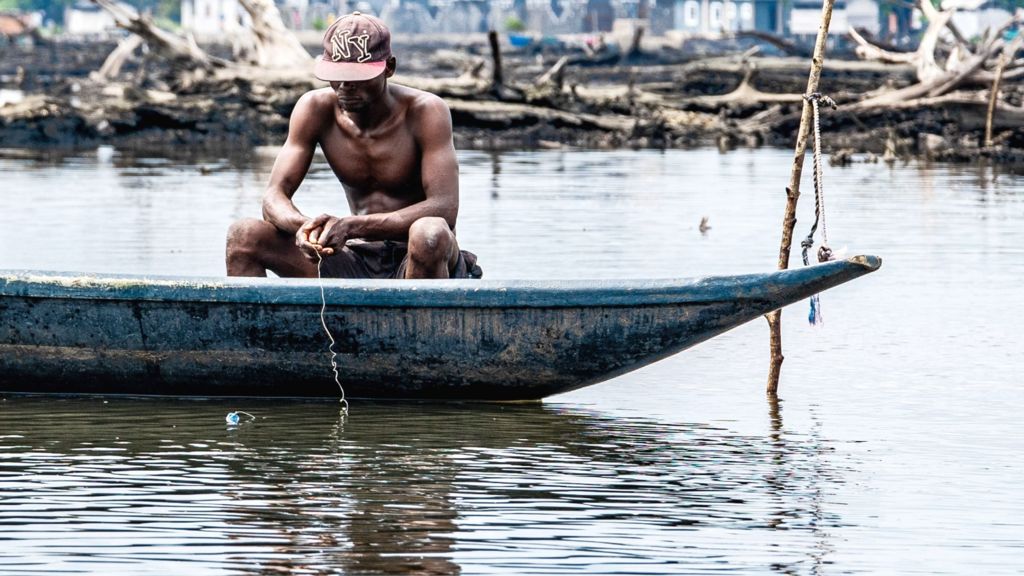
Bille residents, who rely on the region’s waterways for food and income, have already seen their way of life destroyed by the pollution. When BBC reporters visited the community last week, local fishermen and harvesters described a total collapse of the ecosystem that once sustained them. Balafama Augustus Bruce, a 64-year-old fisherman and one of the claimants in the lawsuit against Shell, recalled that before the 2011-2013 spill period at the center of the case, the waters around Bille teemed with sardines, catfish, tilapia, and oysters. Today, most native species are gone, and any that are caught are often deformed. “Before 2011, here was a beautiful area. People play here and go into the river,” Bruce told the BBC. “We used to fish around here. But because of the damage the spills have caused, nobody is fishing here again. Because of that I’ve become poor. I eat from hand to mouth.” For Taminoibitein Philip, a 49-year-old periwinkle harvester, the pollution has wiped out the local harvest of the sea snails, a staple regional delicacy. Even when snails can be found, they no longer grow to full adult size. “And the odour is killing us… some places have crude, some places have gas. We don’t benefit. We are suffering,” Philip said. Like other residents, she argues that Shell, which sold its remaining onshore Nigerian assets including the pipeline to Renaissance Africa Energy last year, still owes the community redress after decades of profiting from the region’s resources. “Let them come and flush the river for us,” she said.
The legal case against Shell, being brought by Leigh Day law firm on behalf of the communities, seeks a total of $1 billion in resolution: $250 million in direct compensation for lost livelihoods and health harms, and $750 million to fund a full cleanup of the contaminated environment. Since Shell began commercial oil extraction in Nigeria in 1958, the United Nations estimates that at least 13 million barrels of crude have been spilled across the Niger Delta in more than 7,000 separate incidents — a legacy of pollution that has existed for generations. The region has a long history of activism to hold oil companies accountable, most famously led by Nigerian writer and activist Ken Saro-Wiwa, who was executed by Nigeria’s military government in 1995 after leading protests against oil pollution in Ogoniland.
The documents also reveal internal concerns about the potential for public and legal scrutiny of Shell’s practices as early as 2013. When executives proposed an internal audit of pipeline integrity and oil theft management between 2009 and 2012, then-Nigerian subsidiary onshore assets general manager Vincent Holtam warned the audit could expose the company to massive liability. “I have no doubt that this will come out as UNACCEPTABLE, in which case we may be very exposed in disputing any oil loss claims from the Government or compensation claims from the community,” Holtam wrote in an email. The documents do not confirm whether the audit was ever completed. Just one month later, Shell launched a top-secret initiative codenamed Project Madrid to assess the full scale of spill damage around the pipeline. A 36-page internal presentation for the project estimated that 100 illegal refineries were operating along the route, contaminating 9,000 hectares of water and an equal area of land, and that the company was already responding to 18 active spills from 60 known illegal bunkering points. Shell opted to continue operations after a series of temporary shutdowns for repairs, though the documents do not detail which long-term strategy executives ultimately approved.
In its response to the BBC’s reporting, Shell has pushed back against the claims, arguing that the documents released lack critical context about the challenging operating environment in the Niger Delta at the time. The company blames nearly all of the pollution on large-scale criminal oil theft, sabotage, and illegal refining, noting that its Nigerian subsidiary invested heavily in spill prevention and response over the years, and that pervasive systemic criminality made full prevention impossible. A company spokesperson added that Shell “strongly believes in the merits of our case and will vigorously defend the claims at trial next year.” Shell also confirmed that it had contacted the three former executives named in the documents, and none chose to issue a direct public response. The law firm representing the communities countered that Shell’s London headquarters made the key decisions that led to the environmental destruction, and that communities are determined to hold the company accountable for damage that continues to blight their lives today. Local Bille leaders acknowledge that oil theft was widespread in the region, but argue that Shell still bears legal and moral responsibility for failing to maintain its infrastructure and address the pollution it enabled. “They are not concerned about what happens to you. Their concern is to continue to make profit,” said Chief Boma Renner Dappa, spokesperson for the Bille local leaders’ council. “All that has happened in this environment is as a result of negligence.” The BBC requested comment from the Nigerian government on Shell’s claims that local authorities could not address the organized criminal activity fueling oil theft, but has not yet received a response.