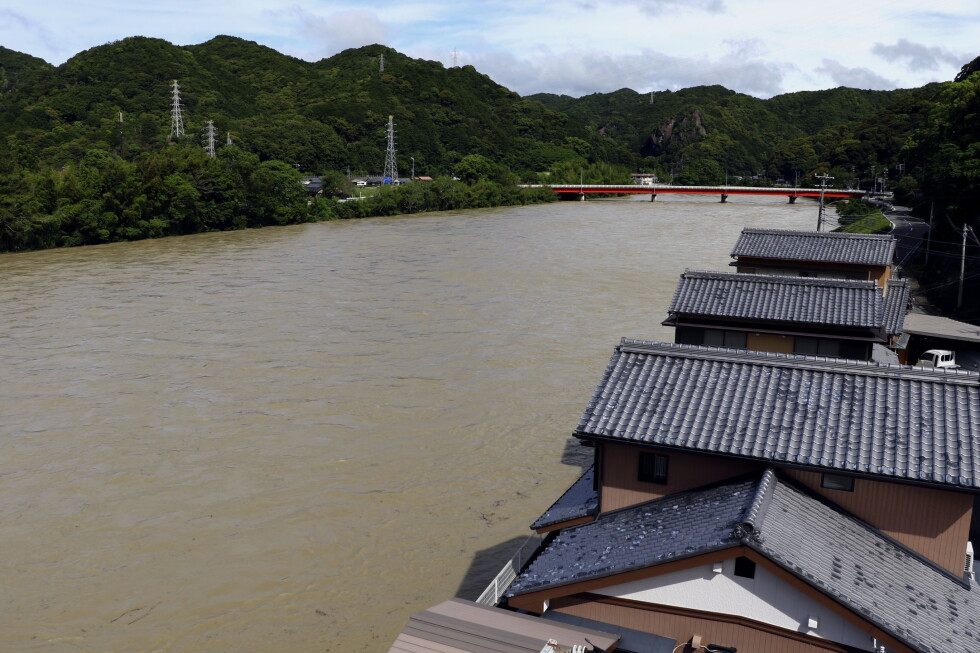
A severe weather event is unfolding across east-central Japan, where Tropical Storm Jangmi has brought torrential downpours, life-threatening flood risks, and widespread disruption to critical infrastructure just as it reached the densely populated Tokyo metropolitan region on Wednesday.
The Japan Meteorological Agency (JMA) confirmed that mid-morning Wednesday, the storm was positioned east of Shima City, tracking northeastward with maximum sustained winds reaching 90 kilometers per hour (55 miles per hour). This downgrade in strength came after Jangmi made landfall in Wakayama Prefecture earlier as a typhoon, packing winds of 126 kph (78 mph), before moving inland and weakening rapidly. Forecasters projected the system would hold tropical storm intensity through most of Wednesday. Before reaching Japan’s main islands, the storm passed over the southern island of Okinawa, leaving 15 people with minor injuries in its wake.
Over a 24-hour period, the storm dumped as much as 50 centimeters (20 inches) of rain on the central Japanese Owase region. Heading into Thursday morning, the JMA warns that additional accumulations of up to 20 centimeters (8 inches) are possible across multiple areas, including the Japanese capital. In response to the rapidly deteriorating conditions, the agency has issued its highest-level flood alerts for numerous regions across central and eastern Japan, issuing urgent calls for residents in low-lying communities and along riverbanks to evacuate immediately to higher, safer ground.
Local authorities have already activated emergency protocols. In downtown Tokyo, residents living adjacent to the Zenpukuji River received mandatory evacuation advisories. Broadcast footage from local networks shows the river’s muddy, swollen banks approaching capacity, with water on the cusp of spilling over into surrounding neighborhoods.
The severe rainfall has already paralyzed daily life across the affected region. Surface street traffic has ground to a halt in Tokyo, hundreds of domestic and international flights have been grounded, and regional and commuter rail services have either been suspended entirely or face significant delays. Tokyo Electric Power Company Holdings, the primary utility provider for the capital region, reports that more than 5,000 residential properties have lost power amid the stormy conditions.