分类: world

  • BBC at New Jersey ICE detention centre as curfew enforced

    BBC at New Jersey ICE detention centre as curfew enforced

    Tensions have erupted at a U.S. Immigration and Customs Enforcement (ICE) detention center in New Jersey, leading local authorities to enact a restricted curfew following violent confrontations between demonstration participants and law enforcement officers. A BBC correspondent, Nada Tawfik, is on the ground at Delaney Hall, the detention facility at the center of the unrest, to report on the unfolding situation.

    The curfew order covers a half-mile radius surrounding the compound, restricting public movement within the zone in an effort to de-escalate the conflict that broke out between protesters and police. The standoff at the facility comes amid long-running national debate over immigration enforcement practices and conditions in ICE detention centers across the United States, which has drawn repeated protests from advocacy groups in recent years.

    BBC’s on-site reporting comes as local officials work to restore order to the area after the clashes, with observers watching closely to see how the situation develops in the coming hours. The curfew remains in effect as authorities work to prevent further unrest around the detention center.

  • UN warns world to prepare for El Nino extreme weather

    UN warns world to prepare for El Nino extreme weather

    Global weather authorities have sounded a clear alarm: the climate phenomenon El Nino is increasingly likely to develop in the coming months, bringing heightened risks of extreme weather that could compound decades of human-caused global warming. In its latest quarterly update on El Nino and its cooling counterpart La Nina, the United Nations’ World Meteorological Organization (WMO) announced Tuesday that there is an 80% probability of El Nino forming between June and August 2024, with that likelihood climbing to near or above 90% by November. Most climate models also project the event will be at least moderate, and possibly reach strong intensity.

    El Nino is a naturally occurring climate pattern defined by elevated surface ocean temperatures across the central and eastern equatorial Pacific. It reshapes global atmospheric circulation, wind patterns, and rainfall distribution, with effects that can last 9 to 12 months, occurring every two to seven years as conditions cycle between El Nino, La Nina, and neutral phases. As of late April to mid-May 2024, WMO data shows sea surface temperatures in the key monitoring region of the central-eastern equatorial Pacific are already approaching El Nino threshold levels, with sub-surface ocean temperatures measuring more than 6°C above the long-term average. The Southern Oscillation Index, the atmospheric metric that tracks El Nino development, also aligns with the pattern’s formation.

    While WMO confirms there is no conclusive evidence that human-caused climate change increases the frequency or strength of El Nino events, the agency emphasizes that rising global temperatures amplify the phenomenon’s most dangerous impacts. A warmer baseline ocean and atmosphere already hold extra energy and moisture, creating conditions that make extreme weather events such as heatwaves and intense downpours far more likely during an El Nino event. The most recent major El Nino was a key driver pushing 2023 to become the second-hottest year on record, and 2024 to break all previous temperature records, hitting an average of 1.55°C above the pre-industrial baseline from 1850 to 1900.

    WMO Secretary-General Celeste Saulo stressed that the time for global preparation is now, warning the upcoming El Nino could worsen existing droughts, amplify heavy rainfall, and boost the risk of dangerous heatwaves across both land and marine ecosystems. “It will have cascading impacts,” Saulo told reporters, noting that warming tropical oceans can ripple through global trade, national economies, and human security. “That’s why this early information is so relevant and so important.” Early preparation, she added, can help climate-sensitive sectors including agriculture, water management, energy, and public health adapt to coming changes. Currently, 128 countries operate multi-hazard early warning systems, and the UN has set a target of achieving universal coverage for all nations by the end of 2027.
    UN Secretary-General Antonio Guterres framed the forecast as an urgent climate wake-up call in a video address. “El Nino is arriving on our doorstep,” Guterres said. “The world must treat it as the urgent climate warning it is. El Nino conditions will pour fuel on the fire of a warming world.” Guterres added that the only meaningful response to the growing risk is scaled climate action: ending global dependence on fossil fuels, accelerating the transition to renewable energy, protecting vulnerable communities, and rolling out universal early warning systems.

    Though El Nino typically reaches its peak intensity between November and February, the associated temperature surge often emerges after the event’s peak. Forecasters expect more precise projections of the event’s timing and strength to be available next month. For the June to August period, WMO forecasts that nearly every region of the globe will see above-average temperatures, increasing the risk of overlapping extreme hazards and accelerating drought development in areas that receive reduced rainfall.

    Regional climate projections already point to specific high-risk zones: the northern Greater Horn of Africa is forecast to see below-normal rainfall during its critical June-September wet season; South Asia is projected to have below-average monsoon rainfall; and Central America is likely to face a hotter, drier than average summer. In terms of hurricane activity, El Nino’s warm Pacific waters typically fuel more intense hurricane development in the central and eastern Pacific, while suppressing storm formation in the Atlantic Ocean during the Northern Hemisphere summer.

  • Two people shot dead amid Kenya protests against US Ebola quarantine centre plan

    Two people shot dead amid Kenya protests against US Ebola quarantine centre plan

    Deadly violence has erupted in central Kenya over a controversial proposal to build a US-operated Ebola isolation facility, leaving two local residents dead and deepening public divisions over the public health and diplomatic initiative. The unrest unfolded in Nanyuki, a town adjacent to Laikipia Airbase, the planned site for the 50-bed treatment center, after hundreds of demonstrators took to the streets to oppose the project.

    According to preliminary reports, one fatality was shot near the perimeter of the airbase itself during peak protest activity. Friends transported the wounded individual to Nanyuki’s main hospital, where he later succumbed to his injuries. A second victim was already deceased when military personnel brought his body to the same medical facility. To date, no senior Kenyan official has released an official statement confirming the circumstances of the deaths or assigning responsibility for the gunfire that killed the two men.

    The unrest built on growing public anger that first emerged after details of the US plan were made public. The facility is designed to treat American citizens who contract Ebola during the ongoing outbreak in the neighboring Democratic Republic of the Congo, and would be staffed entirely by US medical personnel. Kenya has not recorded any confirmed Ebola cases to date, but critics warn that bringing infected patients into the country creates unacceptable risks of cross-border transmission that could devastate local communities.

    Mass demonstrations first organized on Monday saw hundreds of protesters block major thoroughfares through Nanyuki and set burning tires across roads to draw attention to their opposition. In response, police deployed tear gas to clear the crowds and disperse the gathering. The controversy has already made its way through Kenya’s judicial system: last week, a local rights group filed a lawsuit arguing that the facility poses “grave and imminent risks” to Kenyan public health, prompting the High Court to issue an initial order halting all work on the project.

    In his first public comments on the dispute Monday evening, Kenyan President William Ruto defended his decision to approve the plan. Ruto framed the initiative as a gesture of long-standing friendship between Kenya and the United States, telling reporters that “When President [Donald] Trump asked Kenya to support them by having a centre in Laikipia Airbase I gave the ok because it was an agreement with friends who have walked with Kenya for 30, 40 years.” He added that the Kenyan government had “deployed every arsenal” to safeguard the country from Ebola risks, and urged opposition politicians not to politicize what he called a critically important public health matter. “We are a responsible government. We know what we are doing,” Ruto said.

    Despite the president’s defense of the plan, the High Court doubled down on its suspension on Tuesday, extending the pause on construction and opening and ordering the national government to release full documentation detailing the terms and specifications of the proposed facility. Even with the court order in place, however, independent observers and local experts confirm that military aircraft have continued making regular trips in and out of Laikipia Airbase, indicating that preparatory work for the center is still ongoing.

    The proposal has drawn widespread opposition from key Kenyan public health and accountability groups, including Kenya’s national doctors’ union and independent government watchdogs. Both groups reiterate that bringing Ebola patients into Kenya, even for treatment at a secured military facility, creates an unnecessary and avoidable risk of infection for local populations that the government has not adequately addressed.

  • Israel, Hezbollah exchange fire after Trump announcement

    Israel, Hezbollah exchange fire after Trump announcement

    Just hours after U.S. President Donald Trump announced a surprise bilateral ceasefire agreement between Israel and the Iran-backed militant group Hezbollah, heavy fighting erupted across the Israel-Lebanon border on Tuesday, derailing hopes for a quick end to months of escalating violence.

    The sudden resumption of hostilities came as both sides remained publicly divided over the terms of the deal Trump claimed to have brokered. Per Lebanese official sources, the draft agreement outlines that Hezbollah would halt all cross-border fire into northern Israel, while Israel would end its airstrikes on southern Beirut – a decades-long stronghold of the militant movement. The Lebanese presidency issued an official statement confirming the terms, noting that negotiators would work to expand the truce to cover all Lebanese territory, and the Lebanese embassy in Washington earlier claimed Hezbollah had accepted the U.S. proposal. However, the militant group has never issued an official confirmation of its acceptance of the deal.

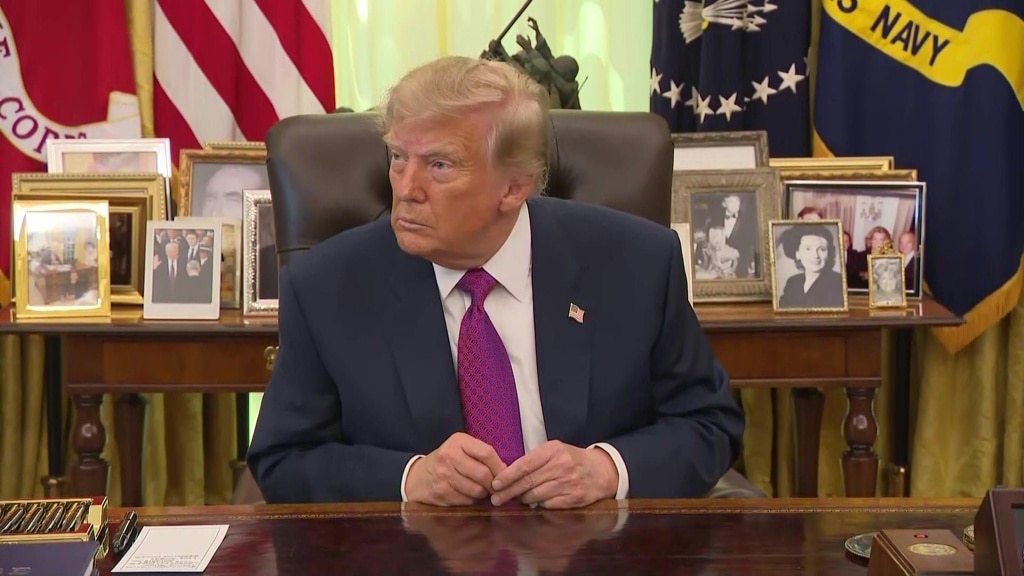
    Trump doubled down on his ceasefire push in a post to his Truth Social platform, saying he “hopefully” the two sides would end their conflict “for ETERNITY!” He also claimed that no Israeli troops would enter Beirut, and that any Israeli forces en route to the capital had already been turned back, following what he called a “very productive” call with Israeli Prime Minister Benjamin Netanyahu. But unconfirmed reporting from Axios contradicted this public posture, revealing that Trump privately called Netanyahu “fucking crazy” in off-air remarks, accusing the Israeli leader of putting planned peace talks between the U.S. and Iran at risk. Trump also claimed he held a productive call with Hezbollah representatives through intermediaries, saying both sides had agreed to a full halt to hostilities.

    The renewed violence erupted against a backdrop of months of escalating conflict that has already pushed the region to the brink of a wider war. Following the killing of Iran’s supreme leader, Hezbollah opened its front against Israel on March 2, launching widespread rocket attacks. In recent weeks, Israeli forces mounted their deepest ground incursion into Lebanese territory in more than two decades, carrying out waves of heavy aerial bombardment across southern Lebanon and issuing explicit threats to strike southern Beirut’s densely populated suburbs. That threat sent thousands of local residents fleeing the area this week, with massive traffic jams clogging routes leading out of the suburbs toward central Beirut, according to on-the-ground reporting from Agence France-Presse.

    By Tuesday afternoon, multiple official sources confirmed that hostilities had resumed. The Israeli military announced its air defense systems intercepted two projectiles launched from Lebanon into northern Israel, shortly after the Lebanese National News Agency reported fresh Israeli airstrikes targeting multiple locations in southern Lebanon. Netanyahu confirmed in his call with Trump that Israel would continue to strike terrorist targets in Beirut if Hezbollah did not end its attacks on Israeli towns and civilians.

    The latest clash also comes as the fourth round of U.S.-hosted direct negotiations between Israeli and Lebanese military delegations is set to open this Wednesday, following preliminary security talks held last week. A previous truce brokered in April has been almost entirely ignored, with both sides accusing each other of daily violations that justify retaliatory strikes. The human cost of the conflict has mounted sharply: Lebanon’s health ministry reports that at least 3,433 people have been killed in Israeli attacks across Lebanon since March 2, while the Israeli military confirmed two additional soldier deaths in southern Lebanon this week, bringing the total Israeli military fatalities to 27 since the start of the current escalation.

    International actors have moved quickly to call for restraint. Stephane Dujarric, spokesperson for United Nations Secretary-General Antonio Guterres, released a statement urging all parties to respect a cessation of hostilities. In a confidential report to the UN Security Council obtained by AFP, Guterres also recommended that the UN Interim Force in Lebanon (UNIFIL) peacekeeping mission have its mandate extended when it expires at the end of the year, warning that a withdrawal would create a dangerous security vacuum. French Foreign Minister Jean-Noel Barrot also issued a statement Tuesday saying nothing could justify Israeli forces maintaining their presence deep inside Lebanese territory, a reference to Israel’s seizure of the strategic Beaufort Castle (locally called Qalaat al-Chakif) over the weekend. The castle, which holds commanding views over most of southern Lebanon, was used as an Israeli military base during Israel’s 22-year occupation of southern Lebanon that ended in 2000.

    Tehran, which has long provided financial and military support to Hezbollah, has insisted that Lebanon must be included in any final peace deal between Iran and the U.S. But Iran’s state-owned Tasnim News Agency reported this week that Tehran has suspended all diplomatic talks with Washington in response to Israel’s ongoing offensive in Lebanon, raising new doubts about the prospect of a wider regional de-escalation. For ordinary residents caught in the crossfire, the cycle of hope and violence has become a familiar pattern. Hadi, a 24-year-old resident of southern Beirut, told AFP he had dared to hope for a period of stability after Trump’s announcement, but “that feeling did not last long.”

  • Russian attack on Ukraine kills at least 11 and traps others in damaged buildings

    Russian attack on Ukraine kills at least 11 and traps others in damaged buildings

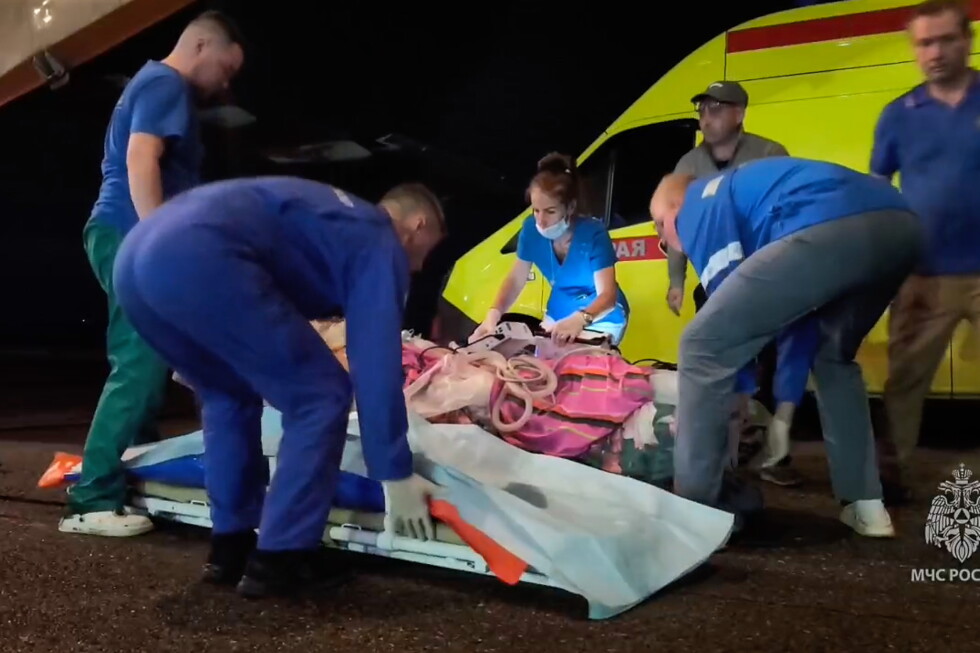
    In a devastating large-scale overnight assault that unfolded across multiple regions of Ukraine on Tuesday, Russian strikes launched with a mix of missiles and drones have claimed at least 11 civilian lives and left dozens more injured, with multiple people still trapped beneath the rubble of destroyed residential buildings, Ukrainian emergency authorities confirmed Wednesday.

    In Ukraine’s capital Kyiv, the attack left four residents dead and 58 people wounded — three of whom are children — the State Emergency Service of Ukraine announced in an official Telegram post. The assault damaged residential buildings and critical civilian infrastructure across eight of the capital’s administrative districts, sowing destruction across large swathes of the city.

    The violence was not confined to the capital: strikes also hit targets across other Ukrainian regions. In the central Dnipropetrovsk region, Russian projectiles struck the city of Dnipro, killing six people and wounding 36 more. In a deadly secondary strike that targeted first responders who had already arrived at the scene to rescue survivors, one rescue worker was killed, emergency officials confirmed. In Dnipro, the attack destroyed a two-story residential building and caused partial collapse of a four-story apartment block, leaving multiple people trapped under the rubble of the larger structure.

    Witnesses reported the sound of nonstop explosions echoing across the region from overnight into the early hours of Wednesday morning. Kyiv had been on high alert for days ahead of this assault, after Ukrainian President Volodymyr Zelenskyy issued repeated public warnings that Russia was gearing up for a renewed large-scale offensive against civilian targets. The president had urged all residents to stay vigilant and move to designated shelters immediately when air raid sirens sound.

    Across Kyiv’s hardest-hit districts, destruction is widespread. In Podilskyi district, the upper floors of a nine-story residential building suffered major partial damage, trapping multiple people in the collapsed debris. As of early Wednesday morning, rescue operations were still ongoing, with first responders continuing their search for survivors even while the air raid alert stayed active across the capital. In the Solomianskyi district, two large residential buildings — a 20-story and a 24-story structure — both sustained significant damage from the strikes.

    For weeks, senior Ukrainian officials have ramped up diplomatic pressure on the country’s Western allies to deliver additional advanced air defense systems and interceptors to counter the persistent Russian missile and drone campaign against civilian and infrastructure targets. While Ukrainian air defenses have managed to successfully intercept a large share of Iranian-made Shahed drones launched by Russia in these attacks, the country’s defensive networks still face a critical, unaddressed vulnerability when countering Russian ballistic missiles, which are far faster and harder to intercept.

  • Russian strikes rock Ukraine, killing nine and wounding dozens

    Russian strikes rock Ukraine, killing nine and wounding dozens

    Just five days after Ukrainian President Volodymyr Zelenskyy publicly warned that Moscow was gearing up for a large-scale new offensive across the country, a coordinated wave of Russian missile and drone attacks killed at least nine civilians and injured dozens more across Ukraine on Tuesday, local authorities confirmed. The assault marks the latest escalation in a grinding, two-year-plus full-scale invasion that has become Europe’s deadliest conflict since World War II, with diplomatic efforts to reach a ceasefire remaining completely stalled as of this report.

    Agence France-Presse reporters on the ground in Kyiv, Ukraine’s capital, reported hearing multiple loud explosions rip through the city early in the attack. Local officials confirmed Russia used advanced ballistic missiles for the strikes, which ignited large structural fires and knocked out electrical power for residents in multiple central and residential districts.

    Kyiv Mayor Vitali Klitschko confirmed that four residents were killed in the capital’s assault, and at least 58 more people — including two young children — were wounded. “Explosions in the city. Air defence forces are working! Stay in shelters!” Klitschko had posted in an urgent public alert minutes after the first strike. AFP journalists observed panicked residents rushing to underground bomb shelters, many carrying only small bags of belongings and blankets, while a thick column of black smoke billowed over central Kyiv.

    Tymur Tkachenko, head of Kyiv’s City Military Administration, confirmed that all of the capital’s strikes were carried out with ballistic missiles, a weapon type that is far harder for Ukrainian air defenses to intercept than slower drones.

    The deadly assault was not limited to the capital. In the central Ukrainian city of Dnipro, local regional governor Oleksandr Ganzha confirmed a separate Russian attack killed five additional people and wounded 25 others, three of whom remain in critical condition as of Tuesday evening. In Ukraine’s second-largest city Kharkiv, located just miles from the Russian border, Mayor Igor Terekhov reported 10 wounded people, including one child, from the coordinated strikes.

    In what has become a standard pattern of retaliation amid the ongoing conflict, Ukrainian drone strikes hit targets inside Russian territory hours after the Russian barrage. Alexander Khinshtein, governor of Russia’s western Kursk region which borders Ukraine, confirmed one person was killed in a Ukrainian drone strike there. Separately, a second drone sparked a large fire at an oil refinery in Krasnodar, a major southwestern Russian city, according to the facility’s operational management team via Telegram.

    The timing of Tuesday’s Russian offensive lines up exactly with warnings Zelenskyy issued last Friday. The Ukrainian leader stated at the time that Kyiv had received credible intelligence confirming Russia was preparing a new massive strike, and urged all citizens to take air raid alerts seriously. “Please pay attention to air alerts, protect your lives. Our services are working efficiently and are prepared; the Air Force and other defenders of our skies will be on duty 24/7, as always,” Zelenskyy said in his address.

    Zelenskyy has repeatedly pushed Western allies to approve and fund additional supplies of Patriot air defense systems, the only weapon Ukraine currently operates capable of reliably intercepting Russian ballistic missiles. Last week, he sent formal requests to U.S. President Donald Trump and the U.S. Congress specifically asking for additional Patriot batteries to counter the growing intensity of Russian air attacks.

    In response to near-daily Russian bombardments across Ukrainian territory, Kyiv has significantly stepped up its own drone and missile strikes on Russian-occupied Ukrainian territories and targets inside mainland Russia. An Agence France-Presse analysis of official Ukrainian Air Force data found that Russia launched a record 8,150 long-range attack drones against Ukraine in May alone, a 24% increase from the total number launched in April. Ukrainian air force data indicates the country’s air defenses managed to intercept roughly 90% of all incoming Russian missiles and drones last month.

  • Israel’s Lebanon campaign: the risks of repeating failed lessons

    Israel’s Lebanon campaign: the risks of repeating failed lessons

    When Israel launched its campaign amid the ongoing war with Iran, the Netanyahu administration articulated two tightly linked strategic objectives: collapse the Islamic Republic of Iran, and eliminate the decades-long threat posed by Hezbollah to Israeli security. For 44 years, the Lebanese Shiite militia has remained a persistent menace along Israel’s northern border, and Israeli policymakers reasoned that cutting off Hezbollah’s core Iranian patron would force the group to collapse. Past efforts to disarm Hezbollah via direct military strikes and internationally backed disarmament initiatives had both fallen short, leaving this two-pronged strategy as the government’s preferred path forward.

  • Missing lab worker found dead in New Mexico nearly a year after disappearing

    Missing lab worker found dead in New Mexico nearly a year after disappearing

    Nearly a full year after 53-year-old administrative assistant Melissa Casias vanished from her post at Los Alamos National Laboratory, authorities have confirmed that human remains discovered in a northern New Mexico forest last month belong to the missing lab employee. The long-awaited identification has reactivated public discussion around a groundless yet widely circulated online conspiracy theory that has linked a string of unrelated deaths and disappearances of U.S.-based science sector workers to a coordinated cover-up.

    Casias was first reported missing to law enforcement on June 26 of last year. According to New Mexico State Police accounts, she had been en route to visit her daughter, and never showed up to work or returned to her own home after the trip. When family members checked her belongings, they found all of her critical personal items — including her purse, identification documents, and both of her cell phones — left behind at her residence, which triggered an immediate missing person investigation.

    It was not until May 28 of this year that a passing hiker stumbled upon the unidentified remains in Carson National Forest, with a handgun located close to the site. State police confirmed in an official statement this week that the New Mexico Office of the Medical Investigator completed positive identification of the remains as Casias’. As of the latest update, the cause and manner of her death remain undetermined, with an active investigation still ongoing. Notably, Casias’ remains were located in a section of the forest that had already been searched by authorities during the initial investigation, a detail that has been highlighted by her family.

    In a public statement posted to the family’s dedicated Facebook page for the search for Casias, her relatives shared their grief over the long-awaited discovery: “This is a lot to process, our hearts are heavy and we fully intend to continue to pursue answers for justice.”

    Los Alamos National Laboratory, where Casias worked as an administrative staff member, is one of the most high-profile scientific research facilities in the United States. It was the site where the world’s first atomic weapons were developed during the Manhattan Project in World War II, and today remains a leading center for U.S. defensive nuclear research. That connection turned Casias’ disappearance into a central talking point for conspiracy theorists earlier this year, who began framing a loose collection of roughly 10 unrelated deaths and disappearances of people with ties to scientific research as evidence of a hidden plot targeting scientists working on sensitive projects.

    The conspiracy theory aggregated cases ranging from a retired U.S. Air Force general and a pharmaceutical researcher to an MIT physics professor who was publicly confirmed to have been murdered by a former classmate. Some family members of the people named in the conspiracy have repeatedly pushed back against the unfounded speculation, noting that most of the deaths have already been explained by routine causes. One researcher died from pre-existing heart disease, another died by suicide following extreme grief after both of his parents passed away within hours of one another, and a third case involved an open murder charge against a neighbor unrelated to any large conspiracy.

    Louise Grillmair, the widow of researcher Carl Grillmair, previously told the BBC that the online speculation was “absolute nonsense”, adding “there’s the facts, and they’re out there.” Other relatives have called the rumors “disgusting”, noting that the baseless speculation compounds the grief their families already face after losing their loved ones.

    Despite the lack of evidence supporting the conspiracy theory, public interest grew so intense earlier this year that the U.S. House Oversight Committee and the Federal Bureau of Investigation launched formal reviews of the cluster of cases. Former U.S. President Donald Trump also publicly commented on the claims, calling the string of events “pretty serious stuff”. With the identification of Casias’ remains, the investigation into her death is ongoing, and her family has made clear they will continue pushing for a full accounting of what led to her disappearance and death.

  • Trump says he ‘had a very good call with Hezbollah’ to end ‘shooting’ in Lebanon

    Trump says he ‘had a very good call with Hezbollah’ to end ‘shooting’ in Lebanon

    On a chaotic Monday marked by shifting military threats and diplomatic posturing, former President Donald Trump announced that backchannel negotiations had produced a tentative agreement for a ceasefire between Israel and the Lebanese militant group Hezbollah, even as top officials from both Israel and key Hezbollah figures pushed back on the details of the deal. The announcement came hours after Israeli military authorities renewed forced evacuation orders for residents of Beirut’s southern suburbs, triggering a fresh wave of civilian displacement and stoking widespread fears of an imminent full-scale assault on the densely populated capital district known as Dahieh.

    In a post to his Truth Social platform, Trump laid out his version of the agreement, saying he had held two separate sets of talks to broker the truce: first with Israeli Prime Minister Benjamin Netanyahu, and second, through intermediaries, with Hezbollah leadership. “I had a very productive call with Prime Minister Bibi Netanyahu, of Israel, and there will be no Troops going to Beirut, and any Troops that are on their way, have already been turned back,” Trump wrote. “Likewise, through highly placed Representatives, I had a very good call with Hezbollah, and they agreed that all shooting will stop – That Israel will not attack them, and they will not attack Israel.”

    When Middle East Eye reached out to the White House press office to request clarification on which US official had spoken with Hezbollah as part of the backchannel, officials declined to comment beyond confirming that no additional information would be added to Trump’s public Truth Social post.

    In the hours following Trump’s announcement, key Lebanese and Israeli leaders offered conflicting accounts that undermined the claim of a finalized ceasefire. Hezbollah lawmaker Hassan Fadlallah released a statement Monday confirming the group’s support for a full, nationwide ceasefire across all of Lebanon, which he said must be followed by a full withdrawal of Israeli military forces from all occupied Lebanese territory. Fadlallah explicitly rejected any proposal for a partial truce that would spare Beirut from Israeli airstrikes in exchange for Hezbollah halting attacks on northern Israel, a framework that aligned closely with the deal Trump described.

    Shortly after Fadlallah’s statement, the Lebanese presidency issued a confirmation that Hezbollah had agreed to a US-brokered proposal for a mutual halt to attacks across all of Lebanese territory. But Netanyahu immediately pushed back, asserting that Israel’s core policy toward Hezbollah remained unaltered. “I spoke with President Trump and told him that if Hezbollah does not cease attacking our cities and citizens—Israel will attack terror targets in Beirut. This stance of ours remains unchanged,” Netanyahu wrote on his X account, adding that the Israel Defense Forces would continue all planned operations in southern Lebanon as planned.

    Israeli Defense Minister Israel Katz reinforced this hardline posture, issuing a fresh warning Monday that “there will be no calm in Beirut” if Hezbollah continues its attacks on Israeli troops and communities in northern Israel. That warning triggered a new exodus of residents from Beirut’s southern suburbs, just days after many had returned to their homes following previous rounds of evacuation orders. Since Hezbollah launched cross-border attacks against Israel in October 2023 in support of its ally Hamas, Israeli military operations have killed more than 3,200 people across Lebanon. The 2024 November ceasefire brokered by the Biden administration has already been violated by Israeli forces more than 1,000 times, and the broader US-Israeli campaign against Iran that launched in late February has only intensified Israeli pressure on Lebanon, with Jerusalem demanding the full disarmament of Hezbollah.

    Monday’s diplomatic chaos also unfolded against the backdrop of ongoing US-led negotiations between Israeli and Lebanese officials, a process that launched earlier this year with military-to-military talks hosted by the Pentagon last Friday. US Under Secretary of Defense for Policy Elbridge Colby led the meeting, which the Pentagon described as the opening of a “security track” to support ongoing political negotiations between the two sides. “The delegations engaged in productive, military-to-military talks focused on building practical frameworks for regional security and stability,” a Pentagon statement read, adding that outcomes from the security track would inform political talks led by the US State Department set to reconvene this week as the third round of such negotiations.

    This diplomatic process began in late April, when US Secretary of State Marco Rubio hosted direct talks between Israeli and Lebanese ambassadors in Washington, with a second, longer round of discussions held last month. The meetings marked the first high-level face-to-face engagement between the two countries in four decades, though Hezbollah has not been included in the talks: the US designated the group a foreign terrorist organization in 1997. Founded in 1982 to oppose Israeli occupation of Lebanon, Hezbollah remains the most powerful military actor in the country and holds representation in Lebanon’s parliament. Rubio has framed the negotiations as more than just a bid for a temporary ceasefire, saying they aim to resolve decades of destabilization caused by Hezbollah’s influence. “This is a lot more than just about that. This is about bringing a permanent end to 20 or 30 years of Hezbollah’s influence in this part of the world and the – not just the damage that it’s inflicted on Israel – [but] the damage that it’s inflicted on the Lebanese people,” Rubio told reporters in April.

    Many regional policy experts have expressed skepticism about the prospects for these talks to end the violence. “It’s certainly a good thing that the conversation took place, and it’s a good thing that the United States agreed to host it, even though it was…at a low level, purely exploratory,” Steven Simon, a former National Security Council official in the Clinton administration, told Middle East Eye earlier this year. “It’s really difficult to see how these talks will alter the course of combat operations, which are what shape the diplomatic environment and the diplomatic possibilities.”

    Monday also brought fresh friction around ongoing talks between the US and Iran, which has provided training and support to Hezbollah since the group’s founding and remains its closest strategic partner. After Iranian state news agency Tasnim, which has close ties to the Islamic Revolutionary Guard Corps, reported that Iran had suspended all talks with US mediators to protest Israel’s escalating attacks in Lebanon, Trump quickly pushed back on the claim in another Truth Social post. “Talks are continuing, at a rapid pace, with the Islamic Republic of Iran. Thank you for your attention to this matter!” he wrote. According to Tasnim’s report, Iran suspended negotiations because Israeli violations of the ceasefire in Lebanon violated a core precondition for talks, and Tehran is demanding an immediate end to all Israeli military operations in both Gaza and Lebanon. The report also warned that Iran and its allied militias are prepared to block the Strait of Hormuz and open new front lines of conflict at the Bab el-Mandeb Strait at the entrance to the Red Sea if the Israeli offensive continues.

  • Four dead and several injured after massive Russian strikes across Ukraine

    Four dead and several injured after massive Russian strikes across Ukraine

    A wave of large-scale Russian overnight missile attacks across multiple major Ukrainian cities has left at least four civilians dead and more than a dozen others injured, just days after a separate strike hit an apartment complex in the eastern city of Dnipro, local administrative officials confirmed early Tuesday.

    The fatalities were all recorded in Dnipro, where the attack claimed the life of a 73-year-old woman among the four dead, and left five additional people wounded. In the northeastern hub of Kharkiv, eight people sustained injuries from the strikes, while the capital city of Kyiv reported four people hurt in the assault.

    In Kyiv, where ballistic missiles targeted locations across the city, thousands of residents rushed to underground shelters as thick plumes of dark smoke billowed from areas in the city center. Kyiv Mayor Vitali Klitschko issued an urgent alert via social media early Tuesday, writing, “Explosions in the city. Air defence forces are working! Stay in shelters!”

    Tymur Tkachenko, head of Kyiv’s City Military Administration, confirmed that the attacking forces were using ballistic missiles for the assault. Klitschko later added that two separate high-rise apartment buildings had sustained direct hits in the strikes, and rescue teams are currently working to clear rubble amid fears that multiple people remain trapped beneath destroyed structures.

    The coordinated overnight attacks come less than 24 hours after Ukrainian President Volodymyr Zelenskyy publicly reiterated intelligence warnings of an impending massive Russian strike, urging all Ukrainian residents to take air raid alerts seriously and prepare for potential assaults. In his nightly Monday video address, Zelenskyy stressed that threat assessments remained active, noting, “Intelligence warnings regarding Russian strikes remain in effect. A massive strike is possible, they have prepared one.”