分类: world

  • Ghana’s military hunts those behind convoy attack on northern highway

    Ghana’s military hunts those behind convoy attack on northern highway

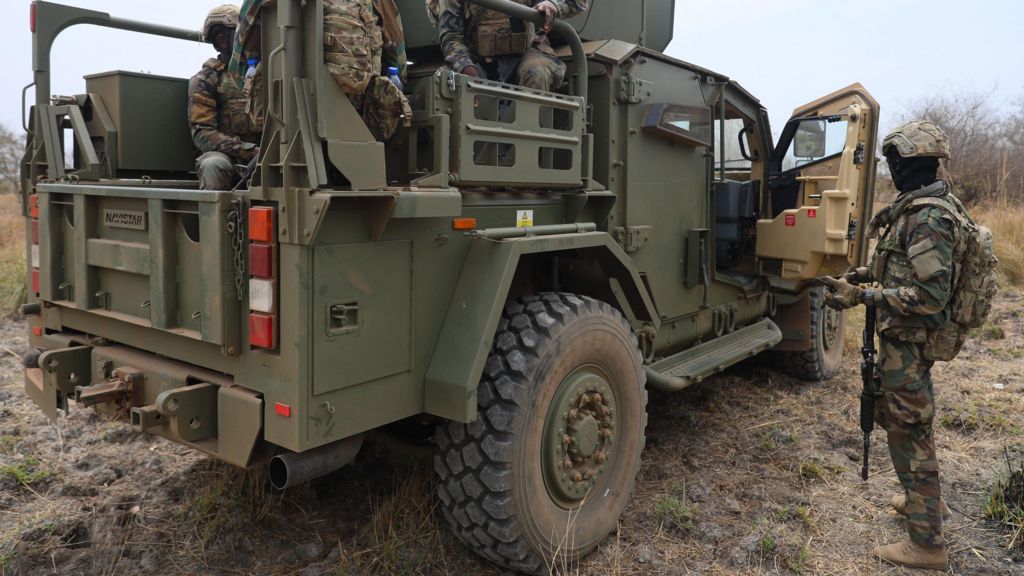
    A brazen assault on a military convoy carrying civilian travelers in northeastern Ghana has left multiple people dead, and launched a full official investigation into the attack by the country’s armed forces. The deadly confrontation unfolded on a high-risk highway near Binduri, as the military escort moved between the urban centers of Bawku and Bolga with 140 civilians in its charge. When gunmen launched their attack, a fierce exchange of fire left seven of the assailants and three innocent civilian bystanders dead. Authorities have already taken 10 suspected attackers into custody, as search operations continue for other individuals linked to the assault. Security forces have also recovered a G3 automatic rifle, two fully loaded magazines and an assortment of extra ammunition from one attacker who attempted to hide in a local mosque after the clash.

    The violence erupts from a decades-old chieftaincy dispute that has kept the region roiled in intermittent, unpredictable bloodshed. The conflict centers on competing claims to the traditional, influential regional leadership position from two local ethnic groups: the Kusasi and the Mamprusi. For years, the chieftaincy rotated between representatives of the two groups, but tensions flared into deeper division several years ago when Ghana’s Supreme Court ruled to uphold the Kusasi’s claim to the position. The ruling did not resolve the standoff, and instead fueled ongoing resentment that has repeatedly erupted into violent clashes.

    To curb the persistent unrest, the Ghanaian government already reinforced the region with additional military deployments last year, a move that came after a wave of attacks on local schools put civilian communities at heightened risk. Beyond deploying additional troops, the government has implemented nighttime curfews across the affected area and launched coordinated joint patrols combining military and police forces to deter violence and respond quickly to flare-ups. In recent months, the influential Asante King has also stepped in to lead high-level mediation efforts aimed at brokering a lasting peace between the two rival groups.

    The deployed troops have a second critical mission beyond quelling domestic intercommunal violence: securing Ghana’s long northern border with Burkina Faso. Neighboring Burkina Faso has struggled with a growing insurgency by armed Islamist militant groups for years, and security officials have documented repeated instances of these fighters crossing into Ghanaian territory to carry out attacks or evade counterinsurgency operations. The combination of long-running ethnic tensions and the threat of cross-border militant incursion has made the northeastern region one of Ghana’s most complex security challenges, and the latest deadly attack is expected to prompt renewed calls for both accelerated mediation and sustained security pressure to prevent further bloodshed.
  • ICC awards $8.4 million in reparations to victims of al-Qaida-linked leader in Mali

    ICC awards $8.4 million in reparations to victims of al-Qaida-linked leader in Mali

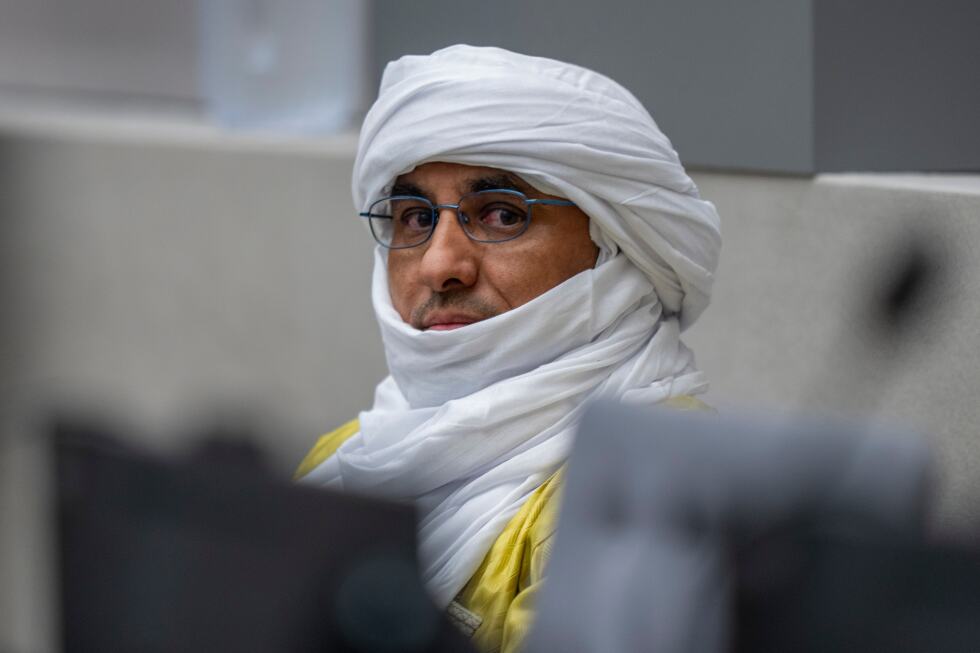
    THE HAGUE, Netherlands — In a landmark ruling for victim justice Tuesday, the International Criminal Court (ICC) ordered a senior al-Qaida-linked extremist leader to pay 7.2 million euros ($8.4 million) in reparations for widespread atrocities he directed while leading the Islamic police in Mali’s ancient desert city of Timbuktu following the 2012 extremist takeover.

    The defendant, Al Hassan Ag Abdoul Aziz Ag Mohamed Ag Mahmoud, was convicted by the ICC last year on charges including torture, religious persecution, and multiple crimes against humanity, receiving a 10-year prison sentence. Judges confirmed that Al Hassan was a central architect of a brutal reign of terror that descended on Timbuktu after Islamic extremist rebels seized control of the city in 2012, leaving tens of thousands of residents harmed by systemic violence.

    Presiding Judge Kimberly Prost told the The Hague-based courtroom that legal responsibility for the harm rests squarely with the convicted perpetrator. “Mr. Al Hassan, as the person found responsible for the crimes, which caused the harm to the victims, is the person financially liable for the cost of repairing the harm,” Prost said.

    However, the court will not be able to collect the ordered sum directly from the 49-year-old, who was confirmed to be indigent before and during his trial, and was represented by a court-appointed attorney funded by the ICC. Instead, the ordered reparations for more than 65,000 identified victims will be disbursed through the ICC’s Trust Fund for Victims, a body established by the court’s member states to deliver compensation and support to those harmed by crimes falling under ICC jurisdiction.

    Deborah Ruiz Verduzco, executive director of the Trust Fund for Victims, explained the body’s unique role under the ICC’s founding framework, the Rome Statute. “We are one of the many innovations of the Rome Statute,” Ruiz Verduzco told the Associated Press, noting that the fund exists specifically to address harm stemming from crimes within the court’s jurisdiction.

    The fund’s 24-person team carries out a broad mandate: supporting victims and their families, developing community recovery programs in regions shattered by violence, and securing the financial resources needed to meet its commitments. In the fund’s 20 years of operation, this marks only the second time a perpetrator has been ordered to pay reparations — and only the first case where a court-ordered award will actually be distributed to mass victims. Previous payments from a perpetrator came in a separate earlier case.

    ICC Presiding Judge Prost emphasized that significant targeted fundraising will be required to raise the full 7.2 million euro sum. The majority of the funds will be contributed by ICC member states, though the trust fund also accepts private donations from global supporters. Most recently, Germany donated 40,000 euros ($46,000) to the fund in March, and Sweden and the Netherlands stand as the body’s two largest national contributors.

    While ICC judges oversee and finalize how reparations funds are allocated, they actively incorporate input from victims through their legal representatives and the trust fund. In Al Hassan’s case, the court ruled that the funds will be directed toward three core areas: socio-economic support for harmed communities, educational programs and vocational training for residents, and specialized psychological support for survivors. The ruling explicitly requires that programming prioritize women and girls, who faced disproportionate harm and gender-based violence during the extremist occupation of Timbuktu.

    This is not the first time the trust fund has delivered recovery support to Timbuktu communities. In 2016, another al-Qaida-linked militant, Ahmad Al Faqi Al Mahdi, pleaded guilty to the war crime of destroying Timbuktu’s iconic historic mausoleums. The trust fund launched a restoration project for the ruined cultural sites in 2021, marking an earlier step toward recovery for the region.

    The ruling comes amid ongoing widespread instability in the Sahel region of West Africa. Mali, along with neighboring Burkina Faso and Niger, has faced a decade-long insurgency waged by armed extremist factions with ties to al-Qaida and the Islamic State group. All three nations have experienced military coups in recent years, and their ruling juntas have expelled long-time Western security partners, most notably French counter-terrorism forces, and turned to Russia’s Wagner mercenary network for security assistance. The ICC’s decision was issued just days after an alliance of al-Qaida-linked militants and separatist fighters carried out the largest coordinated attack in Mali in more than 10 years, underscoring the persistent insecurity gripping the country.

  • Mexican cartel leader found hiding in a ditch

    Mexican cartel leader found hiding in a ditch

    In a high-stakes, large-scale security operation that marks one of the most significant victories against Mexican organized crime in recent months, Mexican security forces have apprehended a senior leadership figure of the Jalisco New Generation Cartel (CJNG), one of the world’s most powerful and violent transnational criminal networks.

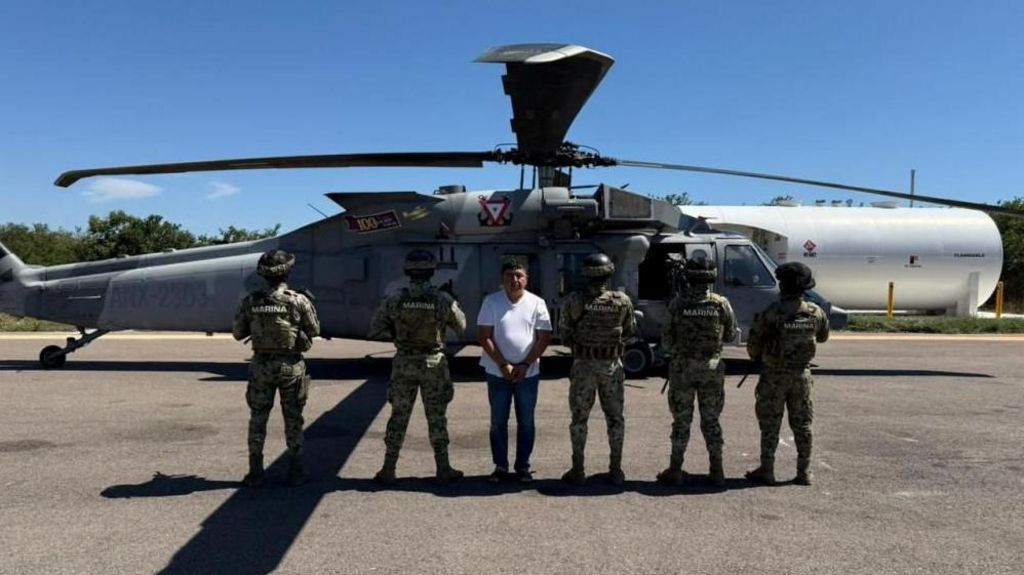
    The target, 45-year-old Audias Flores Silva—known widely by his cartel alias “El Jardinero” or “The Gardener”—was tracked down and captured without resistance on Monday in the western Mexican state of Nayarit. After roughly 500 security personnel closed in on his hiding location, Flores was found concealing himself in a large cement drainage ditch, his legs visible protruding from the pipe as armed officers moved in. Footage released by the Mexican Navy shows military helicopters hovering over a remote cabin in the area prior to the arrest, confirming the coordinated nature of the raid. Following his capture, Flores was immediately airlifted via helicopter to a maximum-security detention facility for holding.

    Senior Mexican officials have confirmed that Flores served as the closest right-hand associate to Nemesio “El Mencho” Oseguera, the former founder and leader of CJNG who was Mexico’s most-wanted criminal. El Mencho died two months ago from injuries sustained during a clash with military forces deployed to arrest him, and Flores was widely named among the top candidates expected to take control of the entire cartel in the wake of El Mencho’s death. Unlike his former boss, who died in a gunfight with security forces, Flores surrendered without any resistance when officers closed in on his hiding spot.

    Mexico’s Security Secretary Omar García Harfuch publicly announced the successful operation via social media, where he commended the personnel of the Mexican Navy for their work. “I recognize the bravery, discipline and dedication of the women and men of the Mexican Navy who carried out this key operation against organized crime,” Harfuch wrote.

    The arrest carries major cross-border significance, as the United States had long targeted Flores for his role in the cartel’s drug trafficking operations. The U.S. State Department had offered a $5 million reward for information leading to Flores’ capture, and U.S. Ambassador to Mexico Ronald Johnson praised the operation in a post on X, calling the arrest “an important step” in disrupting transnational criminal activity. “Actions like this strengthen security on both sides of our border and help dismantle criminal networks that threaten communities in both our countries,” Johnson wrote.

    For Mexican President Claudia Sheinbaum, the successful capture represents a major policy win, as her administration has faced growing pressure from U.S. President Donald Trump to step up efforts to combat cartels smuggling illicit drugs from Mexico into the United States. In a precautionary move to prevent widespread violence following the high-profile arrest, Sheinbaum’s security cabinet deployed additional security personnel to Nayarit and surrounding regions, a response shaped by the wave of coordinated unrest that swept through eight Mexican states after El Mencho’s death in February.

    Initial reports confirm that scattered retaliatory attacks have already occurred, with cartel affiliates setting fire to six vehicles and six local businesses in response to Flores’ arrest. However, Nayarit’s governor Miguel Ángel Navarro Quintero told reporters Tuesday that the security deployment has kept the situation under control, confirming no major roadblocks have been established by cartel members and that overall public order remains calm across the state.

  • BBC reports from scene of fatal Indonesia train crash

    BBC reports from scene of fatal Indonesia train crash

    A devastating collision between two trains in Indonesia’s Bekasi region has claimed the lives of at least 15 people, according to on-the-ground reporting from the BBC. The crash occurred when one train slammed into a carriage exclusively reserved for female passengers that was part of a commuter train service, a popular mode of daily transit for thousands of local residents traveling between Bekasi and the capital Jakarta.

    BBC correspondents who reached the accident site shortly after the collision described a scene of chaos and destruction, with emergency responders scrambling to clear wreckage in search of any survivors trapped under debris. Local authorities have not yet released full details on the cause of the crash, or the identities of the deceased victims, but have confirmed that multiple injured people were transported to nearby hospitals for urgent medical care immediately following the incident.

    The female-only carriage was introduced as a measure to improve safety and comfort for women commuting on crowded Indonesian rail lines, a policy that has been in place on major commuter routes across the country for more than a decade. This deadly crash has already prompted preliminary calls from local transport advocates for a full, transparent investigation into what led to the collision, and a review of safety protocols across the national commuter rail network to prevent similar tragedies in the future.

  • Ukraine says it shot down 33,000 Russian drones in March, a monthly record

    Ukraine says it shot down 33,000 Russian drones in March, a monthly record

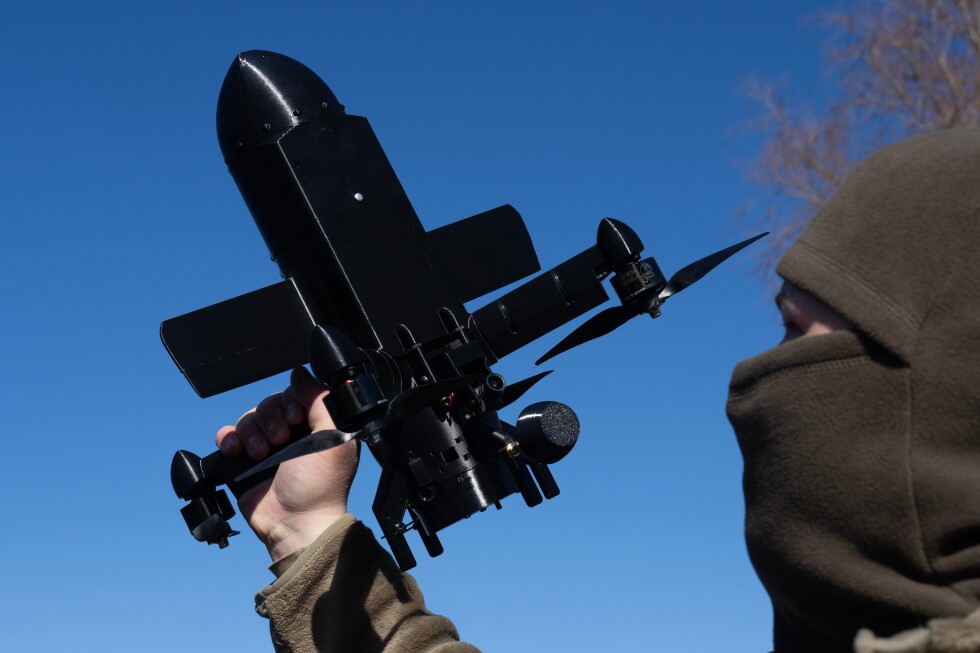
    In a significant milestone for Ukraine’s air defense campaign against Russian aggression, Ukrainian Defense Minister Mykhailo Fedorov announced that interceptor systems shot down over 33,000 Russian drones of varying types in March. This figure marks the highest monthly total of intercepted Russian unmanned aerial vehicles since Moscow launched its full-scale invasion in February 2022.

    Alongside defensive advances, Ukraine has expanded its offensive drone capabilities. The country’s domestically produced long-range attack drones carried out a third strike on a key Russian Black Sea oil infrastructure site in less than two weeks, targeting the refinery and terminal at the Black Sea port of Tuapse. The Tuapse refinery, a major asset in Russia’s energy network that generates critical revenue for Moscow’s war effort, has now faced three coordinated attacks by Ukrainian defense and security units this month alone. According to Ukraine’s Unmanned Systems Forces, the first two strikes earlier in March destroyed 24 oil storage tanks and damaged four additional facilities. Krasnodar Governor Veniamin Kondratyev confirmed that local residents near the site were evacuated as a precaution on Tuesday, though he did not release details on the number of evacuees or the duration of the evacuation order.

    Ukraine’s domestic drone industry has emerged as a game-changing asset in the conflict against Russia’s larger conventional military force. Kyiv’s cutting-edge, battle-proven drone technology has already attracted widespread military procurement interest from the global defense community. Ukrainian officials report that demand for Ukraine’s interceptor drones, a core component of integrated air defense networks, has spiked among Middle Eastern and Gulf nations amid ongoing regional conflicts including tensions with Iran.

    To scale up production and operational effectiveness of interceptor drones, Ukraine has established a new dedicated command within its air force, Fedorov shared in a Monday Telegram post. Offensive capabilities have also seen dramatic growth: the Ukrainian Defense Ministry confirmed Tuesday that Kyiv has more than tripled the maximum range of its deep-strike drone operations since the 2022 invasion. What began as a 630-kilometer (400-mile) strike capability early in the war has expanded to roughly 1,750 kilometers (1,100 miles), allowing Ukrainian forces to target critical Russian military supply factories and revenue-generating energy infrastructure deep inside Russian territory.

    Cross-border drone exchanges continued to inflict casualties on both sides this week. The Russian Defense Ministry stated Tuesday that its air defense systems intercepted 186 Ukrainian drones overnight across multiple Russian regions, the illegally annexed Crimean Peninsula, and the Black and Azov Seas. In the Russian border region of Belgorod, a Ukrainian drone attack left three civilians dead and three others injured, regional governor Vyacheslav Gladkov confirmed.

    On the Ukrainian side, Russian drone attacks claimed three civilian lives and wounded five others across the country over the same period. In the northeastern Kharkiv region’s city of Chuhuiv, two civilians were killed, regional military administration head Oleh Syniehubov reported. One civilian death and five injuries were recorded in Kryvyi Rih, President Volodymyr Zelenskyy’s hometown. A separate Russian strike on Konotop in the northern Sumy region cut off the city’s electricity and water access. To date, independent third-party verification of all Ukrainian and Russian claims about drone strikes and damage has not been completed.

  • Uganda detains 231 foreigners in crackdown on possible human trafficking

    Uganda detains 231 foreigners in crackdown on possible human trafficking

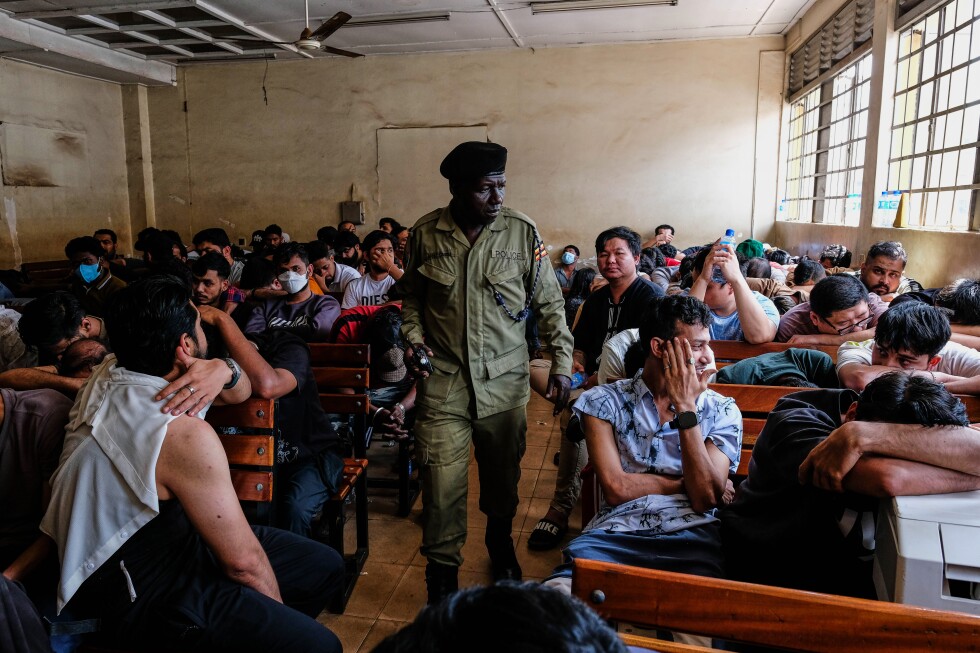
    KAMPALA, Uganda — A sweeping nationwide crackdown on unauthorized migration has led Ugandan law enforcement and internal affairs officials to detain more than 200 foreign nationals this week, with investigations linking many of the detainees to transnational human trafficking networks and organized cyber fraud operations, government representatives announced Tuesday.

    The multi-location operation, which launched early Monday, unfolded across two key sites: a residential enclave in northern Uganda home to a large community of Nigerian migrants, and a tightly secured, closed-off residential compound in the heart of Kampala, Uganda’s capital. In total, 231 people have been placed in custody for questioning across both locations.

    Officials with Uganda’s Ministry of Internal Affairs detailed that 169 detainees were discovered in the capital’s restricted compound, a self-contained apartment complex purpose-built to limit outside movement, complete with its own private restaurant and on-site amenities. Thirty-six of the people found at that site were women, and detainees held there held citizenship from across Asia and Africa, including Pakistan, India, Bangladesh, Ghana, Myanmar, Ethiopia, Sri Lanka, Cambodia, and Malaysia.

    The operation was launched following verified intelligence reports that large groups of foreign nationals were residing and working in Uganda without the mandatory legal documentation required for residency or employment, ministry officials confirmed. During the raids, many detainees were found to be in possession of no valid passport or identity paperwork at all.

    In an official public statement, the ministry outlined the preliminary findings from the operation: “Some individuals have claimed they were trafficked into Uganda with false promises of formal employment. Others were directly engaged in cyber-scamming activities. A few were found in possession of materials linking them to additional other criminal enterprises.”

    Simon Peter Mundeyi, a spokesperson for the Ministry of Internal Affairs, explained to the Associated Press that the detainees are currently being held at two separate processing facilities and divided into three distinct categories for assessment: confirmed or suspected trafficking victims, alleged criminal perpetrators of trafficking and cybercrime, and migrants who simply overstayed their valid visas without engaging in any illegal activity.

    Mundeyi confirmed that both trafficking victims and visa overstayers will be assisted to process voluntary departure from Uganda, though they will be required to cover the cost of their own return travel tickets. Suspected ringleaders of trafficking and fraud networks, by contrast, will face formal criminal prosecution in Ugandan courts before potential deportation following any completed sentence.

    Unlike many regional peers, Uganda has long cultivated a reputation for being open to foreign arrivals and hosting displaced people. The East African nation currently hosts hundreds of thousands of refugees fleeing violent conflict in neighboring states including the Democratic Republic of Congo, Burundi, and South Sudan. It also maintains a liberal visa policy that waives entry visa requirements for short-term visits from citizens of dozens of African and global countries.

  • War in the Middle East: latest developments

    War in the Middle East: latest developments

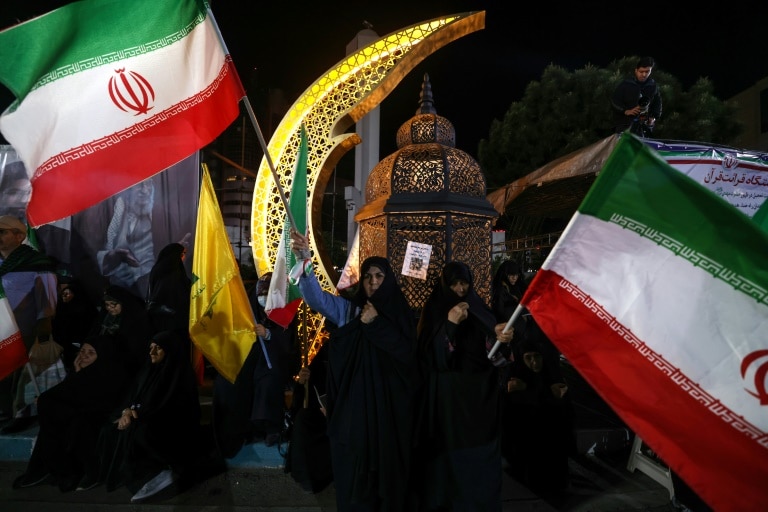
    Two months after a joint U.S.-Israeli military offensive sent shockwaves rippling through global energy markets and upended regional security, the Middle East remains locked in a state of elevated tension, with new diplomatic moves, ongoing military clashes and economic volatility defining the latest chapter of the crisis. On Monday, the White House confirmed it is reviewing a new proposal from Iran aimed at de-escalating tensions and unblocking the critical Strait of Hormuz, a chokepoint through which roughly 20% of global oil supplies transit daily. According to Iran’s Fars News Agency, Tehran transmitted the written proposal, which outlines Iran’s non-negotiable red lines covering both its nuclear program and activity around the strait, to Washington via diplomatic channels in Pakistan. U.S. President Donald Trump convened a meeting of his top national security advisors to assess the offer, with White House press secretary Karoline Leavitt telling reporters during a daily briefing that the proposal is “being discussed” among senior administration officials. As diplomatic talks remain in their earliest stages, the ongoing impasse between Washington and Tehran has already triggered fresh volatility across global markets. On Tuesday, international oil prices jumped sharply, while global equity markets sank, as shipping traffic through the Strait of Hormuz remains severely choked, disrupting global energy supply chains. Beyond the diplomatic standoff, Iran has laid out clear conditions for restoring security across the oil-rich Persian Gulf: Tehran demands ironclad security guarantees that the U.S. and Israel will not launch another offensive against its territory. “A durable and permanent cessation of aggression against Iran supplemented by credible guarantees of non-recurrence and full respect for the legitimate sovereign rights and interests of Iran” are non-negotiable preconditions for any de-escalation, Amir Saeid Iravani, Iran’s permanent representative to the United Nations, told a session of the UN Security Council Monday. Meanwhile, military clashes continue to claim lives across the region despite the existing ceasefire agreement between Israel and the Iran-backed militant group Hezbollah. Lebanon’s Ministry of Public Health confirmed Monday that recent Israeli airstrikes on southern Lebanon killed four people, including one civilian woman, and wounded 51 more, three of whom are children. Israeli military leadership has warned that the country faces an extended period of conflict across multiple fronts in the coming year. Israel Defense Forces Chief of Staff Lieutenant General Eyal Zamir noted that the IDF has maintained continuous, multi-front combat operations since the October 7, 2023 Hamas attack that sparked the ongoing Gaza war, and projected that 2026 will bring another full year of fighting across all active fronts. Israeli Prime Minister Benjamin Netanyahu echoed that assessment, emphasizing that Hezbollah remains a critical national security threat that requires continued Israeli military action in Lebanon. “There are still two central threats from Hezbollah: the 122mm rockets and the drones. This demands a combination of operational and technological activity,” Netanyahu said in a formal statement. While Netanyahu acknowledged that Hezbollah now retains only roughly 10 percent of the missile arsenal it held at the start of the current conflict, he added that the remaining weapons still pose a constant threat to Israeli civilians living in the country’s northern border regions. As tensions simmer on all fronts, the international community continues to monitor developments closely, with growing concern over the risk of the conflict expanding into a wider regional war that could have devastating consequences for the global economy and civilian populations across the Middle East.

  • Russian superyacht sails through Strait of Hormuz despite blockade

    Russian superyacht sails through Strait of Hormuz despite blockade

    Against a backdrop of heightened geopolitical tension and a largely blockaded critical global shipping lane, a luxury superyacht tied to one of Vladimir Putin’s closest sanctioned allies has completed a rare passage through the Strait of Hormuz, drawing new attention to deepening diplomatic ties between Iran and Russia.

    The 142-meter Nord, a multi-deck floating palace valued at an estimated $500 million that comes equipped with a swimming pool, private submarine, and full helipad, set out from Dubai on Friday night and reached the Al Mouj marina in Muscat, Oman by Sunday morning, according to tracking data from the Marine Traffic platform. While the vessel is formally registered to a company controlled by the wife of Alexey Mordashov – Russia’s wealthiest businessman, per Forbes, with an estimated net worth of $37 billion – open source records confirm the superyacht is ultimately linked to Mordashov himself, a long-time ally of Putin who has been hit with sweeping sanctions from the U.S., EU, and UK since Russia’s 2022 full-scale invasion of Ukraine. It remains unknown whether Mordashov was aboard the vessel during the transit.

    The rare voyage comes at a moment of extreme volatility in the Strait of Hormuz, the narrow Gulf waterway that carries roughly one-fifth of the world’s global crude oil and liquefied natural gas supplies. After former U.S. President Donald Trump announced a U.S. military blockade of Iranian ports, Iran has restricted most commercial and private shipping through the channel, leaving current traffic at a small fraction of pre-conflict levels. The ongoing standoff has sent global energy prices soaring: international benchmark Brent crude climbed to $109 per barrel on Monday, deepening economic uncertainty for markets worldwide. With most private vessels avoiding the contested waterway entirely, Nord is one of only a handful of private craft to complete the transit in recent months.

    Parallel to the shipping disruption, this week has seen high-level diplomatic engagement between Iran and Russia aimed at solidifying their growing strategic partnership. On Monday, Putin hosted an Iranian delegation led by Foreign Minister Abbas Araghchi in St. Petersburg, where both leaders reaffirmed their mutual solidarity against Western pressure. Speaking after the meeting, Araghchi emphasized that recent global events have only underscored the depth of the two nations’ alliance, writing on social media platform X: “As our relationship continues to grow, we are grateful for solidarity and welcome Russia’s support for diplomacy.” Araghchi shared public photos of himself shaking hands and smiling with both Putin and Russian Foreign Minister Sergey Lavrov.

    For his part, Putin told the Iranian delegation that the Iranian people are “courageously fighting” for their national sovereignty in the face of pressure from the U.S. and Israel, according to Russian state news agency Tass. The high-level talks come as long-term peace negotiations between the U.S. and Iran remain stalled, leaving the status of the Strait of Hormuz and global energy security unresolved.

    For years following the imposition of Western sanctions on Mordashov, Western governments have pushed other nations to seize Nord and freeze the billionaire’s other assets. Previous attempts to take control of the superyacht have failed, however, with both Hong Kong and the Maldives declining to impound the vessel despite repeated international calls for action.

  • A South Sudan community is denied aid as government and opposition blame each other

    A South Sudan community is denied aid as government and opposition blame each other

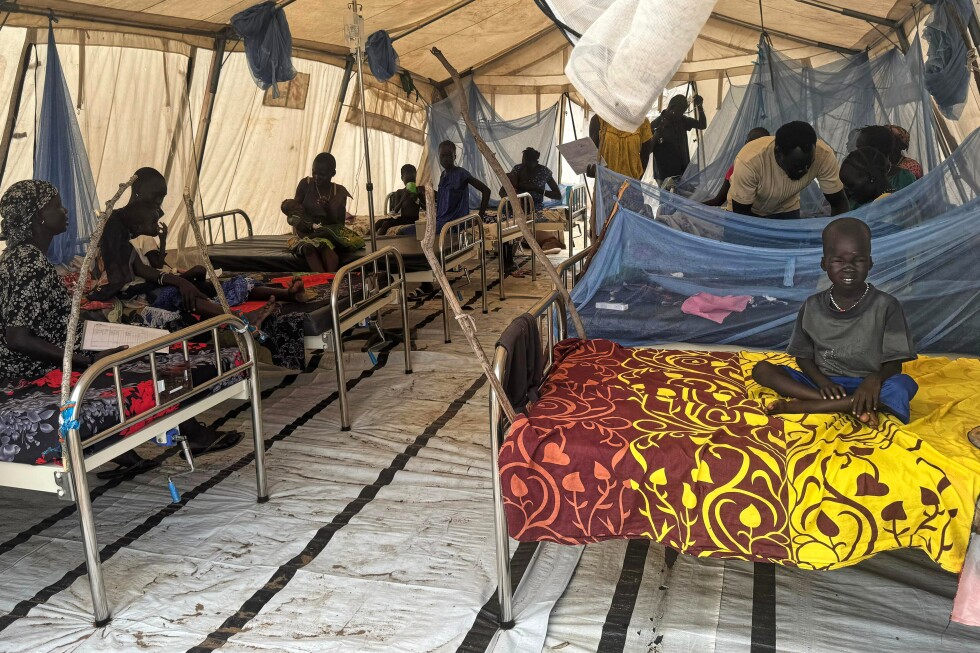
    Amid a fresh wave of armed conflict in South Sudan’s Jonglei State, thousands of displaced civilians trapped in an isolated, swamp-ringed village have been blocked from receiving emergency humanitarian aid by government officials, military and local authorities, according to eyewitness accounts and statements from leading international aid organizations interviewed by the Associated Press.

    The crisis began in December 2023, when opposition forces aligned with Riek Machar — the long-time political rival of President Salva Kiir who was suspended from his post as first vice president and placed under house arrest last year over alleged subversion — seized multiple military outposts across Jonglei. Government counteroffensives the following month pushed thousands of civilians to flee their homes, many toward the remote settlement of Nyatim, a day’s walk from the contested town of Lankien. Among the evacuees was Thomas Nim, a 43-year-old pharmacist who trekked through swampland with his pregnant wife, three children and elderly mother to escape advancing government troops. “Some of the most vulnerable, like the elderly and children, ended up in Nyatim because they couldn’t make it any farther,” Nim explained to the AP.

    Trapped in the desolate location with no access to clean water or sufficient food, displaced residents relied on a Starlink satellite internet connection to send out pleas for emergency assistance. Eyewitnesses report dozens of people have already died, many from apparent starvation, with residents reduced to foraging for leaves and wild roots to stay alive.

    When international aid groups including Doctors Without Borders (MSF) and the U.N. World Food Programme (WFP) applied for official government clearance to deliver relief supplies to Nyatim, their requests were repeatedly rejected. “It was a ‘no’ from local and national authorities and from the military,” stated Yashovardhan, MSF’s South Sudan mission head, who uses a single name. WFP country director Adham Effendi confirmed the blockade, noting the agency had been blocked despite “numerous engagements with both national and local authorities” — an unusually public rebuke from an agency that has historically avoided public criticism of South Sudan’s government over aid access restrictions.

    Both government and opposition representatives have traded blame for the ongoing crisis. Gatkhor Dual, an opposition aid coordinator in Jonglei, accused county commissioner James Bol Makuei of intentionally cutting off aid to the area because he believes Nyatim’s residents support the opposition. Makuei has countered that access is restricted because the population estimate of 30,000 cited by MSF is exaggerated, and claimed the main opposition group SPLM-IO is holding civilians hostage in the area to gain political leverage and attract aid near the county seat of government. But Nim, the displaced pharmacist who fled to Nyatim, denies any opposition military presence in the village.

    While concerns over aid diversion are not unfounded in South Sudan — where armed groups on both sides have a long track record of seizing humanitarian supplies for military use, and the U.N. reports fighters looted more than two dozen aid-run health facilities during recent Jonglei fighting — the blockade has left thousands of vulnerable people with no source of life-sustaining support. Some residents have already abandoned the remote village and returned to their conflict-ruined homes out of desperation. “People are returning to their homes,” said Koang Pajok, one of those who left Nyatim. “There was no food and shelter.”

    Delivering aid across South Sudan has long been a challenge, hampered by crumbling infrastructure, repeated attacks on river transport routes, and mandatory bureaucratic clearance from government officials. The ongoing crisis in Nyatim has deepened an already catastrophic humanitarian situation across the region: in the nearby community of Chuil, where the government has allowed aid access, MSF screening in March found more than half of 1,000 tested children were acutely malnourished. The aid organization has been forced to repeatedly expand its small treatment facility in Chuil from four beds to 100 to keep up with the influx of starving civilians.

    Barred from overland or river access to remote areas, WFP has carried out airdrops of 415 metric tons of food to the Chuil region since March. But the arrival of aid has also drawn armed men with military weapons to the area, sparking fears the site could become a target for airstrikes. When a surveillance plane flew over the region in April, anxious civilians scattered, recalling that a similar overflight preceded a December airstrike on Lankien that killed at least 11 civilians.

    The current crisis is the latest chapter in decades of cyclical violence in South Sudan, which gained independence from Sudan in 2011 before descending into a civil war between Kiir and Machar that killed an estimated 400,000 people between 2013 and 2018. A 2018 peace deal formed a fragile unity government between the two rivals, but fighting has reemerged in recent months, with consistent reports that armed groups on both sides have weaponized aid to punish civilian populations aligned with opposing factions.

    This reporting is supported by a grant from the Gates Foundation, with the AP retaining full editorial control over all content.

  • Trial of Austrian man accused of plotting to attack a Taylor Swift concert set to begin

    Trial of Austrian man accused of plotting to attack a Taylor Swift concert set to begin

    VIENNA, Austria — Two years after an alleged terrorist plot targeting a high-profile Taylor Swift concert was uncovered, an Austrian court is set to open the trial Tuesday for the 21-year-old Austrian citizen at the center of the conspiracy. The defendant, identified only as Beran A. in compliance with Austria’s strict privacy regulations for criminal defendants, faces multiple serious charges, including terrorist activity and formal membership in the Islamic State (IS) militant group. If convicted on all counts, he could receive a maximum sentence of 20 years in prison.

    The foiled plot sent shockwaves across the globe in August 2024, when Austrian authorities, acting on critical intelligence shared by U.S. security agencies, announced the last-minute cancellation of three sold-out Eras Tour shows scheduled at Vienna’s Ernst Happel Stadium. The cancellation left tens of thousands of Swift’s devoted fans, known colloquially as Swifties, heartbroken—many of whom had traveled from every corner of the world to attend the record-breaking tour. While the disappointment ran deep, the global fan base turned the crisis into a moment of collective connection, transforming the entire city of Vienna into an impromptu gathering spot where fans traded handmade friendship bracelets a staple of Eras Tour fan culture and joined in mass singalongs of Swift’s biggest hits.

    On the eve of the trial, defense attorney Anna Mair confirmed to the Associated Press that her client intends to plead guilty to the majority of the charges against him, though she declined to specify which counts he will admit to.

    According to official allegations laid out by prosecutors, Beran A. planned to target massive crowds gathered outside Ernst Happel Stadium on the nights of the scheduled shows. Authorities say the plot targeted up to 30,000 fans waiting outside the venue each night, alongside 65,000 concertgoers inside, with the attacker planning to use knives or improvised homemade explosives. Investigators have stated the suspect’s explicit goal was to “kill as many people as possible.” When authorities raided Beran A.’s Vienna apartment on August 7, 2024—just one day before the first scheduled show—they recovered a cache of materials for building explosive devices.

    Prosecutors have also charged a second co-defendant, 21-year-old Arda K., whose full name is also withheld per privacy rules, in connection with a broader network of IS-aligned plots. Court documents allege that Beran A., Arda K., and a third suspect identified only as Hasan E. planned to carry out coordinated, simultaneous attacks across Saudi Arabia, Turkey, and the United Arab Emirates during the 2024 Ramadan holiday, all in the name of IS.

    The only one of these three plots to be carried out was Hasan E.’s attack in March 2024 at Mecca’s Grand Mosque, where he allegedly stabbed a security guard. The suspect was arrested at the scene and remains in pre-trial custody in Saudi Arabia, while Beran A. and Arda K. abandoned their planned attacks in Turkey and the UAE. After returning to Vienna, prosecutors say Beran A. shifted his full attention to plotting the attack on Swift’s concert.

    The Vienna conspiracy immediately drew international comparisons to the 2017 suicide bombing at an Ariana Grande concert in Manchester, England, that killed 22 people—most of them young fans—and remains the deadliest extremist attack in the United Kingdom in recent decades.

    In a statement posted to Instagram two weeks after the 2024 cancellation, Swift shared her own reaction to the disrupted shows and foiled attack. “Having our Vienna shows cancelled was devastating,” she wrote. “The reason for the cancellations filled me with a new sense of fear, and a tremendous amount of guilt because so many people had planned on coming to those shows.”

    The trial is being held in the town of Wiener Neustadt, roughly an hour’s drive south of Vienna, with proceedings scheduled to resume on May 12.