分类: world

  • Two drones headed to RAF base intercepted, Cyprus says

    Two drones headed to RAF base intercepted, Cyprus says

    Cyprus remains on heightened security alert following a series of aerial incidents targeting RAF Akrotiri, a strategic British military installation on the Mediterranean island. The escalation comes amid broader regional hostilities between Iran and Western allies.

    On Monday, Cypriot authorities confirmed the successful interception of two unmanned aerial vehicles heading toward the British base. This incident occurred just hours after a separate drone struck the facility overnight Sunday, causing minimal damage but no casualties.

    The base implemented emergency protocols, instructing personnel to shelter away from windows and behind furniture as warning sirens sounded throughout the area. The UK Ministry of Defence initiated precautionary measures, including relocating family members to alternative accommodation and planning the temporary dispersal of non-essential personnel.

    The tension extended beyond the military base, with Paphos Airport briefly raising alarms and issuing evacuation instructions after a suspected drone was spotted in its airspace. The US Embassy in Cyprus subsequently issued warnings about potential drone threats in the Paphos region.

    Cypriot President Nikos Christodoulides identified the Sunday attack as involving an Iranian drone, though officials emphasized that Cyprus itself was not the intended target. This assessment was corroborated by UK Prime Minister Sir Keir Starmer during a phone call with the Cypriot leader.

    The incidents form part of a broader regional confrontation that began on Saturday when US and Israeli forces launched massive strikes against Iranian leadership and military targets, resulting in the death of Supreme Leader Ayatollah Ali Khamenei. Iran has responded with ballistic missiles and drone attacks targeting US assets and allies across the Middle East.

    UK Defence Secretary John Healey expressed concern about Iranian ‘indiscriminate attacks’ endangering British troops and civilians in the region. In a significant development, an RAF Typhoon jet operating from Qatar shot down an Iranian drone during a defensive air patrol—marking the first such engagement by a UK fighter since hostilities escalated.

    Prime Minister Starmer confirmed the UK had agreed to a US request to use British military bases for defensive strikes, emphasizing the decision was based on ‘collective self-defence’ of allies and protecting British lives. The BBC understands RAF Fairford in Gloucestershire and Diego Garcia in the Indian Ocean are likely staging points for US operations against Iranian missile sites.

    The Cypriot government announced it would make formal representations to the UK regarding information sharing procedures during Sunday’s incident, highlighting concerns about coordination with local authorities and residents.

  • 169 people killed after insurgents raid a village in a remote area of South Sudan

    169 people killed after insurgents raid a village in a remote area of South Sudan

    JUBA, South Sudan — A brutal insurgent attack on a remote village in South Sudan’s Abiemnom county has resulted in the deaths of at least 169 people, including 90 civilians, according to local authorities. The assault occurred Sunday in Ruweng administrative area, marking the latest eruption of violence threatening to plunge the nation back into full-scale civil war.

    James Monyluak, information minister for Ruweng, confirmed that women and children were among the civilian casualties, alongside dozens of combatants killed in the fighting. In response to the violence, approximately 1,000 terrified residents sought refuge at a United Nations base following the attack.

    The UN Mission in South Sudan (UNMISS) reported 23 wounded victims and expressed grave concern over accounts indicating “dozens of civilians and some local officials have lost their lives.” UNMISS official Anita Kiki Gbeho issued a stern warning: “Such violence places civilians at grave risk and must stop immediately. I urge all involved to cease hostilities without delay and engage in constructive dialogue to address their grievances.”

    The massacre represents the escalating conflict between government forces loyal to President Salva Kiir and armed factions believed to be aligned with opposition leader Riek Machar. The attacking youths are suspected to have connections to Machar’s Sudan People’s Liberation Movement-In-Opposition faction.

    This surge in violence threatens to unravel the fragile 2018 peace agreement that ended South Sudan’s five-year civil war. Machar, who served as first vice president in the unity government formed after the peace deal, currently faces house arrest in Juba on subversion charges that his supporters claim are politically motivated.

    The conflict intensified dramatically in December when opposition forces captured government outposts in Jonglei county, a opposition stronghold where renewed fighting has displaced approximately 280,000 people according to UN estimates. Humanitarian organizations have raised alarms about access restrictions to opposition-controlled territories endangering civilian populations.

    Despite official commitments to the peace process, the government has conducted counteroffensive operations since January employing aerial bombardments and ground assaults, further destabilizing the precarious security situation in the world’s youngest nation.

  • Britain says it’s not at war after a drone strikes its Akrotiri base in Cyprus

    Britain says it’s not at war after a drone strikes its Akrotiri base in Cyprus

    CYPRUS — The British government has emphatically declared that the United Kingdom remains in a non-belligerent status despite escalating Middle East tensions, even as Royal Air Force installations in Cyprus faced direct drone attacks and Britain authorized American forces to utilize UK bases for regional operations.

    RAF Akrotiri, Britain’s pivotal Middle East operations hub, sustained a direct hit from an Iranian-manufactured drone late Sunday, marking the first time the Iran-Israel conflict has physically extended to European territory. While the strike resulted in no casualties and minimal infrastructure damage, it triggered renewed security alerts Monday as Typhoon and F-35 fighter jets scrambled in response to emerging threats.

    The Cypriot government confirmed intercepting two drones headed toward the island nation, while base authorities circulated emergency alerts instructing personnel to remain indoors away from windows. The attack represents the first significant assault on Akrotiri since Libyan militants targeted the facility in 1986.

    British leadership has walked a diplomatic tightrope, refusing to explicitly endorse U.S.-Israeli military actions against Iran while simultaneously permitting American forces to utilize UK bases for targeting Iranian missile launch sites. Prime Minister Keir Starmer emphasized that Britain’s bases cannot be used for strikes on political or economic targets within Iran, stating: ‘We are not joining these strikes, but we will continue with our defensive actions in the region.’

    The shadow of Iraq looms large over British decision-making, with the memory of the 2003 invasion that claimed 179 British lives and thousands of Iraqi and American casualties. Middle East Minister Hamish Falconer reiterated Britain’s defensive posture while acknowledging the necessity of countering Iranian ballistic threats: ‘Iran has ballistic missiles pointed at the Gulf and it is vital that those missile launchers are taken out.’

    Critics within the governing Labour Party, including MP John McDonnell, warn that Britain risks repeating the same trajectory that led to full involvement in Iraq: ‘We are being drawn in, just as we were in Iraq, following the U.S. into an incredibly dangerous situation.’

    The British military has reinforced Akrotiri with additional F-35s, advanced radar systems, and counter-drone technologies in recent weeks, while relocating military families to secure accommodations as tensions continue to mount.

  • Greetings from Shanghai, echoes in New York

    Greetings from Shanghai, echoes in New York

    Shanghai has launched a sophisticated international branding campaign by illuminating New York’s iconic Times Square with a vibrant digital display on the Nasdaq MarketSite Tower screen. The visually striking presentation, characterized by its distinctive “Shanghai red” color scheme, served as a dynamic greeting to New Yorkers while strategically positioning the Chinese metropolis as a premier global destination.

    The high-profile digital exhibition showcased Shanghai’s multifaceted appeal across business, culture, education, and tourism sectors. This transcontinental visual communication spanned over 12,000 kilometers, symbolizing Shanghai’s commitment to strengthening its international connections and expanding its global influence.

    According to the presentation, Shanghai aims to project an image of openness, confidence, and opportunity to international audiences. The carefully orchestrated display highlighted the city’s modern infrastructure, vibrant urban life, and economic vitality, emphasizing its readiness to engage with global partners across multiple sectors.

    The strategic timing of this initiative aligns with Shanghai’s ongoing efforts to enhance its status as an international hub for finance, trade, and innovation. This digital outreach represents part of a broader campaign to attract foreign investment, international talent, and global recognition as the city continues to develop its worldwide networks and partnerships.

  • Pakistan deploys troops, imposes 3-day curfew after deadly protests over US-Israeli strikes on Iran

    Pakistan deploys troops, imposes 3-day curfew after deadly protests over US-Israeli strikes on Iran

    Pakistani authorities have deployed military forces and implemented a stringent 72-hour curfew across northern cities following lethal demonstrations triggered by the assassination of Iran’s Supreme Leader. The violent outbursts, which resulted in significant casualties and property damage, represent the most severe civil unrest in recent years.

    In Gilgit and Skardu, where the curfew remains effective until Wednesday, thousands of Shiite protesters targeted international organizations including the United Nations Military Observer Group (UNMOGIP) and UN Development Programme facilities. Official reports confirm demonstrators vandalized the UNMOGIP Field Station, set fire to police infrastructure, and damaged educational buildings and charitable organizations. Regional police authorities reported at least 12 fatalities and 80 injuries from the confrontations.

    The unrest extended to Karachi, where protesters assaulted the U.S. Consulate, breaking windows and attempting to arson the building. Police utilized batons, tear gas, and live ammunition to disperse crowds, resulting in 10 additional deaths and over 50 injuries. Similar clashes in Islamabad claimed one life during attempted marches toward the U.S. Embassy.

    United Nations spokesperson Stephane Dujarric acknowledged the violence against UN premises, emphasizing that “the safety and security of UN personnel and premises throughout the region remain our top priority.” Meanwhile, Gilgit-Baltistan government spokesman Shabir Mir assured that authorities have stabilized the situation despite ongoing security measures.

    The geopolitical tensions precipitated substantial economic consequences, with the Pakistan Stock Exchange experiencing a dramatic 10% decline in its benchmark KSE-100 Index. Financial analysts attribute the market collapse to investor panic driven by heightened regional instability.

    This civil unrest occurs alongside ongoing military exchanges between Pakistan and Afghanistan along their shared border, compounding regional security concerns. The U.S. Embassy and its consulates have suspended public services indefinitely citing security apprehensions, while Pakistani authorities have reinforced protection around American diplomatic installations nationwide.

  • Video appears to show US F-15 fighter jet crashing in Kuwait

    Video appears to show US F-15 fighter jet crashing in Kuwait

    A significant military incident has occurred during joint training exercises in Kuwait, resulting in the accidental destruction of six US F-15 fighter jets by Kuwaiti air defense systems. Video footage circulating online appears to capture the dramatic moment of at least one aircraft crashing.

    According to official US military statements, the sophisticated fighter jets were ‘mistakenly shot down’ by Kuwait’s defensive systems during what was described as routine training operations. The incident represents one of the most substantial friendly-fire losses of advanced aircraft in recent memory.

    In a positive development amid the disastrous equipment loss, all crew members involved in the incident survived and are reported to be in stable condition. Military officials have confirmed that rescue operations proceeded successfully despite the complex nature of the multiple crashes.

    The geopolitical implications of this accident are being carefully assessed, as Kuwait serves as a crucial strategic partner for the United States in the Middle East. Such incidents, while rare, highlight the inherent risks of complex multinational military exercises involving live-fire components.

    Defense analysts note that the loss of six F-15s represents a substantial financial and operational impact, with each aircraft valued at approximately $30 million. An immediate investigation has been launched by both US and Kuwaiti authorities to determine the exact chain of events that led to the catastrophic error in air defense identification protocols.

  • Afghan, Pakistani forces trade air, artillery strikes

    Afghan, Pakistani forces trade air, artillery strikes

    The volatile Afghanistan-Pakistan border has descended into open warfare as military forces from both nations engaged in intense aerial and artillery exchanges extending into Sunday. The conflict represents the most severe escalation of violence since October, with fighting now entering its fourth consecutive day along the 2,600-kilometer shared frontier.

    Kabul residents reported explosions reverberating through the capital before dawn, followed by sustained gunfire. Afghan authorities confirmed Pakistani aircraft conducted strikes near the city around 5:40 AM local time, triggering approximately twenty minutes of defensive anti-aircraft fire from Afghan forces. Government spokesman Zabihullah Mujahid assured citizens that defensive measures were underway while urging calm.

    North of Kabul, additional airstrikes targeted the former US air base at Bagram, though provincial officials reported no casualties or significant damage from the attempted bombardment. The latest hostilities follow Pakistan’s intensified military campaign against what it identifies as militant infrastructure and military installations within Afghan territory.

    Islamabad maintains its operations specifically target the outlawed Tehreek-e-Taliban Pakistan (TTP), which it accuses Afghan authorities of sheltering—an allegation Kabul vehemently denies. Afghanistan has condemned the cross-border strikes as violations of its sovereignty and launched retaliatory operations against Pakistani military bases in Miranshah and Spin Wam.

    The rhetoric from both sides has intensified dramatically. Pakistani Defense Minister Khawaja Muhammad Asif declared that “our patience has now run out. Now it is open war between us,” while Afghan Interior Minister Sirajuddin Haqqani warned the conflict would prove “very costly” for both nations.

    Casualty figures remain heavily disputed, with Pakistani officials claiming over 330 Afghan forces killed and dozens of posts destroyed. Afghan authorities rejected these figures as inaccurate, acknowledging only 13 military deaths while asserting their forces inflicted substantial losses on Pakistani troops.

    Civilian areas in multiple provinces including Paktika, Khost, Kunar, Nangarhar and Kandahar have reportedly been affected, with Afghan officials alleging dozens of civilian casualties, including women and children. Pakistan maintains it exclusively targets military installations.

    The Torkham border crossing, a critical transit point for Afghans returning from Pakistan, has become an active conflict zone, prompting hundreds of residents to flee the area.

    International diplomatic efforts have intensified with Saudi Arabia, Russia, China, the European Union, and United Nations all urging restraint and advocating for dialogue. Chinese Foreign Ministry spokeswoman Mao Ning confirmed Beijing has been mediating through backchannel communications to facilitate de-escalation between the neighboring nations.

  • What Aussie travellers need to know about their flight plans after Middle East conflict sparks airline chaos

    What Aussie travellers need to know about their flight plans after Middle East conflict sparks airline chaos

    A severe aviation crisis has emerged across the Middle East following recent military escalations, leaving tens of thousands of Australian travelers stranded globally. The closure of critical airspaces—including Iran, Iraq, Israel, Syria, Kuwait, and the United Arab Emirates—has triggered widespread flight cancellations and rerouting, disrupting major transit corridors between Australia and Europe.

    Virgin Australia cancelled six flights on Monday, with services from Sydney, Melbourne, Brisbane, Perth, and Doha heavily affected. The airline is offering flexible rebooking options, travel credits, and refunds for passengers scheduled to travel to Doha through March 6. While Qantas reported no immediate impact on its Singapore-London route, it has extended booking flexibility for travelers transiting through UAE, Qatar, Israel, Jordan, and Oman.

    Major international carriers, including Emirates, Qatar Airways, British Airways, and Lufthansa, have suspended operations to and from the region. In response, the UAE government has committed to covering accommodation costs for affected passengers until normal operations resume.

    The Australian government has issued stringent travel advisories, urging citizens to avoid travel to multiple Middle Eastern nations. Smartraveller, Australia’s official travel advisory service, has highlighted significant risks of further regional escalation and sudden border closures. The Department of Foreign Affairs and Trade specifically advises against travel to Bahrain, Israel, Kuwait, Lebanon, Qatar, UAE, Iran, Iraq, Palestine, Syria, and Yemen.

    Travel insurance providers have clarified that most policies exclude coverage for incidents related to armed conflict or civil unrest. The Insurance Council of Australia emphasizes that traveling against official warnings may void insurance coverage entirely. Stranded passengers are advised to contact their airlines directly for rebooking or refunds.

    Australian citizens and permanent residents in affected regions are encouraged to register with DFAT for direct updates and assistance.

  • Israel hits Lebanon after Hezbollah fire, expanding Iran war

    Israel hits Lebanon after Hezbollah fire, expanding Iran war

    Israeli military forces initiated a significant escalation in hostilities with Hezbollah on Monday, launching targeted strikes across Lebanon, including the capital city of Beirut. This offensive action came in direct response to rocket and drone attacks launched by the Iranian-backed militant group against Israeli territory earlier that day.

    The Israeli Defense Forces confirmed they had ‘begun striking targets of the Hezbollah terrorist organization across Lebanon,’ with an AFP journalist documenting multiple powerful explosions resonating through Beirut. Military officials specified that their operations ‘precisely struck’ senior Hezbollah members both in the Beirut metropolitan area and in southern Lebanon, marking the most substantial military engagement since the November 2024 ceasefire agreement.

    Hezbollah, the Shiite Muslim political and military organization, claimed responsibility for the initial rocket barrage, characterizing it as retaliatory measure for the killing of Iranian Supreme Leader Ayatollah Ali Khamenei during coordinated US-Israeli strikes on Tehran over the weekend. The group’s leadership had previously established any attack against Khamenei as an unequivocal ‘red line’ that would necessitate military response.

    The escalation has triggered widespread evacuations throughout southern Lebanon and Beirut’s suburbs, with Israel issuing formal warnings to residents in approximately 50 towns and villages within Hezbollah strongholds. Army spokeswoman Ella Waweya urged civilians to ‘evacuate your homes immediately and move at least 1,000 metres away from your village to open areas’ for their safety.

    Lebanese Prime Minister Nawaf Salam condemned Hezbollah’s rocket fire as ‘irresponsible,’ asserting that such actions ‘endanger Lebanon’s security and safety, and gives Israel pretexts to continue its attacks.’ His government, which has historically advocated for Hezbollah’s disarmament, announced plans to convene an emergency meeting to address the crisis and implement protective measures for Lebanese citizens.

    The National News Agency of Lebanon reported substantial population displacement from conflict zones, with local media footage showing congested roadways as residents fled targeted areas. This development represents a dangerous expansion of regional tensions that originated with the October 2023 Hamas attack on Israel and subsequent military operations in Gaza.

  • Hopes and fears as US Iranians take to streets after toppling of supreme leader

    Hopes and fears as US Iranians take to streets after toppling of supreme leader

    The Iranian-American community across the United States has responded with complex and divided emotions following the joint U.S.-Israel military operation that resulted in the death of Iranian Supreme Leader Ayatollah Ali Khamenei over the weekend.

    In Los Angeles, home to the largest concentration of Iranian immigrants in America, police closed streets outside federal buildings to accommodate celebratory demonstrations. The city witnessed emotional scenes as thousands waved flags and danced in celebration. A plane circled overhead displaying a banner reading “THANK U TRUMP,” capturing the sentiment of many exiles who have long opposed the Tehran regime.

    Fatemeh Shams, an Iranian-American in Philadelphia since 2009, expressed the conflicted feelings shared by many: “We all have very mixed feelings about what’s happening. On the one hand, we are extremely happy that our killers… they no longer breathe. The fact that Khamenei was killed in less than a moment, after 38 years of corruption and crime, it kind of feels that we didn’t have any control over the justice we had been fighting for.”

    Hoda Zeaighamnia celebrated with her three children, one of whom was just days old when the family fled Iran. Her daughter Donya Cheshmaghil stated: “My family was forced to flee because we’re not Muslim and they’re very oppressive against anyone that’s not Muslim. We’re hoping this leads to regime change. We’re very grateful for the US for finally intervening.”

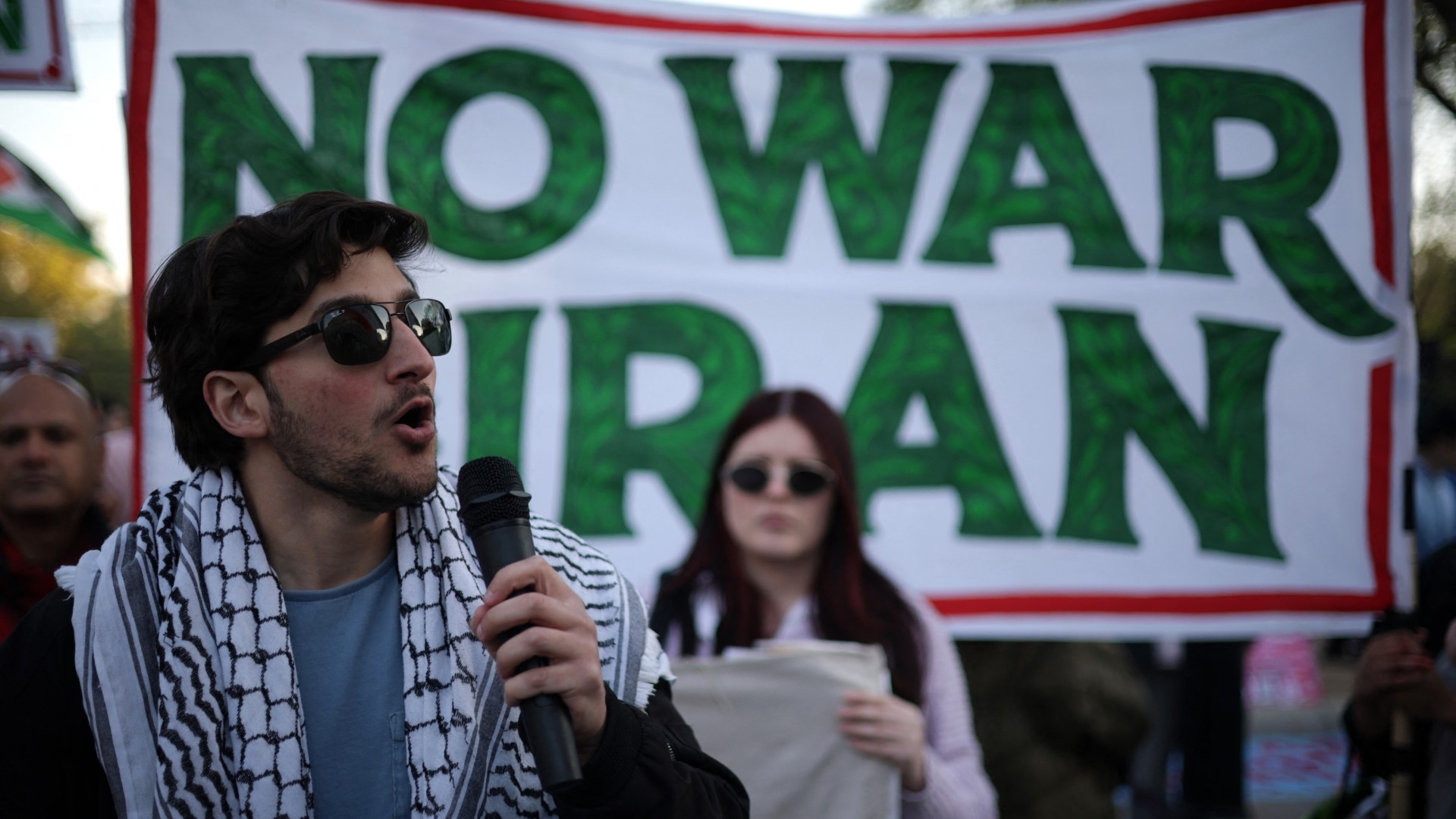
    However, not all responses were celebratory. Anti-war protests emerged in several cities, including Los Angeles where actress and activist Jane Fonda, 88, addressed hundreds of demonstrators. “You may wage this war in our name, but not with our consent,” she declared.

    The division was also evident among U.S. Congress members with Iranian heritage. Republican Congresswoman Stephanie Bice called for Iranians to “stand up and take back their nation,” while Democratic Representative Yassamin Ansari expressed concerns about potential U.S. involvement in “another endless war in the Middle East.”

    Despite uncertainties about the future, many Iranian-Americans chose to focus on the immediate outcome—the removal of a leader whose regime has been responsible for thousands of deaths during recent protests. As one celebrator in LA expressed: “This is a great day. Our country has been wanting this for a while. It’s beautiful. It really is.”