分类: world

  • S. Korea probes syringe hoarding as war hits plastic makers

    S. Korea probes syringe hoarding as war hits plastic makers

    Escalating conflict in the Middle East has triggered ripple effects across global supply chains, pushing South Korean authorities to open a formal investigation into alleged illicit stockpiling of medical syringes that has put the country’s critical healthcare supplies at risk.

    The crisis traces back to recent military tensions that have severely disrupted shipping through the Strait of Hormuz, a strategic waterway that carries the majority of the world’s seaborne oil trade. US-Israeli strikes on Iran and the near-total closure of the strait have upended deliveries of naphtha, a petroleum-derived liquid product that serves as the core input for manufacturing polypropylene and other plastic materials used in everything from medical tools to consumer packaging.

    This supply shock has hit Asian petrochemical manufacturers particularly hard, forcing regional governments to implement emergency regulations to prevent widespread shortages. Earlier this month, South Korea enacted a formal ban on excessive hoarding of syringes and hypodermic needles, moving quickly to head off potential market chaos as supply chain disruptions deepened.

    On Tuesday, the Seoul Metropolitan Police Agency confirmed to AFP that it had launched an immediate investigation into four medical product distributors accused of violating the new hoarding ban. The probe was initiated after a formal complaint was filed by the country’s Ministry of Food and Drug Safety. Law enforcement has pledged to ramp up inspections across every stage of the medical supply chain to root out and penalize illegal market manipulation.

    Under the emergency regulations, businesses are prohibited from holding stockpiles of syringes and needles exceeding 150 percent of the average monthly sales volume recorded in 2023 for five consecutive days or more. The rules also ban companies from refusing to sell legitimate orders to buyers without a verifiable justifiable reason. Despite these safeguards, food and drug officials say some distributors have intentionally exploited the supply crunch to stockpile inventory, intending to resell the products at inflated, gouged prices.

    Investigators have already confirmed that one distributor held more than 130,000 excess syringes for well over the five-day limit set by the ban, according to the ministry. For South Korea, the risk of naphtha shortages is particularly acute: official data from the South Korean presidential office shows that more than 50 percent of the country’s total naphtha imports in 2023 transited through the Strait of Hormuz.

    South Korean President Lee Jae Myung has publicly condemned the hoarding practices, taking to social media over the weekend to promise the strongest possible enforcement action against what he called antisocial behaviour. The president emphasized that actors who profit from public crises by worsening supply shortages for personal gain will not be tolerated. To mitigate the ongoing supply disruption, Lee’s chief of staff announced this month that the country has secured an additional 2.1 million tonnes of naphtha from alternative suppliers including Saudi Arabia and Oman, with all shipments routed through pathways that avoid the Strait of Hormuz.
  • Man who murdered UK dad in Australia declared mentally unfit for trial

    Man who murdered UK dad in Australia declared mentally unfit for trial

    A devastating unprovoked knife attack that claimed the life of a British tourist travelling through regional Australia has concluded with a landmark legal ruling: the perpetrator has been formally declared mentally unfit to stand criminal trial for the killing.

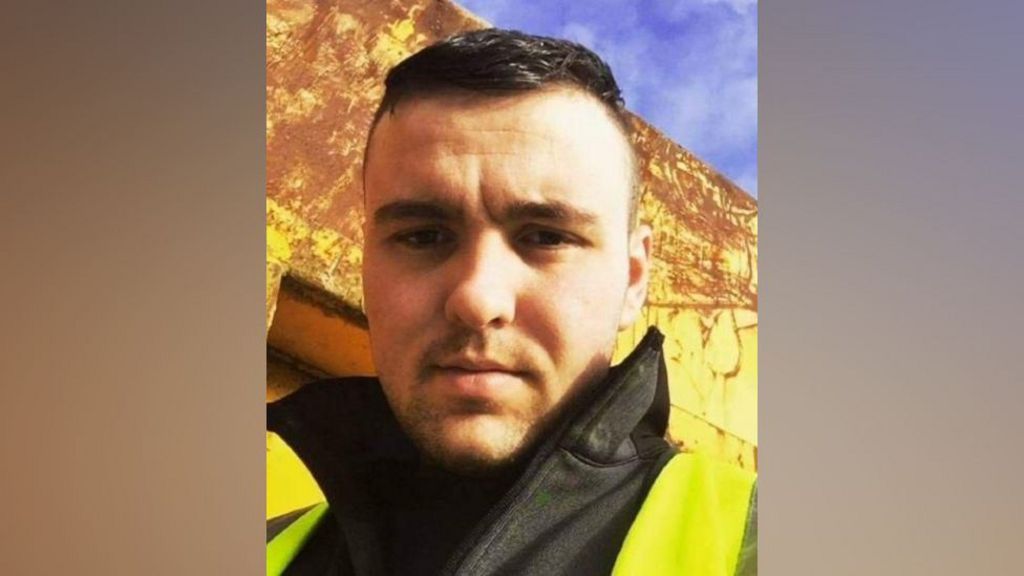
    Thirty-year-old Royce Mallett, a loving father of two from County Durham in the United Kingdom, was fatally wounded in the July 8, 2024 attack, which unfolded in the motel car park of the Hume Inn in Albury, a regional town in New South Wales. According to court testimony, Mallett had just climbed into a parked vehicle outside the accommodation when 29-year-old David Summers-Smith reached through the open car window and stabbed him once in the chest without warning or a single word, using a common steak knife as his weapon.

    Summers-Smith, who has a long documented diagnosis of schizophrenia, was experiencing acute psychotic episodes at the time of the fatal assault. He entered a formal plea of not guilty to the murder charge on the grounds of severe mental impairment. Following weeks of testimony and review of psychiatric evidence, Supreme Court Justice Dina Yehia delivered her ruling on Tuesday: while the court confirmed Summers-Smith did carry out the fatal stabbing, he cannot be held criminally responsible for his actions due to his mental state.

    In her written judgment, Justice Yehia described the single act of violence as “both catastrophic and tragic.” Court records show that immediately after the attack, Summers-Smith fled the scene, but within a short time contacted local police to confess he had stabbed a stranger, and reaffirmed his admission of guilt when officers took him into custody.

    Psychiatrists who conducted a formal assessment of Summers-Smith detailed his long and complex mental health history: his schizophrenia and persistent psychotic symptoms have not responded to standard prescription medication, and at the time of the attack, he was receiving court-ordered outpatient mental health treatment in the community. Experts also confirmed that in the weeks leading up to the stabbing, Summers-Smith had been self-medicating with illegal substances, including crystal methamphetamine, commonly known as ice, and cannabis. His psychiatric team noted he held persistent delusional beliefs and had no insight into the severity of his illness or his need for ongoing structured treatment.

    The ruling has shone a light on the devastating impact of the attack on Mallett’s grieving family, whose victim impact statements laid bare the lifelong damage the killing has caused. Mallett’s partner, Caitlin O’Keeffe, told the court she now faces the prospect of raising their two young children alone, with the permanent knowledge that the children will grow up without their father’s guidance, love and support. “It affects not just today, but every future moment that he should have been part of, and everyday moments that he’s already missed,” she wrote in her victim statement.

    Mallett’s father added that he had lost not only his son, but his closest confidant and “best friend,” telling the court he now struggles to find joy in daily life or any motivation to complete routine tasks. Citing the family’s statements, Justice Yehia noted that Mallett’s loved ones remain unable to comprehend how a person with treatment-resistant severe mental illness was allowed to live and receive treatment in the community.

    As part of her ruling, Justice Yehia ordered that Summers-Smith be detained indefinitely in a secured mental health facility. His case will be subject to regular periodic review by the New South Wales Mental Health Review Tribunal, which will monitor his progress and potential recovery, and holds the authority to modify or amend his detention order should his mental health improve significantly.

  • Executions in North Korea ramped up significantly during pandemic – report

    Executions in North Korea ramped up significantly during pandemic – report

    A new report released by the Seoul-founded Transitional Justice Working Group (TJWG) has documented a stark surge in executions in North Korea following the country’s 2020 border closure at the onset of the COVID-19 pandemic, with a total of 358 people confirmed executed between 2011 and the end of 2024.

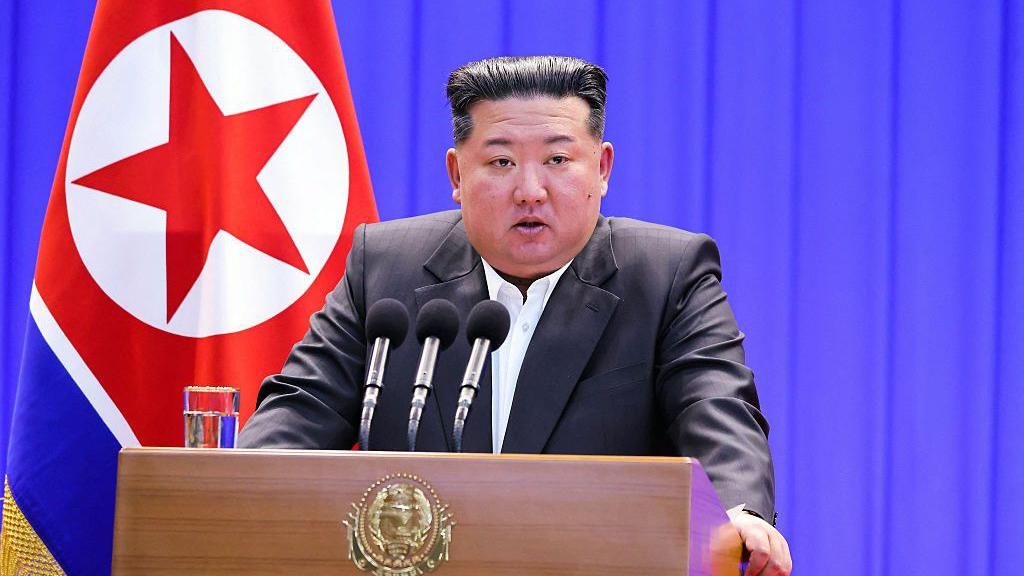
    Compiled from firsthand testimonies gathered from more than 250 North Korean defectors across 51 administrative cities and counties, the report tracks sharp fluctuations in the use of capital punishment over the past 13 years. Executions peaked early in current leader Kim Jong Un’s rule, hitting a high of more than 80 documented executions in 2013. After a landmark United Nations inquiry in 2014 found systemic human rights violations taking place in the country, international pressure pushed the number of executions into a steady decline: between 2015 and 2019, an average of just five executions were recorded annually, with only 44 total executions confirmed in the five years preceding the pandemic.

    That downward trend reversed dramatically after Pyongyang shut down all cross-border movement in early 2020 to curb the spread of COVID-19. According to TJWG’s data, at least 153 people were either executed or sentenced to death between January 2020 and the end of 2024—more than three times the pre-pandemic five-year total. In 2020 alone, 54 people were put to death, followed by 45 executions in 2021, marking a drastic break from the low single-digit annual totals recorded just years earlier.

    The report identifies the most common charges leading to execution or death sentences tied to religion, unapproved superstition practices, and access to foreign cultural content—most notably South Korean popular media including K-dramas and K-pop. These content types are strictly banned in North Korea, where the ruling regime views the spread of South Korean cultural influence as a direct threat to its ruling ideology. A high-profile 2024 case documented by outside observers saw two North Korean teenagers sentenced to 12 years of hard labor for watching and distributing K-dramas, a public sentencing that underscored the regime’s intensified crackdown on outside cultural access. TJWG counted 29 cases of capital punishment tied to these cultural and religious offenses out of the 144 fully documented cases of execution and death sentencing included in the analysis.

    Other common capital offenses included public criticism of Kim Jong Un or the ruling Workers’ Party of Korea, premeditated murder, drug trafficking, and assisting North Korean residents to flee the country. More than 70 percent of all executions recorded in the report were carried out publicly, and the vast majority were conducted by firing squad. TJWG researchers also mapped 46 active execution sites across North Korea that have been used for capital punishments during Kim Jong Un’s time in power.

    Founded in Seoul in 2014 by a coalition of human rights activists and researchers from North Korea, South Korea, the United States, the United Kingdom, and Canada, TJWG’s core mission is to document human rights violations and track the use of the death penalty in North Korea through on-the-ground testimonies from defectors. In its official press release accompanying the new report, the organization warned that the country faces a growing risk of further increasing executions as the regime works to consolidate power ahead of a planned fourth hereditary transfer of political power. The group noted that tighter ideological and cultural control will likely be paired with harsher punishments to maintain the ruling establishment’s political dominance.

  • IS claims responsibility for Nigeria attack that killed 29 people

    IS claims responsibility for Nigeria attack that killed 29 people

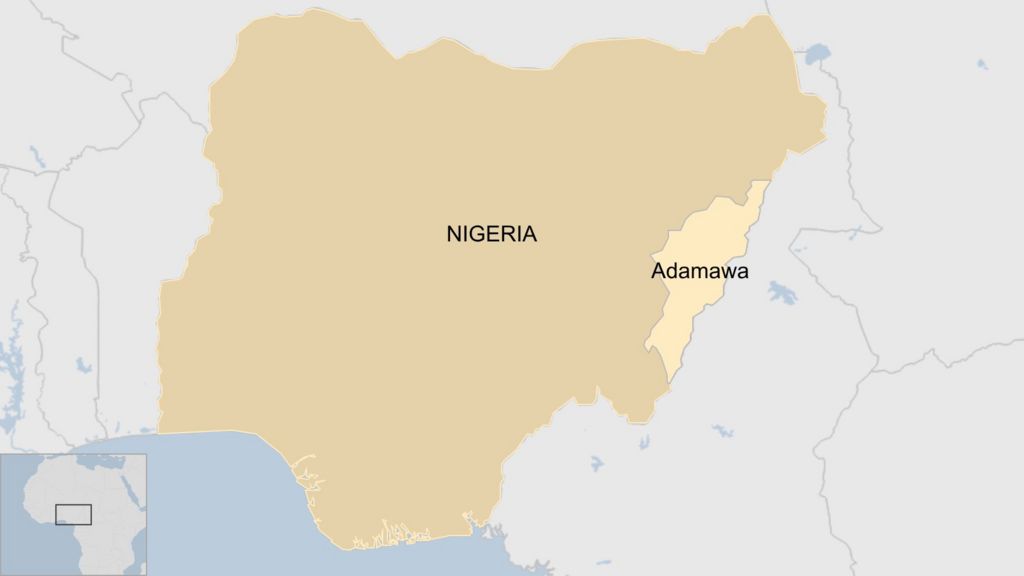
    In a devastating act of violence that has deepened concerns over persistent insecurity in Nigeria’s restive northeast, gunmen aligned with the Islamic State group have killed at least 29 civilians in a targeted assault on a remote village in Adamawa State, local government officials have confirmed. The attack, which the terror group has claimed responsibility for without outlining a clear motive, unfolded in the village of Guyaku, located within the Gombi local government area, and unfolded over the course of several hours, according to state authorities. Witness accounts and official reports detail that militants first stormed a local football pitch where community members had gathered for a public event, opening fire indiscriminately on unarmed civilians before launching a coordinated arson attack that destroyed dozens of residential homes, local places of worship, and hundreds of civilian motorcycles. In the wake of the bloodshed, Adamawa State Governor Ahmadu Umaru Fintiri traveled directly to the attack site to assess the damage and meet with affected community members, sharing on-the-ground photos of his visit and condemning the violence as a fundamental “affront to our humanity”. In a public post shared to his Facebook page, the governor’s spokesperson captured the raw mood gripping the small, close-knit community, writing that “the atmosphere in the community remains tense, with grief and fear evident” following the carnage. Many residents, the spokesperson added, have already fled their homes in search of safer ground, driven out by widespread anxiety that follow-up attacks could target the area in the coming days. Governor Fintiri moved quickly to reassure the public in a statement posted to X, formerly Twitter, affirming that “We are intensifying security operations immediately to restore peace and ensure every resident feels safe in their home again.” The region where the attack took place, which sits along Nigeria’s porous border with Cameroon, has been plagued by near-constant violence linked to Islamist militant factions and local criminal gangs for more than a decade. The current wave of instability traces its origins back to 2009, when the jihadist group Boko Haram launched a full-scale insurgency focused on establishing an Islamic caliphate in northeast Nigeria. According to international aid organizations, the decades-long conflict has claimed the lives of more than 35,000 people and forced over 2 million Nigerians to flee their homes as internally displaced persons, while violence has spilled across national borders into neighboring Niger, Chad, and Cameroon. In recent years, Boko Haram has fractured into rival factions, with the larger breakaway group, the Islamic State West Africa Province (ISWAP), aligning itself with the global Islamic State network and carrying out regular attacks against civilian and military targets across the region. Earlier this month, Nigerian courts concluded mass trials that saw almost 400 convicted individuals handed down sentences for their ties to both Boko Haram and ISWAP, marking one of the largest crackdowns on militant affiliation in the country’s recent history. The latest attack comes as the Nigerian federal government faces mounting domestic and international pressure to rein in widespread insecurity across the country, with general elections scheduled for January drawing increased global scrutiny of the administration’s ability to protect civilians and maintain stability. Late last year, the United States launched what it described as “powerful and deadly” drone strikes against IS-aligned militants operating in northwest Nigeria, marking a escalation of international counter-terrorism cooperation in the region even as militant factions continue to carry out high-profile attacks against soft civilian targets.

  • Nations to kick off world-first fossil fuel exit talks

    Nations to kick off world-first fossil fuel exit talks

    Against a backdrop of escalating geopolitical tensions, global energy market volatility, and growing alarm over accelerating climate change, more than 50 national delegations have gathered in the Colombian Caribbean port city of Santa Marta this week for the world’s first dedicated international conference focused on phasing out fossil fuels, the primary driver of anthropogenic global warming.

    Co-hosted by fossil fuel-dependent Colombia and the Netherlands, the two-day summit is being held outside the framework of long-running United Nations climate negotiations, a deliberate choice that reflects widespread frustration among participating nations over the UN process’s repeated failure to make meaningful progress on fossil fuel reduction. Santa Marta, the host city, is a fitting backdrop for the talks: it sits at the heart of one of Colombia’s busiest coal exporting hubs, a reminder of the deep economic ties many nations still retain to planet-warming fossil fuels.

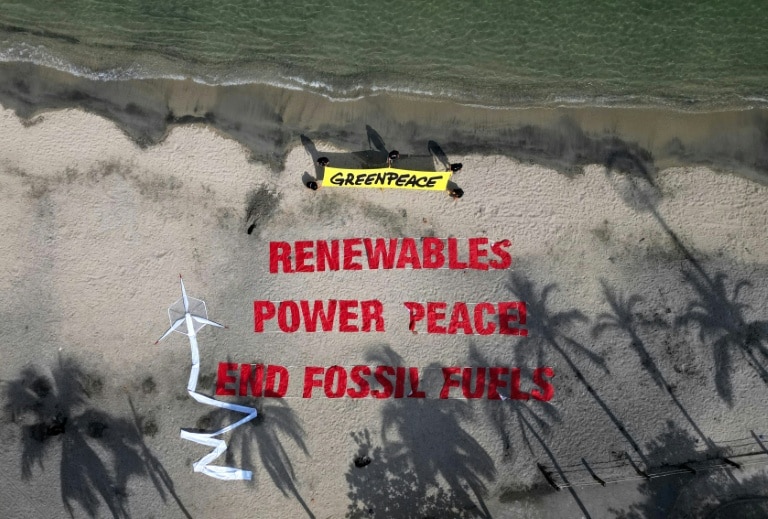
    As delegates arrived for the opening of talks on Tuesday, climate activists and Indigenous community groups marched through the city’s streets and along its beaches to demand urgent action, with coal tankers clearly visible lined up on the ocean horizon beyond the shore. The summit is not mandated to produce binding international commitments, but an independent scientific advisory panel has put forward a sweeping 12-point policy menu for attending nations to consider, headlined by a call for an immediate halt to all new fossil fuel extraction and infrastructure expansion projects.

    The attendee list includes a diverse cross-section of major fossil fuel producers, large energy consumers, and climate-vulnerable nations: major developed producers Canada, Norway and Australia, developing energy giants Brazil, Nigeria and Angola, European Union member states, coal-dependent emerging economies Turkey and Vietnam, and small island developing states that face existential risk from rising sea levels driven by climate change. Notably absent from the talks are the world’s three largest greenhouse gas emitters—the United States, China and India—as well as oil-rich Gulf nations.

    Organizers first announced the summit in late 2024, but recent geopolitical upheaval, including the ongoing Iran conflict and subsequent oil and gas market disruptions, has only sharpened the urgency of the conversation, according to speakers. UK special climate envoy Rachel Kyte told reporters on the ground in Santa Marta that the current crisis has underscored a core truth long argued by climate advocates: global reliance on fossil fuels is a major source of geopolitical and economic instability.

    “People seem refreshed to be able to talk about these issues without having to sort of argue the existential question of — do we need to do this at all?” Kyte said. “Many nations are here in good faith to really work through what is a very complex challenge made more urgent by the crisis.”

    Alongside calls to halt new fossil fuel development, the summit’s agenda includes work to map out a framework for equitable reductions in global fossil fuel production and consumption, and strategies to reform harmful fossil fuel subsidies that currently skew global energy markets and block much-needed investment in renewable energy. A new analysis released Monday by the International Institute for Sustainable Development highlights the scale of this challenge: the research found that governments around the world still spend five times more public funding on fossil fuel support than they invest in renewable energy alternatives.

    Scientists leading the advisory panel have stressed that there is no possible justification for opening new fossil fuel extraction sites, even as renewable energy investment hits record highs. Speaking to AFP in Santa Marta, Carlos Nobre, a Brazilian climate scientist and former member of the UN Intergovernmental Panel on Climate Change, warned that even if no new fossil fuel projects are developed, the existing reserves of coal, oil and gas already in production or development are enough to push global average temperatures 2.5 degrees Celsius above pre-industrial levels by 2050.

    The planet has already warmed 1.1 degrees Celsius above pre-industrial averages, and current policy trajectories put the world on track to blow past the 1.5 degree Celsius warming threshold that scientists identify as the limit for avoiding catastrophic, irreversible climate impacts. Beyond that threshold, scientists warn of irreversible losses including the complete disappearance of the world’s coral reef systems and the full collapse of the Greenland ice sheet, which would eventually raise global sea levels by more than seven meters, displacing hundreds of millions of people worldwide.

  • US considering sending stranded Afghans in Qatar to the Congo, advocacy group says

    US considering sending stranded Afghans in Qatar to the Congo, advocacy group says

    Nearly three years after the chaotic 2021 U.S. withdrawal from Afghanistan, more than 1,100 Afghan allies with verified ties to the U.S. military and government remain trapped in a geographic and bureaucratic limbo at Camp As Sayliyah, a U.S.-operated military base tucked into Qatar’s arid desert. What was supposed to be a maximum 21-day waiting period for U.S. resettlement has stretched into years, leaving the group confined to the base with no legal permission to reside in Qatar, forbidden from leaving the compound. One resident previously described the facility to Middle East Eye as little more than an open-air prison.

    Now, a new and deeply controversial proposal has sparked outrage from refugee advocacy groups: transfer the entire cohort to the Democratic Republic of Congo for permanent resettlement, according to #AfghanEvac, a leading advocacy organization working to evacuate and resettle Afghan allies.

    The Trump administration, which took office in 2025, originally ordered the Camp As Sayliyah facility closed by March 31 of this year, giving the stranded Afghans a firm deadline to find a new host country after the administration reversed prior commitments to bring all vetted allies to the U.S. To date, no permanent resettlement destination had been publicly confirmed, until details of the DRC plan emerged during a recent virtual press briefing held by #AfghanEvac last week.

    Shawn VanDriver, president of #AfghanEvac, told reporters that the current proposal would send Afghan interpreters, former special operations personnel, and immediate family members of more than 150 current and recently separated U.S. service members to a country grappling with multiple overlapping crises. The DRC already hosts over 600,000 displaced people from regional conflicts, is engaged in active armed hostilities with Rwanda, and is classified by the United Nations as one of the world’s worst humanitarian displacement emergencies. The U.S. State Department also maintains a Level 3 travel advisory for the DRC, a strong official warning that advises U.S. citizens against all non-essential travel to the country due to widespread violence, crime, and political instability.

    “This plan cannot stand,” VanDriver emphasized, arguing that forcing vulnerable Afghans who worked alongside the U.S. to resettle in an active conflict zone violates every commitment Washington made to these allies.

    U.S. State Department officials have neither confirmed nor denied the DRC proposal, stating only that the agency is actively working to identify viable resettlement options for all Camp As Sayliyah residents. In a statement emailed to Middle East Eye, a department spokesperson framed third-country resettlement as a “positive resolution” that would allow Afghans to build new lives outside Afghanistan while upholding U.S. national security priorities. The spokesperson added that the agency maintains regular direct communication with residents, and would not disclose details of ongoing negotiations due to the sensitivity of the process.

    Middle East Eye’s request for comment to the Department of Homeland Security, asking whether new DHS Secretary Markwayne Mullin – who has a public record of supporting Afghan ally resettlement efforts – has been involved in discussions, was redirected to the State Department.

    The controversy has already sparked partisan finger-pointing over the years-long delay. The Trump administration has blamed the prior Biden administration for what it calls a rushed, flawed vetting process for Afghan allies evacuated after the 2021 withdrawal. But Jon Finer, Biden’s former deputy national security advisor, pushed back against that characterization during the #AfghanEvac briefing. He clarified that the evacuation operation for Afghan allies, dubbed Operation Enduring Welcome, was not an unplanned emergency pullout, but a structured, deliberate resettlement pipeline.

    Finer also confirmed that the Biden administration preserved and strengthened the strict enhanced vetting frameworks developed over decades, including those put in place during the first Trump administration. “They are, by design and by implementation, the most vetted lawful immigrants to the United States among all the categories of people who come,” Finer said of the Camp As Sayliyah residents, adding that all 1,100 people currently held at the base have already completed full vetting for U.S. immigration. #AfghanEvac’s data confirms that more than 200,000 Afghans have already successfully been resettled in the U.S. through this exact same vetting process with no reported security incidents.

    Earlier this year, the State Department launched a controversial voluntary departure program, offering cash payments to Afghans who leave the base on their own. Then-Assistant Secretary of State Samir Paul Kapur told lawmakers in February that 150 Afghans had already accepted the payments, but Camp As Sayliyah residents told Middle East Eye that many of those who accepted the offer had no other viable option and chose to return to Afghanistan, where they face targeted violence from the Taliban for their past work with the U.S.

    VanDriver rejected framing the program as a voluntary choice, noting that Afghans were given only two unacceptable options: return to Taliban-controlled Afghanistan or relocate to a conflict zone in the DRC. “You cannot call a choice voluntary when the two options are Congo and the Taliban, civil war or an oppressor who wants to kill you,” VanDriver said. “That is not a choice. That is a confession extracted under duress.”

    Last weekend, VanDriver led a bipartisan congressional delegation to visit the Camp As Sayliyah facility, where his organization collected a video plea from 14-year-old stranded resident Zahra. In her message, addressed to U.S. First Lady Melania Trump, Zahra asked simply for “a peaceful life, a chance to get a better education, and a brighter future” that the U.S. had promised her and her family for their service alongside American forces.

  • Rescuers trying to reach 3 people trapped in damaged train car after crash in Indonesia

    Rescuers trying to reach 3 people trapped in damaged train car after crash in Indonesia

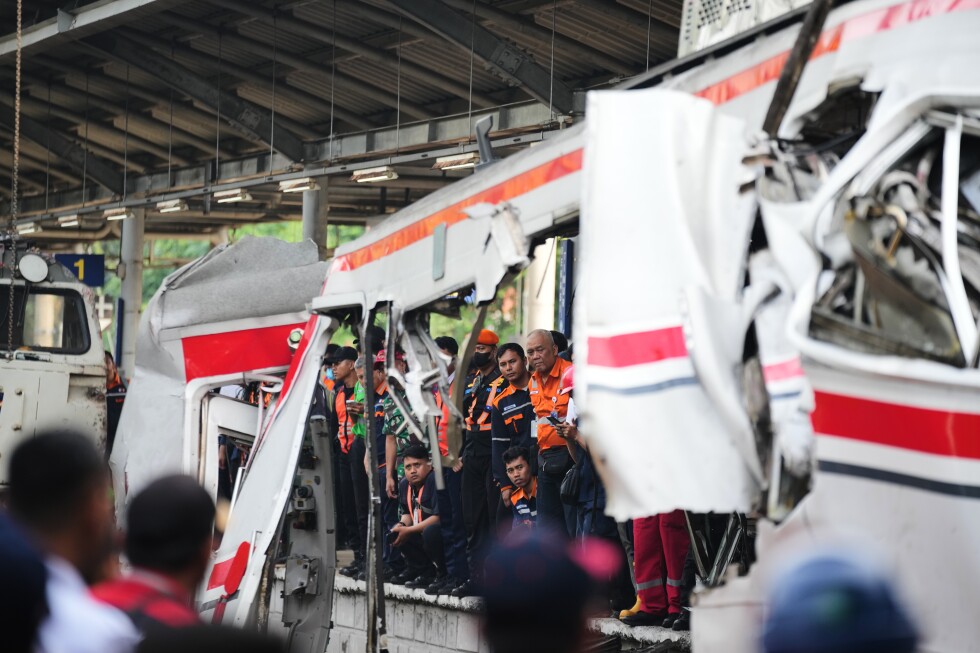
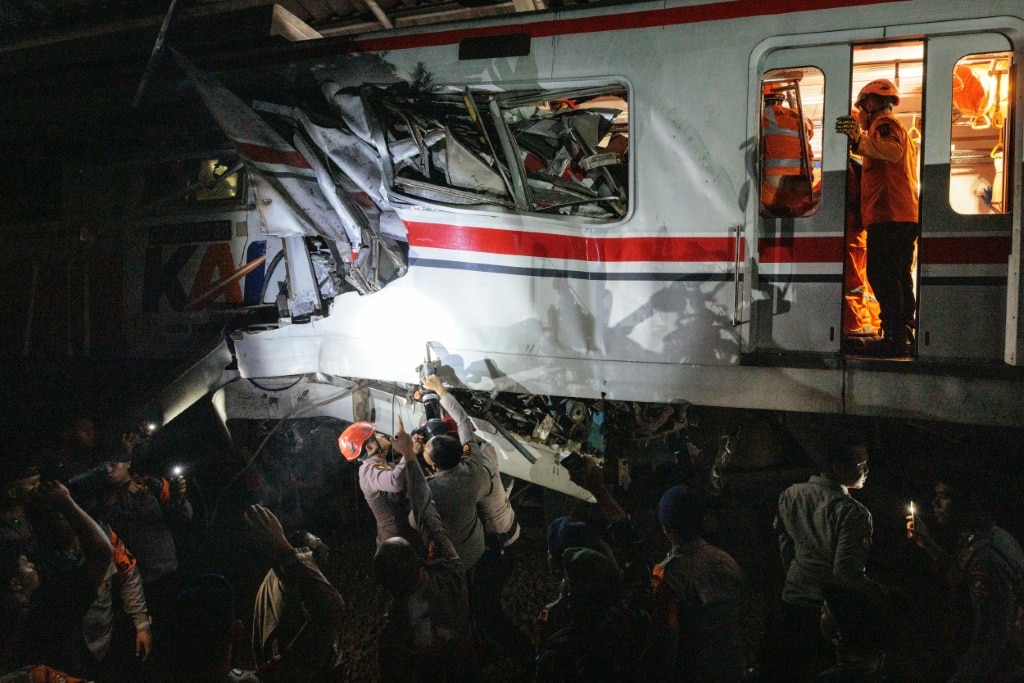
    BEKASI, INDONESIA – Rescue operations stretched into a second day Tuesday as first responders fought to free three people still trapped inside a crumpled women-only commuter rail car following a high-impact rear-end collision that claimed at least seven lives on the outskirts of Indonesia’s capital Jakarta.

    The crash unfolded Monday at Bekasi Timur Station, when a long-distance intercity train, identified as the Argo Bromo Anggrek, collided with the back of a stationary commuter train. The targeted rear car was a designated women-only carriage, a widely implemented policy across Indonesia’s public transit system designed to reduce sexual harassment of female passengers.

    Officials from state-owned railway operator PT Kereta Api Indonesia confirmed that 81 people injured in the collision have been transported to area hospitals for urgent medical care. All 240 passengers aboard the long-distance train escaped without life-threatening harm, according to agency updates.

    PT Kereta Api Indonesia CEO Bobby Rasyidin told reporters Tuesday that the complex extrication process has moved deliberately, prioritizing the safety of trapped victims and responding first responders. “The evacuations are taking a long time … and we’re doing it very carefully,” Rasyidin said from the crash site.

    Jakarta Police Chief Asep Edi Suheri confirmed that law enforcement and national transport investigators have launched a full probe into what led to the fatal incident. Rasyidin noted preliminary observations suggest a signal disruption may have been a contributing factor, tied to an earlier separate incident where another commuter train hit a broken-down taxi on a nearby level crossing.

    “For the full, accurate chronology of events, we are leaving it to the National Transportation Safety Committee to investigate the cause of this accident in greater detail,” Rasyidin added.

    This deadly collision adds to a growing pattern of preventable disasters on Indonesia’s aging, underfunded national railroad network. Just 10 months prior to this incident, in January 2024, another head-on collision between two trains in West Java province left four people dead and dozens more injured.

  • Trains collide near Jakarta, killing seven, injuring dozens

    Trains collide near Jakarta, killing seven, injuring dozens

    Rescue teams have launched an urgent search and evacuation operation after a fatal overnight collision between two trains on the outskirts of Indonesia’s capital Jakarta, which has already claimed seven lives and left more than 80 others injured, with multiple passengers still trapped inside mangled carriages.

    State-owned rail operator Kereta Api Indonesia (KAI) spokesperson Anna Purba confirmed the initial casualty count to local media early Tuesday: seven fatalities and 81 injured people, with two trapped individuals confirmed alive in the wreckage as rescue work continued.

    Survivors have described the sudden, terrifying chaos of the incident, which occurred when a long-distance intercity train struck a stationary commuter train that had been halted on the tracks near Bekasi Timur Station, roughly 25 kilometers from central Jakarta. Sausan Sarifah, a 29-year-old commuter who was admitted to RSUD Bekasi hospital with a broken arm and deep thigh laceration, recalled the harrowing moments immediately after impact. She had been traveling home from work when her train stopped at the station, and passengers had already received announcements to prepare to disembark when the collision occurred. “It all happened so fast, in a split second,” Sarifah said from her hospital bed. “There was no time to get out, and everyone ended up piled up inside the train, crushed on top of one another. I thought I was going to die. Thank God I was on top, so I could be evacuated quickly.”

    According to KAI spokesperson Franoto Wibowo, the chain of events that led to the collision began when a taxi clipped the commuter train at a nearby level crossing, forcing the train to stop abruptly on the active main line where it was subsequently hit by the oncoming long-distance service. Jakarta police chief Asep Edi Suheri added that the long-distance train collided directly with the last carriage of the commuter train, which was designated as a women-only car. All confirmed fatalities and injuries are from the commuter train; all roughly 240 passengers aboard the long-distance train were evacuated without major harm, Purba confirmed.

    Witnesses at the crash site described chaotic scenes in the immediate aftermath of the incident: rescue personnel shouted urgently for emergency equipment such as oxygen tanks, ambulances formed a long, flashing queue along the access road, and stretchers carrying injured survivors were carried out of the wreckage as hundreds of shocked onlookers gathered. The Jakarta search and rescue agency noted in an official statement that the high-force impact caused “significant damage to several train carriages”, leaving multiple passengers pinned inside the twisted metal. Rescuers from the military, local fire department, national search and rescue agency, and Indonesian Red Cross have all been deployed to the site, using specialized extrication equipment to extract trapped survivors.

    As of Tuesday morning, evacuation work was still ongoing, and officials warned that the death toll could climb. Deputy house speaker Sufmi Dasco Ahmad, who was at the crash site, told reporters: “Judging from the evacuation process that is still under way, it is possible that the number of victims may continue to rise.”

    Local hospitals are also operating at a rush to treat the influx of injured patients, with medical teams conducting triage to prioritize the most severe cases. Eva Chairista, a 39-year-old woman who traveled to RSUD Bekasi after learning her 27-year-old sister-in-law Fira was injured, described a frenzied scene as families waited for updates on their loved ones. “The doctor told us to be patient, there are many whose condition is worse than my sister-in-law’s,” she said.

    This collision is the latest serious transport accident in Indonesia, a vast archipelagic nation where chronic underinvestment and poor maintenance have left much of the public transport fleet, including trains, buses and passenger aircraft, aged and unsafe. The previous major train crash in Indonesia, which occurred in West Java province in January 2024, killed four crew members and injured roughly two dozen people. One of the deadliest level crossing accidents in the country’s recent history occurred in Jakarta in 2015, when a commuter train collided with a minibus, killing 16 people.

  • Nations have chance to break ‘fossil fuel mindset’: Mary Robinson

    Nations have chance to break ‘fossil fuel mindset’: Mary Robinson

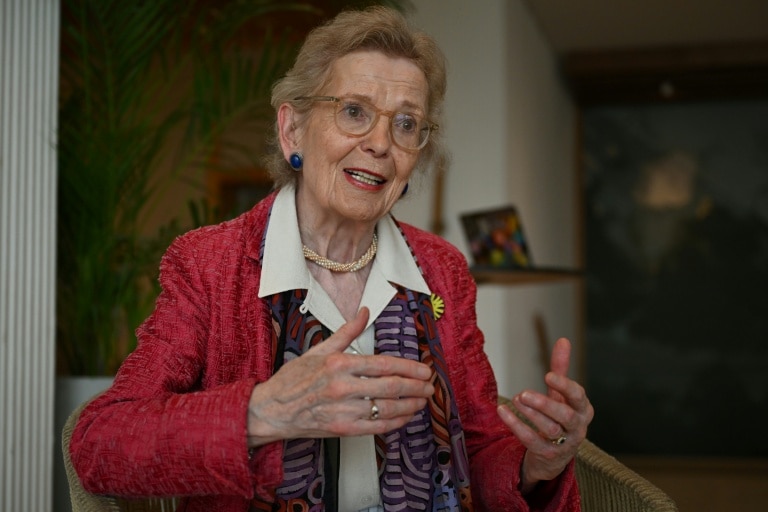
    As a former Irish president who has witnessed decades of global political and environmental shifts, Mary Robinson is positioning the upcoming high-level fossil fuel phaseout conference in Santa Marta, Colombia, as an unprecedented turning point in the global fight against climate change. Speaking to Agence France-Presse ahead of the April 28-29 gathering, the veteran climate advocate says the summit comes at a uniquely opportune moment: amid ongoing global energy market chaos sparked by the Iran conflict, the meeting is throwing a stark spotlight on the steep dangers of continued reliance on coal, oil, and gas — a burden that falls heaviest on the low-income communities Robinson has spent her career championing.

    Robinson, a member of The Elders, a collective of former global leaders founded by Nelson Mandela, served as the United Nations Special Envoy for Climate Change when the landmark Paris Agreement was signed in 2015. When asked whether the Santa Marta gathering, which emerged from widespread frustration with slow progress in the UN-led climate negotiation process, undermines the role of the annual Conference of the Parties (COP), Robinson pushed back on that framing. She emphasized that the COP process remains irreplaceable for global climate coordination, noting that the Colombia conference was never intended to replace UN talks — instead, it is designed to complement and accelerate the multilateral process.

    She pointed to the failed outcome of COP30 in Belém, where fossil fuel lobbying blocked any official agreement to include explicit language referencing a phaseout of fossil fuels, as the core catalyst for organizing the Santa Marta summit. What was not foreseen when the conference was planned, Robinson noted, was the eruption of one of the most severe global oil and gas crises in modern history. This unexpected timing has only amplified the meeting’s urgency, she argued, making it the ideal moment to break through decades of entrenched “fossil fuel mindset” and accelerate the global transition to renewable, clean energy systems. “It’s the way we have to go, it’s the way we are going, but we need to go far much faster,” she said.

    Unlike formal UN climate talks, the Santa Marta conference is not structured around binding, text-by-text negotiations, Robinson explained, which gives participants unprecedented space to collaborate on actionable action. Stakeholders from across sectors — national governments, sub-national governing bodies, private industry, civil society groups, and grassroots activists gathering for the concurrent People’s Summit — are attending ready to share concrete commitments they are prepared to implement, rather than haggling over negotiating language. This open, action-oriented dynamic, Robinson said, makes it likely the summit will spawn new coalitions of actors committed to moving rapidly away from fossil fuels, creating a new, results-first momentum that has been missing from global climate talks to date.

    When addressing concerns that hundreds of millions of people around the world still depend on fossil fuels for basic energy access, Robinson tied that reliance directly to the current energy crisis: the ongoing conflict has cut off roughly 20 percent of global oil and gas supplies, sending prices soaring and leaving the world’s poorest communities facing the steepest costs. Farmers have been hit particularly hard by skyrocketing fertilizer prices tied to fossil fuel markets, highlighting that continued reliance on dirty energy offers no long-term path to energy security or stable livelihoods. This reality, she argued, makes the Santa Marta conference a uniquely critical moment to build momentum for change.

    Robinson also addressed the growing pressure many governments face to expand fossil fuel production in response to the current energy crisis, arguing that far too many policy decisions around energy security are not grounded in the urgent warnings climate scientists have issued for decades. Drawing a parallel to the COVID-19 pandemic, where most nations relied on top chief medical officers to guide policy, Robinson called on all governments to appoint chief planetary scientists to provide authoritative, science-based guidance for climate and energy policy. “During COVID, lots of countries had chief medical officers, and we listened because we were scared. They had a lot of authority,” she noted. “We’re in the same position. We haven’t thought it through yet, but we are.”

    While the latest climate science paints a deeply alarming picture, with the planet approaching irreversible tipping points faster than many researchers predicted, Robinson says she retains cautious optimism for the future. That optimism was crystallized during a scientific expedition to Greenland, where she had a transformative experience listening to a glacier calve — the process where large chunks of ice break off into the ocean as temperatures rise. She described hearing sounds like thunder as a large section of ice split off, followed by smaller cracks that echoed like rifle shots, and found herself crying as the reality of human-caused climate change hit home. That moment, she said, underscored both the urgency of the crisis and the need to seize every available opportunity to act. With the open, action-focused space provided by the Santa Marta conference, the global community finally has a chance to build the momentum needed to accelerate the transition away from fossil fuels, she argued, and leaders must not waste this opening.

  • Terror trial to begin for man accused of plotting attack on Taylor Swift concert

    Terror trial to begin for man accused of plotting attack on Taylor Swift concert

    A high-stakes terror trial targeting one of the world’s biggest entertainment events has opened in Austria, after a last-minute tip from U.S. intelligence agencies prevented what Taylor Swift has described as an imminent large-scale massacre at her 2024 Vienna Eras Tour concerts.

    Two 21-year-old Austrian men are standing before a court in Wiener Neustadt, a city just south of the Austrian capital Vienna, in connection with the foiled attack. The lead defendant, identified only as Beran A. under Austrian privacy rules, faces a slate of serious charges including membership in a designated terrorist organization, planning a mass terrorist attack at the concerts, spreading jihadist propaganda, pledging allegiance to the Islamic State (IS) terror group, illegally manufacturing explosive materials, and attempting to acquire banned weapons. Prosecutors allege that Beran A. obtained online instructions to build a shrapnel bomb using triacetone triperoxide, or TATP — an explosive commonly used in high-profile IS attacks — and received hands-on explosives training from other IS operatives. He also made repeated attempts to purchase illegal firearms and a hand grenade from underground dealers for the planned attack, according to official charging documents.

    The second defendant, Arda K., is accused of being a co-conspirator in Beran A.’s IS-aligned terror cell. Prosecutors confirm the pair not only plotted the concert attack but also planned additional assaults in three major international destinations: Mecca, Istanbul, and Dubai. If convicted on all charges, both men — who were teenagers when the plot was first developed — could face up to 20 years behind bars. A third co-defendant, a teenage Syrian national identified as Mohammed A., was already sentenced to an 18-month suspended prison term in Germany last year for assisting the plot: he translated bomb-making instructions from Arabic for Beran A. and connected him to an active IS member. The current trial in Austria is scheduled to run through late May 2026.

    The plot was derailed only by a timely tip-off from the U.S. Central Intelligence Agency, which alerted Austrian authorities to the plan just 24 hours before the first scheduled concert on August 7, 2024. Beran A. was taken into custody that same day, and law enforcement ultimately arrested three total suspects linked to the conspiracy ahead of the shows. In the wake of the arrests, Austrian officials and Swift’s team made the decision to cancel all three sold-out performances at Vienna’s Ernst Happel Stadium, which were expected to draw a total audience of more than 195,000 fans from across Europe. The cancellation left thousands of disappointed Swift fans gathering in central Vienna, where they sang the singer’s hits and traded the Taylor Swift-themed friendship bracelets that have become a staple of the Eras Tour experience.

    Details of the close call were revealed in Swift’s new Disney+ documentary about her record-breaking Eras Tour, with the pop superstar sharing her first-hand account of the moment she learned of the plot. Speaking to reporters including the BBC at the documentary’s New York premiere, Swift said the tour narrowly “dodged a massacre situation” thanks to the intervention of intelligence and law enforcement. After two decades of performing, she noted, fearing for the safety of her audience was an unprecedented experience. In a social media post shared immediately after the 2024 cancellation, she reflected on the mixed emotions of the moment: “Having our Vienna shows cancelled was devastating. But I was also so grateful to the authorities because thanks to them, we were grieving concerts and not lives.”

    The Eras Tour, which wrapped its 149-show global run in December 2024 after launching in March 2023, made history as the first concert tour to surpass $1 billion in total ticket sales, drawing more than 10.1 million attendees across five continents.