分类: world

  • Watch: Iranian Americans celebrate on the streets of Los Angeles

    Watch: Iranian Americans celebrate on the streets of Los Angeles

    The streets of Los Angeles witnessed vibrant celebrations as members of the Iranian American community gathered publicly for the second consecutive day following the outbreak of regional hostilities. Demonstrating a complex geopolitical stance, expatriates and their descendants expressed support for Israel’s defensive measures through spontaneous street gatherings characterized by dancing, singing, and waving Israeli flags.

    This public display in one of America’s largest Iranian diaspora communities reflects deep-seated opposition to the Tehran regime rather than endorsement of conflict itself. The celebrations, concentrated in West Los Angeles neighborhoods traditionally associated with Persian Jewish populations, represent a political statement against Iran’s current leadership and its proxy networks.

    Community leaders emphasized that the demonstrations symbolize solidarity with democratic values and opposition to authoritarian regimes, highlighting the nuanced perspectives within immigrant communities regarding their nations of origin. The gatherings occurred peacefully without reported incidents, though they present striking visual contrasts to protests occurring simultaneously in other global cities.

    These events underscore how international conflicts frequently trigger transnational responses within diaspora communities, where geopolitical tensions become locally performed through public expression. The demonstrations also reveal the multifaceted nature of immigrant identity politics, where homeland conflicts become reinterpreted through the lens of American civic values and experiences.

  • Deadly strikes hit Israel as Iran promises to avenge Khamenei’s killing

    Deadly strikes hit Israel as Iran promises to avenge Khamenei’s killing

    The Middle East plunged deeper into a widespread military confrontation as Iran, reeling from the assassination of its Supreme Leader Ali Khamenei, announced an interim governing council and vowed severe retaliation against the United States and Israel. For a second consecutive day, the region endured a relentless exchange of missile and drone attacks, marking a significant escalation in hostilities.

    Iranian authorities confirmed the deaths of several high-ranking officials, including Islamic Revolutionary Guard Corps (IRGC) Commander Mohammad Pakpour, Defence Council Secretary Ali Shamkhani, and Defence Minister Aziz Nasirzadeh, attributing their killings to coordinated strikes by Israel and the U.S. Former U.S. President Donald Trump claimed that 48 Iranian leaders had been eliminated since operations commenced on Saturday.

    Despite these significant losses, Tehran continued its offensive operations. An Iranian missile struck a bomb shelter in the densely populated ultra-Orthodox town of Beit Shemesh, Israel, resulting in at least nine fatalities and raising the Israeli death toll to twelve since the conflict began. Simultaneously, Iranian forces launched attacks across the Gulf, targeting capitals including Riyadh, Abu Dhabi, Dubai, Manama, Doha, and Kuwait City, as well as Oman—a nation previously engaged in mediation efforts. Civilian casualties were reported, with three killed in the UAE and one in Kuwait.

    The U.S. military reported three personnel killed and five seriously wounded during ‘Operation Epic Fury.’ In a strategic move with global economic implications, Iran closed the Strait of Hormuz, a critical chokepoint for 20% of the world’s oil supply. Attacks on two vessels in the strait, including an oil tanker reported to be sinking, threatened to trigger a surge in crude prices. The U.S. claimed to have sunk an Iranian warship in the Gulf of Oman, while the IRGC asserted an attack on the USS Abraham Lincoln, a claim promptly denied by the Pentagon.

    In response to the leadership vacuum, Iranian President Masoud Pezeshkian appeared on state television alongside Judiciary Chief Gholam-Hossein Mohseni-Ejei and senior religious scholar Ayatollah Alireza Arafi, forming a three-man interim council. President Pezeshkian declared a ‘legitimate duty and right to avenge’ Khamenei’s killing, which he labeled a ‘historic crime.’

    The political atmosphere within Iran was deeply fractured. Organized pro-government rallies demanding ‘severe revenge’ dominated the streets of Tehran, Isfahan, and Qom. Conversely, celebrations erupted in some areas, such as the conservative holy city of Mashhad, where residents distributed sweets and openly flouted hijab laws, highlighting the nation’s internal divisions. The Iranian Red Crescent reported a preliminary toll of at least 201 killed and 747 wounded in airstrikes, with a devastating strike on a girls’ primary school in Minab claiming 153 lives, most of them children aged seven to twelve.

    Israeli Prime Minister Benjamin Netanyahu declared that the campaign would intensify, with 100,000 reservists called up and strikes continuing ‘at the heart of Tehran.’ He warned the situation would ‘only escalate in the days ahead,’ signaling no near-term de-escalation despite unverified claims from Trump about potential negotiations and a reported refusal from Tehran for a ceasefire.

  • 17 killed at pro-Iran protests across Pakistan

    17 killed at pro-Iran protests across Pakistan

    Pakistan witnessed violent nationwide demonstrations on Sunday as protests erupted over the killing of Iran’s Supreme Leader Ayatollah Ali Khamenei in US-Israel strikes, resulting in at least 17 fatalities and numerous injuries across multiple cities.

    In Karachi, hundreds of pro-Iranian protesters attempted to storm the US consulate, leading to intense clashes with security forces. Medical authorities confirmed at least 10 deaths and over 70 injuries in the city, with hospital records indicating many victims suffered fatal gunshot wounds. AFP journalists witnessed demonstrators scaling the consulate’s main gate, smashing windows before police dispersed crowds with tear gas.

    The northern city of Gilgit experienced similarly deadly confrontations, where rescue official Zaheer Shah reported at least seven fatalities and multiple injuries during protests. In the capital Islamabad, thousands gathered bearing images of the deceased Iranian leader, prompting security forces to deploy tear gas and audible gunfire to control crowds near US diplomatic compounds.

    Prime Minister Shehbaz Sharif condemned Khamenei’s killing as a ‘violation of international law,’ stating on social media platform X that ‘Heads of State/Government should not be targeted.’ While expressing solidarity with Iran, Sharif’s statements notably characterized the offensive as an Israeli operation, omitting significant US involvement.

    The protests revealed deep anti-American sentiment among demonstrators. ‘We don’t need anything in Pakistan that is linked with the US,’ protester Sabir Hussain told AFP. Another participant, Zahra Mumtaz, accused Pakistani leadership of being ‘stooges of the Americans’ while demanding the right to grieve openly.

    The violence extended to international organizations as protesters in Skardu stormed and set fire to a United Nations office, with nearby vehicles completely burned according to AFP correspondents. The US and British embassies subsequently issued security alerts urging citizens to exercise extreme caution throughout Pakistan.

  • Kidnapping of foreigners soars in Africa’s lawless Sahel region

    Kidnapping of foreigners soars in Africa’s lawless Sahel region

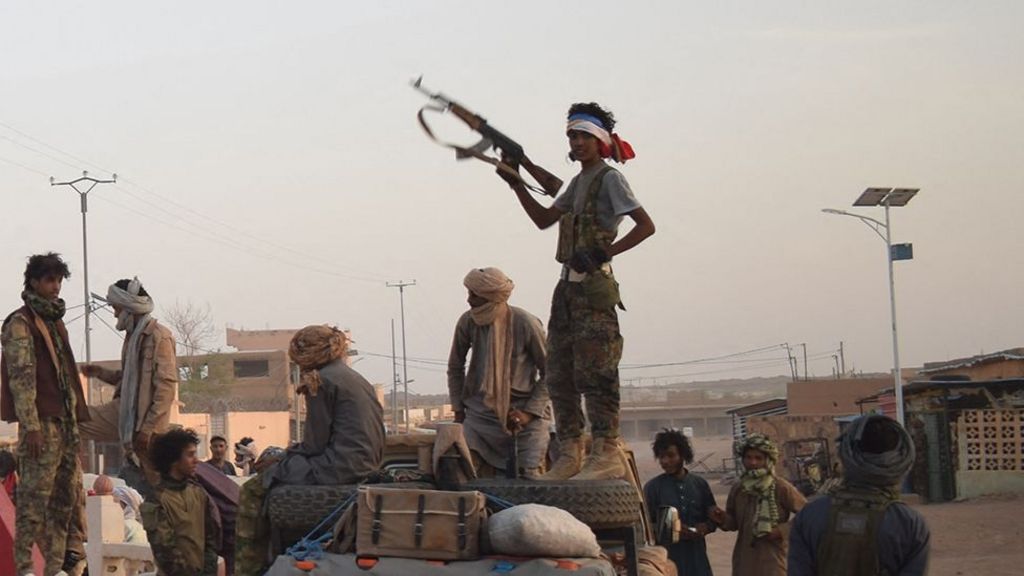
    The West African Sahel region has witnessed a dramatic escalation in high-profile kidnappings of foreign nationals throughout 2025, with Islamist militants employing abduction as both economic strategy and political weapon. This alarming trend represents a strategic shift by al-Qaeda affiliate Jama’at Nusrat al-Islam wal-Muslimin (JNIM), which has transformed kidnapping into a sophisticated revenue stream while simultaneously undermining regional governments.

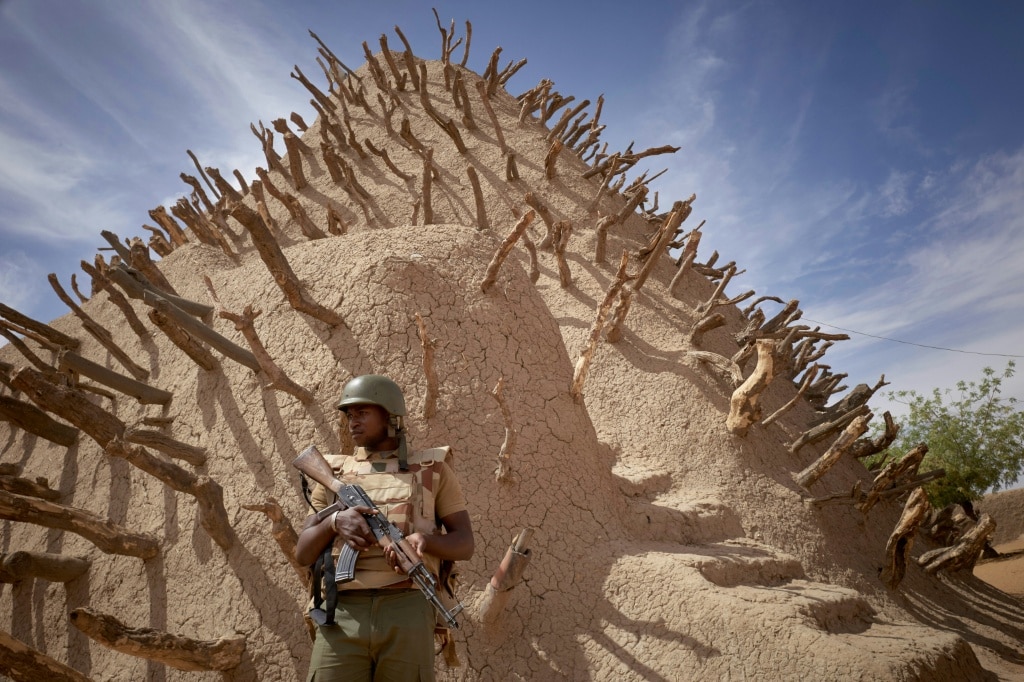
    Marin Petrović’s harrowing experience exemplifies this crisis. The Bosnian mountain rescue expert documented his 55-day captivity after JNIM militants intercepted his vehicle en route to Mopti’s historic mosque. His Instagram testimony reveals brutal conditions: sleeping on bare ground, drinking contaminated water, and surviving on minimal rations while surrounded by wildlife and armed guards. Despite his ordeal, Petrović observed unexpected humanity among some captors, noting that ‘many of them have a heart’ beneath their militant exterior.

    Statistical analysis reveals disturbing patterns. According to ACLED conflict monitoring data, 30 separate kidnapping events targeted foreigners by November 2025, with final numbers expected to surpass previous years significantly. Chinese nationals constitute the largest demographic among abducted foreigners, representing 38 of 89 documented cases—primarily workers in Mali’s gold mining regions where Chinese corporations have expanded operations amid soaring gold prices.

    The economic dimensions are staggering. Ransom payments allegedly contribute up to 40% of JNIM’s annual revenue, with one UAE royal family member’s release reportedly commanding $50 million. This financial incentive combines with strategic objectives: by targeting foreign workers, JNIM destabilizes Mali’s economy and strains international partnerships, particularly China’s significant mining investments.

    Analyst Héni Nsaibia of ACLED explains this dual motivation: ‘Ransom provides obvious incentive, but kidnapping primarily serves broader economic warfare with direct ramifications for bilateral relations.’ The group’s recent avoidance of Western targets suggests calculated public relations efforts to build international credibility, contrasting with their continued targeting of Chinese nationals who receive less diplomatic protection.

    While Petrović eventually gained freedom without ransom payment, others remain captive. Austrian humanitarian worker Eva Greztmacher, now 74, has endured over a year in desert conditions with temperatures reaching 50°C (122°F). Her son Christoph maintains cautious optimism while coordinating discreet efforts for her release, acknowledging the delicate balance between media attention and negotiation tactics.

    The crisis continues evolving. Recent Chinese embassy warnings against ‘illegal gold mining’ and personnel evacuations signal growing governmental concern, though official intervention remains limited. As JNIM refines its kidnapping calculus—weighing financial gains against political consequences—foreign workers and travelers throughout the Sahel face increasingly perilous conditions with no comprehensive solution in sight.

  • Iranian missiles kill nine in Israel, with UAE, Oman and Kuwait also targeted

    Iranian missiles kill nine in Israel, with UAE, Oman and Kuwait also targeted

    A significant escalation in Middle Eastern hostilities occurred on Sunday as Iranian ballistic missiles struck the Israeli city of Beit Shemesh, resulting in substantial casualties and structural damage. According to the Magen David Adom emergency service, the attack killed nine individuals and wounded at least 28 others, with two victims reported in serious condition.

    Israeli authorities confirmed a direct impact on a residential building located approximately 30 kilometers from Jerusalem. Emergency response teams, including search and rescue units and medical evacuation helicopters, were immediately deployed to the area. An Israeli military spokesperson stated that officials are thoroughly investigating the precise circumstances of the ballistic missile impact.

    Paramedic Yehuda Shlomo described the aftermath to AFP, recounting ‘a terrible scene’ with severe structural damage, widespread smoke, and numerous traumatized casualties emerging from damaged structures. This attack represents the most lethal strike on Israeli territory since the current conflict initiated.

    The Iranian offensive, reportedly in retaliation for earlier Israeli and American operations, extended beyond Israel’s borders throughout the Gulf region. United Arab Emirates authorities reported three fatalities and 58 injuries from the attacks, with victims identified as Pakistani, Nepalese, and Bangladeshi nationals. The UAE Defense Ministry disclosed intercepting 152 of 165 detected ballistic missiles and neutralizing 506 of 541 Iranian drones.

    Kuwait’s health ministry confirmed one death and 32 injuries, while Oman experienced its first direct involvement in the conflict when two drones targeted the port of Duqm. One strike injured a foreign worker at mobile accommodations, while the other landed near fuel tanks without causing additional damage. Subsequent reports indicated an oil tanker attack off Oman’s coast that injured four crew members.

    Bahrain’s capital Manama saw drone strikes targeting its airport and the Crowne Plaza hotel, prompting the US embassy to advise citizens to avoid area hotels. Social media footage revealed smoke and flames emanating from high-rise residential buildings struck by drone debris.

    Qatar, host to the region’s largest US military base, reported intercepting most of the 65 missiles and 12 drones launched toward its territory, though eight people sustained injuries with one in critical condition. Witnesses reported visible smoke near US military installations in Abu Dhabi, Manama, and Kuwait as American bases throughout the region came under fire.

  • Which senior Iranian figures have been killed by US-Israeli attacks?

    Which senior Iranian figures have been killed by US-Israeli attacks?

    A coordinated military offensive by the United States and Israel has resulted in a catastrophic decapitation of Iran’s political and military hierarchy, with casualties estimated in the hundreds. The most significant loss confirmed by Iranian state media is the death of Supreme Leader Ayatollah Ali Khamenei, who had governed the Islamic Republic since 1989. A state television broadcaster, visibly emotional, announced that the 86-year-old cleric “achieved his long-cherished wish of martyrdom in the holy month of Ramadan.” Several members of his immediate family, including his daughter, son-in-law, daughter-in-law, and granddaughter, were also reported killed.

    The assault extended far beyond the supreme leader, systematically eliminating the upper echelons of Iran’s security apparatus. Among the high-profile casualties is Mohammad Pakpour, Commander of the Islamic Revolutionary Guard Corps (IRGC); Ali Shamkhani, Secretary of the Defence Council and a key nuclear negotiator; and Amir Nasirzadeh, the nation’s Defence Minister. Abdolrahim Mousavi, Chief of Staff of the Armed Forces, was also killed, continuing a pattern of targeting military successors.

    Israeli military spokespersons claimed responsibility for eliminating a wider circle of senior officials, though these reports await independent verification. According to intelligence sources cited by major news outlets, the operation was based on meticulously gathered intelligence. The New York Times reported that the CIA had been monitoring Khamenei’s movements for months and recently identified a high-level meeting at a leadership compound in Tehran. This intelligence was subsequently shared with Israeli forces, who launched a simultaneous multi-target strike. CBS News, citing intelligence sources, placed the death toll among officials at approximately 40.

    The list of presumed deceased includes Mojtaba Khamenei (a son and potential successor to the supreme leader), Esmail Qaani (head of the IRGC’s Quds Force), and several heads of military intelligence and research agencies. In the wake of this power vacuum, Iranian state media announced that interim governance would be transferred to a three-member council consisting of President Masoud Pezeshkian, Judiciary Chief Gholam-Hossein Mohseni-Ejei, and jurist Alireza Arafi. The scale and precision of the strikes mark an unprecedented escalation in the ongoing shadow conflict between the powers, potentially reshaping the geopolitical landscape of the Middle East.

  • 6 killed in Iranian missile attack in Israel’s Beit Shemesh: rescue service

    6 killed in Iranian missile attack in Israel’s Beit Shemesh: rescue service

    A residential neighborhood in Beit Shemesh, located west of Jerusalem, became the target of a devastating Iranian missile attack on Sunday, resulting in significant casualties. According to Zaki Heller, spokesperson for Israel’s Magen David Adom rescue service, the assault claimed six lives and left at least 23 individuals injured.

    The attack represents a significant escalation in ongoing regional tensions, with Iranian forces launching missile barrages in response to prior military actions by the United States and Israel. Emergency personnel were immediately dispatched to the impact site, working tirelessly to extract victims from the debris and provide critical medical assistance to the wounded.

    Beit Shemesh, typically a quiet residential community, has now become the latest flashpoint in the intensifying conflict between the two nations. The strike on civilian infrastructure marks a concerning development in the military exchanges that have recently escalated between Iran and Israel.

    The international community continues to monitor the situation closely as tensions in the region reach new heights, with concerns growing about potential further retaliation and the broader implications for Middle Eastern stability.

  • In maps: Strikes across Iran and the Middle East

    In maps: Strikes across Iran and the Middle East

    The Middle East confronts an unprecedented military escalation as coordinated US-Israeli operations against Iran continue into their second consecutive day. Israeli forces confirm striking targets “in the heart of Tehran,” including the compound of Supreme Leader Ayatollah Ali Khamenei, while Iran has intensified retaliatory attacks across Israel and Gulf Arab nations.

    Satellite imagery and verified footage reveal significant damage to Leadership House, Khamenei’s official compound in Tehran, following precision strikes. Additional strikes targeted the Narmak neighborhood, residence of former president Mahmoud Ahmadinejad, and areas surrounding Iran’s intelligence ministry. The Israel Defense Forces stated these operations specifically targeted locations housing senior political and security figures.

    Beyond Tehran, military installations in Kermanshah, Qom, Isfahan, Tabriz, and Karaj sustained damage, with Israeli forces reporting the destruction of two fighter aircraft in Tabriz. US President Donald Trump announced the sinking of nine Iranian naval vessels and substantial damage to Iranian naval headquarters. US Central Command deployed B-2 stealth bombers armed with 2,000-lb bombs against ballistic missile facilities.

    Iran’s retaliatory measures have produced devastating consequences across the region. A missile strike on Beit Shemesh, Israel, killed at least nine people, while three US service members died in action according to Pentagon reports. Gulf states including UAE, Kuwait, Bahrain, and Qatar experienced sustained attacks, with Bahrain’s US Navy Fifth Fleet service center suffering missile damage. The UAE reported three fatalities and multiple injuries, while Kuwait confirmed one death.

    Civilian infrastructure has not been spared, with Dubai International Airport and educational facilities becoming casualties of the conflict. Iranian state media reported at least 153 fatalities at a girls’ school in Minab, though international verification remains challenging due to visa restrictions for foreign journalists.

    The conflict has drawn in previously uninvolved nations, with Jordan intercepting ballistic missiles targeting its territory and Oman’s Duqm commercial port suffering drone attacks that injured one worker. Regional tensions continue to mount as both sides vow to escalate military operations further.

  • Israelis unite across political divides in support of ‘justified’ war against Iran

    Israelis unite across political divides in support of ‘justified’ war against Iran

    Tel Aviv’s streets transformed into scenes of urgent preparation Saturday morning as air raid sirens sent residents scrambling—some toward bomb shelters, others loading children and belongings into vehicles to evacuate. This latest escalation with Iran has created what locals describe as a ‘new war routine’ in Israeli life, simultaneously familiar and unprecedented.

    Despite underlying fears, the conflict has generated remarkable national cohesion, temporarily bridging Israel’s deep political divisions. Orly Hareuveny, a physiotherapist and self-described leftist, sheltered from missile explosions while explaining to Middle East Eye that war has become an intrinsic part of Israeli existence—’the same as the weather is for people in England.’ Though traditionally supporting Palestinian coexistence, she views the current conflict as ‘very justified,’ characterizing Iranian leadership as ‘enemies of the world’ whose threat parallels historical persecution.

    The national consensus appears overwhelming. Central Israeli couple Osnat and Haiem (using pseudonyms) asserted that ‘everyone in Israel agrees that this war should happen,’ citing October 7th as demonstrating existential threats to Zionism. Media commentary reflects this unity, with prominent writer Ben-Dror Yemini declaring the conflict a ‘war of commandment’ representing both moral duty and national necessity.

    Even typically oppositional figures have rallied behind military action. Yair Golan of the left-wing Democrats party emphasized giving ‘full backing’ to military forces, while centrist leader Yair Lapid declared ‘no coalition and no opposition, only one people.’ Only Ayman Odeh, representing Palestinian citizens, offered dissent, noting Israel contained ‘fifty shades of militarism.’

    Political commentator Meron Rapoport confirmed widespread support, referencing polls showing half of Israelis favored striking Iran regardless of diplomatic outcomes. The conflict is widely rationalized as a ‘pre-emptive attack’ against an ‘existential threat,’ though Rapoport acknowledged underlying public fear and trauma from recent conflicts. Reports suggest military leadership has privately warned of potentially devastating consequences while publicly maintaining silence about risks.

    As Haaretz documented via Instagram, Israelis have adapted to what they term ‘coffee and arak in the parking lot’—maintaining casual routines amid emergency protocols. Yet beneath this surface normalcy, hundreds remain displaced from previous conflicts, with many suffering lasting psychological trauma, indicating the profound human cost of Israel’s perpetual war footing.

  • Israel closes Rafah crossing and all other checkpoints in the West Bank and Gaza Strip

    Israel closes Rafah crossing and all other checkpoints in the West Bank and Gaza Strip

    In a significant escalation of movement restrictions, Israeli authorities implemented a comprehensive closure of all crossings and barriers throughout the occupied West Bank and Gaza Strip on Saturday. This security measure coincided with the commencement of joint military operations by Israel and the United States targeting Iranian assets.

    The Israeli Coordinator of Government Activities in the Territories (COGAT), the military body governing Palestinian civilian matters, announced the indefinite shutdown of all transit points including the critical Rafah crossing. The directive permits exceptions solely for Palestinians holding pre-approved ‘essential worker permits,’ which would be processed through designated terminals.

    Despite COGAT’s assertion that the Gaza closure wouldn’t exacerbate humanitarian conditions, immediate consequences emerged across the territories. In the West Bank, approximately 1,000 barriers and iron gates separating Palestinian communities were sealed, stranding hundreds of travelers. Many were compelled to sleep in vehicles or seek temporary shelter with relatives, while others faced arduous detours that transformed routine 45-minute commutes into multi-hour ordeals.

    The Palestinian Education Ministry responded to the mobility crisis by transitioning all academic institutions to remote learning, acknowledging the impossibility of students and educators reaching campuses. Medical services faced severe disruption as ambulance crews experienced significant delays in patient transfers, particularly affecting those requiring dialysis and other critical treatments.

    The Karameh border crossing connecting the West Bank with Jordan was similarly shut down, trapping numerous Palestinians including returning Umrah pilgrims. Anas Hreibat from Hebron described his family’s grueling 24-hour wait under difficult conditions with elderly relatives before being granted limited re-entry.

    Concurrently, Israeli forces implemented closures at major religious sites including Jerusalem’s Al-Aqsa Mosque and Hebron’s Ibrahimi Mosque, forcibly evacuating worshippers and installing metal barriers—a security protocol previously enacted during June’s conflict with Iran.

    According to activist Bashar al-Qaryouti, these measures represent an established Israeli policy of imposing collective punishment through movement restrictions during security emergencies. He warned that prolonged closure could precipitate humanitarian disaster by severing aid and food supplies to vulnerable populations.

    In Gaza, the Rafah crossing’s closure—just one month after reopening following a two-year shutdown—further tightened the siege on over two million residents. Ismail al-Thawabta, director of the Gaza Government Media Office, condemned the action as illegal collective punishment under the Fourth Geneva Convention that directly endangers civilian lives by blocking medical access for thousands of wounded and ill Palestinians.