分类: world

  • Trump, Fox News praise UAE decision to leave Opec

    Trump, Fox News praise UAE decision to leave Opec

    The United Arab Emirates will officially withdraw from the Organization of the Petroleum Exporting Countries (OPEC) on Friday, a decision that has already earned public praise from former U.S. President Donald Trump amid ongoing regional volatility sparked by the US-Israeli war on Iran.

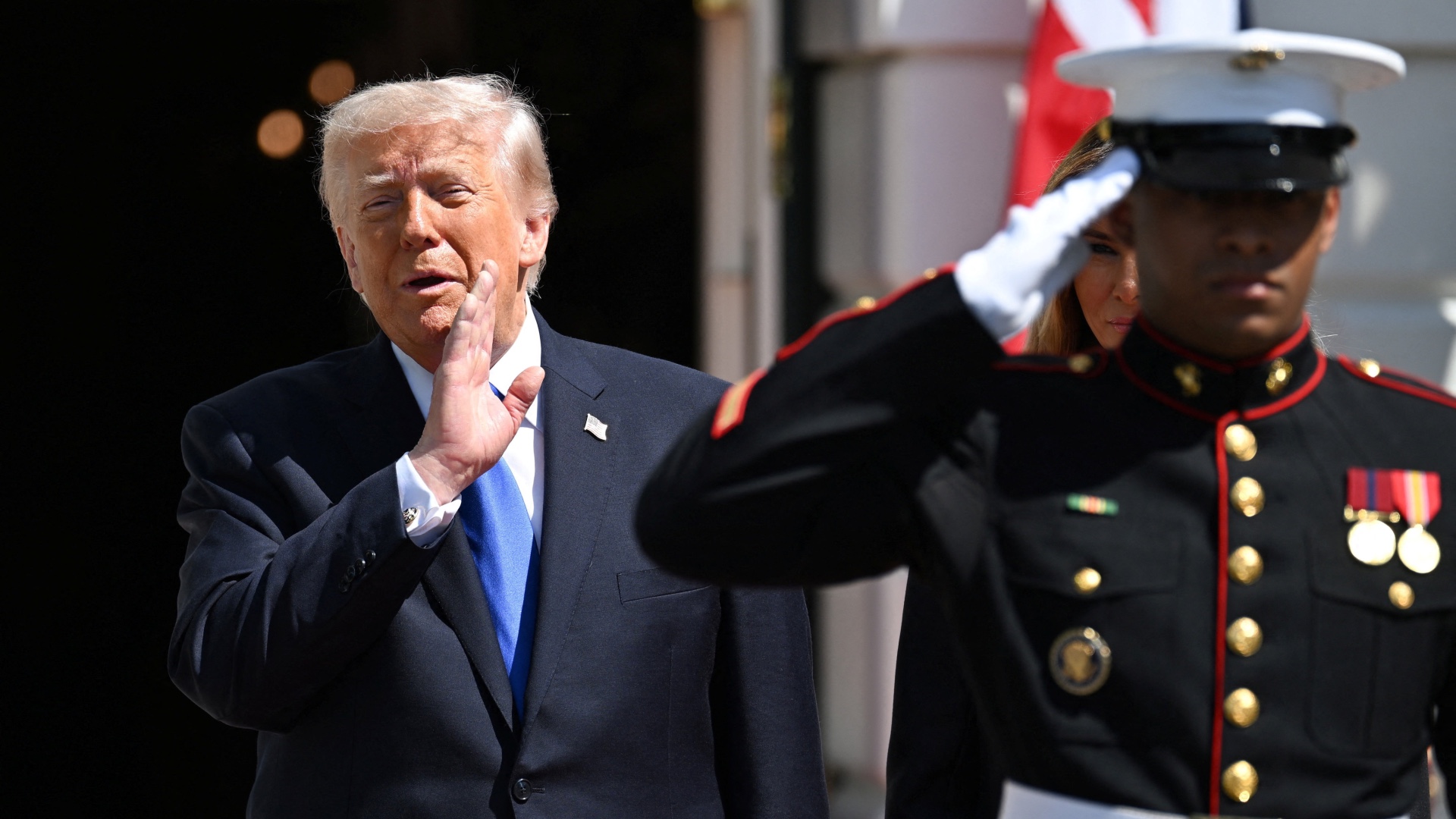
    Speaking to reporters at the White House on Wednesday, Trump voiced clear support for the Gulf nation’s move, singling out UAE leader Mohamed bin Zayed (MBZ) for praise. “I think it’s great. I know him very well. Mohamed. Very smart, and he probably maybe wants to go his own way,” Trump said. The former president argued the exit would ultimately help push down global energy prices, noting “They’re having some problems in OPEC” and describing MBZ as “a great leader.”

    Outside OPEC’s production quota system, the UAE will gain full flexibility to ramp up its crude output, an outcome the Trump administration has prioritized to ease energy market disruptions tied to the war on Iran. Analysts view the withdrawal as part of a broader shift by Abu Dhabi to deepen its strategic alignment with Washington while hedging against prolonged regional conflict.

    Previously unreported details from Middle East Eye (MEE) reveal that UAE Foreign Minister Sheikh Abdullah bin Zayed informed U.S. Secretary of State Marco Rubio earlier this year that Abu Dhabi is already preparing for the conflict to last as long as nine months. Just weeks prior, the UAE also requested a currency swap line from the Trump administration to secure access to U.S. dollars should its foreign reserves be depleted by extended market volatility.

    The UAE’s decision has also gained backing from Fox News, a outlet that Trump regularly relies on to gauge conservative support for policy priorities. Speaking on Fox Business, host Charles Payne argued the UAE is uniquely positioned to increase production after years of targeted investment in energy infrastructure, unlike many other OPEC members that have underinvested in capacity.

    “They have the ability to produce. Right now, there’s about 3.6 million barrels a day. They can do anywhere up to one and a half million more, but they’re locked in because of Opec pricing,” Payne said. “UAE has been brilliant. Everyone knows Dubai [and] what they’ve done economically. And so Saudi Arabia can’t control them anymore.”

    In an official statement released earlier this week, the UAE Energy Ministry framed the exit as the outcome of a “comprehensive review” of its long-term national production strategy. The ministry acknowledged that near-term market instability, including supply disruptions from conflict in the Arabian Gulf and Strait of Hormuz, has reshaped regional energy dynamics, but noted that medium and long-term forecasts still point to sustained growth in global energy demand.

    The statement also emphasized the country’s decades of constructive participation in the cartel: the UAE, then represented by Abu Dhabi, first joined OPEC in 1967 and retained its membership after the formal unification of the Emirates in 1971. “Throughout this period, the UAE has played an active role in supporting global oil market stability and strengthening dialogue among producing nations,” the statement read.

    The US-Israeli war on Iran, which began in late February, has already inflicted significant economic damage on the UAE, the Gulf state with the closest formal ties to Israel. Iranian drone and ballistic missile attacks targeting the country have damaged Dubai’s reputation as a top luxury tourism destination and drastically slowed the country’s oil export volumes. Unlike some Gulf nations that have pushed for diplomatic negotiations to de-escalate tensions with Iran, the UAE has taken a hardline stance, publicly calling for the U.S. to continue military operations.

    MEE, which provides independent, on-the-ground coverage of the Middle East, North Africa and surrounding regions, first broke details of the UAE’s pre-exit preparations for extended conflict.

  • It’s not just oil: Iran war also threatens Asia’s food security

    It’s not just oil: Iran war also threatens Asia’s food security

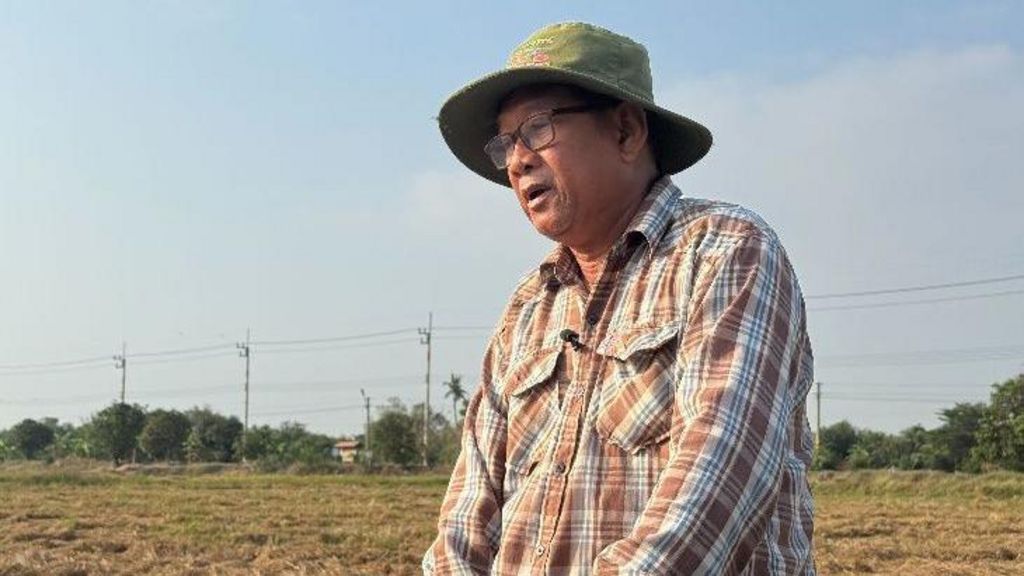
    As the annual rice planting season gets underway across Southeast Asia’s vast agricultural expanses, thousands of smallholder farmers are facing an impossible choice that could reshape global food security for the year ahead. Among them is 60-year-old Suchart Piamsomboon, a third-generation rice farmer based in Thailand’s Chachoengsao province, who traveled to his local agricultural supply shop earlier this spring ready to stock up on fertiliser for the new growing cycle. What he found there changed his entire planting plan. No fertiliser shipment had arrived, and the shop owner warned it might not come at all. Even if a shipment turned up, the cost would exceed 1,100 Thai baht per 50-kilogram sack – a steep jump from the 800 to 900 baht price tag just five weeks prior. By the time Piamsomboon returned to his small farm, rumors were already spreading that prices could climb as high as 1,200 baht per sack.

    Faced with runaway input costs that far outpace the revenue he can earn selling his harvested rice, Piamsomboon made the difficult decision to walk away from planting this season. “Farming only leads to financial losses now,” he explained. “I’d rather work as a day laborer, earning 100 to 200 baht a day just to get by. My everyday expenses don’t go down, but my farming income keeps falling year after year.”

    Piamsomboon is far from alone in this choice. From Thailand’s central rice belt to Vietnam’s fertile Mekong Delta, rice producers across the Asia-Pacific are running the same financial calculations and landing on the same grim outcome: the planting season is here, but affordable fertiliser is not. The decisions these farmers make over the coming weeks will directly shape the size of the year-end global rice harvest, a staple that feeds half the world’s population.

    The root of this unfolding crisis traces back to a conflict thousands of miles away, one that most Asian smallholders never expected to impact their daily lives. In late February, military strikes on Iran by the United States and Israel effectively closed the Strait of Hormuz, the narrow strategic waterway that carries roughly one-third of all globally traded seaborne fertiliser. With exports through the strait halted completely, global fertiliser markets erupted: within weeks, the price of urea, the world’s most widely used nitrogen fertiliser, surged by more than 40%.

    As major importers scrambled to replace lost Gulf supply, the global community turned its attention to China, the world’s single largest fertiliser producer. In 2025, China accounted for 25% of total global fertiliser output and exported more than $13 billion worth of the product to markets worldwide. But Beijing closed its export doors in early March, implementing an immediate ban on several key fertiliser varieties critical to rice and staple crop production. This latest move builds on a series of incremental export restrictions China has rolled out since 2021. A Reuters analysis of Chinese customs data finds that between 50% and 80% of China’s total fertiliser exports are now restricted under the new rules.

    One fertiliser exporter based in China’s Shandong province, who requested anonymity to avoid government repercussions, described the sudden order to halt all shipments to international clients. His firm has supplied fertilisers to Asia-Pacific markets including Thailand, Indonesia, and New Zealand for nearly a decade, and had already signed contracts and confirmed shipping dates for shipments to at least five countries before the ban was announced. “We already had the orders in hand, and our clients were waiting for the cargo to arrive,” he said. “But now we’ve been ordered not to ship anything. Of course we’re worried about our business, but we understand the government’s reasoning: they need to guarantee enough supply for domestic farmers first, so we will follow the regulations.”

    The only major fertiliser product China still exports in large volumes is ammonium sulfate, a low-grade industrial byproduct that cannot serve as an effective replacement for the more nutrient-dense fertilisers required to produce high-yield rice harvests.

    Joseph Glauber, Research Fellow Emeritus at the Washington-based International Food Policy Research Institute, warned that the dual shocks of the Strait of Hormuz closure and China’s export ban will inevitably send shockwaves through global fertiliser markets and put worldwide food security at severe risk.

    For the Chinese government, guaranteeing domestic food security has become a core political priority. A national food security law passed in 2023 requires all local governments to embed mandatory grain production targets directly into their regional economic plans. Allowing fertiliser exports to continue amid global price spikes would drive up domestic fertiliser costs in China, squeezing the same domestic farmers the policy is designed to protect. Paul Teng, a senior food security fellow based in Singapore, explained: “In China, food security is a non-negotiable political issue. The government is not willing to compromise on ensuring there is enough grain for the domestic population, no matter the global impact.”

    Compounding the issue, China’s own access to liquefied natural gas – the key feedstock for manufacturing nitrogen fertilisers – is now threatened by the closure of the Strait of Hormuz, leaving Beijing with even less incentive to release domestic supply to global markets.

    For Southeast Asia, a region that is structurally dependent on Chinese fertiliser imports, Beijing’s export halt has triggered an immediate crisis. Vietnam, one of the world’s top rice exporters that supplies much of the Philippines and parts of Africa, sourced more than half of its total fertiliser imports by volume from China in the first quarter of 2026 – totaling more than 480,000 tonnes. Put simply: the country that feeds much of Southeast Asia cannot grow its rice without Chinese fertiliser inputs.

    The Philippines faces an even more precarious situation. The island nation relies on China for 75% of its total fertiliser supply, with almost no domestic fertiliser production to fall back on. To make matters worse, the Philippines sources roughly 80% of its imported rice from Vietnam, creating a tightly interconnected supply chain of dependencies: Filipino consumers depend on Vietnamese rice, and Vietnamese farmers depend on Chinese fertiliser. Break just one link in this chain, and the entire system could collapse.

    Thailand, another regional agricultural powerhouse whose rice exports feed much of Asia, faced a dual supply shock: in 2024, it sourced 20% of its fertiliser from China and 32% of imports from the Persian Gulf. Both supply routes are now blocked at the same time.

    Analysts emphasize that the full impact of this crisis will not show up in global food prices immediately. The consequences will only become visible at the end of 2026, when this spring’s planted harvests come in far smaller than expected – or fail to materialize entirely. Teng noted: “Many countries do have enough fertiliser stockpiled to get through the immediate planting season, but if the crisis stretches on for months, we will see severe production shortfalls for rice and other staple crops in the second half of the year.”

    The United Nations World Food Programme estimates that the combined fallout from the Middle East conflict and resulting fertiliser crisis could push an additional 45 million people into acute hunger by the end of 2026. Across Asia and the Pacific, the prevalence of food insecurity is projected to rise by 24% – the largest relative increase of any region in the world.

    For smallholder farmers already on the edge of financial ruin, the hardship is already overwhelming. “Sometimes I wish every rice farmer across the country would stop planting altogether, so that government officials would have no rice to eat and finally understand what we’re going through,” said Pratheuang Piamsomboon, a 48-year-old rice farmer in Bangkok’s Nong Chok district. “This hardship is impossible to put into words.”
  • Nun assaulted in Jerusalem amid ‘pattern’ of anti-Christian attacks by Israelis

    Nun assaulted in Jerusalem amid ‘pattern’ of anti-Christian attacks by Israelis

    A violent assault on a 48-year-old nun and researcher at Jerusalem’s French School of Biblical and Archaeological Research has sparked renewed international alarm over escalating hostility targeting Christian communities across Israel and occupied East Jerusalem. The attack unfolded on Tuesday at the Cenacle, a sacred Mount Zion site revered by both Christian and Jewish faith traditions, according to detailed accounts from institutional leaders.

    Father Olivier Poquillon, director of the Dominican-managed institute that employs the nun, described the unprovoked attack to Agence France-Presse. He confirmed that an unidentified assailant approached the researcher from behind, hurled her with full force onto a nearby rock, and continued to repeatedly kick her while she lay incapacitated on the ground. Photographs circulating widely on social media have documented visible facial bruising from the beating; the victim has since received outpatient medical care for her injuries.

    Following the incident, both Poquillon and the French Consulate General in Jerusalem issued public condemnations of the “gratuitous assault” via social media platform X, and jointly demanded immediate law enforcement action to apprehend and prosecute the attacker. Israeli police announced Wednesday that they had taken a 36-year-old suspect into custody, but declined to release any further identifying information about the individual. Local Israeli journalist Yossi Eli of Channel 13 later reported that the arrest only came after the incident gained widespread viral media attention, prompting public pressure on law enforcement.

    In an official statement, Israeli police asserted that they “treat any attack on members of the clergy and religious communities with the utmost seriousness and apply a policy of zero tolerance to all acts of violence,” adding that the force remains “committed to protecting all communities and ensuring those responsible for violence are held accountable.” Israel’s Foreign Ministry also released a condemnation, noting that the attack “stands in direct contradiction to the values of respect, coexistence and religious freedom upon which Israel is founded,” and reaffirming the country’s stated commitment to safeguarding worship access for all faith groups.

    But local and institutional leaders have pushed back against these official assurances, framing the assault as part of a sustained, growing pattern of anti-Christian aggression. The Hebrew University of Jerusalem, which maintains an affiliation with the nun’s research center, released a statement calling the incident “not an isolated incident, but part of a troubling pattern of rising hostility toward the Christian community and its symbols.” The university added that the attack represents a direct violation of Jerusalem’s core founding values of religious pluralism and safe interfaith dialogue.

    This latest assault comes against a backdrop of escalating tensions that have raised concern among Christian communities across the region over the past two months. In March 2025, Israeli police initially blocked Latin Patriarch of Jerusalem Cardinal Pierbattista Pizzaballa and other senior clergy from accessing the Church of the Holy Sepulchre to lead the annual Palm Sunday Mass. Access was only partially restored after widespread international pushback. In a recent pastoral letter, Pizzaballa warned that holy sites meant for prayer have increasingly become identity-focused battlegrounds, noting that “sacred texts are invoked to justify violence, occupation, and terrorism,” and calling the abuse of religious belief to legitimize harm “the gravest sin of our time.”

    Earlier in April, video footage emerged showing an Israeli soldier destroying a statue of Jesus in southern Lebanon, triggering global public outrage. The Israeli military ultimately removed the soldier from combat duty and issued a 30-day sentence for the incident. In the occupied West Bank, Israeli settlers have stepped up repeated attacks on Taybeh, one of the only remaining majority-Christian towns in the territory, in recent weeks.

    A April 2025 report from the Rossing Centre for Education and Dialogue, a Jerusalem-based interfaith advocacy organization, documented what it calls a “continued and expanding pattern of intimidation and aggression” targeting Christian communities, with clergy and church properties bearing the brunt of attacks. The organization recorded 155 separate incidents of anti-Christian hostility in 2025 alone: 61 physical assaults, 52 attacks on church-owned property, 28 cases of harassment, and 14 incidents of vandalized religious signage. Researchers stressed that the recorded incidents are almost certainly just the “tip of the iceberg,” as many cases go unreported.

    The report links the rising violence to a shifting “sociopolitical climate increasingly intolerant of diversity and more assertive in exclusivist national-religious claims,” noting that Palestinian Christian communities are disproportionately impacted by the hostility. Separate from physical attacks, Christian educational institutions in Jerusalem now face an existential threat: the Israeli Education Ministry has recently banned teachers holding Palestinian-issued teaching permits from working in Israeli-jurisdictional schools, putting more than 200 Christian teachers out of work and pushing dozens of schools toward potential permanent closure.

  • Boat with Sudanese migrants capsizes off Libya, leaving at least 17 dead, UN says

    Boat with Sudanese migrants capsizes off Libya, leaving at least 17 dead, UN says

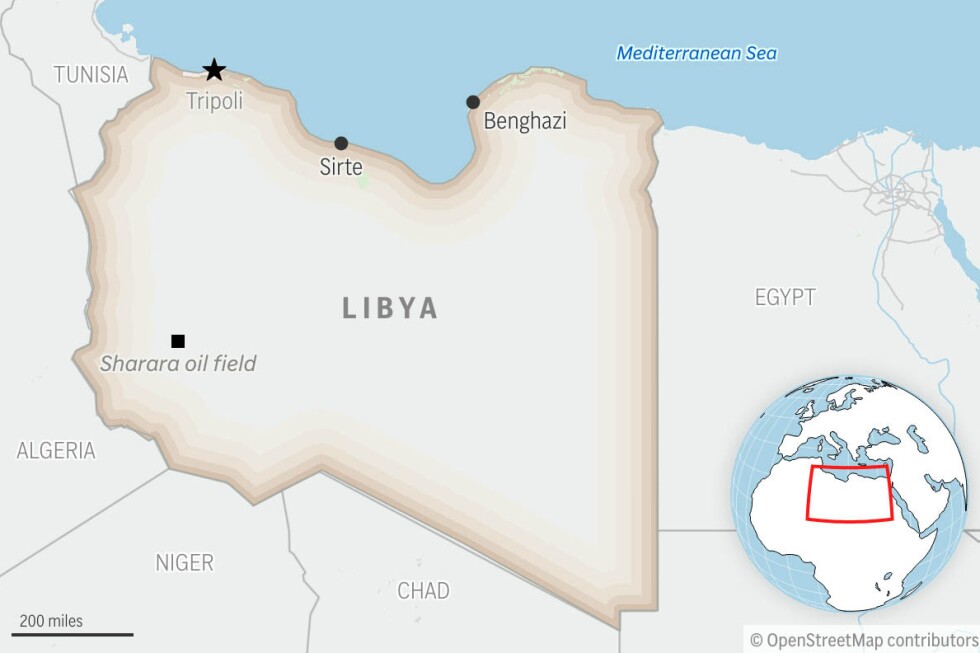
    A crowded vessel carrying 33 Sudanese migrants has capsized in the Mediterranean Sea off the coast of Tobruk, a coastal town in eastern Libya, leaving at least 17 passengers dead and nine others unaccounted for, United Nations officials confirmed in a statement released Thursday. Just seven people on board the ill-fated craft survived the disaster, the U.N. Refugee Agency shared via its social media platform X. Authorities have not yet released a definitive timeline for when the overturning occurred.

    According to the U.N. International Organization for Migration (IOM), the survivors had been stranded adrift in open waters for multiple days before they were pulled from the sea, and a number of the fatalities were caused by starvation and dehydration in the days before the rescue. The boat departed Tobruk and was bound for Greece when it overturned roughly 100 kilometers (62 miles) northwest of the Libyan city, the organization confirmed. Local rescue efforts were led by Libya’s national navy, the country’s coast guard, and the Libyan Red Crescent.

    On Thursday, the Libyan Red Crescent published on-site photos from the rescue operation that showed emergency personnel moving multiple deceased victims sealed in black body bags. Medical details on the condition of the seven survivors have not been released to the public as of Thursday’s update.

    For more than a decade, Libya has served as a primary departure and transit hub for thousands of migrants fleeing conflict, political instability, and extreme poverty across Africa and the Middle East. The nation descended into ongoing factional chaos following the 2011 NATO-backed uprising that removed and killed long-time authoritarian ruler Moammar Gadhafi, leaving central government weak and unable to regulate unregulated migrant smuggling operations along its long Mediterranean coastline.

    This latest tragedy comes less than two weeks after another deadly shipwreck off Libya’s coast: earlier this month, more than 80 migrants were reported missing after their vessel capsized in the central Mediterranean. Data from IOM shows that 2026 is on track to be the deadliest year for Mediterranean migrant crossings since record-keeping began in 2014. In the first four months of the year, 765 people were confirmed dead along the dangerous Central Mediterranean route alone — a 150% jump in fatalities compared to the same period in 2025. IOM Director General Amy Pope told the Associated Press earlier this month that the agency has recorded a sharp rise in migrants from South Asia and the Horn of Africa — including Bangladesh, Pakistan, Afghanistan, and Sudan — attempting the dangerous crossing to European shores in recent months.

  • Israeli forces kill Palestinian teen in West Bank raid

    Israeli forces kill Palestinian teen in West Bank raid

    A fresh wave of Israeli military operations in the occupied West Bank has left two Palestinians dead, including a 16-year-old teenager, amid a documented sharp escalation in civilian casualties and forced displacement that has reached levels not seen since the 1967 occupation, United Nations data confirms.

    The most recent fatal incident unfolded Wednesday evening in the al-Hawooz neighborhood of Hebron, where Israeli forces launched a large-scale raid into the densely populated urban area. Medical sources confirm 16-year-old Ibrahim al-Khayyat sustained a critical gunshot wound to the abdomen during the operation, which saw Israeli troops deploy dozens of military vehicles, block major thoroughfares, and order local shop owners to close their businesses mid-day.

    During the incursion, troops opened live fire and launched tear gas canisters directly at local residents, leaving two people injured. Both casualties were transported to the local Red Crescent hospital for emergency care, where al-Khayyat was pronounced dead shortly after arrival. In addition to the fatality, Israeli forces took at least one Palestinian into custody during the raid, which also targeted the headquarters of a local charitable association.

    The Hebron killing came hours after a separate Israeli incursion in Silwad, a town located northeast of Ramallah, that left another Palestinian, Abd el-Halim Hammad, dead. These two deaths are part of a consistent, daily pattern of Israeli search-and-arraid operations across the occupied West Bank that regularly involve the use of live ammunition against Palestinian civilians.

    UN data compiled on the ongoing crisis shows that Palestinian fatalities at the hands of Israeli forces in the West Bank have spiked dramatically since October 2023. Since that time, at least 1,080 Palestinians have been killed, with at least 35 additional deaths recorded already this year. Thousands more have sustained injuries from military activity in the region.

    Parallel to the increase in military operations, UN officials also record a significant surge in violence carried out by Israeli settlers against Palestinian communities. The data shows an average of 140 settler attacks per month, nearly twice the frequency recorded before October 2023. These attacks have grown increasingly organized, with a clear goal of forcing Palestinian communities out of Area C — a section of the West Bank that makes up roughly 60% of the total territory, and remains under full Israeli military and administrative control.

    According to latest UN displacement figures, approximately 40,000 Palestinians have been forcibly removed from their homes in the West Bank since January 2023. More than 3,000 of these displacements are directly tied to targeted attacks by settlers. UN officials note that the current scale of forced displacement is the worst it has been since Israel occupied the West Bank in 1967.

  • First direct US-Venezuela flight in years arrives in Caracas

    First direct US-Venezuela flight in years arrives in Caracas

    After nearly a decade of severed air connectivity and strained diplomatic ties, the first direct commercial flight between the United States and Venezuela touched down in Caracas on Thursday, marking the most visible milestone yet in the rapid normalization of relations between the two nations following Washington’s removal of former leftist leader Nicolás Maduro.

    The inaugural American Airlines service departed Miami International Airport at 10:26 a.m. local time (1426 GMT), touching down at Simón Bolívar International Airport less than three hours after takeoff. A second Envoy Air flight followed shortly after the American Airlines arrival, launching the resumption of regular direct air links that were completely halted in 2019 amid spiraling bilateral tensions.

    Notably, the flight manifest included senior U.S. officials traveling to Caracas for high-level government meetings — a development that would have been considered unimaginable just six months ago, according to diplomatic sources on the ground.

    For frequent transnational travelers with ties to both countries, the resumption of direct flights eliminates years of logistical hassle and extended travel times. Claudia Varesano, a 44-year-old traveler who maintains family and business operations in Venezuela, has long commuted between the two nations but was forced to rely on connecting routes through third countries that stretched short trips into all-day journeys. “A three-hour flight would become an eight-hour flight. I’m celebrating today because I’m a frequent traveler. I can go, have breakfast and come back,” Varesano told reporters ahead of arrival.

    Isabel Parra, a Venezuela-born travel agent who had not returned to her home country since 2018, echoed that excitement, saying she felt “super excited” to step back on Venezuelan soil after years of traveling via layovers in Curaçao, the Dominican Republic, or Bogotá. “For years we had to go through those intermediate stops, so having this direct flight is a real pleasure,” Parra said. She added that the inaugural flight carried a steep $3,000 price tag, but expects ticket costs to drop sharply once American Airlines launches a second daily round-trip route on May 21, increasing service capacity.

    To mark the historic occasion, American Airlines outfitted the flight with a specialty Venezuelan-themed menu, featuring local favorites including cachapas (traditional sweet corn pancakes) and Venezuelan-style chicken salad. Greeting passengers upon departure from Miami — a major hub for the Latin American diaspora and a long-recognized gateway to the region — were city representatives and Félix Plasencia, Venezuela’s ambassador to Washington.

    The resumption of direct flights comes as the two nations rapidly rebuild economic and diplomatic ties after years of estrangement. Roughly 1.2 million Venezuelans currently reside in the United States, many of whom split time between the two countries or send regular remittances back to family. Analysts widely expect the thaw in relations, paired with restored air links, to draw increased U.S. business investment into Venezuela, which holds the world’s largest proven crude oil reserves.

    Despite the progress on normalization, significant complexities remain in the bilateral relationship. U.S. President Donald Trump has simultaneously pushed aggressive deportation policies targeting Venezuelan migrants, terminating a humanitarian protection program that shielded thousands of migrants from deportation back to the country’s high-crime areas.

    The diplomatic shift traces back to a January 3 U.S. special forces raid in Caracas that resulted in the capture of Maduro, a longstanding U.S. antagonist, who was extradited to New York to face federal drug trafficking charges that he and his supporters deny. Maduro was succeeded by his former vice president Delcy Rodríguez, who has moved to cooperate extensively with Washington despite her historical ideological alignment with Maduro’s leftist government. Trump has publicly praised Rodríguez’s policy opening to U.S. companies, and has eased broad sanctions imposed on Venezuela in recent years, including lifting personal sanctions targeting Rodríguez. In line with this opening, Venezuela has moved to fully open its critical oil and mining sectors to private international investment.

    American Airlines, a Texas-based carrier with an extensive route network across Latin America, first launched service to Venezuela in 1987 and at its peak carried more passengers between the two countries than any other airline. The carrier suspended all service in 2019, when relations collapsed after the U.S. and a bloc of Western and Latin American nations refused to recognize Maduro’s 2018 re-election, citing widespread electoral irregularities.

    Even with the resumption of flights, U.S. travel guidance retains limited warnings: the State Department still urges U.S. citizens to reconsider travel to Venezuela due to persistent widespread violent crime, but lifted its full blanket ban on all travel to the country in March.

    The launch of direct flights also comes amid a period of upheaval for the global aviation industry, which has faced severe financial pressure from a sharp spike in global oil prices following recent military escalations between the U.S., Israel, and Iran.

  • Myanmar’s Suu Kyi back in the spotlight but still out of sight

    Myanmar’s Suu Kyi back in the spotlight but still out of sight

    Nearly three years after Myanmar’s military ousted her democratically elected government in a 2021 coup, ousted leader Aung San Suu Kyi’s upcoming transfer from prison detention to a designated residence has pushed the Nobel Peace Prize laureate back into global headlines — yet her isolation from the public and supporters remains unbroken. The announcement from junta chief Min Aung Hlaing, who seized power after the coup and was sworn in as civilian president last month, has offered little clarity about where Suu Kyi will be held or how much of her combined prison sentence she still has left to serve. A party source close to the National League for Democracy (NLD) indicates the 78-year-old will likely be held in Naypyidaw, Myanmar’s sparse, purpose-built capital.

  • Syrian government confirms detention of missing German journalist

    Syrian government confirms detention of missing German journalist

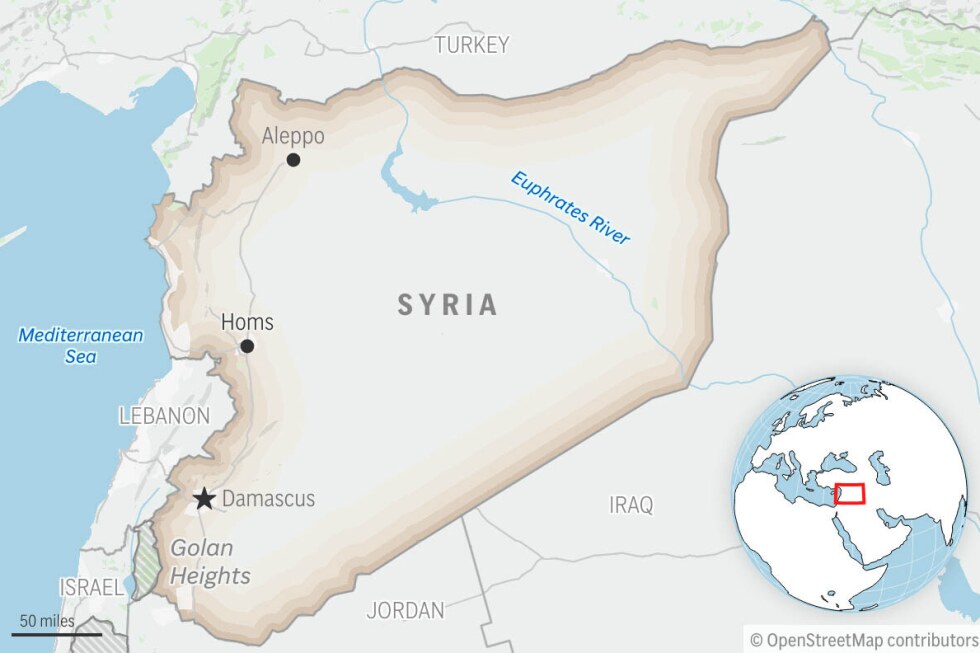
    BEIRUT, Lebanon — In an official confirmation this Thursday, Syria’s new transitional government has acknowledged that a German reporter who vanished earlier this year remains in state custody, ending months of uncertainty over her fate. The confirmation comes amid ongoing efforts by Syria’s post-Assad leadership to consolidate control across war-torn territory recaptured in recent military operations.

    Thirty-six-year-old Eva Maria Michelmann was last spotted on January 18, amid a government offensive to seize the northern city of Raqqa from the Kurdish-led Syrian Democratic Forces (SDF). The Committee to Protect Journalists (CPJ), a press freedom watchdog, had earlier this week publicly raised alarms over Michelmann’s disappearance, noting that she was accompanied by her colleague Ahmed Polad—a Kurdish-Turkish journalist—when the pair was reportedly apprehended by advancing Syrian government troops. CPJ has since issued an urgent call for the immediate release of both reporters.

    In its official statement, Syria’s Information Ministry laid out the government’s account of the detainment: the two foreign nationals were discovered during a clearing operation by Interior Ministry forces in a Raqqa building that had previously served as a SDF security outpost. According to the statement, the pair “refused to disclose their true identities” and carried no official identification to confirm their citizenship or professional status. During initial interrogations, the ministry says the pair claimed to carry out humanitarian work on behalf of the United Nations, a claim investigators later confirmed was fabricated, with no mention of their journalistic work at the time.

    The government added that after making an attempt to escape custody, the pair was rearrested on suspicion of being illegal foreign fighters in Syrian territory. The statement confirmed that “the two were formally detained, and legal proceedings have been initiated in preparation for referral to the competent judicial authorities,” but gave no further details on the specific charges the pair may face.

    CPJ later confirmed that both reporters were on assignment for the Istanbul-based Etkin News Agency (ETHA) and Özgür TV, a broadcaster that operates across multiple European cities. Frank Jasenski, a German lawyer representing Michelmann and her family, warned earlier this week that “We assume that her health is very, very poor and we demand her immediate release.” Germany’s Federal Foreign Office confirmed last week that it has been in contact with the detained journalist, but declined to share additional details citing privacy protection regulations.

    Raqqa, which had long been held by the SDF, fell to Syrian government forces in a January offensive launched after the ouster of former President Bashar Assad in December 2024. Following the capture of the city, the new Syrian administration and the SDF reached a ceasefire agreement that laid out terms for the SDF to integrate into Syria’s national army. That ceasefire has held to date, and the integration process is proceeding gradually.

    Since overthrowing Assad’s decades-long government late last year, Syria’s new transitional leaders have faced the steep challenge of reestablishing full central authority across a country fractured by nearly 14 years of devastating civil conflict.

  • Ukraine expands oil strikes on Russia as Putin proposes brief ceasefire

    Ukraine expands oil strikes on Russia as Putin proposes brief ceasefire

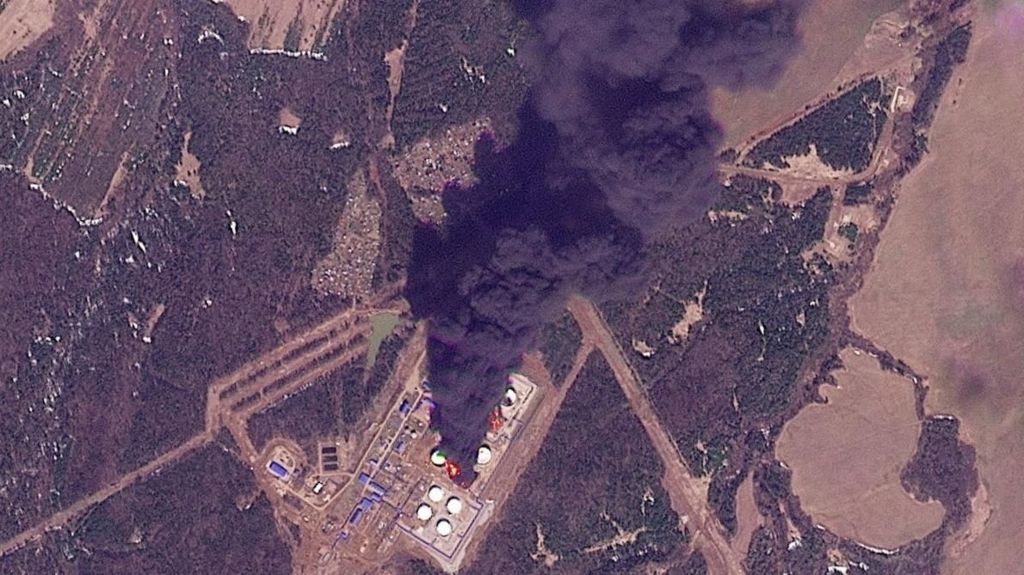
    In a significant escalation of cross-border strikes amid the ongoing four-year full-scale invasion of Ukraine, Ukrainian drones have targeted a major Lukoil oil pumping and refining complex near Perm, a city in central Russia more than 1,500 kilometers from the active front line, triggering a massive smoke plume that was captured in dramatic social media footage.

    Ukraine’s Security Service (SBU) confirmed it carried out the attack on the facility, one of Russia’s largest oil refining hubs. Visuals shared across online platforms showed towering columns of black smoke and visible flames billowing from the site, and an initial chemical emergency alert was issued for multiple districts of Perm. Local city officials later walked back the alert, framing it as a routine safety test, a move aligned with a broader pattern of Russian authorities downplaying the impact of Ukrainian strikes on domestic infrastructure.

    This Perm strike is the second attack on critical Russian energy infrastructure in the same region within a single week. Earlier this week, the SBU announced it had disabled a key strategic hub for Russia’s national oil pipeline network, also located in Perm. Further north along the Black Sea coast, multiple strikes on oil facilities in Tuapse earlier this month caused extensive oil contamination, with local residents sharing images on Telegram of oil slicks spreading across coastal waters, black petroleum puddles on local roads, and wild animals coated in sticky oil residue.

    The increasing frequency of deep-penetration drone attacks on Russian territory has become an unavoidable source of concern for the Kremlin, even as official statements continue to minimize their strategic impact. This mounting security threat has already forced tangible policy changes: on Wednesday, the Kremlin announced it would scale back its annual May 9 Victory Day military parade, the iconic holiday marking the defeat of Nazi Germany in World War II, explicitly citing “terrorist threats” originating from Ukraine.

    Later that same day, Russian President Vladimir Putin held a 90-minute phone call with former U.S. President Donald Trump, during which Putin put forward a proposal for a one-day ceasefire to coincide with the Victory Day holiday. Yuri Ushakov, Putin’s senior diplomatic advisor, confirmed that Trump had expressed active support for the initiative, noting that the holiday represents a shared victory over Nazi Germany between the two countries.

    Ukrainian President Volodymyr Zelensky responded cautiously to the offer, saying Kyiv would seek additional clarification from U.S. officials on the details of the proposal. “We will clarify what exactly this is about — a few hours of security for a parade in Moscow, or something more,” Zelensky said, adding that Ukraine remains committed to its original proposal for a long-term ceasefire and a lasting, sovereign peace.

    This proposed temporary truce follows a long pattern of limited, short-lived ceasefires that have been implemented since the full-scale invasion began in 2022. Most of these prior truces have been tied to major holidays, restricted solely to energy infrastructure, or limited to the Black Sea grain initiative. Ukraine has repeatedly pushed for a comprehensive permanent peace agreement, while Russia has refused to enter into such talks unless Kyiv agrees to cede control of occupied sovereign Ukrainian territories to Moscow.

    During the call, Ushakov said Trump asked Putin to share his assessment of frontline conditions in Ukraine. Putin claimed to the former U.S. president that Russian forces maintain the strategic initiative and are continuing to push back Ukrainian positions. This characterization directly contradicts independent assessments from military analysts and recent on-the-ground developments.

    Over the past several months, Ukrainian forces have retaken portions of occupied Russian territory, capitalizing on technological advances in long-range strike capabilities and slowed Russian recruitment efforts that have stretched Moscow’s frontline forces thin. The U.S.-based Institute for the Study of War (ISW) noted in a recent analysis that Kyiv’s military operations are inflicting mounting casualties and operational costs on Russian troops. The ISW added that the Kremlin is likely overstating its progress to frame the conflict as nearing a Russian victory, in an effort to mitigate growing international and domestic pressure over the mounting costs of the war.

    The background of this latest strike is rooted in Russia’s ongoing regular aerial bombardment of Ukrainian civilian areas. Just on Wednesday night, a new Russian airstrike on Ukrainian population centers killed at least three civilians and injured 79 more, including one child, continuing a pattern of attacks that has killed thousands of Ukrainian civilians and displaced millions more since the full-scale invasion began.

  • ‘How are we going to get back home?’ Islamist group tightens blockade on Mali capital

    ‘How are we going to get back home?’ Islamist group tightens blockade on Mali capital

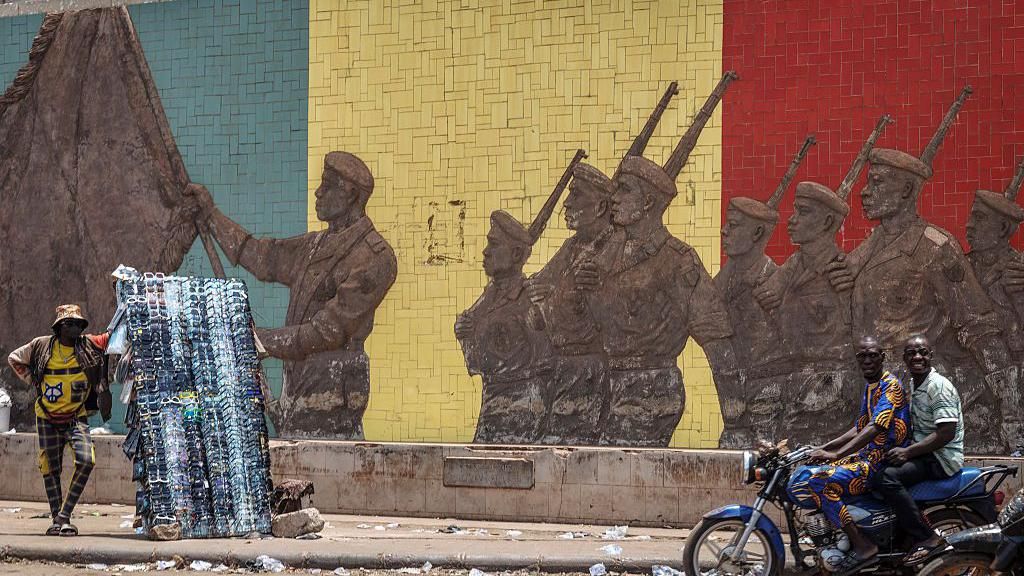
    For over a decade, Mali’s national military has waged a persistent, bloody conflict against Islamist insurgent groups across the West African nation. Now, that conflict has tightened its grip on the heart of the country: Bamako, the bustling capital and key regional hub home to more than 3 million residents, is currently under a rolling partial blockade by Jama’at Nusrat al-Islam wal-Muslimin (JNIM), one of the country’s most active Islamist militant factions. The blockade comes just days after a high-profile assassination of Mali’s defense minister within the city’s borders, deepening the sense of crisis gripping the nation.

    Stranded motorists and travelers on the Bamako-Kéniéba highway, one of the capital’s primary arterial routes, have described days of uncertainty and fear. One mother of two, who traveled outside the city to visit aging parents, told the BBC she has been barred from re-entering Bamako for nearly 24 hours. “Our army isn’t capable of protecting us, how are we going to get back home?” she asked, echoing the anxiety shared by hundreds of other stranded people along major inbound routes. JNIM fighters issued an explicit public warning Wednesday that “no-one will be allowed in any more” to the capital, a sharp escalation of tactics the group has used to pressure the ruling military junta.

    This tightening blockade marks a significant escalation from the group’s 2025 fuel blockade, which crippled supply chains, caused widespread fuel shortages, and sent prices for essential goods soaring across Bamako. Today, eyewitnesses confirm that at least three of the six main access roads leading into the capital are closed for hours at a time, as militants rotate positions across different routes to avoid counterattacks. During gaps between militant presence, small numbers of civilian vehicles are able to sneak through, but movement remains severely restricted and unpredictable.

    The current crisis follows a coordinated nationwide offensive launched last weekend by a newly formed alliance of jihadist fighters and separatist rebels from the Azawad Liberation Front (FLA), whose stated goal is to overthrow the military regime led by General Assimi Goïta. Goïta seized control of Mali in a 2020 coup and has since shifted the country’s foreign security alliances dramatically, expelling French counterterrorism forces that had supported the government for nearly a decade and turning instead to the Russia-aligned Africa Corps, a paramilitary force that emerged from the remnants of the Wagner Group following the death of its founder Yevgeny Prigozhin.

    Despite this new partnership, the insurgent offensive has already scored major gains. The FLA alliance forced African Corps and Malian government troops to withdraw from the key northern city of Kidal, which is now fully under separatist control. Following the capture of Kidal, FLA leaders have announced plans to advance on other northern population centers and issued an ultimatum demanding the full withdrawal of all Africa Corps forces from Malian territory.

    The Kremlin has repeatedly reaffirmed its commitment to maintaining a presence in the country. “Russian forces will remain in Mali to combat extremism, terrorism and other harmful phenomena and will continue to provide assistance to the current government,” a Kremlin spokesperson stated Thursday, pushing back against claims that the withdrawal from Kidal signals weakening Russian commitment to the junta.

    For ordinary civilians caught in the crossfire, the situation has grown increasingly desperate. A long-haul lorry driver who has worked Malian trade routes for decades told the BBC he had never experienced a crisis of this scale. “I’m stuck here and it sounds dangerous. I would rather run away to save my life than fight for the goods I have to deliver. I’ve never thought like this before,” he said. Just 50 miles from Bamako, the regional town of Ségou is already under a full insurgent blockade, where hundreds of commercial trucks, passenger buses, and private cars have been trapped for days. A local reporter confirmed that stranded passengers, including whole families and small-scale traders, are already facing critical shortages of clean drinking water and food.

    Mali’s junta leadership has responded with vows of harsh retribution. Following an emergency meeting of the country’s security council Wednesday, state media quoted Goïta saying that Malian armed and security forces have already inflicted “heavy losses” on insurgent forces and would continue to ramp up counteroffensives to restore order.

    Independent security analysts warn that the current offensive exposes deep vulnerabilities in the junta’s grip on power. “Those moves show that the regime is weak and can’t restore security,” explained Alain Antil, director of the Sub-Saharan Africa Centre at Ifri, a leading French foreign affairs think tank. Antil noted that the current trajectory echoes 2013, when a similar alliance of jihadists and Tuareg separatists advanced on Bamako, prompting a large-scale French military intervention that pushed insurgents back but failed to fully resolve the country’s instability. Despite Goïta’s decision to oust French forces and align with Russia, the security situation has continued to deteriorate, culminating in last weekend’s coordinated offensive.

    International governments have already begun issuing warnings to their citizens. France, Canada, and the United Kingdom have all issued formal advisories urging their nationals to leave Mali immediately, while the United States recommends that all U.S. citizens in the country stay in secure locations and avoid non-essential travel. Even amid the warnings, some long-term foreign residents have refused to flee, pointing to deep personal ties to the country. “I won’t leave,” one Frenchwoman who has lived in Mali since 2002 told the BBC. “I love Mali. It has become a part of me since I came here in 2002. We’ll stay with my family. We know things will be OK.”