分类: world

  • US criticises allies over failure to stop Gaza aid flotilla

    US criticises allies over failure to stop Gaza aid flotilla

    Tensions between the United States and its European allies have escalated sharply in recent days, after Washington publicly blamed its partners for failing to block a Gaza-bound humanitarian aid flotilla that Israeli naval forces intercepted and seized in international waters earlier this week.

    On Wednesday, Israeli commandos seized at least 21 vessels participating in the aid mission, detaining 175 activists on board. Organizers with the Global Sumud Flotilla, the coalition behind the effort, have labeled the interception an outright act of piracy carried out in neutral international waters.

    One day after the raid, State Department spokesperson Tommy Pigott released a formal statement dismissing the flotilla as a “baseless, counterproductive stunt”. Pigott argued that the mission bypassed existing official channels designed to deliver humanitarian support to Palestinian civilians in Gaza, and said the Biden administration expects allied nations to take “decisive action” against vessels involved in the effort. That action, he specified, includes blocking access to ports, denying docking privileges, prohibiting departures from allied territories, and refusing refueling services to participating ships.

    “The United States will explore using available tools to impose consequences on those who provide support to this pro-Hamas flotilla and supports our allies’ legal actions against [it],” Pigott added.

    The U.S. rebuke comes as growing rifts have emerged between Washington and its European partners over U.S. and Israeli policy in the Middle East, particularly amid escalating tensions with Iran. According to a recently leaked internal Pentagon email, the U.S. government threatened last week to punish NATO member states that refuse to back the U.S.-led campaign against Iran, and even considered expelling Spain from the alliance over Madrid’s public opposition to the conflict. The same email also revealed U.S. officials have floated recognizing Argentina’s territorial claims over the Falkland Islands, a move that would directly target the United Kingdom for what Washington claims is insufficient support for its Iran policy.

    The U.S.-led “Board of Peace”, a body created by the Trump administration to oversee a new governing framework for Gaza, also issued a public statement on the social platform X condemning the aid flotilla. The organization dismissed the effort as “performative love-boat activism”, and called on critics of Israeli policy to instead redirect pressure toward Hamas. In the same statement, the Board claimed it has drastically expanded humanitarian support for Gaza’s civilian population, asserting that three times as many Gaza residents are now receiving food aid compared to previous periods.

    These claims, however, stand in stark contrast to on-the-ground data and reporting from the region. Back in April, the Gaza Government Media Office reported that an average of just 227 aid trucks enter the blockaded strip each day, which amounts to only 37 percent of the daily delivery volume agreed to under the October 2024 ceasefire deal. Despite a U.S.-mediated truce agreement, Israel has continued to tighten entry restrictions on humanitarian aid, leading to a steady decline in food deliveries to Gaza’s 2 million residents. Independent reporting from Middle East Eye has documented widespread fears of imminent famine across the strip, as Palestinians grapple with acute shortages of basic food ingredients, cooking gas, and fuel needed to power homes and medical facilities.

    In response to the Israeli raid and the U.S. criticism of allied inaction, officials from Germany and Italy issued a joint statement expressing “deep concern” over the interception and calling for “full respect of international law” in the incident. The Italian government additionally demanded that Israel immediately release the Italian nationals who were unlawfully detained during the seizure of the flotilla.
  • Israel ‘sent advanced laser defence system to UAE’ during Iran war

    Israel ‘sent advanced laser defence system to UAE’ during Iran war

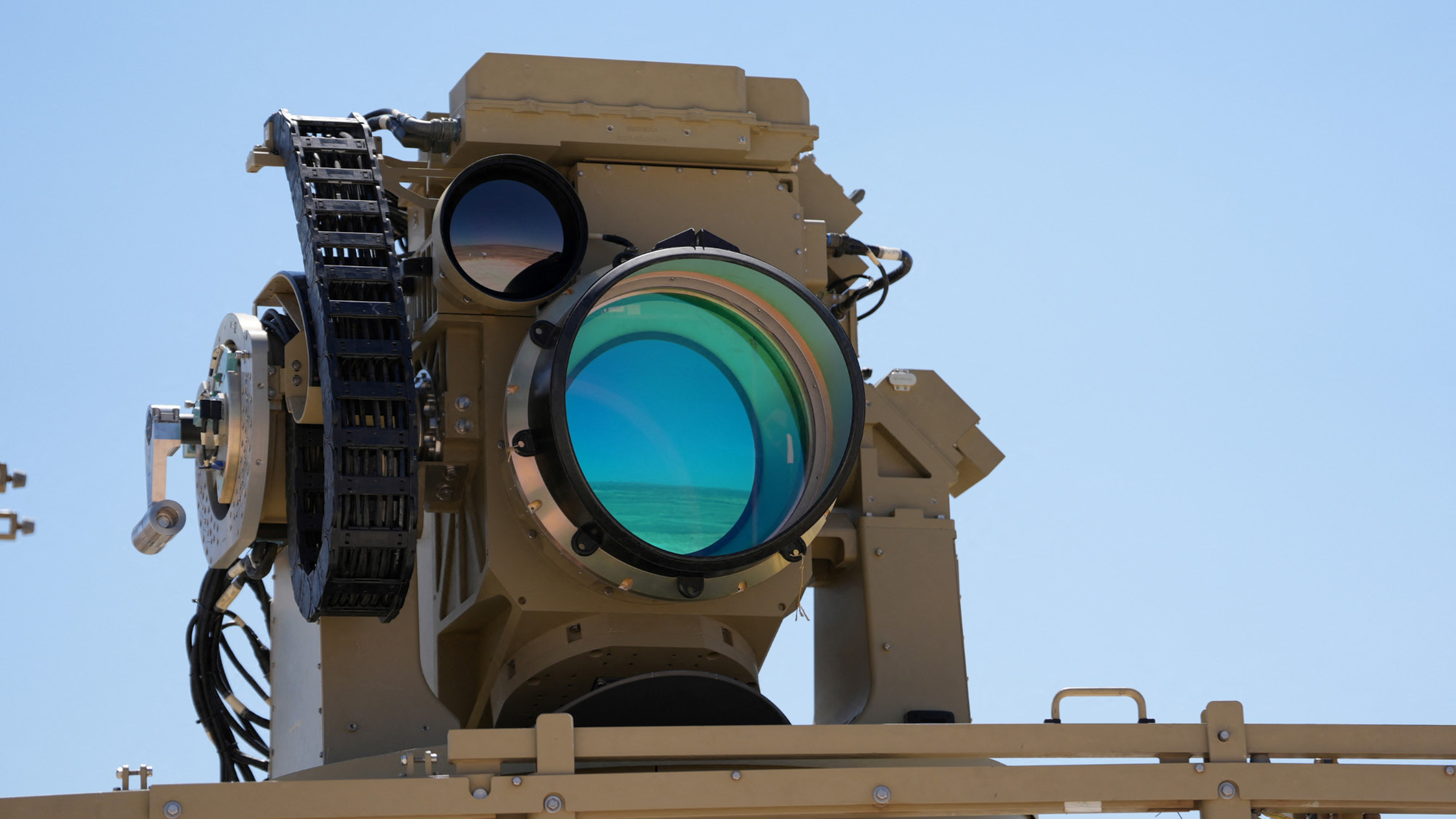
    Against the backdrop of open conflict between the US-Israeli bloc and Iran that has roiled the Persian Gulf since February, new details have emerged of deepening military cooperation between Israel and the United Arab Emirates, the Financial Times revealed in a report published Thursday. Two anonymous sources familiar with the deployment confirmed to the outlet that Israel has transferred a modified variant of its domestically developed Iron Beam laser defense system to Abu Dhabi, as the UAE braces for continued drone and missile attacks from Iranian forces.

    Iron Beam, which entered operational service with the Israeli military only in December 2025, is engineered to intercept low-altitude, short-range threats including rockets and unmanned aerial vehicles — exactly the type of projectiles that have formed the bulk of Iran’s cross-region retaliatory attacks. Alongside the high-powered laser system, the FT report adds that Israel also supplied the UAE with Spectro, a compact advanced surveillance platform capable of detecting incoming unmanned aerial threats from distances of up to 20 kilometers.

    This latest weapons transfer builds on a previous deployment reported last month by Axios, which revealed that Israel had already sent a complete Iron Dome air defense battery to the Gulf nation, accompanied by dozens of trained Israeli personnel to operate the system. Israeli Prime Minister Benjamin Netanyahu personally authorized the deployment of the battery, which includes both interceptor missiles and specialized support staff. One insider told the FT that the number of Israeli troops deployed on the ground in the UAE is “not small”, confirming a substantial and ongoing Israeli military presence in the country. Beyond weapons systems, the report notes that Israel has also maintained continuous real-time intelligence sharing with Emirati authorities for the full duration of the conflict, helping the UAE anticipate and respond to incoming attacks.

    Iranian officials have previously stated to Middle East Eye that they view the UAE as an active participant in the US-Israeli war campaign against Tehran, a claim that aligns with the scope of military cooperation now coming to light. The two countries first normalized diplomatic relations in 2020 under the US-brokered Abraham Accords, and have steadily expanded their strategic, economic and defense ties in the years since that agreement. That partnership has grown exponentially since the United States and Israel launched a major bombing campaign against Iranian targets in February. In response, Tehran launched a wave of retaliatory strikes targeting US, Israeli and allied assets across the Middle East, with the UAE emerging as one of the most heavily targeted nations in the region.

    Emirati officials confirm Iran has fired approximately 550 ballistic and cruise missiles, plus more than 2,200 drones at targets across the UAE. While the vast majority of these incoming projectiles have been intercepted, falling debris from failed attacks has caused significant damage across major population and economic centers including Abu Dhabi, Dubai, the Burj Al Arab luxury hotel, the Palm Jumeirah development, Dubai International Airport and the Fujairah oil industrial hub.

    Israeli and Emirati officials have publicly acknowledged that the two countries have coordinated closely on both military and political strategy since the outbreak of hostilities. Beyond supplying defense systems, the Israeli Air Force has also conducted pre-emptive strikes against short-range missile launch sites in southern Iran to prevent projectiles from being fired at the UAE and other neighboring Gulf states. Tensions escalated further in mid-March when Iran’s critical South Pars gas field, a cornerstone of the country’s energy infrastructure, was hit by airstrikes. Tehran responded with another wave of strikes across the Gulf, targeting hotels, airports, data centers, ports and US diplomatic missions across the region.

    A temporary ceasefire between the United States and Iran went into effect last month, halting large-scale offensive hostilities and reopening diplomatic negotiations. As of the latest reports, those talks have not yet yielded any major breakthrough toward a lasting peace deal, leaving the region in a fragile state of heightened alert.

  • War criminal Mladic close to death, say lawyers asking judge for jail release

    War criminal Mladic close to death, say lawyers asking judge for jail release

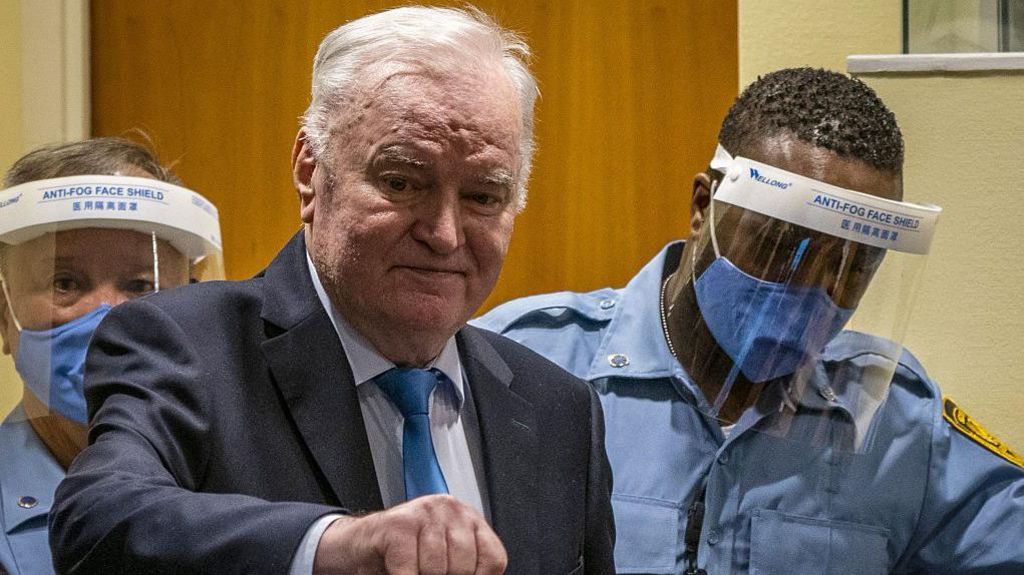
    Eighty-four-year-old convicted Bosnian Serb war criminal Ratko Mladic, infamously known as the “Butcher of Bosnia”, is at the center of a high-stakes legal battle before a United Nations tribunal, as judges prepare to rule on a desperate appeal for his early release on humanitarian grounds.

    Mladic’s path to a cell in The Hague has been decades in the making. First indicted for atrocities during the 1992-1995 Bosnian War, he evaded capture for 16 years after disappearing in 1995, and was only tracked down and arrested in rural Serbia in 2011. He has remained in UN detention ever since, going on trial at the international tribunal in 2012 before receiving a life sentence in 2017 on charges of genocide, war crimes, and crimes against humanity. That conviction was upheld on appeal in 2021.

    The gravity of Mladic’s crimes is well-documented. As commander of Bosnian Serb forces during the breakup of the former Yugoslavia, he oversaw a campaign of ethnic cleansing across Bosnia and Herzegovina, a nearly four-year siege of the capital Sarajevo that killed more than 10,000 civilians, and the 1995 Srebrenica massacre, where 8,000 Bosniak men and boys were systematically executed.

    Now, Mladic’s legal team argues the 84-year-old’s declining health makes continued detention unnecessary and cruel. In a formal submission to the tribunal Friday, his lawyers outlined a rapid deterioration of his condition: Mladic has long been confined to a wheelchair or bed, and recently suffered a suspected stroke during a phone call with his son that left him nearly unable to speak. Two independent doctors who have evaluated Mladic have concluded his condition is critical, with a high risk of imminent death.

    The defense is pushing for immediate provisional or conditional release to a Serbian-language hospital or hospice, an ask widely interpreted as a bid to allow Mladic to return to Serbia to spend his final days. Serbian Justice Minister Nenad Vujic has confirmed the Serbian government is prepared to provide all required assurances to the UN court to facilitate the transfer.

    Mladic’s legal team argues that the current UN detention unit and its on-site prison hospital lack the capacity to provide adequate end-of-life care for the former general. They maintain that keeping Mladic behind bars now constitutes cruel and inhumane punishment, and no longer serves the original goals of his conviction.

    In response to the request, presiding judge Graciela Gatti Santana ordered an independent medical evaluation of Mladic’s health, with final findings due Friday. The assessment is tasked with evaluating the adequacy of his current care, confirming his diagnosis and prognosis, and outlining available treatment options.

    But the appeal has drawn fierce pushback from Bosnian victim and survivor groups, who reject the claim that this is a purely humanitarian request. They argue Mladic’s release bid is nothing more than a calculated legal tactic, pointing to multiple failed attempts by his defense team to secure his freedom in recent months: A similar release request was rejected in July 2025, and an application for temporary release to attend a family member’s memorial was also turned down last November.

    As the international tribunal weighs its decision, Mladic’s son Darko told Serbian media that there has been no recent change to his father’s condition, and he plans to visit him in the prison hospital next week. The ruling on the release bid, which will close one of the most high-profile chapters of international war crime prosecutions stemming from the Yugoslav Wars, is now imminent.

  • China has now dropped tariffs on imports from every African country except 1

    China has now dropped tariffs on imports from every African country except 1

    CAPE TOWN, SOUTH AFRICA – A landmark Chinese trade policy that grants duty-free market access to Africa’s largest economies for a two-year period officially entered into force on Friday, launching at a moment of stark contrast with the United States’ ongoing push for protectionist trade measures under former President Donald Trump.

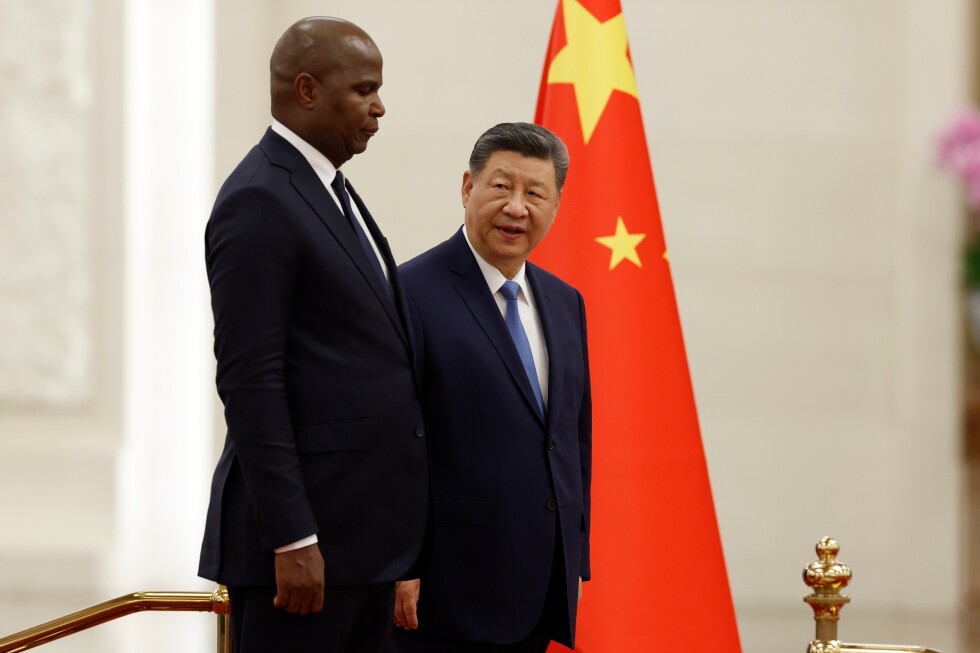
    The new tariff exemption framework covers the 20 biggest economies across the African continent, including regional powerhouses South Africa, Egypt, Nigeria, Algeria and Kenya. Prior to this update, China had already eliminated import tariffs for 33 low-income African nations, bringing the total number of African countries eligible for full tariff-free treatment for their exports to 53 out of the continent’s 54 sovereign states. The sole exception is the small southern African kingdom of Eswatini, which remains the only African country to maintain official diplomatic relations with Taiwan, a self-governing island that China claims as part of its own territory.

    Chinese authorities frame the policy as a concrete step toward shared bilateral growth. The Customs Tariff Commission of China’s State Council emphasized that the initiative will advance mutually beneficial development between China and African trading partners. According to China’s state-run Xinhua News Agency, the first shipment to benefit from the new rules cleared customs in the southern Chinese tech hub of Shenzhen in the early hours of Friday: a 24-metric-ton consignment of fresh apples sourced from South African orchards.

    China’s Ministry of Commerce noted that the policy will deliver particular gains for high-demand African agricultural exports that previously faced import duties ranging from 8% to 30%. These include cocoa from top global producers Ivory Coast and Ghana, coffee and avocados from Kenya, and citrus fruits and wine from South Africa. Combined, Ivory Coast and Ghana control more than half of the world’s total cocoa supply, while South Africa ranks as one of the world’s top exporters of citrus produce.

    The policy rollout comes as many leading African economies have been actively diversifying their export markets away from the U.S., after the Trump administration implemented steep reciprocal tariffs on African goods roughly a year ago. At the height of those measures, South Africa, Africa’s most industrialized economy, faced tariffs as high as 30%, while some other African nations saw rates exceed 40%.

    “South Africa looks forward to working with China in a friendly, pragmatic and flexible manner,” South African Trade Minister Parks Tau stated during bilateral trade talks held in Beijing this past February. Though the U.S. Supreme Court ruled Trump’s broad global tariffs unconstitutional and struck them down in the same month, the former president quickly announced that his administration held “very powerful alternatives” and immediately enacted new temporary import taxes to replace the invalidated measures.

    Today, China already holds the position of Africa’s largest single trade partner, at a time when the continent’s demographic footprint is expanding rapidly: the United Nations projects Africa’s current population of 1.5 billion will nearly double to 2.5 billion by 2050, accounting for more than a quarter of the global population at that time.

    Despite Beijing’s framing of the deal as a win-win for development, analysts point to persistent structural imbalances in the China-Africa trade relationship, alongside billions of dollars in outstanding African sovereign debt owed to Beijing. In 2025, total bilateral trade hit a record high of $348 billion. However, Chinese exports to Africa grew roughly 25% to reach $225 billion over the period, while African exports to China rose only around 5% to $123 billion, widening the existing trade deficit for African nations.

    For decades, the core of the trade relationship has centered on China importing raw materials from Africa and exporting finished manufactured goods back to the continent. Thierry Pairault, a leading China-Africa researcher at France’s National Center for Scientific Research, points out that most African raw material exports – including crude oil and industrial minerals – already enjoyed tariff-free access to Chinese markets before the new policy. While Pairault acknowledges the policy will deliver modest benefits for African agricultural exporters, he argues its broader geopolitical purpose is deliberate.

    “Xi Jinping is positioning China as the antithesis of Western protectionism. This gesture is intended to appeal to both African public opinion and global markets,” Pairault explained in an analysis published by the China Global South Project, a research initiative focused on China’s engagement with low and middle-income nations. Even so, he added, the policy “only applies where it costs China almost nothing.”

  • Ukraine says a strike hit Tuapse oil terminal, the fourth attack on the region in 2 weeks

    Ukraine says a strike hit Tuapse oil terminal, the fourth attack on the region in 2 weeks

    In a sharp escalation of cross-border military strikes amid the ongoing Russia-Ukraine conflict, Ukrainian forces have carried out a new attack on an oil terminal located in Tuapse, a Russian city on the Black Sea coast, Ukraine’s General Staff confirmed Friday. This strike marks the fourth assault on Russian oil infrastructure in the Black Sea region in just over two weeks.

    Ukraine’s top military body confirmed that explosions and a large fire broke out at the terminal site following the strike. Russian local authorities clarified that the blaze was triggered by an incoming Ukrainian drone, and noted that no fatalities or injuries have been reported from the incident.

    Records of repeated attacks show this same Tuapse oil facility was targeted three times earlier this month, on April 16, April 20, and April 28. In a coincidence that underscores the pace of strikes in the region, Veniamin Kondratyev, the governor of Russia’s Krasnodar Krai which administers Tuapse, announced just 24 hours before Friday’s strike that crews had fully extinguished a fire at the city’s oil refinery from a previous attack.

    The strike on Russian infrastructure came as Russian forces launched a wave of large-scale drone attacks across multiple regions of Ukraine Friday, causing civilian casualties and widespread damage to public infrastructure.

    Serhii Nadal, mayor of Ternopil, a major city in western Ukraine, reported that Russia launched more than 50 drones at the city. Strikes hit local industrial sites and key public infrastructure, leaving at least 10 people wounded and cutting power to multiple residential neighborhoods, Nadal said.

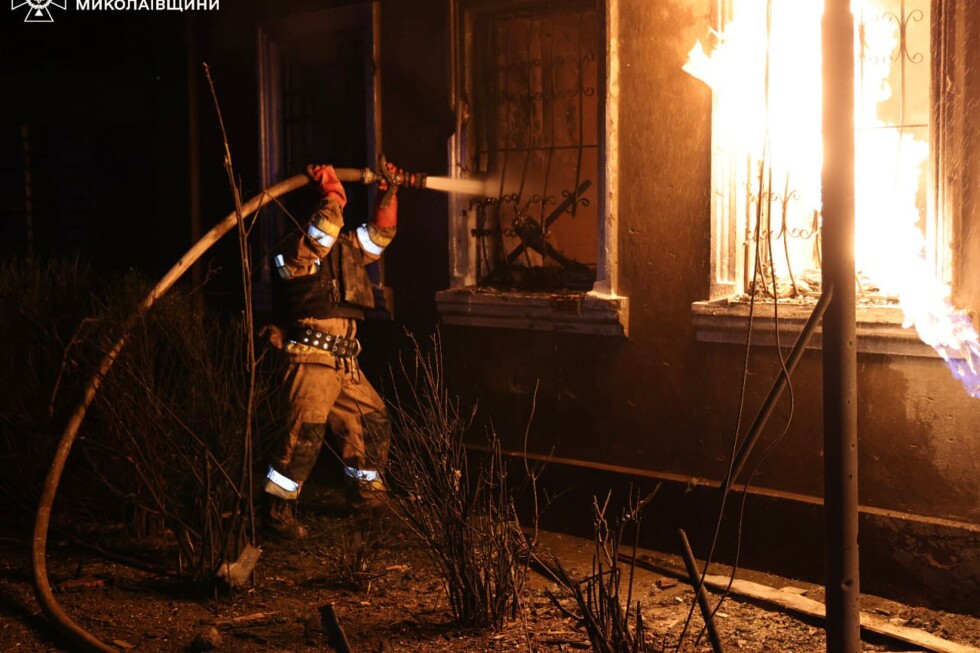
    In southern Ukraine’s Odesa region, overnight Russian drone strikes caused damage to two multi-story residential apartment buildings and local port infrastructure, local emergency management officials confirmed. Ukraine’s State Emergency Service reported that one apartment in a 16-story residential building was completely destroyed by the strike, and the building’s roof caught fire. In a second nearby high-rise, flames engulfed the entire 12th floor.

    Ukrainian President Volodymyr Zelenskyy wrote in a Telegram post Friday that the Odesa strikes left at least five people injured. He added that damage from overnight Russian attacks was also documented in two other Ukrainian regions: the central city of Kryvyi Rih, and the northeastern Kharkiv region, where Russian strikes hit critical railway infrastructure.

    In his statement, Zelenskyy emphasized the scale of Russia’s recent aerial campaign, noting that Russian forces had carried out 210 total drone strikes against Ukraine in recent days, with roughly 140 of those strikes conducted using Iranian-made Shahed attack drones, the most commonly used loitering munition in Russia’s cross-border strikes. “Russia continues to attack our energy infrastructure, critical infrastructure, and civilian objects,” Zelenskyy wrote.

  • Iran offers new proposal amid stalled US peace talks

    Iran offers new proposal amid stalled US peace talks

    Nearly two months into a ceasefire between US-led coalition forces and Iran, hopes for a diplomatic breakthrough have moved forward slightly after Tehran delivered a new negotiating proposal to Washington via Pakistani mediators, Iranian state media confirmed Friday.

    According to Iran’s official IRNA news agency, the full text of the proposal was transferred to Islamabad for onward transmission to US officials on Thursday evening. This development comes after the only completed round of direct peace talks between the two parties ended without progress, even as a cessation of active hostilities has held since April 8. The conflict, launched on February 28 via a surprise joint strike campaign by the United States and Israel, has paused on the battlefield but left a tangled web of economic blockades that are roiling global markets.

    A key point of ongoing friction remains control of the Strait of Hormuz, a critical chokepoint for 20% of the world’s daily oil trade. Iran has continued its restrictions on commercial shipping through the strait, cutting off millions of barrels of oil, natural gas, and fertilizer supplies from global markets. In response, Washington has enforced a full counterblockade of Iranian ports. The Wall Street Journal reported Thursday that US President Donald Trump has instructed national security officials to prepare for the standoff to extend through coming months, a revelation that immediately pushed up global crude prices.

    Speaking in a video published by Iran’s judiciary website Mizan Online, top Iranian judicial official and senior cleric Gholamhossein Mohseni Ejei reaffirmed Tehran’s position on negotiations this week. “The Islamic Republic has never shied away from negotiations,” he said, while adding that Iran would never accept externally imposed terms for a peace deal. Ejei also stressed that Tehran has no interest in resuming full-scale conflict. “We do not welcome war in any way; we do not want war, we do not want its continuation,” he added.

    Even with the ceasefire holding, global markets have remained roiled by the uncertainty of the prolonged standoff. Crude oil prices remain more than 50% higher than pre-conflict levels, as traders price in extended disruption to Hormuz shipping. The European Central Bank opted this week to hold interest rates steady, driven by new concerns that sustained energy price hikes could reignite global inflation.

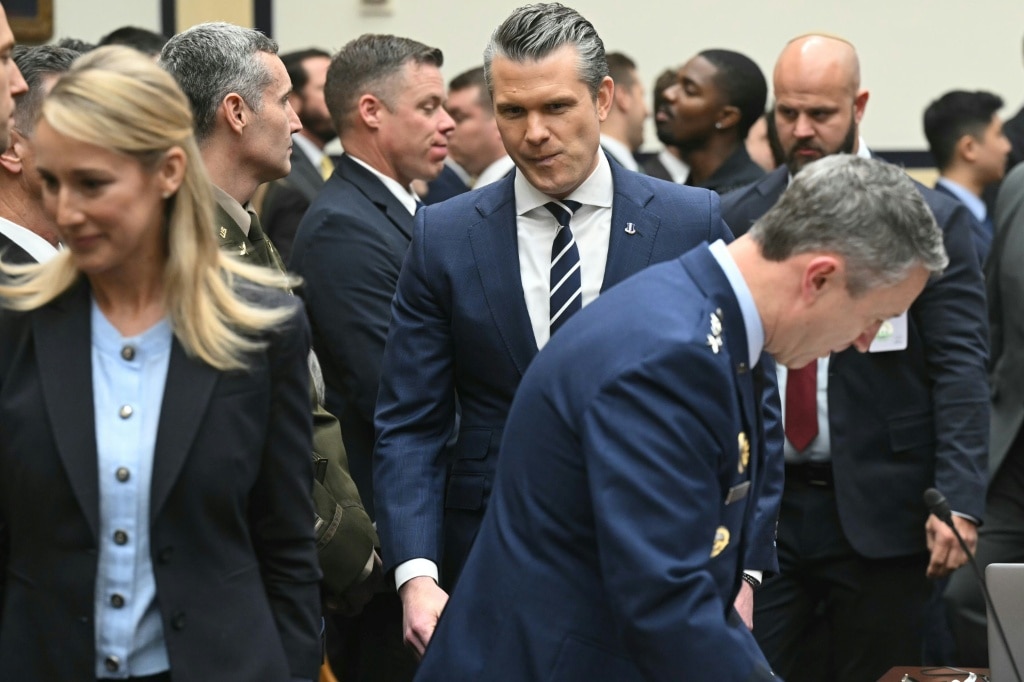
    Domestically, the conflict has amplified political and economic pressure on both sides. In Washington, a bitter legal debate over war powers has broken out, centered on a 60-day deadline for the president to secure congressional authorization for military action under the War Powers Resolution. Trump administration officials, including Defense Secretary Pete Hegseth, argue that the ceasefire has paused the clock on the deadline, claiming active hostilities that began on February 28 have formally ended for the purposes of the law. But critics have pushed back on the claim, and Trump faces growing discontent over the conflict, which has coincided with rising domestic inflation, slower-than-expected economic growth, and looming November midterm elections. US government data released Thursday put national inflation at 3.5%, well above policymakers’ target levels.

    For Iran, the conflict has compounded economic hardship that built up over years of harsh international sanctions. The US Pentagon reported this week that its counterblockade has prevented Iran from exporting $6 billion worth of oil since the conflict began. Iran’s national statistics center shows that domestic inflation, already above 45% before the war, has climbed to 53.7% in recent weeks.

    “For many people, paying rent and even buying food has become difficult, and some have nothing left at all,” Mahyar, a 28-year-old Iranian resident who spoke to AFP on condition of safety, said. He added that the private company he works for has laid off 34 staff, roughly 40% of its total workforce, amid the economic downturn.

    On the diplomatic front, Washington has moved forward this week with plans to launch a new international shipping coalition, branded the “Maritime Freedom Construct”, to restore commercial traffic through the Strait of Hormuz. Trump has repeatedly criticized US allies for dragging their feet on coalition efforts to reopen the waterway. Previously, France and Britain had organized a broader international coalition that pledged to support reopening Hormuz only after a diplomatic peace deal is reached.

    After the US announcement of its separate coalition, French Foreign Minister Jean-Noel Barrot sought to downplay tensions between the two initiatives during a visit to the Gulf this week. Barrot said the two coalitions have different mandates and will complement rather than compete with one another. “The US mission is not of the same nature as the one we established… it comes as a sort of complement,” he explained.

  • Rebels take key military camp in Mali’s north

    Rebels take key military camp in Mali’s north

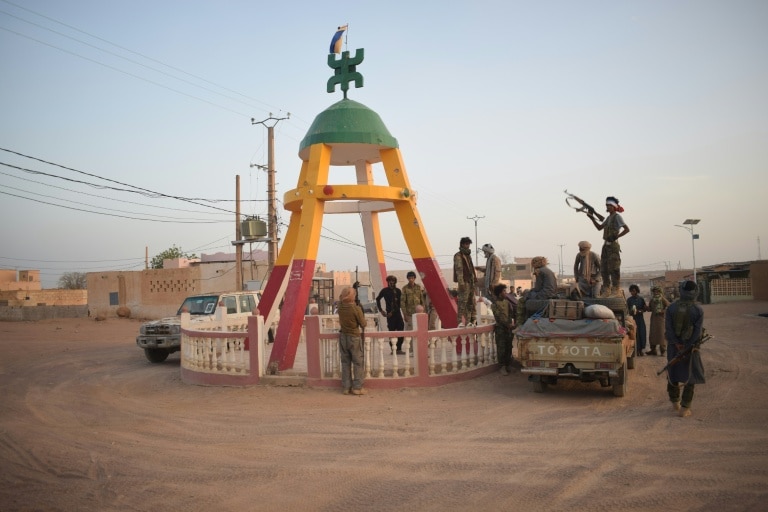
    In a major escalation of armed opposition to Mali’s ruling military junta, a coordinated alliance of Tuareg separatists and al-Qaeda-linked jihadists has captured a key strategic military outpost in the country’s far north, after junta-aligned forces withdrew without major resistance.

    The fall of the Tessalit military base — a strategically critical installation nicknamed a “super-camp” located just kilometers from the Algerian border — was confirmed by multiple independent sources speaking to Agence France-Presse, following a wave of large-scale coordinated attacks across the West African nation that have already killed a top junta leader and left at least 23 other people dead.

    A senior official with the Tuareg-dominated separatist Front for the Liberation of Azawad (FLA), the group leading the rebel advance, confirmed that all remaining Malian army troops and their Russian mercenary allies surrendered the camp and retreated southward ahead of rebel forces entering the area. A security source based in Gao, the largest city in northern Mali located south of Tessalit, confirmed no significant armed clashes broke out during the capture, as regular Malian forces had fully evacuated the base before rebel fighters arrived. A locally elected official in the region further confirmed that Russian mercenary personnel, who have been embedded with Malian troops across the country to counter insurgent movements, also abandoned their positions at the outpost.

    Geopolitical and military analysts have underscored the outsize strategic importance of the Tessalit base. Originally constructed by French colonial authorities, the installation features a well-maintained airstrip capable of accommodating military helicopters and larger fixed-wing aircraft, and its isolated position in the far northern Sahara offers unobstructed monitoring of cross-border movement across the entire Sahara region. Prior to its capture, the base hosted a large contingent of Malian army troops and Russian mercenary allies, and stocked a substantial arsenal of military equipment.

    The capture of Tessalit comes as the culmination of a series of coordinated rebel offensives that mark the most significant armed challenge to Mali’s junta in nearly 15 years. Last weekend, separatist FLA fighters and jihadists from the Group for the Support of Islam and Muslims (JNIM) — an al-Qaeda-affiliated insurgent group — launched coordinated large-scale fatal attacks across multiple key junta strongholds across the country. The attacks included a car bombing at the residence of Mali’s defense minister Sadio Camara, a core leader of the 2020 junta, in the garrison town of Kati near the capital Bamako. Camara, 47, died of his wounds from the attack, and the junta held an official state tribute for him earlier this week. During the weekend offensive, rebel forces also seized full control of the major northern city of Kidal, and FLA leaders have publicly predicted their alliance will soon take control of all of northern Mali and topple the junta entirely.

    Just one day before the fall of Tessalit, JNIM launched a full road blockade of the capital Bamako, permitting only exit for residents already inside the city and cutting off most inbound supply routes. This is not the first time the group has targeted the Malian economy with blockades: late in 2024, JNIM imposed widespread blockades on imported gasoline and diesel trucked into the country from neighboring Ivory Coast and Senegal, in an attempt to cripple government revenue and basic services.

    Mali’s current political trajectory has been shaped by its 2020 military coup, which brought the current junta to power. In the years following the coup, Mali joined neighboring junta-led Burkina Faso and Niger in cutting all diplomatic and security ties with former colonial power France, and aligned closely with the Russian government. Russia has deployed thousands of mercenary fighters to the three Sahel states to support counter-insurgency operations against jihadist groups. Earlier this year, the three nations formed the Alliance of Sahel States (AES), a joint security bloc with a stated combined force of 15,000 troops. Late Thursday, the government of Niger announced that the AES had launched intensive air campaigns across Mali in response to last weekend’s rebel attacks.

  • French hub monitors Hormuz tensions from afar

    French hub monitors Hormuz tensions from afar

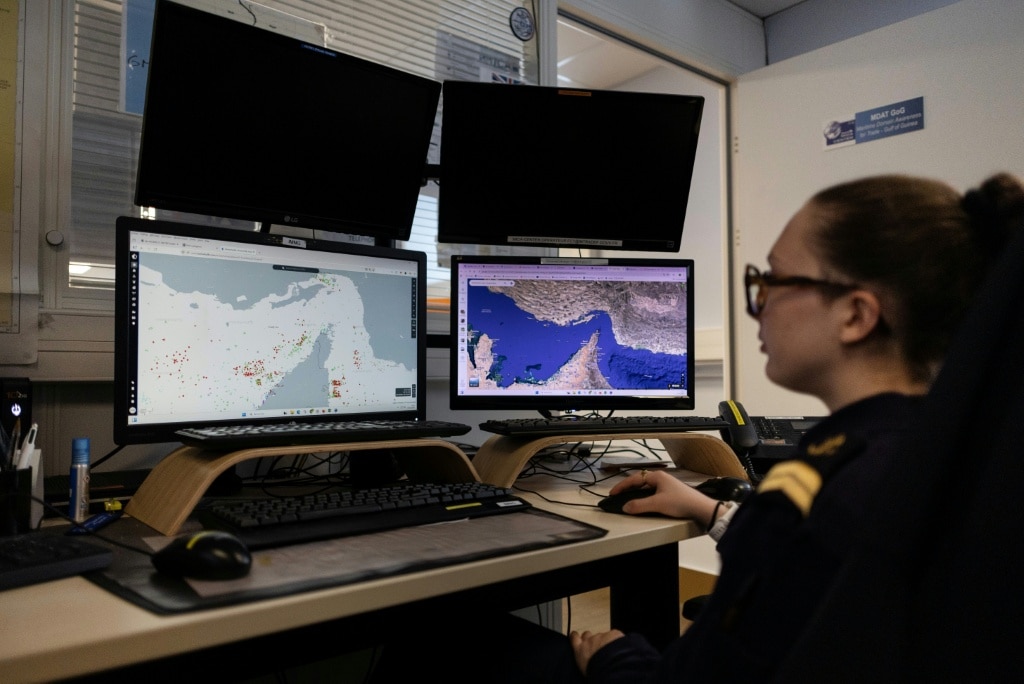
    Thousands of kilometers from the oil-rich waters of the Persian Gulf, a small team of 12 French naval analysts sits hunched over monitoring screens in a basement facility in Brest, tracking every blink of vessel activity signaling shifting danger near the strategic Strait of Hormuz. Since the outbreak of the Iran conflict in late February, this quiet outpost — the Maritime Information Cooperation and Awareness Center, or MICA Center — has become a critical lifeline for hundreds of civilian merchant vessels trapped in the Gulf amid escalating blockades and unpredictable attacks.

    Tensions between Iran and the United States have led to overlapping blockades of the narrow strait, a global energy chokepoint that carried roughly one-fifth of the world’s total crude oil and liquefied natural gas supplies before the conflict began. The standoff has left more than 750 civilian ships stranded on the Gulf side of the passage, with only a tiny number able to successfully exit in recent weeks.

    MICA’s core mission is to deliver real-time security alerts to commercial shipping operators across the globe. When the center’s team detects any sign of bombardment or imminent threat, it immediately dispatches an encrypted alert to all container ships, cargo vessels and cruise liners within a 50-nautical-mile radius of the danger zone. “We share the nature of the event, its context and exact position,” MICA’s commanding officer Thomas Scalabre told Agence France-Presse during an on-site interview. That advance warning allows vessels to react quickly: crews can steer clear of incoming fire or floating debris, or even disable their tracking transponders to avoid being targeted. For context, the strait measures just 29 nautical miles across at its narrowest point, making the 50-nautical-mile alert zone more than sufficient to cover the entire waterway.

    MICA’s monitoring data draws from multiple sources, combining high-resolution satellite imagery, automatic location signals transmitted by ship transponders, and on-the-ground reports shared directly by crews operating in high-risk waters. The center currently provides its monitoring and alert services to 85 major international maritime transport companies, including French shipping giant CMA CGM and Danish industry leader Maersk. While the Strait of Hormuz is currently MICA’s top priority, the facility also monitors security risks across all the world’s open waters, tracking Houthi rebel missile and drone attacks in the Red Sea, piracy operations off the coast of Somalia, and transnational drug smuggling routes.

    Since the outbreak of the conflict on February 28, Scalabre says MICA has documented roughly 40 separate security incidents in and around the Strait of Hormuz, 24 of which were direct attacks by Iranian forces on commercial vessels — some of which have resulted in fatalities.

    France and the United Kingdom have previously announced plans to form a multinational coalition to reopen the strait to safe commercial navigation, but the coalition will not be deployed until after a ceasefire is reached. To date, peace talks aimed at de-escalating the conflict have stalled in recent weeks, leaving merchant shipping in a state of ongoing uncertainty.

    In the absence of a clear resolution, “the rules Iran imposes on navigation remain very unclear and are constantly shifting,” Scalabre explained. This uncertainty extends to which vessels the Iranian Revolutionary Guards Corps (IRGC) may choose to target. “There isn’t necessarily any logic in the IRGC’s targeting policy. We’ve seen many different nationalities and types of vessels” targeted, he added.

    Even nations long viewed as friendly to Iran are not exempt from unprovoked attacks. According to security intelligence firm Vanguard Tech, IRGC gunboats opened fire on the India-flagged tanker Sanmar Herald on April 18 without any prior radio contact, despite India being counted among Iran’s close partners alongside China, Russia, Iraq and Pakistan. Iran has also publicly confirmed it has laid sea mines across the main channel of the strait.

    “What matters is the psychological effect. No one will take the risk of venturing there,” Scalabre said of the persistent threat. While Tehran retains the authority to grant individual ships permission to enter or exit the Gulf through the strait, even approved vessels are not guaranteed safe passage. “Even when they obtain it, the IRGC’s ‘mosquito fleet’ can emerge to block their way,” Scalabre added, referencing the IRGC’s fleet of small, fast attack speedboats that are used to intercept and harass commercial vessels.

    In his office, Scalabre pulled up a satellite image showing a swarm of these small craft moving in to intercept a target: a dozen patrol boats cutting through the water, leaving trails of white wake as they encircle and seize a commercial vessel before it can exit the Gulf. “They sometimes carry out indiscriminate attacks, whether the country is considered friendly or not,” the French naval officer said.

    For the Iranian government, controlling access to the Strait of Hormuz remains one of its most powerful leverage points, Scalabre noted: “For Tehran, controlling the Strait of Hormuz remains one of its trump cards to exert pressure and negotiate a way out of the conflict.”

  • Israeli authorities taking 2 activists from a Gaza-bound flotilla to Israel for questioning

    Israeli authorities taking 2 activists from a Gaza-bound flotilla to Israel for questioning

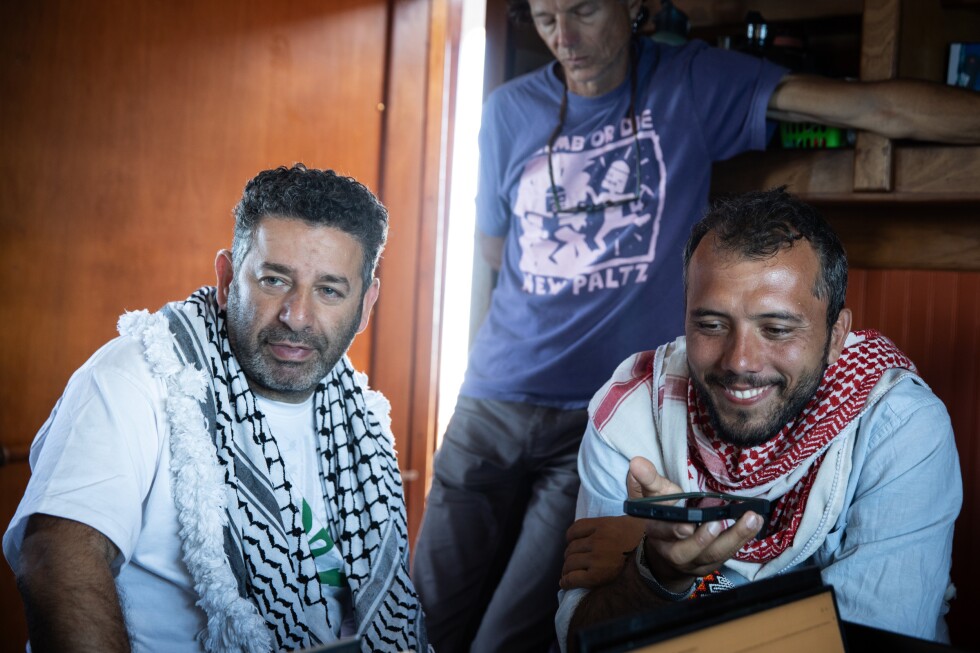
    In an overnight operation between Wednesday and Thursday hundreds of kilometers from Israel and Gaza, Israeli naval forces intercepted a large humanitarian aid flotilla organized by the Global Sumud Flotilla coalition in international Mediterranean waters off the coast of Crete. The interception, which involved 22 vessels and 175 participating activists, has sparked a sharp international dispute over territorial norms, humanitarian access to blockaded Gaza, and allegations of excessive force by Israeli troops.

    Among those detained after the interception are two senior members of the flotilla’s steering committee: Saif Abukeshek, a Spanish-Swedish citizen of Palestinian descent, and Thiago Ávila, a Brazilian national. According to Israeli officials, the pair are being transferred to Israel for formal interrogation. Israeli authorities have leveled unsubstantiated claims that Abukeshek is linked to a terrorist organization, while Ávila has been labeled a suspect in unspecified illegal activity, with no supporting evidence released to the public as of Friday.

    Flotilla organizers have issued a scathing account of the Israeli operation, accusing commandos of storming participating vessels, damaging ship engines, and committing widespread abuse against detainees. In an official statement released Friday, the coalition claimed Israeli forces denied detained activists access to food and clean water, and intentionally flooded the floors where detainees were forced to sleep. When a group of activists resisted the removal of Abukeshek and Ávila, organizers say Israeli forces responded with brutal violence: participants were punched, kicked, dragged across decks with their hands bound behind their backs, and suffered serious injuries including broken noses, fractured ribs, and severe bruising from beatings. Organizers also claim gunshots were fired during the clash. In total, 34 activists holding citizenship from countries including the United States, Australia, Colombia, Italy, and Ukraine required hospital treatment for their injuries after disembarking in Crete.

    Israeli officials have defended the interception, saying early action was necessary to stop the flotilla before it could reach Israeli territorial waters, given the large number of vessels participating. Israeli Foreign Minister Gideon Saar claimed Thursday that all activists removed from the vessels were taken into custody unharmed, and authorities have not issued any formal response to the specific allegations of abuse and mistreatment. Prior to this operation, 53 vessels were part of the flotilla’s deployment, which launched earlier this month from Barcelona, Spain. Organizers note that 31 of those vessels have now reached safe international waters, and will continue their stated mission to break what they call Israel’s illegal naval blockade of Gaza.

    Diplomatic reactions to the incident have split along familiar geopolitical lines. Spanish Foreign Minister José Manuel Albares issued an immediate audio statement Friday calling for Abukeshek’s immediate and unconditional release, adding that roughly 30 other Spanish citizens who disembarked in Crete have already received consular support from the Spanish embassy in Greece. Greek authorities have confirmed they requested Israel withdraw its naval vessels from the interception area, and offered to facilitate the disembarkation and repatriation of remaining activists through diplomatic good offices. Lara Souza, Ávila’s wife, told reporters the pair’s current location remains unclear, with Brazilian officials warning that securing their release will become far more complicated if they are transferred into Israeli territory. The Brazilian Foreign Ministry has not yet responded to requests for comment from the Associated Press.

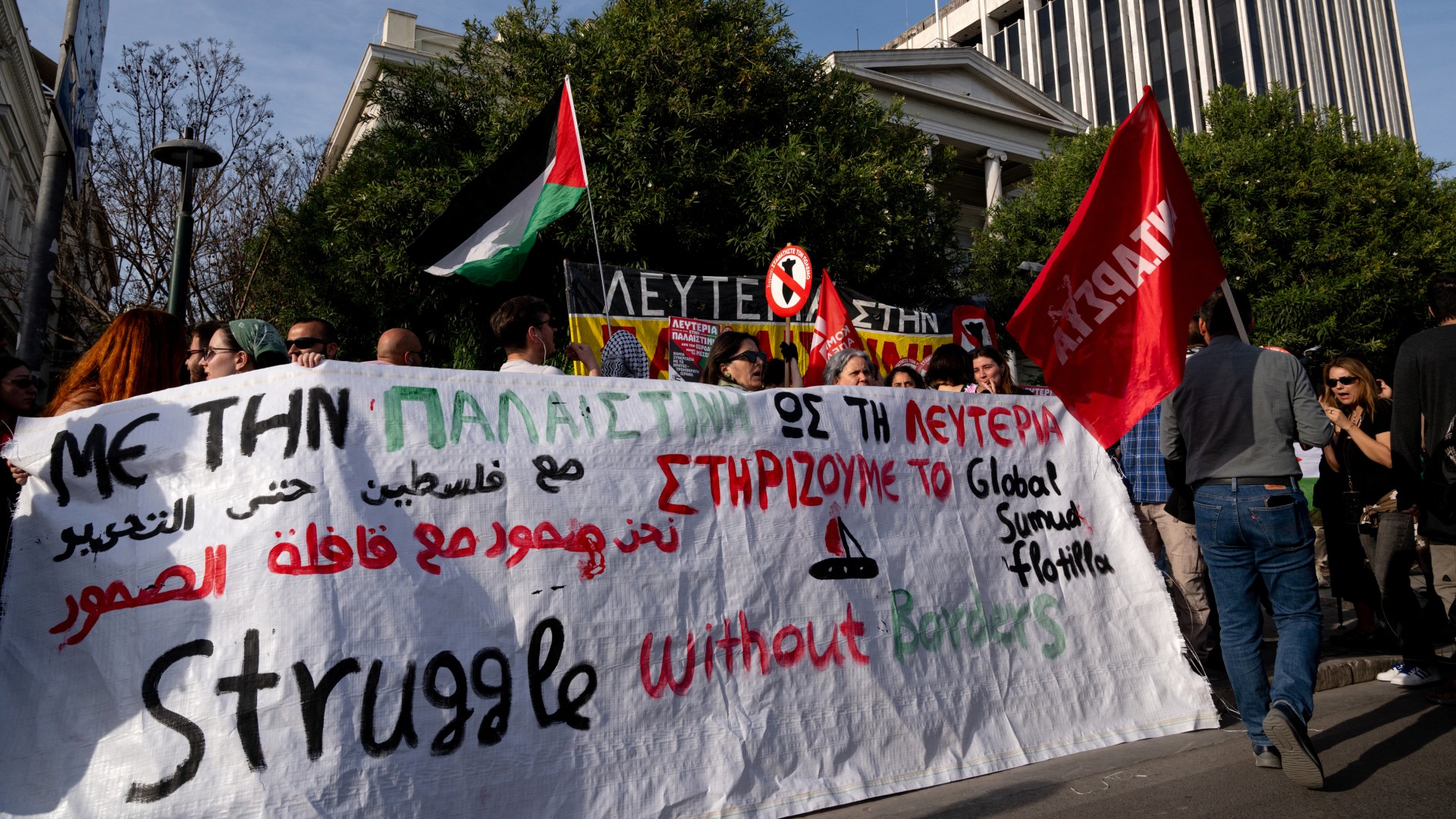
    The United States has publicly aligned with Israel in condemning the flotilla, characterizing the mission as a “pro-Hamas political stunt.” In a statement posted to the social platform X, the U.S. State Department said it expects all U.S. allies, particularly those that have endorsed former President Donald Trump’s 20-point ceasefire plan for Gaza, to take decisive action against the initiative, including denying the flotilla’s vessels access to national ports. Solidarity protests in support of the flotilla and detained activists have already broken out in major capitals across the globe, including Rome, Athens, and Istanbul.

    This is not the first time Israeli authorities have blocked the Global Sumud Flotilla’s efforts to deliver aid to Gaza. Less than a year ago, Israel intercepted an earlier mission involving roughly 50 vessels and 500 activists, including high-profile participants such as climate activist Greta Thunberg, Mandla Mandela (grandson of anti-apartheid leader Nelson Mandela), and multiple sitting lawmakers. All participants were arrested, detained, and eventually deported, including Ávila, who previously accused Israeli authorities of abusing him during detention — claims that Israeli officials have repeatedly denied.

  • US imposes sanctions on DR Congo ex-President Kabila alleging rebel support

    US imposes sanctions on DR Congo ex-President Kabila alleging rebel support

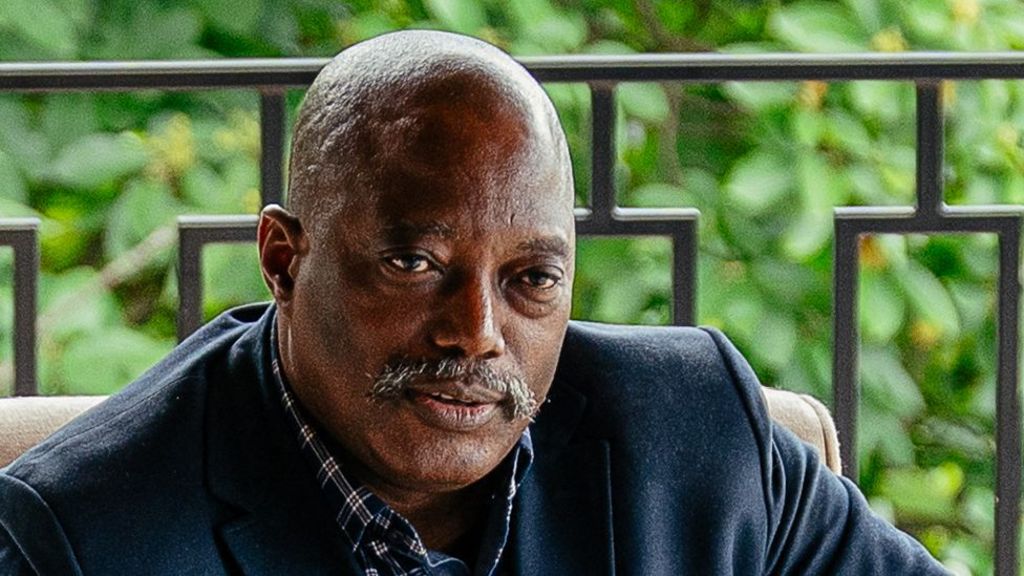
    The United States has announced wide-ranging sanctions against former Democratic Republic of Congo (DRC) President Joseph Kabila, leveling serious accusations that the long-time former leader has provided direct support to the M23 rebel group active in eastern DRC.

    According to U.S. officials, Kabila has delivered critical financial backing to the insurgent group, encouraged defections from the official Congolese national army, and even plotted to launch coordinated attacks against Congolese military forces from his base outside the country. The 54-year-old ex-president, who held the DRC’s highest office for 18 years starting in 2001, has not issued any public response after the BBC reached out for comment on the new sanctions. Kabila’s current location remains unconfirmed publicly, though he entered self-imposed exile in South Africa in 2023; he was last spotted publicly one year ago in Goma, a major eastern DRC city that is currently controlled by M23 forces.

    This latest punitive action by Washington is framed as a key component of its broader efforts to uphold the 2024 peace deal between DRC and neighboring Rwanda that the U.S. helped broker. The U.S. has long alleged that Rwanda provides military and logistical support to M23, a claim that Kigali has repeatedly denied despite overwhelming independent evidence to the contrary. Rwandan officials maintain that any military presence they have in the border region is strictly a defensive measure to counter cross-border security threats from armed groups based in eastern DRC. Washington previously sanctioned top Rwandan army commanders over their ties to M23 back in March 2025.

    In its official statement announcing the sanctions, the U.S. Treasury Department claims Kabila’s ultimate goal is to destabilize the current DRC government based in Kinshasa, clearing the way for an allied opposition candidate to seize power and restore his political control over the country. Under the newly imposed measures, all assets owned by Kabila that fall under U.S. jurisdiction are immediately frozen, and any U.S. citizen or registered company is prohibited from conducting financial or commercial activity with the former president. Global financial institutions and foreign business partners have also received formal warnings against engaging in even indirect transactions with Kabila, with violations carrying severe civil and criminal penalties. U.S. officials note the sanctions serve both as a punitive measure and a tool to force a change in Kabila’s behavior, sending a clear signal that Washington is prepared to target even former heads of state accused of fueling deadly conflict in central Africa.

    Eastern DRC has been plagued by persistent armed conflict for decades, with dozens of competing armed groups vying for control of the region’s resource-rich territory. M23 launched major offensive operations in early 2025, seizing large swathes of land and multiple major population centers in the area. Beyond advancing regional peace and security goals, the U.S. says the new sanctions against Kabila will also strengthen a recent regional economic agreement focused on improving transparency in global critical mineral supply chains. Last December, the U.S. and DRC formalized a bilateral partnership to expand U.S. access to DRC’s massive reserves of strategically critical minerals, including cobalt, coltan, and copper, all of which are core inputs for global clean energy and electronics manufacturing.

    The punitive actions against Kabila are not limited to international sanctions: last September, a Congolese military court sentenced the former leader to death in absentia after convicting him of war crimes and treason tied to his alleged support for M23. Kabila rejected the charges as politically motivated and arbitrary, and refused to appear in court to mount a defense against the accusations.