分类: world

  • Once on the back foot, Myanmar’s military now looks set to resume offensive in bloody civil war

    Once on the back foot, Myanmar’s military now looks set to resume offensive in bloody civil war

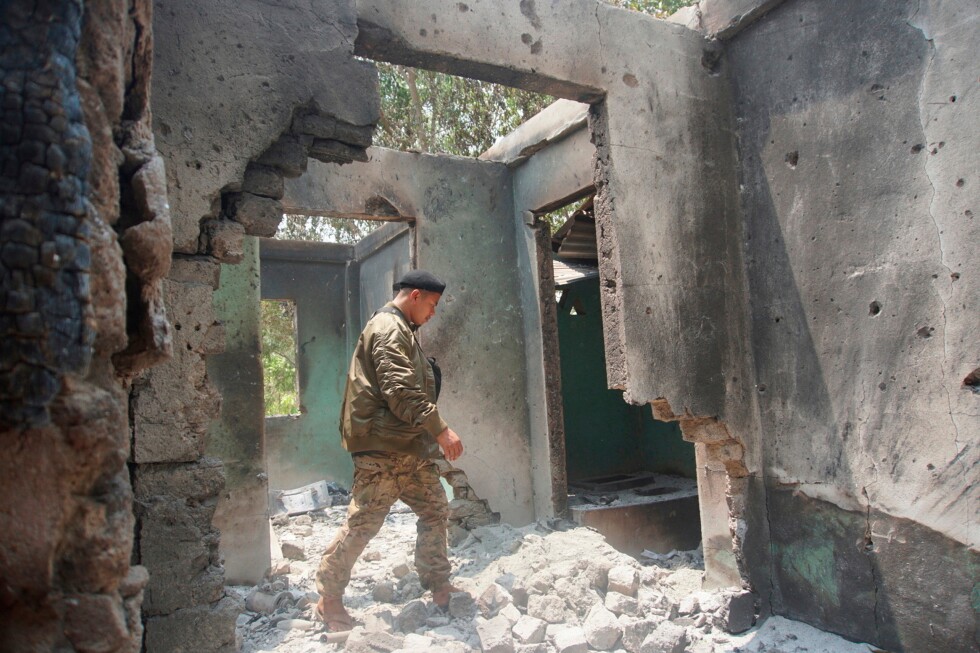
    Just 14 months ago, Myanmar’s military junta found itself on the brink of strategic collapse in the country’s brutal ongoing civil war. An alliance of veteran ethnic militias had pushed junta forces out of vast territories in northern Myanmar, while pro-democracy guerrilla groups and long-standing opposition factions forced the military into defensive positions across nearly every other region of the country. Today, that dynamic has flipped dramatically, reshaping the trajectory of a conflict that has displaced millions and killed tens of thousands since the 2021 military coup.

    Fueled by a massive expansion of its ranks from tens of thousands of newly conscripted troops, the Tatmadaw – Myanmar’s official military – has clawed back significant swathes of territory it lost in 2023, and is now positioning to launch a broad new national offensive. In contrast, the anti-junta resistance movement has been crippled by key defections, internal factional infighting, and crippling supply shortages that have weakened its operational capacity across multiple front lines.

    “I think we’re nearing a crescendo here where the Tatmadaw is going to reassert itself and the large-scale organized resistance movement is going to peter out,” explained Morgan Michaels, a Singapore-based analyst with the International Institute of Strategic Studies who leads the organization’s Myanmar Conflict Map project. “That doesn’t mean scattered armed resistance will disappear entirely – armed resistance will always continue in Myanmar until there’s a comprehensive, negotiated political solution. But the Tatmadaw has retaken the strategic initiative, and every major development now plays to its advantage.”

    Five years of continuous conflict – a timeline that stretches back to the immediate aftermath of the 2021 coup that ousted the elected civilian government of Aung San Suu Kyi – has left both anti-junta fighters and the general public deeply war-weary. The conflict has claimed more than 8,000 civilian lives and forced more than 3 million people to flee their homes, according to UN estimates. “There are many saying that the local population doesn’t care much who will win the war, but just want the fighting to stop,” noted Aung Thu Nyein, a Myanmar-based political analyst who currently works in neighboring Thailand, in an interview with the Associated Press.

    Beyond internal fatigue, the resistance has also been undermined by shifting geopolitical pressure from China, which holds massive economic and strategic stakes in Myanmar. Myanmar is a critical supplier of rare earth elements and other key natural resources to Beijing, which has invested billions of dollars in cross-border infrastructure including oil and gas pipelines, mines, and connectivity projects. China is also one of the Tatmadaw’s two largest arms suppliers, alongside Russia, and maintains significant influence over ethnic paramilitary groups that operate along the Sino-Myanmar border.

    Initially, Beijing supported the major October 2023 anti-junta offensive launched by the Three Brotherhood Alliance, a coalition of three ethnic armed organizations (EAOs), because it was angered that the military government had allowed rampant transnational organized crime to spread in border regions. But that support quickly evaporated: China cut off all arms and ammunition supplies to the alliance and pressured its members to halt offensive operations. Today, two of the alliance’s three core members – the Myanmar National Democratic Alliance Army and the Ta’ang National Liberation Army – have signed Chinese-brokered ceasefires with the Tatmadaw, leaving only the Arakan Army still active in combat in western Rakhine State.

    The anti-junta resistance is split between two broad blocs: the long-standing ethnic minority EAOs that predate the 2021 coup, and newer pro-democracy People’s Defense Forces (PDFs) that formed after the coup, most of which are affiliated with the National Unity Government (NUG), a shadow administration formed by ousted members of Suu Kyi’s National League for Democracy. Resistance leaders warn that persistent divides between these groups have left them vulnerable to the Tatmadaw’s renewed momentum.

    “Although there is a shared understanding of the need to overthrow the military dictatorship and move toward a future federal union, there are still gaps and differences in overall grand strategy and tactics,” said the Burma Liberation Democratic Front, a pro-democracy resistance group active in Sagaing and Mandalay regions, in a written statement to AP. “There are still differences in positions, perspectives, and approaches. Many continue to hold onto ethnic, regional, and organizational interests and attachments.” The group added that the Tatmadaw is actively exploiting these rifts, pursuing a classic divide-and-conquer strategy to fuel divisions between the public and revolutionary forces, across ethnic lines, and between separate resistance factions.

    On the political front, the Tatmadaw has recently consolidated its international standing, most notably after holding a contested general election earlier this year. The election was widely dismissed by UN experts and Western governments as neither free nor fair, with all major opposition candidates barred from running, but it allowed junta leader Min Aung Hlaing – the senior general who led the 2021 coup – to be sworn in as president earlier this month, adding a veneer of democratic legitimacy to his authoritarian rule. China, which publicly supported the election, was quick to congratulate Min Aung Hlaing and dispatched its foreign minister for an in-person meeting just days after his inauguration. The election also freed up thousands of troops who had been deployed to provide poll security, allowing the Tatmadaw to reallocate those forces to front-line combat operations, Michaels noted.

    One of Min Aung Hlaing’s first acts as president was to announce a new offer of peace talks to all armed resistance groups, including both EAOs and PDFs, though the NUG was deliberately excluded from the invitation. The NUG immediately rejected the offer, denouncing it as a tactic to prolong military rule. The junta’s offer, published in the state-run *Global New Light of Myanmar*, set a July 31 deadline for groups to join talks, and included a caveat that resistance groups may not bring “unrealistic demands” to the negotiating table. No details were provided on consequences for groups that refuse the invitation, and the junta did not respond to requests for comment from AP.

    Even as it extends the offer of talks, the Tatmadaw has continued to press offensive operations across multiple fronts. It is currently conducting a large-scale assault in Sagaing Region aimed at retaking the northern city of Indaw, which fell to PDF forces backed by the Kachin Independence Army last year. At the same time, the military remains on the defensive in eastern Myanmar, where the Karen National Liberation Army is advancing on a key junta stronghold near the Thai border.

    Analysts say Min Aung Hlaing’s peace offer is likely an attempt to revive the decade-old Nationwide Ceasefire Agreement, which brought relative calm to parts of Myanmar by signing on roughly half of the country’s EAOs. For now, however, incremental, localized ceasefires appear to be the junta’s immediate goal. “In the short term if you can agree to ceasefires with some groups, then you can redirect your resources toward other groups that are either unwilling to agree to a ceasefire or that the Tatmadaw is unwilling to agree to a ceasefire with,” Michaels explained. “The Tatmadaw can always accept some degree of opposition and, in fact needs some level of active armed resistance to justify its rule and justify its behavior. But the current level of widespread armed resistance across the country is not tenable for the junta.”
  • US charges Mexican governor and other leaders with aiding drug cartel

    US charges Mexican governor and other leaders with aiding drug cartel

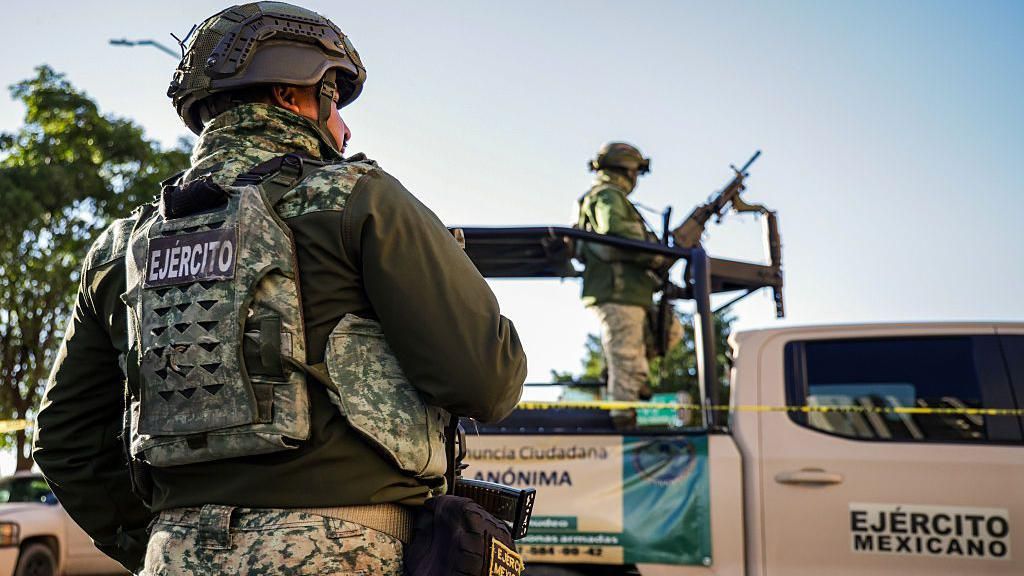
    In an unprecedented move that has rattled U.S.-Mexico relations, federal prosecutors in New York unveiled a sweeping indictment Wednesday charging Rubén Rocha Moya, the sitting governor of Mexico’s Sinaloa state, with conspiring with the notorious Sinaloa Cartel to smuggle massive volumes of narcotics into the United States. Rocha Moya, a member of Mexican President Claudia Sheinbaum’s ruling political party, is one of 10 current and former Mexican government officials named in the case, which also includes a sitting senator, a high-ranking police commander, a mayor, and other former public servants.

    The indictment, issued by the U.S. Attorney’s Office for the Southern District of New York, alleges that the group abused their positions of public trust to protect Los Chapitos, one of the dominant warring factions of the Sinaloa Cartel, in exchange for millions in bribes and political backing for their careers. Sinaloa state, where Rocha Moya serves as governor, is the historic birthplace and base of operations for the Sinaloa Cartel, which the U.S. government has formally designated as a terrorist organization.

    “The Sinaloa Cartel is not just trafficking deadly drugs, it is a designated terrorist organization that relies on corruption and bribery to drive violence and profit,” DEA Administrator Terrance Cole said in a statement announcing the charges. “These public officials used positions of trust to protect cartel operations, enabling a pipeline of deadly drugs into our country.”

    U.S. Attorney Jay Clayton echoed that sentiment, emphasizing that transnational drug trafficking networks depend on institutional corruption to operate unimpeded. “As the indictment lays bare, the Sinaloa cartel, and other drug trafficking organisations like it, would not operate as freely or successfully without corrupt politicians and law enforcement officials on their payroll,” Clayton said.

    Rocha Moya has forcefully and categorically rejected all allegations against him, framing the indictment as a political attack not just on his person, but on the ruling party’s signature domestic policy project, known as the Fourth Transformation. “This attack isn’t only against me, it’s against the Fourth Transformation,” Rocha Moya wrote in a post on the social media platform X.

    The charges have already triggered a sharp pushback from the Mexican government. In an official statement released shortly after the indictment was made public, Mexico’s foreign ministry said the arrest and extradition requests submitted by the U.S. Embassy lack sufficient evidentiary basis, noting that the documents “do not include the elements of proof” required to proceed with the requests. Mexican authorities have launched an independent internal review to assess whether the U.S. allegations hold legal merit, a process that will be overseen by the country’s Attorney General’s office, which will make the final determination on extradition if formal requests move forward.

    Attorney general spokesperson Ulises Lara confirmed the domestic probe in a video posted to social media, stating that the review would determine “if the accusation made by U.S. authorities has legal grounds.”

    Legal and foreign policy experts note that the indictment of a sitting sitting governor from Mexico’s ruling party is an extremely rare development in bilateral relations, and it creates a major diplomatic challenge for President Sheinbaum, who took office recently. The charges also mark the latest escalation in an aggressive anti-cartel strategy launched by the Trump administration targeting both drug trafficking networks and the official corruption that enables their operations. Sinaloa Cartel has been locked in a violent internal power struggle between competing factions for years, a conflict that has sent shockwaves through northern Mexico and contributed to record drug overdose deaths in the U.S. tied to fentanyl trafficking.

  • Countries end Colombia fossil fuel summit with focus on next steps and financing

    Countries end Colombia fossil fuel summit with focus on next steps and financing

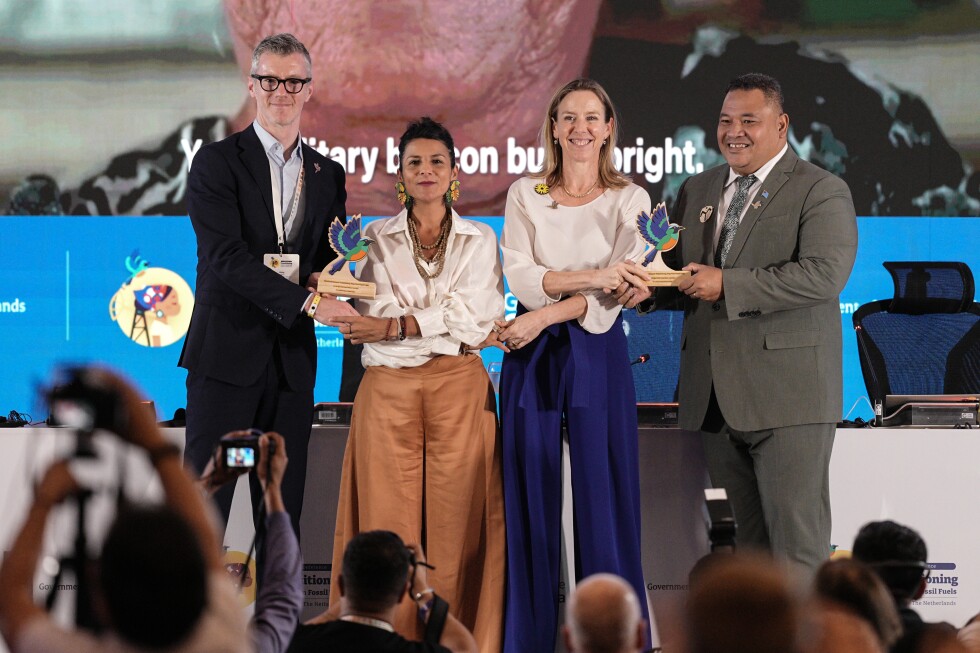
    On Wednesday, a groundbreaking international conference focused on phasing out fossil fuels drew to a close in the Caribbean coastal city of Santa Marta, Colombia, marking a historic shift in global climate policy conversations. For the first time in three decades of formal climate negotiations, delegates from 56 countries gathered to directly address the question of how to wind down oil, gas, and coal production — the primary driver of anthropogenic global warming — rather than debating whether such a transition is necessary. What began as an exploratory dialogue has laid the foundation for ongoing global cooperation, with financing for developing nations emerging as the most pressing obstacle to a just, widespread transition.

    The gathering brought together a diverse cross-section of stakeholders beyond national government negotiators, including climate advocates, financial experts, Indigenous community leaders, youth representatives, and subnational authorities. Unlike formal United Nations climate conferences (known as COPs), which are often rigid and marked by pre-negotiated positional stances, participants described the Santa Marta meeting as having an unusually open, collaborative atmosphere. Former Irish President Mary Robinson, a leading voice for climate justice, noted that the tone of dialogue set this gathering apart from traditional UN talks, with participants engaging in more human, cooperative problem-solving rather than sticking to inflexible official lines.

    Prior global climate negotiations have long centered on cutting end-use emissions rather than targeting the root of the climate crisis: fossil fuel extraction and production itself. This landmark meeting reoriented the conversation to tackle the full scope of the transition, including coordination between fossil fuel producing and consuming nations, support for workers shifting out of fossil fuel sectors, and managing the broader economic impacts of winding down production. While the conference did not produce legally binding commitments, it delivered tangible initial outcomes: agreements for ongoing cross-country collaboration, the establishment of dedicated working groups focused on financing and just labor transitions, and renewed momentum for future global negotiations to coordinate a coordinated fossil fuel phaseout.

    Discussions repeatedly centered on financing as the single most urgent barrier to progress. Many low- and middle-income nations in the Global South face unsustainable debt burdens, high global borrowing costs, and limited access to affordable capital for renewable energy development, even as renewables have become cheaper than fossil fuels in most parts of the world. Tzeporah Berman, founder and chair of the Fossil Fuel Non-Proliferation Treaty Initiative, explained that many developing countries are pushed to expand new fossil fuel projects solely to service their existing debt, trapping them in a cycle of dependency that is incompatible with climate action. Participants also highlighted how restrictive domestic fiscal policies and structural inequities in the global financial system slow transition progress, noting that traditional macroeconomic responses to inflation can inadvertently hamper investment in the clean energy transition. Ana Toni, CEO of the upcoming COP30 hosted by Brazil, called for greater engagement from finance ministers to develop targeted solutions to the fiscal challenges of the transition.

    The conference also forged a new, inclusive alliance that brings together major economies and the world’s most climate-vulnerable nations, a dynamic that participants said has been missing from many prior climate efforts. While the U.S. federal government was not invited — organizers framed the gathering as a space for nations already aligned on the goal of phasing out fossil fuels — a senior official from California attended as an independent observer, noting that clear policy and regulatory certainty is critical to unlocking private sector investment for the transition.

    Indigenous participants raised important questions about inclusive decision-making, noting that Indigenous communities have long been frontline stewards of forest ecosystems that absorb carbon, but their knowledge and voices are often sidelined in global climate processes. Patricia Suárez, an adviser to the National Organization of Indigenous Peoples of the Colombian Amazon, emphasized that any just transition must center Indigenous territorial rights and acknowledge the critical role these communities play in addressing the climate crisis, while calling for meaningful representation in all upcoming transition initiatives.

    In a moment that drew resounding applause from delegates, attendees announced that the next fossil fuel transition conference will be co-hosted by Tuvalu, a low-lying Pacific island nation extremely vulnerable to sea-level rise, and Ireland. The pairing of a climate-vulnerable developing state and a wealthy developed European nation reflects a deliberate effort to bridge global divides in perspective and responsibility for the transition. Tuvalu’s Minister of Home Affairs, Climate Change and Environment Maina Vakafua Talia noted that hosting the conference will highlight the lived, on-the-ground impacts of fossil fuel emissions, and that future talks will prioritize delivering concrete, actionable outcomes rather than non-binding statements. “If we are to address the climate change issue, we have to address the root cause, and the root cause is the fossil fuel industry,” Talia said, adding that delegates are eager to put concrete solutions and actionable steps on the table at the next gathering.

    Senior policy observers noted that the conference signals a growing global appetite for moving beyond broad climate pledges to targeted, practical action on the core driver of climate change. “Santa Marta has delivered something valuable: a genuine demonstration that climate action remains a priority, and real appetite for specific solutions,” said Vance Culbert, senior policy adviser at the International Institute for Sustainable Development, adding that the initiative will help give the global fossil fuel transition a more coherent, powerful foundation.

  • New Zealand court rejects appeal by mosque gunman to abandon his guilty pleas

    New Zealand court rejects appeal by mosque gunman to abandon his guilty pleas

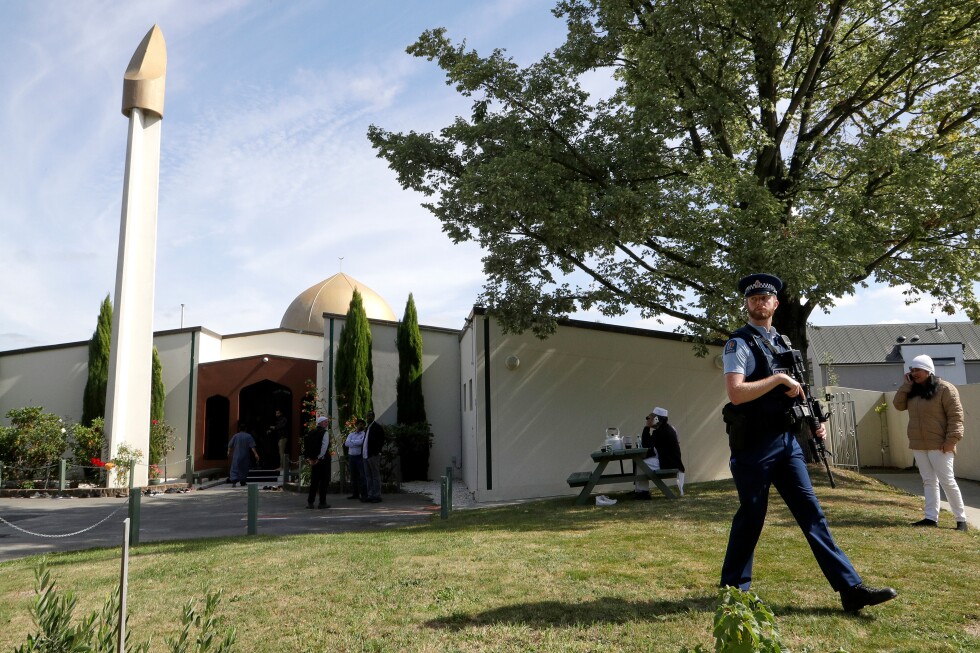
    WELLINGTON, New Zealand – In a ruling that brings renewed closure to survivors and grieving families of the 2019 Christchurch mosque attacks, New Zealand’s Court of Appeal has dismissed white supremacist Brenton Tarrant’s bid to reverse his guilty pleas on charges of terrorism, murder, and attempted murder.

    Tarrant, a 35-year-old Australian national, carried out one of the worst mass shootings in New Zealand’s modern history in March 2019. Targeting two Christchurch mosques during Friday prayers, he opened fire with semiautomatic weapons, killing 51 Muslim worshippers and wounding dozens more. He streamed the attack live online and published a lengthy manifesto detailing his violent white supremacist ideology under his real name.

    In March 2020, Tarrant entered guilty pleas to all charges against him, a decision that spared the nation the trauma of a prolonged high-profile trial that many feared would give the extremist a platform to amplify his hateful rhetoric. On Thursday, a three-judge panel rejected Tarrant’s latest claim that harsh prison conditions had forced him to enter the guilty pleas against his will, noting first that the appeal was filed a staggering 505 days after the statutory deadline.

    During a five-day hearing held in February, Tarrant, who has since dismissed his original legal team, also argued that his guilty pleas were the product of “irrationality” caused by poor mental health, claiming he had temporarily abandoned his racist views at the time of the plea deal. The three judges on the panel uniformly rejected this argument, finding Tarrant’s accounts of mental illness to be inconsistent and unsupported by evidence from prison staff, independent mental health professionals, and his former legal representatives.

    In their written ruling, the judges emphasized: “He was not suffering from a mental impairment or any other form of mental incapacity which rendered him unable to voluntarily change his pleas to guilty. He endeavoured to mislead us about his state of mind in a weak attempt to advance an appeal in circumstances where all other evidence demonstrated that he made an informed and totally rational decision to plead guilty.”

    The ruling also revealed an unusual procedural twist: shortly after Tarrant presented his case at the February hearing, he attempted to abandon the appeal himself. Judges rejected that request, noting that the case carried profound public importance and required a final, formal resolution. Court documents suggest Tarrant made the move to drop the appeal after recognizing his argument was unlikely to succeed, but New Zealand law does not require courts to allow appellants to withdraw a pending appeal once proceedings are underway.

    Tarrant is currently serving a life sentence without the possibility of parole at Auckland Prison, a sentence handed down in August 2020. The Court of Appeal did grant Tarrant’s request to abandon a separate planned appeal of his life sentence, which had been scheduled for hearing in 2026.

    Court records confirm that Tarrant relocated to New Zealand from Australia in 2017, already planning the mass attack. He spent nearly two years accumulating weapons and conducting surveillance on the target mosques before carrying out the shooting. At the time of his guilty plea, he acknowledged the overwhelming weight of evidence against him, including the self-filmed livestream of his attack and his own publicly released manifesto laying out his racist motivations. Thursday’s ruling closes another chapter in the aftermath of the attack, preventing a retrial that would have re-traumatized victims and their families.

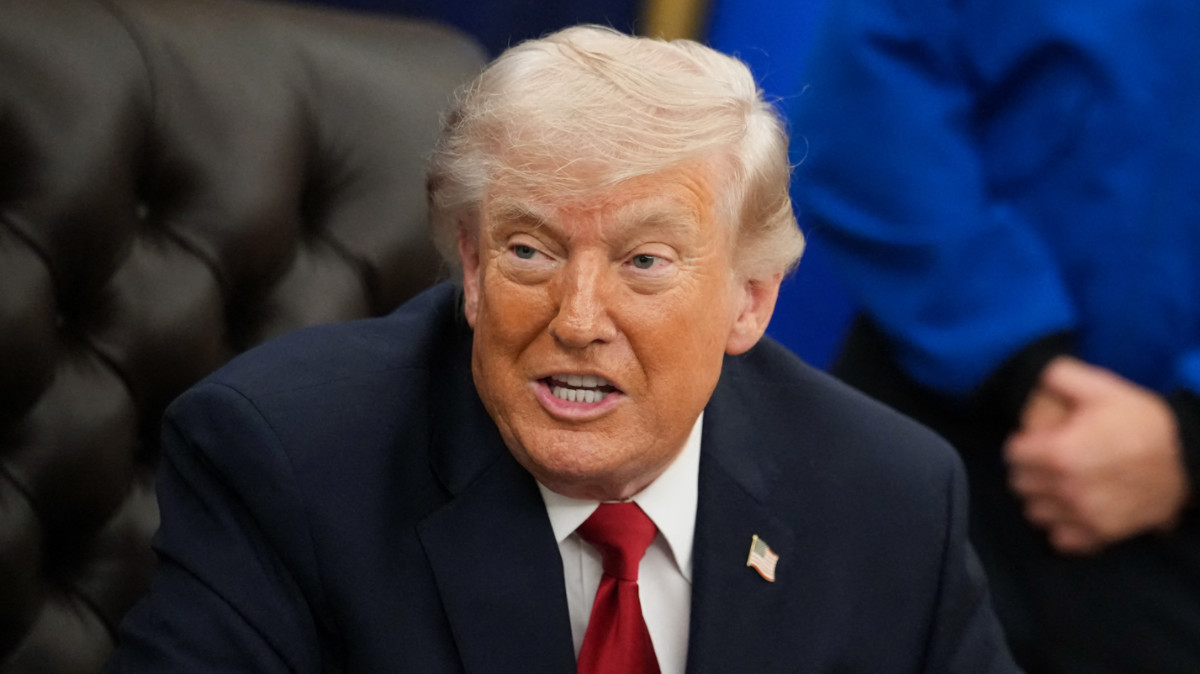
  • Trump says Iran is ‘choking like a stuffed pig’, as he mulls extending blockade

    Trump says Iran is ‘choking like a stuffed pig’, as he mulls extending blockade

    As the protracted US-Israeli military campaign against Iran shows no immediate sign of de-escalation, former US President Donald Trump rejected a landmark Iranian peace initiative on Wednesday that aimed to lift reciprocal blockades of the strategically critical Strait of Hormuz and postpone divisive nuclear negotiations to a future date.

    Multiple independent US media outlets have confirmed that the White House is actively considering extending its naval blockade of Iranian ports and oil infrastructure for multiple months, a plan that was outlined directly to senior US oil industry executives during a closed-door meeting with Trump. The news of the extended blockade triggered immediate volatility in global energy markets, a key barometer of geopolitical risk in the Middle East. Brent Crude, the global benchmark for international oil trade, jumped 7.5% by mid-day Wednesday to settle at $107.49 per barrel.

    On his social media platform Truth Social, Trump doubled down on his hardline stance toward Tehran, writing, “Iran can’t get their act together. They don’t know how to sign a nonnuclear deal. They better get smart soon!” The post was paired with a doctored image showing Trump carrying a rifle against a backdrop of explosions destroying a desert fortress, overlaid with the slogan: “No more Mr. Nice Guy!”

    According to US media reports, Trump’s closed-door talks with oil executives centered on two core goals: maintaining pressure on Iran via the naval blockade, and mitigating the economic fallout of higher energy prices for American consumers. Since the start of hostilities, average US retail gasoline prices have climbed roughly 35%, a smaller increase than what consumers have seen in Europe and Asia, but still a significant burden for household budgets. On Wednesday, the American Automobile Association reported the current national average price for a gallon of regular gasoline stands at $4.23.

    In an interview with Axios News published Wednesday, Trump framed the blockade as a more effective tactic than sustained aerial bombardment. “The blockade is somewhat more effective than the bombing. They are choking like a stuffed pig. And it is going to be worse for them. They can’t have a nuclear weapon,” he told reporters. The former president insisted the blockade will only be lifted once a comprehensive nuclear agreement is reached — a negotiation process he acknowledged could stretch on for months, if not years.

    While Trump declined to confirm upcoming military action during the Axios interview, unnamed senior defense officials have disclosed that US Central Command is drafting contingency plans for a series of “short and powerful” targeted strikes against Iranian assets to break the current diplomatic deadlock. The planning follows a major disruption to diplomatic efforts last week, when Trump canceled a planned trip by his negotiation envoys to mediating Pakistan just after Iran’s foreign minister had already arrived in the country, leaving talks completely in limbo.

    A three-week-old ceasefire between US and Iranian forces has largely held across the theater of operations up to this point, giving a much-needed reprieve to Tehran, which suffered heavy damage from weeks of coordinated US and Israeli airstrikes. At the same time, US regional allies in the Persian Gulf have faced thousands of retaliatory ballistic missile and drone strikes from Iranian-aligned forces. More than 3,000 Iranian civilians and combatants have been killed in the 40 days of bombardment that preceded the ceasefire.

    After the initial ceasefire took hold, Trump replaced large-scale airstrikes with the naval blockade, a move he says responds to Iran’s seizure of partial control over the Strait of Hormuz, through which roughly 20% of the world’s daily oil shipments pass. Tehran has selectively allowed commercial vessels to transit the waterway amid the ongoing standoff. “They want to settle. They don’t want me to keep the blockade,” Trump told Axios. He added that the blockade has crippled Iran’s oil export sector, claiming that Iranian tankers and domestic oil infrastructure “are getting close to exploding” from backed-up crude supplies.

    On Wednesday, Iran’s state-run Press TV released a statement from an unnamed senior security source pushing back on Trump’s hardline position. The source noted that Iran’s military has shown deliberate restraint in recent weeks “intended to give diplomacy a chance”. The ceasefire, the source explained, was designed to give Trump “an opportunity to pull the United States out of the current quagmire it finds itself in”, but warned that Washington will face “practical and unprecedented action” from Iran if it refuses to end its naval blockade.

  • ‘Attacked 28 times in a day’ – BBC visits heavily targeted US-UK base in Iraq

    ‘Attacked 28 times in a day’ – BBC visits heavily targeted US-UK base in Iraq

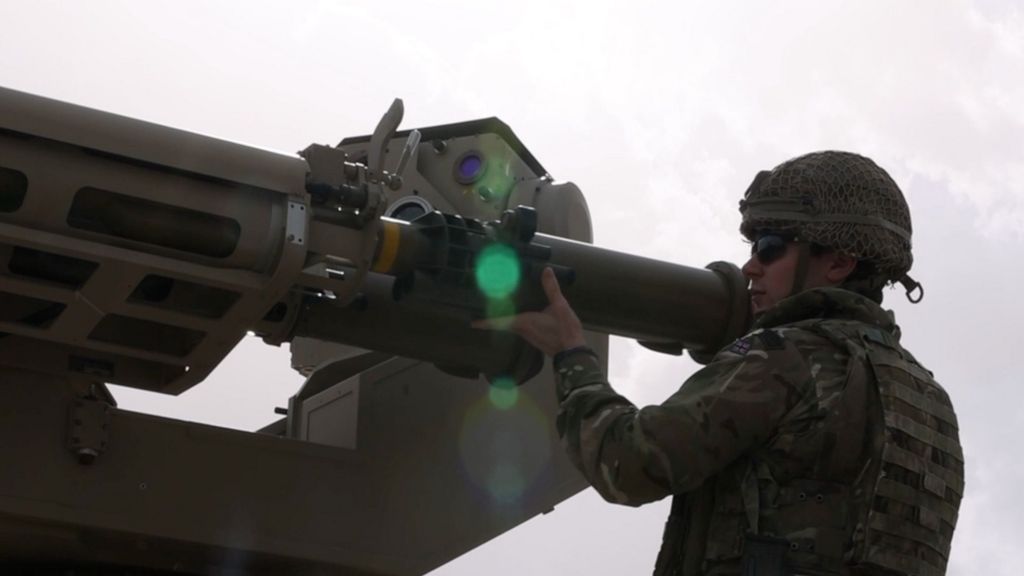
    A recent on-the-ground reporting trip by the BBC has pulled back the curtain on one of the most violently targeted American and British military installations in the entire Middle East, a site that endured an astonishing 28 separate attacks in a single 24-hour period before a fragile ceasefire agreement brought a temporary lull in hostilities.

    Located within Iraqi territory, this base has long sat at the center of escalating regional frictions, becoming a primary focal point for anti-coalition strikes that have put the lives of both American and British service members stationed there in constant danger. In the period leading up to the current fragile truce, attacks against the outpost grew not just in frequency, but in intensity, culminating in the record-breaking 28-attack barrage that underscored just how precarious the security situation around the installation had become.

    During their visit to the base, BBC correspondents documented the visible aftermath of repeated strikes: damaged infrastructure, reinforced defensive positions, and service members who had grown accustomed to regular air raid sirens and incoming fire. The ceasefire that has paused the near-constant attacks remains shaky, with no long-term political agreement in place to resolve the underlying tensions that drive attacks on coalition forces in Iraq. Analysts warn that even with the current lull, the base remains at high risk of resumed hostilities if ceasefire terms break down, continuing to serve as a flashpoint for broader regional unrest that has roiled the Middle East for months.

  • Karim Khan describes threats from David Cameron and Lindsay Graham in new interview

    Karim Khan describes threats from David Cameron and Lindsay Graham in new interview

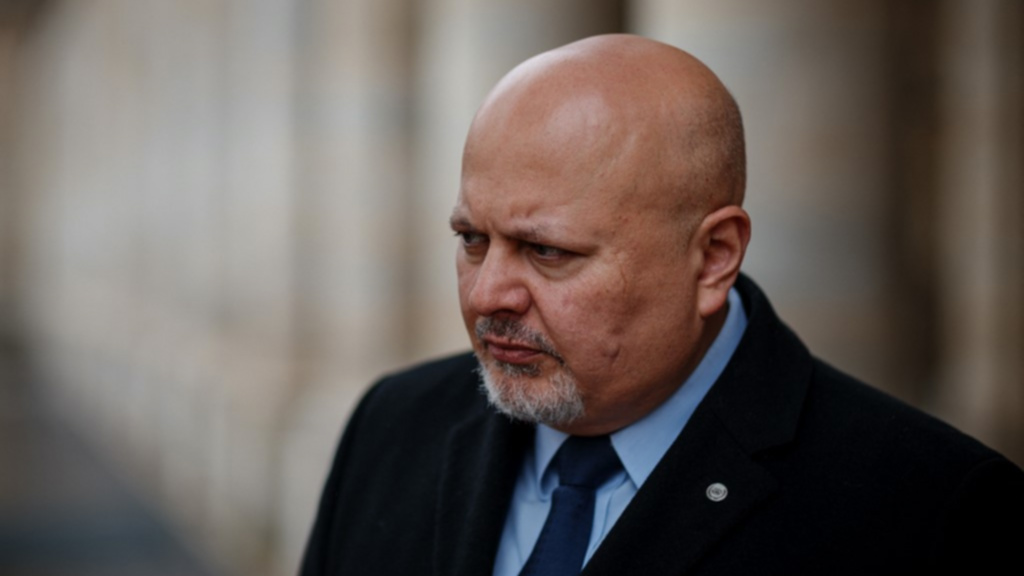
    More than a year after stepping back from his role at the International Criminal Court (ICC) amid a United Nations investigation into sexual misconduct claims, Chief Prosecutor Karim Khan has spoken publicly for the first time, forcefully asserting his innocence and revealing unprecedented political intimidation from Western leaders over his push to prosecute Israeli officials for alleged war crimes in Gaza.

    In a wide-ranging interview with journalist Mehdi Hasan published on Zeteo, Khan laid out details of direct threats from senior Western politicians, corroborating earlier exclusive reporting from Middle East Eye (MEE) that exposed a coordinated campaign to undermine his leadership over the Gaza investigation. The probe into Khan’s conduct was triggered after misconduct allegations emerged last year, and a independent panel of judges appointed by the ICC’s governing Assembly of States Parties (ASP) Bureau already reviewed the UN investigation and concluded no evidence of misconduct or breach of duty had been proven against Khan. Yet despite the panel’s exoneration, Khan has not been allowed to resume his post, after a bloc of mostly Western and European states voted to set aside the judges’ findings and launch their own separate assessment based on the UN report.

    Khan told Hasan he was stunned and confused by the decision to keep the case open after he was cleared. “I cooperated with the process, and the process exonerated me. I’m just concerned that…why is it not being closed straight away?” he said. Addressing the sexual misconduct allegations directly, Khan noted that the 137 findings contained in the UN investigation contained zero conclusions that labeled any of his behavior as inappropriate in any form. “So it’s as clear as cut as that,” he emphasized, adding that the ongoing delay is no longer about the original allegations. “What is being proposed is for political state officials to somehow hear more representations to get the result [they want]. It is not acceptable.” The UN Office of Internal Oversight Services’ original report included competing evidence from both the complainant and Khan, and the judges’ panel later confirmed the investigation either failed to reach conclusive factual findings or found it impossible to do so based on available evidence.

    The misconduct investigation has unfolded against a backdrop of growing global pressure on Khan and the ICC, sparked by the prosecutor’s move to pursue arrest warrants for senior Israeli leaders over alleged war crimes committed during the Gaza conflict. Pressure began mounting in early 2024, as Khan finalized plans to apply for warrants for Israeli Prime Minister Benjamin Netanyahu and former Defense Minister Yoav Gallant. To date, Khan, his two deputies, and multiple ICC judges have already been subjected to official US sanctions over the investigation.

    Last August, MEE reporting detailed a sprawling intimidation effort that included threats from high-profile politicians, coordinated negative briefings against Khan by close associates, safety concerns triggered by the presence of a Mossad team in The Hague, and pre-planned media leaks of the sexual misconduct allegations. While Khan declined to directly accuse any intelligence service of infiltration, he confirmed that Netanyahu has repeatedly worked to weaponize the allegations against him. “Netanyahu has clearly amplified and has sought to instrumentalise, at the very least, these allegations,” he said, adding that both Russian foreign intelligence and Israeli intelligence have carried out close surveillance of his activities.

    When asked about MEE’s June 2024 exclusive report of a threat from then-British Foreign Secretary David Cameron that the UK would withdraw from the ICC and cut funding if the court moved forward with arrest warrants for Israeli officials, Khan confirmed the account was accurate. The April 23, 2024, phone call marked a clear moment of public pressure from one of the ICC’s founding member states. “Yes, it’s been reported, and it’s true,” he said. “I was sad. I wasn’t angry, I was sad. I’m not sure if it was [the] UK government, it was a very senior state official representing the UK government.” When pressed to confirm the caller was Cameron – a former British prime minister and current Conservative peer – Khan affirmed it was. Describing the conversation as difficult, he noted Cameron appeared visibly upset during the call. Khan struck a more optimistic note about the new British Labour government, saying Attorney General Richard Hermer has reaffirmed the UK’s commitment to respecting international law, a shift from the previous administration’s stance. As a British national and the ICC’s chief prosecutor, Khan emphasized the UK’s special responsibility as a UN Security Council permanent member: “If it stands for anything, it must stand for international law, and rules and complying and doing the right thing. And if the UK does the right thing, it’ll be good for the UK, and it’ll be good for the international community. And if we don’t, it’ll be the kiss of death for the standing of this great country.” Cameron has not responded to requests for comment on the call, and the British government has repeatedly declined to address the issue despite repeated questions from Labour MPs.

    Khan also confirmed remarks first reported by MEE from a May 2024 conference call with US Senator Lindsey Graham, in which Graham claimed the ICC was only intended to prosecute African leaders and figures like Russian President Vladimir Putin, not Israeli or American officials. Graham’s comment echoed the dismissive attitude many Western leaders have taken toward the Gaza investigation, Khan argued.

    The prosecutor also pushed back against claims that he advanced the arrest warrants to distract public attention from the misconduct allegations against him, calling the claim “baloney” in an American turn of phrase. He laid out a clear timeline to prove the warrants were planned long before the allegations became public: he traveled to the region in late 2023, visiting Israel, Palestinian communities, and Rafah, and publicly stated that all parties would be held accountable for violations. As early as March 2024 – weeks before the allegations emerged – he had already briefed senior US officials that he planned to file arrest warrant applications for the Palestine situation by the end of April, confirming the investigation’s timeline was never linked to the misconduct claims.

    Today, Khan’s future at the ICC remains uncertain. The ASP Bureau is scheduled to deliver a final ruling on the allegations in early June, and Khan is set to deliver a high-profile public address at the Oxford Union next Tuesday, in what will be one of his first major public appearances since stepping back from his post.

  • Palestine football appeals Fifa decision to do nothing about Israeli clubs in illegal settlements

    Palestine football appeals Fifa decision to do nothing about Israeli clubs in illegal settlements

    A long-running diplomatic and sporting dispute over football in occupied Palestinian territories has escalated, as the Palestinian Football Association (PFA) has formally lodged an appeal with the Court of Arbitration for Sport (CAS) to challenge FIFA’s controversial refusal to impose sanctions on Israel. The global football governing body opted for no action against Israel over its operation of football clubs in illegal Israeli settlements located in the occupied West Bank, a ruling the PFA has decried as fundamentally unjust.

    The root of this latest clash traces back to a formal complaint the PFA submitted to FIFA in 2024. After completing a months-long investigation into the allegations, FIFA released its ruling last month, arguing that the final legal status of the West Bank remains an unresolved, highly complex issue under public international law, justifying its decision to take no punitive measures against the Israel Football Association. This stance directly contradicts a prior ruling from the International Court of Justice, which has repeatedly affirmed that all Israeli settlements established in the occupied West Bank after the 1967 Six-Day War violate international law.

    News of the April 20 appeal to CAS, the world’s highest authority for resolving international sporting legal disputes, was first confirmed by Reuters news agency. In an address to reporters on the sidelines of the Asian Football Confederation congress held in Vancouver, Canada, PFA vice president Susan Shalabi made clear the organization’s position: after exhausting all available internal appeal channels within FIFA’s governance structure, the PFA remains committed to following formal institutional processes to secure what it calls long-delayed justice.

    “FIFA’s council has spent 15 years deliberating this issue and ultimately chose not to issue a decision,” Shalabi explained. “This outcome is deeply unjust, so the only remaining path open to us is to bring this appeal to CAS. We will see this full process through to the end until we achieve a just result.”

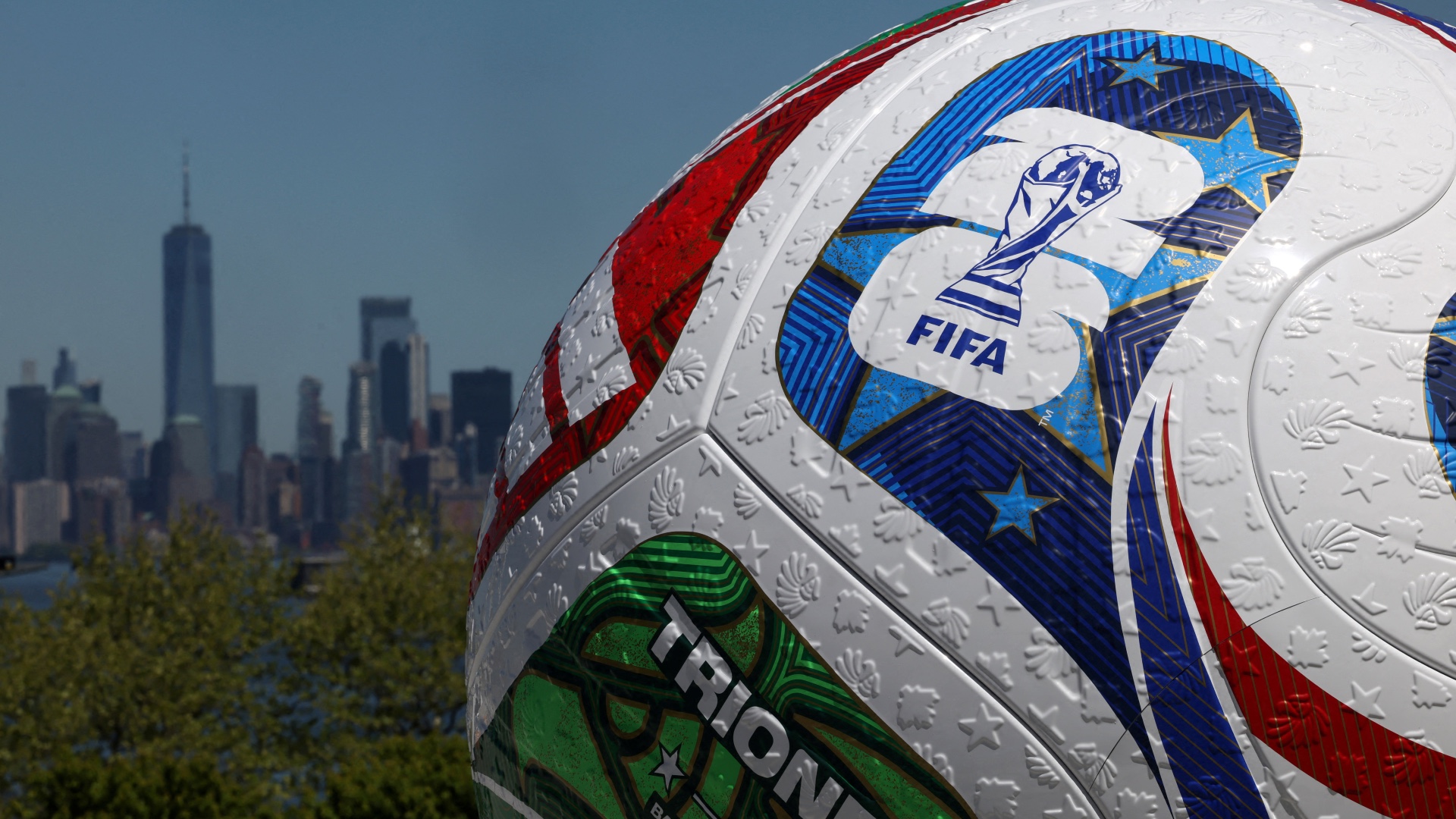
    This latest development is only the most recent in a series of high-profile tensions between the PFA, FIFA and international stakeholders in recent months. Ahead of this week’s annual FIFA congress, also being hosted in Vancouver, three senior PFA officials, including organization president Jibril Rajoub, were initially denied entry visas by Canadian authorities. Canada is one of three co-hosts for the 2026 men’s FIFA World Cup alongside the United States and Mexico.

    Following public political pressure and significant media attention, FIFA intervened to support the PFA’s request for entry, and most of the visa applications were ultimately approved. Shalabi confirmed Tuesday that Rajoub and the PFA’s general secretary will still attend the congress, though they are expected to arrive late. The PFA’s legal counsel remains blocked from entry, as their visa application was never approved. In a statement following the initial denials, Immigration, Refugees and Citizenship Canada declined to share specific details about individual cases, noting that all visa applications are reviewed individually based on the documentation submitted by each applicant.

    Prior to the congress, Rajoub had been scheduled to deliver an address to assembled FIFA delegates specifically focused on the issue of Israeli football matches and clubs operating in occupied Palestinian territories. The current dispute is not an isolated incident: back in February, a coalition of six pro-Palestinian human rights and sports justice organizations – including Irish Sport for Palestine, Scottish Sport for Palestine, Just Peace Advocates, Euro-Med Human Rights Monitor, and Sport Scholars for Justice in Palestine – filed a 120-page formal complaint with the International Criminal Court’s chief prosecutor, according to reporting from The New York Times. The complaint names FIFA president Gianni Infantino and UEFA (European football’s governing body) president Aleksander Ceferin, and accuses both leaders of aiding and abetting war crimes through their institutions’ policies. The coalition argues that FIFA and UEFA have improperly allowed Israeli clubs to compete in leagues organized by the Israel Football Association, even when those clubs host matches on land seized and settled by Israel in the occupied territories.

  • Smiles and wonder: How the US reacted to King Charles

    Smiles and wonder: How the US reacted to King Charles

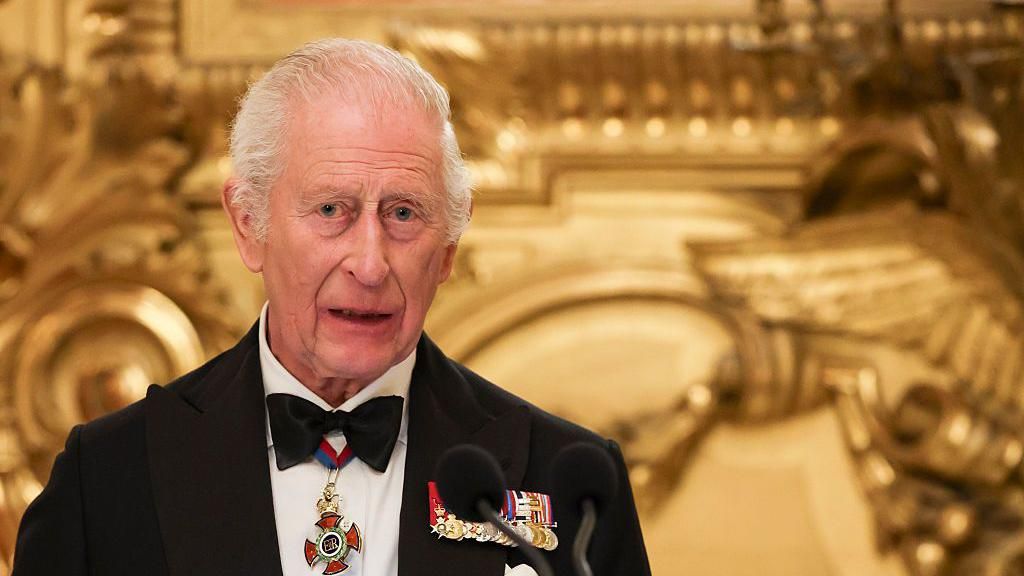
    Two and a half centuries after the United States severed its political ties to the British monarchy, a six-day state visit from King Charles III and Queen Camilla has captivated the American public, upending long-running polling that has placed the British monarch among the least popular senior royals in US public opinion.

    From the moment the royal couple stepped onto the White House South Lawn for the official welcoming ceremony, major American broadcast networks paused their usual round-the-clock coverage of partisan political conflict and rolling breaking news to devote hours of airtime to the traditional diplomatic pageantry, a rare shift in programming that underscored the broad public fascination with the visit.

    Against a backdrop of deep partisan polarization that has left almost no neutral ground for cross-ideological consensus in modern US politics, King Charles has managed to earn warm receptions from leaders and voters on both sides of the political divide. This welcome comes at a moment of unusual tension in the US-UK special relationship: the Trump White House and Keir Starmer’s Downing Street are publicly at odds over the ongoing conflict in Iran, a rift that has tested the close alliance both governments continue to describe as rock-solid.

    Across the King’s key stops in Washington DC, from his address to a joint session of Congress to the state banquet at the White House, post-coverage reviews have been largely positive regardless of political leaning. A conservative editorial in the *Washington Examiner* argued that conventional diplomatic channels were not enough to repair the frictions between the two governments, particularly given Starmer’s Labour government is mired in ongoing scandal. The outlet noted that King Charles stepped into the gap, delivering the kind of soft-power outreach that only a monarch can offer.

    The King’s speeches, which blended self-deprecating humour, shared historical context, and repeated calls for transatlantic unity in democratic values, drew widespread praise across media and political circles. Many commentators interpreted his remarks on democratic principles as a subtle rebuke of growing political extremism in the US, a point echoed by an opinion contributor to the *Arizona Republic*, who wrote: “Sometimes it takes an outside perspective to see what’s really going on. It’s striking to have a king remind us of what democracy is all about.”

    Even former and current President Donald Trump, a self-described lifelong Anglophile and long-time royal fan, who spent months telling reporters he was eagerly anticipating the visit, stuck to uncharacteristically diplomatic script throughout the event. Avoiding any mention of policy disagreements with the Starmer government, Trump lauded the centuries-long cultural and political ties that bind the two nations, telling attendees at the state banquet: “Before we ever proclaimed our independence, Americans carried within us the rare gifts of moral courage. And it came from a small but mighty kingdom from across the sea.” He later joked that the King had managed a feat he never could: drawing standing ovations from both sides of the aisle on Capitol Hill, where King Charles became only the second British monarch in history to address a joint session of Congress. “They liked him more than they’ve ever liked any Republican or Democrat, actually,” Trump said.

    Not all reactions aligned with the broad acclaim, however. Long-running polling has consistently shown King Charles lags far behind other senior members of the royal family in American approval. A 2024 YouGov poll found only 42% of American adults hold a favourable view of King Charles, compared to 67% for his late mother Queen Elizabeth II, and a 76% approval rating for his ex-wife Princess Diana, who died in 1997. Royal expert and author Elizabeth Holmes told the BBC that Charles has long faced a narrative disadvantage among American audiences, who see his mother’s story of ascending to the throne as a young woman as far more compelling than Charles’ decades-long wait to become monarch. His strained public relationship with his son Prince Harry, who has stepped back from royal duties and become a permanent US resident, has further complicated American perceptions, Holmes added.

    Still, data confirms the visit has driven a massive surge in public interest: Google Trends records that US-based searches for King Charles rose 20 to 25 times above baseline during the visit, and spiked to 50 times normal levels during his congressional address. Even Americans not closely following the event expressed enthusiasm. 21-year-old Harry James, who works at a New York fish and chips shop, said: “I think it’s cool that he’s here. It’s cool we can keep these traditions going.”

    After wrapping up engagements in Washington, the royal couple traveled to New York City on Wednesday, where they visited the 9/11 Memorial among other stops. Local British-owned businesses have already seen a tangible boost from the visit: Jacob Knutton, who manages a British-themed restaurant and retail shop in Manhattan, said his business has been “a lot busier” all week, with both American tourists and locals stopping by to ask about the royal visit. Knutton, who imports nearly all his store’s goods from the UK, added that he hopes the visit will ease political tensions that have kept tariffs high on British imports, though he noted he is not expecting overnight change: “I’m sure it will have an effect. But I’m not expecting magical wand-waving.”

    Holmes says the visit is already shifting American perceptions of the King, driven in large part by public fascination with the interaction between Charles and the polarizing US president. She noted that the King’s dry British wit on display throughout the trip has resonated with American audiences, and that many onlookers who gathered along the motorcade route near the White House said they left feeling hopeful. Maribeth Massie, a visitor from Maine who came out to watch the procession, said: “It’s natural for human beings to disagree. Hopefully they’ll lay some common ground together and move forward.”

  • In Gaza, life flickers as power cuts shatter livelihoods and healthcare

    In Gaza, life flickers as power cuts shatter livelihoods and healthcare

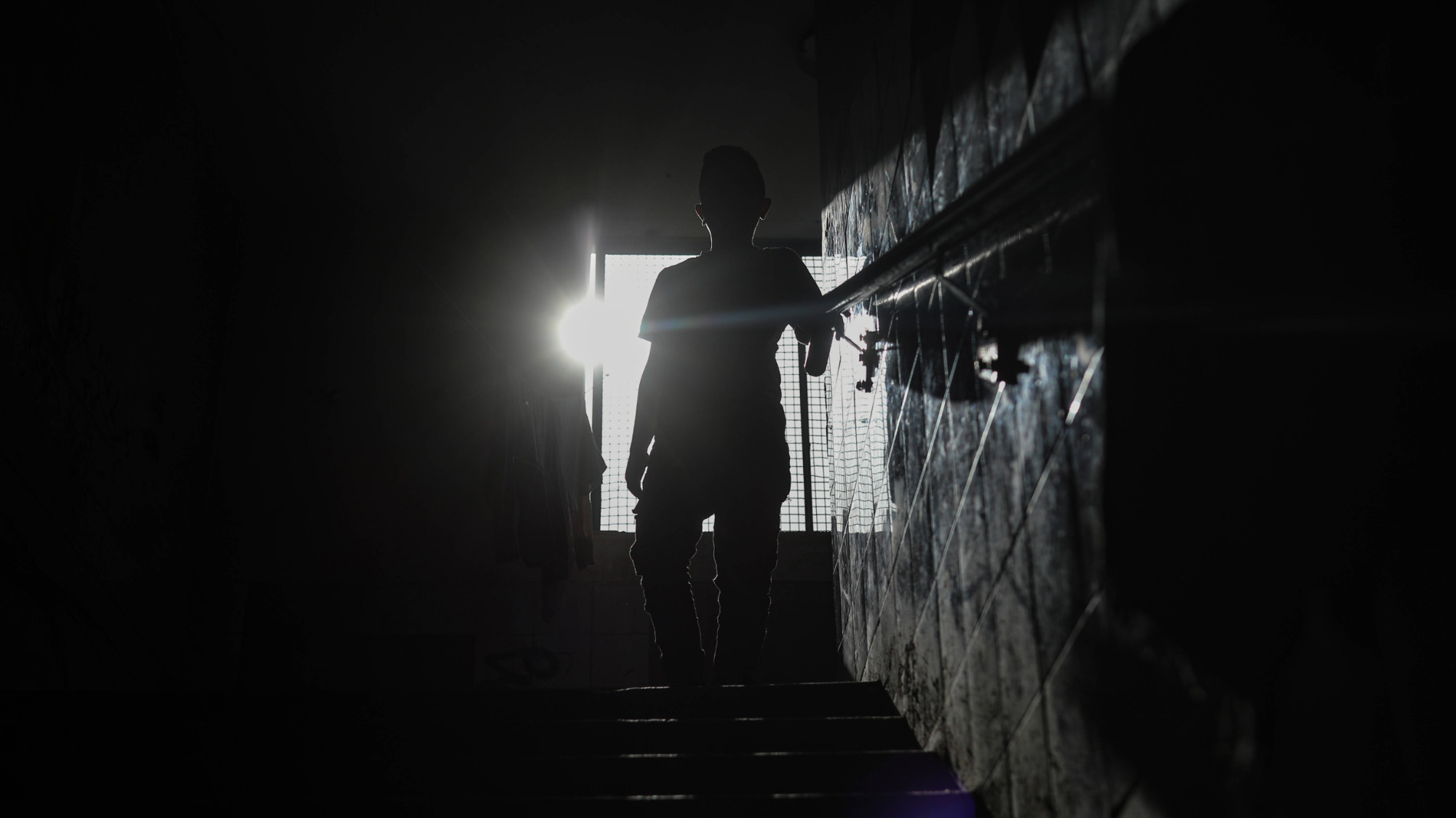
    Gaza City, Palestine — When 34-year-old baker Abrar Abdu pulled open the door of her oven after hours of careful preparation, she was left speechless. In her small, dimly-lit workshop, the only light came from her phone’s flashlight, which cast a shadow over 27 completely ruined cakes, destroyed by an unexpected power outage that left her aging oven malfunctioning.

    Abdu is one of thousands of Palestinian small business owners navigating Gaza’s escalating total energy crisis, a disaster that has unfolded since Israel cut all power connections to the 2.2 million-person enclave at the start of its military campaign in 2023. The territory’s only power plant ceased operations on October 11 that year, after running out of fuel under a strict Israeli blockade on energy imports. Today, Gaza remains trapped in near-total darkness, with most residents relying on expensive, overstretched private generators or limited, costly solar infrastructure just to access basic power.

    For Abdu, the latest power failure was a devastating blow that wiped out months of slow progress toward rebuilding her small cake shop after the war. She was forced to issue apologies to waiting customers, refund all orders, and absorb the full cost of spoiled ingredients, a loss she says has pushed her business to the edge of collapse. “I have incurred devastating financial losses due to the chronic instability of the electricity generators,” Abdu told Middle East Eye in an interview, adding that the crisis threatens not just her own livelihood, but the incomes of her small team of employees.

    Even after the October 2025 ceasefire agreement, Israeli restrictions on fuel and critical equipment imports remain fully in place, deepening the humanitarian crisis and derailing fragile efforts to rebuild civilian life. Abdu explained that the dependence on overpriced commercial generators has created a constant cycle of financial stress: at one point, the business was forced to halt production for nine straight days due to repeated generator breakdowns. “This leaves us in a constant struggle against financial ruin, the loss of our clientele, and the burden of paying workers who support their families amid extreme poverty,” she said.

    The crisis hits hardest at Gaza’s already crippled healthcare system, which has been left on the brink of collapse after repeated Israeli attacks and restrictions on medicine and medical equipment. Hospitals across the strip are almost entirely dependent on generators to keep critical care units running, but years of blockade and the intensification of the energy crisis have left this infrastructure failing. Mohammed Abu Salmiya, director of Gaza’s Al-Shifa Medical Complex, said key generator components have worn down completely, and entire units have stopped operating due to constant mechanical strain, a lack of spare parts, and shortages of specialized maintenance oil.

    Abu Salmiya described conditions inside the hospital as “tragic,” with frequent generator failures disrupting life-saving services including intensive care units, neonatal incubators, and dialysis centers. “These departments cannot afford even a minute of downtime. Consequently, we have been forced to shut down non-critical wards to keep life-saving sections operational,” he told MEE. Hundreds of patients waiting for scheduled surgeries now face indefinite delays, as hospital administrators are forced to prioritize only the most urgent, life-threatening cases. Fluctuating, unstable power has also permanently damaged thousands of pieces of sensitive medical equipment, which require a consistent energy flow to operate safely.

    The Association of Generator and Alternative Energy Owners in Gaza has issued repeated urgent warnings in recent weeks over the growing shortages of mineral oil and spare parts, warning that the entire system is on the edge of total failure. “If the current situation persists, Gaza will sink into total darkness,” said Mustafa Abu Hassira, a senior official with the association. “If these generators continue to fail without the necessary oils and parts for maintenance, people will have neither water nor light in their homes. This will paralyze what remains of commercial and industrial activity.”

    Abu Hassira noted that Gaza has endured an Israeli-led technical blockade for nearly 20 years, after Israeli forces bombed the main transformers of the territory’s only power plant and imposed a full blockade in 2006. For decades after that, residents relied on a patchwork of aging private generators, with access to just a few hours of power per day. “We have endured a technical blockade for 15 years, during which we were prevented from importing new generators. But the real collapse began when this war started,” he said. “Most of the vital generators in the strip have been destroyed, and operational infrastructure has been targeted, leaving us with a stark reality: no spare parts, no mineral oils, and no prospect of repair.”

    With no access to proper maintenance supplies, generator owners have been forced to use makeshift alternatives including industrial diesel and even cooking oil, which speeds up engine wear and causes irreversible damage. Abu Hassira reported that of the 150 large generators that once provided basic power for public services across Gaza, roughly 60 have now stopped working entirely, and the number of failed units grows every day. Prices for the few remaining supplies of proper mineral oil have skyrocketed from 14 shekels per litre to 1,500 shekels per litre, putting it out of reach for most small operators. “We are not just facing an electricity crisis; we are facing total paralysis that will dismantle what remains of the local economy and cut off the basic necessities of life,” he added.

    The energy crisis has now spilled into every corner of civilian life, even affecting transportation across the strip. With fuel and maintenance parts impossible to import, around 70 percent of Gaza’s vehicles were destroyed during the war, and the remaining fleet is at risk of total collapse, according to Anas Arafat, spokesperson for Gaza’s Ministry of Transport and Communications. Restrictions on spare parts, oil, and tyres have left the surviving vehicles vulnerable to permanent breakdown, Arafat explained, warning that the impact extends far beyond civilian travel: “Without them, ambulances cannot transport the wounded, water trucks cannot distribute supplies, and the generators powering hospitals and bakeries will fail. The wheels of life in Gaza may stop at any moment unless this crisis is resolved urgently.”

    For Abdu, the crisis comes after she made a painful effort to rebuild her business following the war. Her bakery was forced to shut down when she and her family were displaced, and it was only after the 2025 ceasefire that they were able to return to Gaza City, repair the damaged workshop, and restart operations after four months of work. “We invested thousands to repair our ovens and refrigerators. After nearly four months, we managed to reopen despite the challenges,” she said.

    Solar power, the only alternative to private generators, remains out of reach for most small business owners like Abdu, with a basic setup costing as much as 5,000 shekels ($1,400) — a sum most cannot afford. Unstable power has already damaged her ovens and refrigerators, adding more unexpected costs to an already strained budget. “We continue to bleed money due to power outages while paying more for raw materials than larger businesses,” she said. “Our suffering as we try to rebuild from the ashes remains invisible.”