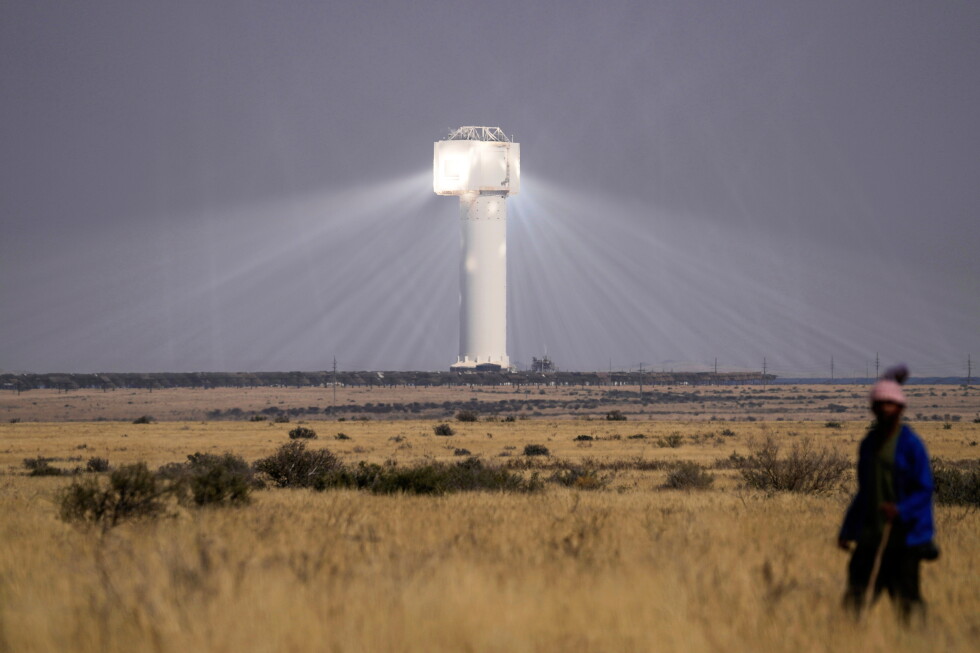
Across the African continent, a profound shift is unfolding in energy infrastructure development, as governments and private investors increasingly pivot away from fossil fuels and large-scale hydropower to prioritize solar, wind, and battery storage projects. This transition is driven by demand for cheaper, more rapidly deployable, and more reliable electricity access to power growing populations and industrial expansion.
The changing landscape of African energy development came into sharp focus in early May, when China and Zambia announced a $1.5 billion energy package that includes three 300-megawatt projects spanning solar, wind, and coal-fired power. While the inclusion of coal highlights Africa’s ongoing need for consistent baseload power to support unstable grids, the broader trend is clear: countries grappling with soaring fuel import costs triggered by geopolitical tensions like the Iran conflict, inconsistent grid reliability, and rising industrial demand are turning overwhelmingly to renewable energy, which can be brought online far faster and at lower cost than traditional fossil fuel or large hydropower facilities.
Data from energy research firm Electron Intelligence underscores this momentum. Of the 322 new energy projects announced across Africa in 2025, 173 were solar developments, followed by hydropower at 46, wind at 34, natural gas at 22, and hybrid energy projects at 14. The International Renewable Energy Agency reports that Africa added a record-breaking 11.3 gigawatts of new renewable energy capacity in 2025, three times the volume added in the previous year. South Africa, Egypt, and Ethiopia accounted for the bulk of this growth.
“Africa is not on the periphery of the global energy transition, it is sitting at its center,” explained Mugwe Manga, climate finance lead at FSD Kenya. “The continent holds the world’s best renewable resources, and the economics have now decisively turned in favor of clean energy.”
Olamide Niyi-Afuye, CEO of the Africa Minigrid Developers Association (AMDA), noted that the shift goes beyond project numbers to represent a complete strategic rethinking of how energy infrastructure is built. African nations are now prioritizing modular systems that can be deployed quickly and expanded incrementally with flexible financing models, a framework that plays to the strengths of small-scale and distributed solar in particular.
Plummeting technology costs have been the single biggest driver of this renewable boom. Globally, utility-scale solar costs have fallen by nearly 90% since 2010, while onshore wind costs have dropped roughly 70%. These price declines have made renewables the least expensive option for new electricity generation across most African markets.
“Renewable energy is now unequivocally the fastest, cheapest, and most bankable way to connect people, companies and economies to the megawatts they need to grow,” said Matt Tilleard, CEO of CrossBoundary Energy, a firm that invests in African renewable projects. Much of the recent growth has come from distributed solar and battery systems, which are installed directly at mines, manufacturing facilities, telecom towers, and residential properties, eliminating the need for connection to overstretched central national grids.
Official statistics often undercount this distributed growth, Tilleard noted, because traditional counting methods only track capacity connected to main national grids. Data from the Africa Solar Industry Association recorded 23.4 gigawatts of operational solar capacity across Africa by the end of 2025, but Chinese export data shows 58.1 gigawatts of solar panels have been shipped to African countries since 2017, suggesting actual adoption is far outpacing official tracking.
For investors, renewables hold another key advantage: faster returns on investment and lower exposure to volatile global fossil fuel price shocks. Unlike coal-fired plants, which can take up to 12 years to complete, and large hydropower dams that often require a decade or more of construction, utility-scale renewable projects can generate revenue within 18 months of breaking ground.
At the Kamoa-Kakula copper complex in the Democratic Republic of Congo, one of Africa’s largest copper mines, CrossBoundary Energy is developing a 233-megawatt solar and battery storage project. Tilleard said the project moved from contract signing to more than 80% completion in just 12 months. “Solar and wind projects are especially attractive at this moment because they combine strong commercial fundamentals with relatively lower investment risk,” Niyi-Afuye added.
Progressive policy changes across the continent have also accelerated the renewable push. Ethiopia became the first country in the world to ban imports of internal combustion engine vehicles, spurring faster adoption of electric vehicles that in turn drives demand for new clean electricity generation. In South Africa, regulatory changes relaxing caps on private power generation have opened the door to a massive wave of new industrial renewable projects.
Despite this rapid growth, significant barriers remain. Many African national utilities face deep financial instability, making lenders hesitant to sign onto long-term power purchase agreements. Perceived country risk also pushes financing costs for African renewable projects up to three times higher than costs for similar projects in advanced economies, according to data from the International Energy Agency.
Multilateral development finance institutions, including the African Development Bank and the International Finance Corporation, have stepped in to bridge this gap, offering concessional loans, credit guarantees, and risk-sharing frameworks to de-risk private investment. Manga argues that the main obstacles to faster expansion are no longer technological or cost-related.
“What remains is not a question of technology or cost,” he said. “It is a question of finance, political will and preparing bankable projects that will drive demand for power on the continent.”
This reporting from The Associated Press on climate and energy transition is supported by funding from multiple private foundations, with the AP retaining full editorial control over all content.