Trauma does not easily loosen its grip, even when the bombs have fallen silent thousands of kilometers away. For five-year-old Malik Agha, the echoes of war live in small, daily habits: he still tucks extra bits of food next to his pillow each night, a quiet instinct born of months of hunger in a Gaza displacement camp. His four-year-old sister Razan automatically sets aside a portion of every meal, even when their plate in their new home in southern Poland is full. Malik mixes up the words “tent” and “home,” and both children flinch at the smell of smoke and the flash of red emergency lights, their small bodies bracing instinctively for another incoming strike. More than two years after their family escaped the deadly conflict in Gaza, these deep emotional scars remain.
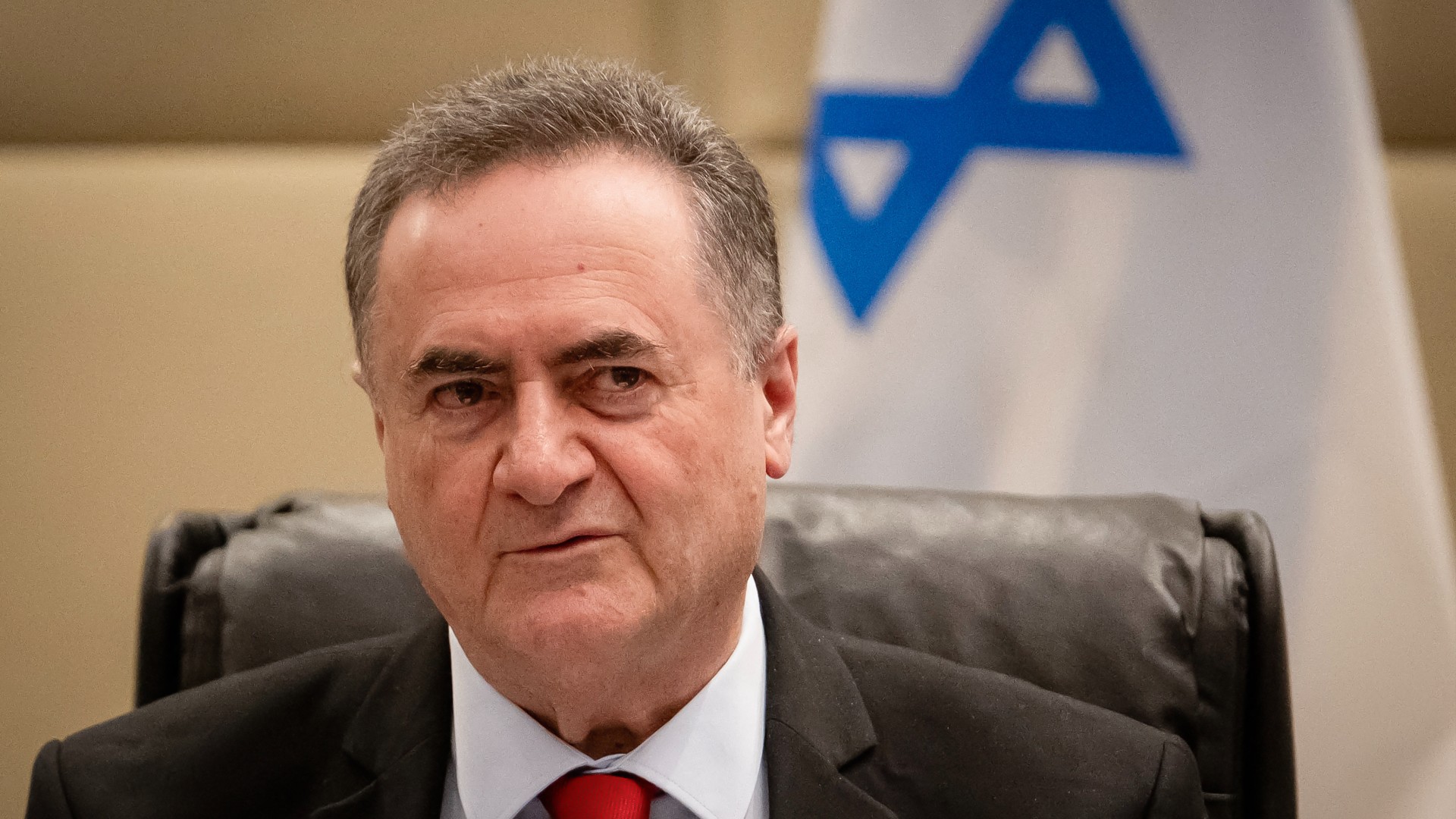
On a Monday in Wrocław, the children’s father Amjad Agha stepped into the city’s district prosecutor’s office alongside a second Palestinian-Polish survivor, prominent plastic surgeon Ahmed Elsaftawy, to file a landmark criminal complaint. The document accuses senior Israeli officials of genocide, war crimes, and crimes against humanity committed against Palestinian civilians in the Gaza Strip. Named in the complaint are former Israeli defense minister Yoav Gallant, his current successor Israel Katz, sitting and former Israel Defense Forces chiefs of staff, the Israeli navy commander, Israel’s energy and water minister, and current and former heads of the Coordination of Government Activities in the Territories (Cogat) – the Israeli body that controls all humanitarian access into Gaza and the occupied West Bank.
This case marks one of the first formal legal actions of its kind in Europe brought by named, dual-citizen survivors of the Gaza conflict. Legal teams backing the complaint say the action is intended to test whether Polish prosecutors will uphold international law by holding alleged perpetrators of crimes against Polish citizens and their family members accountable, in line with legal obligations.
Agha’s path to this moment traces back decades. Born in Khan Younis in southern Gaza, he moved to Poland to study, earning advanced degrees in food chemistry and management from Lodz University of Technology before returning to Gaza in 2005 to care for his aging parents. He took a role at the Palestinian agriculture ministry, running a laboratory that taught local Gaza farmers how to cultivate oyster mushrooms – an affordable source of protein and a rare small income stream in Gaza’s long-besieged economy. It was there he met Alaa, a microbiologist who would become his wife. The couple married in 2020, settling on the ground floor of a family home in central Khan Younis, with Agha’s brother and his family living upstairs, and a wide network of cousins, friends, and neighbors surrounding them. Their son Malik arrived in 2021, followed by daughter Razan a year later; both children inherited Polish citizenship through their father.
When Israel launched its military campaign in Gaza in October 2023, Malik was just two years old, and Razan had only just turned one. One week into the conflict, on 14 October, the family was woken before dawn by an Israeli airstrike that hit their apartment building. They had already moved their mattresses into the home’s hallway, the most sheltered spot in the structure – a choice Agha says saved all their lives. Had they stayed in their bedrooms, with the children in their cots, he is certain none would have survived.
Agha described the chaos that followed: “It was dark and very hot, and dust hung thick in the air. The children were crying desperately.” Shards of glass, chunks of ceiling, and broken concrete rained down around the family. Agha grabbed Malik, who had been sleeping beside him, before his wife screamed out asking where Razan was. Agha’s brother rushed down from the upper floor with a phone flashlight. Agha passed Malik to his uncle, then found Razan buried under debris. Both children were crying at first, but Razan quickly fell silent, terrifying her parents. Agha’s brother carried the two children out to a waiting ambulance, while Agha stayed behind to free Alaa, who was trapped up to her neck in rubble. By the time the ambulance reached the nearest hospital, Razan had stopped breathing. “At that moment, we were convinced that our little girl was already dead, that she was gone,” Agha recalled. It was only after Agha rescued his wife and reached the hospital himself that doctors told the couple Razan had been successfully resuscitated.
Thirteen members of Agha’s extended family were killed in that single strike. The surviving family members lost every possession they owned, and spent months sheltering in overcrowded displacement tents. “It was cold, the water was contaminated, and there wasn’t enough food, especially for the children,” Agha said. Both children developed chronic diarrhoea and severe dehydration; Razan slipped into life-threatening malnutrition, while Malik developed anaemia. The family was finally able to evacuate Gaza in May 2024, relying on the children’s Polish citizenship to exit the strip. They now live in Wrocław, where Malik and Razan attend local preschool alongside Polish peers. Agha says his son’s first clear words after the strike were about a “broken window”: “His favourite spot was the windowsill, from which he watched the street, children playing with a ball, cars passing by. That space was his world, his point of reference. Suddenly, it was gone. He didn’t know who did it; he just said that they ‘broke it’, that ‘it’s gone’. He was not quite two years old, and those were practically his first words.”
Elsaftawy, the second complainant, brings his own generations-long history of displacement and grief to the case. A leading plastic surgeon who heads a department at a hospital in Trzebnica, just outside Wrocław, he has lived in Poland for more than 30 years. His own family’s story of displacement began in 1948, during the Nakba – the mass expulsion of Palestinians that accompanied the creation of Israel. His father, then eight years old, was forced out of al-Majdal, the territory that is now the Israeli city of Ashkelon. The family ended up living in refugee tents in Gaza, turned into stateless refugees overnight. Elsaftawy himself was born in Qatar, where his parents moved in the 1960s searching for work. He moved to Poland at 17 to study medicine – a field that was closed to non-citizens in Qatar at the time – and has built his life and career there ever since. After the Oslo Accords in the 1990s, many of his relatives moved back to Gaza. Since October 2023, 34 members of his extended family have been killed in Gaza. The most devastating loss, he says, was his sister, who died from complications of malnutrition after being denied access to urgent medical care. “This tragedy will forever remain a part of my life,” he told Middle East Eye.
To evacuate his elderly father and his brother’s family from Gaza last year, Elsaftawy traveled to Egypt and paid $27,500 in cash to Hala, the Egyptian private company that controlled access to the Rafah crossing evacuation list for most of 2024. The fee was $5,000 for his father, and $2,500 for each of his brother’s three children. “In a world where freedom is not a right but a commodity, everything has a price,” he noted.
The legal complaint argues that the ongoing humanitarian catastrophe in Gaza is not an accidental side effect of military operations, but the result of a deliberate, coordinated strategy that meets the international legal definition of genocide. It specifically highlights the use of starvation as a prohibited weapon of war, and the deliberate obstruction of life-saving humanitarian aid to Polish citizens and their family members in Gaza. The complainants are backed by the Hind Rajab Foundation, the Polish-Palestinian justice initiative Kaktus, and Polish activists Nina Ptak and Ewa Jasiewicz from the Global Sumud Flotilla mission.
Elsaftawy emphasized he is not seeking special treatment, only equal application of the law. “I am demanding only the right to the truth, accountability and the protection of fundamental humanitarian values, which should apply regardless of nationality, religion or origin,” he said. “Poland has a duty to adhere to the principles of international law, the protection of human rights and responsibility for the safety of its citizens.” In a statement, Kaktus framed the case as a critical test for Polish democratic institutions, asking: “Will the law be applied equally to everyone, or selectively, depending on origin?”