For millions of young Yemenis trapped in more than a decade of civil conflict and systemic economic collapse, the promise of a stable future lies almost exclusively across the northern border in Saudi Arabia. As one of the only accessible destinations for steady work, the neighboring kingdom has become a beacon of hope for those fleeing violence and poverty – but the $2,500 price tag for a legal visa and sponsorship puts this path out of reach for nearly all Yemeni households.
Ahmed, a 35-year-old chef and father of two young children, was one of millions who dreamed of legal work in Saudi Arabia to support his family. Unable to scrape together the funds for official entry, he made the fateful choice to cross the border illegally by the end of 2024, finding casual work in a restaurant in Jazan province. Twice, Saudi authorities caught and deported him back to Yemen, leaving him with no legal way to earn the income his family needed to survive. That’s when he turned to the only viable option he had left: joining qat smuggling networks.
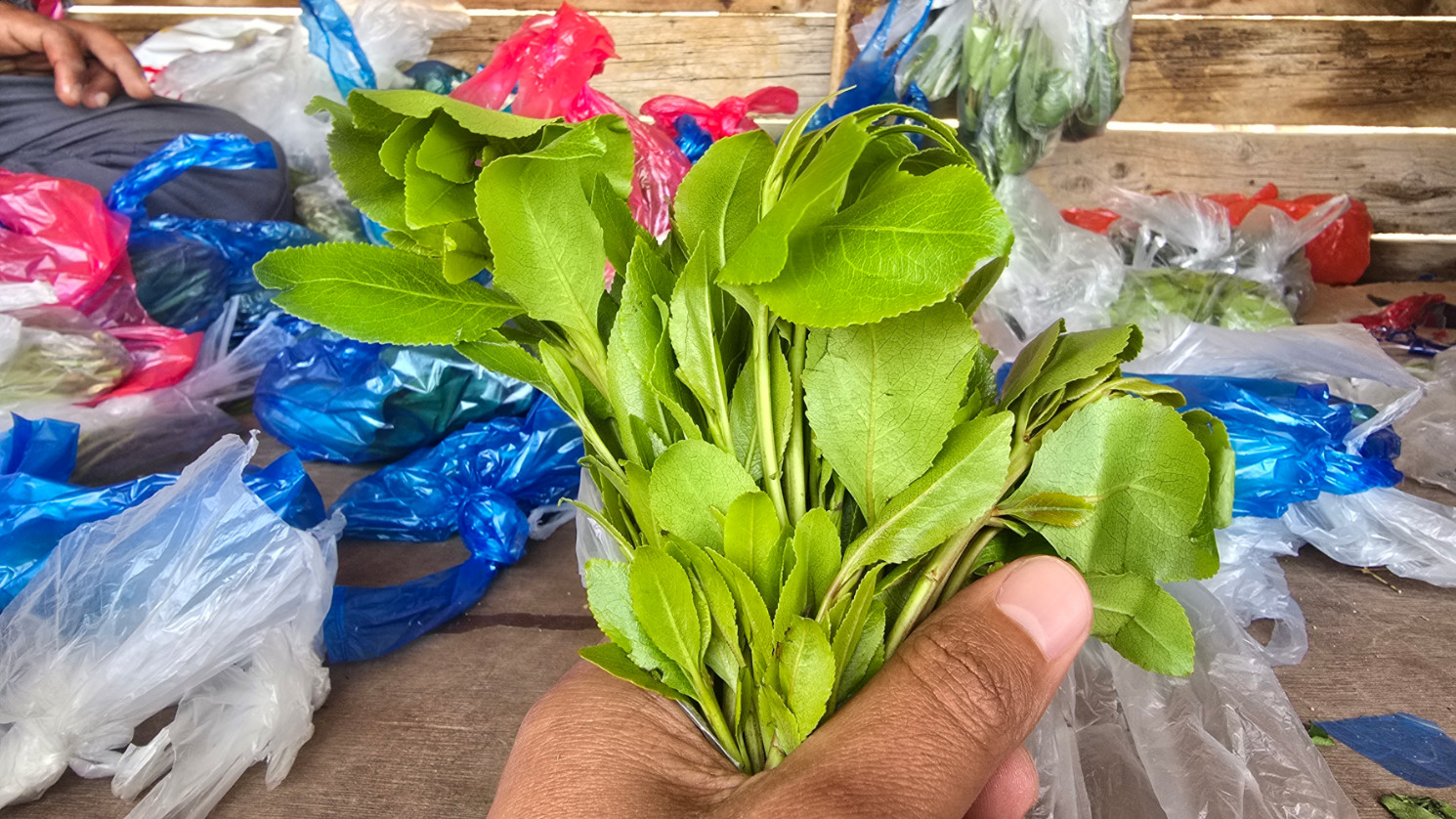
On his first illegal crossing, Ahmed had already traveled alongside qat smugglers, witnessing firsthand the deadly risks that come with moving the controlled stimulant across the border. Qat is classified as an illegal narcotic in Saudi Arabia, with punishments ranging from a mandatory minimum five-year prison sentence and a $5,300 fine to permanent deportation. For repeat offenders, sentences can stretch to 25 years, and under the kingdom’s anti-narcotics laws, capital punishment is a possible penalty in serious trafficking cases. Despite knowing the dangers – including accounts of smugglers being shot dead by border guards – success stories from fellow villagers convinced him the risk was worth taking.
For four months, Ahmed successfully made smuggling runs across the border, returning home with enough money to lift his family out of extreme poverty. For two months, they lived without the constant hunger and uncertainty that defined most Yemeni households, and Ahmed planned a second four-month stint to earn enough for a permanent home. He promised his two young children new bicycles on his return, and asked his wife Wafa to begin searching for a house. But just two weeks into his second trip, Wafa received the devastating news: Ahmed had been shot dead by Saudi border guards while attempting to cross.
Two months on, Wafa still has not told her children – both under the age of 10 – that their father is dead. She hides the trauma to protect them, telling them he is still working in Saudi Arabia and plans to bring their bicycles home soon. “It is too difficult to tell a child that their father was killed while simply trying to provide for their needs,” she told Middle East Eye. Now, the family faces eviction from their small rental home, as there is no one left to earn an income. “The days spent with my husband when we only had one meal a day were infinitely better than these days without him,” Wafa said. “Having the whole family gathered together under one roof is something you cannot truly appreciate until you lose someone you love.”
Ahmed’s tragic story is far from an isolated case: it reflects a nationwide humanitarian catastrophe unfolding across Yemen. According to the United Nations Office for the Coordination of Humanitarian Affairs (OCHA), by 2026 more than 22.3 million Yemenis – over half the country’s total population – will require life-saving humanitarian assistance and protection. More than 10 years of war, cascading economic collapse, crippling funding shortages for aid programs, and repeated climate-driven disasters have left millions without consistent access to food, healthcare, and clean drinking water. According to 2022 Saudi census data, more than 1.8 million Yemenis already live legally in Saudi Arabia, marking the Yemeni community as the kingdom’s fourth-largest immigrant population.
Khalid, a 45-year-old Yemeni who turned to qat smuggling one year ago, understands the deadly gamble better than most. Like Ahmed, he had no other viable path to a living wage: the only two lines of work that offer meaningful income in today’s Yemen are joining one of the warring factions or smuggling qat. He chose smuggling. “I thought deeply about whether to join the fighting or smuggle qat, as these are the only two jobs that I can do and they offer a good income. I decided to go with smuggling,” he explained.
Khalid describes the smuggling trek across the rugged border highlands as a “death journey” that demands extreme physical stamina. Smugglers often walk more than 20 kilometers carrying up to 40 kilograms of qat on their backs, a feat that only the most fit can complete. As a low-level courier for a large smuggling ring, Khalid earns 5,000 Saudi riyals (around $1,330) per successful run – a sum that no legal, civilian job in Yemen can match for ordinary laborers. When spotted by Saudi border guards, smugglers are ordered to halt; those who run face deadly gunfire. “Many Yemenis have been arrested and face severe penalties in Saudi Arabia, so I prefer to run. For me, it was either make it across or die,” he said. He recalled one incident in which 10 smugglers came under fire, and only six made it to safety, with the fates of the other four unknown.
Khalid counts himself among the extremely lucky: after one year of smuggling, he earned enough to open a small grocery store in Lahij and build a home for his family, and he has left smuggling behind for good. “One year was enough for me to achieve my dreams of owning a home and a grocery shop. Now, I will focus on running this business together with my sons,” he said. “I don’t want my sons to ever do the same job. I encourage them to grow this grocery business and make it their future.” Even so, he recognizes why so many other Yemenis take the same risk he did: “If I hadn’t been desperate to provide for my family, I would never have risked my life, but I was forced to.”
Economic analyst Sameer al-Dhobhani explains that the surge in qat smuggling is a direct symptom of Yemen’s collapsed economy and decades of stalled job growth. “The civil service has almost paused employing new university graduates since 2011, the economic situation has collapsed and the population is growing. All of these factors have forced Yemenis to seek out jobs that are hazardous or illegal,” he said. Qat smuggling across the border is not a new trade, but al-Dhobhani notes it has exploded in popularity over the course of the war: for young Yemenis, the risks of smuggling often compare favorably to the near-certain death of frontline fighting, and the pay is far better than any legitimate work.
“Qat smuggling is one of the grim consequences of the war, as some people have broken the barrier of fear and no longer hesitate to take on dangerous work,” al-Dhobhani said. “However, we must not lose sight of the root cause, which is the catastrophic economic situation and the severe lack of legitimate job opportunities. If safe, legal, and well-paid jobs were available, Yemenis would not risk their lives smuggling qat. It is desperation, he said, that drives them to it.”
Al-Dhobhani warns that the crisis will only worsen until Yemeni authorities prioritize economic recovery and job creation for young people. “Since 2015, every day has been worse than the last for Yemenis. They will not stop taking these dangerous jobs until the government takes this issue seriously and begins implementing solutions to revive the economy and provide the youth with civilian jobs,” he said. For Wafa and her children, that solution has come too late – a reminder that for millions of Yemenis, the search for a better future too often ends in tragedy on the border.