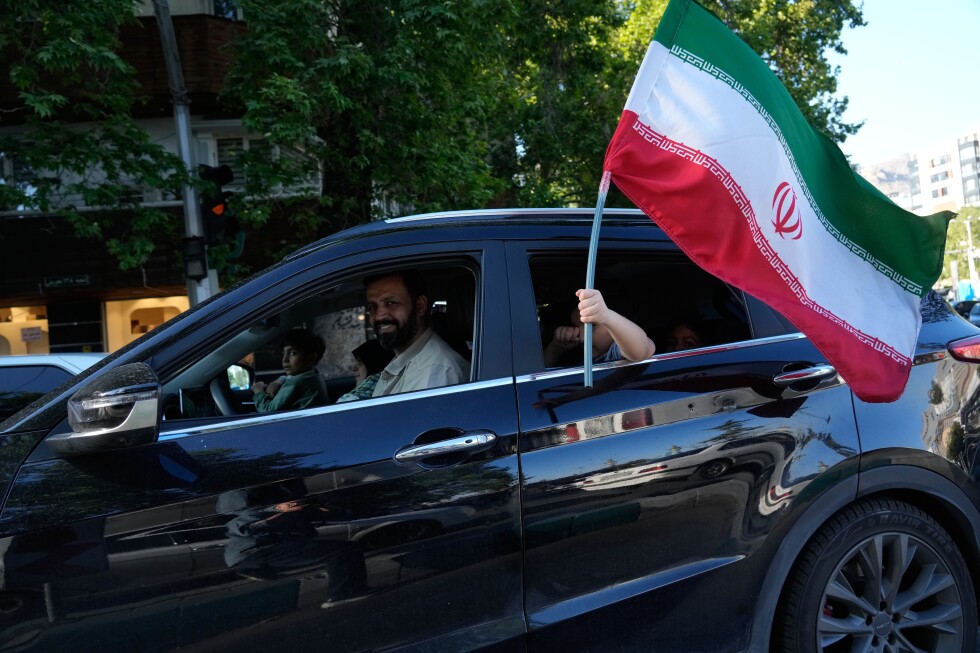
DUBAI, United Arab Emirates – A new suspected attack targeting an unidentified northbound cargo ship has been documented off the coast of Sirik, Iran, east of the strategic Strait of Hormuz, the United Kingdom Maritime Trade Operations (UKMTO), Britain’s leading maritime security monitoring agency, announced Sunday. This incident brings the total number of maritime attacks recorded in and around the world’s most critical energy chokepoint to at least two dozen since the outbreak of the ongoing Iran war, and marks the first reported assault in the region after a lull that began April 22, when another cargo vessel came under fire. All crew members aboard the targeted ship emerged unharmed, UKMTO confirmed, though no group has yet stepped forward to claim responsibility for the attack. The overall threat rating for commercial shipping transiting the area remains classified as critical, as Tehran has effectively disrupted normal traffic through the strait through a campaign of targeted attacks and threats against passing vessels. For months, Iranian officials have maintained that any non-U.S. and non-Israeli flagged vessels may safely pass the waterway only upon payment of a transit toll. The small assault craft used in these attacks, many operated by Iranian forces and outfitted only with twin outboard motors, are notoriously agile, difficult for international naval forces to detect, and have been linked to multiple assaults on commercial shipping in recent months. Tensions in the region remain high even as a fragile three-week ceasefire between U.S.-led forces and Iran has largely held. U.S. President Donald Trump told reporters Saturday that additional military strikes against Iranian targets remain on the table should diplomacy fail to resolve the standoff. Parallel to the maritime security escalation, Iran has submitted a new 14-point peace proposal to the United States through diplomatic intermediary Pakistan, which hosted direct, face-to-face negotiations between the two countries last month. The proposal, reported by Iranian state-linked security outlets Nour News and Tasnim, aims to reach a full end to hostilities within a 30-day timeline rather than just extend the current ceasefire. It calls for the U.S. to lift all sweeping economic sanctions on Iran, end the ongoing American naval blockade of Iranian ports, withdraw all U.S. military forces from the broader Middle East region, and force an end to Israeli military operations in Lebanon. Notably absent from the proposal is any mention of Iran’s controversial nuclear program and its stockpiles of enriched uranium – the core longstanding point of contention between Tehran and Western powers, which Iran has indicated it prefers to address in later negotiations. Pakistan continues to serve as a key go-between for the two adversaries, with the country’s prime minister, foreign minister and army chief all pushing for sustained direct dialogue between Washington and Tehran, according to two unnamed Pakistani officials authorized to discuss the sensitive diplomacy. On Sunday, Iranian Foreign Minister Abbas Abbas Araghchi also held talks with his Omani counterpart Badr al-Busaidi, whose government oversaw previous rounds of pre-war negotiations between the two sides. The strategic Strait of Hormuz, located at the mouth of the Persian Gulf, normally carries roughly 20% of the world’s daily traded oil and natural gas, alongside critical fertilizer shipments that global food markets depend on. Since the outbreak of war on February 28, Iran’s tightening grip on the waterway has sent shockwaves through global energy and commodity markets. During a visit to the strategically vital Larak Island port facilities Sunday, Iranian deputy parliament speaker Ali Nikzad reaffirmed Tehran’s uncompromising stance, saying, “Iran will not back down from our position on the Strait of Hormuz, and it will not return to its prewar conditions.” Nikzad does not hold formal decision-making authority in the Iranian legislature, but his comments signal the hardline position popular among Iranian political elites. The U.S. has responded by warning global shipping companies that any form of payment to Iran for safe transit – including digital assets – could expose them to harsh U.S. sanctions. Compounding pressure on Tehran, the U.S. naval blockade implemented April 13 has cut off most of Iran’s oil export revenue, a critical lifeline for the country’s already ailing economy. U.S. Central Command announced Saturday that 48 commercial tankers have already been ordered to turn back from Iranian ports. U.S. Treasury Secretary Scott Bessent told Fox News Sunday that Iran has collected less than $1.3 million in total transit tolls to date – a tiny fraction of the country’s pre-war daily oil export earnings. “They’re going to have to start shutting in wells, which we think could happen in the next week,” Bessent said, noting that Iran’s onshore oil storage facilities are rapidly filling to capacity. Iran’s domestic economic situation continues to deteriorate rapidly, with the national currency the rial hitting new record lows against the U.S. dollar Sunday. On the second day of Iran’s working week, the dollar traded at 1,840,000 rials in Tehran’s central Ferdowsi Street currency exchange, a sharp drop from the already record low of 1.3 million rials per dollar recorded last December. At that time, the currency collapse sparked widespread nationwide protests over the soaring cost of living. Iranian markets remain deeply unstable, with prices for basic consumer goods rising on a daily basis, and local media reports indicate that dozens of factories have failed to renew worker contracts after the Iranian new year in March, leaving thousands unemployed. Yousef Pezeshkian, son and senior adviser to Iranian President Masoud Pezeshkian, acknowledged the stalemate in a Telegram post over the weekend, writing that both the United States and Iran continue to view themselves as the war’s victor and remain unwilling to make concessions. In a separate development Saturday, the Norwegian Nobel Committee issued an urgent public appeal for Iran to immediately allow imprisoned 2023 Nobel Peace Prize laureate Narges Mohammadi to transfer to Tehran to receive specialized care from her personal medical team, after a sharp deterioration in the human rights lawyer’s health. The committee confirmed it is in regular contact with Mohammadi’s family and legal team, and warned that the activist’s life remains in imminent danger. Mohammadi, who is imprisoned in Zanjan prison in northwestern Iran, fainted twice in custody Friday, and was admitted to a local hospital, according to her personal foundation. Her legal team has said she is suspected to have suffered a heart attack in late March. This report included contributions from Associated Press correspondent Melanie Lidman in Tel Aviv, Israel, with additional reporting from Amir Vahdat in Tehran, Iran, and Munir Ahmed in Islamabad, Pakistan.
分类: world
-
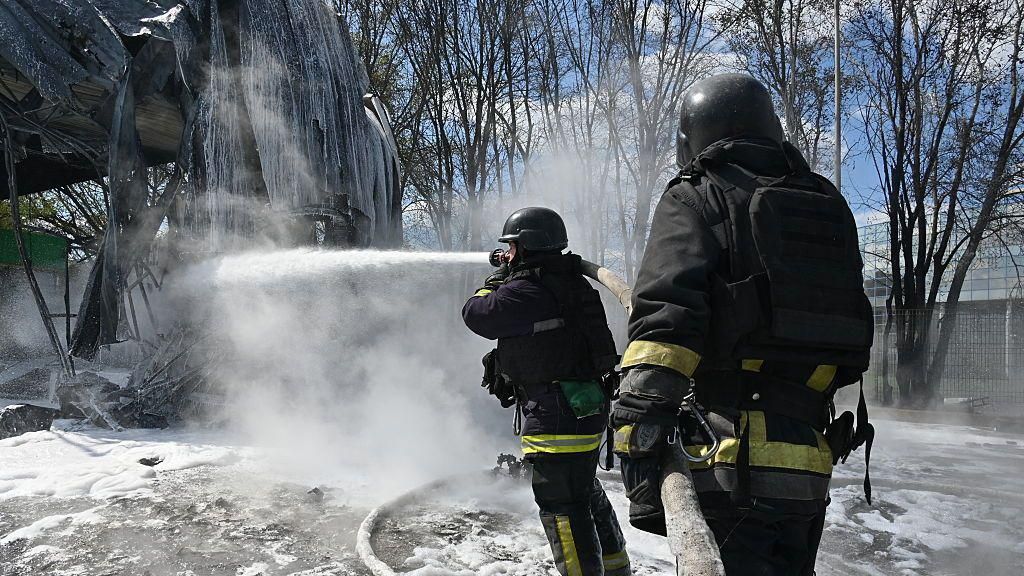
Russian strikes kill 10 as Zelensky says Ukraine hits oil tankers and terminal
Over a 24-hour period, a fresh wave of Russian drone and missile assaults across multiple Ukrainian regions has left at least 10 civilians dead and 76 others injured, marking another escalation in the ongoing aerial campaign targeting Ukrainian populated areas. Fatalities were confirmed across five Ukrainian administrative regions, consistent with Russia’s sustained pattern of regular strikes on urban and civilian infrastructure throughout the country. Three fatalities were recorded in separate incidents in the southern Kherson region, according to the region’s governor. Two deaths each were reported in Odesa, Donetsk, and Zaporizhzhia, while one additional fatality was confirmed in the northeastern Sumy region. Ukrainian air defense forces reported they intercepted the vast majority of incoming Russian weapons, which included one ballistic missile and close to 270 attack drones launched in the assault.
Parallel to these defensive operations against Russian strikes, Ukrainian authorities have confirmed a series of successful cross-border attacks targeting key Russian energy infrastructure and maritime assets. Ukrainian President Volodymyr Zelenskyy announced that a major oil terminal in northwestern Russia sustained extensive damage, while two Russian oil tankers were hit in strikes near the key Black Sea port of Novorossiysk. Zelenskyy confirmed the two damaged tankers were part of Russia’s so-called ‘shadow fleet’ of vessels operated to bypass Western price caps and sanctions on Russian crude oil exports. No official details on the extent of damage to the ships have been released by Russian authorities as of yet.
Zelenskyy added in a Telegram post accompanying black-and-white footage that appeared to show a naval drone approaching one of the targeted tankers: ‘These tankers were actively used for transporting oil. Now they will not be.’ In recent weeks, Ukrainian forces have ramped up a coordinated campaign of long-range drone strikes on Russian oil export infrastructure spread across the country’s western and southern regions. Kyiv officials confirm these strikes have taken out billions of dollars in Russian oil export capacity. Over the weekend, Zelenskyy added that infrastructure at the Primorsk export terminal in Russia’s Leningrad region, located near the Finnish border, was also heavily damaged, alongside three vessels stationed at the facility.
Russian officials reported that in total, Ukraine launched at least 334 drones in cross-border attacks over the same 24-hour period, with the Leningrad region facing the heaviest assault. While Moscow has largely sought to downplay the impact of Ukrainian long-range strikes on its territory, the Kremlin has openly acknowledged growing security concerns over the deep strike range of Ukrainian drones. Most notably, this security anxiety prompted the Kremlin to announce this week it would scale back its annual Victory Day military parade, scheduled for May 9 to mark the Soviet defeat of Nazi Germany in World War II, citing what officials described as an elevated ‘terrorist threat’ from Ukraine.
-
2 US service members missing after military exercises in Morocco
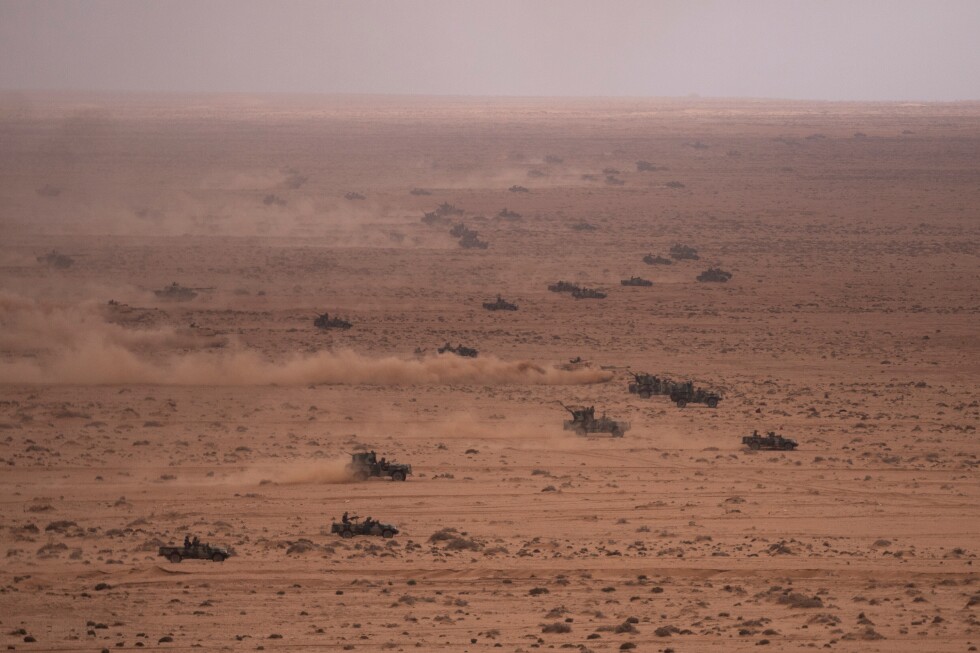
A developing emergency is unfolding in southwestern Morocco, where two American service members have gone missing following their participation in a yeary multinational military exercise hosted in the North African nation, U.S. Africa Command (AFRICOM) announced in an official update Sunday.
Joint search-and-rescue missions have been mobilized by the Moroccan government, U.S. military personnel and other partner nations that took part in the African Lion drills, according to AFRICOM’s public statement. The command confirmed that the circumstances surrounding the disappearance are still being probed, and search activities are continuing across the affected area.
The incident was recorded on May 2 in the vicinity of the Cap Draa Training Area, located near Tan Tan along Morocco’s Atlantic coastline. The African Lion exercise kicked off across four different North and West African nations in April, with additional training activities hosted in Tunisia, Ghana and Senegal, and was originally scheduled to conclude in the first week of May.
First launched in 2004, African Lion stands as the largest annual joint military training exercise led by the U.S. across the African continent. The event routinely draws senior military leadership from the U.S. and its key partner states across Africa, bringing together thousands of service members to coordinate on tactical training and security cooperation. U.S. military leaders have long framed the annual multinational exercise as a critical platform for deepening regional security partnerships, boosting participating forces’ operational readiness, and preparing for a range of unforeseen global crises.
-
Nigeria summons South African envoy over attacks on its nationals
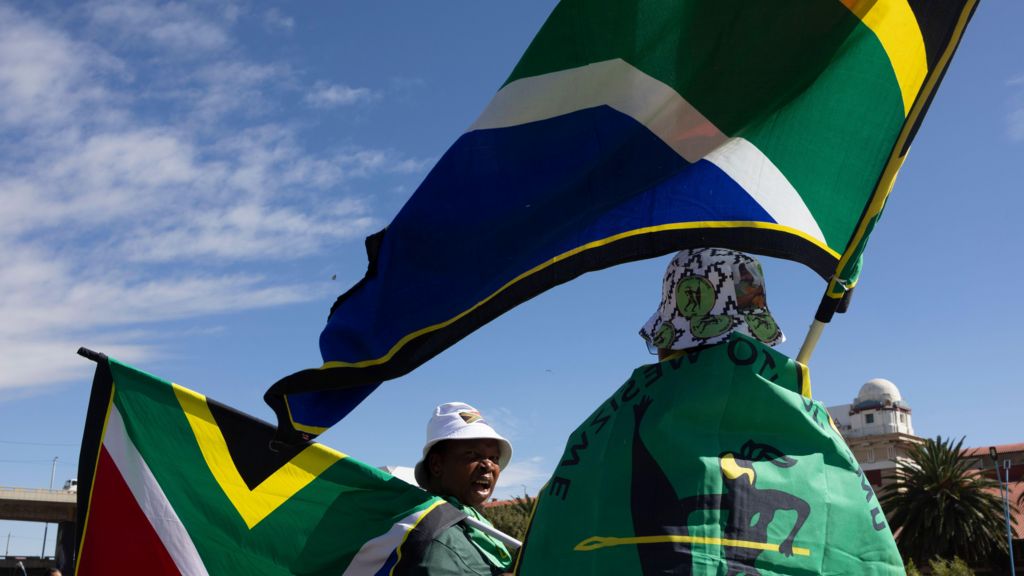
A wave of violent anti-immigrant attacks targeting foreign nationals across South Africa has sparked diplomatic tension between the continent’s most industrialized nation and Nigeria, after Abuja formally called in Pretoria’s acting high commissioner to address the escalating crisis.
According to an official statement from Nigeria’s foreign ministry, the scheduled Monday meeting will center on delivering Nigeria’s formal and profound concern over the recent string of xenophobic actions, including organized anti-immigration marches by nativist groups, documented assaults on Nigerian citizens, and coordinated attacks on businesses owned by Nigerian nationals. Ministry officials have explicitly warned that the ongoing unrest poses a tangible risk to the longstanding bilateral relations between the two African economic powerhouses.
Local South African media reports confirm that at least six foreign nationals have been killed in recent weeks: two Nigerian citizens and four Ethiopian nationals, with additional attacks recorded against migrants from other African countries across the country. As the economic hub of Southern Africa, South Africa has for decades drawn migrant workers from across the continent seeking greater employment opportunities and economic stability, a trend that has fueled growing resentment among segments of the local population.
South African President Cyril Ramaphosa has publicly condemned the violent attacks on migrants, but has also coupled this condemnation with a warning to all foreign residents that they must abide by South Africa’s domestic immigration laws. During his annual Freedom Day address last week, which marked the anniversary of South Africa’s first post-apartheid democratic elections in 1994, Ramaphosa reminded citizens of the critical solidarity and support African nations across the continent provided during the decades-long fight against the racist apartheid regime.
Despite this official message of unity, anti-immigrant sentiment has hardened in many communities. Many South African residents blame undocumented migrants for straining public services, taking scarce formal employment opportunities from local workers, and fueling rising rates of organized crime, particularly drug trafficking. Hardline anti-immigration groups have taken to extrajudicial patrols, stopping people outside public facilities including hospitals and schools to demand proof of legal residency.
During a large anti-immigrant march held in the capital Pretoria last week, organizers ordered all foreign-owned businesses to shut their doors ahead of the demonstration to avoid potential violence. One Nigerian resident, speaking to BBC Pidgin on the sidelines of the unrest, expressed deep disappointment with the targeting of African migrants. “It is not okay because we are blacks, we are brothers… everybody comes here just to survive,” he said.
A South African security worker, who was blocked from reaching his job by the protest march, echoed that frustration. “It’s not what we expected as fellow Africans,” he told reporters. “It’s just making us scared – imagine if we’re scared in our own African continent – what if we go to Europe?”
Nigeria is not the only African nation to take formal diplomatic action over the unrest. Last month, Ghana also summoned South Africa’s top diplomatic envoy after a viral video spread widely across social media showing a Ghanaian man being aggressively confronted by anti-immigrant activists who demanded he show proof of legal immigration status.
The current rise in xenophobic tension traces back to earlier this year, when controversy erupted after the head of Nigeria’s community in the South African port city of KugoMpo, formerly known as East London, was installed in a traditional local leadership position loosely translated as “king.” Many local South African residents framed the move as an illegitimate power grab by foreign communities, stoking widespread anger that has since spread across the country.
Official South African government data estimates that roughly 2.4 million legal migrants currently reside in the country, accounting for just under 4% of the total national population. Demographers estimate that a much larger number of migrants reside in the country without formal immigration documentation. The vast majority of migrants come from neighboring Southern African countries including Lesotho, Zimbabwe and Mozambique, nations that have a long history of providing migrant labor to South Africa’s economy. A far smaller share of the migrant population hails from Nigeria.
-
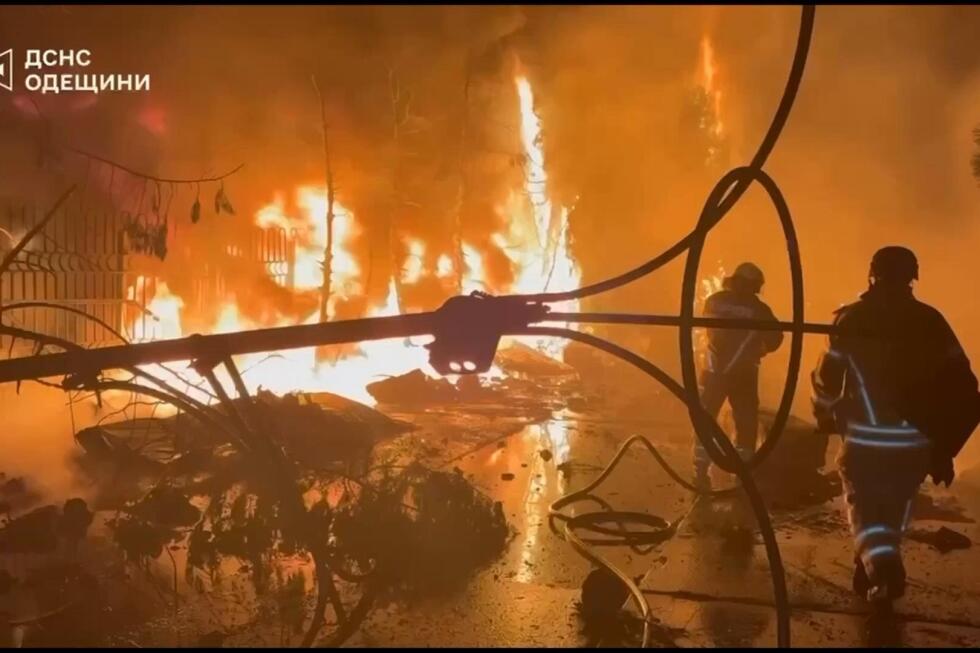
Ukraine hits key Russian oil-loading port and 3 ‘shadow fleet’ tankers
On Sunday, Ukraine escalated its long-range targeting campaign against Russian energy assets, launching a coordinated wave of drone strikes that hit a major Baltic Sea oil export terminal and multiple vessels Kyiv links to Russia’s sanctions-evading shadow crude fleet. The cross-border attacks came amid a wave of reciprocal strikes that left civilian casualties on both sides, deepening the ongoing military escalation in the third year of Russia’s full-scale invasion.
The first and highest-profile strike targeted Primorsk, Russia’s largest Baltic Sea oil export terminal operated by state-owned energy giant Transneft. Located more than 1,000 kilometers from Ukrainian territory, between the Russian-Finnish border and St. Petersburg, the facility is capable of processing hundreds of thousands of barrels of crude daily and has been targeted by Ukrainian drones multiple times since March. Russian regional governor Alexander Drozdenko confirmed that a nighttime drone attack sparked a fire at the port, but noted no oil spill occurred. He offered no immediate details on potential casualties or the extent of infrastructure damage.
Ukrainian President Volodymyr Zelenskyy claimed the operation delivered significant damage to Russian assets in a post on the Telegram messaging platform Sunday. He confirmed the strike, adding that one more Russian Kalibr missile-carrying vessel had been put out of action, alongside destruction of key port infrastructure. Zelenskyy also said Ukrainian drones hit a Karakurt-class missile ship, a Russian patrol boat, and one tanker belonging to Russia’s notorious shadow oil fleet — a network of unregistered or loosely registered vessels used to bypass Western price caps and sanctions on Russian crude exports.
In an earlier separate statement Sunday, Zelenskyy announced a second strike targeting two additional shadow fleet tankers near the entrance to Novorossiysk, Russia’s major Black Sea port. “These tankers were actively used to transport oil. Now they won’t,” he said, confirming the operation was directed by the chief of Ukraine’s general staff, Andrii Hnatov. The Kremlin has not issued any official confirmation of Zelenskyy’s claims regarding the two tanker strikes as of Sunday evening.
Sunday’s attacks mark the latest acceleration of Ukraine’s recent campaign against Russian energy export infrastructure. Ukrainian officials have repeatedly justified the targeting, noting that oil and gas revenue forms a core pillar of funding for Russia’s full-scale invasion, which entered its third year in February 2024.
The coordinated Ukrainian strikes were matched by a large-scale Russian air assault across Ukraine overnight into Sunday, which left multiple civilians dead and injured. Ukraine’s Emergency Service confirmed that a Russian drone strike on the southern Odesa region killed two people and wounded three more, damaging three residential buildings and port infrastructure before emergency crews extinguished a resulting fire. In central Ukraine’s Dnipropetrovsk region, six people were wounded in overnight strikes. A passenger bus carrying 40 children was damaged in the attack, though no children onboard were injured.
Reciprocal strikes also caused civilian casualties inside Russian territory. A 77-year-old man was killed in a Ukrainian drone strike west of Moscow near the town of Volokolamsk, 120 kilometers from central Moscow, regional governor Andrei Vorobyov confirmed via Telegram. Russian officials said six drones were intercepted and downed in the Moscow region, which surrounds the capital, and Moscow mayor Sergei Sobyanin confirmed an additional five drones were shot down while approaching the city itself. In western Russia’s Smolensk region, three people — a man, woman and child — were injured after debris from a shot-down Ukrainian drone crashed into an apartment block, local governor Vasiliy Anokhin reported.
Russian Defense Ministry figures released Sunday show that Russian air defenses intercepted and downed a total of 334 Ukrainian unmanned aerial vehicles overnight across Russia and occupied Crimea. For its part, Ukraine’s Air Force reported that Russia launched a total of 269 drones and ballistic missiles against Ukrainian targets overnight. Ukrainian forces shot down 249 of the incoming drones, the service said in a Facebook update, while 19 drones and multiple ballistic missiles successfully hit targets in 15 separate locations across the country.
-

Australia sets its sights on Yorkshire’s young professionals
For generations, British people have been drawn to Australia by the promise of warmer weather, a more relaxed lifestyle, and greater professional opportunities. That long-running trend has hit a new milestone in 2024: new data from the Australian Bureau of Statistics shows 39,580 people migrated to Australia from the UK, Channel Islands and Isle of Man this year, marking the highest annual number of arrivals from the region in a decade. An additional 10,660 migrants also arrived from Ireland, putting the upward trajectory of UK and Irish migration to Australia beyond doubt.
Now, one of Australia’s less populated regions is leaning into this growing interest, launching a targeted outreach campaign across the UK and Ireland to lure young skilled workers to its borders. Australia’s Northern Territory, a vast, sparsely populated region famous for its rugged outback landscapes, unique wildlife and untouched coastal areas, is facing a critical workforce shortage, with officials estimating the region will need an additional 30,000 workers over the next five years to support growing industries spanning construction, healthcare, education, hospitality, business and technology. To fill these gaps, territory officials have been hosting pop-up information sessions across UK and Irish cities, including Leeds, Liverpool, Belfast and Cork, to introduce young professionals to the opportunities available in the region that are often overshadowed by more popular migration destinations like Sydney, Melbourne and Perth.
On a recent midweek evening in Leeds, dozens of young professionals traded post-work drinks at city center beer gardens for a chance to learn more about making the move to the outback. Among them was 24-year-old medical sales worker Chloe Rhodes, who has dreamed of moving to Australia since she was a teenager. “Here I’m happy, I’m alright, but I just want to strive for more,” Rhodes explained. “It’s the whole idea of the slower-paced lifestyle – and I grew up by the beach, so I like to be by the beach a lot.” Like many aspiring migrants, Rhodes faces hurdles to making the move: her current role is not included on Australia’s skilled occupation list for working visas, but she is hopeful her position at a global company will allow for an internal transfer, a process she says is already underway.
For 26-year-old Caitlin Murphy, who already spent two years living in Western Australia, the Northern Territory has emerged as a top candidate for a permanent move with her partner. Murphy, originally from Scotland, is drawn to the territory’s laid-back pace of life, and is counting on her partner’s IT career to qualify them for a permanent visa. Her own background in law, however, will likely make it harder to transfer her professional qualifications, a challenge she says she is prepared to navigate.
Geoff Totham, a Northern Territory government workforce development officer who has been leading the information sessions, says turnout for this year’s events has already been busier than the territory’s 2024 tour of the UK. He notes that most attendees know very little about the Northern Territory compared to better-known Australian states, but the region offers unique advantages that more populous states cannot match. “The more we market into this place, hopefully more people will realise that there are opportunities in the territory and, of course, that’s going to help us solve our workforce issues,” Totham said.
For UK migrants who have already made the leap, the reality of life in Australia brings both rewards and unforeseen hurdles. Ben Cartwright, who left Leeds for Sydney 18 months ago, says he initially underestimated how hard it would be to break into his field of media and communications, even with prior UK experience. On a working holiday visa that limited him to six months with any single employer, Cartwright spent months working odd jobs to get by before landing a role as a magazine editor. Today, he says the effort has paid off: he earns more than double the salary he made for the same work in the UK. Adam Laver, a 27-year-old former BBC journalist who left Bradford for Adelaide at the end of 2024, says he loves his new coastal lifestyle, which includes an affordable home within walking distance of the beach. But he has struggled to find steady work outside of seasonal hospitality roles, which dry up during the cooler months. Laver now plans to move to Vietnam next month to teach English, and advises future migrants to save more and plan for transportation barriers that can limit job opportunities in less urbanized areas. Despite the challenges, the growing turnout for migration information sessions suggests that the draw of Australia’s lifestyle and opportunity remains as strong as ever for young British professionals.
-

How we reported in -30C temperatures in Canada’s Arctic
Covering a story in one of the harshest cold-weather environments on Earth requires more than just preparation—it demands endurance, adaptability, and a willingness to push past the limits of human comfort. For two BBC correspondents, Nadine Yousif and Eloise Alanna, that challenge became a reality when they embarked on a five-day journey across Canada’s frozen Arctic, embedded with the nation’s military rangers, facing sustained temperatures as low as -30 degrees Celsius and the constant threat of frostbite.
Canada’s Arctic region is a remote, sparsely populated landscape that plays a critical role in the country’s national security and sovereignty, making the work of Canadian military rangers here vital. These reservists regularly patrol the vast icy expanse, conducting reconnaissance, supporting local communities, and maintaining a persistent presence in the strategically important northern territory. For the journalists, joining a patrol offered an unfiltered, first-hand look at the realities of operating in one of the coldest inhabited regions on the planet, far from the amenities of southern urban centers.
Over the course of their five-day trek, Yousif and Alanna confronted a cascade of environmental threats that tested their resilience. Sub-zero temperatures bite through even the most advanced cold-weather gear, turning routine tasks like adjusting camera equipment or checking notes into dangerous ventures that increase the risk of tissue damage from frostbite. Every exposure to the open air carries risk, and the team had to remain constantly vigilant for early warning signs of frostbite and hypothermia, conditions that can escalate into life-threatening emergencies in minutes in these conditions.
Working alongside the experienced military rangers, the journalists learned to navigate the frozen terrain, adapt to the unforgiving climate, and document the little-seen work of Canada’s northern patrols. The expedition offered audiences a rare, intimate glimpse into the challenges faced by both service members and the small Indigenous communities that call the Canadian Arctic home, highlighting the harsh realities of life and work in a region that is increasingly gaining strategic and climate attention globally.
-

Israel accused of destroying Christian convent in Lebanon in latest attack on Christians
A French-based Catholic charitable organization has issued a strong condemnation of Israel after Israeli military forces completely demolished a convent run by the Greek Catholic Salvatorian Sisters order in the southern Lebanese village of Yaroun, framing the incident as a deliberate attack on a sacred site of worship.
In an official statement released Friday, L’Oeuvre d’Orient, a longstanding Catholic charity focused on supporting Christian communities across the Middle East, denounced not just the targeted destruction of the convent but also the widespread systematic leveling of residential properties across southern Lebanon. The organization argued this campaign of demolition is intentionally designed to block displaced civilian populations from returning to their home communities once active hostilities subside.
The charity further emphasized that the Yaroun convent attack is not an isolated incident, but part of a growing broader pattern of destruction targeting Christian cultural and religious heritage across the region. It pointed out that multiple other Christian sacred sites were destroyed during 2024 cross-border and wartime operations, including two Melkite churches in Yaroun and the nearby village of Derdghaya — both of which are officially protected as part of Lebanon’s national cultural heritage register.
Tensions over Israeli actions targeting Christian sites have been simmering since April, when widely circulated images showed an Israeli soldier using a jackhammer to deliberately desecrate a crucifix statue of Jesus in southern Lebanon. That incident sparked widespread outrage among Christian communities and religious leaders across the globe.
In recent weeks, reports of violent targeting of Christian individuals and institutions have increased sharply across the broader Middle East. Earlier this week, in occupied East Jerusalem, a 48-year-old nun who works as a researcher was physically assaulted near the Cenacle on Mount Zion, sustaining visible facial injuries that required urgent medical intervention.
Restrictions on core Christian religious practices have also expanded in recent months. Last month, Israeli police initially blocked Cardinal Pierbattista Pizzaballa, the Latin Patriarch of Jerusalem, and a group of fellow clergy from holding the traditional Palm Sunday Mass at the Church of the Holy Sepulchre, one of Christianity’s holiest sites. Access was only partially restored after widespread international pressure was brought to bear on Israeli authorities.
A new analysis published by the Rossing Centre for Education and Dialogue, a regional research organization focused on interfaith relations, confirms a dramatic uptick in anti-Christian aggression. The center’s 2025 report documents a “continued and expanding pattern of intimidation and aggression” targeting Christian communities, recording 155 separate separate incidents of hostility in just one year. This total includes 61 physical assaults on individuals, 52 attacks on church-owned property, 28 cases of religious harassment, and 14 incidents of vandalism targeting religious signage. Researchers stressed that the published numbers likely represent only the “tip of the iceberg,” as many incidents go unreported out of fear of retaliation.
Responding to the latest convent incident on Saturday, an Israeli military spokesperson acknowledged that Israeli forces had damaged a “religious building” in Yaroun during what the military described as operational activities targeting what it calls militant infrastructure in the area.
The demolition of the convent comes even after a ceasefire was announced on April 17, designed to end more than six weeks of large-scale Israeli military operations across Lebanon. Despite the truce, Israeli military strikes and ground operations have continued in southern Lebanon.
As of Saturday, Lebanon’s official National News Agency reported that Israeli military actions between March 2 and May 2 have left at least 2,659 people dead and more than 8,183 others wounded across the country, the vast majority of them civilian residents displaced from their southern communities.
-
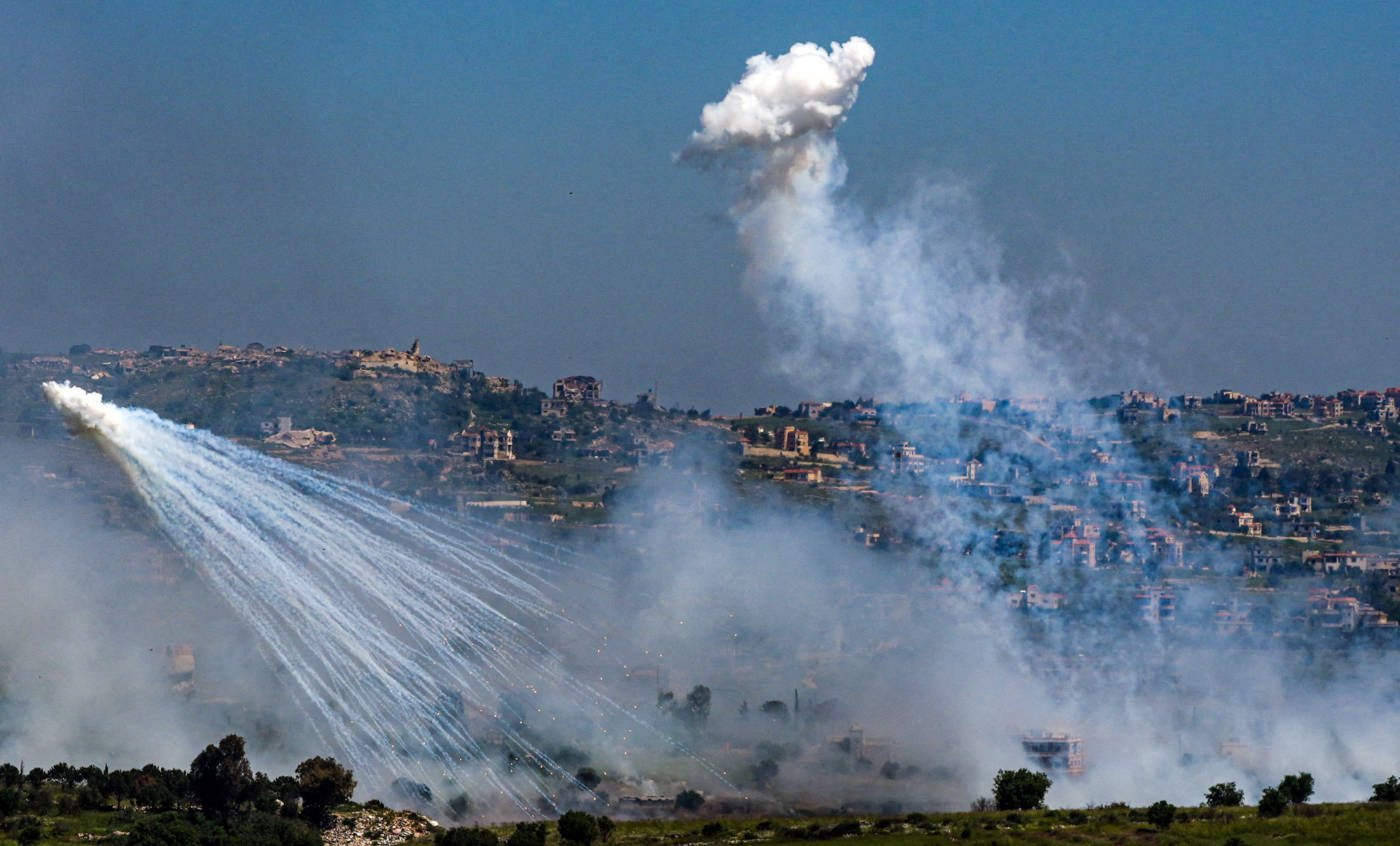
What exactly is white phosphorus and why is it controversial?
Fresh accusations have emerged this week accusing the Israeli military of deploying white phosphorus artillery shells in populated areas of southern Lebanon, renewing long-simmering global debate over the controversial weapon’s legality and devastating humanitarian impact. Human rights monitors warn that using the incendiary munition near civilian communities qualifies as an indiscriminate attack that violates core standards of international humanitarian law.
To contextualize the latest allegations, Middle East Eye has broken down the chemical properties, harmful effects, historical military use, and regulatory gaps that have allowed white phosphorus to remain a persistent weapon of war across decades of conflict.
### What is white phosphorus, and how is it used?
Chemically derived from rock phosphate, white phosphorus is a pale, waxy solid with a unique volatile trait: it is pyrophoric, meaning it spontaneously ignites on contact with air or water, producing a thick, opaque white smoke. First commercialized in the 19th century for match production, the compound was quickly linked to a fatal occupational illness nicknamed “phossy jaw”, which caused bone necrosis and death among factory workers exposed to its fumes.Today, civilian applications of white phosphorus are limited to agricultural inputs and detergent chemical additives, with use declining amid growing environmental concerns over its toxicity. On the battlefield, however, militaries defend its use by arguing that its smoke screen capabilities effectively conceal troop movements and help identify targets for artillery and air strikes. But the same chemical properties that make it useful for battlefield masking also make it a devastating incendiary weapon, often deployed to flush enemy combatants out of enclosed spaces like tunnels or disperse crowds.
### The devastating human and environmental cost of white phosphorus exposure
The harm caused by white phosphorus extends far beyond immediate battlefield injuries. In enclosed spaces, the compound quickly consumes oxygen, causing rapid suffocation. For those exposed via inhalation, symptoms include acute respiratory tract burning, nausea, fluid buildup in the lungs, and extreme, unquenchable thirst.White phosphorus’s most horrifying trait is its stickiness: it clings tenaciously to skin and clothing, burning at temperatures up to 2,500°C that can sear straight through flesh to reach the bone, leaving survivors with excruciating, permanently disfiguring injuries. Even when it appears extinguished, the compound can reignite hours after exposure. If it enters the bloodstream, it poisons vital organs, often leading to death. For medical providers, treating white phosphorus exposure is uniquely dangerous and challenging, as the compound continues to burn even after extraction from wounds, and there is no antidote for its systemic toxicity.
Beyond human harm, white phosphorus’s extreme combustibility destroys civilian infrastructure and renders agricultural land infertile for years after use, leaving long-term damage to local communities.
Bonnie Docherty, a leading expert on conventional weapons at Harvard Law School’s International Human Rights Clinic and senior arms adviser for Human Rights Watch, explains that when white phosphorus is detonated over populated areas, it cannot distinguish between civilian non-combatants and military targets. “When white phosphorus is airburst over a populated area, it spreads flaming wedges of the substance over a wide area and cannot distinguish between civilians and soldiers or between civilian objects and military targets,” she told Middle East Eye. “That use is inherently indiscriminate and violates general international humanitarian law, or the laws of war.”
### A long history of military use across global conflicts
White phosphorus has been a staple of global military arsenals for more than a century. It saw widespread use among Allied forces during World War I, and the British Royal Air Force deployed it against Kurdish villages during the 1920 Iraqi revolt. U.S. forces used white phosphorus grenades during the 1944 Normandy campaign, and by the Vietnam War, troops nicknamed the munition “Willie Pete,” using it to flush Viet Cong combatants out of tunnel networks and ignite napalm strikes.Subsequent conflicts from the 1982 Falklands War to the 1990s Chechen Wars saw the weapon deployed by British and Russian forces respectively. During the 2020 Second Nagorno-Karabakh War, both Armenia and Azerbaijan accused one another of using white phosphorus as an incendiary weapon, with investigators from the Atlantic Council later confirming its presence on the battlefield. Similar allegations have been leveled against Russian forces following their 2022 full-scale invasion of Ukraine.
Israel has a well-documented history of deploying white phosphorus across its military campaigns in the occupied Palestinian territories and Lebanon. As recently as March 2025, the Israeli military fired white phosphorus over residential areas in the southern Lebanese village of Yohmor during cross-border strikes. Since October 2023, leading human rights organizations including Amnesty International and Human Rights Watch have documented repeated Israeli use of the munition over populated areas of southern Lebanon and the Gaza Strip, where Israel’s ongoing military campaign has killed more than 72,000 Palestinians to date. Israel has repeatedly denied these accusations.
Israeli officials have a history of acknowledging past use: the Israeli military publicly confirmed it deployed white phosphorus against Hezbollah targets during the 2006 Lebanon invasion, and it acknowledged firing roughly 200 white phosphorus munitions into populated Gaza during the 2008-2009 Gaza war, an operation that Human Rights Watch confirmed killed dozens of civilians. In 2013, Israel’s High Court of Justice rejected a public petition seeking to ban the Israeli military from using white phosphorus in populated civilian areas.
The munition has also been deployed across other recent Middle Eastern conflicts: during the Syrian civil war and the U.S.-led campaign against the Islamic State, U.S.-coalition forces, the Turkish military, and the Syrian government were all accused of using white phosphorus. In 2005, the U.S. Pentagon publicly admitted it used white phosphorus as an incendiary weapon during the 2004 siege of Fallujah, Iraq. Human Rights Watch also accused the U.S.-led coalition of using white phosphorus in Afghanistan in 2009, while Washington countered that the Taliban had used the munition 44 times that same year.
### The regulatory gap that lets white phosphorus evade a global ban
Despite its well-documented devastating humanitarian impact, white phosphorus is not explicitly banned under international law. The 1980 Convention on Conventional Weapons (CCW) Protocol III restricts the use of incendiary weapons, defining them as weapons “primarily designed” to start fires and cause burn injuries, and places heavy restrictions on weapons like napalm and flamethrowers.But the protocol’s definition deliberately excludes multi-purpose munitions like white phosphorus, which are officially classified as smokescreen and target-marking tools rather than primary incendiary weapons. This creates what Docherty calls a “major loophole in the protocol.” “Civilians suffer the same excruciating injuries from weapons that produce heat and flame regardless of what those weapons were designed to do,” she said. “Therefore, the definition should instead be based on the effects of the weapons.”
A second loophole in Protocol III imposes stricter bans on air-dropped incendiary weapons than ground-launched variants, meaning even if white phosphorus were classified as an incendiary, most of the munitions recently used by Israel in southern Lebanon—fired from ground-based artillery—would not fall under the protocol’s prohibitions.
Reforms to close these regulatory gaps, supported by the International Committee of the Red Cross and a group of member states, have repeatedly failed due to the CCW’s governance rules, which allow any single signatory to veto amendments. Russia has repeatedly used this power to block reform efforts. To date, 117 states have ratified Protocol III, including the U.S., China, India, Russia, and most European nations, but many major military powers in the Middle East and North Africa—including Israel, Iran, Turkey, Syria, and Egypt—are not signatories, and are therefore not bound by the protocol’s rules. Even non-signatories are required to follow core principles of international humanitarian law requiring distinction between civilians and combatants and the prohibition of unnecessary suffering, but these rules are rarely enforced.
### Tracing the global supply chain of Israeli white phosphorus
Public information about the white phosphorus munitions supply chain remains limited, but investigations have traced most of the munitions used by Israel in recent years back to U.S. and Israeli suppliers. In October 2023, Amnesty International investigators identified U.S. Department of Defense identification codes on white phosphorus artillery shells recovered from Israeli strikes in Gaza. The shells are fired from U.S.-designed M109 155mm howitzers, currently manufactured by British multinational defense firm BAE Systems.A December 2023 Washington Post analysis of shell fragments recovered from the Lebanese village of Deira matched production codes to U.S. military stockpiles, indicating the munitions were manufactured at plants in Louisiana and Arkansas in 1989 and 1992. The U.S. Army’s Pine Bluff Arsenal in Arkansas, a key domestic hub for white phosphorus munitions production, was identified by both Amnesty and the Washington Post as the most likely origin of the Israeli munitions. In 2005, U.S. defense contractor Teledyne Brown Engineering was awarded a $10 million contract to upgrade the arsenal’s white phosphorus production facility.
Other investigations have named Israeli firm ICL Group, formerly Israel Chemicals Ltd, as a major global supplier of white phosphorus for military use, including supplying raw material to the Pine Bluff Arsenal. Former U.S. agrochemical firm Monsanto, acquired by Germany’s Bayer in 2018, has also been linked to white phosphorus military supply chains in academic reporting. In October 2023, then-U.S. Deputy Pentagon Press Secretary Sabrina Singh declined to comment on accusations of U.S. supply of white phosphorus to Israel, saying only that “I just don’t have a comment on that. And I think, I think the spokesperson from the IDF said that they were not using that. So I just, I don’t have any further comment on that.”
-
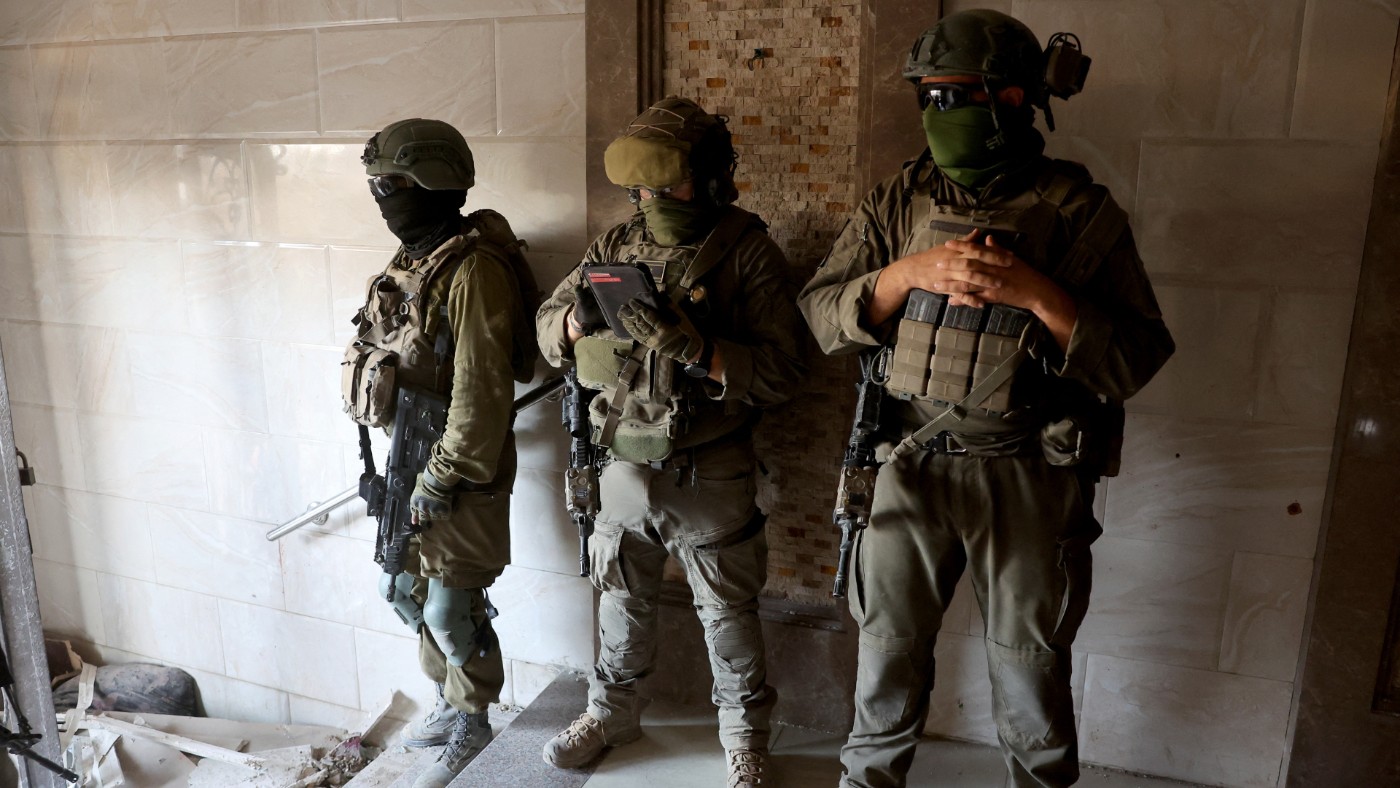
London police refuse to investigate British nationals accused of war crimes in Gaza
London’s Metropolitan Police has confirmed it will not open any formal investigation into 10 British nationals and dual citizens accused of committing war crimes and crimes against humanity while serving with the Israeli military in Gaza, a decision that human rights groups say threatens to leave serious alleged abuses unaccountable.
The controversial ruling comes more than a year after two human rights legal organizations—the Palestinian Centre for Human Rights (PCHR) and the Public Interest Law Centre (PILC)—submitted a 240-page evidence dossier to the Met’s specialized War Crimes Team in April 2023. The dossier laid out detailed allegations linking the 10 individuals to a string of serious violations, including targeted assassinations of Palestinian civilians and humanitarian aid workers, indiscriminate strikes on residential civilian zones, deliberate attacks on hospitals and other internationally protected sites, and the forced displacement of Palestinian civilians from their homes. The submission was backed by an open letter signed by more than 70 international legal and human rights experts, which called on the War Crimes Team to launch a full inquiry into every allegation of involvement in war crimes and crimes against humanity.
In a formal decision notice released on April 27, 2024, police said they would not move forward with the probe, arguing there is no realistic prospect of securing a conviction and that a thorough, effective investigation could not be carried out. Notably, this decision stands even after the Metropolitan Police acknowledged that global international bodies have repeatedly assessed that Israeli military actions in Gaza could constitute war crimes, and the force initially identified at least four of the 10 named individuals as being of “particular interest” for investigation.
Both PCHR and PILC have publicly voiced deep disappointment with the outcome, arguing that the dossier contained credible, verifiable evidence that merited a full formal investigation. The groups warn the ruling risks creating a dangerous accountability gap that allows British nationals and residents accused of severe international crimes committed abroad to avoid legal consequence.
Paul Heron, a senior solicitor with PILC, said the organizations outright reject the Met’s conclusions, insisting the refusal to investigate was premature and that police applied an incorrect legal standard to the case. “This was not a charging decision made by prosecutors at the end of a full investigation—it was a decision about whether serious allegations of the most severe core international crimes should even be investigated at all,” Heron explained. He added that the police’s approach sets an unreasonably high barrier for any future war crime probes, noting “the entire purpose of an investigation is to gather and test evidence, including evidence that is not accessible to victims, their legal representatives or civil society groups.” Heron confirmed that the coalition of groups is currently reviewing all potential legal options and is highly likely to launch a judicial challenge against the Metropolitan Police over the decision.
The police ruling also follows a string of related controversial developments in the UK’s approach to alleged Israeli war crimes. Last month, The Guardian revealed that the UK Foreign Office had closed a specialized unit tasked with tracking potential violations of international law by Israeli forces in Gaza and Lebanon, a move implemented due to government funding cuts. Reports at the time confirmed that the head of the Met’s War Crimes Team had previously warned the Foreign Office that data from the unit was critical to supporting the police’s assessment of war crime allegations against British nationals.
Freedom of Information requests published last month by independent outlet Declassified UK also exposed that more than 2,000 British citizens have served in the Israeli military during Israel’s ongoing military campaign in Gaza.
The decision comes amid a growing UK government crackdown on pro-Palestinian protest action. Just days after the Met’s war crime probe ruling, the force confirmed it is reviewing a potential ban on upcoming pro-Palestinian marches across London, following a stabbing attack that injured two Jewish men, aged 34 and 76, in Golders Green, a northwest London neighbourhood with a large Jewish community. UK Prime Minister Keir Starmer publicly backed potential bans over the weekend, stating that the chant “globalise the intifada” should be completely off-limits for public protest. On Friday, Starmer called the chant an example of “extreme racism” and called for criminal prosecution of anyone who uses it. It should be noted that there have been no recorded instances of antisemitic attacks in the UK linked to the use of this phrase, despite police forces in London and Greater Manchester announcing in December 2023 that they would arrest anyone chanting the phrase or displaying it on protest placards.
Since the start of Israel’s military campaign in Gaza in October 2023, official Palestinian health data records more than 72,000 Palestinians have been killed in Israeli attacks, including roughly 20,000 children. In April 2024, an Israeli drone strike on a vehicle operated by the humanitarian group World Central Kitchen in Gaza City killed seven aid workers, three of whom were former British service members. The family of James Kirby, one of the killed British aid workers, has repeatedly called for a full, independent public inquiry into his death. Two years after the strike, Kirby’s family says they have received only limited communication from the UK government and remain uncertain whether any full formal investigation is progressing. At the time of the attack, reporting from Middle East Eye noted that arms experts and human rights campaigners found the Elbit Hermes 450 drone used in the strike was powered by a British-manufactured engine.
Last November, the UK government officially confirmed that British soldiers had continued to train in Israel throughout the military campaign in Gaza, marking the first official admission of UK military personnel presence at Israeli military academies since the start of the war in October 2023. It is also well-documented that Royal Air Force aircraft have conducted regular surveillance flights over Gaza since the war began, despite widespread allegations of war crimes against Israeli forces.