分类: world

  • Is there anybody out there? Pentagon releases secret UFO files

    Is there anybody out there? Pentagon releases secret UFO files

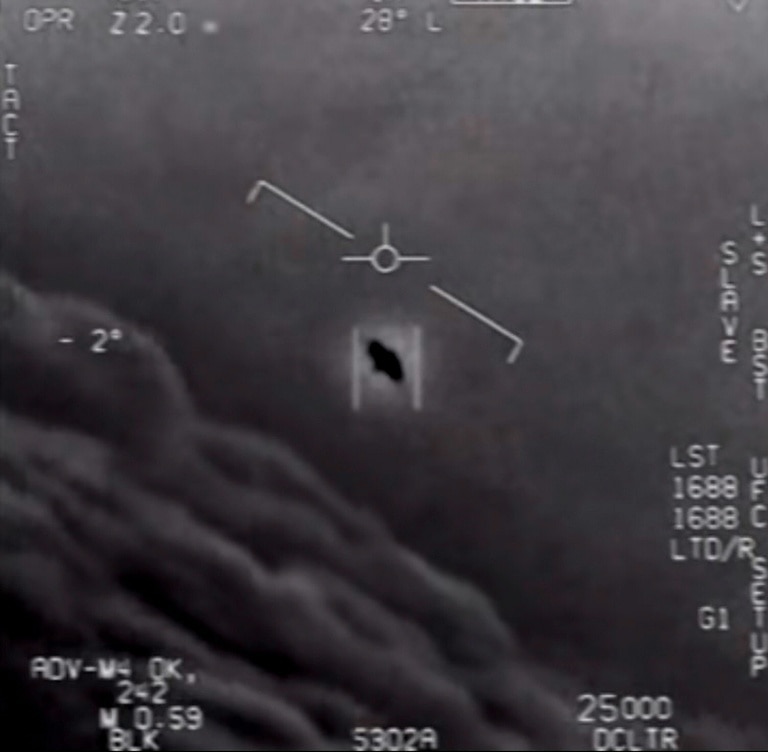
    In a long-awaited move that has reignited global public curiosity about potential extraterrestrial life, the U.S. Pentagon released its first collection of once-classified documents detailing hundreds of reported unidentified flying object (UFO) sightings on Friday. The batch of files, which draws records from multiple U.S. agencies including the Federal Bureau of Investigation, the State Department, NASA and the Defense Department itself, includes decades-old reports of flying saucers, mysterious airborne discs, and even a recent glowing orb encounter compared to the iconic ‘Eye of Sauron’ from *The Lord of the Rings*.

    Public and official attention toward Unidentified Anomalous Phenomena (UAP, the Pentagon’s official term for UFOs) has surged in recent years. Beyond public fascination, U.S. defense officials have raised serious national security concerns, noting that many unexplained aerial sightings could stem from advanced secret military technologies being tested by U.S. geopolitical adversaries.

    In an official statement announcing the release, Defense Secretary Pete Hegseth emphasized the urgency of transparency, noting that decades of classification had fueled widespread public speculation that the public deserved to evaluate firsthand. ‘These files, hidden behind classifications, have long fueled justified speculation — and it’s time the American people see it for themselves,’ Hegseth said.

    In total, more than 160 declassified files were made accessible to the public via the Defense Department’s official website. The records stretch back nearly 80 years: one of the oldest entries, dated December 1947, compiles multiple independent reports of ‘flying discs’ documented by U.S. military officials. A 1948 top-secret U.S. Air Force intelligence report echoed persistent official concern over the recurring sightings, noting that the consistent reports from credible observers kept the issue a top priority for Air Material Command headquarters.

    Alongside the mid-20th century documents, the release also includes recently compiled reports from 2023. One file summarizes seven separate accounts from federal government employees of unexplained anomalous phenomena across U.S. airspace. The Pentagon’s All-domain Anomaly Resolution Office (AARO), the body tasked with investigating UAP encounters, labeled this collection of accounts ‘among the most compelling’ in its entire active database, citing the professional credibility of the witnesses and the unusual nature of the events they described.

    One of the most striking 2023 accounts comes from three independent teams of federal law enforcement special agents, all of whom separately reported seeing large orange orbs in the sky that launched or emitted smaller, red glowing orbs. In a separate incident, two federal special agents encountered a glowing orange object perched on the edge of a rock pinnacle. The witnesses drew a sketch of the object, and described it as nearly identical to the Eye of Sauron from J.R.R. Tolkien’s fantasy franchise, minus the iconic central pupil.

    The release of the files follows an executive order from President Donald Trump issued in February 2025, which directed all U.S. federal agencies to begin the process of identifying and declassifying all government-held records related to UFOs and potential extraterrestrial activity. Trump justified the order by pointing to overwhelming public interest in the topic.

    When announcing the order, Trump drew controversy by accusing his Democratic predecessor, Barack Obama, of improperly disclosing classified information during a viral podcast appearance. In that podcast, Obama had addressed widespread rumors surrounding Area 51, the highly secretive Nevada military facility at the center of decades of UFO conspiracy theories. Obama stated: ‘They’re real, but I haven’t seen them and they’re not being kept in… Area 51.’

    Trump responded to the remarks at the time by claiming Obama had leaked information he was not authorized to share, while adding that he remained uncertain about the existence of extraterrestrial life: ‘I don’t know if they are real or not.’

    To date, no conclusive empirical evidence of intelligent extraterrestrial life visiting Earth has been presented by the U.S. government. In a March 2024 report, the Pentagon confirmed that it has found no conclusive evidence linking reported UAP sightings to alien technology. The report noted that the vast majority of unexplained encounters ultimately are identified as ordinary objects and activity, including weather balloons, reconnaissance aircraft, orbiting satellites, and natural atmospheric phenomena.
  • War in the Middle East: latest developments

    War in the Middle East: latest developments

    A day of rapidly shifting developments across the Middle East on Friday left regional security hanging in the balance, with armed clashes between U.S. and Iranian forces, cross-border attacks between Hezbollah and Israel, and diplomatic friction roiling already fragile relations between key global and regional players.

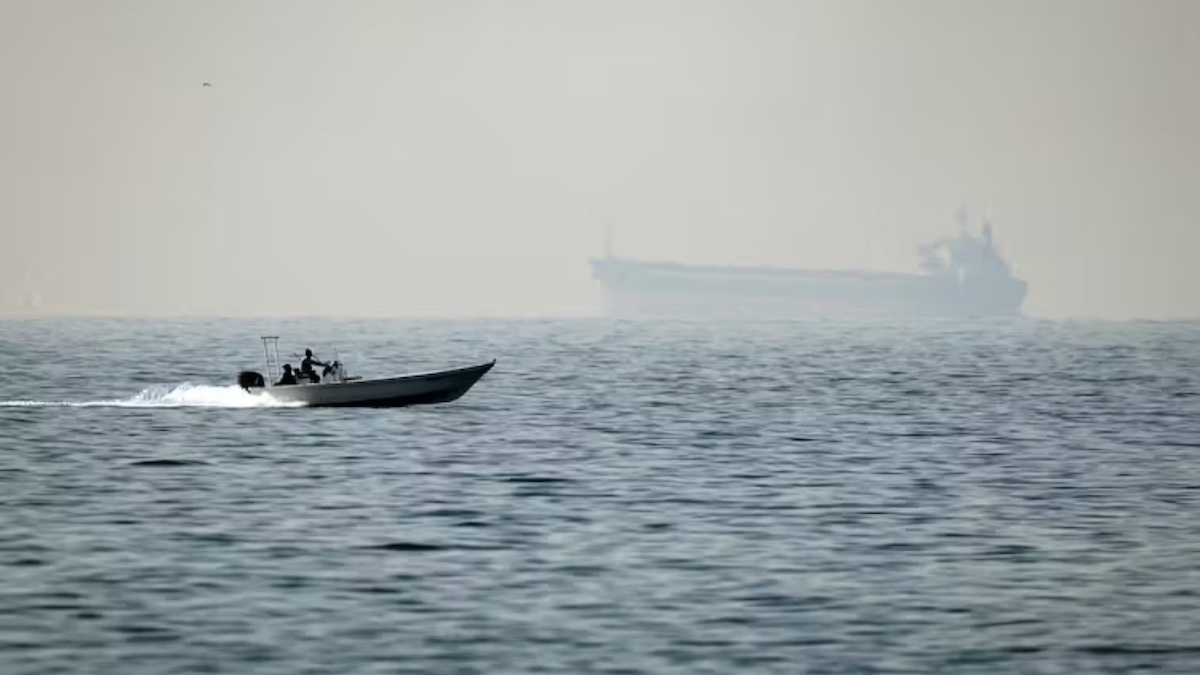
    The first major development broke when U.S. Central Command announced via a social media post on X, accompanied by footage of the operation, that American military forces had fired on and disabled two Iranian-flagged oil tankers that it said attempted to breach a U.S.-led maritime blockade imposed on Iranian ports since April 13. The attack, carried out by a U.S. Navy F/A-18 Super Hornet, used precision munitions targeted at the vessels’ smokestacks to stop them from entering Iranian territorial waters. This operation marks the fourth time the U.S. has forcibly stopped ships it accuses of violating the blockade, following the seizure of the Iran-flagged tanker Herby by the U.S. destroyer USS Rafael Peralta just 11 days earlier.

    Iranian state media quickly pushed back on the U.S. account, confirming fresh armed confrontations in the strategic Strait of Hormuz. Fars News Agency reported that sporadic clashes between Iranian armed forces and U.S. naval vessels had been ongoing for more than an hour on Friday, following a major flare-up overnight Thursday. An unnamed Iranian official added that overnight U.S. strikes on shipping near the strait hit an Iranian cargo vessel, leaving five crew members missing and 10 others wounded.

    Diplomatically, the U.S. remained on standby Friday for Iran’s response to a latest U.S.-proposed peace deal, a development that comes after both sides traded blame for the overnight clash that sent global markets into turbulence and renewed widespread fears that the region could slide back into full-scale open conflict. U.S. Secretary of State Marco Rubio reaffirmed Washington’s hardline position ahead of Iran’s expected response, stressing that Iran has no right to claim control over the Strait of Hormuz, a critical global chokepoint for 20% of the world’s daily oil trade. “Iran now claims that they own, that they have a right to control, an international waterway… That’s an unacceptable thing that they’re trying to normalise,” Rubio told reporters Friday.

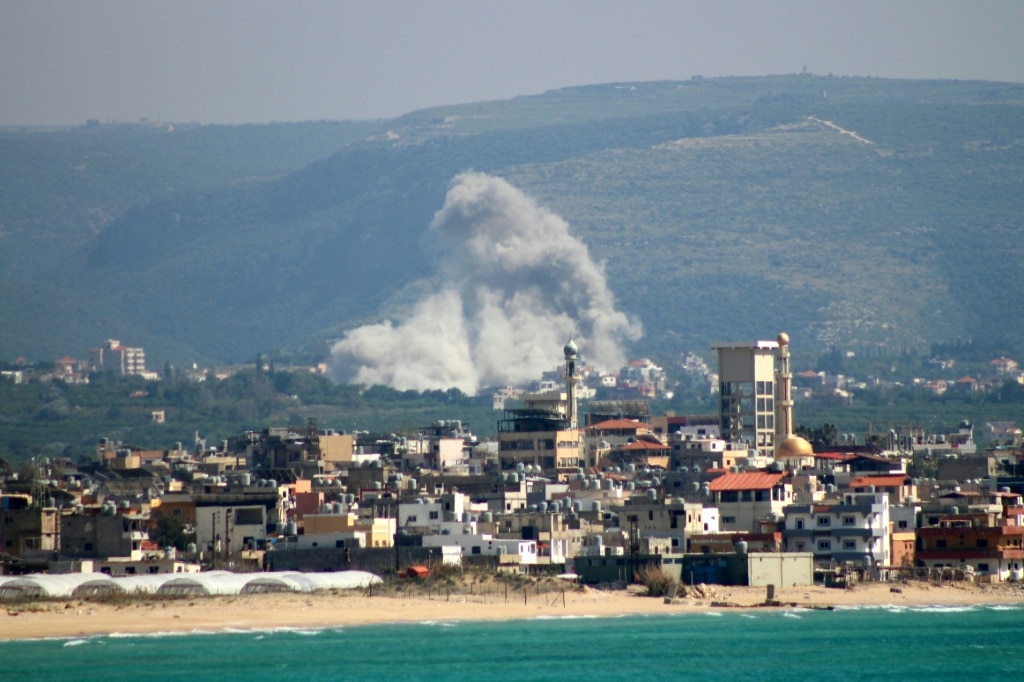
    Amid the U.S.-Iran standoff, the long-running Israeli-Lebanese border front also flared back to life, just weeks after a tentative truce went into effect. The Lebanese armed group Hezbollah announced it had launched a barrage of missiles at an Israeli military base south of the coastal city of Nahariya in northern Israel. The strike was framed as retaliation for recent Israeli attacks on southern Lebanon and the southern suburbs of Beirut. The Israeli military confirmed that air raid sirens activated across multiple northern Israeli communities shortly before Hezbollah’s statement. Separately, Lebanon’s civil defence rescue organisation confirmed that an Israeli airstrike on southern Lebanon killed one of its personnel, raising tensions further along the volatile border.

    Diplomatic friction also emerged between the U.S. and its long-time regional partner Saudi Arabia, according to two anonymous Saudi sources speaking exclusively to Agence France-Presse. The sources confirmed that Riyadh has barred the U.S. from using Saudi airspace and military bases on Saudi territory for any operations aimed at reopening the Strait of Hormuz. The clarification notes that this restriction applies only to operations targeting the current standoff with Iran, and that the U.S. will retain access to Saudi infrastructure for all other pre-planned activities. Saudi Arabia has repeatedly stated publicly that it will never allow its territory or airspace to be used for offensive operations against Iran, aligning with this new restriction.

    The escalating conflict has already sparked ripple effects across global energy and transportation sectors. On Friday, the European Union moved to crack down on exploitative airline pricing amid spiking aviation fuel costs tied to Middle East war supply risks, banning carriers from adding last-minute fuel surcharges to tickets that customers have already purchased. Separately, the European Union Aviation Safety Agency (EASA) issued new guidance clearing the way for expanded use of U.S.-produced Jet A aviation fuel across European airports. Currently, the fuel is only permitted for use by flights returning to the U.S. from European hubs. EASA’s new guidance concludes that widespread adoption of Jet A in Europe would not create major safety risks so long as the transition is properly managed, a move intended to head off potential fuel shortages amid ongoing supply disruptions.

    Another major escalation came when the United Arab Emirates confirmed that Iranian forces launched a combined missile and drone attack on Emirati territory Friday. The UAE’s Ministry of Defence wrote in a post on X that the country’s air defence systems successfully intercepted two ballistic missiles and three unmanned aerial vehicles launched from Iran, but the attack still left three people with moderate injuries.

    In a further sign of Iran’s plans to assert control over the strategic waterway, a leading international shipping journal reported Friday that Tehran has established a new government agency tasked with approving all vessel transits through the Strait of Hormuz and collecting transit tolls from passing ships. The move comes as Washington continues to push for a diplomatic deal to reopen the strait, which Iran has closed to commercial shipping in recent weeks amid the escalating standoff.

  • ‘Blessed’ Leo marks one year as pope with southern Italy visit

    ‘Blessed’ Leo marks one year as pope with southern Italy visit

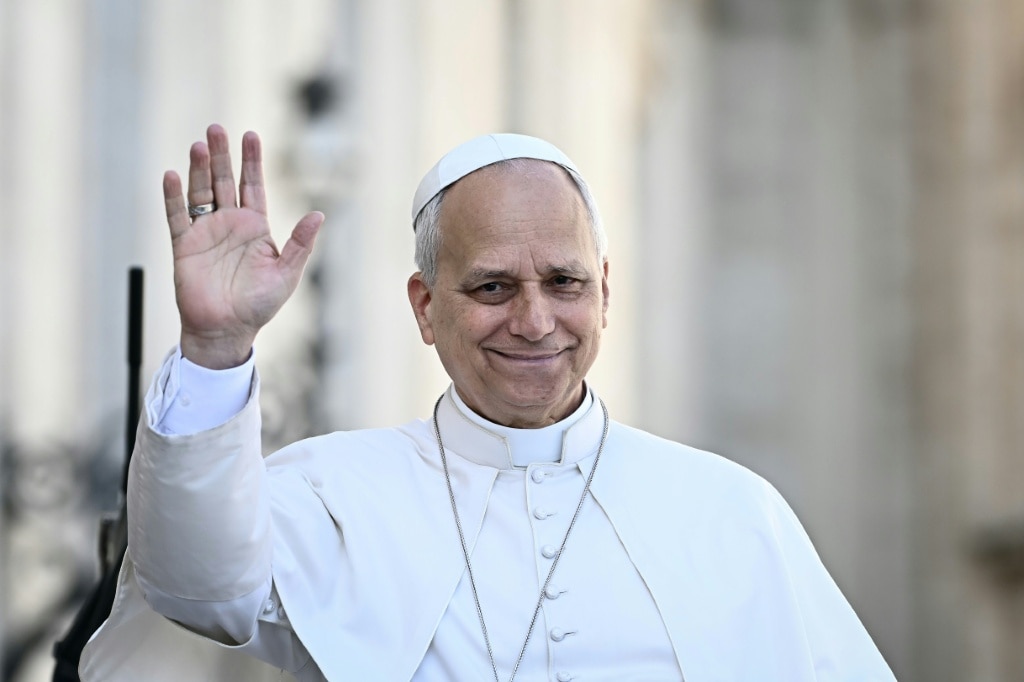
    One year to the day after his historic election as the first American pontiff to lead the global Catholic Church, Pope Leo XIV traveled to southern Italy’s Pompeii on Friday to mark the milestone, describing himself as “blessed” amid weeks of public friction with the White House.

    The 70-year-old Pope marked the May 8, 2025 anniversary with a visit to the Sanctuary of the Virgin of the Rosary of Pompeii, a religious site founded by a former Satanic priest that held special personal meaning for Leo: he first referenced the sanctuary in his inaugural address from St. Peter’s Basilica balcony on the day of his election. The site sits in the shadow of Mount Vesuvius, near the iconic ruins of the ancient Roman city destroyed by the volcano’s eruption centuries ago.

    Arriving via white helicopter to the ancient southern Italian city, Pope Leo was greeted by roaring shouts of “the pope has arrived!” from thousands of pilgrims gathered in the main city square. Inside the sanctuary, he addressed a crowd of more than 2,000 faithful, which included 400 sick and disabled worshippers. “What a beautiful day, so many blessings. I feel the most blessed for being able to come here to the sanctuary… on this anniversary,” he told the assembled gathering.

    The pastoral trip came just one day after Pope Leo held a long-awaited audience with U.S. Secretary of State Marco Rubio, a meeting arranged to de-escalate tensions that erupted after U.S. President Donald Trump launched scathing public criticism of the pontiff’s outspoken anti-war stance. In the wake of Trump’s attacks, Pope Leo stood firm, saying he held a “moral duty” to speak out against conflict, and reiterated this position ahead of the Pompeii visit, noting “The Church’s mission is to preach the Gospel and to preach peace.”

    Following the meeting, Rubio confirmed the discussion had been productive, telling reporters “It’s important to share our points of view and an understanding of where we’re coming from.” The Pope’s measured response to Trump’s criticism won praise from both lay worshippers and Italian political leaders. Mariella Annunziata, a 52-year-old faithful in attendance at the Pompeii event, told reporters the pope had responded “in an elegant way” to the attacks, adding “He did not give in to provocation.”

    Italian Prime Minister Giorgia Meloni, who also drew criticism from Trump after defending the Pope’s right to speak out on peace issues, issued a public tribute to the leader of the world’s 1.4 billion Catholics. Writing on X, she noted: “In a complex and highly uncertain time, his voice is a point of reference on a global level — for Christians but not only.”

    After arriving in Pompeii, Pope Leo traveled through the packed square in his popemobile, with crowds leaning out of building windows and gathering on balconies to catch a glimpse of the pontiff. Dressed in a traditional red mozzetta short cape over his white papal robes, he greeted an estimated 20,000 people gathered outside the basilica with a cheerful “Good morning Pompeii!” before entering the sanctuary.

    During an outdoor mass held following his tour, the Pope returned to his core anti-war message, telling attendees “We cannot resign ourselves to the images of death that we see on the news every day”. He also prayed for God to “enlighten all those who bear special responsibilities of governance” and called on global leaders to make a “renewed commitment” to end all armed conflicts around the world.

    For many pilgrims in attendance, the anniversary visit was a historic occasion. Tommaso Del Sorbo, a 32-year-old local who brought his small poodle Giorgio to the mass, said “It’s a wonderful feeling because it’s not every day that we have the pope here among us, especially one year after his election.” Sixty-eight-year-old Salvatore Sica, who traveled to Pompeii from nearby Naples, offered a measured take on the new pontiff, noting his reserved leadership style contrasts sharply with that of the late Pope Francis, the Argentine pontiff who died in April 2024 and was widely beloved for his warm, spontaneous approach. “I’m curious to see the new pope… He’s not like Francis, who was one of the family, like a brother or a father,” Sica said. “He preaches peace but I see him as distant from the people. But he is a good pope.”

    The one-day southern Italy trip is the first of a series of short pastoral visits the Vatican has planned for Italy this summer, coming two weeks after the Pope completed a four-nation tour of Africa. After wrapping up his events in Pompeii, the Pope traveled on to Naples, where he venerated the relics of San Gennaro, the city’s patron saint, and greeted crowds in the iconic Piazza del Plebiscito. In a speech to Naples residents, he praised the city as a “pearl of the Mediterranean” while also drawing attention to its widespread economic hardship and “multiple faces of poverty.”

  • Iran weaponizes petroyuan in war reparations push

    Iran weaponizes petroyuan in war reparations push

    After weeks of escalating tensions and blockades between Iran and the United States at the Strait of Hormuz, this strategically critical narrow waterway has emerged as a defining battleground that could reshape the future of global energy markets and international economic power dynamics. While the U.S. has deployed military escorts for commercial vessels passing through the passage, the military posturing masks a far deeper, long-term transformation unfolding in Persian Gulf energy security.

    Beyond the competing bids by Iran and the U.S. to control the global flow of oil, natural gas, helium, and fertilizers exiting the region, a second major disruption has already hit global oil markets: key U.S. ally the United Arab Emirates has formally withdrawn from OPEC, a move widely regarded as a significant blow to the oil cartel’s cohesion and influence.

    Against this volatile backdrop, Iran has unveiled plans to introduce new tariffs for vessels transiting the Strait of Hormuz, framing the charges as reparations for damage inflicted by recent regional conflict. Analysts estimate these annual tariffs could generate between $40 billion and $50 billion in revenue for Tehran, providing a much-needed buffer to soften the impact of long-standing U.S. economic sanctions.

    The most geostrategically significant detail of the proposed tariff regime is its currency requirement: all charges must be denominated in Chinese yuan, rather than the U.S. dollar. This policy, which already sees informal payments from ships bound for China, India, and Japan, with Iran’s parliament currently working to formalize the framework, could dramatically redraw regional and global power balances. Tehran has also added cryptocurrency as an accepted payment method to expand flexibility. For Iran, the policy is explicitly designed to deepen economic and political ties with Beijing.

    To understand the far-reaching implications of this move, it is necessary to revisit the 50-year history of the petrodollar system that has underpinned U.S. global economic dominance since the 1970s. The system was established when Washington struck a deal with Saudi Arabia: the U.S. would provide military protection, and in exchange, Saudi Arabia would price all of its oil exports exclusively in U.S. dollars. The framework quickly spread across all OPEC member states, becoming the global standard for international oil trade. This arrangement cemented the U.S. dollar’s position as the world’s primary reserve currency, a core pillar of U.S. geopolitical power.

    Under the petrodollar system, oil-exporting nations accumulate large dollar surpluses from energy sales, most of which are then recycled back into U.S. government securities, equities, and Western sovereign wealth funds. This system finances U.S. budget deficits, keeps Washington’s borrowing costs low, and grants the U.S. substantial financial leverage over oil-producing nations and global markets at large.

    If Iran’s yuan-denominated tariff regime takes root, leading economist Antonio Bhardwaj notes that it could set in motion the systematic erosion of the petrodollar system, while establishing the petroyuan as a credible, institutionally embedded alternative for settling global energy transactions. International relations analyst Pakizah Parveen warns the policy could also split the global oil market into two distinct blocs: shipments from nations compliant with Iran’s rules will transact in yuan through the Strait of Hormuz, while non-compliant parties will face sharply higher costs for dollar-denominated oil cargoes.

    This split would create an acute dilemma for major U.S. allies including Japan, South Korea, Pakistan, and the Philippines, all of which already face severe economic strain from Gulf region market upheaval. Choosing to pay tariffs in yuan would draw these nations closer to Beijing, reinforcing China’s narrative as a stable, reliable alternative economic partner to the U.S. This shift also mirrors a similar policy Russia adopted in 2025, when it began requiring yuan payments for its oil exports.

    While it remains far too early to declare that Iran’s tariffs will trigger full-scale de-dollarization of the global economy, the move represents a clear step toward eroding the dollar’s decades-long global primacy. Any shift away from the dollar by major energy-importing nations directly reduces financial and political dependence on the U.S., while accelerating Beijing’s efforts to fully internationalize the yuan.

    Current global economic trends already point to this gradual shift: for the first time since 1996, global central banks now hold more gold in their reserve portfolios than U.S. government debt securities. BRICS bloc members including China, India, and Brazil have all cut their holdings of U.S. assets throughout 2025, as the group works to reduce its dependence on Western financial systems.

    Taken together, Iran’s yuan-denominated Strait of Hormuz tariffs mark another clear milestone in the emergence of a multipolar global order, where U.S. preeminence can no longer be taken for granted. While this shift could grant greater strategic flexibility to nations large and small seeking alternatives to U.S.-led global governance, it also introduces a new era of uncertainty for global energy markets and international economic cooperation.

  • UAE sends Trump’s Board of Peace ‘$100m’ for training of new Gaza police force

    UAE sends Trump’s Board of Peace ‘$100m’ for training of new Gaza police force

    The United Arab Emirates has transferred $100 million to the US-backed Board of Peace to fund the training of a new Palestinian police unit earmarked for deployment in the Gaza Strip, The Times of Israel reported in a story citing anonymous diplomatic sources. This single contribution marks the largest individual donation the transitional governance body has received to date, coming after nine initial board members pledged a combined $7 billion, and the United States added an additional $10 billion in commitments during an international donor conference held in February.

    Per details shared by a senior U.S. official and a Middle Eastern diplomat, new police recruits will undergo training in neighboring Egypt and Jordan, while a private Emirati security firm has been contracted to build out the full force, which is planned to number roughly 27,000 serving officers. Earlier reporting from the same outlet quoted an anonymous Arab diplomat, who confirmed that former Palestinian civil servants who held roles in Gaza prior to the current conflict will be eligible to apply to join the new force, though all candidates must pass a strict vetting process carried out by Israel’s internal security agency before receiving final approval.

    The ongoing violence against Palestinian security personnel in Gaza has persisted even after a ceasefire agreement was reached in October. In the most recently documented violation of the truce on Wednesday, a high-ranking officer with the Palestinian interior ministry was killed in an Israeli strike. Since the ceasefire took effect on October 10, at least 837 Palestinians have been killed by Israeli forces, pushing the total death toll from Israel’s military campaign in Gaza to at least 72,619, a figure widely cited in regional humanitarian and political reporting.

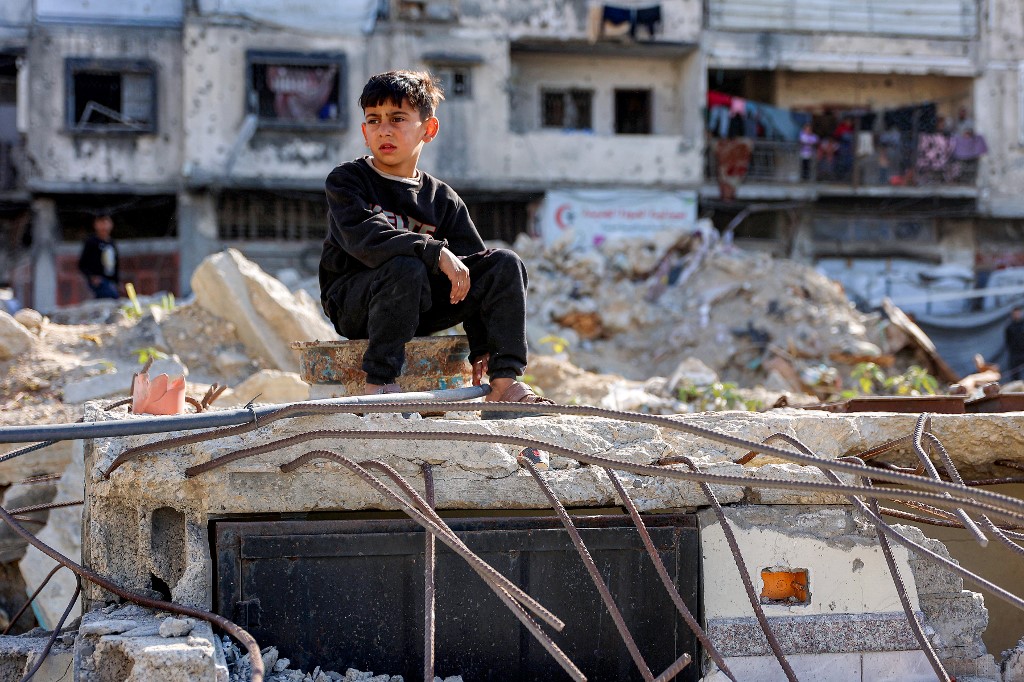
    Ali Shaath, the Palestinian technocrat tapped to lead the National Committee for the Administration of Gaza (NCAG) — the interim technocratic governing body set up to oversee Gaza’s transition — confirmed that recruitment for the new police service is already active across the Strip. Speaking at the February donor conference, Shaath emphasized the urgent need for the force, noting that much of Gaza lies in catastrophic ruin, with widespread destruction leaving acute unmet humanitarian needs and fragile public security. “Large parts of [the] Gaza Strip are severely damaged. Destroyed, actually. Humanitarian needs are acute. Law and order remain fragile. This is not [a] normal operating environment… which is precisely why discipline and prioritisation matter,” Shaath stated. The new police force will operate under the direct oversight of the NCAG.

    The initiative aligns with a 20-point plan released by former U.S. President Donald Trump in September that outlines a framework for ending the current war in Gaza. Under that plan, Washington will partner with Arab and international stakeholders to establish a temporary International Stabilization Force (ISF) that will deploy to the Strip, and work in tandem with the newly trained Palestinian police force.

    Amid continuing Israeli strikes on Gaza, Nickolay Mladenov, the Board of Peace’s high representative for Gaza, noted in late March that “the truce is holding despite challenges.” Mladenov also confirmed that the NCAG has been formally established and has already “made progress on vetting thousands of civilian police candidates.”

    “The National Committee exercises authority solely on an interim basis. The end state is a reformed Palestinian Authority capable of governing Gaza and the West Bank, and ultimately a pathway to Palestinian self-determination and statehood,” Mladenov explained. He added that the Palestinian security force, operating under the interim national committee’s authority, will enable the dismantling of all armed factions in Gaza and the consolidation of all weapons under a single civilian governing authority.

    Several other board member nations — including Indonesia, Morocco, Kazakhstan, Kosovo, and Albania — have also pledged military personnel to join the international stabilization force that will coordinate with the local Palestinian police service.

    The UAE’s $100 million donation comes months after Abu Dhabi drafted plans in February to construct a new administrative compound for Palestinian use in the section of Gaza already under Israeli military occupation. That proposal has already stoked regional tensions, putting the UAE at odds with other regional powers and multiple Palestinian groups, who argue the plan amounts to a de facto partition of Gaza, a outcome they strongly oppose.

    This reporting comes from Middle East Eye, a outlet that provides independent, on-the-ground coverage and analysis of the Middle East, North Africa, and surrounding regions.

  • Huge plumes of ash rise as Indonesia’s Mount Dukono erupts

    Huge plumes of ash rise as Indonesia’s Mount Dukono erupts

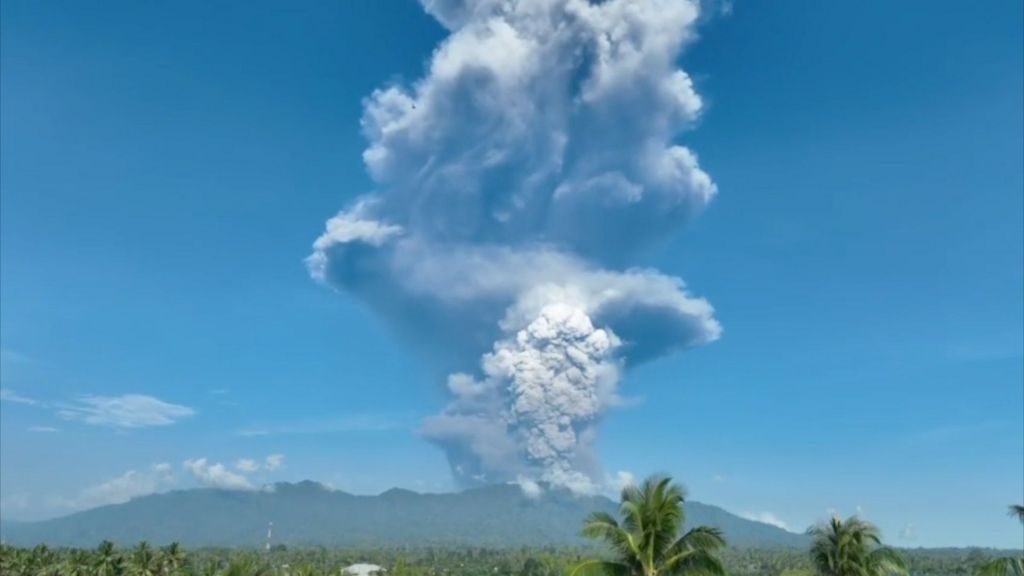
    A dramatic volcanic eruption at Indonesia’s Mount Dukono has sent towering plumes of ash billowing into the sky, capturing global attention after a group of hikers defied official restrictions to climb the active peak. Indonesian authorities confirmed that the small group entered the restricted volcanic zone against explicit public safety warnings, putting their lives at severe risk amid persistent geologic activity at the site.

    Mount Dukono, located on the northern tip of Halmahera island in North Maluku province, has a long history of intermittent volcanic activity. Indonesian geological agencies have maintained a standing climbing ban on the volcano for years due to its regular eruptions and unstable terrain, which can trigger sudden ash falls, pyroclastic flows, and volcanic gas releases that pose fatal risks to anyone in the area.

    The eruption, which produced the massive ash columns observed by local observers, comes as Indonesia continues to manage activity across its more than 120 active volcanoes. The archipelago nation sits along the Pacific Ring of Fire, an area of intense geologic activity that produces frequent earthquakes and volcanic eruptions. Authorities regularly monitor volcanic sites across the country, updating warning levels and closing access to peaks when activity increases to prevent preventable tragedies.

    Local officials have not yet released updates on the status of the hikers who entered the restricted zone, nor have they confirmed whether the group was able to exit the area safely after the eruption. Search and rescue teams have been placed on standby, ready to deploy to the mountain once volcanic activity calms enough to guarantee the safety of response personnel. This incident has reignited conversations about the need for stricter enforcement of safety restrictions at Indonesia’s active volcanic sites, as unauthorized visits continue to put both hikers and first responders in danger.

  • A massive 11,000-carat ruby has been unearthed in Myanmar’s war-scarred gemstone heartland

    A massive 11,000-carat ruby has been unearthed in Myanmar’s war-scarred gemstone heartland

    BANGKOK, Associated Press – A massive, exceptionally rare ruby has been uncovered by miners in Myanmar, marking the second-largest rough ruby ever extracted from the conflict-plagued Southeast Asian nation, according to official state media reports released Friday. Weighing in at 11,000 carats – equal to 2.2 kilograms or roughly 4.8 pounds – the gem was pulled from the ground near the famed mining town of Mogok, located in Myanmar’s upper Mandalay region. This area is the undisputed heart of the country’s multi-billion-dollar gem mining industry, which has been swept up in the intense ongoing civil war that has torn through Myanmar since the 2021 military coup.

    State-owned publication *Global New Light of Myanmar* confirmed the large ruby was discovered in mid-April, just days after the country’s annual traditional New Year celebration. While the newly unearthed stone is only around half the weight of the 21,450-carat record-holding ruby found in Myanmar back in 1996, industry assessments place its market value far higher thanks to its exceptional color profile and crystalline quality. Gem experts describe the stone as having a vivid purplish-red base hue with subtle warm yellow undertones, a top-tier color grading, moderate natural transparency, and a highly reflective surface that signals premium quality.

    Myanmar dominates the global ruby supply chain, producing an estimated 90% of all natural rubies traded worldwide, with most output coming from the Mogok and Mong Hsu mining regions. For decades, gemstones – whether traded through legal channels or smuggled across unregulated borders – have been one of the largest sources of state revenue in Myanmar. However, human rights advocacy groups including London-based research and policy organization Global Witness have long campaigned for international jewelers to boycott all gem imports from Myanmar, arguing that profits from the gem trade have propped up repressive military governments for generations.

    The context of this discovery comes amid ongoing political and military upheaval in Myanmar. Earlier this year, the ruling military installed a new nominally civilian government following general elections that were widely dismissed as fraudulent by independent human rights organizations and domestic opposition groups. The election confirmed the continued grip on power of President Min Aung Hlaing, the army chief who led the 2021 coup that ousted the elected civilian government. In recent weeks, Min Aung Hlaing and his cabinet held a formal inspection of the giant ruby at the presidential office in the national capital of Naypyitaw.

    Beyond funding the national military, gem mining revenue also acts as a core funding stream for the numerous ethnic armed groups that have waged campaigns for regional autonomy across Myanmar for more than half a century, a dynamic that has perpetuated the country’s long-running cycles of internal conflict. Security conditions across major mining regions remain deeply unstable. Mogok, the town where the new ruby was found, was captured in July 2024 by the Ta’ang National Liberation Army (TNLA), a guerrilla group representing the Palaung ethnic minority. Though the TNLA initially took control of and began operating the region’s mines, authority over the area was eventually transferred back to Myanmar’s national military under the terms of a China-brokered ceasefire deal reached in late 2024.

  • Despite gains combating deforestation in Brazil’s Amazon, forest degradation is a looming threat

    Despite gains combating deforestation in Brazil’s Amazon, forest degradation is a looming threat

    SAO PAULO, Brazil — Brazil’s President Luiz Inácio Lula da Silva has repeatedly highlighted his administration’s landmark progress reining in Amazon deforestation, a win that is set to be confirmed when official annual data drops in October. Early projections indicate the 2025-2026 deforestation rate will hit its lowest point since 2012, a dramatic reversal from the record-high deforestation seen under former President Jair Bolsonaro’s environmentally deregulatory tenure. But this hard-won progress masks growing, underrecognized threats that continue to erode the world’s largest tropical rainforest, from the creeping damage of forest degradation to looming legislation that could cripple Brazil’s core anti-deforestation enforcement tool.

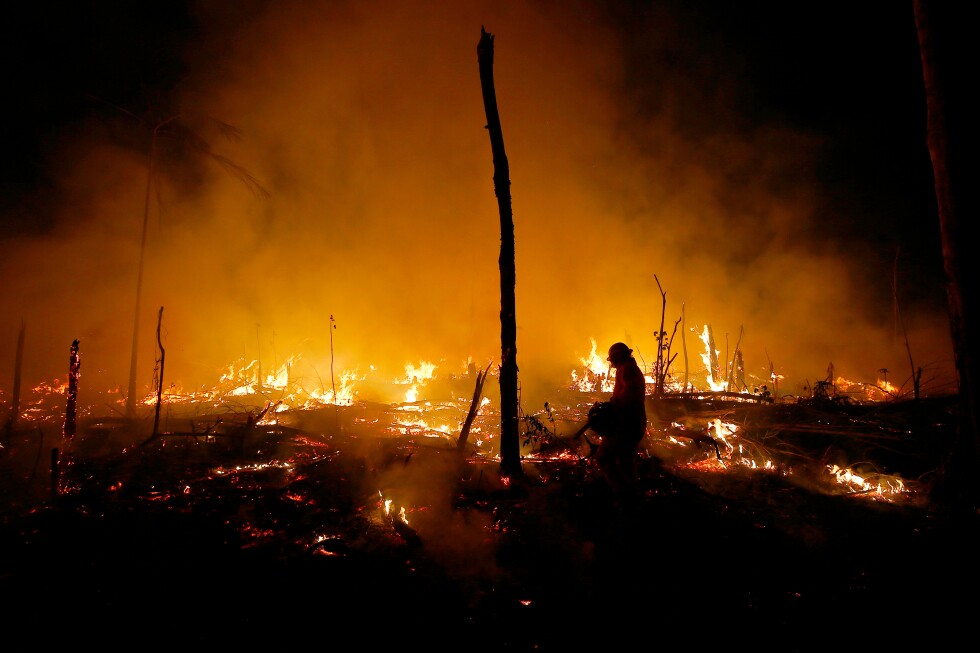
    The Amazon spans nine South American nations, with Brazil holding more than 60% of the total forest area — meaning ecological changes in the Brazilian Amazon shape the fate of the entire biome. While the Lula administration has cut total clear-cutting dramatically, official satellite data from Brazil’s real-time DETER monitoring system shows that forest degradation, the gradual damage of forest ecosystems from activities like illegal logging, wildfires, and drought-linked die-off, has outpaced full deforestation in recent years. Between August 2025 and April 2026, deforestation alerts marked roughly 1,700 square kilometers of cleared forest, while degradation affected more than 4,420 square kilometers of partially damaged woodland. Unlike clear-cutting, which leaves an obvious mark on satellite imagery, degradation progresses slowly and quietly. “Degradation is slower and more silent. It is like a chronic condition,” explained Taciana Stec, a climate policy specialist at Brazilian climate think tank Talanoa.

    This chronic damage is already pushing the rainforest closer to a catastrophic tipping point. Today, the Amazon still acts as a critical global carbon sink, absorbing massive volumes of the planet-warming carbon dioxide driving climate change. But if degradation and stress continue, scientists warn the forest could cross an irreversible threshold where it emits more carbon than it absorbs, triggering full or partial biome collapse. A 2024 study published in *Nature* estimates that between 10% and 47% of the Amazon could reach this critical tipping point by 2050 if current stress levels persist.

    The threat of extreme weather will only amplify this damage. A strong El Niño event, the cyclical warming of equatorial Pacific waters that drives higher temperatures and drier conditions across the Amazon, is projected for 2026. The 2023-2024 El Niño event already offered a preview of this risk: temperatures rose 2 to 4 degrees Celsius above the Amazon’s historical average, and severe drought fueled the worst wildfire season the region had seen in 20 years. During that event, forest degradation increased at a rate three times faster than deforestation fell, erasing much of the progress made to cut clear-cutting, according to research by Guilherme Mataveli, a scientist at Brazil’s National Institute for Space Research (INPE). A partially degraded forest remains standing, but loses much of its ecological function, making it far more vulnerable to additional stress from drought and fire. “If the Amazon were a human patient with a chronic illness, El Nino would strike like a flu, triggering a fever that leaves the body weaker and more vulnerable,” Stec noted. “Two years later, the flu returns. But this time, the patient has not fully recovered. The fever burns hotter, and the illness hits harder.”

    New long-term research has underscored this persistent damage. A 20-year study led by Yale University researcher Leandro Maracahipes, published in April in *Proceedings of the National Academy of Sciences*, found that repeated wildfires do not immediately turn the Amazon into savanna, as many earlier models predicted. Instead, the forest remains standing but permanently degraded: it loses specialized native species that rely on dense old-growth cover, and becomes far more susceptible to future damage. “The forest is resilient, but our message is that we need to preserve it even more, and urgently,” Maracahipes said. “And it has to be now.”

    Beyond climate and ecological threats, environmental regulators are bracing for a major legislative setback that could gut Brazil’s successful anti-deforestation policy. A fast-track bill sponsored by lawmaker Lucio Mosquini, currently pending a vote in Brazil’s lower house of Congress, would bar Brazil’s top environmental enforcement agency IBAMA from issuing sanctions for illegal deforestation based solely on satellite monitoring — the core pillar of Brazil’s current successful deforestation control efforts. Mosquini argues that satellite-based penalties unfairly harm farmers, who are not given an opportunity to defend themselves. But IBAMA officials note that farmers already have 20 days to challenge penalties, and can have sanctions overturned if they prove deforestation was legally authorized.

    IBAMA first adopted satellite monitoring in 2016 to complement limited on-the-ground inspections in remote parts of the rainforest. Bolsonaro halted the policy in 2019 as part of his administration’s deregulatory agenda, leading to a 15-year high in Amazon deforestation by 2021. When Lula returned to the presidency in 2023, his administration immediately restored the remote monitoring policy, driving the sharp drop in deforestation seen today. Political analysts expect the bill to pass, given the outsized political and economic influence of Brazil’s powerful agribusiness sector. If approved, it would be “a major environmental setback,” IBAMA President Jair Schmitt told the Associated Press. “In effect, you end up encouraging environmental offenders and unfair competition.” Schmitt compared satellite monitoring to speed cameras used by traffic enforcement: it is impossible to station a law enforcement officer on every corner of a city, just as it is impossible to place an IBAMA agent on every square kilometer of the 5 million square kilometer Brazilian Amazon.

    To address the growing threat of wildfires in the 2026 season, the Lula administration has already hired 4,600 new firefighters and launched expanded real-time monitoring of high-risk areas. IBAMA has combined historical fire data, deforestation records, and weather forecasts to identify properties at extreme risk of fire, and has ordered landowners in those areas to implement preventive measures. Still, Indigenous fire brigades on the ground already warn that conditions are worsening faster than expected. “The situation this year is worrying. We’re still in the rainy season, and we’ve already recorded two fires in April,” said Tainan Kumaruara, a member of the Indigenous volunteer Guardioes Kumaruara fire brigade in Para state. “The forest is different from what it was 10 years ago. It’s much drier. The trees no longer behave as they did.”

    Experts say addressing the growing threat of degradation will require Brazil to expand its focus beyond just stopping clear-cutting, to prioritize large-scale forest restoration. Brazil has committed to restoring 12 million hectares of degraded Amazon forest by 2030 under the Paris Climate Agreement, and the Brazilian Environment Ministry reports that 3.4 million hectares are already in the process of recovery. Even so, the dual threats of accelerating degradation and pending anti-enforcement legislation mean the long-term future of the Amazon remains far from secure, even with the Lula administration’s progress cutting deforestation.

  • WHO says hantavirus risk low after flight attendant tests negative

    WHO says hantavirus risk low after flight attendant tests negative

    On Friday, the World Health Organization moved to ease global anxiety over a rare hantavirus outbreak aboard the Dutch-flagged cruise ship MV Hondius, confirming that the general public faces only minimal risk of transmission even as multiple countries finalized plans to repatriate the vessel’s 150 trapped passengers and crew.

    Three passengers on the Atlantic cruise have already died from the infection: a Dutch married couple and a German national. While the Andes virus, the only strain of hantavirus capable of limited person-to-person spread, has been confirmed among positive cases, WHO officials emphasized that the pathogen is far less transmissible than common respiratory viruses such as COVID-19.

    “This is a dangerous virus, but only to the person who’s really infected, and the risk to the general population remains absolutely low,” WHO spokesman Christian Lindmeier told reporters Friday. He added that emerging data from the outbreak has shown even cabin sharers have avoided transmission in multiple cases, a pattern that suggests the virus does not spread easily between people. “That shows you again, luckily, apparently, the virus is not that contagious that it easily jumps from person to person,” Lindmeier said.

    As of Friday, the WHO recorded five confirmed cases and three suspected cases linked to the ship, with no active suspected infections remaining on board. One reassuring development came from contact tracing efforts launched after an infected passenger disembarked early: a KLM flight attendant who had been exposed to the infected passenger and developed mild symptoms tested negative for hantavirus, a result Lindmeier called “good news.”

    The outbreak unfolded after the MV Hondius, a vessel often used for polar expeditions, departed Ushuaia, Argentina on April 1 for a transatlantic cruise bound for Cape Verde. The first fatality and 30 other passengers disembarked at the remote British overseas territory of Saint Helena on April 24, with a connecting flight departing for Johannesburg the following day, triggering a worldwide contact tracing operation. The first fatality’s wife, who was removed from a Johannesburg-to-Amsterdam KLM flight before takeoff, later died in a South African hospital.

    Three early cases, including two crew members who later tested positive, were evacuated from Cape Verde to the Netherlands for treatment. The ship has since sailed for the Spanish Canary Island of Tenerife, where it is expected to arrive early Sunday. Kasem Ibn Hattuta, a YouTuber traveling on the vessel, said passengers have maintained calm after medical personnel boarded to oversee the journey. “We finally left Cape Verde which was a relief for everyone on board, specially knowing that our sick colleagues are finally getting the medical care they need,” he said in a statement. “Everyone is keeping high spirit, people are smiling and taking the situation calmly,” adding that all passengers follow indoor masking and social distancing protocols.

    Spanish authorities have confirmed the ship will anchor off the coast of Tenerife rather than docking at port, and all passengers will be ferried to the island’s airport for repatriation flights organized by their home countries. The United Kingdom has chartered a dedicated flight to repatriate its citizens, with the UK Health Security Agency confirming strict infection control measures will be enforced at every step of the process. British health officials also reported a suspected case on Tristan da Cunha, one of the world’s most remote inhabited islands with a population of roughly 250, which the ship visited during its voyage. U.S. President Donald Trump told reporters Thursday he had been briefed on the outbreak and added, “It’s very much, we hope, under control.”

  • Russia’s WWII victory celebrations are muted this year as Ukraine war weighs on Putin

    Russia’s WWII victory celebrations are muted this year as Ukraine war weighs on Putin

    As Russia prepares to mark its most consequential secular national holiday on Saturday, simmering security risks from the ongoing war in Ukraine and growing undercurrents of domestic discontent have cast a long shadow over the traditional commemorations held in Moscow’s iconic Red Square. This year’s Victory Day, which honors the Soviet Union’s 1945 defeat of Nazi Germany, has been fundamentally reshaped by the unresolved conflict that has stretched more than four years beyond Russia’s full-scale 2022 invasion of Ukraine. The day, once a showcase of national pride and military grandeur, is unfolding against a backdrop of failed ceasefire efforts, escalating cross-border attacks, and unprecedented cutbacks to the iconic military parade.

    The unilateral 48-hour ceasefire that Russia declared for Friday and Saturday fell apart within hours of taking effect, mirroring the rapid collapse of a separate unilateral ceasefire announced by Ukraine just days earlier. Almost immediately after the ceasefire went into effect at midnight Friday, both Moscow and Kyiv traded blame for continued hostilities, a public exchange that lays bare the profound, years-long lack of trust between the two warring parties that has derailed all U.S.-led diplomatic initiatives aimed at reaching a lasting peace settlement.

    Russia’s Defense Ministry claimed its forces strictly adhered to the ceasefire, holding their positions and halting all offensive operations, but accused Ukraine of launching sustained strikes on Russian military positions and civilian infrastructure across the border regions of Belgorod and Kursk. The ministry added that Russian air defense systems had intercepted and downed 390 Ukrainian drones and six Neptune long-range guided missiles launched at Russian territory since midnight. A separate statement from Russia’s Transport Ministry confirmed that a Ukrainian drone strike targeted the administrative headquarters of the Southern Russia Air Navigation branch in Rostov-on-Don, forcing a temporary suspension of operations at 13 airports across southern Russia.

    Ukrainian President Volodymyr Zelenskyy offered a sharply conflicting account of the ceasefire’s first day. Zelenskyy said Russian forces continued offensive attacks along the entire front line overnight, while Ukrainian air defenses intercepted and destroyed 56 Russian drones launched at Ukrainian targets. “All this clearly shows that there was not even a pretense of a ceasefire attempt from the Russian side,” Zelenskyy told reporters Friday. He also confirmed that Ukrainian forces carried out another long-range strike on a Russian oil facility in the Yaroslavl region, located more than 700 kilometers (400 miles) from the Ukrainian border, though he did not provide a specific timeline for the attack. In recent months, Ukraine’s advancements in drone and missile technology have allowed it to carry out increasingly frequent and accurate strikes deep inside Russian territory, with key energy infrastructure, particularly major oil production facilities, emerging as a primary target.

    Russian officials have issued stark warnings of severe retaliation – including the possibility of a large-scale missile strike on Kyiv – if any Ukrainian attack disrupts Saturday’s official Victory Day events. “We have strengthened our focus on the possibility of retaliatory measures,” presidential aide Yuri Ushakov told reporters Thursday. Russia’s Foreign Ministry has urged foreign embassies and international organizations based in Kyiv to evacuate their offices ahead of any potential strike, and the Defense Ministry has called on Ukrainian civilians to leave targeted areas.

    The guest list for this year’s commemorations has also drawn international attention, with Zelenskyy expressing surprise that several foreign leaders have traveled to Moscow for the events. Attendees include Malaysia’s King Sultan Ibrahim Iskandar, Laos President Thongloun Sisoulith, and Belarus’s authoritarian leader Alexander Lukashenko. Notably, Slovakia’s Prime Minister Robert Fico – the leader of an EU member state – is scheduled to hold a meeting with Putin and lay flowers at the Tomb of the Unknown Soldier outside the Kremlin walls, but will not attend the Red Square parade.

    For decades, Russian President Vladimir Putin, who has held power for more than 25 years, has leveraged the symbolic legacy of the World War II victory to rally domestic support for his administration and justify the war in Ukraine, while also projecting Russia’s influence on the global stage. That makes this year’s scaled-back parade all the more notable: for the first time in nearly 20 years, the iconic procession will not feature tanks, missiles, or other heavy military equipment, with only the traditional flyover of military aircraft remaining. Russian officials have only cited the “current operational situation” as justification for the change, offering no further details.

    Beyond security threats from Ukraine, the Kremlin also faces growing rumblings of domestic discontent over its wartime policies. Many Russians have expressed frustration over escalating internet censorship and state control of online activity, including recent restrictions on the widely used messaging app Telegram. To bolster security for Saturday’s events, Russia’s Ministry of Digital Development, Communications and Mass Media has announced sweeping restrictions on mobile internet access and text messaging services across Moscow. Only state-approved websites and services included on the government’s official “white list” will remain accessible to mobile users, though home internet and Wi-Fi connections will not be affected. The restrictions have been framed as a necessary measure to protect public safety, but they underscore the Kremlin’s growing anxiety about potential unrest or security breaches during the national holiday.

    The current state of the war has further compounded pressures on the Kremlin. Russia’s far larger and better-equipped military has been locked in a slow, costly grinding campaign in Ukraine, a far cry from the quick victory the Kremlin expected when it launched its full-scale invasion in February 2022. Ukraine’s steady campaign of long-range strikes deep into Russian territory has shaken the Kremlin, with attacks targeting critical oil infrastructure, military manufacturing plants, and weapons depots, eroding confidence in the government’s ability to secure the country’s rear areas as the war drags on.