A fresh wave of cross-border strikes has ratcheted up tensions in the 28-month-old Ukraine conflict, after a Ukrainian attack on Russian-occupied Crimea left three people dead and seven injured, just one day after Kyiv launched coordinated strikes on energy and military infrastructure in Saint Petersburg, coinciding with the opening of Russia’s flagship international economic forum.
Sergey Aksyonov, the Moscow-appointed head of Crimea’s occupied administration, confirmed the casualties in a Thursday Telegram post, noting that emergency response teams had been deployed to the site of the strike on non-residential structures in Simferopol, the region’s administrative capital.
The Saint Petersburg strikes, which hit a local oil terminal and the Kronstadt military base, unfolded Wednesday as 20,000 delegates from more than 130 countries gathered for the start of the three-day Saint Petersburg International Economic Forum (SPIEF), an event long referred to as “Russia’s Davos.” Thick plumes of black smoke from the burning terminal were clearly visible from the forum’s conference venue as opening sessions got underway. For many attendees, the attack did not come as a shock: 32-year-old Moscow-based businesswoman Valeria, who is attending the forum, told Agence France-Presse that residents across Russia have grown accustomed to persistent attack threats after years of war. “We have been living under such attacks for many years now,” she noted.
Ukrainian officials have framed the coordinated strikes as legitimate retaliation for a recent surge in Russian bombardment across Ukrainian territory. Sergiy Sternenko, an advisor to Ukraine’s defense minister, said the attack was intentionally timed to disrupt the high-profile economic gathering, noting that “The Petersburg forum is opening with a nice plume of black smoke in the background after Ukrainian strikes.”
In a press conference alongside NATO Secretary General Mark Rutte in Kyiv, Ukrainian President Volodymyr Zelenskyy reaffirmed his country’s right to respond proportionally to Russian attacks, warning that Kyiv would continue to ramp up the intensity of its deep strikes into Russian territory. “It’s just a matter of time before we can scale up the intensity of our responses,” Zelenskyy said.
The latest exchange of fire has already caused casualties across multiple frontline and rear areas. On Wednesday, Moscow-appointed officials reported that a drone strike on a passenger bus in Russian-occupied eastern Ukraine killed seven people, with two additional fatalities recorded in the border region of Bryansk and Russian-occupied parts of Kharkiv Oblast. Separate statements from Ukrainian local officials confirmed that at least 10 civilians were killed in a wave of Russian retaliatory strikes across Ukraine on the same day.
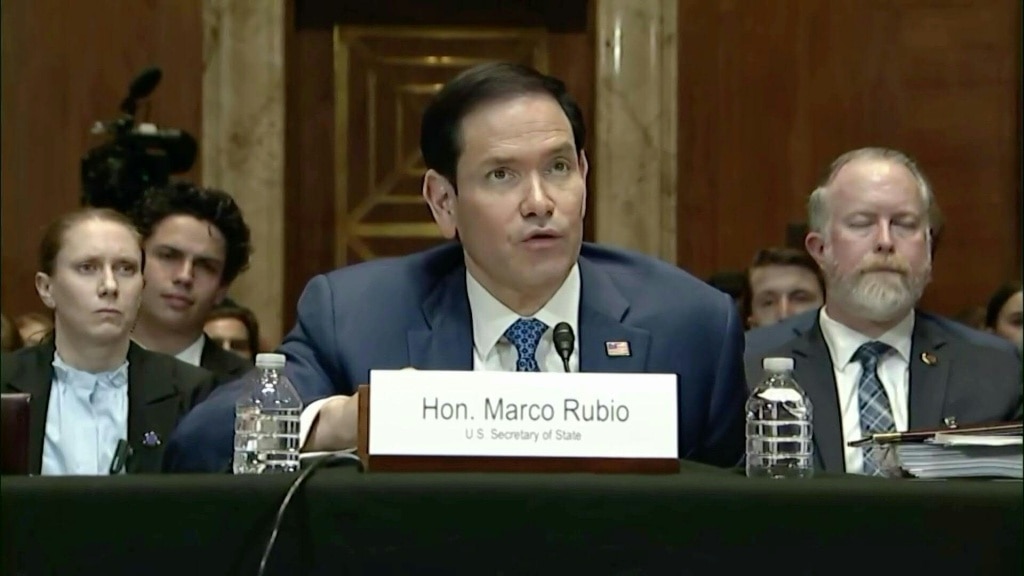
Top Western officials have warned that Ukraine’s growing success in launching long-range strikes deep inside Russian territory has created a tangible risk of the conflict spilling beyond existing borders and escalating into a wider confrontation. U.S. Secretary of State Marco Rubio told a U.S. Senate appropriations panel Wednesday that the risk of escalation is now “more real than it was two years ago,” as Kyiv’s long-range strike capabilities have improved dramatically. “Ukraine has become increasingly effective at conducting long-range strikes deep into Russia,” Rubio said. “It’s one of the things that reminds us of why it’s important to try to bring this war to an end, if we can, because the risk of escalation is real.”
Speaking earlier to the House Foreign Affairs Committee, Rubio noted that little progress has been made toward peace negotiations since Russia launched its full-scale invasion in February 2022. “To this point, neither side has been willing to make concessions, particularly on the Russian side, necessary in order to bring peace about,” he said, adding that the U.S. has invested significant diplomatic time and resources into advancing peace talks over the past year.
EU High Representative for Foreign Affairs Kaja Kallas said the recent Ukrainian strikes have sowed chaos within the Kremlin. She told AFP that increased Russian attacks on Ukrainian civilian infrastructure reflect panic on the part of Russian President Vladimir Putin, who is facing mounting losses on the battlefield. “It clearly shows also panic on the Russian side — why they are increasing the terrorist attacks that they are doing in Ukraine is because they don’t know what to do with these things,” Kallas said. “Putin is losing money, men, and momentum, and that’s why he’s increasing attacks on civilians.”
Kremlin spokesperson Dmitry Peskov has already promised a coordinated, systemic Russian response to the strikes on Saint Petersburg, while Russian President Vladimir Putin is set to deliver his keynote address to the SPIEF forum on Friday, where the conflict and its economic implications are expected to top the agenda.