分类: world

  • Fake Australian, Chinese and Brazilian police stations: BBC goes inside a seized scam compound

    Fake Australian, Chinese and Brazilian police stations: BBC goes inside a seized scam compound

    Deep inside the Cambodian border town of O Smach, behind the shuttered Royal Hill casino, a six-story building stands pockmarked with shrapnel damage from a December cross-border air strike. When the BBC, granted access by occupying Thai military forces, walked its dark, dust-choked corridors, each door opened to a chilling window into one of the world’s largest cross-border online fraud operations.

    Behind one door, a full-scale replica of a Vietnamese bank had been constructed to fool victims. Another was fitted to mimic an Australian police station, complete with a Chinese police uniform hanging on a wall. Hand-painted motivational slogans in Chinese — one reading “Money Coming From Everywhere” — still line the walls, scattered with crumpled counterfeit $100 bills left behind when thousands of trapped scam workers fled after the bombing. This was not a casino, but a sprawling forced labor scam compound, where trafficked workers defrauded countless victims across the globe of their life savings under brutal, regimented control.

    The compound’s current status is wrapped in a brief but tense border dispute. In December, the Thai Air Force carried out airstrikes on Royal Hill, claiming Cambodian military drones were being launched from the site during a short outbreak of cross-border fighting. The bombardment shattered windows, blew gaping holes in roofs and walls, and forced the compound’s workers to flee abruptly, leaving half-eaten noodle bowls, half-empty soda cans, and a stale, acrid stench in their wake. Today, only Thai soldiers patrol the empty site. The Thai military invited the BBC to expose the scale of Cambodia’s transnational scam industry, framing the visit as a call for international action against what they call a regional scourge — a move that also serves to justify their December cross-border strikes. Cambodia has formally protested Thai occupation of the territory, while Thailand argues its troop presence adheres to the post-ceasefire agreement that froze forces in their end-of-conflict positions.

    What makes the Royal Hill compound particularly revealing is how it operated in complete obscurity for years, even as neighboring O Smach Casino, owned by high-profile Cambodian tycoon Ly Yong Phat, had already been named in reports of abuse by escaped scam workers. Ly Yong Phat, a senior figure in Cambodia’s ruling Cambodian People’s Party with close ties to the powerful Hun clan led by former Prime Minister Hun Sen, has already been sanctioned by the U.S. and other nations for alleged involvement in human trafficking and online fraud. By contrast, Royal Hill’s owner Lim Heng has maintained an extraordinarily low public profile, never appearing on international sanctions lists. Like many connected to the ruling elite, Lim Heng was awarded the Cambodian noble title Neak Oknha by Hun Sen — an honor requiring a minimum $500,000 donation to the state, placing him among a small circle of just a few hundred elite Cambodian powerbrokers. The only publicly known unusual detail about Lim Heng is his habit of paying respects at the cremation site of former Khmer Rouge leader Pol Pot, located near another of his northern border casinos.

    The rise of scam compounds like Royal Hill is rooted in decades of political and economic change in Cambodia. After the 1991 end of the Cambodian civil war, well-connected tycoons amassed vast fortunes by acquiring large land tracts through their ties to the ruling family. Early wealth came from illegal logging and agricultural plantations, followed by windfalls from a Chinese-investor-fueled urban property boom. In border regions like O Smach, casinos became the most profitable venture, capitalizing on strict gambling bans in neighboring Thailand and China. Over three decades, the Cambodian government issued roughly 200 casino licenses, drawing the interest of Chinese organized crime syndicates that added lucrative unregulated online gambling operations on site.

    The shift to large-scale online fraud came in 2019, after international pressure from China forced Hun Sen to ban online gambling, followed by the COVID-19 pandemic that halted cross-border tourism. With their core revenue streams cut off, criminal syndicates pivoted to transnational online fraud, luring thousands of young workers from across the globe with false promises of high-paying clerical or tech jobs. Some workers knew they would be participating in illicit activity, but none were prepared for the brutal conditions inside the compounds.

    Documents recovered by the BBC from Royal Hill’s rubble lay bare the brutal disciplinary regime workers faced. Anyone who failed to generate a single “lead” — an initial contact with a potential victim to build an online relationship — in one day received five cane strokes. Three straight days without a lead resulted in a minimum of 10 strokes. Even casual conversation with coworkers or failure to share personal intimate photos to trick victims into trusting scammers earned the same corporal punishment. Escapee Wilson, a young Ugandan man recruited to Royal Hill in August, described even harsher abuse to the BBC. “Some people were electrocuted. Some were put into the black room. They have a room called The Black Room where terrible torture went on,” he said from Phnom Penh, where a local charity shelters him as he waits for repatriation.

    Wilson said he was lured with an offer for a digital marketing job in Malaysia, only to be trafficked to the Cambodian compound. He described being forced to work 15 to 16 hour days, following rigid scripts written by Chinese bosses and using AI to alter his voice and appearance to match his assigned persona: “You are supposed to portray the character of a woman, who is 37 years old, rich, and who wants a husband. You chat to these older Americans with the intention of making them think you have fallen in love with them. So, in the script, there’s a point where you break them emotionally. You build trust, and then later on you can lure them into buying the products.” Wilson added that workers were even forced to return to their posts immediately after bomb blasts during the December air strike: “Every time we would hear a bomb – the building would sometimes shake – we would run out. We were scared. But then we had to come back in and work again.”

    The BBC found scam scripts and operational rules in multiple languages tailored to target victims across the globe. Lateness resulted in fines, and workers had to request permission to use the toilet. One recovered “Employee Outing Registration Form” meticulously logged every bathroom break taken by workers in the days before the air strike, including the exact amount of time each worker spent away from their desk. Next to a fully built replica Brazilian police station, rows of soundproofed booths were set up for scammers to make calls, with handwritten notes in Portuguese reminding scammers of tactics to gain victims’ trust. One recovered fake document was a convincing forged summons from Sao Paolo police accusing a victim of money laundering — a common blackmail tactic to scare targets into transferring funds or surrendering sensitive bank account information.

    For years, the Cambodian government largely ignored growing international outcry over the ballooning scam industry and its linked human rights abuses. The 2025 U.S. State Department Trafficking in Persons Report accused the Cambodian government of failing to take meaningful action to eliminate the trade, noting that no high-profile scam compound owner or operator had ever been arrested or prosecuted. When the U.S. imposed sanctions on Ly Yong Phat in September 2024 over his links to fraud and forced labor, the ruling party demanded the sanctions be withdrawn, accusing the U.S. of violating Cambodian sovereignty.

    Earlier this year, however, sustained international pressure from the U.S., China and other global powers forced the Cambodian government to make an abrupt policy shift. National police have raided dozens of suspected scam compounds, and Prime Minister Hun Manet pledged to fully shut down the entire cross-border scam industry by the end of April, acknowledging that the illegal trade was destroying Cambodia’s international reputation and damaging its legitimate economy.

    The most high-profile move came in January, when Cambodian authorities arrested and extradited to China Chen Zhi, a young Chinese entrepreneur who had become one of Cambodia’s most influential insiders. Chen Zhi, who had acquired Cambodian citizenship and served as a personal adviser to Hun Sen, ran the Prince Group — a conglomerate that owned a national bank, an airline, and massive property developments across the country. Sanctioned by both the U.S. and UK in 2024 for running a vast fraud-funded corporate network, Chen Zhi had seemed untouchable for years. But after his arrest, footage circulated of him being led hooded and handcuffed off a plane to China, where he now awaits trial on charges of running a cross-border fraud and gambling syndicate. His high-profile extradition sent a clear signal that the government was willing to sacrifice top-tier figures connected to the scam industry to salvage Cambodia’s global standing. Authorities followed Chen Zhi’s extradition with the extradition of Li Xiong, chairman of Huione Pay, an online payment platform accused of laundering billions in scam profits.

    Today, many scam compounds across Cambodia sit empty, and authorities say more than 10,000 trafficked foreign workers have been repatriated. But many more, like Wilson, still remain stuck in Cambodia waiting to return home. And despite the government’s bold pledges, analysts remain skeptical that the crackdown will mark the end of cross-border scams in the country.

    Critics compare raid operations to a game of whack-a-mole: it is simple for syndicates to relocate workers to new, unreported lower-profile compounds, and thousands of workers are believed to have chosen to remain in Cambodia rather than face poverty at home. Beyond the high-profile arrest of Chen Zhi, none of the Cambodian tycoons accused of hosting scam compounds behind their casino operations have faced legal action. Ly Yong Phat, Try Pheap and Kok An — all wealthy, powerful elite figures sanctioned by foreign governments for their links to scams — still live freely and comfortably in Cambodia. In a striking irony, both Ly Yong Phat and Kok An, who hold senate seats, recently voted in favor of a new anti-scam law the government says will impose harsh penalties on scam operators.

    As for Lim Heng, the little-known tycoon who built Royal Hill, his name had never appeared in any public reporting or investigation into Cambodia’s scam industry — until Thai forces crossed the border and seized his compound.

  • Top Jerusalem Islamic official calls on West to tell Israel: Don’t mess with Al-Aqsa

    Top Jerusalem Islamic official calls on West to tell Israel: Don’t mess with Al-Aqsa

    For five consecutive weeks, one of Islam’s holiest sites has stood empty, a situation that has stoked regional tensions and drawn accusations of Western diplomatic double standards across the Muslim world. Now, a senior leader of the Islamic Waqf, the body tasked with administering Al-Aqsa Mosque in occupied East Jerusalem, is publicly demanding Western governments step in to pressure Israel to reverse its sweeping restrictions and uphold long-standing agreements governing the sacred site.

    Israel imposed a total entry ban on all Muslim worshippers to the Al-Aqsa compound starting February 28, the same day it launched a joint military campaign against Iran alongside the United States, citing unsubstantiated security threats. The ban has remained in place through key religious milestones on the Islamic calendar, including Friday congregational prayers, Eid al-Fitr, and Laylat al-Qadr – one of the holiest nights of the year for Muslim believers. For nearly the entire holy month of Ramadan, the mosque and its sprawling ancient courtyards sat vacant, forcing thousands of Muslim worshippers to gather for prayers on the narrow streets surrounding the Old City instead.

    In an exclusive interview with Middle East Eye, Mustafa Abu Sway, deputy chairman of the Islamic Waqf council, warned the ongoing closure and creeping Israeli control of the site poses a direct threat to stability across the entire Middle East. “If we care about regional stability, Western governments must issue clear statements reaffirming their commitment to preserving the Status Quo, which will prevent Security Minister Itamar Ben Gvir and Prime Minister Benjamin Netanyahu from inflicting further irreversible damage,” Abu Sway said. “A strong public statement would send an unambiguous message to Israel that it cannot tamper with Jerusalem’s holy sites.”

    Muslim Palestinians have expressed widespread frustration over what they view as stark double standards in Western policy toward religious access in Jerusalem. Just one week before the interview, the United States, Italy, Spain, the Vatican, and other international actors issued harsh condemnations of Israel after it barred Catholic leaders from accessing the Church of the Holy Sepulchre for Palm Sunday services. That public outcry forced Netanyahu to reverse the restriction within hours. By comparison, the five-week total ban on Muslim access to Al-Aqsa has been met with complete silence from Western capitals.

    Jordanian MP Saleh al-Armouti, who heads the parliamentary bloc of the Islamic Action Front, praised the Vatican’s intervention on behalf of Christian worshippers while calling for similar action to reopen Al-Aqsa. “I call on the Pope to publicly demand the reopening of the blessed Al-Aqsa Mosque,” al-Armouti said.

    Restrictions across the Old City, which houses Al-Aqsa alongside the Church of the Holy Sepulchre and the Western Wall, have been unevenly enforced. While limits on access to Christian and Jewish holy sites have been loosened at times, the closure of Al-Aqsa has remained rigidly in place. Weeks before the full closure, Al-Aqsa’s leading imam, Sheikh Muhammad al-Abbasi, was arrested by Israeli forces directly inside the mosque’s courtyards.

    A coalition of eight Muslim-majority nations, led by Jordan, has repeatedly called on Israeli authorities to lift the entry ban and reopen the site to Muslim worshippers. In an early March joint statement, the group condemned the restrictions as a “flagrant violation” of international law and the long-standing principle of unrestricted access to houses of worship. The statement also reaffirmed that Jordan’s Ministry of Awqaf and Islamic Affairs is the only legal body with exclusive jurisdiction over Al-Aqsa, and that Israel has no valid claim to control the site. A second joint statement issued by the same bloc last week reaffirmed the demand, citing binding legal and historical Status Quo agreements – and was again ignored by the Israeli government.

    The Status Quo arrangements that govern access and administration of Jerusalem’s holy sites date back to the 19th century. Under the terms of this agreement, Al-Aqsa is managed by the Waqf under Jordanian custodianship. When Israel seized full control of East Jerusalem during the 1967 Six-Day War, it formally recognized the Status Quo and acknowledged that Muslim authorities retain exclusive control over access, security, and the religious character of the Al-Aqsa compound.

    On-the-ground reporting from Middle East Eye confirms a heavy, intimidating Israeli military presence remains deployed across the area surrounding Al-Aqsa, with soldiers positioned to block any attempted entry by worshippers. Internal sources familiar with the situation tell MEE that Israeli interference extends far beyond the entry ban on worshippers. Israeli police have also barred nearly all Waqf staff from entering the compound to carry out critical maintenance work, capping entry at just 25 employees out of the Waqf’s total workforce of roughly 1,000.

    This creeping encroachment has fueled widespread fears that Israel intends to permanently alter the long-standing governing rules of the site once it reopens, including reallocating space or prayer time to Jewish ultranationalist groups. While Israel’s chief rabbinate has formally banned Jewish prayer on the Al-Aqsa compound – which is believed to sit atop the site of the ancient Jewish Second Temple – ultranationalist Israeli groups have increasingly staged incursions into the compound and conducted unauthorized Jewish prayers there, with open political backing from senior government figures including Ben Gvir.

    Abu Sway ruled out any possibility of a compromise that would alter the Status Quo, noting that Jordan’s King Abdullah II has repeatedly declared Al-Aqsa a red line that cannot be violated. “King Abdullah has made clear there will be no time sharing, no space sharing at Al-Aqsa. He has left no room for doubt on this position,” Abu Sway said. “I am grateful that Jordan has our full backing. Without Jordanian support, Israel would have a completely free hand to alter the character of Al-Aqsa. Jordan will never compromise on the Status Quo.”

  • ‘In south Lebanon, we don’t just cover the war, we try to survive reporting it’

    ‘In south Lebanon, we don’t just cover the war, we try to survive reporting it’

    Editor’s note: This is a firsthand personal narrative from Ramez El Kadi, a Lebanese journalist who has reported from the front lines of Israel’s military campaign in southern Lebanon since the offensive first launched in October 2023.

    Every trip I take down to southern Lebanon is far more than a simple commute between two urban centers. It is a profound mental shift between two very different realities of the journalistic calling: the profession we dreamed of when we first took up our notebooks, and the dangerous, altered version forced on us by years of Israel’s war.

    Gone are the days when a protective vest and helmet were just optional safety gear for high-risk assignments. Today, they are as fundamental to my daily work as the camera in my hand, the notepad in my pocket, and the microphone I use to capture testimony.

    Each morning, I try to frame my shift as just another routine day of on-the-ground reporting: another assignment I will finish, another trip I will return home from safely. But the old normal died the moment our colleagues became intentional targets. Now, reporting the news is no longer just a job of documenting and transmitting events. It is a constant, personal battle against the gnawing fear that rides with me and my team in the back of our car, hanging thick in the long silences broken only by anxious messages from loved ones: Why do you keep going back? Aren’t you scared? Haven’t decades of frontline work been enough?

    In the early years of my career, danger had clear boundaries. I first encountered it in northern Lebanon, in Tripoli, during waves of internal unrest. Back then, threats were tied to specific locations, specific streets, and gunfire with traceable origins. You could map the risk and adjust your steps accordingly.

    Today, that certainty is gone. Journalists are now explicitly listed on Israeli target banks. The repeated deliberate attacks on my colleagues have created a terrifying new reality: simply holding a camera, or reporting a story that contradicts the narrative pushed by those wielding military power, is enough to put a reporter in the crosshairs.

    This truth was driven home on March 19, when RT correspondent Steve Sweeney and cameraman Ali Rida Sbaiti narrowly survived an Israeli strike near southern Lebanon’s Qasmiyeh Bridge. The pair were clearly marked as press, on assignment to cover earlier Israeli attacks on the strategically critical crossing.

    For every frontline reporter in southern Lebanon, stepping out to work each day is now an existential choice, not just a professional one.

    This is the most fundamental shift the war has wrought: danger no longer depends on which road you take, how close your broadcast position is to clashes in the border town of Khiam, or how many kilometers separate you from the front lines. The very equipment we carry to bring the truth to the world can, in an instant, become a death sentence.

    Beyond safety protocols and security briefings, a deep psychological shift has rewired how Lebanese war correspondents prepare to do their jobs now. Standing in front of a camera today requires carrying a double awareness: you are conscious of the violence unfolding around you, and you are also acutely aware that you could become the story yourself.

    Nothing highlighted this shift more sharply than the day we lost Issam Abdallah, the Reuters photojournalist killed in a deliberate Israeli strike in Alma al-Shaab. That strike, on October 13, 2023, changed everything.

    Just hours before the attack, Abdallah and I stood with a group of fellow journalists scouting for a vantage point to film Israeli bombardment across the border. We split up to our positions, and everything felt routine. We were just journalists doing our jobs, unaligned with any fighting faction. Back then, the question we would have asked was simple – and in hindsight, it is devastating: why would we be targeted?

    I was reporting live from a residential rooftop when an Israeli tank across the border opened fire. “It looks like the Israelis hit a house or possibly a car, judging by that thick black smoke,” I said on air, just minutes before I learned the strike had hit a group of my colleagues – all clearly, visibly marked as members of the press.

    Issam was the first journalist Israel killed in Lebanon after it launched its 2023 offensive across the border. Six other reporters were wounded in that same attack. A little over a month later, journalists Farah Omar and Rabih al-Maamari were killed in an Israeli strike on another southern Lebanese town. Less than two weeks before this account was published, Fatima Ftouni and Ali Choeib were killed in a series of targeted strikes that hit their car as they traveled through Jezzine.

    According to United Nations experts, at least 259 journalists and media workers have been killed by Israeli forces since 2023. That toll includes 210 Palestinian journalists in Gaza and 14 Lebanese journalists, with at least 64 of those deaths confirmed as deliberate targeted killings.

    The consistent targeting of reporters has turned the constant, low hum of Israeli drones that fills southern Lebanon’s sky into a permanent, chilling warning: we are being watched. The split second of silence before a strike is no longer just anticipation of harm coming for someone else; it is the quiet dread that the next strike could be for you.

    And even so, I keep going back.

    I return because war cannot be reduced to a count of strikes or maps of territorial control. The real story is in the faces of ordinary people, who are erased by the dry, clinical language of military communiques. In the border villages, amid the rubble and the smoke, there is always a mother searching for her missing child, a family standing in front of what was once their home, now reduced to rubble. There are survivors who only want someone to listen to them before they are swallowed up by statistical tallies of the dead, by rhetoric that erases their humanity.

    In this context, the journalist’s role is far bigger than just reporting the day’s news. We are witnesses to crimes unfolding before our eyes. We are the people tasked with pulling ordinary people’s stories out from under the fire, and carrying them to the rest of the world.

    We do not go back into the field because we have no fear. We go back because we know what it would mean if this war went unwitnessed, if no one was there to hold the powerful to account.

    At the end of every day, once the camera is turned off and the only sound is the quiet of the night, I find myself answering that same question from loved ones, over and over. This is why I return. Not because I seek out danger, but because war cannot be left to the people who want to bury its truth and silence its victims.

  • Iran snubs new ultimatum issued by US

    Iran snubs new ultimatum issued by US

    Fresh violence erupted across the Middle East on Monday 6 April 2026, as Iran defied a belligerent ultimatum from former US President Donald Trump that threatened catastrophic bombing of critical Iranian infrastructure unless the Strait of Hormuz was opened to all commercial shipping by Tuesday. The hardening of positions comes amid a spiraling exchange of cross-border attacks between Iran, Israel and US-aligned partners in the Gulf that has left more than 40 people dead and sent international oil prices surging to multi-year highs.

    In an incendiary social media post published Sunday, Trump issued a stark threat to Iran, declaring that Tuesday would mark simultaneous “Power Plant Day” and “Bridge Day” for the country, promising that Iranians would be “living in Hell” if the strategic Strait of Hormuz—through which roughly 20% of the world’s daily oil supplies pass—did not reopen to unimpeded traffic by the deadline. Iran’s parliamentary speaker Mohammad Bagher Ghalibaf quickly pushed back against the rhetoric, taking to social media to label Trump’s threats reckless war crimes, warning the US would gain nothing from the escalation.

    By Monday, joint US and Israeli air and missile strikes had pounded targets across eastern, southern and western Iran. Iranian state media confirmed at least 34 fatalities from the bombardment, including six children, with senior military commander Major General Majid Khademi, head of intelligence for the Islamic Revolutionary Guard Corps, counted among the dead. Israeli strikes hit energy infrastructure at Iran’s massive South Pars natural gas field, and also damaged Sharif University of Technology, one of Iran’s leading centers of engineering and higher education.

    Iran quickly retaliated for the attacks, launching its own missile and drone barrages against targets in Israel and US-aligned Gulf states. In Haifa, a major Israeli coastal city, an Iranian missile struck a residential building, killing at least four people. The Israeli military has since issued urgent warnings to residents that a second large-scale missile attack from Iran is imminent.

    Across the Gulf Cooperation Council region, Iranian strikes targeted critical civilian and energy infrastructure. In Kuwait, missiles hit power generation, water desalination and oil facilities, while an oil installation in Bahrain sustained damage. In the United Arab Emirates, a drone attack damaged the headquarters of a telecommunications firm in the emirate of Fujairah, with no injuries reported. One person was wounded by falling debris from an intercepted attack in an industrial zone of Abu Dhabi, the UAE’s capital.

    The escalation of hostilities at the Strait of Hormuz has already roiled global energy markets. Brent crude, the global benchmark for oil prices, jumped to $109 per barrel in early Monday spot trading, representing a 50% increase from pre-conflict levels. The price spike comes just one day after the OPEC+ alliance, which groups major oil exporting nations including Saudi Arabia and Russia, announced a modest output increase of 206,000 barrels per day set to take effect in May.

    International mediators have already stepped in to push for de-escalation. According to reporting from The Associated Press, citing two anonymous senior Middle Eastern officials, mediators from Egypt, Pakistan and Turkey have submitted a joint draft peace proposal to both Tehran and Washington. Titled the tentative “Islamabad Accord”, the plan calls for an immediate 45-day ceasefire, the immediate reopening of the Strait of Hormuz, and 15 to 20 days of negotiations to finalize a broader long-term settlement, with final talks scheduled to be held in Pakistan.

    Neither Iran nor the US has issued an official formal response to the proposal, which was delivered Sunday night to Iranian Foreign Minister Abbas Araghchi and US Middle East envoy Steve Witkoff. However, a senior anonymous Iranian official told mediators that Iran would not agree to reopen the key waterway in exchange for only a temporary truce, arguing that the US has not demonstrated it is serious about achieving a lasting peace. Iran’s core demands for a final settlement include binding security guarantees against future attacks, war reparations for damage already sustained, and formal international recognition of Iranian sovereignty over the Strait of Hormuz.

    Anwar Gargash, diplomatic advisor to the UAE’s president, offered his government’s position Sunday, stating that any viable peace deal must guarantee full unimpeded access through the strait. He added that any agreement that fails to address concerns over Iran’s nuclear program, ballistic missile development and drone production would leave the region more unstable and dangerous than before the current conflict.

    Monday’s surge in violence follows a controversial rescue operation last Friday, after a US Air Force F-15E fighter jet was shot down over Iranian territory. US forces successfully rescued the two crew members on board, but were forced to destroy two C-130 cargo planes and at least two MH-6 Little Bird helicopters that became stuck during the mission. Iran has claimed it shot down the abandoned aircraft, and Iranian state media has broadcast footage of charred wreckage to support the claim.

  • ‘Incredibly dangerous’: rescuing downed fighter crew in Iran

    ‘Incredibly dangerous’: rescuing downed fighter crew in Iran

    On a Monday press briefing at the White House, top US military and intelligence leaders alongside former President Donald Trump detailed one of the riskiest American combat search and rescue operations in recent Middle Eastern conflict: the recovery of two downed F-15 crew members from inside Iranian territory, after the jet was shot down amid five weeks of ongoing US-Iran hostilities.

    The incident contradicts a recent claim Trump made last week that joint US-Israeli military operations had fully degraded Iran’s air defense capabilities, leaving the country with no functional anti-aircraft systems or operational radars. According to official accounts, the F-15 crashed Friday local time after being hit by a shoulder-fired heat-seeking missile, with its two-person crew — a pilot and a weapon systems officer — ejecting safely but landing in separate, undisclosed locations across Iranian soil.

    “I immediately was asked to make a decision,” Trump told reporters at the briefing. “I ordered the US armed forces to do whatever was necessary to bring our brave warriors back home.”

    The recovery effort unfolded in two distinct phases, drawing on over 170 American aircraft and roughly 200 military personnel, with added support from the Central Intelligence Agency. The first mission to extract the pilot deployed more than 20 warplanes that penetrated Iranian airspace in broad daylight, facing intense enemy fire en route. Joint Chiefs of Staff Chairman General Dan Caine, who spoke alongside Trump, described the operation as a bold incursion into hostile territory.

    After search teams located the pilot, rescue helicopters retrieved him, but the aircraft immediately came under concentrated small arms fire from Iranian forces on the ground. One helicopter sustained critical damage, and multiple crew members suffered minor injuries, though Caine confirmed all are expected to make full recoveries. To clear a safe exit corridor for the rescue convoy, US A-10 Thunderbolt II ground attack aircraft carried out close-range suppression fire against advancing Iranian units. One A-10 took heavy enemy damage mid-engagement, but its pilot continued the mission before diverting to a neighboring allied country. Once on approach, the pilot determined the aircraft could not land safely, ejected over friendly territory, and was recovered unharmed. The damaged A-10 was ultimately lost.

    “This was an incredibly dangerous mission,” Caine emphasized during the briefing.

    The search for the weapon systems officer posed a far greater challenge, with CIA Director John Ratcliffe comparing the task to “hunting for a single grain of sand in the middle of a desert.” With Iranian forces scrambling to locate the downed airman first, intelligence teams launched a broad deception campaign to misdirect enemy search parties, buying critical time for US teams to pinpoint his location. By Saturday morning, US intelligence had confirmed his position. According to Trump, the injured officer evaded capture for more than a day, traversing rugged unmarked terrain, self-treating his wounds, and transmitting his location to US command.

    For the second extraction, more than 150 aircraft were deployed to support the operation. To reach the isolated landing zone, two large C-130 cargo planes carried three compact disassembled helicopters that were assembled on-site after landing. However, the heavy cargo planes became stuck in soft sand and were unable to take off. After all US personnel and the rescued airman were evacuated via smaller aircraft on multiple sorties, the stranded C-130s were deliberately destroyed on the ground to prevent sensitive military technology from falling into Iranian hands. The total cost of all aircraft lost during the entire rescue operation exceeds $250 million, according to unofficial estimates.

    More than 50 hours after the F-15 was shot down, both crew members were safely brought back to friendly territory, Caine confirmed. “These two operations reflect our nation’s most sacred obligation to our military service members,” he said. “We leave no one behind.”

  • Two mountain ranges, two deserts, two seas: Iran’s geography is its greatest weapon

    Two mountain ranges, two deserts, two seas: Iran’s geography is its greatest weapon

    As hundreds of U.S. service members fly toward the Persian Gulf aboard military transport planes, ahead of a potential large-scale ground invasion of Iran, military analysts are sounding urgent alarms over the steep, unpredictable costs any such operation would incur – shaped heavily by Iran’s unique and formidable geography. Spanning more than 1.4 million square kilometers, Iran is a vast nation framed by two massive mountain ranges, with the Caspian Sea marking its northern border and the Sea of Oman and Persian Gulf forming its southern frontier. Its rugged, varied terrain, experts uniformly agree, would turn any ground incursion into a quagmire that is nearly impossible to control once initiated.

    “If you examine the historical record of large-scale ground interventions, you quickly see that once invading forces cross the border, containing the scope and duration of the conflict becomes extraordinarily difficult,” explained Arman Mahmoudian, a research fellow at the University of South Florida’s Global and National Security Institute, in an interview with Middle East Eye. Iranian and Western analysts have outlined three primary scenarios for a U.S.-led ground attack: seizing Iranian-controlled islands in the Persian Gulf and Strait of Hormuz, launching an amphibious assault on Iran’s southern coastline, or pushing into western Iran through Kurdish-majority territories bordering Iraq and Turkey. Every proposed path carries severe, well-documented risks, analysts emphasize.

    The closure of the Strait of Hormuz – a critical global chokepoint through which roughly one-fifth of the world’s daily oil consumption passed before the outbreak of the current conflict – has emerged as the primary driver of pressure on former U.S. President Donald Trump and his defense department. Since hostilities began, Iran has targeted commercial transiting vessels and effectively shut down the waterway, granting passage only to a small number of tankers from nations it classifies as friendly, with unconfirmed reports indicating Tehran has charged some vessels up to $2 million for guaranteed safe passage. Iran’s control of the strait has already driven global energy prices sharply higher, intensifying pressure on Washington to reopen the route.

    In response to the closure, the U.S. has launched airstrikes on Kharg Island, Iran’s primary oil export hub located 32 kilometers off the country’s southern coast. The strikes have fueled widespread speculation that Washington could move to seize the island, a idea Trump first floated in a 1988 interview with The Guardian, decades before he entered electoral politics. But even analysts at staunchly anti-Iranian think tanks argue that a seizure of Kharg or any other Iranian Gulf island would be strategically unsound and likely backfire.

    Mahmoudian notes that Iran would have little incentive to defend Kharg, which handles 90 percent of Iran’s total crude exports, in a direct head-to-head battle with U.S. forces. “Iran cannot win a direct fight for the island against American military power, so they would not waste troops trying. Instead, they would let U.S. forces take control, then launch sustained asymmetric attacks on occupying forces from the mainland,” he said. This dynamic holds for all major Iranian islands in the Strait of Hormuz, including Qeshm, Hormuz and Larak: any U.S. seizure would leave occupying forces vulnerable to constant attack. Farzin Nadimi, an analyst with the pro-Israeli, anti-Iranian Washington Institute, has even acknowledged this reality, stating in an interview that “the military occupation of Kharg is neither practical nor logical. Even if Iranian islands are taken, it would be very hard to hold them.” Seizing Kharg would also send global oil prices spiking even further, analysts add: removing Iran’s 1.5 million barrels per day of exports from the global market would create massive new supply shortages that harm consumers and economies worldwide.

    Beyond Kharg, Iran controls 42 islands in its southern waters, 18 of which are permanently inhabited. The largest, Qeshm Island, spans 1,500 square kilometers – larger than the entire nation states of Bahrain and Singapore – and sits just two kilometers from the Iranian mainland along the Strait of Hormuz. Three smaller islands, the Greater Tunb, Lesser Tunb and Abu Musa, hold particular geopolitical sensitivity: Iran controls the islands, but the United Arab Emirates claims sovereignty over them, leading to speculation the U.S. could seize the territories and hand them over to the UAE as a goodwill gesture. But Alex Vatanka, a senior fellow at the Washington-based Middle East Institute, warns this would create decades of persistent tension between the UAE and whatever Iranian government remains after the conflict. Most analysts agree that any U.S. seizure of Iranian islands would primarily serve a political goal: gaining leverage to force Tehran to make concessions in future negotiations in exchange for returning the occupied territories. Senior Iranian sources have previously warned that Iran would respond to any ground invasion by heavily targeting the UAE, which it views as complicit in U.S.-led aggression.

    A second potential invasion route is Iran’s 1,800-kilometer southern coastline, which stretches from the Iraqi border near Abadan all the way to the Gulf of Gavater on the Pakistani border. While the coastline’s enormous length makes defending every point a challenge for Iran, it would pose the same logistical nightmare for any invading force. Mahmoudian argues that a coastal assault makes geographic sense for the U.S., as Iran’s southern coast sits directly across the Gulf from pre-positioned U.S. military bases, allowing for easy logistics reinforcement, casualty evacuation and resupply. The U.S. already maintains overwhelming naval dominance in the region, and the Marines deployed to the area are specifically trained for large-scale amphibious operations. Even so, Mahmoudian warns that even a limited coastal incursion could quickly spiral out of control. “If you seize a stretch of coastline to control the Strait of Hormuz, your forces will still face constant Iranian attacks,” he explained. “To secure your position and build out defenses, you have to push further inland. Once that happens, containing escalation becomes nearly impossible.”

    Iran’s massive size and rugged terrain work heavily in Tehran’s favor, even after weeks of U.S. and Israeli airstrikes. Nadimi notes that Iran has still been able to launch consistent missile attacks, in large part because its vast territory allows it to disperse military assets, and key weapons systems are stored in hardened underground facilities. Iran is home to more than 390 mountains over 2,000 meters, including 92 that rise above 4,000 meters – among them Mount Damavand, the Middle East’s highest peak. Vatanka compares the current context to the 2003 U.S. invasion of Iraq, noting that Iran is four times larger than Iraq, with far more rugged terrain. Tehran has also spent decades preparing for this exact scenario, burying key military and nuclear infrastructure deep inside mountains, making it far more defensible than Iraq under Saddam Hussein was in 2003.

    The third proposed invasion route would push into western Iran from Iraq, through the rugged Zagros Mountains and across Kurdish-majority regions near the Turkish border. Since the outbreak of the war, some analysts have suggested the U.S. could rely on Iranian Kurdish armed groups based in northern Iraq to lead the ground offensive in this scenario. So far, these groups have avoided direct involvement in the conflict, but commanders from the Kurdistan Free Life Party (PJAK) and the separatist Kurdistan Freedom Party (PAK) signaled openness to collaborating with Israel during a March 19 online conference at Tel Aviv University. Even so, experts argue this scenario is unlikely to achieve U.S. strategic goals.

    Under this plan, the U.S. would provide air support while Kurdish forces lead the ground push, leveraging their local knowledge of the difficult mountain terrain. But Mahmoudian notes that Iran has already pre-positioned large numbers of troops in the region under the cover of military exercises, anticipating exactly this kind of incursion. The result would be extremely heavy casualties for Kurdish fighters. Vatanka adds that most Kurdish armed groups are lightly armed and lack the large, structured military units needed to sustain a deep incursion into Iran. “They can hide behind U.S. and Israeli air support, but they would still take catastrophic losses,” he explained. “As they push beyond Kurdish regions into majority-Persian areas, their position becomes even more untenable. There is no scenario where these forces advance all the way to Tehran – they simply do not have the capability.”

    To date, the U.S.’s core strategic goals for the conflict remain frustratingly unclear. When the U.S. and Israel launched the campaign on February 28, leaders cited the goal of regime change in Iran, but weeks of intensive airstrikes and targeted assassinations of military and political leaders have failed to destabilize Iran’s governing structure. If the goal is instead to increase pressure to force Tehran into unfavorable negotiations, there is no evidence the strategy has worked – if anything, it has hardened the Iranian leadership’s stance and increased public nationalist sentiment in favor of the government. History also shows the Islamic Republic has never agreed to negotiations while its territory remains under foreign occupation, Mahmoudian pointed out, referencing the 1980-1988 Iran-Iraq War. When Iraqi forces captured the port of Khorramshahr and besieged Abadan in the first year of the war, Baghdad offered Tehran negotiations to end the conflict – but Iran refused until all occupied territory was returned.

    Vatanka argues that the current U.S. approach lacks any coherent grand strategy. The initial stated goal of regime change was quickly abandoned, he explained, leaving little more than a vague hope that the Iranian public would rise up and overthrow the government on its own. “That is not a strategy,” he said. “That is just a hope.”

  • US and Iran reviewing ceasefire deal, reports say

    US and Iran reviewing ceasefire deal, reports say

    Diplomatic efforts to de-escalate months of open conflict between the United States and Iran have entered a critical new phase, with Pakistan delivering a last-minute proposal for an immediate temporary truce now under review by both governments.

    Reuters first broke the story on Monday, citing an anonymous source familiar with the backchannel negotiations. Tentatively named the “Islamabad Accords”, the proposal outlines a two-step framework: an immediate halt to all hostilities, followed by negotiations to lock in a comprehensive permanent agreement within a 15 to 20-day window.

    According to the source, Pakistan’s top military commander, Army Chief Asim Munir, maintained round-the-clock contact through the night with three key figures: US Vice President JD Vance, US Special Envoy Steve Witkoff, and Iranian Foreign Minister Abbas Araqchi. The source emphasized that all core terms of the ceasefire would need to be finalized the same day the proposal was delivered.

    This is not the only ceasefire framework currently circulating. Just one day earlier, Axios reported that regional mediators had been floating an alternative 45-day truce plan designed to clear a path for permanent conflict-ending negotiations.

    Despite the flurry of diplomatic activity, insiders have warned that the odds of even a partial truce being agreed within the next 48 hours remain very low. The entire push is widely framed as a final attempt to head off major new US attacks, which US President Donald Trump has publicly threatened to launch if Iran does not meet his demands by an extremely tight deadline.

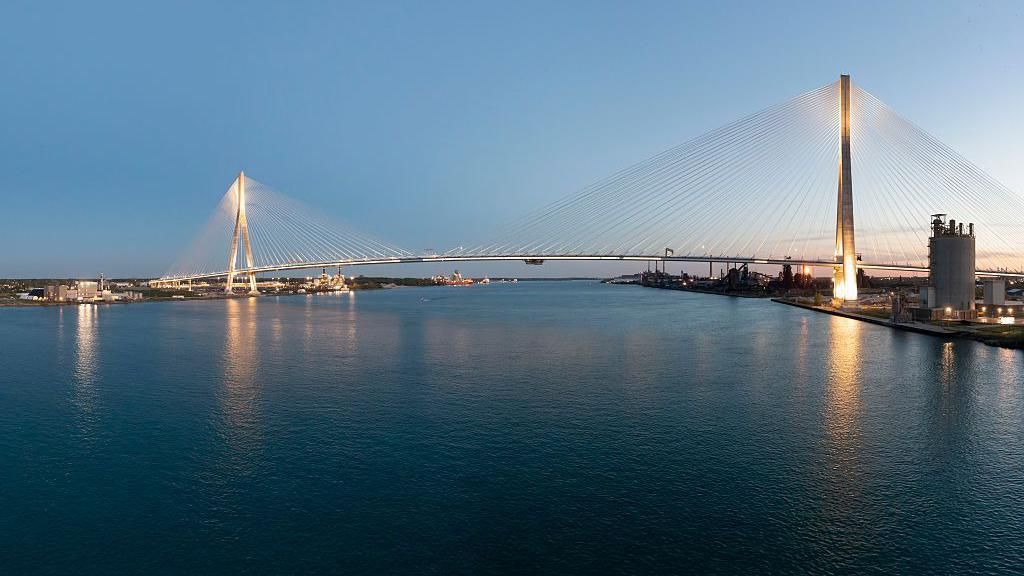
    Trump has set an 8pm ET Tuesday deadline for Iran to unilaterally reopen the Strait of Hormuz, a critical global energy chokepoint that Iran closed in response to the US-Israeli military campaign that began more than a month ago. In an inflammatory post on his social platform Truth Social, Trump wrote: “Open the Fuckin’ Strait, you crazy bastards, or you’ll be living in Hell – JUST WATCH!” He has also explicitly threatened to target critical Iranian infrastructure, including bridges and national power plants, if his demands are not met.

    This deadline is not the first Trump has issued, nor is it the first he has extended. On March 21, Trump gave Iran a 48-hour ultimatum to fully reopen the strait, threatening to “obliterate” Iranian power plants if the order was ignored. Two days later, he extended the deadline by five days, citing what he called “good and productive conversations” — a claim Iranian Foreign Minister Araqchi immediately denied, stating no official contact had taken place. As that five-day extension approached, Trump granted a second 10-day extension that was set to expire Monday evening, claiming the extension came “as per Iranian Government request.”

    Even with these ongoing diplomatic overtures, Iran has already rejected core elements of the ceasefire proposal. A senior Iranian official told Reuters Monday that Tehran will not agree to reopen the Strait of Hormuz as a concession for a temporary truce. The official pointed to Washington’s ongoing refusal to commit to a permanent ceasefire, adding that Iran rejects being pushed into accepting rigid arbitrary deadlines.

    Many high-profile Iranian figures have openly spoken out against any temporary truce. Majid Shekeri, a former senior advisor to Iranian parliament speaker Mohammad-Bagher Ghalibaf, wrote on social platform X that “A temporary ceasefire benefits Pakistan, Turkey, and America, and harms Iran. It’s astonishing that they even dare to raise such a thing.”

    This is not the first setback for Pakistan’s mediation efforts. The Wall Street Journal reported last Friday that talks had already hit a dead end when Iran refused to hold direct talks with US officials in Islamabad, citing what Tehran called unacceptable US demands.

    The closure of the Strait of Hormuz has already had sweeping global economic impacts: the waterway handles roughly one-fifth of the world’s total daily oil and natural gas supplies, all of which have been cut off from global markets since Iran closed the passage.

    The human cost of the ongoing US-Israeli bombardment of Iran has already been devastating. Iran’s own Ministry of Health reports that at least 2,076 Iranians have been killed in the attacks, with an additional 26,500 people wounded. The US-based Iran-focused Human Rights Activists News Agency (HRANA) has recorded a higher death toll of 3,531 killed, a count that includes 1,607 civilian deaths and at least 244 children among the dead.

    In addition to his threats against Iran, Trump has repeatedly lashed out at US European allies in recent weeks, accusing them of failing to provide sufficient support for his campaign against Iran and calling them “cowards.” He has also threatened to withdraw the United States from the North Atlantic Treaty Organization (NATO) over the dispute. To date, Trump has publicly declared victory over Iran at least five separate times, despite the ongoing open conflict.

  • Dozens attend Passover prayers at Western Wall as Al-Aqsa remains closed

    Dozens attend Passover prayers at Western Wall as Al-Aqsa remains closed

    Amid the ongoing US-Israeli war against Iran, a deeply controversial and discriminatory access policy for religious sites in occupied East Jerusalem has drawn widespread condemnation, as Palestinian and Christian worshippers remain locked out of holy sites ahead of and during major religious holidays, while Jewish worshippers are permitted to gather for seasonal rituals.

    Since February 28, Israeli occupation authorities have imposed a full ban on all Muslim Palestinian worshippers entering Al-Aqsa Mosque, one of the most sacred sites in Islam. This total closure marks an unprecedented step not seen since Israel began its occupation of East Jerusalem in 1967, with no exceptions granted even for Ramadan—Islam’s holiest month—or the major Eid al-Fitr holiday marking the end of the fasting period. The shutdown extends to Christian holy sites in Jerusalem’s Old City as well: the Church of the Holy Sepulchre, one of Christianity’s most revered locations, has been closed to worshippers, who were barred from gathering for traditional Easter celebrations on Sunday, with only 15 members of the clergy permitted inside to conduct the holiday observance.

    In sharp contrast, Israeli authorities allowed as many as 50 Jewish worshippers to enter the Western Wall, the structure that forms part of the outer boundary of the Al-Aqsa Mosque compound (known to Muslims as the Buraq Wall), on Sunday. Those in attendance were able to take part in the traditional priestly blessing ceremony tied to the Jewish Passover holiday, held in a covered space adjacent to the Western Wall plaza.

    The unequal application of restrictions does not end at the Western Wall. Thousands of people gathered for a large Passover event in an indoor hall in the central Israeli city of Bnei Brak, an area that has been heavily targeted by Iranian missile strikes amid the ongoing war. Dozens more gathered for Passover festivities in Jerusalem’s Mamilla neighborhood, located just steps from the Old City. This pattern mirrors restrictions seen during the Purim holiday last month, when large gatherings of Israelis proceeded without interference, while wartime gathering limits were strictly enforced against Palestinian residents.

    Israeli officials have framed the full closure of Al-Aqsa as a necessary security measure to mitigate risks from Iranian missile attacks. But Palestinian leaders and critics reject this justification, arguing the closure is part of a deliberate, long-running effort to consolidate exclusive Israeli control over the contested holy site, eroding long-standing Palestinian and Muslim access rights.

    Ahmad Tibi, a Palestinian citizen of Israel who serves as a member of the Israeli Knesset (parliament), slammed the discriminatory policy on Sunday, calling for the immediate reopening of both Al-Aqsa Mosque and the Church of the Holy Sepulchre. Tibi pointed to a recent Israeli High Court decision that allowed gatherings of up to 600 people for anti-war protests, alongside unimpeded mass Jewish holiday celebrations, as proof that security concerns are a pretext. “There is no safety justification for the restrictions at Al-Aqsa; this is a blatant violation of freedom of worship,” Tibi said. He added that Israeli police “act forcefully against worshippers at Herod’s Gate and at the entrances to the Church of the Holy Sepulchre. This is selective enforcement driven by political motives.”

    After Sunday’s prayers at the Western Wall, the Israeli High Court issued a ruling that raised the maximum allowed gathering size from 50 to 100 people for both the Western Wall and the Al-Aqsa Mosque compound. Despite the new legal limit, however, no worshippers—Muslim or Jewish—have been permitted to enter the Al-Aqsa Mosque building itself since the war began. Prior to the ruling, only 25 staff members from the Jerusalem Waqf, the Islamic endowment that manages the 14-hectare Al-Aqsa compound, were allowed on site per shift for maintenance work. Even that limited access has been contested: last week, Israeli forces reportedly turned away seven Waqf staff who were scheduled for their shifts.

    It remains unclear whether the new 100-person gathering limit will pave the way for the return of Palestinian Muslim worshippers to the mosque. Prior reporting from Middle East Eye indicates that Israeli officials have informed the Waqf that the mosque will remain closed at least through mid-April. The decision to raise the gathering cap came after intense pressure from Israeli religious and far-right political leaders, coming on the heels of the High Court’s approval of 600-person anti-war protests.

    Israeli police, under the oversight of far-right National Security Minister Itamar Ben Gvir, have drafted a proposal that would allow up to 150 “Jewish and Muslim worshippers” to enter Al-Aqsa Mosque. Ben Gvir has framed the proposal as an effort to ensure fairness, arguing that since anti-government protests are permitted, “I am obliged to ensure justice and prevent discrimination” against worshippers seeking access to the site. “The High Court must allow access both to the Temple Mount and the Western Wall in small groups,” he stated, using the Israeli term for the hill where Al-Aqsa is located.

    Before the outbreak of the war with Iran, ultra-nationalist Israeli settlers carried out twice-daily incursions into the Al-Aqsa Mosque compound under heavy Israeli police protection, in open violation of the decades-long international status quo agreement that designates Al-Aqsa as an exclusively Islamic holy site governed by Muslim authorities. These daily incursions were paused when the war began, but it remains unclear whether the new police proposal would allow them to resume.

    If the proposal goes into effect, the 150-person cap would actually exceed the pre-war limit of around 100 settlers per incursion. The plan has already been celebrated by Arnon Segal, one of the most prominent Israeli activists who organizes the regular settler raids on Al-Aqsa. Writing on his X account, Segal noted that “Allowing ‘small groups of only 150 people’ onto the Temple Mount is more than the maximum group size Jews have ever been allowed to enter, even on the busiest and most crowded days.” He called the proposal “a dream,” crediting Ben Gvir for advancing the plan and framing it as an unprecedented, historic shift in access to the site.

  • WHO worker among seven killed by Israel in Gaza bombing

    WHO worker among seven killed by Israel in Gaza bombing

    Israel’s continued military operations in the Gaza Strip have left at least seven Palestinians dead over a 24-hour period ending Monday, among them a staff member working for the World Health Organization (WHO), in a new wave of violence that underscores ongoing violations of a October ceasefire agreement. The string of attacks, which stretched across multiple locations from northern to southern Gaza, adds to a mounting death toll that has already surpassed 72,300 Palestinians since the start of Israeli military operations in October 2023, according to Gaza’s Ministry of Health.

  • Tehran rejects Trump’s ultimatum as 45-day truce plan emerges

    Tehran rejects Trump’s ultimatum as 45-day truce plan emerges

    Escalating tensions between the United States, Israel and Iran have reached a new boiling point, after Tehran formally dismissed a harsh, expletive-laden ultimatum issued by former U.S. President Donald Trump that threatened widespread destruction of Iranian critical infrastructure. The rejection comes as international mediators circulate a tentative 45-day truce plan aimed at de-escalating the conflict that has roiled the Middle East since late February.

    Trump’s ultimatum set a Tuesday deadline for Iran to immediately reopen the Strait of Hormuz, the strategic global chokepoint for nearly 20% of the world’s daily oil trade. In a provocative social media post, Trump warned that failure to comply would result in devastating targeted strikes on Iranian power plants and bridges, claiming a continued closure of the strait would leave Iran “back to the Stone Age” and its population “living in Hell”. The threat followed a coordinated wave of U.S. and Israeli airstrikes across Iran that had already killed more than 34 people earlier in the conflict, to which Iran responded by launching missile strikes against Israeli and Gulf Arab targets.

    Tehran has refused to back down from its restriction on shipping through the strait, which remained fully open until the U.S.-Israeli military campaign began on February 28. In an official response to Trump’s threats, Iranian Parliamentary Speaker Mohammad Bagher Ghalibaf labeled the targeting of Iranian civilian infrastructure “reckless”, writing on the social platform X that “You won’t gain anything through war crimes.”

    The ongoing conflict has already sent shockwaves through global energy markets. By early Monday spot trading, Brent crude, the global benchmark for oil prices, climbed to $109 per barrel — a 50% jump from pre-conflict levels. On Sunday, OPEC+ announced a modest output increase of 206,000 barrels per day set to launch in May, a small adjustment that has done little to cool rising energy prices.

    As diplomatic efforts move forward, violent clashes continued across the region over the past 48 hours. On Monday morning, Tehran endured another night of intensive airstrikes that targeted eastern, southern and western districts of the capital. Local state media confirmed at least 34 fatalities from the strikes, including six children. The most significant damage was recorded at Sharif University of Technology, one of Iran’s most prestigious higher education institutions, where multiple campus buildings suffered unprecedented destruction.

    Iran continued its cross-border retaliatory strikes on Monday as well. A missile hit a residential building in the Israeli city of Haifa, leaving at least two people dead and four more wounded. Across the Gulf Cooperation Council states, attacks hit power, desalination and oil facilities in Kuwait, while an oil installation was targeted in Bahrain. In the United Arab Emirates, air defense systems intercepted incoming missile and drone attacks early Monday. A stray drone strike damaged a telecommunications building owned by provider du in Fujairah, with no casualties reported, while falling debris from an intercepted attack left one person injured in an Abu Dhabi industrial zone.

    The latest round of violence followed a high-stakes U.S. special operations mission on Friday that rescued the missing pilot of an F-15 fighter jet shot down over Iranian territory. The operation, which involved dozens of U.S. aircraft, closed a politically sensitive chapter of the conflict, but U.S. forces were forced to destroy two C-130 cargo planes and at least two MH-6 Little Bird helicopters after the aircraft became stuck in rough terrain during extraction. Iranian state media claimed it had shot down the abandoned aircraft, broadcasting footage of charred wreckage to support the claim.

    Amid the ongoing bloodshed, diplomatic efforts have advanced to end the hostilities. A source familiar with the negotiations told Reuters that both Iran and the U.S. have received a draft truce plan that would immediately reopen the Strait of Hormuz once a ceasefire takes effect. Under the draft tentatively called the “Islamabad Accord”, an immediate ceasefire would be followed by 15 to 20 days of negotiations to finalize a broader long-term settlement, with final in-person talks scheduled to take place in Pakistan. Earlier, Axios reported that U.S., Iranian and regional mediators are discussing a potential 45-day temporary truce that could lay the groundwork for a permanent end to the conflict.

    However, a senior Iranian official has already rejected a core condition of the proposal, stating that Iran will not agree to reopen the Strait of Hormuz in exchange for only a temporary truce. The official added that Tehran does not believe the U.S. is currently ready to negotiate a permanent ceasefire agreement.

    Regional stakeholders have laid out their own requirements for any lasting peace deal. Anwar Gargash, diplomatic advisor to the UAE president, stated on Sunday that any final settlement must guarantee unimpeded, free passage for all commercial shipping through the Strait of Hormuz. He added that any deal that fails to address restrictions on Iran’s nuclear program, ballistic missile development and drone production would only set the stage for “a more dangerous, more volatile Middle East” in the long term.