分类: world

  • Tehran rejects Trump’s ultimatum as 45-day truce plan emerges

    Tehran rejects Trump’s ultimatum as 45-day truce plan emerges

    Escalating tensions between the United States, Israel and Iran have reached a new boiling point, after Tehran formally dismissed a harsh, expletive-laden ultimatum issued by former U.S. President Donald Trump that threatened widespread destruction of Iranian critical infrastructure. The rejection comes as international mediators circulate a tentative 45-day truce plan aimed at de-escalating the conflict that has roiled the Middle East since late February.

    Trump’s ultimatum set a Tuesday deadline for Iran to immediately reopen the Strait of Hormuz, the strategic global chokepoint for nearly 20% of the world’s daily oil trade. In a provocative social media post, Trump warned that failure to comply would result in devastating targeted strikes on Iranian power plants and bridges, claiming a continued closure of the strait would leave Iran “back to the Stone Age” and its population “living in Hell”. The threat followed a coordinated wave of U.S. and Israeli airstrikes across Iran that had already killed more than 34 people earlier in the conflict, to which Iran responded by launching missile strikes against Israeli and Gulf Arab targets.

    Tehran has refused to back down from its restriction on shipping through the strait, which remained fully open until the U.S.-Israeli military campaign began on February 28. In an official response to Trump’s threats, Iranian Parliamentary Speaker Mohammad Bagher Ghalibaf labeled the targeting of Iranian civilian infrastructure “reckless”, writing on the social platform X that “You won’t gain anything through war crimes.”

    The ongoing conflict has already sent shockwaves through global energy markets. By early Monday spot trading, Brent crude, the global benchmark for oil prices, climbed to $109 per barrel — a 50% jump from pre-conflict levels. On Sunday, OPEC+ announced a modest output increase of 206,000 barrels per day set to launch in May, a small adjustment that has done little to cool rising energy prices.

    As diplomatic efforts move forward, violent clashes continued across the region over the past 48 hours. On Monday morning, Tehran endured another night of intensive airstrikes that targeted eastern, southern and western districts of the capital. Local state media confirmed at least 34 fatalities from the strikes, including six children. The most significant damage was recorded at Sharif University of Technology, one of Iran’s most prestigious higher education institutions, where multiple campus buildings suffered unprecedented destruction.

    Iran continued its cross-border retaliatory strikes on Monday as well. A missile hit a residential building in the Israeli city of Haifa, leaving at least two people dead and four more wounded. Across the Gulf Cooperation Council states, attacks hit power, desalination and oil facilities in Kuwait, while an oil installation was targeted in Bahrain. In the United Arab Emirates, air defense systems intercepted incoming missile and drone attacks early Monday. A stray drone strike damaged a telecommunications building owned by provider du in Fujairah, with no casualties reported, while falling debris from an intercepted attack left one person injured in an Abu Dhabi industrial zone.

    The latest round of violence followed a high-stakes U.S. special operations mission on Friday that rescued the missing pilot of an F-15 fighter jet shot down over Iranian territory. The operation, which involved dozens of U.S. aircraft, closed a politically sensitive chapter of the conflict, but U.S. forces were forced to destroy two C-130 cargo planes and at least two MH-6 Little Bird helicopters after the aircraft became stuck in rough terrain during extraction. Iranian state media claimed it had shot down the abandoned aircraft, broadcasting footage of charred wreckage to support the claim.

    Amid the ongoing bloodshed, diplomatic efforts have advanced to end the hostilities. A source familiar with the negotiations told Reuters that both Iran and the U.S. have received a draft truce plan that would immediately reopen the Strait of Hormuz once a ceasefire takes effect. Under the draft tentatively called the “Islamabad Accord”, an immediate ceasefire would be followed by 15 to 20 days of negotiations to finalize a broader long-term settlement, with final in-person talks scheduled to take place in Pakistan. Earlier, Axios reported that U.S., Iranian and regional mediators are discussing a potential 45-day temporary truce that could lay the groundwork for a permanent end to the conflict.

    However, a senior Iranian official has already rejected a core condition of the proposal, stating that Iran will not agree to reopen the Strait of Hormuz in exchange for only a temporary truce. The official added that Tehran does not believe the U.S. is currently ready to negotiate a permanent ceasefire agreement.

    Regional stakeholders have laid out their own requirements for any lasting peace deal. Anwar Gargash, diplomatic advisor to the UAE president, stated on Sunday that any final settlement must guarantee unimpeded, free passage for all commercial shipping through the Strait of Hormuz. He added that any deal that fails to address restrictions on Iran’s nuclear program, ballistic missile development and drone production would only set the stage for “a more dangerous, more volatile Middle East” in the long term.

  • Churches and politicians in South Sudan call for ‘lasting peace’ in Easter messages

    Churches and politicians in South Sudan call for ‘lasting peace’ in Easter messages

    Thousands of Christian worshippers across South Sudan gathered for traditional Easter processions over the holiday weekend, but the tone of this year’s celebrations was defined by urgent appeals for an end to persistent bloodshed and the establishment of lasting peace. The joint calls from both senior church leaders and top government officials come as escalating sporadic violence across the young nation has sparked repeated international warnings that South Sudan could be on the brink of sliding back into full-scale civil war, less than 10 years after a five-year civil conflict formally ended.

    The most recent high-profile act of violence occurred just one week before Easter, when unidentified gunmen attacked a mining site in Jebel-Iraq, a region located southwest of the capital Juba, leaving 74 mine workers dead. In the wake of the massacre, government representatives and opposition figures have traded blame, with neither side taking responsibility for the attack, deepening public distrust amid already rising tensions.

    At the principal Easter mass held at Juba’s St Theresa’s Cathedral, lead celebrant Santo Loku Pio delivered a blunt rebuke of the violence that has become entrenched in South Sudan’s public life. “Christians don’t practice hatred, they don’t practice violence that leads to the death of someone or somebody, and many other things that destroy life,” Pio told the assembled congregation. He issued a direct call to ordinary citizens to reject orders to carry out violence: “If you are told to go and kill, refuse, even if it means losing your job,” he said, urging attendees to “be a man or woman of peace.”

    Turning his address to the country’s ruling leadership, Pio called for a fundamental shift in governance. “Be good leaders – good governors, good commissioners, good ministers and good servants of the society. It is time for us to rise above violence, let us do the right thing and I think peace will reign,” he added, framing the call for peace as central to the spiritual meaning of Easter.

    South Sudan’s President Salva Kiir echoed the call for national unity and reconciliation in an Easter message read on his behalf by his press secretary at St Theresa’s Cathedral. Kiir emphasized that the Easter holiday serves as a reminder that hope persists even in the darkest of times. “Let us forgive one another, and support one another, and work hand in hand, and build a country that reflects the strength and dignity of its people,” the statement read.

    Other senior religious leaders across the country joined the appeal for urgent action. Justin Badi Arama, Archbishop of the Episcopal Church of South Sudan and Anglican Primate, told worshippers at Juba’s All Saints Cathedral that the nation must “persevere and work for lasting peace.” “We need urgent action to end violence in South Sudan and restore human dignity across our nation,” he said. In the southwestern city of Yambio, Eduardo Hiiboro Kussala, Bishop of the Catholic Diocese of Tombura-Yambio, centered his message on the sanctity of life. “We want to pray for protection of life and we want to tell everybody that God is the source of life,” he said.

    The collective calls for peace come against a backdrop of growing political unrest. Former First Vice-President Riek Machar, the leader of the main opposition faction Sudan People’s Liberation Movement/Army In Opposition (SPLM/A-IO), is currently under house arrest and facing trial on charges of treason, war crimes, and crimes against humanity, all of which he denies. Machar’s party has denounced the proceedings as a “political witch-hunt” designed to dismantle the 2018 peace accord that brought the 2013–2018 civil war to an end. Last week, the United States Embassy in South Sudan issued a statement demanding Machar’s release, along with other detained opposition politicians, calling the move a critical prerequisite for holding free, fair, and successful national elections and a key step toward advancing long-term peace and accountability.

    South Sudan, the world’s youngest sovereign nation, gained independence from Sudan in 2011, but has struggled with persistent political instability and intercommunal violence in the years following sovereignty. International observers and United Nations officials have repeatedly warned that escalating tensions between the ruling government and opposition, paired with rising intercommunal killings, could push the country back into a widespread civil conflict that would have devastating consequences for the nation’s 11 million people.

  • Death toll from extreme weather in Afghanistan increases to 110

    Death toll from extreme weather in Afghanistan increases to 110

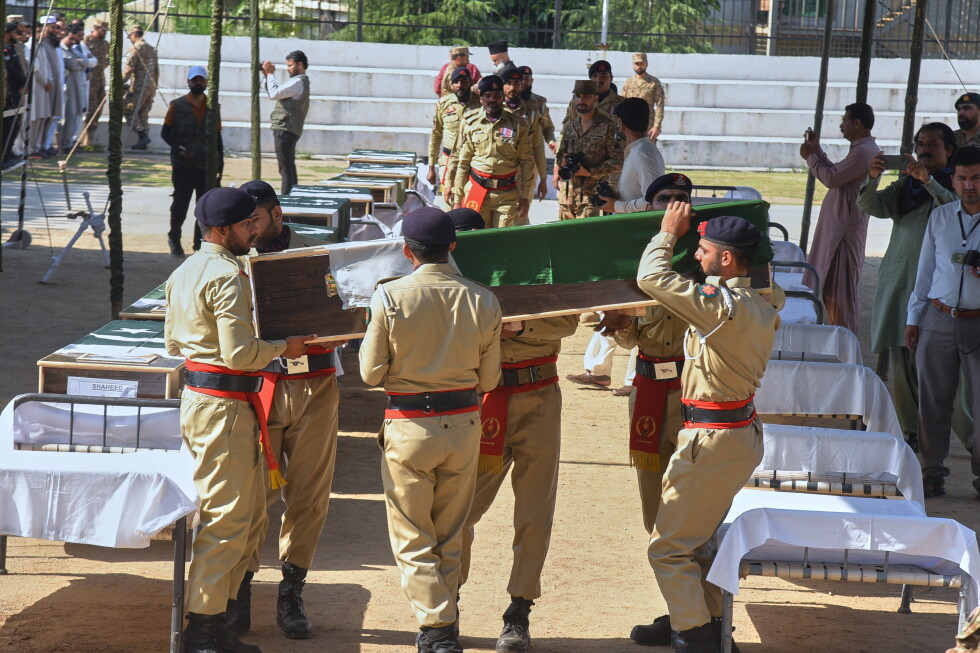
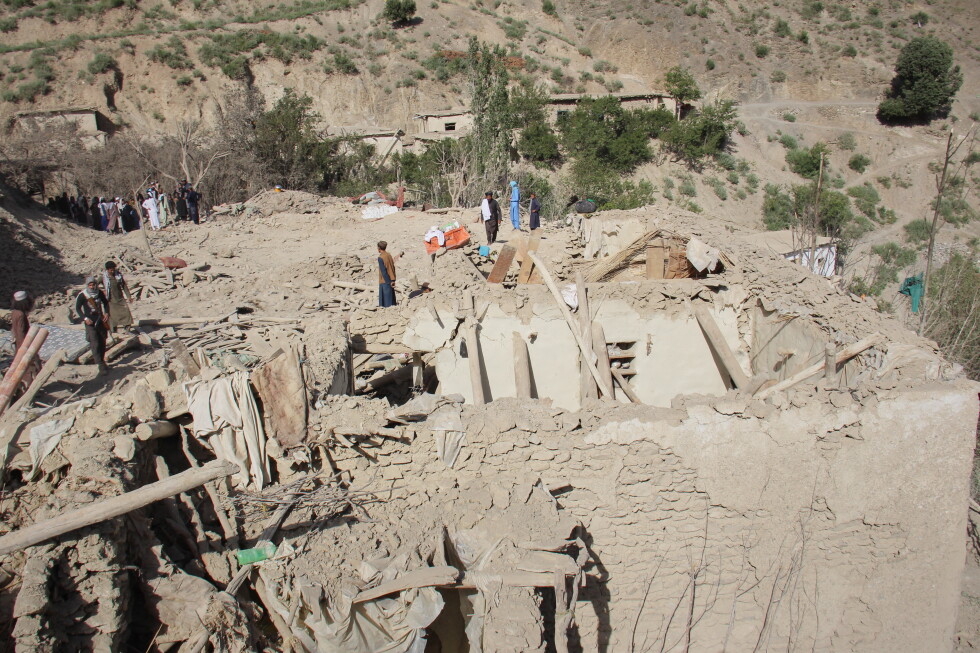
    Twelve days of relentless extreme weather across Afghanistan has left a devastating trail of destruction, with the national disaster authority confirming Monday that the death toll from widespread flooding and landslides has climbed to at least 110. Authorities have also warned that more heavy precipitation is on the way, leaving the country bracing for further hardship.

    The prolonged storm system has impacted almost all of Afghanistan’s 34 provinces, with new casualties continuing to mount in the most recent 24-hour window: the Disaster Management Authority reported 11 additional deaths, six new injuries, and seven people unaccounted for, all swept away by surging floodwaters in separate incidents.

    When accounting for all fatalities from flooding, landslides and associated lightning strikes over the 12-day crisis period, the total casualty count stands at 110 dead and 160 injured. The damage to infrastructure and private property is equally staggering: 958 homes have been completely leveled, and a further 4,155 residences have sustained partial damage that leaves many uninhabitable. More than 325 kilometers (200 miles) of critical public roads have been destroyed, while widespread damage to commercial property, agricultural plots, irrigation canals and drinking water wells has disrupted the lives of 6,122 registered families to date. Disaster management officials stress these numbers remain preliminary, as assessments are still ongoing in hard-to-reach affected areas.

    Emergency response operations are already underway across hard-hit regions. In the western province of Herat, Afghanistan’s Defense Ministry confirmed Monday that military helicopter crews successfully airlifted two stranded residents to safety after floodwaters cut off their escape route.

    Two of the country’s major arterial highways have been closed for days due to landslide and flood damage, forcing thousands of travelers to take lengthy, unplanned detours. The critical Kabul-Jalalabad highway, which connects the national capital to the Pakistani border and Afghanistan’s eastern provinces, has been shut since last Thursday. A second key route, running from Jalalabad city northeast to Kunar and Nuristan provinces, was closed Sunday by falling rock debris from unstable hillsides damaged by heavy rain.

    In anticipation of continued severe weather, national authorities have issued widespread flood warnings for Tuesday across nearly the entire country, urging residents to avoid low-lying river valleys and areas historically prone to flash flooding.

    This latest extreme weather event comes on the heels of multiple deadly climate disasters in Afghanistan already this year. Earlier in 2025, heavy snowfall followed by sudden flash floods killed dozens of people across the country. Afghanistan is annually at high risk of seasonal flood events, as spring melting and heavy rainfall often trigger sudden deadly flash floods on steep, deforested terrain that can kill scores or even hundreds of people in a single event. In 2024 alone, spring flash floods claimed more than 300 lives across the nation.

  • Israel hits Iran gas complex after Trump threat

    Israel hits Iran gas complex after Trump threat

    A sharp escalation of conflict across the Middle East unfolded Monday, as Israeli forces carried out targeted strikes on Iran’s largest petrochemical complex in the coastal city of Assaluyeh on the Gulf of Oman, just one day after U.S. President Donald Trump issued an extreme threat to destroy Iran’s civilian infrastructure if Tehran refused to reopen the Strait of Hormuz. The strikes came amid rapidly rising tensions that have already roiled global energy markets and drawn multiple regional nations into direct hostilities.

    Alongside the attack on the critical energy facility, a separate joint U.S.-Israeli strike killed senior Islamic Revolutionary Guard Corps (IRGC) intelligence chief Majid Khademi at dawn Monday. In response, Iran launched a wave of drone and missile attacks targeting Israel, Kuwait, and the United Arab Emirates, extending the reach of the conflict across the Gulf region. Iranian officials have warned that any follow-through on Trump’s threat to strike civilian infrastructure would be met with far more devastating retaliatory actions.

    Trump’s ultimatum, delivered in an expletive-laden Sunday social media post, gave Iran until 8:00 pm Tuesday (00:00 GMT Wednesday) to reopen the Strait of Hormuz, a critical global energy chokepoint that Iran has effectively blocked in recent weeks. “Open the Fuckin’ Strait, you crazy bastards, or you’ll be living in Hell,” Trump wrote in the post. Iran has already rejected the demand, with the IRGC stating publicly Monday that the strait “will never return to its former status, especially for the US and Israel.” The closure of the waterway, through which roughly 20% of global oil trade passes, has sent global oil and gas prices skyrocketing and forced nations around the world to implement emergency contingency plans to offset the energy supply shock.

    Israeli Defence Minister Israel Katz confirmed that Monday’s strike on the Assaluyeh petrochemical complex successfully hit the facility, which accounts for nearly half of Iran’s total petrochemical output and holds an estimated value of tens of billions of dollars. Local Iranian media reported multiple explosions at the site following the strike. Israeli Prime Minister Benjamin Netanyahu issued a stark warning after the attack, saying “We will reach anyone who seeks to harm us.” In a separate announcement, the Israeli defence ministry confirmed it would ramp up production of Arrow missile interceptors to bolster the country’s multi-layered national air defence system amid the steady influx of Iranian attacks.

    Even as violence accelerates across the region, diplomatic efforts to de-escalate tensions are underway. Axios, citing anonymous U.S., Israeli, and regional sources, reported that a proposed 45-day ceasefire is currently under discussion, with mediation from Pakistan, Egypt, and Turkey, to open space for negotiations on a long-term peace deal. Egypt’s Foreign Minister Badr Abdelatty confirmed Sunday that Cairo has been holding active talks with regional governments, U.S. Special Envoy Steve Witkoff, and Iranian Foreign Minister Abbas Araghchi. A statement from the Egyptian foreign ministry noted that “Views and proposals were exchanged on ways to deescalate the military situation in the region given the delicate juncture it is currently facing.”

    Trump told Fox News Monday that Iran was “close” to reaching a negotiated deal, though Iranian officials have repeatedly denied holding any formal negotiations with either the U.S. or Israel. European Council President Antonio Costa issued a public call for diplomatic resolution Monday, writing on X that “Any targeting of civilian infrastructure, namely energy facilities, is illegal and unacceptable.”

    The current full-scale conflict erupted on February 28, when joint U.S.-Israeli strikes killed Iran’s supreme leader Ayatollah Ali Khamenei, and has since engulfed the entire Middle East and disrupted the global economy. The global oil supply squeeze has already had ripple effects on commercial aviation: Indonesian authorities announced Monday they would increase jet fuel surcharges, while long-haul low-cost carrier Air Asia X implemented ticket price hikes of up to 40% to offset rising fuel costs. Major Asian energy importers have adjusted their shipping routes to avoid the Strait of Hormuz entirely; a South Korean ruling party lawmaker said Seoul will redirect oil shipments to load from Saudi Arabia’s Red Sea port of Yanbu, and Taiwanese officials confirmed they would adopt the same alternative route.

    U.S. and Gulf allies aligned with Washington have already suffered direct impacts from the expanding conflict. Kuwait reported six civilian injuries in an Iranian drone strike on a residential area between Sunday and Monday. The UAE confirmed Monday that its air defence systems intercepted a combined missile and drone attack, with one person injured in an industrial zone of Abu Dhabi. Jordanian local media reported the government has begun processing compensation claims for residents whose property was damaged by falling missile and drone debris.

    In Israel, four civilian bodies were recovered from a damaged residential building in the northern city of Haifa after an Iranian missile strike Monday. In retaliation, the Israeli military announced it had completed a new wave of strikes across multiple targets in Tehran. Iranian state media reported strikes on multiple residential areas in the capital, and confirmed that gas outages disrupted service across parts of Tehran after a strike on a local university facility. Even amid the threats of further attacks, many Tehran residents appeared to carry on with daily life Sunday, with large groups of young people exercising, flying kites, and holding picnics in the city’s western public parks.

    The conflict has also expanded to Lebanon, where Iran-backed Hezbollah launched attacks on Israel starting March 2. Israel has responded with heavy airstrikes and a ground incursion into parts of southern Lebanon. Israeli Army Chief Lieutenant General Eyal Zamir visited Israeli troops deployed in southern Lebanon Sunday and pledged to intensify offensive operations. AFP correspondents on the ground observed a large plume of smoke rising over southern Beirut’s suburbs Monday following an Israeli airstrike that the military confirmed targeted Hezbollah positions.

    Trump is scheduled to hold a press conference later Monday to release details on the rescue of a U.S. airman whose fighter jet was shot down by Iranian forces in recent days.

  • Nigerian army rescues 31 held hostage in Easter church attack

    Nigerian army rescues 31 held hostage in Easter church attack

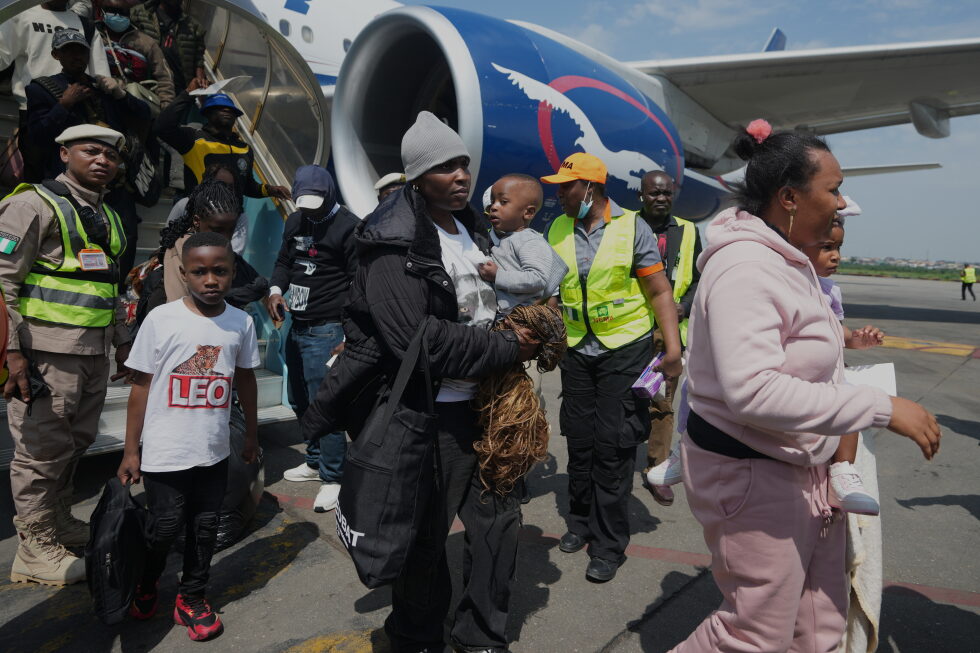
    On a Sunday morning ahead of the Easter holiday, armed attackers targeted a church in the northwestern Nigerian community of Ariko, Kaduna State, leaving multiple civilians dead and dozens held captive in a brazen act of violence that has underscored the persistent security crisis plaguing the region. In the aftermath of the assault, Nigerian military forces announced they have successfully recovered all 31 civilian hostages taken during the attack, though discrepancies have already emerged over the final civilian death toll. Official security force statements confirm five civilians were killed when gunmen opened fire during Easter worship celebrations, but a local church leader initially placed the confirmed death count at seven. According to the Nigerian army’s official account, responding military personnel engaged the attacking gunmen in an intense close-quarters firefight that eventually forced the assailants to retreat from the area, abandoning their hostages and the remains of those they had killed. Military officials added that the fleeing attackers sustained heavy losses during the clash, with visible blood trails along their escape routes confirming significant casualties among the insurgents. Despite the military’s claims of a rapid, effective response to the attack, local media reports quoting area residents tell a different story, claiming the gunmen were able to carry out their assault and operate in the area for an extended period before security forces arrived to confront them. In the wake of the rescue operation, additional military troops have been deployed to the region to track down the surviving attackers and bolster local security protections for civilian communities. Military authorities have also called on local residents to share any intelligence that can help advance counter-insurgency operations targeting the armed groups driving widespread insecurity across northern Nigeria. This church attack is not an isolated incident: kidnappings for ransom and targeted attacks on civilian communities are endemic across northern Nigeria, where the national government has struggled for years to contain overlapping security threats from jihadist insurgent networks and criminal armed gangs known locally as bandits. In a separate, coordinated counter-offensive announced just days after a mass abduction of village residents in Zamfara State, Nigeria’s military confirmed it had killed 65 bandits during a major operation in the state, per reporting from the Agence France-Presse news agency. Police had already confirmed earlier that dozens of local residents were abducted from multiple villages in Zamfara earlier that same week, and a regional manhunt had been launched immediately after the kidnapping was reported. The persistent targeting of religious communities in Nigeria, including Christian congregations celebrating major holidays, has drawn international scrutiny in recent years. During the final year of former U.S. President Donald Trump’s administration, the White House raised formal concerns over the treatment of Christian communities in Nigeria and called on the Nigerian national government to take more aggressive action to improve security and protect Christian populations. Trump went as far as to publicly claim that a “Christian genocide” was ongoing in the country, an accusation that Nigerian government officials firmly rejected, noting that Muslims, Christians, and people of no religious affiliation have all been killed in widespread attacks across the country’s northern regions. In a show of international support for Nigeria’s counter-insurgency efforts, U.S. military personnel were deployed to Nigeria earlier this year in February to provide specialized training for local security forces and share intelligence support to aid the fight against Islamist militants and other armed criminal groups.

  • A Russian attack kills 3 in Odesa while Ukraine targets Russian oil infrastructure, officials say

    A Russian attack kills 3 in Odesa while Ukraine targets Russian oil infrastructure, officials say

    Fresh large-scale drone exchanges between Russia and Ukraine have escalated civilian casualties and infrastructure damage, marking another dangerous turn in the four-year full-scale invasion that continues to defy international peace efforts. The latest wave of violence unfolded overnight Monday, with Russian strike teams launching a coordinated aerial assault on Odesa, Ukraine’s strategically critical southern Black Sea port city.

    The attack on Odesa left a devastating civilian toll: local officials confirmed the deaths of two adult women and a two-year-old toddler, who were killed when a drone slammed into a residential apartment building, leaving the structure heavily damaged. Working through the night under bright floodlights, emergency rescue teams pulled four surviving people trapped in the rubble of the damaged building. Eleven additional people, including a pregnant woman and two children under one year of age, were admitted to local hospitals for treatment, Ukrainian President Volodymyr Zelenskyy confirmed in an official post on social media platform X.

    This strike is part of a sustained, widespread Russian assault across multiple Ukrainian regions, targeting both civilian residential areas and critical energy infrastructure. Since launching its full-scale invasion in February 2022, Russian forces have consistently targeted civilian population centers across Ukraine, with United Nations data confirming the deaths of more than 15,000 Ukrainian civilians to date. In Monday’s overnight barrages, in addition to Odesa, Russian strikes hit energy assets in four northern and eastern regions: Chernihiv, Sumy, Kharkiv and Dnipro. The damage to transmission and distribution facilities in Chernihiv left more than 300,000 households without power, according to the region’s public utility operator.

    Zelenskyy released updated figures Monday showing the extreme intensity of Russian aerial assaults over the past seven days: Russia has launched more than 2,800 attack drones, nearly 1,350 heavy glide bombs, and over 40 assorted missiles at Ukrainian targets in just one week. In a recent interview with The Associated Press, the Ukrainian leader warned that ongoing conflicts in other global regions, particularly the standoff between Iran and Israel, are depleting global stockpiles of the air defense systems Ukraine relies on to fend off these attacks — most notably the U.S.-manufactured Patriot systems designed to intercept incoming cruise and ballistic missiles. On Monday, Zelenskyy reiterated his call for international partners to ramp up support for Ukraine’s air defense networks, saying, “Russia has no intention of stopping” its offensive as U.S.-led peace negotiations remain completely stalled. “We need to strengthen air defense together so that the interception rate of drones and missiles continues to increase,” he added.

    In response to the ongoing Russian assaults, Ukraine has launched counter-strikes deep inside Russian territory using domestically developed long-range drones, which now have an operational range of up to 1,500 kilometers (930 miles). Kyiv has increasingly targeted Russian oil and energy export infrastructure in these strikes, as Russia works to expand crude oil exports following a temporary sanctions waiver granted during the previous Trump administration to ease global energy supply constraints. Ukrainian officials have repeatedly stated that all expanded energy export revenue generated by Russia flows directly into its military budget to fund new weapons and attacks on Ukraine.

    Monday’s Ukrainian counter-strike targeted Novorossiisk, one of Russia’s largest and most economically critical Black Sea oil export ports located in the Krasnodar Krai region. The Russian Defense Ministry claimed that its air defense systems intercepted and downed a total of 50 Ukrainian drones launched in the overnight attack. Regional governor Veniamin Kondratyev confirmed that the attack still caused damage and civilian casualties: eight people, including two children, were injured, and six apartment buildings plus two private residential homes suffered damage. Unconfirmed independent media reports suggest the primary target of the strike was Novorossiisk’s Sheskharis oil terminal, a major hub for Russian Black Sea oil exports. This attack follows a similar strike last week that hit multiple Russian oil facilities on the Gulf of Finland in northwest Russia.

    The Associated Press continues to provide ongoing full coverage of the Russia-Ukraine war at its dedicated online hub.

  • Middle East conflict drives record fuel price hikes across Africa

    Middle East conflict drives record fuel price hikes across Africa

    The ongoing conflict in the Middle East has triggered an unprecedented ripple effect across African economies, most of which depend entirely on imported petroleum products, pushing fuel prices to historic levels that leave ordinary consumers bearing the full brunt of rising global energy costs. In Southern and East Africa in particular, two nations have rolled out the steepest monthly fuel price adjustments recorded in modern history, according to regional energy officials.

    South Africa’s Department of Mineral and Petroleum Resources confirmed that new price hikes took effect Wednesday: gasoline rates rose by 3.06 South African rand (roughly $0.18) per liter, while diesel prices increased between 7.37 and 7.51 rand per liter. Even more dramatic increases hit illuminating paraffin, a critical off-grid energy source for millions of low-income South African households, which jumped 11.67 rand per liter. To offset some of this strain for consumers while maintaining broader economic stability, South Africa’s finance ministry implemented a temporary 3-rand-per-liter cut to the general fuel levy, running from April 1 to May 5, department spokesperson Lerato Ntsoko confirmed.

    Neighboring Malawi followed with an even larger proportional adjustment, rolling out a maximum 35 percent increase for core petroleum products that also took effect Wednesday. Lucas Kondowe, chair of the Malawi Energy Regulatory Authority, explained that the persistent upward pressure from Middle East conflict-driven volatility has upended longstanding industry pricing norms. Where suppliers traditionally use the prior month’s average global price to set local rates, today’s volatile market has led all suppliers to switch to a far shorter two-week average from the current month, accelerating price jumps for end users. Under the new rates, Malawi’s gasoline and diesel now hit 6,672 kwacha ($3.86) per liter, ranking among the highest fuel prices on the entire African continent.

    South Africa and Malawi are far from isolated cases: energy regulators across the continent have hiked pump prices to pass along soaring import costs to consumers. Tanzania has raised fuel prices by roughly 33 percent, while Ghana increased gasoline by 15 percent and diesel by nearly 19 percent. Even in Nigeria, Africa’s largest crude oil producer, the continent’s biggest refinery operated by Dangote Petroleum announced a fresh price hike in late March, lifting Premium Motor Spirit costs from 1,175 to 1,245 Nigerian naira ($0.85 to $0.90) per liter. The conflict has pushed global Brent crude prices above $100 per barrel, forcing the local adjustment. Other nations that have rolled out significant fuel price increases in recent weeks include Mauritania, the Gambia, Mali, Botswana, Ethiopia and Zimbabwe.

    To buffer low-income and vulnerable households from the growing impact of the conflict, a small number of governments have rolled out targeted support measures beyond South Africa’s fuel levy cut. Kenya for instance has reiterated that its existing fuel stabilization fund and longstanding government-to-government fuel import deal continue to work to moderate extreme price spikes and maintain consistent domestic supply. But even with these localized interventions, global bodies warn the damage extends far beyond energy markets. The United Nations Conference on Trade and Development (UNCTAD) has issued an urgent alarm that disruption to critical global energy shipping routes has amplified economic pressure across every region, including Africa. A rapid UNCTAD assessment found ship traffic through the Strait of Hormuz, one of the world’s most vital energy chokepoints, has dropped to near a standstill, with transits plummeting nearly 95 percent. The International Energy Agency estimates that between 25 and 30 percent of global crude oil production and 20 percent of global liquefied natural gas supplies normally pass through the narrow waterway. “This has disrupted a large share of global energy supplies, driving fuel and transport costs higher and feeding inflationary pressures across economies worldwide,” the UN body noted in its latest update.

  • US warns of ‘hell’ in Iran amid strikes

    US warns of ‘hell’ in Iran amid strikes

    As a self-imposed 48-hour deadline for a negotiated peace with Iran ticks down, former U.S. President Donald Trump has issued a stark warning that “all hell will break loose” across the country if no agreement is reached, with the broader 10-day ultimatum for Iran to fully reopen the Strait of Hormuz also approaching.

    The escalating threat landed amid a sharp surge in cross-border strikes across the Middle East over the Easter weekend, which left critical energy infrastructure in Gulf Cooperation Council (GCC) states and civilian sites across Iran — including universities, research facilities and areas near nuclear infrastructure — heavily damaged.

    On Friday, warplanes targeted and destroyed a research facility affiliated with Shahid Beheshti University, one of Iran’s most prestigious higher education institutions, located in northern Tehran. The strike on the university’s Laser and Plasma Research Institute marks the latest in a growing pattern of civilian site targeting by U.S. and Israeli forces in their ongoing military campaign against Iran, which launched on February 28.

    During an on-site press briefing Saturday, Iranian Minister of Science, Research and Technology Hossein Simaei Saraf confirmed that at least 30 Iranian universities have sustained damage from U.S. and Israeli strikes since the conflict began.

    In Sunday’s most high-profile development, Trump announced on his Truth Social platform that U.S. military forces had completed what he called “one of the most daring search and rescue operations in U.S. history,” recovering a “highly respected colonel” whose plane was downed over Iranian territory. The colonel was the second of two crew members aboard an F-15E Strike Eagle fighter jet shot down Friday; the first service member was extracted earlier.

    Iranian military officials pushed back sharply on the U.S. rescue claim hours later. A spokesperson for Iran’s Khatam al-Anbiya Central Headquarters announced that Iranian forces intercepted and destroyed multiple U.S. aircraft attempting to infiltrate southern Isfahan province to extract the downed aircrew, fully foiling the operation. According to the spokesperson, the destroyed aircraft included two Black Hawk helicopters and two C-130 military transport planes, all of which were left burning after the strike.

    Al Jazeera reported Sunday that multiple civilian fatalities occurred during search operations for the downed F-15E crew in Iran’s southwestern Kohgiluyeh and Boyer-Ahmad Province. Iran’s state-run Fars News Agency confirmed the casualties: five people killed and eight wounded in an attack on the Koh Siah area of Kohgiluyeh County, with an additional four fatalities recorded in the Vazg and Kakan districts of Boyer-Ahmad County.

    The previous day, the International Atomic Energy Agency (IAEA) confirmed one person was killed by projectile fragments after a U.S.-Israeli strike hit a site near Iran’s Bushehr nuclear power plant, the fourth strike near the facility to date.

    The Israel Defense Forces (IDF) also released a statement confirming it had conducted airstrikes on more than 120 targets across central and western Iran over the weekend, with planned targets including ballistic missile stockpiles, drone production facilities and Iranian air defense installations.

    Global and regional officials have raised urgent alarms over the growing humanitarian and nuclear risks of the escalating conflict. On April 4, Iranian Foreign Minister Abbas Araghchi took to X to warn that radioactive fallout from a strike on Bushehr would devastate capital cities across the GCC, not just Tehran. He also accused U.S. media of misrepresenting Iran’s negotiating position, reiterating that Iran’s core demand is a permanent end to what he called the “illegal war” imposed on the country.

    World Health Organization Director-General Tedros Adhanom Ghebreyesus joined the IAEA in sounding the alarm on Sunday over nuclear facility safety in Iran. “The latest incident involving the Bushehr nuclear power plant is a stark reminder: a strike could trigger a nuclear accident, with health impacts that would devastate generations,” he wrote on X. “With every passing day of this escalating conflict, the stakes and threats are raised higher and higher. We must de-escalate now. Peace is the best medicine.”

    Former IAEA Director General Mohamed ElBaradei also issued a public appeal, urging GCC member states and the United Nations to intervene to stop Trump from turning the entire region into an inferno.

  • Hamas backs Iran and says disarmament is not on the table while Israel continues genocide

    Hamas backs Iran and says disarmament is not on the table while Israel continues genocide

    In a pre-recorded video address released Sunday, Abu Obaida, the newly named military spokesman of Hamas’s Izz al-Din al-Qassam Brigades, has laid out the group’s stance on escalating regional tensions, criticized international ceasefire brokers, and issued a broad call for armed resistance against Israeli actions across the Middle East.

    Abu Obaida took up the well-known nom de guerre in December, after Hamas confirmed the previous holder of the alias, Huthaifa Samir al-Kahlout, was killed in an Israeli airstrike on Gaza City last August. The new spokesman’s full identity remains undisclosed.

    Opening his remarks, Abu Obaida expressed unwavering backing for recent Iranian strikes targeting Israeli territory, framing the exchange of hostilities between Tehran and Tel Aviv as a direct extension of the conflict that began with Hamas’s October 7 Al-Aqsa Flood operation out of Gaza. He described the ongoing US-backed Israeli campaign against Iran as a continuation of the same war that has devastated Gaza for months, arguing that attacks by what he called “Zionist-American aggression” against Iranian citizens mirror the genocidal actions Israeli forces have carried out in Gaza.

    “ The heinous crimes committed by the Zionist-American aggression against our brothers in the Islamic Republic remind the world of the genocidal crimes in Gaza,” he stated in the address, which aired across multiple Arab media outlets. Abu Obaida also claimed to mourn the passing of Iranian Supreme Leader Ali Khamenei, naming him as a “great martyr” alongside other fallen Iranian figures. He added that the Qassam Brigades viewed the Islamic Revolutionary Guard Corps’ strikes on Israel “with immense pride and admiration.”

    The spokesman also acknowledged a message of solidarity from Iran’s Khatam al-Anbiya Headquarters, which recently dedicated part of its military operations to slain senior Palestinian leaders, including Hamas co-founder Sheikh Ahmed Yassin and late Hamas chief in Gaza Yahya Sinwar.

    Turning to ongoing ceasefire talks for Gaza, Abu Obaida issued sharp criticism of international mediators working to broker a truce, accusing them of applying asymmetric pressure exclusively on Palestinian resistance groups while ignoring repeated Israeli violations of existing truce commitments. He argued that brokers have continued to demand new concessions from Hamas without holding Israel accountable for failing to uphold its end of preliminary agreements, rejecting all calls to disarm Hamas before Israel is made to answer for its breaches.

    “What the enemy is trying to pass today on the Palestinian resistance and the people of Gaza through the mediators is extremely dangerous,” he said. “What is required is to pressure the entity [Israel] to complete its commitments in the first stage, before talking about the terms of the second stage.”

    Abu Obaida listed ongoing Israeli actions he said violate implicit and explicit truce terms: continued targeting of civilian populations in Gaza, severe restrictions on humanitarian aid entering the enclave, closure of the Rafah border crossing that prevents wounded Palestinians from seeking emergency medical care, and the full closure of Jerusalem’s Al-Aqsa Mosque to Muslim worshippers during the holy month of Ramadan. All of these actions, he emphasized, have taken place while the international community directs all its pressure at Hamas.

    He went on to issue a direct call to arms, urging resistance factions across the Muslim world to make Israel “pay a heavy price” for its closure of Al-Aqsa Mosque, and calling on Palestinians living in the occupied West Bank, East Jerusalem, and within Israel’s pre-1967 borders to launch offensive attacks against Israeli targets. He warned that Israel’s provocative actions will not remain unpunished, noting that any attempt to disarm Hamas is equivalent to an effort to continue the genocide of the Palestinian people.

    “Let the enemy know that touching Al-Aqsa and the prisoners will not pass without consequence, no matter the cost to our people, and it will have repercussions upon the occupation state,” he warned. “Indeed, it will be an additional detonator for the entire region.”

    Closing his address, Abu Obaida turned to Syria, which he called “the beating heart of Al-Sham” and the birthplace of Izz ad-Din al-Qassam, the namesake of the Qassam Brigades. He praised the Syrian people for hosting Palestinian refugees for decades and for continuing to show public solidarity with the Palestinian cause.

    His remarks aligned with recent public demonstrations across Syria: following Friday prayers this week, hundreds of protesters gathered in central Damascus to wave Palestinian flags, chant slogans calling for the liberation of Al-Aqsa, condemn Israel’s policies toward Palestinian detainees, and protest the ongoing closure of the holy site. The Damascus rally was part of a broader wave of pro-Palestinian protests across the country, as public anger grows over Israel’s military campaigns and policies targeting Palestinians across the region.

    This report draws from independent on-the-ground and regional reporting by Middle East Eye, which specializes in original coverage of the Middle East and North Africa.

  • Saudi oasis town adjusts to life in the firing line

    Saudi oasis town adjusts to life in the firing line

    Nestled in central Saudi Arabia, the tranquil oasis town of Al-Kharj has long been a beloved escape. For generations, overstretched residents of nearby Riyadh have flocked here to unwind, drawn by its lush palm-lined avenues, world-famous sweet dates, and green agricultural landscapes that stand out dramatically against the kingdom’s endless expanses of arid desert. Today, however, this once-peaceful retreat finds itself at the heart of escalating regional conflict, its quiet daily routine disrupted by the constant threat of incoming projectiles.

    Al-Kharj’s proximity to the sprawling Prince Sultan Air Base, a critical military installation that once hosted U.S. command operations during the 1991 Gulf War and the 2003 invasion of Iraq, has put the town directly in the line of fire. Following the joint U.S.-Israeli strike on Iran that launched on February 28, Tehran has launched repeated waves of attacks targeting Gulf states it accuses of enabling American military operations. Iran’s Revolutionary Guards has openly claimed that Saudi Arabia hosts advanced U.S. fighter jets including F-35s and F-16s at Prince Sultan, alongside refueling and storage infrastructure, making the base a priority target.

    Last month, multiple U.S. media outlets confirmed that at least a dozen American service members were wounded in an Iranian attack on the base. While Iranian officials have publicly claimed they destroyed a high-value advanced surveillance aircraft worth hundreds of millions of dollars, additional reports confirm several U.S. aerial refueling tankers also sustained damage in the strike.

    For Al-Kharj’s 350,000 residents, the conflict has already spilled into civilian life. The town recorded Saudi Arabia’s first civilian casualties from the current wave of tensions on March 8, when two migrant workers were killed after a projectile crashed into a residential neighborhood. Just last week, two local residents were injured when debris from an intercepted drone fell onto three private homes, and a separate incident damaged six additional properties, according to official Saudi statements.

    Despite the repeated strikes and growing risk, however, most Al-Kharj residents have maintained remarkable stoicism, adapting their daily routines rather than succumbing to panic. “We hear the loud booms of missile interceptions, but we rarely spot anything in the sky,” 66-year-old local Abdullah told AFP, requesting only his first name be published due to strict Saudi security sensitivity. Speaking after afternoon prayers at his neighborhood mosque, Abdullah noted: “This is all very new for Al-Kharj, but life goes on as normal — there’s no panic, no change to how we live.”

    Government worker Turki, who also only shared his first name, explained that while the town’s newfound place in global headlines has led friends and family across the country to check in constantly, daily public life continues uninterrupted. During a recent lunch rush at a local popular restaurant, AFP observed diners scrolling through war updates on their phones between bites of traditional rice and meat dishes, a small routine adaptation that underscores how residents have integrated the new risk into everyday life.

    Even younger residents, who openly acknowledge their fear, refuse to alter their daily schedules. Twenty-one-year-old student Batool, sipping coffee at a downtown cafe, admitted: “I would be lying if I said I’m not afraid when I hear the explosions, or when I heard about the foreign workers who died. But I’m not letting fear change how I live. As you can see, I’m still studying outside, my routine hasn’t shifted at all because of the war.”

    While AFP observed no heavy deployment of additional security forces around the town despite the regular strikes, residents confirm the threat is always lingering. Mobile phones regularly receive alert warnings of incoming attacks, and concerns about the next barrage never fully fade.

    The presence of U.S. forces at Prince Sultan Air Base carries long-standing geopolitical weight. American troops first withdrew from the base in the early 2000s, after decades of controversy: conservative factions of Saudi society have long viewed foreign military presence on the soil of Islam’s two holiest sites as a religious insult, a grievance infamously cited by Osama bin Laden as a core justification for the September 11 attacks. U.S. forces only returned to the base in 2019 under a new bilateral agreement between Washington and Riyadh, with initial reports indicating hundreds of personnel would be stationed there.