分类: world

  • Cameroon says Russia has confirmed 16 Cameroonian soldiers died in Ukraine

    Cameroon says Russia has confirmed 16 Cameroonian soldiers died in Ukraine

    YAOUNDE, Cameroon – In an official confirmation that shines new light on the ongoing trend of African citizens being drawn into Russia’s military campaign in Ukraine, Cameroon’s foreign ministry has acknowledged that 16 of its soldiers have been killed while deployed in the war zone, according to a formal notification submitted to Russia’s diplomatic mission in Yaounde this Monday. The government statement confirms that the 16 Cameroonian service members died while operating in the area designated by Moscow as its special military operations zone, and authorities have already initiated required protocols to reach out to the deceased soldiers’ next of kin. On the same day, the ministry issued a separate, public call for the families of six other Cameroonian citizens currently residing in Russia to report to its headquarters for urgent, unspecified discussions related to their loved ones, with no additional details released about the status of these six individuals. This confirmation comes 15 months after Cameroon’s top defense official ordered military commands across the country to enforce strict emergency protocols to crack down on growing numbers of active and retired Cameroonian soldiers leaving the country to enlist in foreign conflicts. The development is far from isolated. Ukrainian officials estimate that more than 1,700 African citizens have been recruited to fight alongside Russian forces, and multiple African governments have documented cases of their people being deceived into joining the war effort through false promises of high-paying jobs or specialized professional training. Just this year, an intelligence brief submitted to Kenya’s national parliament detailed that roughly 1,000 Kenyans were lured to Russia with fake job offers, only to be redirected to frontline combat positions against Ukraine. Earlier this April, Ukraine’s intelligence service announced that two Nigerian citizens had been killed in late 2023 while fighting under Russian command. A 2024 independent investigation by The Associated Press further uncovered that African women have also been targeted for deception: lured through social media advertisements marketing study and work opportunities, they were instead sent to Russian facilities to assemble attack drones intended for use against Ukrainian forces. This pattern of deceptive recruitment has put Moscow in a difficult position amid its ongoing military manpower needs in Ukraine, while leaving dozens of African families grappling with the loss or disappearance of their loved ones thousands of miles from home.

  • Gunman killed, 2 wounded in shootout outside Israel’s Istanbul consulate

    Gunman killed, 2 wounded in shootout outside Israel’s Istanbul consulate

    On a Tuesday midday in one of Istanbul’s busiest commercial districts, a violent shootout between police and a group of armed assailants left one gunman dead and two other people wounded, with two police officers sustaining minor injuries, local governor Davut Gul has confirmed. The exchange of gunfire broke out shortly after 12:15 pm local time (0915 GMT) in the Levent business district, located on Istanbul’s European side, steps away from the Israeli consulate building.

    In the immediate aftermath of the incident, key questions remain unanswered, including whether the Israeli diplomatic mission was the intentional target of the attack. A source close to the situation told Agence France-Presse that no Israeli diplomats are currently present on Turkish territory. All Israeli diplomatic missions across the Middle East region, including those in Turkey, were evacuated shortly after the October 7, 2023 attacks by Palestinian group Hamas on Israeli soil, a security precaution implemented amid rising regional tensions.

    Turkish authorities have already completed the initial identification process for all involved suspects. Interior Minister Mustafa Ciftci confirmed that the group traveled to Istanbul from the northwestern Turkish city of Izmit using a rented vehicle. Ciftci also noted that one of the assailants has ties to an “organisation that exploits the region”, though officials have not yet publicly named the specific group linked to the attack.

    Independent Turkish media reports have suggested the Islamic State (IS) group may be connected to the shooting. This potential link follows a deadly IS attack on Turkish police just two months prior in Yalova, a city on the Sea of Marmara roughly 55 miles southeast of Istanbul, where IS gunmen opened fire on police checkpoints, killing three officers and wounding nine more. In the wake of that December attack, Turkish security forces launched sweeping nationwide raids against IS cells, arresting more than 120 suspected militants.

    Ciftci added that the two main suspects involved in Tuesday’s shootout are brothers, one of whom has a prior criminal record for drug offenses. Unconfirmed local media reports add that three total suspects were involved in the plot, all clad in camouflage gear, carrying heavy long firearms, and transporting supplies in large backpacks.

    AFP correspondents on the ground observed a heavy, sustained police deployment cordoning off the area outside the consulate building in the hours after the shootout. Visible bloodstains were left on the pavement of an adjacent public parking lot, and footage broadcast by private Turkish news network NTV showed officers returning fire along a busy central thoroughfare, before emergency medics carried an injured victim away on a stretcher.

    Turkey’s Justice Minister Akin Gurlek announced via social media platform X that the Istanbul public prosecutor’s office has opened a formal criminal investigation into the incident, with authorities working to piece together the full sequence of events and any broader connections to extremist networks.

  • Zelenskyy offers an Easter pause on energy strikes as Russian drone kills 4 in bus strike

    Zelenskyy offers an Easter pause on energy strikes as Russian drone kills 4 in bus strike

    KYIV, Ukraine — As Russia’s full-scale invasion of Ukraine enters its fifth year of brutal conflict, Ukrainian President Volodymyr Zelenskyy has announced a unprecedented reciprocal proposal: a temporary halt to cross-border attacks on energy facilities from both sides, timed to coincide with the upcoming Orthodox Easter holiday this weekend. In a public address delivered late Monday, Zelenskyy confirmed the offer was formally transmitted to Russian authorities through Washington, which has served as a mediator for indirect talks between Moscow and Kyiv.

    “If Russia agrees to end its strikes against our energy infrastructure, Ukraine will stand by the same commitment,” Zelenskyy stated. To date, the Kremlin has not issued any public response to the proposal. This call for a limited holiday truce comes amid a long track record of failed ceasefire attempts between the two warring nations. Last Orthodox Easter, Russian President Vladimir Putin unilaterally announced a 30-hour ceasefire, but the agreement collapsed within hours as both sides traded accusations of immediate violations. A year ago, Moscow also rejected a 30-day unconditional truce put forward by the U.S. and Ukraine, framing the offer as unconstructive and continuing to push for a sweeping negotiated settlement that meets its core demands. Even so, Russia has unilaterally declared multiple short-term ceasefires over the past years of conflict.

    Despite extending the offer, Zelenskyy made clear he holds little optimism that the Kremlin will accept the proposal. He pointed to current global energy market conditions, noting that Russia is reaping greater financial benefits from elevated international oil prices driven by ongoing conflict in Iran, giving it little incentive to pause strikes that undermine Ukraine’s energy stability. Beyond the truce proposal, Zelenskyy also reiterated growing concerns that a prolonged U.S.-Israeli military campaign in Iran will divert international attention and erode critical American support for Ukraine’s war effort. So far, U.S.-mediated indirect talks between the two nations have stalled on all core sticking points, with Washington’s policy bandwidth largely absorbed by the escalating Middle East crisis. Meanwhile, Ukrainian and Russian forces remain entrenched in brutal, ongoing clashes along a roughly 1,000-mile front line stretching across eastern and southern Ukraine.

    For months, both sides have targeted each other’s critical energy infrastructure as a core military strategy. Russia has launched sustained, large-scale attacks on Ukraine’s power grid in a deliberate campaign to break civilian morale ahead of the cold winter and spring months. In response, Ukraine has ramped up its own long-range drone strikes against Russian oil facilities, aiming to cut into the export revenue that funds Moscow’s war machine. A new assessment published late Monday by the Institute for the Study of War (ISW), a Washington-based think tank specializing in conflict analysis, confirms Ukraine’s expanding drone campaign is yielding tangible results. The report notes that Ukraine is successfully exploiting gaps in Russia’s overstretched air defense network, causing significant damage to Russia’s oil export capacity. “Russia’s vast geographic territory creates enormous defensive challenges, particularly when the country still relies heavily on legacy air defense systems to intercept Ukrainian drone salvos,” the ISW assessment added.

    Alongside attacks on energy infrastructure, Russian forces have continued to target civilian and public transportation networks across Ukraine, including the country’s critical rail links that serve both civilian and military supply purposes. On Tuesday morning, a Russian drone struck a civilian bus as it pulled into a stop in the southeastern Ukrainian city of Nikopol during morning rush hour, killing four civilians and wounding 15 more. Ukrainian Interior Minister Ihor Klymenko confirmed the attack in an online post, emphasizing that the strike was a deliberate tactic targeting ordinary civilians. “This brutal attack on regular civilian transportation happened during rush hour, when people were simply heading to their jobs,” Klymenko wrote. “This is no accident — this is Russia’s deliberate strategy: targeted strikes on innocent civilians.”

    Additional Russian attacks across southern and eastern Ukraine pushed Tuesday’s civilian death toll even higher. Ukrainian authorities reported three people killed and three more injured in a strike on a residential building in the southern city of Kherson. Near the eastern city of Synelnykove, an 11-year-old boy was killed in a separate drone strike, bringing the total number of civilian fatalities reported on Tuesday to eight. Following Tuesday’s wave of drone and artillery strikes, Ukrainian military and civil defense officials confirmed widespread power outages across multiple regions in eastern and southern Ukraine, a disruption that echoes the widespread energy cuts that upended civilian life across the country through the winter months.

  • Gunman killed, 2 wounded in shootout outside Israel’s Istanbul consulate

    Gunman killed, 2 wounded in shootout outside Israel’s Istanbul consulate

    A violent shootout between police and suspected assailants outside the Israeli consulate in Istanbul on Tuesday has left one gunman dead and two other people wounded, according to the city’s governor. The clash also left two Turkish police officers with minor injuries, marking a shocking outbreak of violence in a major urban center that has already faced heightened security threats in recent years. Initial reports from Turkish public broadcaster TRT had claimed two of three attackers were killed, but official accounts have since corrected that narrative, confirming only one assailant died in the exchange of gunfire. Turkish law enforcement has already completed the identification process for all involved attackers, senior officials confirmed. Turkish Interior Minister Mustafa Ciftci shared key details about the attackers’ movements ahead of the incident, revealing the group traveled to Istanbul from the northwestern Turkish city of Izmit using a rented vehicle. Ciftci also confirmed that one of the assailants has ties to an “organisation that exploits the region,” though official government authorities have declined to publicly name the specific extremist group the suspect is linked to. Despite the government’s refusal to confirm the affiliation, multiple Turkish media outlets have pointed to the Islamic State (IS) militant group as the likely connection. This speculation is bolstered by recent IS-linked violence in the nearby region of Yalova, a coastal province on the Sea of Marmara located approximately 55 miles southeast of Istanbul. In a December attack in Yalova, IS militants opened fire on a Turkish police unit, killing three officers and wounding nine others in one of the deadliest militant attacks in the country in recent months. Additional details released by Ciftci also revealed that the two attackers involved in Tuesday’s incident are brothers, and one of the pair has a prior criminal record related to drug offenses. Turkish security forces have launched a full investigation into the plot, working to uncover any broader networks that may have supported the attack and determine the full scope of the assailants’ plans ahead of the clash at the consulate.

  • Gunmen attack police near building housing Israeli Consulate in Istanbul

    Gunmen attack police near building housing Israeli Consulate in Istanbul

    On a Tuesday in central Istanbul, a brazen armed assault targeting police outside a high-rise building that hosts the Israeli Consulate left one attacker dead and two others wounded and in custody, senior Turkish government officials have confirmed. The incident, which unfolded in Levent, Istanbul’s bustling core commercial district, sparked an intense shootout between the three assailants and responding law enforcement, leaving two officers with minor injuries.

    Istanbul Governor Davut Gul confirmed to reporters that the attackers were armed with long-barreled weapons, with one attacker fatally shot during the exchange of fire. The two surviving suspects, who were wounded in the clash, have been taken into Turkish custody. According to Turkey’s Interior Ministry, the pair are brothers identified only as Onur C. and Enes C., with Onur holding a prior criminal record related to drug offenses. Both are currently undergoing interrogation by law enforcement authorities.

    Details of the attackers’ movements and backgrounds have begun to emerge in the hours after the assault. Interior Minister Mustafa Cifti revealed in a post on the social platform X that the three suspects traveled to Istanbul from Izmit, a city located roughly 100 kilometers (60 miles) east of the country’s largest metropolis, in a rented vehicle. Cifti also noted that one of the assailants had ties to a group that “exploits religion,” though he stopped short of naming the specific organization. Turkey has faced repeated deadly terrorist attacks from extremist groups in recent years, most notably the Islamic State group, which has carried out multiple high-profile assaults across the country.

    Notably, no Israeli diplomatic personnel were present in the consulate building at the time of the attack. Israel withdrew all of its diplomats from its Turkish missions earlier amid growing security concerns and rapidly deteriorating bilateral relations tied to the ongoing war in Gaza.

    Eyewitness accounts from people working and moving through the normally busy business district paint a chaotic picture of the 10-minute shootout. Omer Dilki, a 34-year-old local resident, told reporters that the repeated gunfire stood out in the normally noisy district. “In general, this is a noisy area, so initially we thought this might be something else. But the gunshots continued,” he said, adding that he saw officers taking cover behind parked vehicles and coordinating with one another during the clash. Ali Rıza Arpacı, who works at a business near the consulate building, described witnessing “serious clashes” unfold directly in front of him, saying “We were almost inside the clashes.”

    Mobile footage from the scene captured one armed assailant, armed with what appeared to be an assault rifle and wearing a brown backpack, hiding behind a public bus while exchanging gunfire with police. The footage also shows one officer fall to the ground after apparently being struck by gunfire, before rolling to cover behind a nearby tree. Turkish officials later clarified that the two injured officers sustained only minor wounds: one was hit in the leg, while the other suffered a wound to the ear.

    In the aftermath of the attack, Turkish law enforcement quickly sealed off the entire building and closed multiple surrounding roads to through traffic. Forensic investigators in white protective hazmat suits have since combed the attack site, collecting shell casings, DNA samples, and other potential evidence to build their case. Turkish Justice Minister Akin Gurlek announced that three top prosecutors, including one deputy chief prosecutor, have been appointed to lead the ongoing criminal investigation into the assault.

    Turkish President Recep Tayyip Erdogan issued a sharp condemnation of what he called a “treacherous” attack, reaffirming the country’s unwavering counter-terrorism stance. “We will resolutely continue our fight against all forms of terrorism, and we will not allow the climate of security in Turkey to be harmed by vile and timed provocations like today’s,” he said.

    International condemnation of the assault followed quickly. U.S. Ambassador to Turkey Tom Barrack condemned the attack, praising Turkish authorities for “their swift and decisive response.” Israel’s Foreign Ministry also issued a statement condemning the assault, and commended Turkish security forces for their rapid action that prevented the attack from causing greater harm.

    This report includes a correction to an earlier version of the story, which incorrectly cited Turkish outlet Haberturk to claim two attackers had been killed. Turkish officials have confirmed only one of the three assailants was killed, with the other two wounded and taken into custody. Suzan Fraser reported from Ankara, with additional contribution from Mehmet Guzel in Istanbul.

  • 1 killed, 2 injured in fire beneath bridge on Panama Canal

    1 killed, 2 injured in fire beneath bridge on Panama Canal

    A deadly blaze erupted on Monday beneath the Bridge of the Americas, the iconic crossing spanning the Panama Canal near Panama City, leaving one person dead and two others hospitalized with injuries, according to international wire service reporting from the Central American nation.

    The fire broke out involving multiple fuel trucks parked or operating under the bridge, triggering an emergency response from local safety and law enforcement authorities. Details of the fire’s origin and the identities of the casualties have not yet been released to the public as of Monday’s update.

    Located at the Pacific entrance to the Panama Canal, the Bridge of the Americas is a critical piece of transportation infrastructure connecting North and South America, as well as facilitating overland access across the canal itself. The incident has raised preliminary questions about safety protocols for fuel storage and transport near major canal infrastructure, though no disruptions to canal operations have been reported in the initial wake of the tragedy.

    The Spanish news agency EFE first reported the casualty toll, with the update published by Xinhua on April 7, 2026. Local emergency teams have not yet issued a full statement on how the fire started or the extent of damage to the bridge structure, beyond confirmation of the human cost of the incident.

  • Sudan drone attacks endanger civilians, strain aid response: UN

    Sudan drone attacks endanger civilians, strain aid response: UN

    As Sudan’s brutal internal conflict approaches its third year, United Nations humanitarian officials have issued a stark warning that escalating drone attacks are killing growing numbers of civilian non-combatants, destroying critical public infrastructure, and pushing an already catastrophic humanitarian crisis to new depths.

    In its latest public briefing, the UN Office for the Coordination of Humanitarian Affairs (OCHA) confirmed that drone strikes have increasingly targeted densely populated civilian areas and healthcare facilities — core protected sites under international humanitarian law — severely limiting local communities’ access to life-sustaining essential services.

    One of the deadliest recent incidents took place last Thursday in Sudan’s White Nile State, where a drone attack on Al-Jabalain Hospital left 10 health workers dead and 22 more injured, according to on-ground reports. The strike forced an immediate shutdown of most medical operations at the facility, leaving tens of thousands of local residents without access to routine and emergency care.

    In a weekend social media statement, Tom Fletcher, UN Under-Secretary-General for Humanitarian Affairs, reiterated the global body’s demand for full protection of medical personnel and facilities. He emphasized that binding international humanitarian law mandates unwavering safeguards for healthcare systems operating in conflict zones. OCHA officials added that the Al-Jabalain Hospital attack is not an isolated incident, but part of a sustained pattern of violence against healthcare across Sudan.

    Data from the World Health Organization, verified over the course of the nearly three-year conflict, confirms more than 200 documented attacks on healthcare facilities across the country that have killed over 2,000 people. Just in the first three months of 2026 alone, 13 verified attacks have left 184 people dead and nearly 300 injured.

    Another deadly strike hit civilian areas last Wednesday in Blue Nile State, where drone bombings targeted a public market in the village of Balila and surrounding communities, killing seven civilians according to initial reports.

    Beyond direct casualties, the rapidly escalating insecurity has triggered a new wave of forced displacement. Data from the International Organization for Migration shows that between mid-February and late March 2026, more than 10,000 people fled their homes in Kurmuk locality, with a large share crossing the border into neighboring Ethiopia to seek safety.

    Displaced families that have relocated to Blue Nile’s state capital Ed Damazine currently face acute shortages of food, medical care, and safe shelter, OCHA reports. Vulnerable groups including women and children are at drastically increased risk of gender-based violence and exploitation, while humanitarian aid groups still face major barriers to reaching affected communities in the region.

    Despite the mounting operational and security challenges, UN humanitarian agencies say they have not suspended life-saving work across the country. The UN Sudan Humanitarian Fund has allocated nearly $200 million to deliver critical assistance to approximately 4 million vulnerable Sudanese people to date.

    As the conflict marks its third anniversary, OCHA also noted that more than 1.6 million people have chosen to return to Sudan’s capital Khartoum in recent months, even though unexploded ordnance and widespread damage to public infrastructure continue to pose severe daily risks to returnees. In response, UN agencies are expanding their operational footprint in the capital, including reopening offices that have been closed since the outbreak of fighting in 2023.

    Stephane Dujarric, chief spokesperson for UN Secretary-General Antonio Guterres, told reporters that Pekka Haavisto, Guterres’ personal envoy for Sudan, is currently conducting a series of diplomatic engagements across the region aimed at de-escalating hostilities and protecting civilian populations. Currently based in Nairobi, Haavisto recently held talks with Mohamed Hamdan Dagalo, commander of the paramilitary Rapid Support Forces, following separate negotiations last week with Abdel Fattah al-Burhan, Sudan’s army chief and president of the Transitional Sovereign Council.

    Dujarric confirmed that the diplomatic meetings provided a constructive space for dialogue, with all parties exploring tangible, practical pathways to reduce violence and protect civilians. All negotiating parties expressed their willingness to cooperate with the United Nations’ mediation efforts, the spokesperson added.

    “This is encouraging and must swiftly translate into concrete progress towards ending the suffering of all Sudanese people, once and for all,” Dujarric said. He also confirmed that Denise Brown, the UN Resident and Humanitarian Coordinator for Sudan, has returned to Khartoum alongside a core operations team to scale up aid delivery, even as most OCHA staff remain based in Port Sudan for security reasons. Multiple UN agencies have now resumed operations in Khartoum after three years of closure.
    “As the three-year mark of hostilities in Sudan approaches, we reiterate our call for the protection of civilians and civilian infrastructure, including health facilities, an immediate cessation of hostilities, and rapid, safe, unimpeded and sustained humanitarian access,” Dujarric said. He added that the international response is currently hampered by a severe critical funding gap: Sudan’s 2026 Humanitarian Needs and Response Plan, which requests $2.9 billion to assist more than 20 million vulnerable people across the country, is only 16 percent funded, with just $465 million received by aid organizations to date.

  • Tragedy revisited

    Tragedy revisited

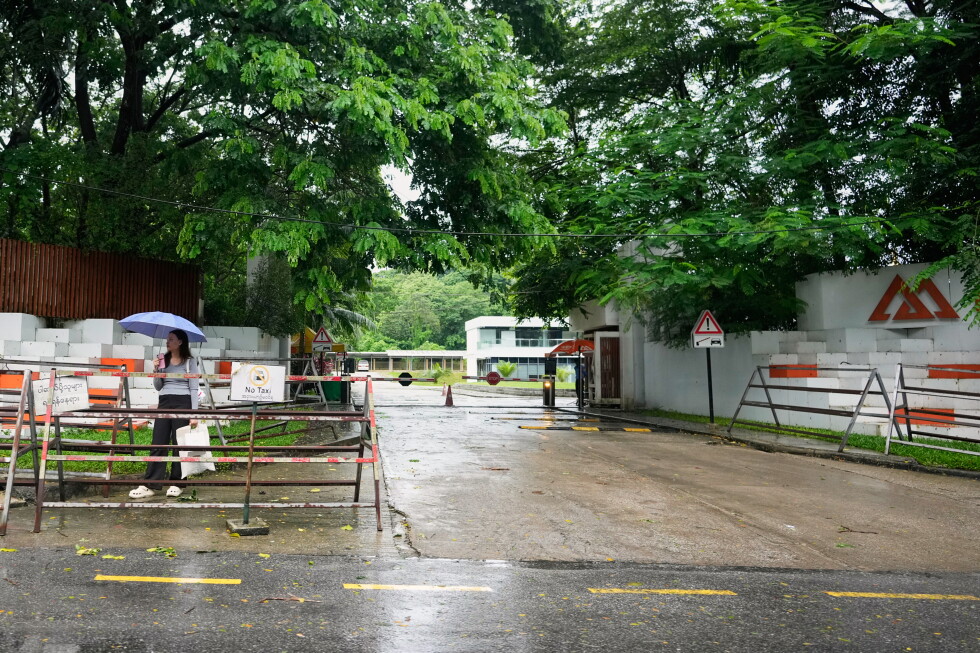
    One year after a catastrophic 7.7-magnitude earthquake tore through central Myanmar, leaving thousands dead and billions of dollars in destruction, the nation has gathered to honor the lives lost and reflect on ongoing recovery work. The official commemoration ceremony was hosted in Nay Pyi Taw, Myanmar’s national capital, and broadcast by state-owned Myanmar Radio and Television on Sunday.

    Addressing attendees, Acting President Senior General Min Aung Hlaing opened the event by extending heartfelt condolences to the families of those killed and affected by the disaster. He spoke of the widespread grief over the thousands of lives cut short and the irreversible loss of personal and public property across the impacted regions.

    Min Aung Hlaing went on to detail the full scale of the destruction the earthquake left in its wake. The tremor, which struck on March 28, 2025, rippled across 10 of Myanmar’s administrative regions and states, including the capital Nay Pyi Taw. Official casualty counts confirm 3,818 people lost their lives in the disaster, while an additional 5,104 people suffered injuries ranging from minor to life-altering. In total, more than 160,000 households saw their homes damaged or destroyed, leaving over 420,000 people displaced or otherwise impacted by the event. Preliminary economic assessments put total infrastructure, property and cultural damage at more than 7,979 billion kyats, equivalent to roughly $3.79 billion. One of the most visible symbols of the destruction, captured in international press imagery, was a centuries-old Buddha statue reduced to rubble in Mandalay, the earthquake’s hardest-hit urban center.

    Beyond commemorating the lives lost, the acting president emphasized that national rehabilitation and reconstruction efforts remain ongoing, with the government prioritizing the safe return of displaced residents and the rebuilding of critical public infrastructure damaged in the tremor.

  • War in the Middle East: latest developments

    War in the Middle East: latest developments

    The long-simmering conflict between Israel and Iran erupted into open cross-border fire on Tuesday, sending shockwaves through the Middle East and raising urgent international concerns over broader regional destabilization. Multiple coordinated strikes, civilian safety warnings, and high-stakes diplomatic maneuvering have combined to create one of the most volatile moments in the region in decades.

    Pakistan, which has been serving as a neutral mediator between Iran and the United States, has seen its diplomatic efforts to de-escalate the crisis reach a pivotal turning point, according to Iran’s ambassador to Islamabad, Reza Amiri Moghadam. In a post shared Tuesday on the social platform X, Moghadam noted that “positive and productive endeavours in Good Will and Good Office to stop the war is approaching a critical, sensitive stage,” though he offered no additional details on the substance or timeline of the ongoing talks.

    As military operations intensified across the region, the Israeli Defense Force issued an urgent public safety advisory to Iranian civilians, urging them to avoid all rail travel across Iran until 17:30 GMT Tuesday. “For your safety, we ask you to refrain from using trains or travelling by train throughout the country from now until 9 pm Iran time,” the military said via its official Persian-language social media account, warning that “Your presence on trains and near railway tracks puts your life in danger.”

    Neighboring Gulf states have also moved to strengthen security protocols amid rising tensions. Authorities in Saudi Arabia and Bahrain announced a temporary precautionary closure of the King Fahd Bridge, a critical cross-border transportation artery that connects the Saudi mainland to the island Kingdom of Bahrain. The closure came shortly after official security alerts were issued for the border region amid rising threat assessments.

    In the Iranian capital of Tehran, local media confirmed that US-Israeli joint airstrikes carried out early Tuesday completely destroyed the city’s Rafi-Nia synagogue. Iran is home to a small remaining Jewish community, the majority of whose members fled the country in the wake of the 1979 Islamic Revolution.

    Hours after a series of strikes hit energy infrastructure targets across Iran, overnight attacks targeted a major petrochemical complex in the eastern Saudi Arabian industrial city of Jubail. An anonymous witness confirmed the strike to Agence France-Presse (AFP) Tuesday. The strike came shortly after the Saudi Ministry of Defense announced that its air defense systems had successfully intercepted and destroyed seven ballistic missiles launched toward eastern regions of the kingdom.

    The escalating conflict has already claimed the lives of foreign civilians, with the Philippine Department of Foreign Affairs confirming Tuesday that a second Philippine national has been killed in the fighting. The Filipino woman was killed Sunday in a missile strike on a residential building in the Israeli port city of Haifa, dying alongside her Israeli husband and his elderly parents. Israeli rescue services recovered four bodies total from the rubble of the building, which was hit by an Iranian missile a day after the attack was launched.

    Israeli military officials confirmed Tuesday that they had launched a widespread wave of airstrikes across Iran, with local Iranian media outlets reporting loud explosions across multiple neighborhoods in Tehran and the nearby city of Karaj. Simultaneously, the IDF confirmed that its domestic air defense systems had been activated to intercept incoming missiles fired by Iranian forces toward Israeli territory.

    In the autonomous Kurdistan Region of northern Iraq, local authorities reported that a drone originating from Iran crashed into a residential home, killing a married couple. An AFP journalist on the ground also reported hearing two large explosions near Erbil International Airport, which hosts military advisors from the US-led global anti-jihadist coalition. Earlier the same day, a security source told AFP that regional air defense systems had intercepted four missiles targeted at the US consulate in Erbil before they could reach their target.

    At the United Nations headquarters in New York, the UN Security Council is scheduled to hold a key vote Tuesday on a draft resolution addressing Iranian threats to freedom of navigation through the Strait of Hormuz, a top global diplomatic source confirmed to AFP. The latest draft of the resolution, which has been reviewed by AFP, demands that Iran end all attacks on commercial shipping and halt “any attempt to impede transit passage or freedom of navigation in the Strait of Hormuz.” However, objections from multiple veto-wielding permanent Security Council members have forced negotiators to water down the text, and the current draft does not include explicit authorization for the use of military force to enforce its terms. Tehran has effectively closed the strategic waterway to international commercial traffic since US-Israeli strikes on Iranian targets on February 28, a move that has already sent global oil and natural gas prices soaring in recent weeks.

    Tensions between Washington and Tehran further escalated Tuesday after US President Donald Trump doubled down on extreme threats to destroy Iran’s national infrastructure. In response, an Iranian Army spokesperson rejected the threats, saying that Trump’s “rude, arrogant rhetoric” has no impact on Iranian military and political decision-making. Trump doubled down on the threats during a White House press conference, saying that “the entire country” of Iran “could be taken out in one night and that night might be tomorrow night,” if Iran does not meet his ultimatum to reopen the Strait of Hormuz by 00:00 GMT Wednesday. “Every power plant in Iran will be out of business, burning, exploding and never to be used again,” he said, adding that he also threatened to destroy all major bridges across Iran. “I mean complete demolition by 12 o’clock (0400 GMT), and it’ll happen over a period of four hours — if we wanted to.”

  • Australia issues new travel warning for Fiji as separate cyclones loom over Pacific neighbour and north Qld

    Australia issues new travel warning for Fiji as separate cyclones loom over Pacific neighbour and north Qld

    Two simultaneous Category 3 severe tropical cyclones are churning across the South Pacific, triggering an urgent travel advisory from Australian officials for visitors heading to one of the region’s top tourist destinations, and raising storm preparedness alerts for both Fiji and Australia’s Queensland state.

    In an updated public notice issued through its official Smartraveller service, Australia’s Department of Foreign Affairs and Trade (DFAT) warned Australians with upcoming travel plans for Fiji that Cyclone Vaianu, one of the two powerful storm systems, is projected to bring severe hazardous conditions to the island nation. As the storm tracks southward toward New Zealand, it is expected to dump intense rainfall that will trigger life-threatening flash flooding, alongside destructive sustained winds that can down power lines and damage infrastructure.

    DFAT officials noted that the approaching storm is already poised to disrupt regional travel plans, with widespread potential for flight delays or full cancellations, as well as interruptions to basic essential services across affected areas. The department has urged all current and incoming travelers in Fiji to familiarize themselves with their accommodation’s official evacuation protocols, and to follow direction from local emergency management officials immediately if a storm warning is issued for their area. “If a cyclone is approaching your area, find your nearest shelter and follow the advice of local authorities,” the advisory read.

    Vaianu is currently on track to reach New Zealand’s North Island, including the country’s largest city Auckland, by the weekend. Forecasters project the storm will weaken significantly as it moves across cooler southern waters, dropping below tropical cyclone intensity before it reaches landfall in New Zealand.

    The second cyclone, Maila, the other equally powerful Category 3 storm system, is currently lingering east of Papua New Guinea in the waters near the Solomon Islands. According to updates from Australia’s Bureau of Meteorology (BOM), steering wind currents around the storm are currently balanced, leaving Maila moving slowly across the Solomon Sea. The system is forecast to shift toward the west-southwest by Thursday, and while it will remain well offshore of Queensland’s coast for the next several days, it is projected to track toward far north Queensland from late this week, with potential landfall sometime over the weekend or early next week. Forecasters have not yet confirmed what intensity Maila will maintain when it reaches the Australian coastline.

    This is not the first time Fiji has faced severe cyclone impacts; the island nation suffered one of its deadliest storm events in 2016, when Cyclone Winston made landfall and killed 44 people, leaving thousands homeless and causing hundreds of millions of dollars in damage to the country’s critical tourism infrastructure.

    In addition to the alerts, DFAT has advised all travelers planning trips to Fiji to reach out directly to their airline and accommodation providers to confirm the status of their plans and understand any changes or disruptions that may affect their trip.