分类: world

  • Nations to kick off world-first fossil fuel exit talks

    Nations to kick off world-first fossil fuel exit talks

    Against a backdrop of escalating geopolitical tensions, global energy market volatility, and growing alarm over accelerating climate change, more than 50 national delegations have gathered in the Colombian Caribbean port city of Santa Marta this week for the world’s first dedicated international conference focused on phasing out fossil fuels, the primary driver of anthropogenic global warming.

    Co-hosted by fossil fuel-dependent Colombia and the Netherlands, the two-day summit is being held outside the framework of long-running United Nations climate negotiations, a deliberate choice that reflects widespread frustration among participating nations over the UN process’s repeated failure to make meaningful progress on fossil fuel reduction. Santa Marta, the host city, is a fitting backdrop for the talks: it sits at the heart of one of Colombia’s busiest coal exporting hubs, a reminder of the deep economic ties many nations still retain to planet-warming fossil fuels.

    As delegates arrived for the opening of talks on Tuesday, climate activists and Indigenous community groups marched through the city’s streets and along its beaches to demand urgent action, with coal tankers clearly visible lined up on the ocean horizon beyond the shore. The summit is not mandated to produce binding international commitments, but an independent scientific advisory panel has put forward a sweeping 12-point policy menu for attending nations to consider, headlined by a call for an immediate halt to all new fossil fuel extraction and infrastructure expansion projects.

    The attendee list includes a diverse cross-section of major fossil fuel producers, large energy consumers, and climate-vulnerable nations: major developed producers Canada, Norway and Australia, developing energy giants Brazil, Nigeria and Angola, European Union member states, coal-dependent emerging economies Turkey and Vietnam, and small island developing states that face existential risk from rising sea levels driven by climate change. Notably absent from the talks are the world’s three largest greenhouse gas emitters—the United States, China and India—as well as oil-rich Gulf nations.

    Organizers first announced the summit in late 2024, but recent geopolitical upheaval, including the ongoing Iran conflict and subsequent oil and gas market disruptions, has only sharpened the urgency of the conversation, according to speakers. UK special climate envoy Rachel Kyte told reporters on the ground in Santa Marta that the current crisis has underscored a core truth long argued by climate advocates: global reliance on fossil fuels is a major source of geopolitical and economic instability.

    “People seem refreshed to be able to talk about these issues without having to sort of argue the existential question of — do we need to do this at all?” Kyte said. “Many nations are here in good faith to really work through what is a very complex challenge made more urgent by the crisis.”

    Alongside calls to halt new fossil fuel development, the summit’s agenda includes work to map out a framework for equitable reductions in global fossil fuel production and consumption, and strategies to reform harmful fossil fuel subsidies that currently skew global energy markets and block much-needed investment in renewable energy. A new analysis released Monday by the International Institute for Sustainable Development highlights the scale of this challenge: the research found that governments around the world still spend five times more public funding on fossil fuel support than they invest in renewable energy alternatives.

    Scientists leading the advisory panel have stressed that there is no possible justification for opening new fossil fuel extraction sites, even as renewable energy investment hits record highs. Speaking to AFP in Santa Marta, Carlos Nobre, a Brazilian climate scientist and former member of the UN Intergovernmental Panel on Climate Change, warned that even if no new fossil fuel projects are developed, the existing reserves of coal, oil and gas already in production or development are enough to push global average temperatures 2.5 degrees Celsius above pre-industrial levels by 2050.

    The planet has already warmed 1.1 degrees Celsius above pre-industrial averages, and current policy trajectories put the world on track to blow past the 1.5 degree Celsius warming threshold that scientists identify as the limit for avoiding catastrophic, irreversible climate impacts. Beyond that threshold, scientists warn of irreversible losses including the complete disappearance of the world’s coral reef systems and the full collapse of the Greenland ice sheet, which would eventually raise global sea levels by more than seven meters, displacing hundreds of millions of people worldwide.

  • US considering sending stranded Afghans in Qatar to the Congo, advocacy group says

    US considering sending stranded Afghans in Qatar to the Congo, advocacy group says

    Nearly three years after the chaotic 2021 U.S. withdrawal from Afghanistan, more than 1,100 Afghan allies with verified ties to the U.S. military and government remain trapped in a geographic and bureaucratic limbo at Camp As Sayliyah, a U.S.-operated military base tucked into Qatar’s arid desert. What was supposed to be a maximum 21-day waiting period for U.S. resettlement has stretched into years, leaving the group confined to the base with no legal permission to reside in Qatar, forbidden from leaving the compound. One resident previously described the facility to Middle East Eye as little more than an open-air prison.

    Now, a new and deeply controversial proposal has sparked outrage from refugee advocacy groups: transfer the entire cohort to the Democratic Republic of Congo for permanent resettlement, according to #AfghanEvac, a leading advocacy organization working to evacuate and resettle Afghan allies.

    The Trump administration, which took office in 2025, originally ordered the Camp As Sayliyah facility closed by March 31 of this year, giving the stranded Afghans a firm deadline to find a new host country after the administration reversed prior commitments to bring all vetted allies to the U.S. To date, no permanent resettlement destination had been publicly confirmed, until details of the DRC plan emerged during a recent virtual press briefing held by #AfghanEvac last week.

    Shawn VanDriver, president of #AfghanEvac, told reporters that the current proposal would send Afghan interpreters, former special operations personnel, and immediate family members of more than 150 current and recently separated U.S. service members to a country grappling with multiple overlapping crises. The DRC already hosts over 600,000 displaced people from regional conflicts, is engaged in active armed hostilities with Rwanda, and is classified by the United Nations as one of the world’s worst humanitarian displacement emergencies. The U.S. State Department also maintains a Level 3 travel advisory for the DRC, a strong official warning that advises U.S. citizens against all non-essential travel to the country due to widespread violence, crime, and political instability.

    “This plan cannot stand,” VanDriver emphasized, arguing that forcing vulnerable Afghans who worked alongside the U.S. to resettle in an active conflict zone violates every commitment Washington made to these allies.

    U.S. State Department officials have neither confirmed nor denied the DRC proposal, stating only that the agency is actively working to identify viable resettlement options for all Camp As Sayliyah residents. In a statement emailed to Middle East Eye, a department spokesperson framed third-country resettlement as a “positive resolution” that would allow Afghans to build new lives outside Afghanistan while upholding U.S. national security priorities. The spokesperson added that the agency maintains regular direct communication with residents, and would not disclose details of ongoing negotiations due to the sensitivity of the process.

    Middle East Eye’s request for comment to the Department of Homeland Security, asking whether new DHS Secretary Markwayne Mullin – who has a public record of supporting Afghan ally resettlement efforts – has been involved in discussions, was redirected to the State Department.

    The controversy has already sparked partisan finger-pointing over the years-long delay. The Trump administration has blamed the prior Biden administration for what it calls a rushed, flawed vetting process for Afghan allies evacuated after the 2021 withdrawal. But Jon Finer, Biden’s former deputy national security advisor, pushed back against that characterization during the #AfghanEvac briefing. He clarified that the evacuation operation for Afghan allies, dubbed Operation Enduring Welcome, was not an unplanned emergency pullout, but a structured, deliberate resettlement pipeline.

    Finer also confirmed that the Biden administration preserved and strengthened the strict enhanced vetting frameworks developed over decades, including those put in place during the first Trump administration. “They are, by design and by implementation, the most vetted lawful immigrants to the United States among all the categories of people who come,” Finer said of the Camp As Sayliyah residents, adding that all 1,100 people currently held at the base have already completed full vetting for U.S. immigration. #AfghanEvac’s data confirms that more than 200,000 Afghans have already successfully been resettled in the U.S. through this exact same vetting process with no reported security incidents.

    Earlier this year, the State Department launched a controversial voluntary departure program, offering cash payments to Afghans who leave the base on their own. Then-Assistant Secretary of State Samir Paul Kapur told lawmakers in February that 150 Afghans had already accepted the payments, but Camp As Sayliyah residents told Middle East Eye that many of those who accepted the offer had no other viable option and chose to return to Afghanistan, where they face targeted violence from the Taliban for their past work with the U.S.

    VanDriver rejected framing the program as a voluntary choice, noting that Afghans were given only two unacceptable options: return to Taliban-controlled Afghanistan or relocate to a conflict zone in the DRC. “You cannot call a choice voluntary when the two options are Congo and the Taliban, civil war or an oppressor who wants to kill you,” VanDriver said. “That is not a choice. That is a confession extracted under duress.”

    Last weekend, VanDriver led a bipartisan congressional delegation to visit the Camp As Sayliyah facility, where his organization collected a video plea from 14-year-old stranded resident Zahra. In her message, addressed to U.S. First Lady Melania Trump, Zahra asked simply for “a peaceful life, a chance to get a better education, and a brighter future” that the U.S. had promised her and her family for their service alongside American forces.

  • Rescuers trying to reach 3 people trapped in damaged train car after crash in Indonesia

    Rescuers trying to reach 3 people trapped in damaged train car after crash in Indonesia

    BEKASI, INDONESIA – Rescue operations stretched into a second day Tuesday as first responders fought to free three people still trapped inside a crumpled women-only commuter rail car following a high-impact rear-end collision that claimed at least seven lives on the outskirts of Indonesia’s capital Jakarta.

    The crash unfolded Monday at Bekasi Timur Station, when a long-distance intercity train, identified as the Argo Bromo Anggrek, collided with the back of a stationary commuter train. The targeted rear car was a designated women-only carriage, a widely implemented policy across Indonesia’s public transit system designed to reduce sexual harassment of female passengers.

    Officials from state-owned railway operator PT Kereta Api Indonesia confirmed that 81 people injured in the collision have been transported to area hospitals for urgent medical care. All 240 passengers aboard the long-distance train escaped without life-threatening harm, according to agency updates.

    PT Kereta Api Indonesia CEO Bobby Rasyidin told reporters Tuesday that the complex extrication process has moved deliberately, prioritizing the safety of trapped victims and responding first responders. “The evacuations are taking a long time … and we’re doing it very carefully,” Rasyidin said from the crash site.

    Jakarta Police Chief Asep Edi Suheri confirmed that law enforcement and national transport investigators have launched a full probe into what led to the fatal incident. Rasyidin noted preliminary observations suggest a signal disruption may have been a contributing factor, tied to an earlier separate incident where another commuter train hit a broken-down taxi on a nearby level crossing.

    “For the full, accurate chronology of events, we are leaving it to the National Transportation Safety Committee to investigate the cause of this accident in greater detail,” Rasyidin added.

    This deadly collision adds to a growing pattern of preventable disasters on Indonesia’s aging, underfunded national railroad network. Just 10 months prior to this incident, in January 2024, another head-on collision between two trains in West Java province left four people dead and dozens more injured.

  • Trains collide near Jakarta, killing seven, injuring dozens

    Trains collide near Jakarta, killing seven, injuring dozens

    Rescue teams have launched an urgent search and evacuation operation after a fatal overnight collision between two trains on the outskirts of Indonesia’s capital Jakarta, which has already claimed seven lives and left more than 80 others injured, with multiple passengers still trapped inside mangled carriages.

    State-owned rail operator Kereta Api Indonesia (KAI) spokesperson Anna Purba confirmed the initial casualty count to local media early Tuesday: seven fatalities and 81 injured people, with two trapped individuals confirmed alive in the wreckage as rescue work continued.

    Survivors have described the sudden, terrifying chaos of the incident, which occurred when a long-distance intercity train struck a stationary commuter train that had been halted on the tracks near Bekasi Timur Station, roughly 25 kilometers from central Jakarta. Sausan Sarifah, a 29-year-old commuter who was admitted to RSUD Bekasi hospital with a broken arm and deep thigh laceration, recalled the harrowing moments immediately after impact. She had been traveling home from work when her train stopped at the station, and passengers had already received announcements to prepare to disembark when the collision occurred. “It all happened so fast, in a split second,” Sarifah said from her hospital bed. “There was no time to get out, and everyone ended up piled up inside the train, crushed on top of one another. I thought I was going to die. Thank God I was on top, so I could be evacuated quickly.”

    According to KAI spokesperson Franoto Wibowo, the chain of events that led to the collision began when a taxi clipped the commuter train at a nearby level crossing, forcing the train to stop abruptly on the active main line where it was subsequently hit by the oncoming long-distance service. Jakarta police chief Asep Edi Suheri added that the long-distance train collided directly with the last carriage of the commuter train, which was designated as a women-only car. All confirmed fatalities and injuries are from the commuter train; all roughly 240 passengers aboard the long-distance train were evacuated without major harm, Purba confirmed.

    Witnesses at the crash site described chaotic scenes in the immediate aftermath of the incident: rescue personnel shouted urgently for emergency equipment such as oxygen tanks, ambulances formed a long, flashing queue along the access road, and stretchers carrying injured survivors were carried out of the wreckage as hundreds of shocked onlookers gathered. The Jakarta search and rescue agency noted in an official statement that the high-force impact caused “significant damage to several train carriages”, leaving multiple passengers pinned inside the twisted metal. Rescuers from the military, local fire department, national search and rescue agency, and Indonesian Red Cross have all been deployed to the site, using specialized extrication equipment to extract trapped survivors.

    As of Tuesday morning, evacuation work was still ongoing, and officials warned that the death toll could climb. Deputy house speaker Sufmi Dasco Ahmad, who was at the crash site, told reporters: “Judging from the evacuation process that is still under way, it is possible that the number of victims may continue to rise.”

    Local hospitals are also operating at a rush to treat the influx of injured patients, with medical teams conducting triage to prioritize the most severe cases. Eva Chairista, a 39-year-old woman who traveled to RSUD Bekasi after learning her 27-year-old sister-in-law Fira was injured, described a frenzied scene as families waited for updates on their loved ones. “The doctor told us to be patient, there are many whose condition is worse than my sister-in-law’s,” she said.

    This collision is the latest serious transport accident in Indonesia, a vast archipelagic nation where chronic underinvestment and poor maintenance have left much of the public transport fleet, including trains, buses and passenger aircraft, aged and unsafe. The previous major train crash in Indonesia, which occurred in West Java province in January 2024, killed four crew members and injured roughly two dozen people. One of the deadliest level crossing accidents in the country’s recent history occurred in Jakarta in 2015, when a commuter train collided with a minibus, killing 16 people.

  • Nations have chance to break ‘fossil fuel mindset’: Mary Robinson

    Nations have chance to break ‘fossil fuel mindset’: Mary Robinson

    As a former Irish president who has witnessed decades of global political and environmental shifts, Mary Robinson is positioning the upcoming high-level fossil fuel phaseout conference in Santa Marta, Colombia, as an unprecedented turning point in the global fight against climate change. Speaking to Agence France-Presse ahead of the April 28-29 gathering, the veteran climate advocate says the summit comes at a uniquely opportune moment: amid ongoing global energy market chaos sparked by the Iran conflict, the meeting is throwing a stark spotlight on the steep dangers of continued reliance on coal, oil, and gas — a burden that falls heaviest on the low-income communities Robinson has spent her career championing.

    Robinson, a member of The Elders, a collective of former global leaders founded by Nelson Mandela, served as the United Nations Special Envoy for Climate Change when the landmark Paris Agreement was signed in 2015. When asked whether the Santa Marta gathering, which emerged from widespread frustration with slow progress in the UN-led climate negotiation process, undermines the role of the annual Conference of the Parties (COP), Robinson pushed back on that framing. She emphasized that the COP process remains irreplaceable for global climate coordination, noting that the Colombia conference was never intended to replace UN talks — instead, it is designed to complement and accelerate the multilateral process.

    She pointed to the failed outcome of COP30 in Belém, where fossil fuel lobbying blocked any official agreement to include explicit language referencing a phaseout of fossil fuels, as the core catalyst for organizing the Santa Marta summit. What was not foreseen when the conference was planned, Robinson noted, was the eruption of one of the most severe global oil and gas crises in modern history. This unexpected timing has only amplified the meeting’s urgency, she argued, making it the ideal moment to break through decades of entrenched “fossil fuel mindset” and accelerate the global transition to renewable, clean energy systems. “It’s the way we have to go, it’s the way we are going, but we need to go far much faster,” she said.

    Unlike formal UN climate talks, the Santa Marta conference is not structured around binding, text-by-text negotiations, Robinson explained, which gives participants unprecedented space to collaborate on actionable action. Stakeholders from across sectors — national governments, sub-national governing bodies, private industry, civil society groups, and grassroots activists gathering for the concurrent People’s Summit — are attending ready to share concrete commitments they are prepared to implement, rather than haggling over negotiating language. This open, action-oriented dynamic, Robinson said, makes it likely the summit will spawn new coalitions of actors committed to moving rapidly away from fossil fuels, creating a new, results-first momentum that has been missing from global climate talks to date.

    When addressing concerns that hundreds of millions of people around the world still depend on fossil fuels for basic energy access, Robinson tied that reliance directly to the current energy crisis: the ongoing conflict has cut off roughly 20 percent of global oil and gas supplies, sending prices soaring and leaving the world’s poorest communities facing the steepest costs. Farmers have been hit particularly hard by skyrocketing fertilizer prices tied to fossil fuel markets, highlighting that continued reliance on dirty energy offers no long-term path to energy security or stable livelihoods. This reality, she argued, makes the Santa Marta conference a uniquely critical moment to build momentum for change.

    Robinson also addressed the growing pressure many governments face to expand fossil fuel production in response to the current energy crisis, arguing that far too many policy decisions around energy security are not grounded in the urgent warnings climate scientists have issued for decades. Drawing a parallel to the COVID-19 pandemic, where most nations relied on top chief medical officers to guide policy, Robinson called on all governments to appoint chief planetary scientists to provide authoritative, science-based guidance for climate and energy policy. “During COVID, lots of countries had chief medical officers, and we listened because we were scared. They had a lot of authority,” she noted. “We’re in the same position. We haven’t thought it through yet, but we are.”

    While the latest climate science paints a deeply alarming picture, with the planet approaching irreversible tipping points faster than many researchers predicted, Robinson says she retains cautious optimism for the future. That optimism was crystallized during a scientific expedition to Greenland, where she had a transformative experience listening to a glacier calve — the process where large chunks of ice break off into the ocean as temperatures rise. She described hearing sounds like thunder as a large section of ice split off, followed by smaller cracks that echoed like rifle shots, and found herself crying as the reality of human-caused climate change hit home. That moment, she said, underscored both the urgency of the crisis and the need to seize every available opportunity to act. With the open, action-focused space provided by the Santa Marta conference, the global community finally has a chance to build the momentum needed to accelerate the transition away from fossil fuels, she argued, and leaders must not waste this opening.

  • Terror trial to begin for man accused of plotting attack on Taylor Swift concert

    Terror trial to begin for man accused of plotting attack on Taylor Swift concert

    A high-stakes terror trial targeting one of the world’s biggest entertainment events has opened in Austria, after a last-minute tip from U.S. intelligence agencies prevented what Taylor Swift has described as an imminent large-scale massacre at her 2024 Vienna Eras Tour concerts.

    Two 21-year-old Austrian men are standing before a court in Wiener Neustadt, a city just south of the Austrian capital Vienna, in connection with the foiled attack. The lead defendant, identified only as Beran A. under Austrian privacy rules, faces a slate of serious charges including membership in a designated terrorist organization, planning a mass terrorist attack at the concerts, spreading jihadist propaganda, pledging allegiance to the Islamic State (IS) terror group, illegally manufacturing explosive materials, and attempting to acquire banned weapons. Prosecutors allege that Beran A. obtained online instructions to build a shrapnel bomb using triacetone triperoxide, or TATP — an explosive commonly used in high-profile IS attacks — and received hands-on explosives training from other IS operatives. He also made repeated attempts to purchase illegal firearms and a hand grenade from underground dealers for the planned attack, according to official charging documents.

    The second defendant, Arda K., is accused of being a co-conspirator in Beran A.’s IS-aligned terror cell. Prosecutors confirm the pair not only plotted the concert attack but also planned additional assaults in three major international destinations: Mecca, Istanbul, and Dubai. If convicted on all charges, both men — who were teenagers when the plot was first developed — could face up to 20 years behind bars. A third co-defendant, a teenage Syrian national identified as Mohammed A., was already sentenced to an 18-month suspended prison term in Germany last year for assisting the plot: he translated bomb-making instructions from Arabic for Beran A. and connected him to an active IS member. The current trial in Austria is scheduled to run through late May 2026.

    The plot was derailed only by a timely tip-off from the U.S. Central Intelligence Agency, which alerted Austrian authorities to the plan just 24 hours before the first scheduled concert on August 7, 2024. Beran A. was taken into custody that same day, and law enforcement ultimately arrested three total suspects linked to the conspiracy ahead of the shows. In the wake of the arrests, Austrian officials and Swift’s team made the decision to cancel all three sold-out performances at Vienna’s Ernst Happel Stadium, which were expected to draw a total audience of more than 195,000 fans from across Europe. The cancellation left thousands of disappointed Swift fans gathering in central Vienna, where they sang the singer’s hits and traded the Taylor Swift-themed friendship bracelets that have become a staple of the Eras Tour experience.

    Details of the close call were revealed in Swift’s new Disney+ documentary about her record-breaking Eras Tour, with the pop superstar sharing her first-hand account of the moment she learned of the plot. Speaking to reporters including the BBC at the documentary’s New York premiere, Swift said the tour narrowly “dodged a massacre situation” thanks to the intervention of intelligence and law enforcement. After two decades of performing, she noted, fearing for the safety of her audience was an unprecedented experience. In a social media post shared immediately after the 2024 cancellation, she reflected on the mixed emotions of the moment: “Having our Vienna shows cancelled was devastating. But I was also so grateful to the authorities because thanks to them, we were grieving concerts and not lives.”

    The Eras Tour, which wrapped its 149-show global run in December 2024 after launching in March 2023, made history as the first concert tour to surpass $1 billion in total ticket sales, drawing more than 10.1 million attendees across five continents.

  • Islamic State militants kill at least 29 in an attack on a village ‌in northeastern Nigeria

    Islamic State militants kill at least 29 in an attack on a village ‌in northeastern Nigeria

    Nigeria is reeling from two back-to-back violent incidents that have underscored the long-running, deep-seated security crisis plaguing the West African nation, with at least 29 villagers confirmed dead following an overnight Islamic State militant attack in the country’s northeast, and eight young pupils still missing after armed gunmen abducted 23 children from a north-central orphanage.

    The first assault unfolded late Sunday in Guyaku, a small rural settlement located within Gombi Local Government Area of Adamawa State, senior state authorities confirmed on Monday. Shortly after the attack, the Islamic State group issued a claim of responsibility via a statement posted to the encrypted messaging platform Telegram.

    During an on-site visit to the impacted village Monday, Adamawa State Governor Ahmadu Umaru Fintiri publicly condemned the violence, labeling the attack a tragic event that has no place in civilized society. Two main militant factions aligned with the Islamic State currently operate across Nigerian territory, but officials have not yet confirmed which cell carried out the Guyaku assault. The Islamic State West Africa Province, better known by its acronym ISWAP, maintains an active presence across northeastern states including Adamawa, while a second IS-linked faction, referred to locally as Lakurawa, typically stages attacks further west in the north-central states of Sokoto and Kebbi.

    The Guyaku attack coincided with a separate mass abduction in north-central Nigeria, where armed assailants stormed an orphanage operated by an unregistered school on the same Sunday. The raiders abducted 23 young pupils from the facility, located in an isolated district of Lokoja, the capital of Kogi State. Kogi State government spokesperson Kingsley Femi Fanwo confirmed in an official statement that the Dahallukitab Group of Schools, which ran the orphanage, was operating without legal authorization.

    Security forces have since launched intensive search and rescue operations, and have successfully rescued 15 of the 23 abducted children. Authorities said operations are ongoing to recover the remaining eight captives and apprehend the perpetrators behind the raid. While no militant or criminal group has stepped forward to claim responsibility for the abduction, the region has seen a sharp surge in kidnapping-for-ransom attacks in recent months. In Nigeria, the term “pupil” generally refers to children enrolled in kindergarten or primary school, meaning the captives are likely aged 12 or younger.

    Kidnappings targeting students and educational institutions have become one of the most visible markers of Nigeria’s ongoing insecurity. Regional security analysts note that armed gangs and militant networks deliberately target schools and children as strategic, high-impact targets, as such attacks draw widespread media and government attention and often yield large ransom payments.

    Nigeria, Africa’s most populous nation, has grappled with a persistent, multifaceted insurgency in its northern regions for more than 20 years, with overlapping conflicts involving IS-aligned insurgents, bandit gangs, and separatist militias that have killed tens of thousands of people and displaced millions. Earlier this year, the United States deployed a contingent of troops to Nigeria to provide advisory support to Nigerian military forces leading counter-insurgency and counter-terrorism operations across the country.

    This report was compiled with additional on-the-ground reporting from Sophie Banchereau, based in Dakar, Senegal.

  • Israeli press review: Teens murder of pizzeria worker sparks lawlessness fears

    Israeli press review: Teens murder of pizzeria worker sparks lawlessness fears

    Israel is currently grappling with three interconnected, deeply concerning crises that have laid bare deep-seated social, institutional, and geopolitical vulnerabilities across the nation.

    The first crisis erupted from a brutal fatal stabbing that has shaken public trust in law enforcement and reignited long-simmering accusations of institutional bias. On Independence Day evening last week, 21-year-old Yemanu Binyamin Zelka, a pizzeria employee of Ethiopian descent working in the central Israeli city of Petah Tikva, was murdered by a group of teenagers. The violence began after Zelka asked the group to stop using party foam spray inside the pizzeria, a minor request that ended with him stabbed to death.

    Days passed before law enforcement launched a formal investigation, and authorities ultimately arrested eight minors for questioning. At a meeting with Zelka’s family, Israeli Police Commissioner Danny Levy framed the killing as an inevitable outcome of years of societal disruption: “There was Covid, then war, and then another war. The children lacked stable frameworks, and in the end, it erupts.” Levy’s comment drew furious backlash from the victim’s family, who are calling for full prosecution of the suspects and have openly voiced widespread public frustration over law enforcement’s handling of the case.

    Activists and politicians have gone further, alleging that the delayed investigation stems from systemic bias against Israelis of Ethiopian origin. “It is unbelievable that dozens of youths carried out a lynching and murdered Binyamin Yimenu Zelka. No one tried to help. Hundreds of people were present, and not a single person stepped in. This horrifying case must shake the country,” Israeli-Ethiopian activist Avi Yalew wrote on social media platform X. Yalew also questioned why police took so long to make arrests when the entire incident was captured on camera. Ayman Odeh, leader of the left-wing Hadash party, pointed to a broader trend of spiraling violent crime: 2025 is on track to record the highest number of murder victims and the highest murder rate in Israeli history. Odeh blamed the current government for abandoning public safety and called the national police force “failing” at addressing rising criminal activity. Data from Haaretz supports this claim: 107 people have been murdered nationwide since the start of the year, a sharp increase that has coincided with Itamar Ben Gvir’s tenure as national security minister, with the vast majority of victims being Palestinian citizens of Israel.

    Alongside rising street violence, Israel is facing an unprecedented mental health crisis among its security forces, with suicide rates reaching 15-year highs. New reporting from Haaretz reveals that at least 12 active-duty Israeli soldiers and police officers have died by suicide since the start of 2025, with three additional non-active reservists also taking their own lives. This marks a continued surge in security personnel suicides that began after Israel launched its military campaign in Gaza in October 2023.

    Mental health professionals and serving military officers link the rising death toll to deep underfunding of mental health services for service members, and systemic failures to support at-risk personnel. One serving army mental health officer described the military’s current response to the crisis as “more like putting a Band-Aid on a bleeding main artery,” noting that current resourcing is nowhere near sufficient to meet demand. Critics add that the Israeli military continues to enlist personnel with pre-existing mental health conditions without providing adequate ongoing support. A former army mental health officer stressed that many recent deaths could have been prevented: “at least some of the recent deaths could have been saved if commanders would’ve paid attention to early warning signs.” “This is no longer just a warning – it is a real alarm,” the former officer added.

    Official army data confirms the severity of the crisis: 60 active-duty soldiers have died by suicide since the October 7, 2023, Hamas-led attack, including 22 in 2024, the highest annual count in 15 years. Crucially, official numbers exclude suicides by non-active duty personnel, meaning the actual death toll is even higher than reported. This crisis has spilled over into the broader Israeli public: Haaretz data shows 7% of all Israelis now live with obsessive-compulsive disorder (OCD), compared to a global average of just 2%. Rates of depression, anxiety, and substance addiction have also jumped, with the resulting economic damage estimated to reach as much as 100 billion shekels annually.

    Compounding these domestic crises is a new geopolitical controversy: a Haaretz investigation has exposed that Israel has been importing stolen Ukrainian wheat from Russia since 2023, a trade that directly funds Russia’s ongoing war in Ukraine. One year after Russia’s full-scale invasion of Ukraine in 2022, Israel began receiving shipments of wheat stolen from Ukrainian territories controlled by Russia, transported on Russian-flagged vessels. Haaretz confirms that more than 30 shipments of stolen Ukrainian grain have been delivered to Israeli buyers by Russian traders, with at least five additional shipments arriving since the start of 2025.

    To avoid detection, the vessels involved do not load the stolen grain at Russian ports. Instead, cargo is transferred between ships at sea in the Black Sea to conceal the wheat’s Ukrainian origin. Haaretz journalists successfully tracked two Russian vessels that loaded stolen grain in Ukraine before delivering directly to Israeli ports. One Israeli grain merchant told reporters that Russian suppliers intentionally misrepresented the cargo, claiming the grain originated in Siberia and was shipped west via rail. The merchant said the true origin only came to light after the Ukrainian embassy issued a warning. Israel’s foreign ministry has so far refused to comment on the findings of the investigation.

    For anyone experiencing mental health crisis or suicidal thoughts, support is available globally: In the UK, Samaritans can be contacted 24/7 on freephone 116 123. In the US, the 988 Suicide & Crisis Lifeline provides free, confidential support 24 hours a day. Additional international helplines can be found via the Befrienders Worldwide website at www.befrienders.org.

  • The oil, gas and arms companies profiting from the war on Iran

    The oil, gas and arms companies profiting from the war on Iran

    Two months into the US-Israeli military campaign against Iran, a stark divide has emerged: as the death toll in Iran climbs above 3,500 and households across the globe face soaring energy costs, two powerful industries – fossil fuel production and arms manufacturing – have recorded explosive profit growth driven by regional instability.

    The ongoing standoff between Washington and Tehran in the Strait of Hormuz, one of the world’s most critical energy chokepoints, has left 1,600 vessels and 20,000 seafarers stranded in the Gulf, pushing international Brent crude prices above $107 per barrel. This supply disruption has sent shockwaves through global energy markets, putting unprecedented financial strain on millions of households across Europe, Asia and beyond, while creating windfall gains for major energy and defense players.

    New data from the Stockholm International Peace Research Institute (Sipri) underscores the long-term growth of the global defense sector: 2025 marked the 11th consecutive year of rising global military spending, which hit a record $2.887 trillion. For the fossil fuel industry, analysis from climate advocacy group Global Witness conducted for *The Guardian* reveals that major oil and gas conglomerates pulled in more than $30 million in excess profits every hour during the first full month of the Iran war.

    In the United Kingdom, the impact on household finances is already severe: projections indicate annual energy bills will jump by as much as £300 ($406) starting in July, driven by supply disruptions from the Strait of Hormuz. New polling shows 44% of UK households will be unable to afford these increases, and the crisis has also deepened global food insecurity, as higher energy and transportation costs push up food prices worldwide. Even as ordinary families struggle to heat their homes, top executives at the UK’s largest energy firms have seen their personal wealth surge by millions of pounds.

    For example, in the month following the launch of US-Israeli strikes in late February 2026, Harbour Energy CEO Linda Cook saw the value of her company shareholdings jump by more than £4 million, bringing her total stake to £26 million. Shell CEO Wael Sawan’s shares rose by nearly £1.8 million to £13.2 million, while Centrica chief Chris O’Shea gained more than £300,000 in share value and BP deputy CEO Carol Howle’s stake grew by over £500,000, according to data from the End Fuel Poverty coalition. Globally, the trend holds: Chevron CEO Michael Wirth saw his stake gain more than £44 million in value, while Norwegian energy giant Equinor, a major gas supplier to the UK, saw its share price climb by more than 45%.

    Jagannadha Pawan Tamvada, a business economics professor at Kingston University, explained that global oil and gas pricing works to the benefit of producers during supply shocks. “Disruptions in supply anywhere in the system raises prices everywhere,” Tamvada told Middle East Eye. Because consumer demand for energy is relatively inflexible, price increases directly translate to higher revenues and profits for energy producers, with all costs passed down to households.

    The same profit dynamic plays out in the defense sector. The United States is currently spending an average of $1.8 billion per day on its military involvement in the Iran war, and Lockheed Martin, the largest Pentagon contractor, has seen its stock price jump by nearly 40% since the start of 2026. Tamvada notes that expectations of future instability automatically lift defense stock values, as market actors price in increased government military spending. “The cost of such instability is not felt by these corporations but rather experienced as a benefit. In effect, risk is socialised downward to consumers while upside is concentrated upwards,” he said.

    Ruth London, a founding member of campaign group Fuel Poverty Action, argues that energy companies are not just passive beneficiaries of price shocks – they are exploiting the crisis to pad their bottom lines. “It is not that a shortage increases the companies’ costs. Instead they charge more because they can. They pocket the difference,” she said. She added that the fossil fuel industry, which already causes death through fuel poverty, oil conflict, pollution and climate change, has profited enormously from the Iran war while continuing to receive billions in government subsidies. In the UK alone, an estimated 10,000 excess deaths each year are linked to cold-related illness caused by fuel poverty, even as energy executives rake in windfall gains that deepen already extreme inequality.

    “Oil and gas price shocks are like Christmas for fossil fuel companies: they can sit back and watch as their profits multiply,” said Philip Evans, senior climate campaigner at Greenpeace UK. Evans called on governments to implement robust new taxes on the extraordinary profiteering occurring during the crisis to prevent ordinary households from bearing the entire economic burden.

    Forty leading UK civil society organizations have joined that call, sending an open letter to the British government through Tax Justice UK urging the chancellor to impose a strong windfall tax on corporate profiteering from the Iran war. “During these times of global crises, certain companies make record profits amidst human suffering in Iran and ordinary people in this country end up footing the bill,” said Caitlin Boswell, deputy director of Tax Justice UK. She explained that years of corporate lobbying have left the UK tax system structured to protect wealthy corporate interests, allowing firms to evade taxes while continuing to receive taxpayer-funded subsidies for fossil fuel production.

    The UK previously implemented a windfall tax on energy companies that raised £6.8 billion in 2022-2023 following the energy shock caused by Russia’s invasion of Ukraine, but widespread negative media coverage – shaped by the fossil fuel industry’s media influence – undermined public support for the policy. Today, polling from YouGov shows the cost of living crisis remains the top issue for UK voters, but the ruling Labour government has refused to impose new taxes on energy firms profiting from the current price spike. According to Boswell, this inaction “just goes to show the sheer power of these vested interest groups and these industries that have… too much political capture.”

    Patrick Galey, head of investigations at Global Witness, describes the fossil fuel industry as the richest and most powerful industry in human history, and also the most devious. After decades of denying the reality of human-caused climate change, Galey says the industry has continued to deliberately obfuscate and delay climate action even after the scientific consensus became undeniable. The Iran conflict marks the second major global energy shock in five years, following the 2022 shock from the Ukraine war, and forecasters warn the fallout from the current crisis will be far more severe.

    Galey argues the core lesson from this crisis is the urgent need for a permanent global transition away from fossil fuels to renewable energy – a shift that is critical not just for climate stability, but for global geopolitical freedom. “Energy independence engenders genuine geopolitical freedom and independence because you are not having to constantly tiptoe around the autocrats that you want to buy fossil fuels from,” he said, pointing to Spain as an example of a nation that has gained greater diplomatic leverage by reducing its reliance on imported fossil fuels. Galey says continued dependence on fossil fuels is a deliberate policy choice, noting that Labour ministers met with fossil fuel lobbyists more than 500 times in their first year in office, and new Labour MPs accepted more than £45,000 in campaign donations from oil and gas companies.

    Fossil fuel and arms manufacturing are already two of the most heavily subsidized industries in the UK: the government provides an estimated £17.5 billion in annual subsidies to oil and gas production, while BAE Systems, the UK’s largest arms contractor, receives £1 billion in annual government science subsidies. Andrew Feinstein, a former South African ANC MP and founding director of Shadow World Investigations, calls this system “corporate welfarism,” where public money is privatized for corporate gain through state subsidies and no-bid contracts.

    Feinstein notes that the arms trade accounts for an estimated 40% of all global corruption despite making up just 0.5% of total global trade, making it uniquely vulnerable to unethical profiteering. He points to evidence of brazen insider trading tied to the Iran war in the United States, including on prediction platform Polymarket, where former President Donald Trump’s son Donald Trump Jr. is an investor and sits on the advisory board. The *Financial Times* reports that more than $500 million in oil futures bets were placed just minutes before Trump announced a planned de-escalation with Iran, suggesting investors had advance insider knowledge of the announcement that allowed them to profit from market shifts.

    “I have never seen war and conflict manipulated so nakedly for short-term profiteering… that is an element which is quite unique to the assault on Iran,” Feinstein said. “Wars are being partly fought to enable insiders to play the stock market and to profiteer in the short term on national security announcements. There is little attempt to hide it.”

    The arms industry also benefits from built-in government secrecy, Feinstein explained. Though BAE Systems paid a $400 million fine for corrupt deals in 2010, the firm is still treated as an arm of the British state, and its executives receive extremely high levels of security clearance that give them unique access to sensitive government information and unparalleled policy influence. Anna Stavrianakis, an international relations professor at the University of Sussex, notes that while defense companies are privately owned, they receive massive taxpayer subsidies through government defense budgets, while all profits are kept private by corporate shareholders.

    Campaign Against Arms Trade has described the relationship between private defense firms and Western governments as far more than a revolving door between public and private roles – it is an “open plan office,” reflecting the complete integration of industry interests into government policy. For example, Israeli weapons manufacturer Elbit Systems has directly interfered in UK democratic politics by meeting with the Home Office during the government’s crackdown on Palestine Action, a grassroots activist group that targets Elbit’s UK facilities. “There is a shared set of assumptions between industry and government that protest needs to be contained and that direct action needs to be repressed,” Stavrianakis said.

  • What to know about the largest coordinated attack in Mali in over a decade

    What to know about the largest coordinated attack in Mali in over a decade

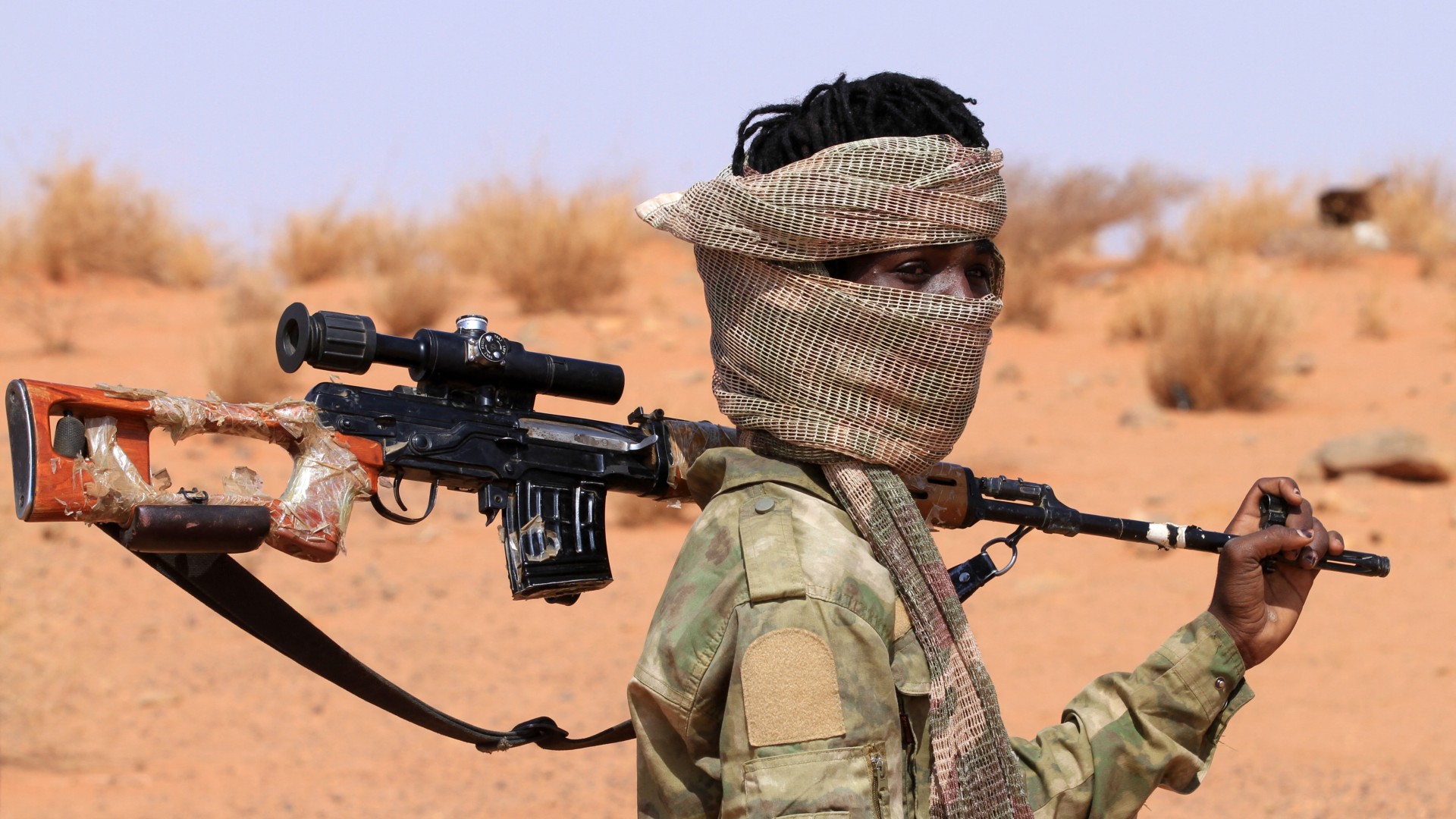
    DAKAR, Senegal — In a dramatic escalation of extremist violence that has already made the Sahel the world’s deadliest region for terror activity, an unprecedented coordinated assault by an alliance of al-Qaida-linked militants and Tuareg separatists has shaken Mali, delivering a direct challenge to the West African nation’s military government and its new security partner Russia.

    The weekend offensive, the largest coordinated attack the country has seen in more than a decade, hit targets across the breadth of Mali simultaneously, marking a new level of operational planning and ambition for the combined insurgent forces. While Malian authorities have yet to release an official casualty count, analysts confirmed on Monday that the scope of the operation — both in the number of targeted locations and the high-profile nature of the sites hit — has no recent parallel in the country’s long-running security crisis.

    Attackers struck the international airport in the capital Bamako, the adjacent military garrison town of Kati, and multiple population centers in northern and central Mali, including the contested cities of Kidal and Sevare. In a high-profile loss for the Bamako government, a car bomb targeting the defense minister’s residence just outside the capital killed him instantly. For the separatist Azawad Liberation Front (FLA), the weekend operation marked a symbolic and strategic victory: the group confirmed Monday it has retaken full control of Kidal, the northern city whose initial seizure by a similar insurgent alliance back in 2012 launched the decade-long cycle of instability that continues to engulf the Sahel.

    The Sahel, a vast arid belt stretching across Africa south of the Sahara Desert, has rapidly emerged as the global epicenter of extremist violence over the past two decades. Data from the 2023 Global Terrorism Index, published by the Institute for Economics and Peace, shows the region now accounts for 51% of all deaths from violent extremism worldwide — a staggering jump from just 1% 20 years ago. Since 2019 alone, fatalities from extremist attacks in the Sahel have risen nearly tenfold. For Mali, a landlocked country at the heart of the crisis, overlapping threats have persisted for more than a decade: al-Qaida and Islamic State-affiliated militant networks have expanded their hold across remote areas, while a long-running Tuareg separatist insurgency has fought for an independent state in the country’s north.

    This is not the first time separatist and jihadist forces have aligned against the Malian government. In 2012, a similar partnership seized most of northern Mali, collapsing central state authority and triggering a French military intervention to push insurgent forces back. Today, the leading jihadist actor in the alliance is Jama’at Nusrat al-Islam wal-Muslimin (JNIM), an al-Qaida-linked group that has expanded dramatically across the Sahel in recent years. The group now controls vast swathes of territory, and had already blockaded Mali’s capital for months to cut off fuel supplies before the weekend offensive. JNIM’s operations extend far beyond Mali’s borders: the group is active in neighboring Burkina Faso and Niger, and its attacks have reached into coastal West African states including Benin, Ivory Coast, and Togo.

    The group has built substantial funding to sustain its large-scale operations, analysts note. JNIM generates revenue through a range of illicit activities: it imposes informal taxes on local populations, steals cattle, controls lucrative artisanal gold mining operations, and uses sieges, kidnappings, and bombings to dominate key regional supply routes. Ulf Laessing, head of the Sahel program at the Konrad Adenauer Foundation, told reporters the group entered the weekend offensive with a “full war chest” after reportedly collecting at least $50 million in ransom for the 2023 kidnapping of an Emirati member of the Dubai royal family and two of his business associates, who were abducted near Bamako.

    On the separatist side, decades of campaigning for an independent northern state of Azawad led separate Tuareg-led factions to merge in 2024 into the unified Azawad Liberation Front, which partnered with JNIM for the weekend assault. Despite clear ideological divides between the Salafi-jihadist vision of JNIM and the separatist nationalist goals of the FLA, the two groups share a core objective: pushing Malian government forces and their Russian allies out of the territories both movements claim in northern and central Mali. “Despite their different worldviews, their shared enemy unites them,” explained Rida Lyammouri, senior fellow at the Moroccan-based Policy Center for the New South.

    The offensive comes amid a dramatic shift in Mali’s foreign and security policy, after the country’s military junta — which seized power in 2020 — cut ties with long-time Western security partners including France and the United Nations, turning instead to Moscow for security support. The shift was driven by widespread popular discontent: after nearly a decade of French counter-terror deployments and UN peacekeeping operations, extremist attacks continued to multiply, government control over territory eroded steadily, and civilians bore the overwhelming brunt of the violence. Mali, along with neighboring Niger and Burkina Faso — all now ruled by military juntas that took power via coups — have formed their own regional bloc, the Alliance of Sahel States, and forced Western and UN forces to withdraw entirely from their territory.

    Today, Mali’s primary security partner is Russia’s newly formed Africa Corps, a defense ministry-affiliated military unit that an estimated 2,000 troops deployed across the country. But independent analysts warn the security situation across the Sahel has only deteriorated sharply since the juntas took power and Western forces withdrew. The region is now recording record numbers of attacks, with civilians killed by both insurgent groups and pro-government forces at all-time highs. Laessing argues that French and UN peacekeeping forces effectively filled the governance and security vacuum left by a chronically weak Malian state, particularly in the remote north and central regions. Their departure eliminated livelihood opportunities for many local residents, leaving young people vulnerable to jihadist recruitment, he added.

    Russian support has failed to fill that security gap, and the weekend offensive has exposed the weakness of Moscow’s position in Mali. Just two days after FLA spokespersons announced the group had seized full control of Kidal, the Africa Corps confirmed on its official Telegram channel that its forces had withdrawn from the strategic northern city. Kidal has long been symbolic of Mali’s security crisis: it was first seized by the 2012 jihadist-separatist alliance, and its recapture by Malian government forces and Russian Wagner Group mercenaries in 2023 was hailed as a major victory for the Bamako-Moscow partnership. The FLA said in a Saturday statement that it had negotiated a peaceful withdrawal agreement, with a convoy of remaining Russian and Malian troops departing the former UN peacekeeping base in Kidal under rebel escort.

    The weekend coordinated attack came well after Bamako was already weakened by months of JNIM pressure. For months before the offensive, the group carried out relentless attacks on fuel tankers traveling into Mali from neighboring Senegal and Ivory Coast, creating a crippling fuel shortage in the capital long before the Iran conflict tightened global energy supplies. Photos from Bamako showed long queues snaking around city gas stations, with the Malian army only able to provide partial relief by escorting small convoys into the capital. A fragile truce reached in late March collapsed shortly before the weekend attacks, with JNIM resuming its assault on supply routes.

    Analysts say the blockade and the latest large-scale offensive are aimed at undermining the legitimacy of Mali’s military government, pressuring businesses and ordinary residents to distance themselves from the junta. Unlike some extremist groups, JNIM does not appear to be aiming to seize direct control of the capital or establish formal rule over all of Mali, instead focusing on weakening the central state to expand its own control over rural and remote territories.