分类: world

  • Netanyahu helped ‘create a genocide in Gaza’, top Biden official says

    Netanyahu helped ‘create a genocide in Gaza’, top Biden official says

    In a bombshell revelation that adds to mounting internal U.S. criticism of American policy toward the Israel-Gaza conflict, a top-ranking former Biden administration State Department leader has publicly stated that Israeli Prime Minister Benjamin Netanyahu bears responsibility for creating what she describes as a genocide in the Gaza Strip.

    Wendy Sherman, who served as U.S. Deputy Secretary of State from 2021 through 2023, made the remarks during a recent interview with Bloomberg’s *The Mishal Husain Show*, published Friday. While she clarified that she is not in a position to issue a formal legal ruling on whether the crime of genocide has been committed in the blockaded Palestinian enclave, she left no room for ambiguity about the scale of human and physical destruction there, stating: “there was no doubt that Gaza was demolished.”

    Sherman, a veteran diplomat who has held senior roles across multiple U.S. presidential administrations, reaffirmed her longstanding commitment to the U.S.-Israel alliance and support for the right of a Jewish state to exist. But she drew a clear line between that backing and her condemnation of the current Israeli campaign, arguing that “Netanyahu ‘led us down a road – and we have been part of it – that has, in essence, created a genocide in Gaza that has destabilised the Middle East.’”

    Her comments align with findings from the United Nations’ top investigative body focused on the Israeli-Palestinian conflict, which ruled in September that Israel has committed the crime of genocide in Gaza.

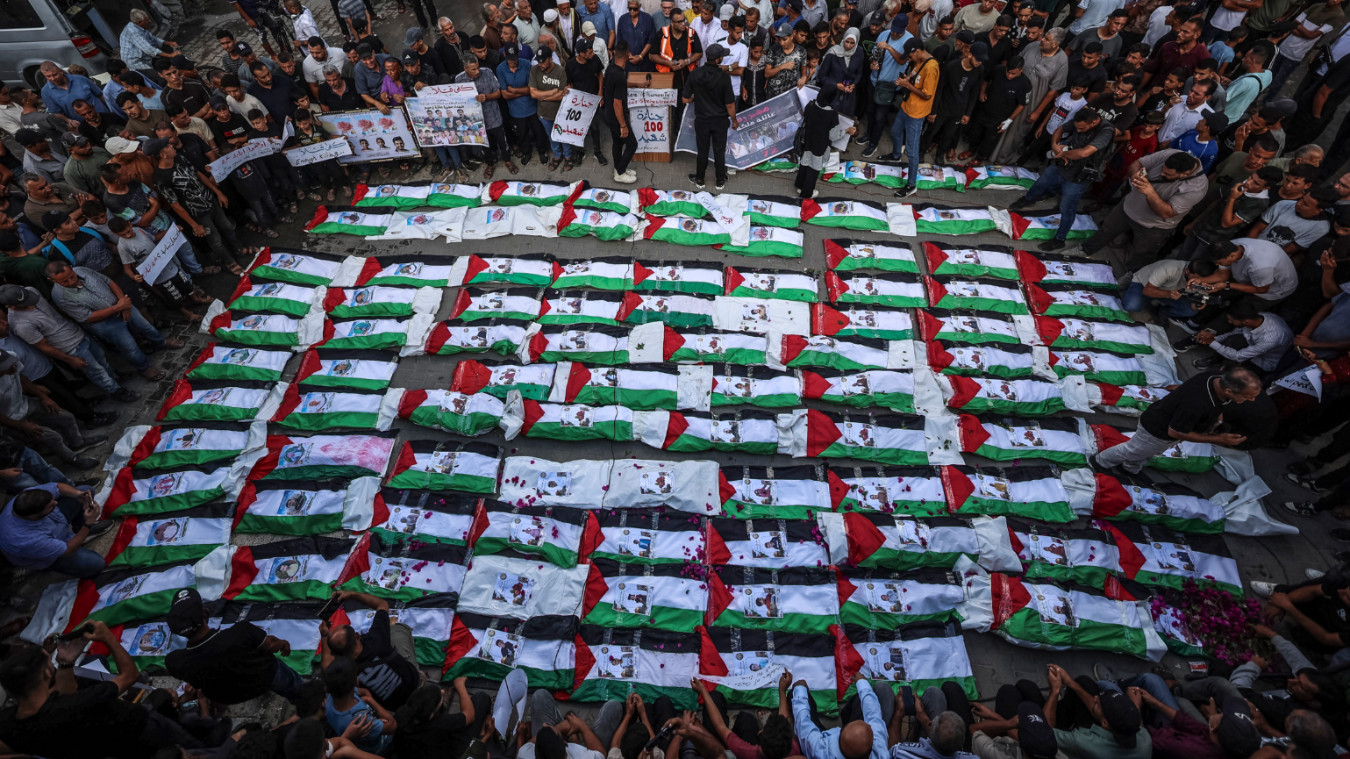
    The ongoing conflict erupted after the October 2023 Hamas-led attack on southern Israel that killed more than 1,100 Israelis. Since that date, Israeli military operations in Gaza have killed at least 72,500 Palestinians, with thousands more still missing and presumed dead under the rubble of destroyed buildings. Over the course of the campaign, Israeli forces have reduced roughly 80 percent of Gaza’s civilian infrastructure – including residential homes, hospitals, and schools – to ruins.

    In her interview, Sherman balanced her remarks by affirming the rights of both peoples to peace and security. “Palestinians deserve a home, dignity and peace,” she said, adding that “Israel also has the right to achieve security and peace.” A self-described strong supporter of Israel, Sherman emphasized that her criticism does not extend to the Jewish state’s right to exist, but rather to the wholesale destruction unfolding in Gaza. “I am not a supporter of destroying any civilization, or any people – that goes for the Palestinians or the Iranian people, as much as I might find the regime odious,” she added.

    Sherman is far from alone among former senior U.S. officials in condemning Washington’s role in the conflict. Back in July 2024, a group of 12 former U.S. government officials who resigned in protest over U.S. support for Israel publicly accused the Biden administration of “undeniable complicity” in the deaths of Palestinian civilians in Gaza. The group, which included former staffers from the State Department, Education Department, Interior Department, White House, and U.S. military, said in a joint statement that the administration was violating U.S. law by continuing to ship weapons to Israel, exploiting loopholes to bypass oversight.

    “America’s diplomatic cover for, and continuous flow of arms to, Israel has ensured our undeniable complicity in the killings and forced starvation of a besieged Palestinian population in Gaza,” the former officials wrote.

    Similar conclusions have been drawn by sitting U.S. lawmakers. In September, Democratic Senators Chris Van Hollen and Jeff Merkley released a bipartisan report concluding that the United States is complicit in Israel’s “ethnic cleansing” of Palestinians, and found that Netanyahu’s longstanding policies in the occupied West Bank amount to “slow motion” ethnic cleansing.

  • Mali faces advancing rebels in ‘difficult’ situation

    Mali faces advancing rebels in ‘difficult’ situation

    Three days after launching the largest coordinated assault in nearly 15 years against Mali’s ruling military junta, a unified force of Tuareg separatists and al-Qaeda-linked jihadists continues advancing across northern Mali, with Russia’s defense ministry acknowledging Tuesday that the security situation “remains difficult”.

    The broad, dawn attacks launched Saturday targeted multiple strategic positions across the West African nation, including military sites near the capital Bamako. In a stunning development that has shaken junta leadership, Defense Minister Sadio Camara — widely regarded as the architect of the junta’s decision to pivot away from Western partners and align with Russia — was killed in fierce fighting against the joint force of the Azawad Liberation Front (FLA) Tuareg rebels and the jihadist Group for the Support of Islam and Muslims (JNIM).

    Junta chief Assimi Goita, who seized power in a 2020 coup on a promise to defeat Islamist insurgency, has not made any public appearance or statement since the attacks began. A Malian security source told Agence France-Presse that Goita is staying out of public view “for security reasons”, while an anonymous elected official in Bamako confirmed that military leadership is currently reassessing its strategy in the wake of the assault. This unexpected absence has fueled widespread uncertainty over the future of the country’s ruling military council.

    On Tuesday, Russian defense officials confirmed that fighters from the Moscow-controlled Africa Corps — the paramilitary force deployed to support the Malian junta — have withdrawn from the key northern town of Kidal, which is now fully under the control of the allied armed groups. The ministry also confirmed that rebel fighters launched attempts to seize high-priority targets in Bamako, most notably the presidential palace. Russia, which has been the junta’s primary foreign backer since 2022, stated that regrouping rebel forces remain active across the north, while the Kremlin separately said Moscow is urgently seeking a return to peace and stability for the Sahel nation.

    Local sources confirm that Malian government forces have already abandoned multiple outposts in the northern Gao region, the country’s second-largest military stronghold. One anonymous local politician reported that troops withdrew from the border town of Labbezanga near Niger and pulled back to the more defensible position of Ansogo. Late Monday, two large explosions were recorded near Bamako’s international airport by an AFP journalist on the ground, though the source of the blasts has not yet been confirmed. Local residents reported the blasts originated from the military Base 101 located at the airport, with no exchange of small arms fire reported before or after the detonations.

    Analysts note that this coordinated offensive marks an unprecedented milestone: two historic foes — Islamist insurgents seeking to establish religious rule and Tuareg separatists fighting for an independent state of Azawad — have set aside their differences to fight a common enemy in the junta and its Russian backers. This new alliance was formalized one year ago, echoing the 2012 crisis that first plunged Mali into ongoing conflict, when the same two groups briefly allied to seize control of northern Mali before turning on one another. At that time, former colonial power France intervened to repel the offensive, but French forces fully withdrew from Mali in 2022 after relations with the junta collapsed.

    Some analysts have framed the attacks near Bamako’s centers of power as a strategic diversion to draw junta forces away from Kidal, a longstanding stronghold of Tuareg pro-independence movements. Kidal was retaken by junta forces backed by Russian mercenaries from the Wagner Group — the predecessor to the current Africa Corps — in a 2023 offensive, but it fell back to rebel control in the recent assault. As of Tuesday, the security situation across central Mali’s Mopti region, which was also targeted in Saturday’s attacks, remains unclear and fluid.

    Mali has now faced more than a decade of persistent jihadist violence and overlapping insurgencies, which has displaced hundreds of thousands of people across the country and into neighboring nations including Mauritania, Niger and Burkina Faso. The large-scale offensive has raised serious new questions about the junta’s ability to contain the insurgency, despite repeated claims that its military strategy, partnership with Russia and increased troop deployments have successfully rolled back the jihadist threat.

  • France murder victim identified after 20 years and suspect arrested

    France murder victim identified after 20 years and suspect arrested

    More than two decades after her mutilated body was found hidden in a rural French village, an unidentified murder victim has finally been named, and a suspect has been taken into custody — marking a historic milestone for Interpol’s global cold case initiative.

    The victim, now confirmed as 34-year-old Algerian-born Hakima Boukerouis, was the fifth unidentified woman to be identified through Operation Identify Me, an international effort launched in 2023 by the global law enforcement agency Interpol to name hundreds of unclaimed female bodies found across six European countries. Until this breakthrough, investigators had only referred to Boukerouis by the chilling nickname “the woman with the Richmond dental crown”, after a distinct, high-cost dental procedure she had undergone shortly before her death that authorities previously suspected was performed in Germany.

    Boukerouis’ remains were first discovered in January 2005, tied, wrapped in black garbage bags, and concealed inside a covered water butt in the small northeastern French village of Saint-Quirin. For nearly 20 years, no matches to missing person reports could be found, leaving the case stuck in the growing backlog of cross-border cold cases. That changed when French law enforcement used familial DNA searching to connect Boukerouis to her relatives, unlocking the long-awaited identification.

    The arrest of a suspect in Boukerouis’ murder is the first made since Operation Identify Me launched, a win that Interpol leaders say highlights the value of persistent, cross-border collaboration on unsolved cases. “This identification underscores how important it is to keep investigating unresolved cold cases,” Interpol Secretary General Valdecy Urquiza said in an official statement released Tuesday. “As part of the Identify Me campaign, the efforts of the French authorities have helped identify a murder victim whose case had remained open for many years.”

    Due to ongoing investigations and active judicial proceedings, neither French police nor Interpol have released the identity of the arrested suspect, and only limited details about the case have been made public.

    Operation Identify Me was created to address a growing challenge for European law enforcement: rising global migration and transnational human trafficking have left an increasing number of people reported missing outside their home countries, making it far harder to match unidentified bodies to missing person reports. The campaign pulls 47 unsolved cases of women found dead under suspicious or violent circumstances in France, Belgium, the Netherlands, Germany, Italy and Spain into a single public, cross-border effort. For the first time, Interpol has issued public black notices — its official requests for information on unidentified deceased persons — for these cases, shared critical records including fingerprints with law enforcement agencies worldwide, and reignited public and investigative attention to these long-forgotten cases.

    Before Boukerouis’ identification, four other women have been named through the initiative: 31-year-old British citizen Rita Roberts, murdered in Belgium in 1992 and identified after her family spotted a photo of her tattoo in a BBC report; 33-year-old Paraguayan national Ainoha Izaga Ibieta Lima, found dead in a Spanish poultry shed in 2018; 31-year-old Russian national Liudmila Zavada, found on a Spanish roadside in 2005 and identified in September 2024; and 35-year-old German citizen Eva Maria Pommer, found on a Dutch beach in 2004 and identified the following month.

    With five identifications complete, investigators still working through the campaign are pushing to name the remaining 42 women. Most of the remaining unidentified victims are confirmed murder victims, most believed to have been between 15 and 30 years old at the time of their death, with some cases dating back decades.

  • Third Ukrainian strike hits Russian oil refinery and prompts evacuations

    Third Ukrainian strike hits Russian oil refinery and prompts evacuations

    In a continued escalation of cross-border attacks on Russian energy infrastructure, a key oil refinery on Russia’s Black Sea coast has been targeted for the third time in April 2026 by Ukrainian drones, triggering a massive inferno that forced the evacuation of adjacent residential areas, regional Russian officials confirmed Tuesday.

    Located in the southern Russian city of Tuapse, the refinery has faced repeated Ukrainian strikes over the past two weeks. Previous attacks already left severe environmental damage in their wake: a large volume of crude oil spilled into the Black Sea, and local residents reported so-called “black rain” falling across the city, leaving sticky oily residue on homes, streets and public spaces.

    Ukraine’s military has publicly taken responsibility for the latest strike, framing attacks on Russian energy facilities as a legitimate strategy to cut off funding for Moscow’s full-scale invasion of Ukraine that began in February 2022.

    In an update posted to his Telegram channel Tuesday, Krasnodar regional governor Veniamin Kondratyev announced that more than 160 firefighters had been deployed to contain the large-scale blaze. The governor noted that first responders were operating in “extremely difficult conditions” and praised their work as “true heroism”, adding that protecting the lives and health of Tuapse residents and visitors remained the government’s top priority. No fatalities or injuries have been reported from the attack or subsequent fire as of Tuesday’s updates.

    Local municipal district head Sergei Boyko ordered residents of streets within the immediate vicinity of the refinery to evacuate the area, while emergency authorities set up a temporary evacuation center at a nearby public school to accommodate displaced residents. The regional crisis center issued public health warnings, alerting residents that harmful combustion byproducts were being released into the atmosphere from the ongoing fire. Local residents were advised to wear protective face masks, keep all windows closed, limit time spent outdoors, and rinse exposed mucous membranes including the nose, eyes and throat after being outside.

    Anastasia Troyanova, a local correspondent for Russian independent environmental outlet Kedr, reported from the scene that a massive plume of thick black smoke hung over Tuapse, with a strong acrid smell of burning fuel permeating the entire area. Satellite imagery captured earlier in April already highlighted the extensive damage caused by the two prior strikes on the refinery.

    Following the attack, Russian President Vladimir Putin ordered the country’s Minister of Emergency Situations to travel immediately to Tuapse to oversee on-site firefighting operations and post-blaze cleanup efforts. Dmitry Peskov, Putin’s press secretary, accused Kyiv of intentionally targeting energy infrastructure used for export operations, claiming the strikes amount to an attempt to destabilize global energy markets.

    For its part, Ukraine’s military reiterated in an official statement that the strike on the Tuapse refinery was part of coordinated, ongoing efforts to “reduce the military-economic potential of the Russian aggressor”. Over the past several months, Ukrainian forces have stepped up long-range drone strikes on critical energy facilities deep within Russian territory, a campaign that Kyiv defends as a legitimate military tactic, since the revenue generated by these oil and gas facilities directly funds Russia’s ongoing war effort.

    In a tit-for-tat development that underscores the continuing escalation of reciprocal long-range attacks, a Russian drone strike on Ukraine’s capital Kyiv injured one civilian on the same day as the Tuapse attack, according to Kyiv Mayor Vitaliy Klitschko. Ukrainian officials reported multiple small blazes across the city, including one that broke out at a local cemetery.

  • Czech court hands 7-year prison term to man over attempted synagogue arson attack

    Czech court hands 7-year prison term to man over attempted synagogue arson attack

    PRAGUE – In a landmark ruling on Tuesday, a regional court in Brno, the Czech Republic’s second-largest urban center, has handed a 20-year-old man a combined seven-year prison sentence for his central role in a foiled terror attack and attempted murder targeting a local Jewish synagogue.

    Court documents confirm the defendant, who was just 17 when the plot was carried out in January 2024, planned the arson attack alongside a second underage accomplice. The pair constructed a homemade incendiary device with the explicit goal of setting fire to Brno’s active synagogue and murdering an individual present at the site. The intended victim escaped the attack unharmed, and the incendiary device failed to cause significant structural damage to the place of worship, thwarting the attackers’ deadly plans.

    In addition to the seven-year term for the attempted attack and murder, the court added a consecutive two-year prison sentence for separate charges of promoting terrorism. That offense was committed after the defendant turned 18, making him eligible for prosecution as an adult on that count.

    Legal authorities confirmed that the defendant’s accomplice, who remains under the minimum age required for public criminal trial in the Czech Republic, has already had their closed-door hearing completed. No details of the accomplice’s case can be released to the public due to Czech juvenile privacy regulations.

    The plot is part of a broader interconnected radicalization network uncovered by Czech law enforcement last year. The defendant and his accomplice are two of five teenagers arrested in a cross-border operation targeting a network that officials say was radicalized online by the transnational militant group Islamic State.

    Investigations into the group revealed that all five members spread virulent hate speech across multiple social media platforms, targeting Jewish communities, the LGBTQ+ population, and other ethnic and social minorities across Central Europe. Coordinated raids carried out by police in both the Czech Republic and neighboring Austria uncovered a cache of weapons, including edged weapons such as knives, machetes, and axes, alongside several gas pistols.

    Officials added that the group participated in private online forums dedicated to recruiting new fighters to join Islamic State militant operations in Syria. All members shared an open obsession with extreme violence and echoed the group’s violent ideology targeting marginalized groups.

    The investigation was a cross-border collaborative effort, with Czech law enforcement coordinating closely with law enforcement counterparts in Austria, the United Kingdom, and Slovakia, as well as Europol, the European Union’s dedicated cross-border law enforcement agency, to dismantle the network and prevent further planned attacks.

  • Will Mexico City’s airport be ready for the World Cup?

    Will Mexico City’s airport be ready for the World Cup?

    As the countdown to the 2026 FIFA World Cup continues, all eyes are turning to host cities across North America to see if critical infrastructure projects will be finished on time. One of the most high-stakes projects currently underway is the major renovation initiative at Mexico City’s Benito Juárez International Airport, a key gateway that will handle millions of visiting fans, players, and media personnel when the tournament kicks off in less than three years.

    The British Broadcasting Corporation has launched a detailed examination of this ongoing upgrade work, which centers on expanding the airport’s overall passenger capacity to accommodate the unprecedented surge in air travel expected during the global sporting event. Benito Juárez already serves as Mexico’s busiest air hub, handling tens of millions of passengers annually, even before accounting for the extra traffic the 2026 World Cup will bring. The renovations are designed to upgrade terminal facilities, streamline processing lines, and boost the airport’s maximum throughput to prevent widespread travel disruptions that could overshadow the tournament.

    The question on many industry analysts and soccer fans’ minds remains whether construction crews can meet the tight deadline set before the first match of the 2026 World Cup. Infrastructure delays have plagued major global events in the past, making this ongoing project a critical test of Mexico’s ability to deliver on its tournament commitments. The BBC’s in-depth review comes amid growing public interest in the progress of all host nation infrastructure, as stakeholders work to ensure the 2026 World Cup – the first co-hosted by three North American nations, and the largest edition in tournament history – runs smoothly from start to finish.

  • Ghana’s military hunts those behind convoy attack on northern highway

    Ghana’s military hunts those behind convoy attack on northern highway

    A brazen assault on a military convoy carrying civilian travelers in northeastern Ghana has left multiple people dead, and launched a full official investigation into the attack by the country’s armed forces. The deadly confrontation unfolded on a high-risk highway near Binduri, as the military escort moved between the urban centers of Bawku and Bolga with 140 civilians in its charge. When gunmen launched their attack, a fierce exchange of fire left seven of the assailants and three innocent civilian bystanders dead. Authorities have already taken 10 suspected attackers into custody, as search operations continue for other individuals linked to the assault. Security forces have also recovered a G3 automatic rifle, two fully loaded magazines and an assortment of extra ammunition from one attacker who attempted to hide in a local mosque after the clash.

    The violence erupts from a decades-old chieftaincy dispute that has kept the region roiled in intermittent, unpredictable bloodshed. The conflict centers on competing claims to the traditional, influential regional leadership position from two local ethnic groups: the Kusasi and the Mamprusi. For years, the chieftaincy rotated between representatives of the two groups, but tensions flared into deeper division several years ago when Ghana’s Supreme Court ruled to uphold the Kusasi’s claim to the position. The ruling did not resolve the standoff, and instead fueled ongoing resentment that has repeatedly erupted into violent clashes.

    To curb the persistent unrest, the Ghanaian government already reinforced the region with additional military deployments last year, a move that came after a wave of attacks on local schools put civilian communities at heightened risk. Beyond deploying additional troops, the government has implemented nighttime curfews across the affected area and launched coordinated joint patrols combining military and police forces to deter violence and respond quickly to flare-ups. In recent months, the influential Asante King has also stepped in to lead high-level mediation efforts aimed at brokering a lasting peace between the two rival groups.

    The deployed troops have a second critical mission beyond quelling domestic intercommunal violence: securing Ghana’s long northern border with Burkina Faso. Neighboring Burkina Faso has struggled with a growing insurgency by armed Islamist militant groups for years, and security officials have documented repeated instances of these fighters crossing into Ghanaian territory to carry out attacks or evade counterinsurgency operations. The combination of long-running ethnic tensions and the threat of cross-border militant incursion has made the northeastern region one of Ghana’s most complex security challenges, and the latest deadly attack is expected to prompt renewed calls for both accelerated mediation and sustained security pressure to prevent further bloodshed.

  • ICC awards $8.4 million in reparations to victims of al-Qaida-linked leader in Mali

    ICC awards $8.4 million in reparations to victims of al-Qaida-linked leader in Mali

    THE HAGUE, Netherlands — In a landmark ruling for victim justice Tuesday, the International Criminal Court (ICC) ordered a senior al-Qaida-linked extremist leader to pay 7.2 million euros ($8.4 million) in reparations for widespread atrocities he directed while leading the Islamic police in Mali’s ancient desert city of Timbuktu following the 2012 extremist takeover.

    The defendant, Al Hassan Ag Abdoul Aziz Ag Mohamed Ag Mahmoud, was convicted by the ICC last year on charges including torture, religious persecution, and multiple crimes against humanity, receiving a 10-year prison sentence. Judges confirmed that Al Hassan was a central architect of a brutal reign of terror that descended on Timbuktu after Islamic extremist rebels seized control of the city in 2012, leaving tens of thousands of residents harmed by systemic violence.

    Presiding Judge Kimberly Prost told the The Hague-based courtroom that legal responsibility for the harm rests squarely with the convicted perpetrator. “Mr. Al Hassan, as the person found responsible for the crimes, which caused the harm to the victims, is the person financially liable for the cost of repairing the harm,” Prost said.

    However, the court will not be able to collect the ordered sum directly from the 49-year-old, who was confirmed to be indigent before and during his trial, and was represented by a court-appointed attorney funded by the ICC. Instead, the ordered reparations for more than 65,000 identified victims will be disbursed through the ICC’s Trust Fund for Victims, a body established by the court’s member states to deliver compensation and support to those harmed by crimes falling under ICC jurisdiction.

    Deborah Ruiz Verduzco, executive director of the Trust Fund for Victims, explained the body’s unique role under the ICC’s founding framework, the Rome Statute. “We are one of the many innovations of the Rome Statute,” Ruiz Verduzco told the Associated Press, noting that the fund exists specifically to address harm stemming from crimes within the court’s jurisdiction.

    The fund’s 24-person team carries out a broad mandate: supporting victims and their families, developing community recovery programs in regions shattered by violence, and securing the financial resources needed to meet its commitments. In the fund’s 20 years of operation, this marks only the second time a perpetrator has been ordered to pay reparations — and only the first case where a court-ordered award will actually be distributed to mass victims. Previous payments from a perpetrator came in a separate earlier case.

    ICC Presiding Judge Prost emphasized that significant targeted fundraising will be required to raise the full 7.2 million euro sum. The majority of the funds will be contributed by ICC member states, though the trust fund also accepts private donations from global supporters. Most recently, Germany donated 40,000 euros ($46,000) to the fund in March, and Sweden and the Netherlands stand as the body’s two largest national contributors.

    While ICC judges oversee and finalize how reparations funds are allocated, they actively incorporate input from victims through their legal representatives and the trust fund. In Al Hassan’s case, the court ruled that the funds will be directed toward three core areas: socio-economic support for harmed communities, educational programs and vocational training for residents, and specialized psychological support for survivors. The ruling explicitly requires that programming prioritize women and girls, who faced disproportionate harm and gender-based violence during the extremist occupation of Timbuktu.

    This is not the first time the trust fund has delivered recovery support to Timbuktu communities. In 2016, another al-Qaida-linked militant, Ahmad Al Faqi Al Mahdi, pleaded guilty to the war crime of destroying Timbuktu’s iconic historic mausoleums. The trust fund launched a restoration project for the ruined cultural sites in 2021, marking an earlier step toward recovery for the region.

    The ruling comes amid ongoing widespread instability in the Sahel region of West Africa. Mali, along with neighboring Burkina Faso and Niger, has faced a decade-long insurgency waged by armed extremist factions with ties to al-Qaida and the Islamic State group. All three nations have experienced military coups in recent years, and their ruling juntas have expelled long-time Western security partners, most notably French counter-terrorism forces, and turned to Russia’s Wagner mercenary network for security assistance. The ICC’s decision was issued just days after an alliance of al-Qaida-linked militants and separatist fighters carried out the largest coordinated attack in Mali in more than 10 years, underscoring the persistent insecurity gripping the country.

  • Mexican cartel leader found hiding in a ditch

    Mexican cartel leader found hiding in a ditch

    In a high-stakes, large-scale security operation that marks one of the most significant victories against Mexican organized crime in recent months, Mexican security forces have apprehended a senior leadership figure of the Jalisco New Generation Cartel (CJNG), one of the world’s most powerful and violent transnational criminal networks.

    The target, 45-year-old Audias Flores Silva—known widely by his cartel alias “El Jardinero” or “The Gardener”—was tracked down and captured without resistance on Monday in the western Mexican state of Nayarit. After roughly 500 security personnel closed in on his hiding location, Flores was found concealing himself in a large cement drainage ditch, his legs visible protruding from the pipe as armed officers moved in. Footage released by the Mexican Navy shows military helicopters hovering over a remote cabin in the area prior to the arrest, confirming the coordinated nature of the raid. Following his capture, Flores was immediately airlifted via helicopter to a maximum-security detention facility for holding.

    Senior Mexican officials have confirmed that Flores served as the closest right-hand associate to Nemesio “El Mencho” Oseguera, the former founder and leader of CJNG who was Mexico’s most-wanted criminal. El Mencho died two months ago from injuries sustained during a clash with military forces deployed to arrest him, and Flores was widely named among the top candidates expected to take control of the entire cartel in the wake of El Mencho’s death. Unlike his former boss, who died in a gunfight with security forces, Flores surrendered without any resistance when officers closed in on his hiding spot.

    Mexico’s Security Secretary Omar García Harfuch publicly announced the successful operation via social media, where he commended the personnel of the Mexican Navy for their work. “I recognize the bravery, discipline and dedication of the women and men of the Mexican Navy who carried out this key operation against organized crime,” Harfuch wrote.

    The arrest carries major cross-border significance, as the United States had long targeted Flores for his role in the cartel’s drug trafficking operations. The U.S. State Department had offered a $5 million reward for information leading to Flores’ capture, and U.S. Ambassador to Mexico Ronald Johnson praised the operation in a post on X, calling the arrest “an important step” in disrupting transnational criminal activity. “Actions like this strengthen security on both sides of our border and help dismantle criminal networks that threaten communities in both our countries,” Johnson wrote.

    For Mexican President Claudia Sheinbaum, the successful capture represents a major policy win, as her administration has faced growing pressure from U.S. President Donald Trump to step up efforts to combat cartels smuggling illicit drugs from Mexico into the United States. In a precautionary move to prevent widespread violence following the high-profile arrest, Sheinbaum’s security cabinet deployed additional security personnel to Nayarit and surrounding regions, a response shaped by the wave of coordinated unrest that swept through eight Mexican states after El Mencho’s death in February.

    Initial reports confirm that scattered retaliatory attacks have already occurred, with cartel affiliates setting fire to six vehicles and six local businesses in response to Flores’ arrest. However, Nayarit’s governor Miguel Ángel Navarro Quintero told reporters Tuesday that the security deployment has kept the situation under control, confirming no major roadblocks have been established by cartel members and that overall public order remains calm across the state.

  • BBC reports from scene of fatal Indonesia train crash

    BBC reports from scene of fatal Indonesia train crash

    A devastating collision between two trains in Indonesia’s Bekasi region has claimed the lives of at least 15 people, according to on-the-ground reporting from the BBC. The crash occurred when one train slammed into a carriage exclusively reserved for female passengers that was part of a commuter train service, a popular mode of daily transit for thousands of local residents traveling between Bekasi and the capital Jakarta.

    BBC correspondents who reached the accident site shortly after the collision described a scene of chaos and destruction, with emergency responders scrambling to clear wreckage in search of any survivors trapped under debris. Local authorities have not yet released full details on the cause of the crash, or the identities of the deceased victims, but have confirmed that multiple injured people were transported to nearby hospitals for urgent medical care immediately following the incident.

    The female-only carriage was introduced as a measure to improve safety and comfort for women commuting on crowded Indonesian rail lines, a policy that has been in place on major commuter routes across the country for more than a decade. This deadly crash has already prompted preliminary calls from local transport advocates for a full, transparent investigation into what led to the collision, and a review of safety protocols across the national commuter rail network to prevent similar tragedies in the future.