Against a backdrop of escalating geopolitical tensions, global energy market volatility, and growing alarm over accelerating climate change, more than 50 national delegations have gathered in the Colombian Caribbean port city of Santa Marta this week for the world’s first dedicated international conference focused on phasing out fossil fuels, the primary driver of anthropogenic global warming.
Co-hosted by fossil fuel-dependent Colombia and the Netherlands, the two-day summit is being held outside the framework of long-running United Nations climate negotiations, a deliberate choice that reflects widespread frustration among participating nations over the UN process’s repeated failure to make meaningful progress on fossil fuel reduction. Santa Marta, the host city, is a fitting backdrop for the talks: it sits at the heart of one of Colombia’s busiest coal exporting hubs, a reminder of the deep economic ties many nations still retain to planet-warming fossil fuels.
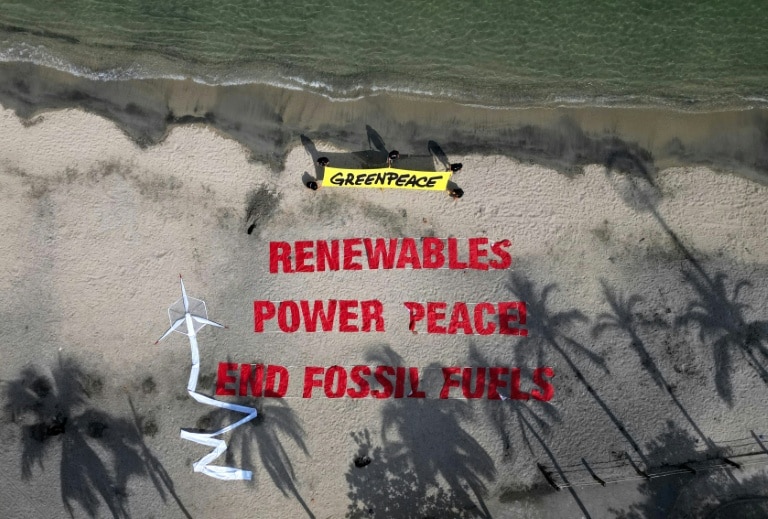
As delegates arrived for the opening of talks on Tuesday, climate activists and Indigenous community groups marched through the city’s streets and along its beaches to demand urgent action, with coal tankers clearly visible lined up on the ocean horizon beyond the shore. The summit is not mandated to produce binding international commitments, but an independent scientific advisory panel has put forward a sweeping 12-point policy menu for attending nations to consider, headlined by a call for an immediate halt to all new fossil fuel extraction and infrastructure expansion projects.
The attendee list includes a diverse cross-section of major fossil fuel producers, large energy consumers, and climate-vulnerable nations: major developed producers Canada, Norway and Australia, developing energy giants Brazil, Nigeria and Angola, European Union member states, coal-dependent emerging economies Turkey and Vietnam, and small island developing states that face existential risk from rising sea levels driven by climate change. Notably absent from the talks are the world’s three largest greenhouse gas emitters—the United States, China and India—as well as oil-rich Gulf nations.
Organizers first announced the summit in late 2024, but recent geopolitical upheaval, including the ongoing Iran conflict and subsequent oil and gas market disruptions, has only sharpened the urgency of the conversation, according to speakers. UK special climate envoy Rachel Kyte told reporters on the ground in Santa Marta that the current crisis has underscored a core truth long argued by climate advocates: global reliance on fossil fuels is a major source of geopolitical and economic instability.
“People seem refreshed to be able to talk about these issues without having to sort of argue the existential question of — do we need to do this at all?” Kyte said. “Many nations are here in good faith to really work through what is a very complex challenge made more urgent by the crisis.”
Alongside calls to halt new fossil fuel development, the summit’s agenda includes work to map out a framework for equitable reductions in global fossil fuel production and consumption, and strategies to reform harmful fossil fuel subsidies that currently skew global energy markets and block much-needed investment in renewable energy. A new analysis released Monday by the International Institute for Sustainable Development highlights the scale of this challenge: the research found that governments around the world still spend five times more public funding on fossil fuel support than they invest in renewable energy alternatives.
Scientists leading the advisory panel have stressed that there is no possible justification for opening new fossil fuel extraction sites, even as renewable energy investment hits record highs. Speaking to AFP in Santa Marta, Carlos Nobre, a Brazilian climate scientist and former member of the UN Intergovernmental Panel on Climate Change, warned that even if no new fossil fuel projects are developed, the existing reserves of coal, oil and gas already in production or development are enough to push global average temperatures 2.5 degrees Celsius above pre-industrial levels by 2050.
The planet has already warmed 1.1 degrees Celsius above pre-industrial averages, and current policy trajectories put the world on track to blow past the 1.5 degree Celsius warming threshold that scientists identify as the limit for avoiding catastrophic, irreversible climate impacts. Beyond that threshold, scientists warn of irreversible losses including the complete disappearance of the world’s coral reef systems and the full collapse of the Greenland ice sheet, which would eventually raise global sea levels by more than seven meters, displacing hundreds of millions of people worldwide.