分类: world

  • Ukraine says it shot down 33,000 Russian drones in March, a monthly record

    Ukraine says it shot down 33,000 Russian drones in March, a monthly record

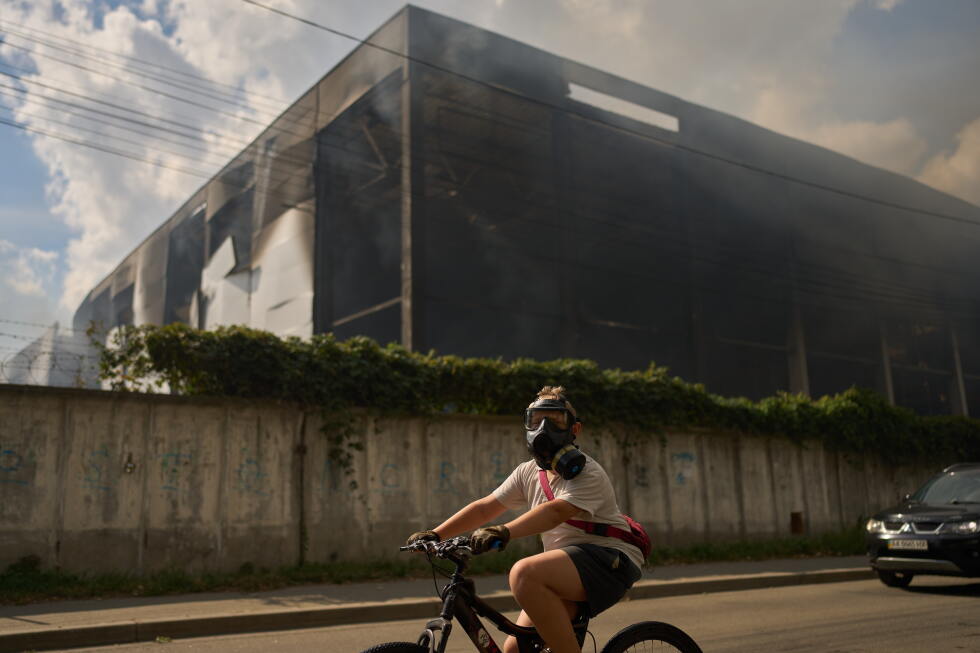
    In a significant milestone for Ukraine’s air defense campaign against Russian aggression, Ukrainian Defense Minister Mykhailo Fedorov announced that interceptor systems shot down over 33,000 Russian drones of varying types in March. This figure marks the highest monthly total of intercepted Russian unmanned aerial vehicles since Moscow launched its full-scale invasion in February 2022.

    Alongside defensive advances, Ukraine has expanded its offensive drone capabilities. The country’s domestically produced long-range attack drones carried out a third strike on a key Russian Black Sea oil infrastructure site in less than two weeks, targeting the refinery and terminal at the Black Sea port of Tuapse. The Tuapse refinery, a major asset in Russia’s energy network that generates critical revenue for Moscow’s war effort, has now faced three coordinated attacks by Ukrainian defense and security units this month alone. According to Ukraine’s Unmanned Systems Forces, the first two strikes earlier in March destroyed 24 oil storage tanks and damaged four additional facilities. Krasnodar Governor Veniamin Kondratyev confirmed that local residents near the site were evacuated as a precaution on Tuesday, though he did not release details on the number of evacuees or the duration of the evacuation order.

    Ukraine’s domestic drone industry has emerged as a game-changing asset in the conflict against Russia’s larger conventional military force. Kyiv’s cutting-edge, battle-proven drone technology has already attracted widespread military procurement interest from the global defense community. Ukrainian officials report that demand for Ukraine’s interceptor drones, a core component of integrated air defense networks, has spiked among Middle Eastern and Gulf nations amid ongoing regional conflicts including tensions with Iran.

    To scale up production and operational effectiveness of interceptor drones, Ukraine has established a new dedicated command within its air force, Fedorov shared in a Monday Telegram post. Offensive capabilities have also seen dramatic growth: the Ukrainian Defense Ministry confirmed Tuesday that Kyiv has more than tripled the maximum range of its deep-strike drone operations since the 2022 invasion. What began as a 630-kilometer (400-mile) strike capability early in the war has expanded to roughly 1,750 kilometers (1,100 miles), allowing Ukrainian forces to target critical Russian military supply factories and revenue-generating energy infrastructure deep inside Russian territory.

    Cross-border drone exchanges continued to inflict casualties on both sides this week. The Russian Defense Ministry stated Tuesday that its air defense systems intercepted 186 Ukrainian drones overnight across multiple Russian regions, the illegally annexed Crimean Peninsula, and the Black and Azov Seas. In the Russian border region of Belgorod, a Ukrainian drone attack left three civilians dead and three others injured, regional governor Vyacheslav Gladkov confirmed.

    On the Ukrainian side, Russian drone attacks claimed three civilian lives and wounded five others across the country over the same period. In the northeastern Kharkiv region’s city of Chuhuiv, two civilians were killed, regional military administration head Oleh Syniehubov reported. One civilian death and five injuries were recorded in Kryvyi Rih, President Volodymyr Zelenskyy’s hometown. A separate Russian strike on Konotop in the northern Sumy region cut off the city’s electricity and water access. To date, independent third-party verification of all Ukrainian and Russian claims about drone strikes and damage has not been completed.

  • Uganda detains 231 foreigners in crackdown on possible human trafficking

    Uganda detains 231 foreigners in crackdown on possible human trafficking

    KAMPALA, Uganda — A sweeping nationwide crackdown on unauthorized migration has led Ugandan law enforcement and internal affairs officials to detain more than 200 foreign nationals this week, with investigations linking many of the detainees to transnational human trafficking networks and organized cyber fraud operations, government representatives announced Tuesday.

    The multi-location operation, which launched early Monday, unfolded across two key sites: a residential enclave in northern Uganda home to a large community of Nigerian migrants, and a tightly secured, closed-off residential compound in the heart of Kampala, Uganda’s capital. In total, 231 people have been placed in custody for questioning across both locations.

    Officials with Uganda’s Ministry of Internal Affairs detailed that 169 detainees were discovered in the capital’s restricted compound, a self-contained apartment complex purpose-built to limit outside movement, complete with its own private restaurant and on-site amenities. Thirty-six of the people found at that site were women, and detainees held there held citizenship from across Asia and Africa, including Pakistan, India, Bangladesh, Ghana, Myanmar, Ethiopia, Sri Lanka, Cambodia, and Malaysia.

    The operation was launched following verified intelligence reports that large groups of foreign nationals were residing and working in Uganda without the mandatory legal documentation required for residency or employment, ministry officials confirmed. During the raids, many detainees were found to be in possession of no valid passport or identity paperwork at all.

    In an official public statement, the ministry outlined the preliminary findings from the operation: “Some individuals have claimed they were trafficked into Uganda with false promises of formal employment. Others were directly engaged in cyber-scamming activities. A few were found in possession of materials linking them to additional other criminal enterprises.”

    Simon Peter Mundeyi, a spokesperson for the Ministry of Internal Affairs, explained to the Associated Press that the detainees are currently being held at two separate processing facilities and divided into three distinct categories for assessment: confirmed or suspected trafficking victims, alleged criminal perpetrators of trafficking and cybercrime, and migrants who simply overstayed their valid visas without engaging in any illegal activity.

    Mundeyi confirmed that both trafficking victims and visa overstayers will be assisted to process voluntary departure from Uganda, though they will be required to cover the cost of their own return travel tickets. Suspected ringleaders of trafficking and fraud networks, by contrast, will face formal criminal prosecution in Ugandan courts before potential deportation following any completed sentence.

    Unlike many regional peers, Uganda has long cultivated a reputation for being open to foreign arrivals and hosting displaced people. The East African nation currently hosts hundreds of thousands of refugees fleeing violent conflict in neighboring states including the Democratic Republic of Congo, Burundi, and South Sudan. It also maintains a liberal visa policy that waives entry visa requirements for short-term visits from citizens of dozens of African and global countries.

  • War in the Middle East: latest developments

    War in the Middle East: latest developments

    Two months after a joint U.S.-Israeli military offensive sent shockwaves rippling through global energy markets and upended regional security, the Middle East remains locked in a state of elevated tension, with new diplomatic moves, ongoing military clashes and economic volatility defining the latest chapter of the crisis. On Monday, the White House confirmed it is reviewing a new proposal from Iran aimed at de-escalating tensions and unblocking the critical Strait of Hormuz, a chokepoint through which roughly 20% of global oil supplies transit daily. According to Iran’s Fars News Agency, Tehran transmitted the written proposal, which outlines Iran’s non-negotiable red lines covering both its nuclear program and activity around the strait, to Washington via diplomatic channels in Pakistan. U.S. President Donald Trump convened a meeting of his top national security advisors to assess the offer, with White House press secretary Karoline Leavitt telling reporters during a daily briefing that the proposal is “being discussed” among senior administration officials. As diplomatic talks remain in their earliest stages, the ongoing impasse between Washington and Tehran has already triggered fresh volatility across global markets. On Tuesday, international oil prices jumped sharply, while global equity markets sank, as shipping traffic through the Strait of Hormuz remains severely choked, disrupting global energy supply chains. Beyond the diplomatic standoff, Iran has laid out clear conditions for restoring security across the oil-rich Persian Gulf: Tehran demands ironclad security guarantees that the U.S. and Israel will not launch another offensive against its territory. “A durable and permanent cessation of aggression against Iran supplemented by credible guarantees of non-recurrence and full respect for the legitimate sovereign rights and interests of Iran” are non-negotiable preconditions for any de-escalation, Amir Saeid Iravani, Iran’s permanent representative to the United Nations, told a session of the UN Security Council Monday. Meanwhile, military clashes continue to claim lives across the region despite the existing ceasefire agreement between Israel and the Iran-backed militant group Hezbollah. Lebanon’s Ministry of Public Health confirmed Monday that recent Israeli airstrikes on southern Lebanon killed four people, including one civilian woman, and wounded 51 more, three of whom are children. Israeli military leadership has warned that the country faces an extended period of conflict across multiple fronts in the coming year. Israel Defense Forces Chief of Staff Lieutenant General Eyal Zamir noted that the IDF has maintained continuous, multi-front combat operations since the October 7, 2023 Hamas attack that sparked the ongoing Gaza war, and projected that 2026 will bring another full year of fighting across all active fronts. Israeli Prime Minister Benjamin Netanyahu echoed that assessment, emphasizing that Hezbollah remains a critical national security threat that requires continued Israeli military action in Lebanon. “There are still two central threats from Hezbollah: the 122mm rockets and the drones. This demands a combination of operational and technological activity,” Netanyahu said in a formal statement. While Netanyahu acknowledged that Hezbollah now retains only roughly 10 percent of the missile arsenal it held at the start of the current conflict, he added that the remaining weapons still pose a constant threat to Israeli civilians living in the country’s northern border regions. As tensions simmer on all fronts, the international community continues to monitor developments closely, with growing concern over the risk of the conflict expanding into a wider regional war that could have devastating consequences for the global economy and civilian populations across the Middle East.

  • Russian superyacht sails through Strait of Hormuz despite blockade

    Russian superyacht sails through Strait of Hormuz despite blockade

    Against a backdrop of heightened geopolitical tension and a largely blockaded critical global shipping lane, a luxury superyacht tied to one of Vladimir Putin’s closest sanctioned allies has completed a rare passage through the Strait of Hormuz, drawing new attention to deepening diplomatic ties between Iran and Russia.

    The 142-meter Nord, a multi-deck floating palace valued at an estimated $500 million that comes equipped with a swimming pool, private submarine, and full helipad, set out from Dubai on Friday night and reached the Al Mouj marina in Muscat, Oman by Sunday morning, according to tracking data from the Marine Traffic platform. While the vessel is formally registered to a company controlled by the wife of Alexey Mordashov – Russia’s wealthiest businessman, per Forbes, with an estimated net worth of $37 billion – open source records confirm the superyacht is ultimately linked to Mordashov himself, a long-time ally of Putin who has been hit with sweeping sanctions from the U.S., EU, and UK since Russia’s 2022 full-scale invasion of Ukraine. It remains unknown whether Mordashov was aboard the vessel during the transit.

    The rare voyage comes at a moment of extreme volatility in the Strait of Hormuz, the narrow Gulf waterway that carries roughly one-fifth of the world’s global crude oil and liquefied natural gas supplies. After former U.S. President Donald Trump announced a U.S. military blockade of Iranian ports, Iran has restricted most commercial and private shipping through the channel, leaving current traffic at a small fraction of pre-conflict levels. The ongoing standoff has sent global energy prices soaring: international benchmark Brent crude climbed to $109 per barrel on Monday, deepening economic uncertainty for markets worldwide. With most private vessels avoiding the contested waterway entirely, Nord is one of only a handful of private craft to complete the transit in recent months.

    Parallel to the shipping disruption, this week has seen high-level diplomatic engagement between Iran and Russia aimed at solidifying their growing strategic partnership. On Monday, Putin hosted an Iranian delegation led by Foreign Minister Abbas Araghchi in St. Petersburg, where both leaders reaffirmed their mutual solidarity against Western pressure. Speaking after the meeting, Araghchi emphasized that recent global events have only underscored the depth of the two nations’ alliance, writing on social media platform X: “As our relationship continues to grow, we are grateful for solidarity and welcome Russia’s support for diplomacy.” Araghchi shared public photos of himself shaking hands and smiling with both Putin and Russian Foreign Minister Sergey Lavrov.

    For his part, Putin told the Iranian delegation that the Iranian people are “courageously fighting” for their national sovereignty in the face of pressure from the U.S. and Israel, according to Russian state news agency Tass. The high-level talks come as long-term peace negotiations between the U.S. and Iran remain stalled, leaving the status of the Strait of Hormuz and global energy security unresolved.

    For years following the imposition of Western sanctions on Mordashov, Western governments have pushed other nations to seize Nord and freeze the billionaire’s other assets. Previous attempts to take control of the superyacht have failed, however, with both Hong Kong and the Maldives declining to impound the vessel despite repeated international calls for action.

  • A South Sudan community is denied aid as government and opposition blame each other

    A South Sudan community is denied aid as government and opposition blame each other

    Amid a fresh wave of armed conflict in South Sudan’s Jonglei State, thousands of displaced civilians trapped in an isolated, swamp-ringed village have been blocked from receiving emergency humanitarian aid by government officials, military and local authorities, according to eyewitness accounts and statements from leading international aid organizations interviewed by the Associated Press.

    The crisis began in December 2023, when opposition forces aligned with Riek Machar — the long-time political rival of President Salva Kiir who was suspended from his post as first vice president and placed under house arrest last year over alleged subversion — seized multiple military outposts across Jonglei. Government counteroffensives the following month pushed thousands of civilians to flee their homes, many toward the remote settlement of Nyatim, a day’s walk from the contested town of Lankien. Among the evacuees was Thomas Nim, a 43-year-old pharmacist who trekked through swampland with his pregnant wife, three children and elderly mother to escape advancing government troops. “Some of the most vulnerable, like the elderly and children, ended up in Nyatim because they couldn’t make it any farther,” Nim explained to the AP.

    Trapped in the desolate location with no access to clean water or sufficient food, displaced residents relied on a Starlink satellite internet connection to send out pleas for emergency assistance. Eyewitnesses report dozens of people have already died, many from apparent starvation, with residents reduced to foraging for leaves and wild roots to stay alive.

    When international aid groups including Doctors Without Borders (MSF) and the U.N. World Food Programme (WFP) applied for official government clearance to deliver relief supplies to Nyatim, their requests were repeatedly rejected. “It was a ‘no’ from local and national authorities and from the military,” stated Yashovardhan, MSF’s South Sudan mission head, who uses a single name. WFP country director Adham Effendi confirmed the blockade, noting the agency had been blocked despite “numerous engagements with both national and local authorities” — an unusually public rebuke from an agency that has historically avoided public criticism of South Sudan’s government over aid access restrictions.

    Both government and opposition representatives have traded blame for the ongoing crisis. Gatkhor Dual, an opposition aid coordinator in Jonglei, accused county commissioner James Bol Makuei of intentionally cutting off aid to the area because he believes Nyatim’s residents support the opposition. Makuei has countered that access is restricted because the population estimate of 30,000 cited by MSF is exaggerated, and claimed the main opposition group SPLM-IO is holding civilians hostage in the area to gain political leverage and attract aid near the county seat of government. But Nim, the displaced pharmacist who fled to Nyatim, denies any opposition military presence in the village.

    While concerns over aid diversion are not unfounded in South Sudan — where armed groups on both sides have a long track record of seizing humanitarian supplies for military use, and the U.N. reports fighters looted more than two dozen aid-run health facilities during recent Jonglei fighting — the blockade has left thousands of vulnerable people with no source of life-sustaining support. Some residents have already abandoned the remote village and returned to their conflict-ruined homes out of desperation. “People are returning to their homes,” said Koang Pajok, one of those who left Nyatim. “There was no food and shelter.”

    Delivering aid across South Sudan has long been a challenge, hampered by crumbling infrastructure, repeated attacks on river transport routes, and mandatory bureaucratic clearance from government officials. The ongoing crisis in Nyatim has deepened an already catastrophic humanitarian situation across the region: in the nearby community of Chuil, where the government has allowed aid access, MSF screening in March found more than half of 1,000 tested children were acutely malnourished. The aid organization has been forced to repeatedly expand its small treatment facility in Chuil from four beds to 100 to keep up with the influx of starving civilians.

    Barred from overland or river access to remote areas, WFP has carried out airdrops of 415 metric tons of food to the Chuil region since March. But the arrival of aid has also drawn armed men with military weapons to the area, sparking fears the site could become a target for airstrikes. When a surveillance plane flew over the region in April, anxious civilians scattered, recalling that a similar overflight preceded a December airstrike on Lankien that killed at least 11 civilians.

    The current crisis is the latest chapter in decades of cyclical violence in South Sudan, which gained independence from Sudan in 2011 before descending into a civil war between Kiir and Machar that killed an estimated 400,000 people between 2013 and 2018. A 2018 peace deal formed a fragile unity government between the two rivals, but fighting has reemerged in recent months, with consistent reports that armed groups on both sides have weaponized aid to punish civilian populations aligned with opposing factions.

    This reporting is supported by a grant from the Gates Foundation, with the AP retaining full editorial control over all content.

  • Trial of Austrian man accused of plotting to attack a Taylor Swift concert set to begin

    Trial of Austrian man accused of plotting to attack a Taylor Swift concert set to begin

    VIENNA, Austria — Two years after an alleged terrorist plot targeting a high-profile Taylor Swift concert was uncovered, an Austrian court is set to open the trial Tuesday for the 21-year-old Austrian citizen at the center of the conspiracy. The defendant, identified only as Beran A. in compliance with Austria’s strict privacy regulations for criminal defendants, faces multiple serious charges, including terrorist activity and formal membership in the Islamic State (IS) militant group. If convicted on all counts, he could receive a maximum sentence of 20 years in prison.

    The foiled plot sent shockwaves across the globe in August 2024, when Austrian authorities, acting on critical intelligence shared by U.S. security agencies, announced the last-minute cancellation of three sold-out Eras Tour shows scheduled at Vienna’s Ernst Happel Stadium. The cancellation left tens of thousands of Swift’s devoted fans, known colloquially as Swifties, heartbroken—many of whom had traveled from every corner of the world to attend the record-breaking tour. While the disappointment ran deep, the global fan base turned the crisis into a moment of collective connection, transforming the entire city of Vienna into an impromptu gathering spot where fans traded handmade friendship bracelets a staple of Eras Tour fan culture and joined in mass singalongs of Swift’s biggest hits.

    On the eve of the trial, defense attorney Anna Mair confirmed to the Associated Press that her client intends to plead guilty to the majority of the charges against him, though she declined to specify which counts he will admit to.

    According to official allegations laid out by prosecutors, Beran A. planned to target massive crowds gathered outside Ernst Happel Stadium on the nights of the scheduled shows. Authorities say the plot targeted up to 30,000 fans waiting outside the venue each night, alongside 65,000 concertgoers inside, with the attacker planning to use knives or improvised homemade explosives. Investigators have stated the suspect’s explicit goal was to “kill as many people as possible.” When authorities raided Beran A.’s Vienna apartment on August 7, 2024—just one day before the first scheduled show—they recovered a cache of materials for building explosive devices.

    Prosecutors have also charged a second co-defendant, 21-year-old Arda K., whose full name is also withheld per privacy rules, in connection with a broader network of IS-aligned plots. Court documents allege that Beran A., Arda K., and a third suspect identified only as Hasan E. planned to carry out coordinated, simultaneous attacks across Saudi Arabia, Turkey, and the United Arab Emirates during the 2024 Ramadan holiday, all in the name of IS.

    The only one of these three plots to be carried out was Hasan E.’s attack in March 2024 at Mecca’s Grand Mosque, where he allegedly stabbed a security guard. The suspect was arrested at the scene and remains in pre-trial custody in Saudi Arabia, while Beran A. and Arda K. abandoned their planned attacks in Turkey and the UAE. After returning to Vienna, prosecutors say Beran A. shifted his full attention to plotting the attack on Swift’s concert.

    The Vienna conspiracy immediately drew international comparisons to the 2017 suicide bombing at an Ariana Grande concert in Manchester, England, that killed 22 people—most of them young fans—and remains the deadliest extremist attack in the United Kingdom in recent decades.

    In a statement posted to Instagram two weeks after the 2024 cancellation, Swift shared her own reaction to the disrupted shows and foiled attack. “Having our Vienna shows cancelled was devastating,” she wrote. “The reason for the cancellations filled me with a new sense of fear, and a tremendous amount of guilt because so many people had planned on coming to those shows.”

    The trial is being held in the town of Wiener Neustadt, roughly an hour’s drive south of Vienna, with proceedings scheduled to resume on May 12.

  • S. Korea probes syringe hoarding as war hits plastic makers

    S. Korea probes syringe hoarding as war hits plastic makers

    Escalating conflict in the Middle East has triggered ripple effects across global supply chains, pushing South Korean authorities to open a formal investigation into alleged illicit stockpiling of medical syringes that has put the country’s critical healthcare supplies at risk.

    The crisis traces back to recent military tensions that have severely disrupted shipping through the Strait of Hormuz, a strategic waterway that carries the majority of the world’s seaborne oil trade. US-Israeli strikes on Iran and the near-total closure of the strait have upended deliveries of naphtha, a petroleum-derived liquid product that serves as the core input for manufacturing polypropylene and other plastic materials used in everything from medical tools to consumer packaging.

    This supply shock has hit Asian petrochemical manufacturers particularly hard, forcing regional governments to implement emergency regulations to prevent widespread shortages. Earlier this month, South Korea enacted a formal ban on excessive hoarding of syringes and hypodermic needles, moving quickly to head off potential market chaos as supply chain disruptions deepened.

    On Tuesday, the Seoul Metropolitan Police Agency confirmed to AFP that it had launched an immediate investigation into four medical product distributors accused of violating the new hoarding ban. The probe was initiated after a formal complaint was filed by the country’s Ministry of Food and Drug Safety. Law enforcement has pledged to ramp up inspections across every stage of the medical supply chain to root out and penalize illegal market manipulation.

    Under the emergency regulations, businesses are prohibited from holding stockpiles of syringes and needles exceeding 150 percent of the average monthly sales volume recorded in 2023 for five consecutive days or more. The rules also ban companies from refusing to sell legitimate orders to buyers without a verifiable justifiable reason. Despite these safeguards, food and drug officials say some distributors have intentionally exploited the supply crunch to stockpile inventory, intending to resell the products at inflated, gouged prices.

    Investigators have already confirmed that one distributor held more than 130,000 excess syringes for well over the five-day limit set by the ban, according to the ministry. For South Korea, the risk of naphtha shortages is particularly acute: official data from the South Korean presidential office shows that more than 50 percent of the country’s total naphtha imports in 2023 transited through the Strait of Hormuz.

    South Korean President Lee Jae Myung has publicly condemned the hoarding practices, taking to social media over the weekend to promise the strongest possible enforcement action against what he called antisocial behaviour. The president emphasized that actors who profit from public crises by worsening supply shortages for personal gain will not be tolerated. To mitigate the ongoing supply disruption, Lee’s chief of staff announced this month that the country has secured an additional 2.1 million tonnes of naphtha from alternative suppliers including Saudi Arabia and Oman, with all shipments routed through pathways that avoid the Strait of Hormuz.

  • Man who murdered UK dad in Australia declared mentally unfit for trial

    Man who murdered UK dad in Australia declared mentally unfit for trial

    A devastating unprovoked knife attack that claimed the life of a British tourist travelling through regional Australia has concluded with a landmark legal ruling: the perpetrator has been formally declared mentally unfit to stand criminal trial for the killing.

    Thirty-year-old Royce Mallett, a loving father of two from County Durham in the United Kingdom, was fatally wounded in the July 8, 2024 attack, which unfolded in the motel car park of the Hume Inn in Albury, a regional town in New South Wales. According to court testimony, Mallett had just climbed into a parked vehicle outside the accommodation when 29-year-old David Summers-Smith reached through the open car window and stabbed him once in the chest without warning or a single word, using a common steak knife as his weapon.

    Summers-Smith, who has a long documented diagnosis of schizophrenia, was experiencing acute psychotic episodes at the time of the fatal assault. He entered a formal plea of not guilty to the murder charge on the grounds of severe mental impairment. Following weeks of testimony and review of psychiatric evidence, Supreme Court Justice Dina Yehia delivered her ruling on Tuesday: while the court confirmed Summers-Smith did carry out the fatal stabbing, he cannot be held criminally responsible for his actions due to his mental state.

    In her written judgment, Justice Yehia described the single act of violence as “both catastrophic and tragic.” Court records show that immediately after the attack, Summers-Smith fled the scene, but within a short time contacted local police to confess he had stabbed a stranger, and reaffirmed his admission of guilt when officers took him into custody.

    Psychiatrists who conducted a formal assessment of Summers-Smith detailed his long and complex mental health history: his schizophrenia and persistent psychotic symptoms have not responded to standard prescription medication, and at the time of the attack, he was receiving court-ordered outpatient mental health treatment in the community. Experts also confirmed that in the weeks leading up to the stabbing, Summers-Smith had been self-medicating with illegal substances, including crystal methamphetamine, commonly known as ice, and cannabis. His psychiatric team noted he held persistent delusional beliefs and had no insight into the severity of his illness or his need for ongoing structured treatment.

    The ruling has shone a light on the devastating impact of the attack on Mallett’s grieving family, whose victim impact statements laid bare the lifelong damage the killing has caused. Mallett’s partner, Caitlin O’Keeffe, told the court she now faces the prospect of raising their two young children alone, with the permanent knowledge that the children will grow up without their father’s guidance, love and support. “It affects not just today, but every future moment that he should have been part of, and everyday moments that he’s already missed,” she wrote in her victim statement.

    Mallett’s father added that he had lost not only his son, but his closest confidant and “best friend,” telling the court he now struggles to find joy in daily life or any motivation to complete routine tasks. Citing the family’s statements, Justice Yehia noted that Mallett’s loved ones remain unable to comprehend how a person with treatment-resistant severe mental illness was allowed to live and receive treatment in the community.

    As part of her ruling, Justice Yehia ordered that Summers-Smith be detained indefinitely in a secured mental health facility. His case will be subject to regular periodic review by the New South Wales Mental Health Review Tribunal, which will monitor his progress and potential recovery, and holds the authority to modify or amend his detention order should his mental health improve significantly.

  • Executions in North Korea ramped up significantly during pandemic – report

    Executions in North Korea ramped up significantly during pandemic – report

    A new report released by the Seoul-founded Transitional Justice Working Group (TJWG) has documented a stark surge in executions in North Korea following the country’s 2020 border closure at the onset of the COVID-19 pandemic, with a total of 358 people confirmed executed between 2011 and the end of 2024.

    Compiled from firsthand testimonies gathered from more than 250 North Korean defectors across 51 administrative cities and counties, the report tracks sharp fluctuations in the use of capital punishment over the past 13 years. Executions peaked early in current leader Kim Jong Un’s rule, hitting a high of more than 80 documented executions in 2013. After a landmark United Nations inquiry in 2014 found systemic human rights violations taking place in the country, international pressure pushed the number of executions into a steady decline: between 2015 and 2019, an average of just five executions were recorded annually, with only 44 total executions confirmed in the five years preceding the pandemic.

    That downward trend reversed dramatically after Pyongyang shut down all cross-border movement in early 2020 to curb the spread of COVID-19. According to TJWG’s data, at least 153 people were either executed or sentenced to death between January 2020 and the end of 2024—more than three times the pre-pandemic five-year total. In 2020 alone, 54 people were put to death, followed by 45 executions in 2021, marking a drastic break from the low single-digit annual totals recorded just years earlier.

    The report identifies the most common charges leading to execution or death sentences tied to religion, unapproved superstition practices, and access to foreign cultural content—most notably South Korean popular media including K-dramas and K-pop. These content types are strictly banned in North Korea, where the ruling regime views the spread of South Korean cultural influence as a direct threat to its ruling ideology. A high-profile 2024 case documented by outside observers saw two North Korean teenagers sentenced to 12 years of hard labor for watching and distributing K-dramas, a public sentencing that underscored the regime’s intensified crackdown on outside cultural access. TJWG counted 29 cases of capital punishment tied to these cultural and religious offenses out of the 144 fully documented cases of execution and death sentencing included in the analysis.

    Other common capital offenses included public criticism of Kim Jong Un or the ruling Workers’ Party of Korea, premeditated murder, drug trafficking, and assisting North Korean residents to flee the country. More than 70 percent of all executions recorded in the report were carried out publicly, and the vast majority were conducted by firing squad. TJWG researchers also mapped 46 active execution sites across North Korea that have been used for capital punishments during Kim Jong Un’s time in power.

    Founded in Seoul in 2014 by a coalition of human rights activists and researchers from North Korea, South Korea, the United States, the United Kingdom, and Canada, TJWG’s core mission is to document human rights violations and track the use of the death penalty in North Korea through on-the-ground testimonies from defectors. In its official press release accompanying the new report, the organization warned that the country faces a growing risk of further increasing executions as the regime works to consolidate power ahead of a planned fourth hereditary transfer of political power. The group noted that tighter ideological and cultural control will likely be paired with harsher punishments to maintain the ruling establishment’s political dominance.

  • IS claims responsibility for Nigeria attack that killed 29 people

    IS claims responsibility for Nigeria attack that killed 29 people

    In a devastating act of violence that has deepened concerns over persistent insecurity in Nigeria’s restive northeast, gunmen aligned with the Islamic State group have killed at least 29 civilians in a targeted assault on a remote village in Adamawa State, local government officials have confirmed. The attack, which the terror group has claimed responsibility for without outlining a clear motive, unfolded in the village of Guyaku, located within the Gombi local government area, and unfolded over the course of several hours, according to state authorities. Witness accounts and official reports detail that militants first stormed a local football pitch where community members had gathered for a public event, opening fire indiscriminately on unarmed civilians before launching a coordinated arson attack that destroyed dozens of residential homes, local places of worship, and hundreds of civilian motorcycles. In the wake of the bloodshed, Adamawa State Governor Ahmadu Umaru Fintiri traveled directly to the attack site to assess the damage and meet with affected community members, sharing on-the-ground photos of his visit and condemning the violence as a fundamental “affront to our humanity”. In a public post shared to his Facebook page, the governor’s spokesperson captured the raw mood gripping the small, close-knit community, writing that “the atmosphere in the community remains tense, with grief and fear evident” following the carnage. Many residents, the spokesperson added, have already fled their homes in search of safer ground, driven out by widespread anxiety that follow-up attacks could target the area in the coming days. Governor Fintiri moved quickly to reassure the public in a statement posted to X, formerly Twitter, affirming that “We are intensifying security operations immediately to restore peace and ensure every resident feels safe in their home again.” The region where the attack took place, which sits along Nigeria’s porous border with Cameroon, has been plagued by near-constant violence linked to Islamist militant factions and local criminal gangs for more than a decade. The current wave of instability traces its origins back to 2009, when the jihadist group Boko Haram launched a full-scale insurgency focused on establishing an Islamic caliphate in northeast Nigeria. According to international aid organizations, the decades-long conflict has claimed the lives of more than 35,000 people and forced over 2 million Nigerians to flee their homes as internally displaced persons, while violence has spilled across national borders into neighboring Niger, Chad, and Cameroon. In recent years, Boko Haram has fractured into rival factions, with the larger breakaway group, the Islamic State West Africa Province (ISWAP), aligning itself with the global Islamic State network and carrying out regular attacks against civilian and military targets across the region. Earlier this month, Nigerian courts concluded mass trials that saw almost 400 convicted individuals handed down sentences for their ties to both Boko Haram and ISWAP, marking one of the largest crackdowns on militant affiliation in the country’s recent history. The latest attack comes as the Nigerian federal government faces mounting domestic and international pressure to rein in widespread insecurity across the country, with general elections scheduled for January drawing increased global scrutiny of the administration’s ability to protect civilians and maintain stability. Late last year, the United States launched what it described as “powerful and deadly” drone strikes against IS-aligned militants operating in northwest Nigeria, marking a escalation of international counter-terrorism cooperation in the region even as militant factions continue to carry out high-profile attacks against soft civilian targets.