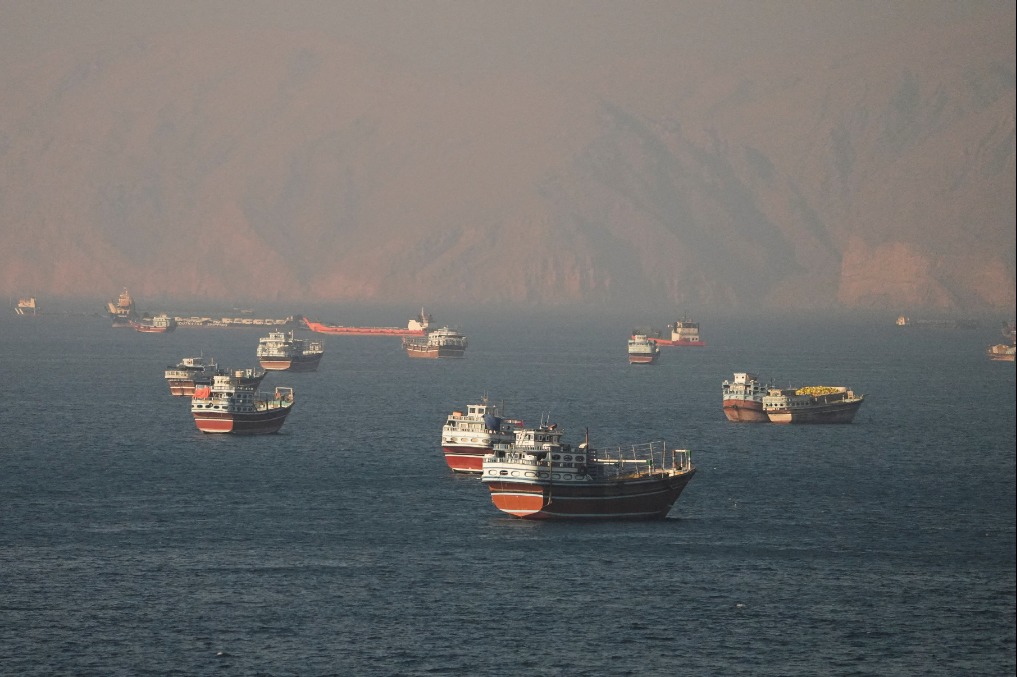
Speaking on the sidelines of the G7 summit in France alongside French President Emmanuel Macron on Monday, former and current US President Donald Trump made a landmark announcement: a long-negotiated agreement between the United States and Iran is “all signed,” paving the way for the full reopening of the strategically critical Strait of Hormuz by the end of this week. The key waterway, which carries roughly a fifth of the world’s daily oil trade, is already partially open for maritime traffic, Trump confirmed. According to US media reports, the two sides have completed an electronic signing of a peace memorandum designed to end a 15-week armed conflict between Washington and Tehran. The virtual signing was completed by Trump, US Vice President JD Vance, and Iranian Parliament Speaker Mohammad Bagher Ghalibaf, multiple sources familiar with the process have confirmed. A senior anonymous official quoted in early reporting noted that the full text of the memorandum’s terms will be declassified and released to the public within 24 to 48 hours of the announcement. Explaining the gradual reopening of the strait, Trump noted that clearing operations are already underway to remove explosive mines placed in the waterway during the conflict. “They’re doing a little hunting for a couple of mines that they’ve already found, but … ships are starting to go out now,” Trump told reporters. “On Friday, it’ll be completely open.” Trump also confirmed he would not attend a formal public signing ceremony for the agreement, announcing instead that Vice President Vance will travel to Geneva to complete the official signing on behalf of the United States. Despite the breakthrough between Washington and Tehran, significant uncertainty hangs over broader regional stability, particularly in Lebanon. Iranian officials have claimed the new agreement includes provisions to end active conflict in southern Lebanon, but Israel’s defense minister has already publicly rejected that framing, confirming Israeli military forces will remain deployed in the southern portion of the country. The diplomatic breakthrough comes after a public rift between Trump and Israeli Prime Minister Benjamin Netanyahu, who launched an airstrike on Beirut before the framework of the US-Iran agreement could be announced — a move that drew explicit anger from the White House. Details of the full peace deal ending the 15-week US-Iran conflict remain under wraps as of Monday, leaving global markets and regional allies waiting for clarity on the long-term terms of the new agreement.
分类: world
-
Sunken train station on infamous WWII ‘Death Railway’ resurfaces from Thailand reservoir
Decades after being swallowed by the waters of a Thai reservoir, a key depot on World War II’s notorious “Death Railway” has reemerged, giving historians and descendants of those forced to build the line a once-in-a-generation chance to document and understand this brutal chapter of wartime history.
The 415-kilometer Thailand-Burma Railway, better known by its grim nickname the Death Railway, was constructed between 1942 and 1943 as a supply route for occupying Japanese forces across mainland Southeast Asia. Built at the cost of staggering human life, the project forced approximately 60,000 Allied prisoners of war—mostly captured from Australia, the United Kingdom, the United States, and the former Dutch East Indies—to work alongside more than 200,000 Asian laborers, who the Japanese called römusha. Official records confirm more than 12,500 POWs and 75,000 laborers died from starvation, disease, abuse, and dangerous working conditions during construction, cementing the railway’s place in global wartime memory. The site has been featured in popular culture ranging from the 1957 classic film *The Bridge on the River Kwai* to the 2025 miniseries adaptation of the award-winning novel *The Narrow Road to the Deep North*.
The newly exposed site, Nithe Station, was once a major hub along the railway, and has remained completely submerged under the reservoir backed by Vajiralongkorn Dam for decades. The unexpected reappearance came after Thailand’s Electricity Generating Authority drained the reservoir for scheduled maintenance work. With the dam’s maintenance set to wrap up in August and the Southeast Asian monsoon season approaching fast, the reservoir will quickly refill, leaving researchers with a narrow window of time to survey the site before it disappears under water once again.
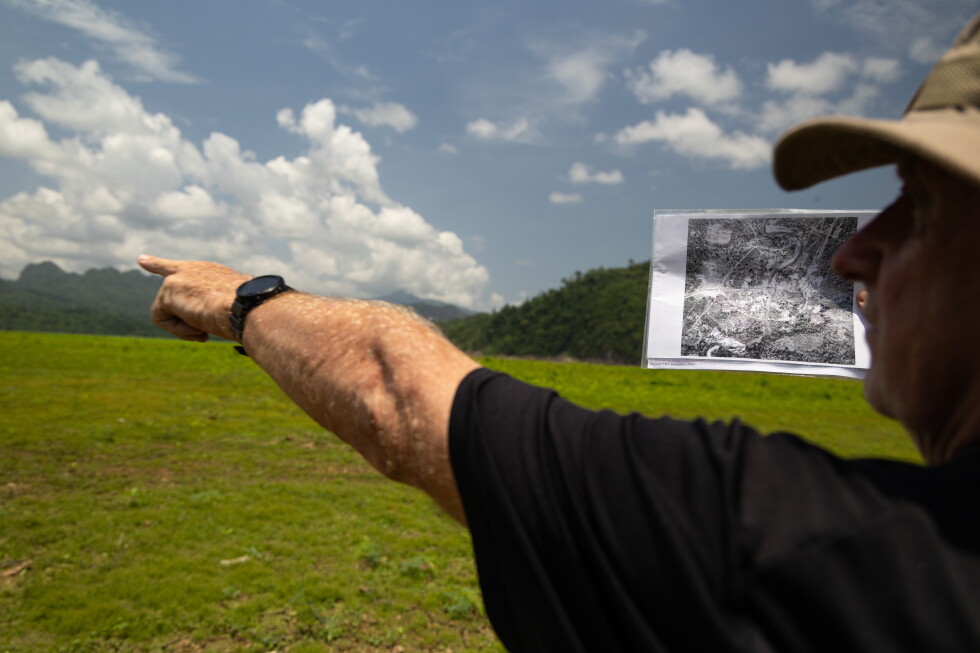
For many researchers working at the site, the project is deeply personal. Martyn Fryer, an independent Australian researcher from Perth, traveled thousands of kilometers to examine the exposed station after his grandfather, a POW captured in Singapore in 1942, died while working on the railway. Traversing muddy bogs in 38-degree Celsius heat, Fryer called the trip a chance to connect to the experience of the men who built the line. “I’ve been to Nithe Station three times in the past, but the water level has always been too high to actually really appreciate the fantastic offerings that it has with the remaining infrastructure and the layout of the railway itself,” Fryer explained. While scanning historic embankments with a metal detector, he has already recovered small but meaningful artifacts including iron railway spikes and bridge staples. Working alongside Andrew Snow, a researcher from the Thailand-Burma Railway Centre whose own father was captured in Singapore and forced to work on the railway, the pair cross-reference 1940s wartime aerial photographs from the UK National Archives with hand-drawn historical maps to pinpoint the location of former POW camps surrounding the station.
Snow noted that this year’s drawdown is uniquely suited for research: while dry seasons occasionally expose small portions of the station, the unusually low water levels and rapid draining left little time for vegetation to regrow, leaving the full layout of the depot exposed for the first time in generations. “It is a good opportunity for us to do some surveying,” he said. “When you’re dealing with relatives of people that worked on the railway, it’s always nice to be able to show them the areas that maybe their relative worked on.”
The unexpected reappearance has also drawn hundreds of domestic tourists to the remote western Kanchanaburi province site. Local resident Kitti Laokham’s social media posts of the exposed station have accumulated more than 32 million views, and visitors like Channarong Noimala have traveled hundreds of kilometers to see the rare sight. “At least for those who died here, no matter whether they are laborers or prisoners of war, we can remember them,” Noimala said.
The rediscovery of Nithe Station comes as public interest in preserving the Death Railway’s legacy continues to grow. Around 100 kilometers southwest of the newly exposed site sits Hellfire Pass, one of the most brutal and well-documented sections of the railway, where hundreds of POWs died carving a path through solid rock. The Hellfire Pass Interpretive Centre, funded by the Australian government, welcomed a record 169,000 visitors in 2025—the 80th anniversary of the end of World War II. Mick Clarke, an Australian Army veteran who manages the center, explained that as time passes, these physical sites grow only more important. “They keep personal stories alive and help future generations understand the cost of war,” he said. For Australia alone, the statistics underscore the deep national connection to the site: around 13,000 Australian POWs were forced to work on the railway, and 2,800 died during construction. “For many Australians, Hellfire Pass is deeply personal,” Clarke said. “It connects families and the nation to a difficult but important chapter of wartime history.”
-
South Africa marks 50 years since Soweto uprising, but challenges linger for its youth
JOHANNESBURG — June 16, 2026 marks 50 years since one of the most pivotal moments in South Africa’s fight against apartheid: the Soweto Uprising, a student-led protest that redefined the trajectory of the nation’s liberation movement against white minority rule. On that fateful day in 1976, hundreds of young demonstrators took to the streets of Soweto to oppose the discriminatory apartheid education system, only to be met with deadly force from state police; official records estimate more than 200 young people were killed in the violence, a massacre that shocked the world.
Today, June 16 is nationally honored as Youth Day, a permanent tribute to the lives lost and the courage of the students who led the uprising. Historians widely recognize the 1976 protest as a critical turning point in the anti-apartheid struggle. What began as a local demonstration quickly sparked mass uprisings across every region of South Africa, galvanizing widespread public resistance to apartheid and forcing the international community to confront the brutal realities of state-enforced racial oppression against Black South Africans.
Half a century later, as the nation gathers to honor the uprising’s legacy, lingering and new challenges facing South Africa’s youth remain a source of deep concern. For survivors, activists, and young people born after the end of apartheid in 1994, the promises of liberation have yet to be fully realized for the country’s younger generation. Systemic racial inequality, crippling youth unemployment, widespread intergenerational poverty, and growing social crises including drug and alcohol abuse continue to block opportunity for millions of young South Africans.
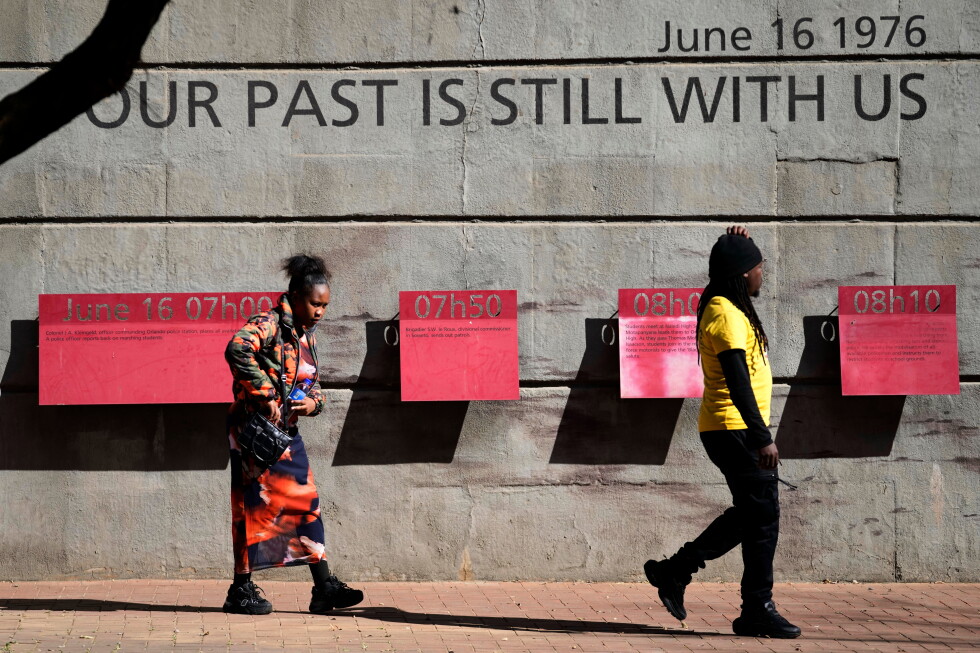
Soweto, South Africa’s oldest and most iconic township, remains dotted with permanent memorials to the 1976 uprising that draw thousands of local and international visitors each year. The most famous of these is the Hector Pieterson Memorial, named for a 13-year-old protester killed on June 16. A Pulitzer Prize-winning photograph of Pieterson’s lifeless body being carried by a fellow student became the global symbol of the uprising, printed on front pages across the world to expose apartheid’s brutality. Murals of protesting youth line the township’s streets, alongside the larger June 16 Memorial Acre that preserves the history of the day.
For survivors like Seth Mazibuko, who took part in the protest as a teen, these landmarks carry more than historical significance — they are painful, vivid reminders of the violence that shaped his life. Mazibuko, now an elder of the liberation movement, recalled the chaos of the day in a recent reflection: when police first fired tear gas to disperse the crowd of thousands of students, shifting winds blew the gas back toward officers, forcing them to release attack dogs on the demonstrators. “We used stones to chase the dogs back to them,” he remembered. Mazibuko was arrested shortly after the uprising, spending 18 months in pre-trial detention before being sentenced to seven years’ imprisonment on Robben Island, the same prison that held Nelson Mandela for nearly three decades, where he served his sentence alongside other anti-apartheid political prisoners.
For South Africa’s “born free” generation — young people born after the formal end of apartheid — the legacy of the uprising is mixed. Many express gratitude for the freedom won by the protesters of 1976, but share deep frustration at the unaddressed crises that shape their daily lives. Nineteen-year-old Sima Poto, who visited the June 16 Memorial to mark the 50th anniversary, pointed to systemic poverty as the root of modern youth struggles. “I would say the issues of poverty and crime are the most pressing ones,” she said. “It is poverty that is leading many of them into crime.” Zola Mguli, 29, who works with the Southern African Alcohol Policy Alliance on campaigns to reduce substance abuse, acknowledged the progress South Africa has made while calling on young people to continue the fight for equality. “I am grateful to belong to a generation that has grown up in freedom, even as significant challenges remain,” Mguli said. “Things are not going as well as our forefathers hoped, there is still racism, alcoholism and other things we are battling with. But if we, the youth, rise up, we can do better.”
Leading South African historian Noor Nieftagodien, who has extensively studied the Soweto Uprising, echoed the urgency of retaining the movement’s original political meaning 50 years on. He described the 1976 student movement as both a traumatic and transformative moment that placed young people at the center of the anti-apartheid struggle, reshaping liberation politics permanently. “This was a generation that was young, gifted, and Black,” Nieftagodien said. “They wanted equal education. The idea of Black power resonated with this new generation of young people. Black consciousness was kind of electrifying; it inspired university students and then increasingly also students in high schools.”
Nieftagodien raised a key critique of how the day is commemorated today: after apartheid ended, the national government declared June 16 a public holiday, but over time, the political meaning of the uprising has been watered down by apolitical celebratory events. “It has lost its meaning,” he argued. “What has happened is that we’ve had the day marked with concerts, etc. I’m all for concerts. But, in fact, in so doing, the kind of celebrations that have been organized have been disinvested from politics, from a critical understanding of what happened.”
-

Australia to probe assault claims by Gaza flotilla activists against Israeli forces
In a development that has escalated diplomatic tensions between Australia and Israel, Australia’s federal law enforcement agency has opened formal inquiries into serious allegations of sexual violence and torture leveled by a group of humanitarian activists against Israeli forces. The claims stem from the interception of the Global Sumud flotilla, a civilian mission organized to deliver desperately needed humanitarian aid to the blockaded Gaza Strip, in mid-May.
Eleven Australian citizens were among hundreds of activists detained by Israeli military personnel after the flotilla was intercepted while en route to Gaza on May 18. On Monday, four of those Australian activists held a high-stakes meeting with Australia’s Foreign Minister Penny Wong, senior government representatives, and federal police officials to detail their alleged experiences at the hands of Israeli forces. Following the meeting, activist Juliet Lamont — one of the four delegates who met with Wong — told reporters that the Australian government had committed to launching an independent probe into the group’s claims of kidnapping, physical abuse, rape, and torture. Lamont added that Minister Wong had stated she believed the activists’ accounts, and law enforcement officials had confirmed they would move forward with formal investigations.
The Australian Federal Police (AFP) later verified the launch of inquiries in an official statement, noting that the investigation would center on the needs of survivors, with a trauma-informed approach to handling the serious allegations. “The AFP has begun inquiries into allegations made by a representative of the group,” a spokesperson for the agency said, adding that an update on the investigation’s progress would be released once appropriate. A spokesperson for Wong’s office added that Monday’s meeting marked the first time the foreign minister had met directly with the activists, giving leadership the chance to hear firsthand accounts of the alleged abuse. The spokesperson confirmed that Wong has repeatedly raised the allegations with Israeli officials, and has consistently called for an independent, fully transparent investigation into the incident.
The case has already sparked significant international backlash after far-right Israeli National Security Minister Itamar Ben-Gvir shared a public video of himself taunting detained activists, who were shown kneeling with their hands bound behind their backs. In response to widespread global condemnation of the video, Israeli Prime Minister Benjamin Netanyahu distanced his government from the action, stating that Ben-Gvir’s conduct “was not in line with Israel’s values and norms.” Wong’s office also noted that the Australian government has already imposed sanctions on Ben-Gvir over his previous inflammatory actions, and that the minister has formally condemned the conduct of Israeli authorities in the flotilla incident.
Israeli officials have forcefully rejected all allegations of abuse. A spokesperson for the Israeli Embassy in Canberra said there is “no credible evidence” to support the activists’ claims, and that no formal complaint has been submitted directly to the Israeli government. The embassy repeated its characterization of the flotilla participants as “professional provocateurs,” claiming their accusations “have already been proven to be false” according to comments reported by Australian national broadcaster ABC.
-

A year on, six questions still haunt the Air India crash investigation
June 2026 marks one full year since Air India Flight 171, a Boeing 787 Dreamliner bound for London, crashed into a medical college campus moments after lifting off from Ahmedabad in western India. The disaster claimed 260 lives, and as investigators mark the first anniversary of the tragedy, they still cannot confirm what caused one of the world’s most advanced commercial passenger jets to fall from the sky.
In an updated statement released Friday to coincide with the anniversary, India’s Aircraft Accident Investigation Bureau (AAIB) offered almost no new actionable clues. The agency confirmed only that ongoing analysis of flight recorder data, aircraft system telemetry, engine components, maintenance documentation, and human factors remains ongoing, with no firm conclusion in sight.
A preliminary report published by the AAIB in July 2025 documented one key, unexplained observation: just seconds after takeoff, the 12-year-old jet’s fuel-control switches suddenly shifted to the “cut-off” position, cutting off fuel flow to both engines and triggering a total loss of power mid-climb. Cockpit audio recordings captured a jarring exchange, with one pilot asking the other why he had moved the switches, receiving only the reply “I did not.” While investigators have not publicly identified which voice belonged to which crew member, the exchange has fueled widespread speculation that deliberate crew action may have played a role, a claim that has divided experts and stakeholders.
The crash itself is a statistical anomaly. While takeoff and landing are widely recognized as the highest-risk phases of flight, fatal crashes occurring within seconds of lift-off are extremely uncommon. Boeing data from 2004 to 2013 shows that only 14% of global commercial jet crashes occurred during takeoff and initial climb, while Airbus estimates the figure to be closer to 5%. For Flight 171, the entire crash sequence unfolded in just 32 seconds, leaving investigators with a tangled web of conflicting evidence to unpack.
Aviation industry observers and independent experts note that international aviation rules, overseen by the International Civil Aviation Organization (ICAO), allow investigation teams additional time for complex probes, and the AAIB is well within its rights to take longer to reach a conclusion. “There is intense public interest across India in uncovering the exact cause,” explained John Cox, a former commercial airline pilot and independent aviation safety consultant, in an interview with the BBC. “The insinuation that this was a deliberate act by the captain has drawn extremely sharp criticism. The precise timing of the engine failure is the critical piece to resolve this.” Cox added that investigators must pin down exactly when power was lost, when the switches moved, and whether the aircraft experienced unreported technical issues on the accident flight or prior journeys to reach a final conclusion.
Shawn Pruchnicki, a former accident investigator and aviation safety expert at Ohio State University, says the 12-month delay in releasing a final report itself signals that investigators are still weighing multiple competing theories. “Air crash investigations are almost never straightforward. If investigators had already confirmed a clear cause, the report would almost certainly be public by now,” he noted. The extended timeline, he argues, points to conflicting hypotheses, unresolved lines of inquiry, and unexplained mechanical anomalies that have yet to be fully characterized.
Not all observers attribute the delay purely to investigative complexity. A veteran air accident investigator based in Canada, speaking to the BBC on condition of anonymity, suggested that final reports are sometimes held up when their conclusions prove “politically or institutionally sensitive.” He also warned that ongoing unregulated speculation about the cause risks confusing the public and undermining trust in the final report, whenever it is released.
Long, multi-stage investigations are not unprecedented in commercial aviation: the probe into Air France Flight 447, which crashed into the Atlantic Ocean in 2009, released a series of interim updates before a final report was published three years after the disaster. But what makes the Flight 171 inquiry unusual is the high level of public contention surrounding it, which has divided stakeholders.
After the preliminary report noted the unexpected shift of the fuel-control switches, sections of international media quickly framed crew action as the most likely cause. At the time of takeoff, the first officer was manipulating the flight controls while the captain monitored the flight. This narrative has sparked fierce pushback from Indian pilots’ groups, safety campaigners, and legal representatives for victims’ families, who argue that jumping to conclusions about crew misconduct outpaces the available evidence.
Captain CS Randhawa, leader of the Federation of Indian Pilots, argues that investigators should prioritize analysis of the aircraft’s encrypted real-time health monitoring data, which routinely transmits performance data for engines, avionics, and other critical systems during flight. The preliminary report makes no mention of this data, leading Randhawa to call the document “incomplete and full of loopholes.”
The anonymous Canadian investigator explained why the inquiry has become so heated: multiple major stakeholders have deep vested interests in the outcome. “Families of the deceased pilots are fighting to clear their loved ones’ names; pilot unions are pushing back against conclusions that they say unfairly implicate the entire crew; Air India is eager to prove its safety and maintenance protocols meet global standards; and Indian regulators have a broad public interest in maintaining public confidence in the country’s fast-growing aviation system,” he said.
At the core of the mystery are the two small fuel-control switches in the 787’s cockpit, which are far from ordinary components. They are physically latched, protected by built-in locking mechanisms, and engineered to require deliberate, intentional force to move — a design feature explicitly intended to prevent accidental engine shutdown. They are almost never adjusted in the seconds immediately after takeoff, only being used before engine start, after landing, or during extreme in-flight emergencies.
Multiple competing interpretations of the switch movement have emerged from independent experts. Cox notes that accidental movement of even one switch is extraordinarily unlikely. After reviewing operational data from more than 400 million combined flight hours across Boeing’s 757, 767, 777, 787, and 737 MAX fleets, he found no recorded cases of a switch failure causing an unplanned engine shutdown. The odds of two separate switches failing at the same time, within one second of each other, he calculates, are “one in a trillion or more.” The anonymous Canadian investigator concludes that the preliminary report’s findings point clearly to “human action in the flight deck, not a mechanical or electrical failure of the aircraft.”
But an alternative, widely discussed theory offers a different framing. Simon Hradecky, editor of aviation industry publication The Aviation Herald, argues that the switch movement may not have caused the engine failure — it may have been the crew’s response to an already unfolding emergency. Under Boeing’s standardized dual-engine failure emergency procedure, crew are instructed to move both fuel-control switches to cut-off and then back to run to reset engine controls and attempt an in-flight relight. If this is what occurred, the recorded switch movement is evidence of a last-ditch attempt to save the aircraft, not the root cause of the disaster.
Another major unresolved question centers on the aircraft’s Ram Air Turbine (RAT), a small backup wind-driven turbine that deploys automatically to generate emergency electrical and hydraulic power if both engines fail. The preliminary report notes the RAT was delivering hydraulic power just five seconds after the fuel switches moved to cut-off. But simulator tests cited by the BBC suggest the full deployment and power delivery process should take between 14 and 18 seconds after fuel cut-off. If the simulator data is accurate, this opens a new puzzle: could the RAT have deployed earlier than currently documented, possibly even before the engines lost power? Hradecky argues this timeline suggests the RAT was triggered after both engines already lost power and fell below idle speed, rather than by an unrelated electrical or hydraulic failure. This nuance is not addressed anywhere in the preliminary AAIB report.
One unconfirmed theory put forward by safety campaigners centers on a major unreported electrical fault that could have triggered a reboot of the aircraft’s flight control computers seconds after takeoff. Under this hypothesis, the reboot caused the flight systems to incorrectly register the aircraft as still being on the ground, triggering an automatic protection system that cut fuel flow to both engines after misreading high thrust as a dangerous malfunction. Proponents of this theory also argue that the fuel-control switches were never physically moved; instead, the flight data recorder captured an electronic fuel-cutoff command, not mechanical movement of the switches.
This theory has been advanced by Indian investigative journalist Rachel Chitra, who has highlighted multiple inconsistencies she identifies in the preliminary report, including unanswered questions about the crew’s failed attempts to relight the engines after fuel flow was restored. Campaigners have also alleged the aircraft experienced unreported prior technical issues, including an in-flight fire, but investigators have not publicly linked any of these incidents to the June 2025 crash. The AAIB’s preliminary report makes no mention of in-flight fire or pre-existing unaddressed technical problems. It confirms the 2013-built 787-8 held a valid airworthiness certificate, had logged nearly 42,000 flight hours, complied with all mandatory airworthiness directives and service bulletins, and was up to date on all scheduled maintenance.
The aircraft was powered by two GEnx engines built by GE Aerospace. While the engines were not new — one dated to 2012, the other to 2013, with roughly 28,000 and 33,000 flight hours respectively — both were still well within the expected service life for modern commercial jet engines. This makes recent reports from Reuters and Bloomberg that the final report is being delayed by ongoing analysis of the engines all the more notable.
Dual simultaneous engine failures on modern commercial airliners are exceptionally rare. When they do occur, investigators typically quickly identify a common root cause: fuel contamination, disrupted fuel supply, bird strike damage, volcanic ash contamination, or a widespread systemic failure. No such common cause has been publicly identified in the Air India crash to date.
If fuel starvation caused the total loss of power, the core question remains: do the moved fuel-control switches explain the entire sequence of events? Experts including Cox and Hradecky believe a key clue lies in the Exhaust Gas Temperature (EGT) data recorded by the flight data recorder and the engines’ electronic control systems. By cross-referencing the moment EGT began to drop with the recorded timing of the fuel-control switch movement, investigators can confirm whether engines began losing power before or after the switches moved.
Many observers believe the full, unredacted cockpit voice recording still holds the key to unlocking the mystery. “There is almost certainly far more context on the cockpit voice recorder than has been released to the public. One single line: ‘why did you do that?’ is not enough to draw a conclusion,” Peter Goelz, former managing director of the U.S. National Transportation Safety Board, noted last year. Only when the full cockpit conversation is aligned frame-by-frame with the aircraft’s final seconds of flight data will a clear, definitive picture of what brought down Flight 171 emerge.
-
Israeli army ‘murdered father and son’ in Gaza and then dumped bodies
The Gaza Strip has been marked by ongoing civilian bloodshed even after the October 2023 ceasefire between Israel and Hamas, with a new fatal incident near the Israeli-demarcated “yellow line” buffer zone laying bare the dangers facing Palestinian civilians who tend to their land in border areas.
On a routine Sunday afternoon trip to check farmland in Wadi al-Salqa, located just 150 meters from the yellow line that marks Israel’s military perimeter inside Gaza, 32-year-old Palestinian farmer Baha Abu al-Ajeen brought his three-year-old son Rayan and his brother-in-law Khaled Abu Gharaba from their home in Deir al-Balah, central Gaza. What began as an ordinary work outing quickly devolved into an unthinkable tragedy, the Abu al-Ajeen family says.
When the three unexpectedly encountered Israeli soldiers hiding inside a local home, troops opened fire without any warning or provocation, according to Nawaf Abu al-Ajeen, the family’s elder and a relative of Baha, who spoke to independent outlet Middle East Eye. A bullet tore through three-year-old Rayan’s eye and exited the back of his skull, killing the child instantly as he was held in his father’s arms. A second bullet struck Baha in the leg, leaving him bleeding profusely.
Instead of providing urgent medical care to the wounded, Israeli forces left the family bleeding on the ground before arresting all three, transporting them to the Kissufim military base. For hours, a wounded Baha remained in detention clutching his son’s lifeless body, alongside the unharmed Khaled who was also held. Nearly six hours after the shooting, soldiers dumped the injured father and his dead child on the central Gaza Salah al-Din Street before withdrawing.
Nawaf told MEE that after receiving word of the abandoned pair from local witnesses, family members traveled to the street and confirmed the identity of Baha and Rayan. The pair were rushed to Deir al-Balah’s Al-Aqsa Martyrs Hospital, where medical staff officially pronounced Rayan dead. Doctors stabilized Baha’s fractured leg with surgical hardware, and he remains hospitalized in stable condition, while his brother-in-law Khaled remains in Israeli detention with no updates on his condition or whereabouts.
The child was buried on Monday afternoon, his body returned to his mother who remains inconsolable. “An ordinary day turned into a living hell we will never forget,” Nawaf said.
The Israeli military issued a standard claim following the incident, asserting that Sunday evening it had opened fire on what it described as members of an armed cell approaching the yellow line. Hospital spokesperson Khalil al-Daqran confirmed the details of the incident to MEE, matching the family’s account: “The bullet pierced the child’s head, and he arrived deceased hours ago. The father is in stable condition with a leg injury and is receiving treatment.”
This deadly shooting is far from an isolated incident, according to UN and human rights data compiled since the ceasefire took effect. In a May report, the UN Human Rights Office found that roughly one-third of all Palestinians killed by Israeli forces after the ceasefire agreement were shot in areas near the border buffer line with Hamas, raising alarming allegations that Israeli troops are deliberately targeting civilians merely for approaching the restricted zone. The office concluded that “such actions would constitute unlawful killings and are therefore war crimes.”
Ajith Sungai, director of the UN Human Rights Office in the occupied Palestinian territory, called the consistent pattern of civilian deaths “disturbing.” “Civilians don’t appear to have posed any threat to the lives of Israeli soldiers, including in some cases where they appear to have been shot while carrying out daily activities, or after approaching or crossing what is known as the Israeli ‘yellow line,’” Sungai noted in a press statement.
As of 5 February, UN data records that 453 Palestinians have been killed in the post-ceasefire period, 152 of which occurred near the yellow line buffer zone—including 102 men, 15 women, 24 boys, and 11 girls. Official data from the Palestinian Ministry of Health published this Monday puts the total post-ceasefire Palestinian death toll at 992, with an additional 3,144 people wounded across the Gaza Strip.
Alaa Skafi, director of the Gaza-based Al-Dameer Association for Human Rights, told MEE that Israel currently classifies 65 percent of the entire Gaza Strip as restricted “yellow” or “red” zones. Skafi explained that even when civilians pose no credible threat to Israeli forces, any person who approaches these restricted areas or the yellow line is targeted with gunfire or arrested under the ready-made pretext of threatening military positions. Civilians are targeted by sniper fire, tank shelling, and drone strikes, he added.
Skafi also alleged that Israel intentionally manipulates the border demarcation to target civilians: even though Israel places yellow concrete blocks to mark the restricted zone near the Salah al-Din Line that splits Gaza east to west, troops regularly move the markers westward, then open fire on civilians who cross the shifted line under the claim they entered restricted territory. “Israel uses ready-made justifications to legitimise the killing of civilians near the Yellow Line and employs new methods of killing, either by soldiers or by members of its affiliated armed groups,” Skafi said.
-
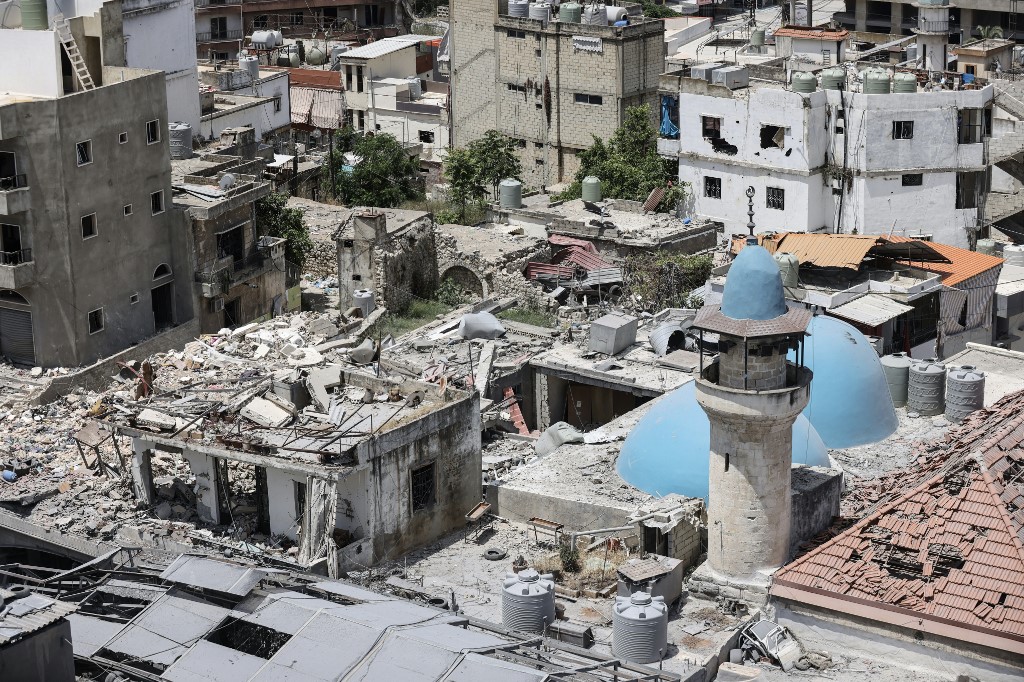
‘Israel is weaker’: Israeli political class reacts angrily to the US-Iran peace deal
On a tense Monday morning in Israel, public and political outrage swept the nation following a Sunday evening announcement from Pakistani mediator Shehbaz Sharif that Washington and Tehran had finalized a comprehensive peace agreement to end months of open conflict.
Sharif, who stepped in as lead negotiator after the joint Israeli-US military campaign against Iran launched in February, confirmed the breakthrough in a post on his official X account. The Pakistani prime minister outlined that the draft deal requires an immediate and permanent ceasefire across all active theaters of conflict, including neighboring Lebanon. He also publicly thanked rival of Israel Turkey, Qatar, and Saudi Arabia for their behind-the-scenes support during the months-long negotiation process, noting the formal signing ceremony would be held this coming Friday in Switzerland.
Within hours of Sharif’s announcement, both US and Iranian officials corroborated the agreement. Former US President Donald Trump called the deal “complete,” while Iranian Deputy Foreign Minister Kazem Gharibabadi confirmed a finalized text would be officially signed within 60 days.
Despite repeated confirmation from Pakistan, Iran, and the US that the deal mandates a ceasefire across all fronts including Lebanon, Israeli leadership immediately rejected the ceasefire clause and made clear the country does not consider itself bound by the terms of the agreement. Even as political backlash mounted, the Israeli Defense Forces launched a new wave of airstrikes and ground operations across southern Lebanon on Monday.
Prime Minister Benjamin Netanyahu, who has not yet delivered a public address on the diplomatic breakthrough, privately told Trump that Israel would reject any Iranian terms related to Lebanon, according to Israeli news outlet Ynet. Defense Minister Israel Katz doubled down on Netanyahu’s position in a public statement Monday, asserting that Israeli military forces would maintain an indefinite presence in security zones across Lebanon, Syria, and Gaza. Katz added that Israeli forces would continue clearing civilian populations from occupied territories and destroying residential structures classified as “terror infrastructure.”
Far-right Finance Minister Bezalel Smotrich, who previously called for the total destruction of residential buildings in Beirut in response to Hezbollah attacks, took to X to voice fierce opposition to the deal. “The agreement with Iran is bad for Israel and for the entire free world,” Smotrich wrote, adding that Israel would be forced to continue its military campaign against Iran independently and would retain full operational freedom for its forces in Lebanon regardless of the US-brokered deal.
National Security Minister Itamar Ben Gvir, another far-right member of Netanyahu’s governing coalition, echoed Smotrich’s rejection in his own X post. “Trump’s agreement does not bind us,” Ben Gvir wrote. “Israel is not a subordinate of the United States, and we are an independent and sovereign state. Israel is not a banana republic.” He added that the deal fails to safeguard Israel’s national security and “does not bind us in any way.” Multiple other sitting cabinet members also publicly pledged to continue military strikes against Iran despite the ceasefire agreement.
Culture Minister Miki Zohar told Ynet that his government’s only core concern is Iran’s nuclear weapons program. “If Israel sees that its security is in danger, it will strike Iran with force,” Zohar said. “Iranians will not only get down on their knees, but they will bow their heads as well.”
While most governing coalition members have avoided direct public criticism of Trump and Netanyahu, anger has spilled over across the Israeli political spectrum, with pro-Netanyahu media figures launching vitriolic attacks against US leadership. Yinon Magal, a prominent journalist with Israeli outlet Channel 14 widely viewed as a mouthpiece for Netanyahu, wrote on X that Israel had been abandoned by its closest ally amid its wars in Iran and Lebanon. Magal went on to label Trump a “loser” and Vice President JD Vance “scum,” and deployed a well-documented antisemitic slur to refer to US Middle East envoys Steve Witkoff and Jared Kushner, calling them “little Jews.”
Another Channel 14 journalist, Shimon Riklin, argued Monday that “what Israel needs more than anything right now is sovereignty,” adding that the country must remind “treacherous America” that it prioritizes its own independent national interests.
The Israel Defense and Security Forum, a prominent right-wing Israeli think tank, issued a statement Monday arguing that “every agreement with the Iranian terrorist regime is ultimately doomed to fail, and the current agreement will be no different.” The group added that “this is the time to stand tall, prepare for what lies ahead, and not compromise on Israel’s interests in removing the threat from Lebanon and Iran.”
Opposition political figures across the ideological spectrum have seized on the diplomatic rupture to attack Netanyahu’s leadership and his handling of the ongoing war. Yair Golan, leader of the centre-left Democrats party, described Netanyahu as “weak, ill, isolated and lacking influence.” Golan argued that the deal allows for billions of dollars in frozen Iranian assets to be unfrozen while leaving Iran’s nuclear and ballistic missile programs fully intact, representing “years of failure” of Netanyahu’s Iran policy that has left “Israel weaker.”
Gadi Eisenkot, a former Israeli army chief of staff and potential future prime ministerial candidate, said the agreement fails to address any of Israel’s core security concerns. He added that nearly three years of conflict following the October 7 debacle have culminated in “a grim result of a failed government.”
Former Israeli prime minister Naftali Bennett also joined the criticism of Netanyahu’s administration, saying it “is incapable of making decisive decisions and has led us into wars of attrition and stagnation.” Bennett pledged to oust Netanyahu in upcoming national elections, fix what he called the prime minister’s policy failures, and claimed he has a concrete plan to remove the current Iranian leadership from power.
-
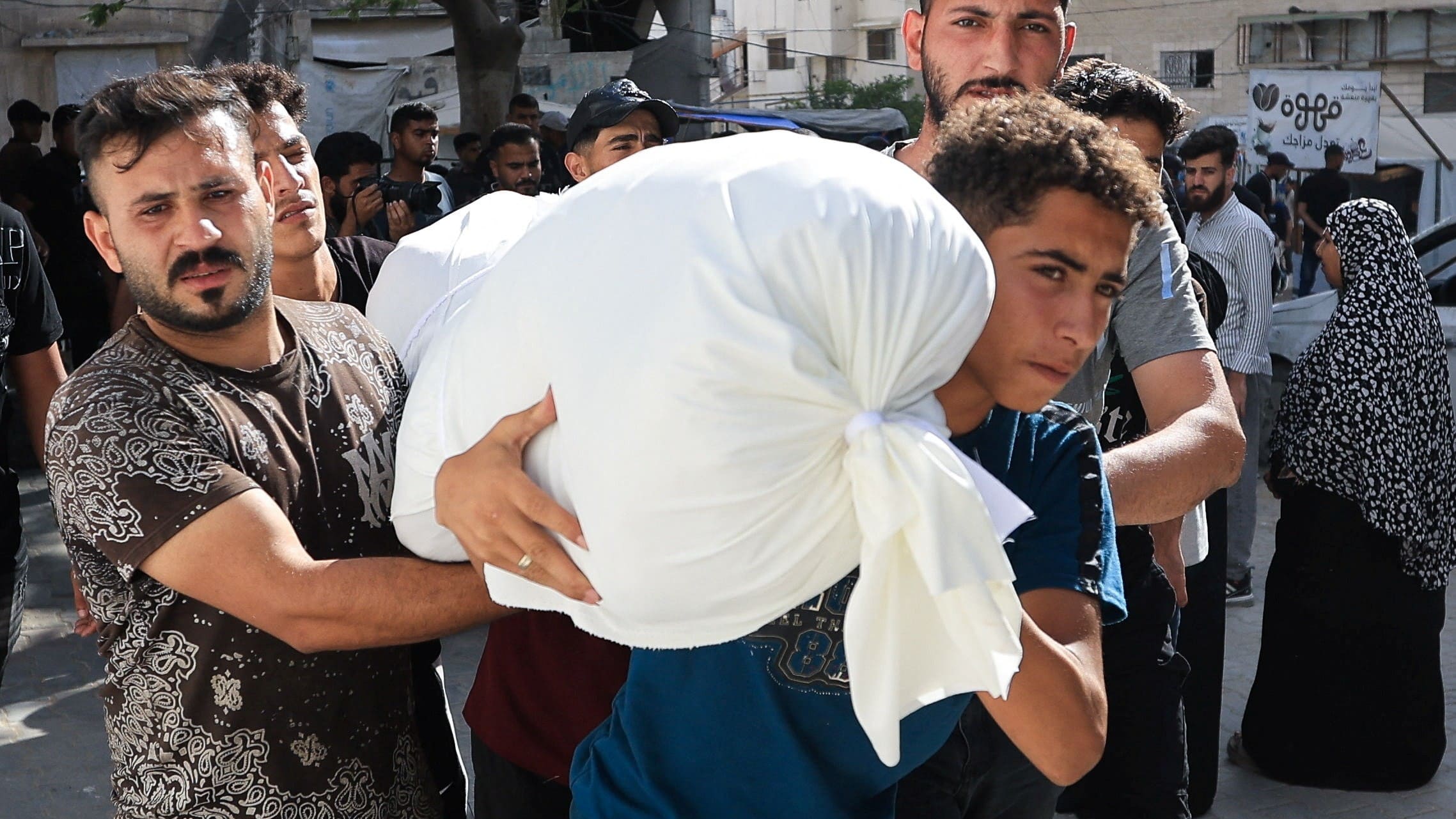
Death toll in Gaza surpasses 73,000 as Israel continues post-ceasefire killings
More than eight months into a U.S.-brokered nominal ceasefire in Gaza, Israeli military assaults continue to unfold across the besieged enclave, with local authorities documenting more than 3,269 documented violations of the truce agreement that was supposed to halt hostilities. The Gaza Government Media Office has released grim casualty figures confirming that since the ceasefire took effect in October 2023, Israeli attacks have killed over 992 Palestinians and wounded another 3,138 people across the territory. The cumulative death toll from the Israeli offensive that launched in October 2023 now exceeds 73,000 Palestinians, with an estimated 8,000 more bodies still trapped under the rubble of destroyed buildings and roughly 3,000 people unaccounted for.
Violence persisted across multiple areas of central Gaza on Monday this week, marking another day of bloodshed in the beleaguered territory. An Israeli airstrike carried out near a school in the Nuseirat refugee camp, located in central Gaza, left one Palestinian dead and multiple others with critical injuries. Earlier the same day, a female Palestinian was killed in an air raid targeting the area surrounding the Abdul Rahman bin Awf Mosque, west of the Al-Zuwayda district in central Gaza. In a separate deadly incident in Deir Al-Balah, Israeli troops opened fire on a father and his young son, before taking both into arbitrary detention. After the pair were eventually released from custody, 12-year-old Rayan Bahaa Abu al-Ajeen was pronounced dead shortly after arriving at al-Aqsa Martyrs Hospital for emergency treatment.
Beyond ongoing deadly attacks, Israeli forces have also carried out widespread mass detentions of Palestinian civilians in Gaza despite the ceasefire framework. Local data shows that at least 95 Palestinians have been abducted by Israeli forces since the truce came into force. In addition to military and human rights violations, Israel has failed repeatedly to meet the terms of the ceasefire agreement that laid out requirements for expanding humanitarian access to the blockaded enclave. As of this reporting, only around 52,740 aid trucks have been allowed to enter Gaza – just 36 percent of the 147,000 trucks the truce deal obligated Israel to permit into the territory. Under the agreement’s terms, Israel was required to allow up to 600 trucks daily carrying life-saving food, medical supplies, fuel, emergency shelter materials and commercial goods into Gaza to address the catastrophic humanitarian crisis.
Restrictions on border crossings have not only blocked aid deliveries, but also stripped Palestinians of their basic right to travel in and out of the enclave. Only 6,845 travelers have been allowed to cross Gaza’s borders out of the 19,600 that the truce agreement guaranteed passage for. Gaza’s Ministry of Health has confirmed that these border restrictions have already resulted in the preventable deaths of approximately 1,500 patients with approved medical referrals who were supposed to be evacuated out of Gaza for urgent, life-saving care starting in early May 2024.
In a formal statement, the Gaza Government Media Office issued a scathing condemnation of what it called the Israeli occupation’s systematic policy of targeting and exterminating the Palestinian people. “We hold the occupation fully responsible for the continued deterioration of the humanitarian situation in the Gaza Strip,” the statement read.
Against the backdrop of intensifying Israeli attacks in recent weeks, Palestinian political factions have issued an official response to a proposal put forward to implement former U.S. President Donald Trump’s disputed peace plan for Gaza, submitted through Nikolay Mladenov, head of the Gaza Peace Council. Hamas confirmed the faction’s coordinated position in an official statement released Monday, calling on regional and international mediators to pressure Israel to abide by the full terms of the existing ceasefire agreement. “The factions announced that they will remain in continuous session to monitor field and political developments and intensify their efforts to ensure a response to the legitimate demands that will alleviate the suffering of our people in the Gaza Strip,” the Hamas statement added.
-
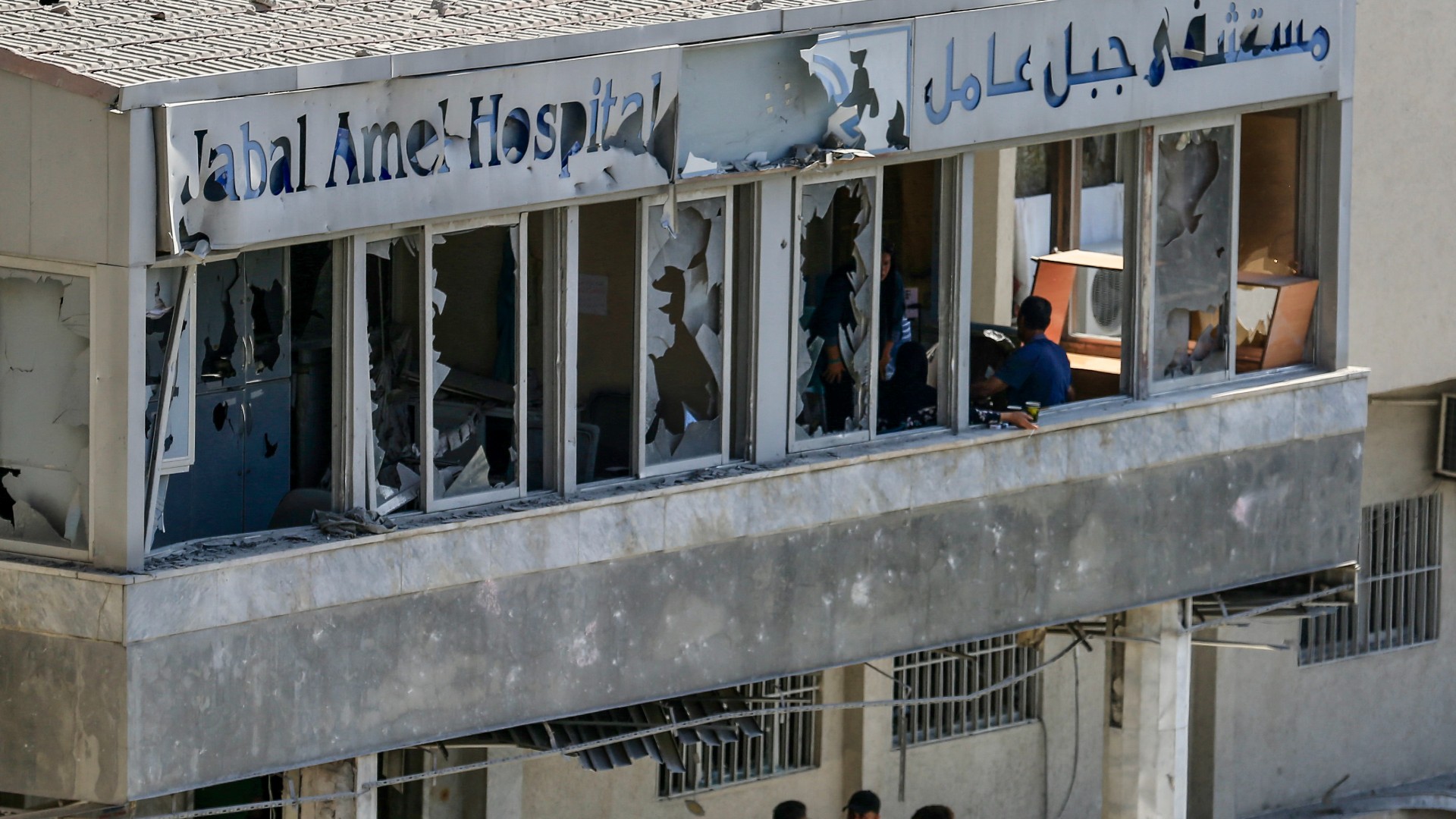
Pressure mounts to suspend Israeli medical association from global body
As the World Medical Association (WMA) prepares to convene its general assembly in Rotterdam, the Netherlands this October, mounting international pressure has emerged calling for the suspension of the Israeli Medical Association (IMA) from the global medical body, driven by a grassroots petition that has gathered more than 1,300 signatures from medical professionals and health organizations worldwide.
Organized by a coalition of global health advocacy groups — including The People’s Health Movement, Dutch-based Doctors for Gaza (Artsen voor Gaza), and the health division of Jewish Voice for Peace — the petition accuses the IMA of failing to uphold fundamental medical ethical principles enshrined in the WMA’s own Geneva and Tokyo Declarations. The document further alleges that the IMA is complicit in what signatories call widespread violations of medical neutrality and international human rights carried out by the Israeli government and military.
Beyond its core accusations regarding ethical failures, the petition outlines multiple specific grievances against the IMA. It documents that Israeli military forces have launched targeted attacks on healthcare infrastructure across Palestine, Lebanon, and Iran, resulting in the death of health workers, arbitrary detention of medical staff, and systemic obstruction of care delivery. Signatories also argue that over the past three decades, Israeli medical professionals have been complicit in inhumane treatment of Palestinian detainees held in Israeli prisons, through their consistent refusal to document or investigate documented violations of medical ethics in detention facilities. The petition adds that decades of Israeli occupation and what signatories term apartheid policies have left Palestinian populations with drastically inferior access to health services compared to Israeli citizens.
In a particularly pointed allegation, the petition argues that the IMA has not taken any public stance against the killing and displacement of hundreds of thousands of Palestinians in the Gaza Strip, nor against the near-total destruction of Gaza’s already fragile healthcare system. In fact, the petition claims that by publicly endorsing a 2023 statement signed by 80 Israeli doctors that openly called for the bombing of Gaza’s hospitals, the IMA effectively gave institutional approval to actions that constitute genocide. Signatories point to two prominent national medical bodies — the South African Medical Association and the British Medical Association — that have already cut formal ties with the IMA, and call on the WMA to follow this same path ahead of its October general assembly.
The accusations gained broader visibility after the leading medical journal *The Lancet* published an analysis of the petition in recent days. The journal’s reporting confirmed that the IMA has failed to release any public statement that condemns Israeli attacks on Gaza’s health system, criticizes Israeli military conduct during the ongoing conflict, calls for an immediate ceasefire, or acknowledges United Nations reports warning of ongoing genocide against Palestinians.
In its official response to *The Lancet*, the IMA rejected all accusations, asserting that its members consistently adhere to global medical ethical standards. The organization characterized the claims against it as “at worst, lies and at best, highly contested allegations presented as fact.” It further argued that the call for expulsion incorrectly conflates the actions of a sovereign government with an independent national medical association, warning that this sets a “extremely dangerous precedent” for global medical collaboration.
For its part, the WMA has also pushed back against the suspension call, telling *The Lancet* that removing the IMA would not advance the goals of peace, improved access to healthcare, or the protection of human rights globally. Instead, the global body argued that suspension would undermine decades of cross-border scientific collaboration, weaken open international medical dialogue, and create a harmful precedent that allows political pressure campaigns to isolate health care workers solely on the basis of their nationality.
-
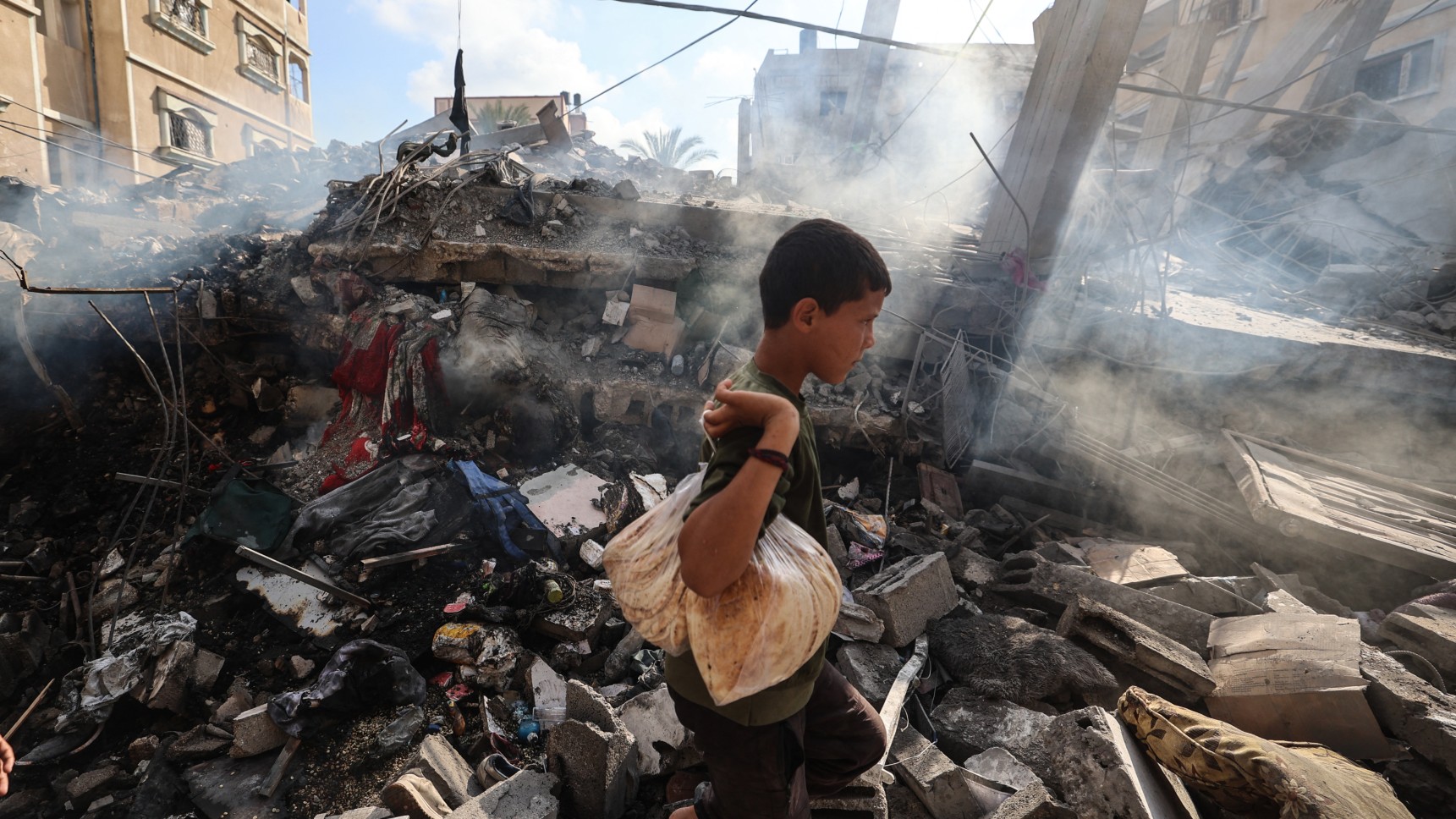
For Gaza’s Palestinians, Israel’s ever expanding ‘buffer zone’ means endless displacement
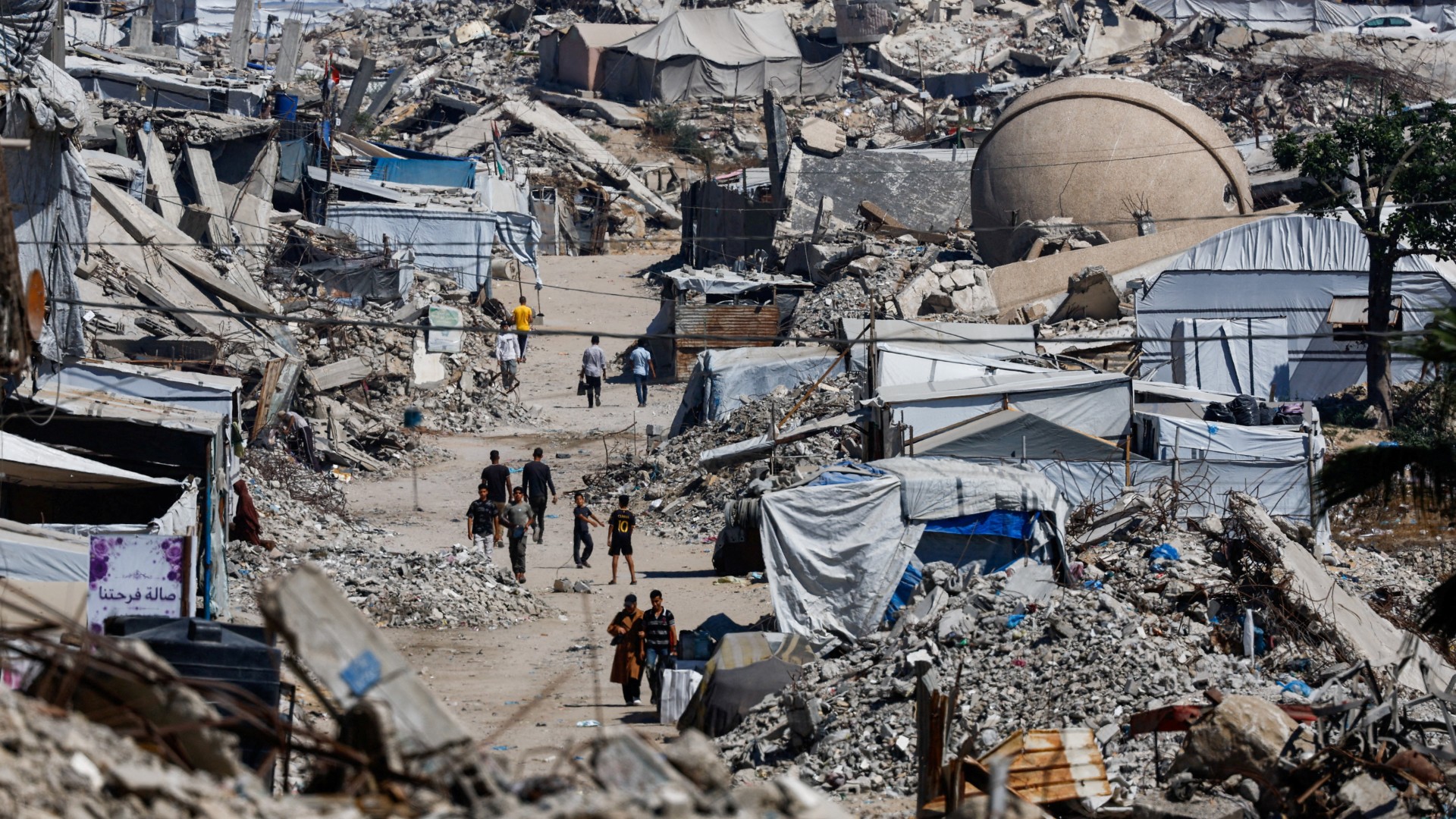
For 32-year-old Jamal Abu Sukran and his three young children, any sense of stability has remained out of reach amid the continuous cycle of upheaval that has defined their lives since the outbreak of Israel’s military campaign in Gaza in October 2023. The family’s latest forced displacement marked their 25th move, triggered by Israel’s June announcement that it would expand its so-called ‘yellow line’ zone of control, now swallowing 70 percent of the blockaded Palestinian enclave.
Even with a formal ceasefire nominally in effect since last October, Israel has steadily tightened its stranglehold over Gaza’s 1.8 million remaining civilian residents, squeezing them into a shrinking sliver of habitable territory. Abu Sukran first lost his original home in Gaza City’s eastern Shujaiya neighborhood when an Israeli airstrike reduced the structure to rubble in the opening days of the war. He took shelter in a nearby makeshift tent, but has been forced to relocate again and again, moving from one overcrowded displacement camp to another as Israeli territorial expansion progresses.
The yellow line was originally framed as a temporary Israeli-held buffer zone under the first phase of the October ceasefire agreement. But Israel has refused to withdraw from the area, blocking implementation of the deal’s second phase that requires a full pullback. Abu Sukran told Middle East Eye that hostilities never actually ceased even after the truce was announced. ‘Even after the ceasefire, the shooting and shelling never stopped,’ he said. ‘Life [in the displaced camps] was unbearable. We used to wait for the gunfire to stop just to go to the toilet.’
Abu Sukran explained that gunfire breaks out as a rule each morning, coming both from Israeli military positions and from local Palestinian collaborator groups. Displaced civilian communities, he added, are often directly targeted by fire. Initially, his post-ceasefire temporary home sat outside the yellow line, but eventually Israel’s expansion pushed the new boundary, called the ‘orange line’, to include his plot of land. ‘It was terrifying,’ he recalled. ‘There were random shootings, stray dogs, rats and shells everywhere. Nothing was left but rubble.’
The same story of repeated displacement plays out across the enclave for 68-year-old Nabil Abu Armanah and his extended family. After Israeli bombardment destroyed their first home in Rafah, they set up a makeshift tent on the ruins of their second property. They were forced to flee once again amid ongoing gunfire, routine Israeli military harassment, and the advance of Israeli tanks that came within 700 meters of the yellow line. When Abu Armanah recently returned to survey his land, he found the newly expanded yellow line cuts directly through his property.
‘I was hoping to return home soon, but now we are homeless. The land means everything to me,’ Abu Armanah said in an interview. ‘It’s extremely dangerous there now. Everything is gone. Nothing remains.’ He added, his voice shaking: ‘These are barbaric actions. We are innocent people. All we want is to live with dignity. I have lived through countless Israeli wars, from the 1967 war until today. They have destroyed everything I built throughout my lifetime.’
Multiple on-the-ground and expert accounts point to a deliberate Israeli strategy of making all territory inside the yellow line permanently uninhabitable for Palestinian residents. Since the ceasefire took effect in October, Israeli bulldozers and demolition crews have worked continuously to raze standing structures to the ground, clearing entire neighborhoods. Senior Israeli government officials, including far-right Minister Bezalel Smotrich, have openly stated their goal of leveling Palestinian land to push residents to leave the enclave ‘voluntarily’.
Political analyst Abdel Nasser Abu Aoun told Middle East Eye that Israel is leveraging the yellow line framework as a deliberate media narrative to legitimize the reoccupation of large swathes of Gaza. While framing the expansion as a security measure, the Israeli government is implementing a scorched-earth policy designed to depopulate captured areas, demolish civilian infrastructure, and commit war crimes, Abu Aoun argued.
By incrementally expanding the yellow line and introducing the new orange line zone of control, Israel effectively annexes more Gaza territory piece by piece. Abu Aoun documented that Israeli forces have even built military observation towers on the site of ancient Palestinian cemeteries, positions that overlook the tents of displaced Palestinians who can see their destroyed ancestral lands from their makeshift shelters. ‘This is one of Israel’s methods of psychological warfare,’ he said. ‘The objective is to punish Palestinians.’
Abu Aoun added that Israel’s end goal appears to be forcing all displaced residents into the small al-Mawasi coastal zone, even though existing infrastructure there is already severely damaged and incapable of supporting a massive influx of people. The overcrowding, he warned, creates a high risk of long-term humanitarian and environmental collapse in the enclave. ‘Israel is proving to the world that it respects neither agreements, mediators nor international law,’ he said. ‘It only understands the law of the jungle.’
The territorial expansion has also triggered a crippling public health and infrastructure crisis across Gaza. Maher Salem, general director of planning and investment at Gaza municipality, told Middle East Eye that roughly 35 percent of Gaza City’s clean water sources have been lost after falling inside the expanded yellow line and being destroyed by Israeli forces. Israel has cut the volume of water entering Gaza from 20,000 cubic meters per day to just 12,000 cubic meters – water that is already paid for by the Palestinian Authority. The cuts have left the average Gaza resident with just 10 liters of clean water per person per day, far below the minimum international standard for basic needs.
Salem also confirmed that Israel destroyed the main desalination plant in the Sudaniya coastal area, which previously produced 10,000 cubic meters of clean drinking water daily. Approximately 150 kilometers of water distribution networks, along with sewage pumps and critical sanitation infrastructure across Gaza City, have also been destroyed in military operations. In addition, Israel has blocked access to Gaza’s main landfill sites, which are located inside the yellow line near the border, forcing municipal authorities to store mounting volumes of waste in residential neighborhoods. To date, an estimated 400,000 cubic meters of uncollected garbage have accumulated across Gaza City, creating what Salem called a major environmental and public health catastrophe.
United Nations data from April underscores the severity of the crisis: more than 80 percent of the 1,600 displacement camps across Gaza report frequent rodent and pest infestations, which have fueled widespread disease outbreaks and rising rates of skin infections and rashes among vulnerable displaced populations.