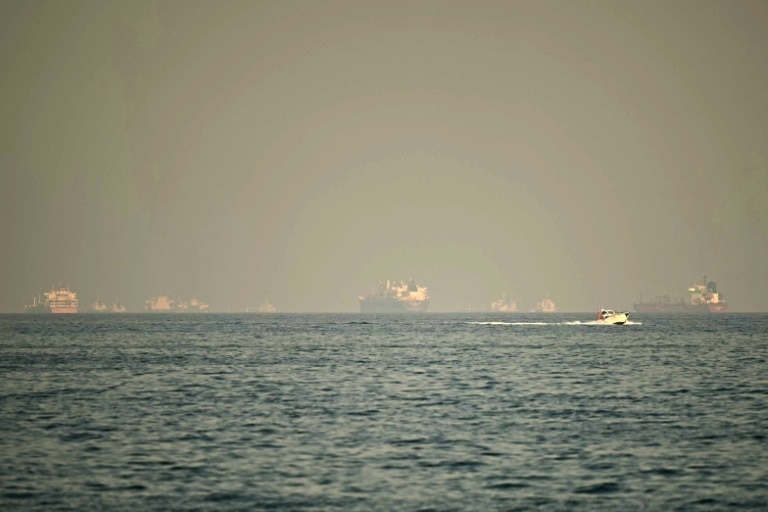
In the wake of a last-minute bilateral ceasefire announcement between the United States and Iran that was meant to reopen the strategically critical Strait of Hormuz, global shipping operators are still holding back, with barely a handful of vessels daring to transit the waterway just one day after the agreement. As of Wednesday, only three commercial ships had completed passage through the chokepoint, a stark contrast to pre-crisis traffic levels and a clear indicator of the deep uncertainty still hanging over one of the world’s most vital maritime trade routes.
Data from multiple maritime industry analysts underscores the scope of the ongoing logjam. Ship tracking service MarineTraffic confirmed that beyond the three transits Wednesday, only a small number of additional vessels are currently scheduled to make the crossing, a number that amounts to no meaningful recovery of trade flow. Since March 1, maritime data provider Kpler records an average of just eight commodity-carrying ships transiting the strait per day, far below the usual 20-plus vessels that pass through daily during normal conditions. Maritime intelligence firm Lloyd’s List Intelligence estimates that more than 800 commercial vessels remain stranded across Gulf waters, with overall traffic through the strait plummeting by roughly 95% from pre-crisis levels.
“Everybody across the global shipping sector is obviously on edge right now,” Richard Meade, editor-in-chief of Lloyd’s List, told Agence France-Presse. For the thousands of crew members who have remained confined to their stuck vessels for weeks, the ceasefire announcement does offer the first glimmer of hope after weeks of uncertainty. “The ceasefire has definitely calmed our nerves, and we’re holding out hope that the calm holds. The crew can finally take a breath after all this time,” an off-duty captain, whose vessel and crew remain stranded off the coast of Qatar, told AFP.
Despite the tentative diplomatic breakthrough, major shipping industry bodies are still warning carriers against rushing to resume full transit through the strait, saying conditions remain too volatile for large-scale movement. “Heading out through the Gulf right now would not be advisable without explicit, verified coordination with both US and Iranian authorities,” Jakob Larsen, chief safety and security officer at the international shipping association Bimco, told AFP. His warning aligns with guidance from other leading industry groups, which all emphasize that the long-term stability of the waterway remains far from guaranteed. “We still have no clear confirmation that the area has truly become safe for regular transit,” the Japanese Shipowners’ Association told AFP Wednesday.
Industry leaders add that core details of the agreement have yet to be clarified enough to restore shipping confidence. John Stawpert, principal director of marine affairs at the International Chamber of Shipping (ICS), noted that much of the public discussion has centered on Iran’s 10-point framework for the deal, but key elements of that proposal remain undefined. That framework, presented by Iran as the basis for talks with the United States, does not align with the terms the White House has agreed to, a senior US official has confirmed.
The International Maritime Organization, the United Nations’ maritime regulatory body, announced Wednesday that it is currently developing a formal mechanism to guarantee permanent safe transit through the strait for all commercial vessels. Beyond the ongoing geopolitical risk, a rushed, uncoordinated mass departure of hundreds of stranded vessels from the Gulf also raises major safety risks of collisions and groundings in already congested waters, Meade added.
One of the biggest outstanding unresolved questions is the future of the limited transit system Iran implemented during the closure of the strait, which Lloyd’s List has dubbed the “Tehran Toll Booth” amid widespread reports that vessels were required to pay fees to secure passage permission. The Iranian 10-point plan explicitly includes language calling for “maintaining Iranian control over the Strait of Hormuz”, a condition that conflicts with US demands for fully unrestricted, free passage.
US President Donald Trump previously stated in a social media post that Iran had agreed to the “COMPLETE, IMMEDIATE, and SAFE OPENING of the Strait of Hormuz”. But an Iranian diplomatic source told reporters Wednesday that a new transit mechanism has been organized in partnership with Oman, “under which there has been and will be a right of passage” for all vessels. Oman’s government issued a statement Wednesday welcoming the ceasefire but declined to comment on the details of the proposed transit mechanism or any potential toll system.
According to reporting from the Financial Times, Tehran is expected to demand a fee of one US dollar per barrel of oil passing through the strait, with payment required to be made in cryptocurrency to avoid US-led financial sanctions. Writing in an op-ed published Tuesday, Amir Handjari, a senior fellow at the US-based Quincy Institute for Responsible Statecraft, argued that a joint Omani-Iranian arrangement to manage the strait is far from unrealistic. “Oman would gain a consistent new revenue stream and increased strategic relevance in the region. Iran would gain international legitimacy, much-needed hard currency, and a tangible diplomatic win to show its domestic population after the conflict,” Handjari wrote.
The current effective shutdown of the Strait of Hormuz has no modern precedent. Even during the eight-year Iran-Iraq War between 1980 and 1988, the strait remained open to commercial traffic, despite a series of deadly tanker attacks that significantly slowed trade flows. More recently, in 2024, repeated attacks by pro-Iranian Houthi militias in the Red Sea cut traffic through the Suez Canal and Bab al-Mandeb Strait by half, France’s economy ministry confirmed.