分类: world

  • US Coast Guard opens criminal investigation into Michigan woman’s disappearance in Bahamas

    US Coast Guard opens criminal investigation into Michigan woman’s disappearance in Bahamas

    A high-stakes missing person case unfolding in the Caribbean has taken a major turn, with the United States Coast Guard confirming Wednesday it has opened a formal criminal investigation into the disappearance of 59-year-old American traveler Lynette Hooker, who vanished after reportedly falling overboard from a small recreational vessel during a vacation with her husband.

    According to statements Brian Hooker gave to Bahamian law enforcement, the couple set out from the popular resort community of Hope Town on Abaco Island Saturday evening, heading toward nearby Elbow Cay aboard their 8-foot hard-bottomed dinghy. During the trip, Lynette fell overboard into rough, choppy waters, Brian told authorities, and was quickly pulled away from the boat by powerful ocean currents. In a chaotic turn of events, the vessel’s ignition keys went overboard with Lynette, leaving Brian unable to motor the craft back toward his wife. After struggling against the rough conditions, he eventually paddled the empty dinghy to shore, reaching the Marsh Harbour Boat Yard just before 4 a.m. local time Sunday. He alerted a dock worker, who contacted local authorities to launch an initial search.

    In a public statement shared with CBS News Wednesday, Brian Hooker expressed profound grief over the incident, saying he is devastated by the loss of his wife and remains focused on the ongoing search effort. “I am heartbroken over the recent boat accident in unpredictable seas and high winds that caused my beloved Lynette to fall from our small dinghy near Elbow Cay in the Bahamas,” he said. “Despite desperate attempts to reach her, the winds and currents drove us further apart. We continue to search for her and that is my sole focus.” He also thanked responding agencies and civilian volunteers for their work in the ongoing search.

    But the case has raised unsettling questions from Lynette’s immediate family, who point to her decades of experience on the water to cast doubt on the official account provided so far. Lynette’s daughter, Karli Aylesworth, told CBS News Wednesday that her mother has been an active sailor for more than 10 years and is a skilled, experienced swimmer. Aylesworth said she cannot reconcile her mother’s background with how the incident is described, and has called for a full, exhaustive investigation into what led to her mother’s disappearance.

    Coast Guard officials confirmed to the BBC Wednesday that the criminal probe is now active, but declined to share any further details about the scope of the investigation, including whether any persons of interest have been identified or what specific lines of inquiry investigators are pursuing. The Royal Bahamas Police Force, which initially announced the investigation and multi-agency search in a social media post Tuesday, did not immediately respond to the BBC’s request for additional comment on the new criminal investigation. The U.S. Coast Guard joins multiple Bahamian agencies in the ongoing search and investigation effort, more than five days after Lynette Hooker was first reported missing.

  • Hundreds march in Senegal’s capital over broken government promises and rising costs

    Hundreds march in Senegal’s capital over broken government promises and rising costs

    On a mid-week day in Dakar, Senegal’s coastal capital, thousands of demonstrators filled the streets to voice growing frustration with the country’s new ruling administration, as a crippling national debt crisis pushes daily living costs to unsustainable levels for ordinary citizens. The demonstration was a coordinated effort between Senegal’s most influential labor unions and the Front for the Defense of Democracy and the Republic (FDR), a major opposition political coalition, bringing together workers, union activists, and government critics from across the political spectrum.

    Mody Guiro, leader of the National Confederation of Senegalese Workers — the nation’s largest union body — told reporters the current government has broken a landmark agreement struck one year prior. Under that deal, unions agreed to pause all planned strike action in exchange for commitments to raise public sector wages and improve national working conditions. For its part, the Senegalese government argues that a historic debt crisis inherited from the previous ruling administration has stripped the state of discretionary funding needed to fulfill these pledges.

    Many protesters wore identifying red scarves and branded union headwear, carrying hand-painted signs that called for the reinstatement of thousands of laid off public employees and sharp cuts to personal income tax rates. Some groups chanted overt calls for the removal of Prime Minister Ousmane Sonko, the country’s second-highest ranking official.

    Sonko and President Bassirou Diomaye Faye’s administration took office in April 2024 on a wave of popular support, fueled by campaign promises of sweeping transformative reform. Their platform centered on rooting out systemic corruption, expanding employment opportunities for Senegal’s large youth population, and ensuring the nation captures maximum economic benefit from its abundant natural resource reserves. To date, however, the ruling PASTEF party’s reform agenda has hit significant roadblocks.

    A 2025 official government audit confirmed that the previous administration left the country with a total public debt of $13 billion — a figure far larger than had been previously disclosed to the public. That debt burden has pushed Senegal’s debt-to-GDP ratio to approximately 132%, one of the highest debt levels recorded on the African continent. Ongoing negotiations with the International Monetary Fund to secure a new economic bailout program have stalled in recent months as the country’s fiscal outlook continues to deteriorate.

    Worsening economic conditions have amplified daily hardship for millions of Senegalese people, with the nation’s youth population bearing the brunt of the crisis. Roughly 75% of Senegal’s total population is under the age of 35, making youth unemployment one of the country’s most pressing social issues. Tensions have already boiled over once this year: in February, student protests over unpaid government financial aid at Senegal’s leading public university were met with a violent crackdown by security forces, which left one student dead.

    Speaking at Wednesday’s demonstration, youth activist Mohamed Fall emphasized that widespread frustration has ground daily life across the country to a halt. “The country is at a standstill. It is essential that the government finds solutions to revive Senegal’s economy instead of picking fights everywhere,” Fall said.

    For many demonstrators, the anger stems directly from unmet campaign promises. Pape Laobe Samb, a former 12-year veteran employee of the Port of Dakar, is one of more than 700 port workers laid off since the start of 2025 as part of the Faye administration’s push to overhaul bloated state institutions. “This is not what they promised people. They said they were going to create jobs and develop the country but they did the complete opposite,” Samb told the Associated Press in an interview at the protest.

    The newly appointed director of the Port of Dakar, who took the post shortly after Faye’s inauguration, has framed the layoffs as a necessary clean-up of irregular, patronage-based contracts left behind by the previous government. Unions push back against this narrative, arguing that nearly all the terminated workers were affiliated with the previous ruling party, and that the mass firings were an unlawful, politically motivated purge rather than a genuine institutional reform.

  • China, EU welcome two-week ceasefire in Mideast

    China, EU welcome two-week ceasefire in Mideast

    On Wednesday, the international community greeted a landmark diplomatic breakthrough for Middle East peace, after Iran, the United States, and Israel reached a two-week ceasefire agreement mediated by Pakistan. This truce pauses a six-week-long conflict that has claimed hundreds of lives and thrown global energy markets into chaos. The last-minute deal came together after U.S. President Donald Trump withdrew his earlier threat to destroy “a whole civilization,” while Iranian authorities agreed to temporarily reopen the Strait of Hormuz — the critical global shipping chokepoint through which roughly one-fifth of the world’s total oil exports pass. Pakistan confirmed that formal negotiations for a permanent peace agreement could kick off as early as this Friday in Islamabad, with all involved parties signaling willingness to participate. That said, there is still no clarity on core procedural details for the upcoming talks, leaving room for uncertainty moving forward. Even ahead of formal negotiations, the truce announcement already triggered tangible shifts in global financial markets. Crude oil prices plummeted in response to the news of reopened shipping lanes: U.S. West Texas Intermediate crude fell by nearly 20%, while Brent crude dropped as much as 16%. Global stock markets also rallied on the optimism. China’s Shanghai Composite Index closed up 2.69% at 3,995 points, while major markets across the Asia-Pacific, including Sydney, Bangkok, Manila, Jakarta, Singapore, and Wellington, all recorded sharp gains. Middle Eastern equity markets also surged: Dubai’s main index jumped 8.5% in intraday trading, marking its largest single-day gain since December 2014, according to Bloomberg data. Both China and the European Union publicly welcomed the ceasefire in formal statements on Wednesday. At a daily press briefing in Beijing, Chinese Foreign Ministry spokesperson Mao Ning noted that the Strait of Hormuz is a vital corridor for global trade and energy flows, and protecting its stability serves the shared interests of the entire international community. She added that China will continue to play a constructive role in advancing lasting peace across the region. EU High Representative for Foreign Affairs Kaja Kallas framed the truce as a critical “step back from the brink,” saying it opens a “much-needed” window for further diplomatic negotiations. United Nations Secretary-General António Guterres also issued a statement welcoming the ceasefire, calling on all conflict parties to uphold their obligations under international law and strictly adhere to the truce terms to clear a path for a lasting, comprehensive regional peace. Iranian Foreign Minister Abbas Araghchi confirmed that Iran will uphold its end of the bargain, guaranteeing safe passage for all vessels through the Strait of Hormuz for the two-week truce period so long as the U.S. and Israel honor their commitments. “If attacks against Iran are halted, our powerful armed forces will cease their defensive operations,” he said in a statement issued on behalf of Iran’s Supreme National Security Council. Even as it joined the ceasefire, Iran reaffirmed its core non-negotiable demands: permanent sovereign control over the Strait of Hormuz, implementation of a $2 million transit fee per passing vessel (with a commitment to share generated revenue with Oman), international recognition of its peaceful nuclear enrichment program, full lifting of all primary and secondary U.S.-led sanctions against the country, and a complete withdrawal of U.S. military forces from the broader Middle East region. Shipping data confirmed that vessel traffic through the strait resumed within hours of the ceasefire announcement. Ship-tracking service MarineTraffic reported via social media that the Greek-owned bulk carrier NJ Earth and Liberia-flagged tanker Daytona Beach were the first commercial vessels to complete transits of the waterway, with more movements now being tracked. For his part, Trump said U.S. negotiators are “very far along” in hammering out a long-term agreement with Iran, which has already submitted a 10-point proposal that Trump called a “a workable basis for negotiation.” Israeli Prime Minister Benjamin Netanyahu announced his government’s support for the ceasefire between the U.S. and Iran, but issued a key clarification: the truce does not apply to Israeli military operations against the Hezbollah militant group in southern Lebanon. Netanyahu’s remark directly contradicted Pakistan’s earlier statement that the ceasefire terms explicitly cover Israeli strikes in Lebanon. Even amid the celebratory diplomatic news, fresh security alerts underscored just how fragile the breakthrough remains. On Wednesday, the same day the ceasefire was announced, missile warnings were activated across the United Arab Emirates, Saudi Arabia, Bahrain, and Kuwait. Iranian state media reported an attack on an oil refinery on the country’s Lavan Island, Kuwait reported drone strikes targeting its power infrastructure, and UAE officials confirmed their air defense systems intercepted incoming Iranian missiles. Since the U.S. and Israel launched joint military operations against Iran on February 28, core disputes over Iran’s nuclear program, its ballistic missile development, and its network of regional proxies have remained unresolved. With no sign those gaps have been closed, it remains unclear whether the two-week ceasefire will hold through its full term, or what will happen once the truce expires if no long-term deal is reached.

  • He’s Australia’s most decorated soldier. Now he’s at the centre of a historic war crimes case

    He’s Australia’s most decorated soldier. Now he’s at the centre of a historic war crimes case

    On a quiet Tuesday on the tarmac of Sydney Airport, a landmark moment in Australian military history unfolded with little fanfare: Ben Roberts-Smith, once the nation’s most celebrated and highly decorated living war hero, was escorted off a commercial flight and into a waiting police vehicle to face five criminal charges of war-time murder.

    Less than 15 years ago, Roberts-Smith returned home from his tour of duty in Afghanistan a national icon. Awarded the Victoria Cross, Australia’s highest military honor, for reportedly single-handedly overcoming Taliban fighters who ambushed his Special Air Service (SAS) patrol, he quickly became the face of Australia’s revered military legacy. He stepped away from the Australian Defence Force (ADF) in 2013, and parlayed his fame into lucrative speaking engagements, corporate board positions, mainstream magazine covers, and high-profile honors including Father of the Year. He even met the late Queen Elizabeth II at Buckingham Palace just months after receiving his top military decoration.

    But that carefully cultivated reputation crumbled in 2018, when Nine newspapers published a bombshell series of investigative reports detailing widespread alleged misconduct during Roberts-Smith’s service. The reports included claims of unlawful beatings and extrajudicial killings of unarmed Afghan detainees, workplace bullying of fellow soldiers, and domestic abuse of a former partner. To clear his name, Roberts-Smith launched one of the most expensive and high-profile defamation lawsuits in Australian history, a seven-year legal battle dubbed the “trial of the century” that cost millions of dollars.

    In 2023, three years after the case began, a Federal Court judge ruled that the core allegations of four murders were substantially true, a finding that was later upheld on appeal. While claims of domestic violence and some bullying allegations were dismissed, the civil trial shattered the myth of Roberts-Smith as a national hero. Now, he faces criminal prosecution that carries a life sentence if convicted, and he continues to maintain his innocence. He has denounced the allegations as “egregious” false claims driven by jealous and spiteful former comrades.

    The criminal charges against Roberts-Smith mark an unprecedented turning point not just for Australia, but for the global community. As a Victoria Cross recipient, Roberts-Smith is the first holder of Australia’s highest military honor to ever be charged with war crimes. Experts note it is nearly impossible to find a recipient of a comparable top military valor award anywhere in the world that has faced such prosecution.

    “For Roberts-Smith to now be charged with war crimes – and not just one, but multiple war crimes – is a very significant cultural and social moment for a country that, for much of its history… has placed a lot of store in the exploits and contributions of the members of its defence forces,” Donald Rothwell, a leading Australian international law professor, told the BBC.

    Deane-Peter Baker, a special forces ethics scholar who redesigned the ADF’s ethics training following the Afghanistan war crime scrutiny, called the moment extraordinary, noting “We’ve never seen this before.”

    Roberts-Smith’s arrest is the culmination of a five-year investigation by the Office of the Special Investigator (OSI), a special watchdog body created after the 2020 release of the landmark Brereton Report. That official inquiry found credible evidence that elite Australian SAS soldiers had unlawfully killed 39 Afghan civilians between 2001 and 2021, when Australian troops withdrew from the country, and recommended 19 current or former ADF members face formal investigation. To date, the OSI has opened 53 probes, finalised 39, and only charged one other former soldier, Oliver Schulz, who is not scheduled to face trial until 2025, two years after his arrest.

    OSI investigations director Ross Barnett told reporters Tuesday that investigators have operated under uniquely challenging conditions that have slowed progress dramatically. All alleged crimes took place in Afghan war zones roughly 9,000 kilometers from Australia, and investigators have no ability to access original crime scenes, recover physical evidence like bullets or blood spatter, conduct post-mortem examinations, or coordinate cross-border law enforcement cooperation. Compounding these challenges is the long-standing military culture of loyalty between “brothers in arms” that discourages service members from testifying against one another. Still, Peter Stanley, former principal historian at the Australian War Memorial, noted that many witnesses who previously stayed silent have come forward, recognizing their obligation to truth outweighs informal loyalty bonds. He added that the original investigative reporting from Nine Newspapers helped uncover critical leads and cleared a path for prosecution.

    Barnett called Roberts-Smith’s arrest a “significant step” in the OSI’s mandate, and the agency says it remains committed to wrapping up remaining investigations as quickly as possible. But legal experts warn the criminal trial itself is still years away, as Australia’s legal system has no modern precedent for domestic war crimes prosecutions, and the case presents a host of unprecedented procedural hurdles. The five separate charges relate to events that occurred more than a decade ago, requiring the court to manage massive volumes of evidence. Coordinating witnesses is another major logistical challenge: some witnesses require identity protection for security or national security reasons, while others based in Afghanistan are nearly impossible to reach under current conditions. Additionally, years of high-profile public coverage of the civil defamation trial, which included 110 days of public evidence, means finding an unbiased jury — should the case go before a jury rather than a judge-alone trial — will be extremely difficult.

    Beyond the legal process, the Roberts-Smith case has forced Australia to confront a long-overdue reckoning over its military legacy and national identity. For more than a century, Australia has anchored its national self-image in the “Anzac spirit,” a set of values centered on courage, loyalty, honor, and ethical conduct forged from the World War One Gallipoli campaign. The slow, unfolding saga of war crime allegations has eroded public trust in the ADF and caused distress among current service members, while the glacial pace of investigations has drawn criticism from veteran groups, who argue the drawn-out process is unfair to all parties involved, including the families of the alleged victims.

    Opinion across the country remains deeply divided. High-profile public figures including former Australian prime minister Tony Abbott and billionaire Gina Rinehart have publicly sided with special forces veterans, arguing that the investigations amount to unfair persecution of soldiers who served their country. “I am very sorry that some of them have been subjected to a form of persecution by the country they served,” Abbott said this week.

    But supporters of the investigations argue that the prosecution of Roberts-Smith demonstrates Australia’s unwavering commitment to the rule of law, even when it requires holding the nation’s most beloved heroes accountable. Other countries, including the United Kingdom, have already launched their own Brereton-style inquiries into Afghan war misconduct following Australia’s lead.

    “In a weird way, this is a moment that Australians should be proud of,” Baker said. “For a nation to hold a member of their armed forces to account – someone who has been held up as one of our greatest living heroes – shows a commitment to ethics, decency and the rule of law that is unfortunately very rare among nations.

    “That ought to be recognised and applauded, however embarrassing or sad this is for many people,” Stanley added.

  • ‘Islamic bomb’: The secret Pakistani scheme to make Iran a nuclear power

    ‘Islamic bomb’: The secret Pakistani scheme to make Iran a nuclear power

    For nearly half a century, Abdul Qadeer Khan, known to Pakistanis as the “Father of the Bomb” and “Mohsin-e-Pakistan” (Saviour of Pakistan), stood at the center of one of the most consequential and controversial chapters in modern nuclear history. His legacy, which blends nationalist devotion to his homeland with a global campaign of nuclear proliferation that upended international nonproliferation norms, continues to shape tensions across the Middle East and South Asia decades after his network was first exposed.

    Khan’s journey into nuclear politics began in 1974, when India conducted its first nuclear weapons test, codenamed Smiling Buddha, in the Rajasthan desert. The test sent shockwaves through neighboring Pakistan, where then-prime minister Zulfikar Ali Bhutto framed the acquisition of an Islamic nuclear bomb as an existential necessity for the young nation. Facing a nuclear-armed Hindu neighbor, Bhutto famously vowed, “We will eat grass or leaves, even go hungry, but we will get one of our own.” He asked: If Christian, Jewish, and Hindu nations already held the bomb, why should the Islamic world be denied it?

    At the time of India’s test, Khan was working at a Urenco Group subcontractor facility in Amsterdam, where he held access to classified blueprints for advanced gas centrifuges—critical technology that enriches natural uranium into weapons-grade material. Recognizing Pakistan’s urgent need, Khan penned a handwritten letter to Bhutto, volunteering his expertise. “I have acquired very detailed and comprehensive knowledge of the gas centrifuge system and am now in a position to help Pakistan… This is a matter of utmost urgency,” he wrote. Later, he would recall, “I wrote the letter with full awareness that I could be arrested or killed. But I felt I had no choice. India had tested. We had to respond.” Though accused of stealing classified centrifuge designs from the Netherlands, Khan returned to Pakistan in 1975, and by 1976 he had established a dedicated nuclear research lab in Rawalpindi. China provided critical support—enriched uranium, tritium, even scientific expertise—despite fierce opposition from India and Israel. The U.S., which initially cut aid to Pakistan over the program in 1979, reversed course months later after the Soviet Union invaded Afghanistan, turning a blind eye to Pakistan’s nuclear progress and even providing covert technical training to its scientists in the 1980s.

    By the end of the Cold War, the U.S. again halted aid to pressure Pakistan to abandon its program, but Khan continued production of highly enriched uranium in secret. After India tested a new series of nuclear warheads in May 1998, Pakistan responded with its own successful tests in the Balochistan desert, officially becoming the world’s seventh nuclear-armed state. “I told Bhutto Sahib we would get the bomb,” Khan declared after the tests. “I promised it. I kept that promise.”

    What remained hidden from the world for decades was that Khan had spent years running a second, far more audacious project: an illicit international proliferation network that sold nuclear technology, components, and designs to three nations—Iran, North Korea, and Libya. Driven by a deep-seated resentment of what he saw as Western hypocrisy, Khan believed the Islamic world had a right to nuclear deterrence, just as Western and allied nations did. In a blunt rebuke of Western double standards, he once asked: “I want to question the holier-than-thou attitude of the Americans and British. Are these bastards God-appointed guardians of the world?”

    Iran’s pursuit of nuclear assistance began in the 1980s, shortly after the 1979 Islamic Revolution that ended Western backing for Tehran’s civilian nuclear program. Though Ayatollah Ruhollah Khomeini issued a fatwa opposing nuclear weapons, the Iranian government, locked in a costly war with Iraq, secretly approached Pakistani military leadership for help. As former Iranian president Akbar Hashemi Rafsanjani revealed in 2015, “We were at war, and we wanted to have such an option for the day our enemies wanted to use nuclear weapons. This was our state of mind.” Khan, who firmly believed the Islamic world needed its own nuclear deterrent, agreed to the deal: Pakistan supplied Iran with 4,000 second-hand first-generation centrifuges, full design blueprints, and training for six Iranian nuclear scientists at Pakistani facilities. For years, the Pakistani military hid the arrangement from even its own civilian leaders; Benazir Bhutto, Zulfikar Ali Bhutto’s daughter and then-Prime Minister of Pakistan, only discovered the agreement by accident during a 1989 visit to Tehran, when Rafsanjani asked her to reaffirm their deal on “special defense matters.”

    Israel, which had long opposed any Muslim-majority nation acquiring nuclear technology, had Khan under surveillance as he traveled across the Middle East in the 1980s and 1990s, but failed to uncover the full scope of his network. Decades later, former Mossad chief Shabtai Shavit admitted he regretted not assassinating Khan when he had the chance, saying the attack would have “changed the course of history.” This was not Israel’s first attempt to stop Khan’s work: in the early 1980s, Israel had convinced then-Indian Prime Minister Indira Gandhi to approve a joint airstrike on Pakistan’s main nuclear facility at Kahuta, with Israeli fighter jets set to launch from an Indian airbase. Gandhi ultimately backed out, and the plan was never carried out.

    Khan’s sprawling network operated undetected until 2003, when Libyan leader Muammar Gaddafi voluntarily disclosed the network’s existence to Western intelligence agencies in an attempt to curry favor with the U.S. Gaddafi revealed that Khan had helped Libya build secret nuclear facilities, some disguised as working chicken farms. The CIA seized a shipment of nuclear machinery bound for Libya passing through the Suez Canal, and investigators uncovered full bomb blueprints hidden in dry cleaning bags from an Islamabad cleaner. The exposure sent shockwaves through Western capitals; a senior U.S. official told the *New York Times* at the time, “It was an astounding transformation when you think about it, something we’ve never seen before. First, [Khan] exploits a fragmented market and develops a quite advanced nuclear arsenal. Then he throws the switch, reverses the flow and figures out how to sell the whole kit, right down to the bomb designs, to some of the world’s worst governments.”

    In 2004, Khan appeared on national Pakistani television and confessed to running the network, claiming he had acted entirely alone with no government backing. The Pakistani state immediately pardoned him, a move Khan later defended, saying he “saved the country for the first time when I made Pakistan a nuclear nation and saved it again when I confessed and took the whole blame on myself.” Former CIA director George Tenet would later describe Khan as “at least as dangerous as Osama bin Laden,” a label he carried for the rest of his life.

    The exposure of Khan’s network to Iran triggered decades of international crisis. In 2005, Iran agreed to place its civilian nuclear program under International Atomic Energy Agency supervision, and in 2015, Tehran signed the Joint Comprehensive Plan of Action (JCPOA) with world powers, accepting strict limits on its nuclear program in exchange for sanctions relief. The deal collapsed in 2018, when the Trump administration withdrew from the agreement and reimposed crippling sanctions on Iran—tensions that persist to this day. Of the three nations Khan assisted, only North Korea successfully developed and tested its own nuclear weapons, joining the small club of nuclear-armed states.

    Khan died in Islamabad in 2021, revered as a national hero in Pakistan but reviled by Western governments as the world’s most dangerous nuclear proliferator. To the end, he remained unapologetic, arguing that his actions were a necessary pushback against Western double standards. He pointed to Israel’s open secret nuclear arsenal, which the West has never seriously challenged, and sarcastically asked in 2009: “If Iran fires a missile then it is wrong, but if Israel does it then it is right?” In a 2011 interview, he laid out his core belief: “Don’t overlook the fact that no nuclear-capable country has been subjected to aggression or occupied, or had its borders redrawn. Had Iraq and Libya been nuclear powers, they wouldn’t have been destroyed in the way we have seen recently.” Today, Pakistan remains the only Muslim-majority nuclear power, and Khan’s shadow continues to hang over global nonproliferation efforts and Middle Eastern security dynamics.

  • Israel launches massive wave of strikes across Lebanon following Iran ceasefire

    Israel launches massive wave of strikes across Lebanon following Iran ceasefire

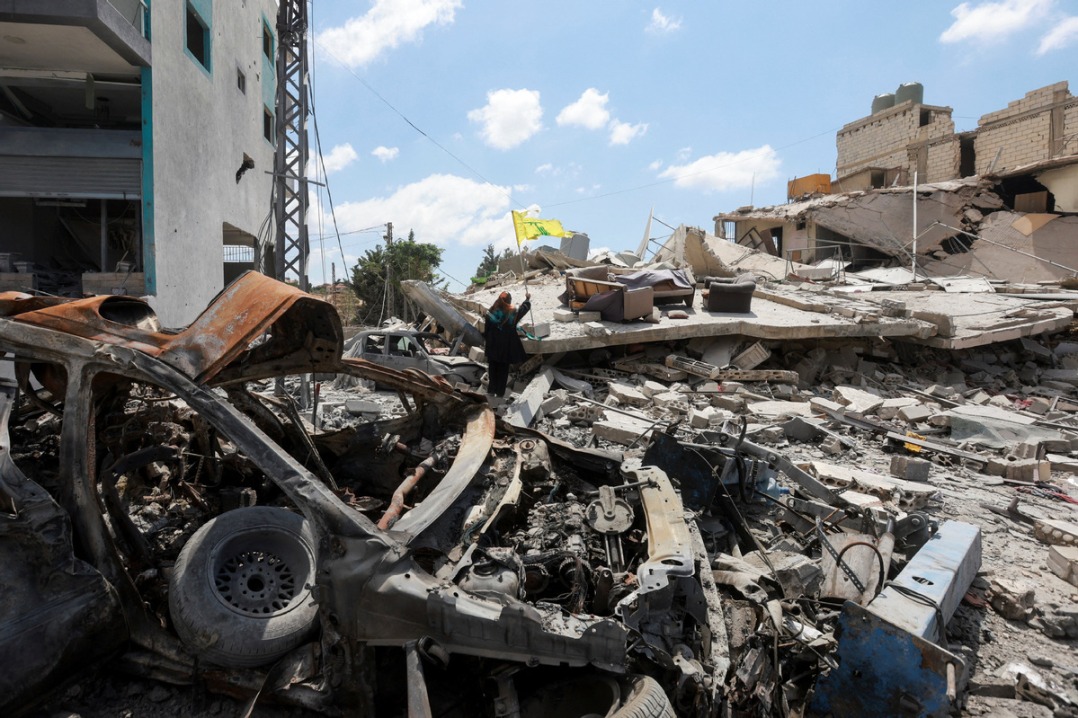
    On Wednesday, just hours after the United States and Iran reached a bilateral ceasefire agreement that was framed to include a halt to hostilities targeting Lebanon, Israel unleashed an unprecedented wave of coordinated air strikes across multiple regions of Lebanon, triggering widespread chaos and emergency response measures across the crisis-hit country.

    Witnesses from Agence France-Presse on the ground documented thick plumes of smoke billowing over central Beirut and its surrounding suburbs, with widespread panic sending civilians fleeing into the streets in search of shelter. In an official public statement, the Israel Defense Forces (IDF) confirmed the scope of the operation, saying it had completed the largest single coordinated strike in the current round of conflict, targeting roughly 100 Hezbollah command centers and military installations across Beirut, the Bekaa Valley and southern Lebanon in just a 10-minute window.

    Local Lebanese media confirmed early civilian casualties from the strikes. Lebanon’s National News Agency reported that an Israeli air strike hit a cemetery in the village of Shmestar in the Bekaa Valley while a memorial gathering was underway, killing at least 10 attendees and wounding four more. Additional strikes hit residential and infrastructure areas across Beirut and multiple districts in southern Lebanon.

    Lebanon’s Ministry of Public Health quickly issued an urgent emergency appeal, asking civilians to clear all major roadways in Beirut to allow ambulances and emergency response teams to reach attack sites and transport casualties. The ministry confirmed that initial assessments showed dozens of people had been killed and hundreds more wounded across the country, adding that severe traffic congestion sparked by the sudden wave of strikes was creating major barriers to rescue operations.

    The timing of the Israeli strikes came as a major escalation just after the US and Iran announced a two-week ceasefire, an agreement negotiated based on an Iranian proposal that originally included a commitment to end all attacks on Lebanese territory. While Israeli Prime Minister Benjamin Netanyahu had formally approved the broader ceasefire between the two countries, he immediately issued a clarification asserting that the truce did not extend to Israeli military operations against Hezbollah in Lebanon.

    Hezbollah entered the ongoing cross-border conflict on March 2, launching a heavy barrage of rockets into Israeli territory in solidarity with Iran amid rising US-Iran tensions. Since that opening exchange, Israel has launched a full ground incursion into southern Lebanon, a move that regional analysts have broadly interpreted as a preliminary step toward establishing a long-term permanent occupation of the area.

    Following Wednesday’s massive strikes, Lebanon’s caretaker prime minister issued an urgent appeal to the country’s regional and international allies, calling for immediate intervention to halt the Israeli attacks. Hezbollah had previously issued guidance for internally displaced Lebanese civilians, urging them not to return to their home areas until a formal, permanent ceasefire agreement is put in place.

    In a separate diplomatic incident connected to the escalating conflict, the Spanish government summoned the Israeli chargé d’affaires in Madrid on Wednesday to protest what it called the unjustifiable detention of a Spanish peacekeeper serving with the United Nations Interim Force in Lebanon (UNIFIL) by Israeli military forces. UNIFIL first reported the incident on Tuesday, initially withholding the peacekeeper’s nationality, and confirmed on social media platform X that Israeli forces detained the service member after blocking a UN logistics convoy. The peacekeeper was ultimately released after less than an hour in custody.

  • Exclusive: The Ethiopian army base covertly supporting Sudan’s RSF

    Exclusive: The Ethiopian army base covertly supporting Sudan’s RSF

    Exclusive analysis of declassified satellite imagery published by the Yale School of Public Health’s Humanitarian Research Lab (HRL) and obtained first by Middle East Eye has uncovered damning evidence that Ethiopia is covertly backing Sudan’s Rapid Support Forces (RSF) from a formal Ethiopian National Defence Force (ENDF) base in the country’s western Benishangul-Gumuz region, opening a new window into the complex geopolitical maneuvering prolonging Sudan’s devastating 2023-present civil war.

    The findings, which mark the first concrete visual confirmation of long-circulated accusations of Ethiopian involvement, track five months of consistent, large-scale military logistics activity at the ENDF base on the outskirts of Asosa, the capital of Benishangul-Gumuz. The activity aligns directly with the RSF’s intense cross-border offensive against Sudanese Armed Forces (SAF) positions in Sudan’s adjacent Blue Nile state, which has raged from December 2025 through March 2026.

    Over the monitoring period, HRL researchers documented repeated arrivals of commercial car transporters at the Asosa base carrying unmarked technical vehicles that are not part of the ENDF’s standard fleet. By February 2026, more than 200 of these vehicles were counted on site. Imagery shows unarmed vehicles were retrofitted on base with custom gun mounts designed for heavy .50-caliber machine guns, and up to 15 tents capable of housing 150 RSF fighters were erected to accommodate personnel. Multiple commercial shipping containers arrived, and fuel tanks on site allowed for mass refueling of vehicles before they deployed toward the Sudanese border.

    Crucially, the technical vehicles tracked through the Asosa base match the color, size, and armament of vehicles later documented in open-source footage of RSF combat operations around Kurmuk, a strategic Sudanese border town just 100 kilometers from the Asosa base. Kurmuk fell to the RSF and its allied Sudan People’s Liberation Movement–North (SPLM-N) fighters in late March 2026 after weeks of fierce clashes. HRL’s analysis of 14 other ENDF bases across the region found no comparable logistics buildup, confirming the Asosa site is a unique outlier dedicated to supporting the RSF.

    “This report is the first visual evidence that those allegations are true. In fact, it is even worse than first feared. Not only are the Ethiopians assisting the RSF, they are doing it from an actual Ethiopian army base,” said Nathaniel Raymond, HRL’s executive director, in an interview with MEE.

    Multiple independent sources, including active and former ENDF officers, Sudanese military and intelligence analysts, a European diplomat, and a former senior Ethiopian foreign ministry advisor, confirmed to MEE that the RSF has operated a secret staging hub in Benishangul-Gumuz for months, though its exact location at a formal ENDF base had not been confirmed until now. Those sources also draw a direct line between Ethiopia’s involvement and the United Arab Emirates (UAE), which has faced mounting international evidence of backing the RSF despite consistent public denials.

    Open-source video evidence from late 2025 further links the Asosa operation to a UAE-controlled supply network centered on the port of Berbera in Somaliland, where the UAE maintains a permanent military base. The car transporters seen carrying vehicles to Asosa match the dimensions and color of carriers filmed moving technical vehicles from Berbera into Ethiopia, and flight tracking data confirms multiple UAE-linked IL-76 cargo planes flew from Abu Dhabi to Ethiopian airports within 300 kilometers of Asosa between December 2025 and March 2026. Additional satellite imagery of Asosa airport identified a UAE-operated C-130 cargo plane and a MI-17 helicopter on site during the buildup period.

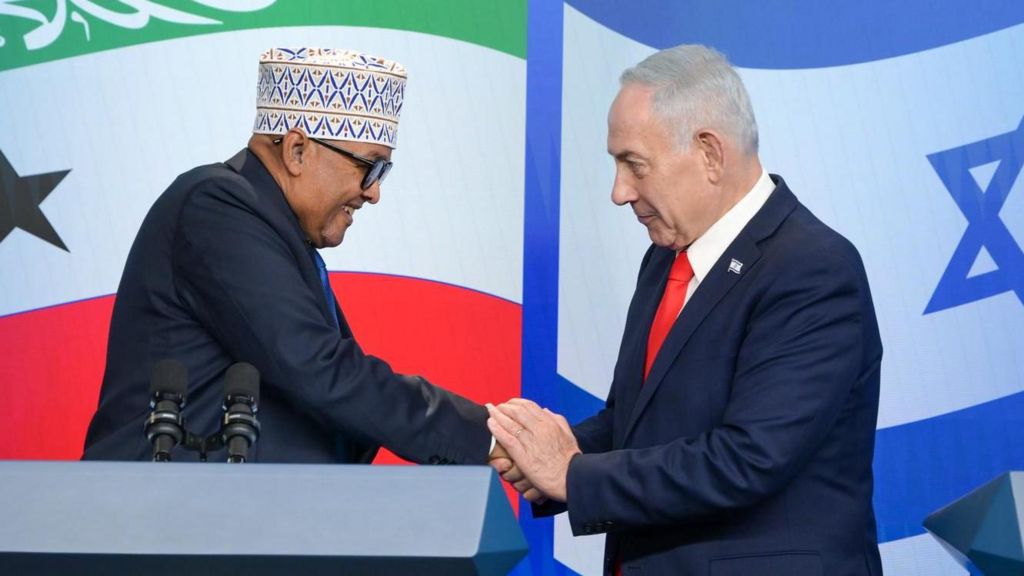
    The UAE’s deepening reliance on Ethiopia for RSF supply lines comes amid a shifting geopolitical landscape in the Horn of Africa. In January 2026, the Somali federal government canceled all cooperation agreements with the UAE over its support for breakaway regions Somaliland and Puntland, disrupting the UAE’s established regional network of military bases that it developed with Israel and the United States to control Red Sea and Gulf of Aden shipping lanes. Israel’s formal recognition of Somaliland sovereignty in December 2025, and subsequent talks to open an Israeli base at Berbera, further escalated tensions between Mogadishu and Abu Dhabi, leaving Ethiopia as the UAE’s most critical remaining partner for RSF operations.

    Analysts point to two core motivations for Ethiopia’s decision to back the RSF, rooted in both geopolitics and domestic security. For nearly a decade, Ethiopia’s government has been locked in strategic competition with Egypt and Eritrea, both of which back the SAF. Domestically, tensions between Ethiopian Prime Minister Abiy Ahmed’s government and SAF leader Abdel Fattah al-Burhan, Sudan’s de facto leader, date back to the 2020-2022 Tigray war, when Burhan provided military support to the Tigray People’s Liberation Front (TPLF), which remains in intermittent conflict with Addis Ababa. A 2025 high-level Ethiopian delegation to Khartoum failed to convince Burhan to cut ties with the TPLF, cementing Addis Ababa’s decision to align with the RSF.

    Getachew Reda, a senior Abiy advisor who joined that 2025 delegation, publicly stated earlier this year that Ethiopia could not remain a “passive bystander” in Sudan’s war, noting the country must defend its own strategic interests in the region. Sudan’s government first openly accused Ethiopia of intervening in the war in March 2026, after the RSF launched its major Blue Nile offensive that included fighters crossing into Sudan from Ethiopian territory.

    Sudan’s civil war, which broke out between the SAF and RSF in April 2023, has already spawned the world’s worst humanitarian crisis: hundreds of thousands of people have been killed, and more than 11 million have been displaced from their homes. A United Nations fact-finding mission recently concluded that the RSF committed genocide during its capture of el-Fasher, the capital of North Darfur, with survivors reporting mass executions, sexual violence, and systematic abuse of fleeing civilians.

    Multiple parties named in the report including the RSF, the office of Prime Minister Abiy Ahmed, and the Ethiopian foreign ministry have not responded to requests for comment from MEE. A former senior advisor to UAE President Mohammed bin Zayed Al Nahyan has previously pushed back against accusations of UAE support, noting that other regional states including Uganda, Ethiopia, and Chad all maintain ties to the RSF, while the SAF receives widespread military backing from Turkey and Egypt.

    HRL’s final report concludes that the Asosa base functions as a critical dedicated logistics node for RSF operations in Blue Nile state, providing resupply, refueling, accommodation, and vehicle maintenance for RSF personnel between December 2025 and the end of March 2026. “It is well situated to provide these services for RSF forces operating inside Blue Nile,” the report notes, “and the five months of consistent activity confirms this is not an isolated incident, but a sustained support operation.”

  • Scale of killing in Lebanon ‘horrific’: UN rights chief

    Scale of killing in Lebanon ‘horrific’: UN rights chief

    Just hours after a ceasefire deal was reached between Israel and Iran, a devastating wave of Israeli air strikes across Lebanon left a staggering death toll in its wake, drawing sharp condemnation from the United Nations’ top human rights official who has labeled the scale of killing “horrific” and called for urgent global intervention to end the spiraling crisis.

    Updated figures from Lebanon’s Ministry of Public Health confirm that at least 112 people were killed and more than 830 others sustained injuries in the unprecedented wave of strikes carried out Wednesday, marking the deadliest single day of violence since Lebanon became entangled in the broader regional Middle East conflict.

    In an official statement released following the attacks, UN High Commissioner for Human Rights Volker Türk expressed revulsion at the staggering number of civilian and overall casualties, saying, “The scale of the killing and destruction in Lebanon today is nothing short of horrific. Such carnage, within hours of agreeing to a ceasefire with Iran, defies belief. It places enormous pressure on a fragile peace, which is so desperately needed by civilians.”

    The statement detailed the catastrophic aftermath of the strikes, noting mass casualties have overwhelmed local hospital capacity across the country. A UN human rights field team deployed to a strike site in the Lebanese capital Beirut reported a scene of utter devastation, where multiple dead bodies were recovered from piles of rubble left by destroyed buildings.

    Türk stressed that international humanitarian law (IHL) sets clear, non-negotiable requirements that all parties to armed conflict must uphold: civilians and civilian infrastructure must be protected at all times, and every attack must adhere to the core IHL principles of distinction between combatants and civilians, proportionality, and precautionary measures to minimize harm to non-combatants. “These principles are non-negotiable, and must always be respected, whatever the circumstances of armed conflict,” he said. The UN rights chief also called for prompt, independent investigations into all alleged violations of international law, with any actors found responsible held legally accountable for their actions.

    Lebanon was dragged into the ongoing regional conflict back in March, when Iran-backed militant group Hezbollah began launching rocket attacks into northern Israel. Türk also made clear his condemnation of Hezbollah’s sustained missile and drone strikes targeting northern Israeli communities, echoing his call for an immediate end to all hostilities from both sides.

    Months of sustained conflict have already caused a humanitarian catastrophe in Lebanon: more than one million Lebanese people have been forcibly displaced from their homes, and Israel has launched a full ground invasion into southern Lebanon. Türk drew particular attention to concerning statements from senior Israeli officials that indicate a long-term intention to occupy or formally annex parts of southern Lebanese territory. “The scale of such actions, coupled with statements by Israeli officials indicating an intention to occupy or even annex parts of southern Lebanon, are deeply troubling,” he said.

    Closing his statement, Türk stressed the urgent need for the international community to act swiftly to stop the bloodshed. “The international community must act quickly to help bring an end to this nightmare. Efforts to bring peace to the wider region will remain incomplete as long as the Lebanese people are living under continuing fire, forcibly displaced, and in fear of further attacks.”

  • Gambia appoints British barrister to prosecute gruesome Jammeh-era crimes

    Gambia appoints British barrister to prosecute gruesome Jammeh-era crimes

    Almost a decade after former Gambian leader Yahya Jammeh suffered an unexpected electoral defeat that forced him from power after 22 years of authoritarian rule, survivors of his regime’s systematic human rights violations have finally secured a landmark step in their long fight for accountability.

    British barrister Martin Hackett, a seasoned international war crimes prosecutor with decades of experience investigating grave atrocities, has been named The Gambia’s inaugural special prosecutor to pursue individuals implicated in the widespread repression, enforced disappearances, and extrajudicial killings that marked Jammeh’s time in office. Jammeh fled to exile in Equatorial Guinea in early 2017, after regional military intervention compelled him to step down following his rejection of the 2016 election results.

    Hackett will lead a purpose-built new office tasked with adjudicating cases from the Jammeh era, a period that documentation has confirmed was rife with systematic human rights abuses. His appointment comes years after the West African nation established the Truth, Reconciliation and Reparations Commission (TRRC), a transitional justice body created to map the full scale of alleged violations committed under Jammeh’s rule. The TRRC collected harrowing firsthand testimony from hundreds of victims, former state security agents, and other witnesses before delivering its final report to current President Adama Barrow in 2021. In that report, the commission explicitly named the individuals most responsible for abuses and formally recommended criminal prosecution, while also stressing the urgent need for reparations for survivors—warning that inaction would cement a culture of impunity in The Gambia.

    To date, the TRRC has begun rolling out phased compensation disbursements, starting with victims of abuses that took place in the immediate aftermath of the 1994 coup that brought Jammeh to power. Yet for the vast majority of survivors, financial reparations remain a secondary priority to holding perpetrators legally accountable for their crimes.

    The TRRC’s investigation highlighted dozens of high-profile atrocities, among them the 2004 assassination of independent journalist Deyda Hydara, a killing that drew international condemnation of press freedom violations in The Gambia. Another of the most shocking cases uncovered was the execution of more than 50 mostly West African migrants, who were killed by state security forces on false charges of plotting a coup against Jammeh.

    Before Hackett’s appointment, a small number of lower-level perpetrators had already faced conviction outside The Gambia under the principle of universal jurisdiction. Multiple former members of the Junglers—Jammeh’s notorious paramilitary death squad—have been sentenced to prison in Germany and the United States for their roles in atrocities.

    Hackett brings extensive international credibility to the new role, having previously served with the UN-backed Special Tribunal for Lebanon and led investigations into war crimes committed by senior military commanders during the Kosovo conflict. Legal and transitional justice observers widely view his appointment as a definitive turning point toward establishing full domestic accountability for decades of abuse.

    Gambian Attorney General Dawda Jallow confirmed that Hackett was selected from a large pool of qualified applicants and will serve a four-year mandate in the role. Jammeh, now 60 years old, has repeatedly denied all allegations of wrongdoing during his rule. He refused to cooperate with the TRRC’s investigation and remains in exile in Equatorial Guinea, beyond the reach of Gambian judicial authorities for the time being.

  • World welcomes US-Iran ceasefire

    World welcomes US-Iran ceasefire

    A dramatic last-minute diplomatic breakthrough averted an all-out escalation of conflict between the United States and Iran on Wednesday, just one hour before a sweeping US deadline for military action was set to expire. Global leaders and markets reacted swiftly with relief to the announcement of a two-week ceasefire, which also includes Iran’s commitment to temporarily reopen the strategically critical Strait of Hormuz, a key chokepoint for global oil supplies.

    The ceasefire brings an end to more than five weeks of intense cross-border attacks launched by the US and Israel that began on February 28. Under the terms of the deal, Iran has agreed to enter into formal peace negotiations with Washington starting this Friday, with Islamabad set to host the talks aimed at reaching a permanent end to hostilities.

    The agreement was brokered by Pakistan, which maintains longstanding diplomatic ties with both sides. US President Donald Trump confirmed the deal in a post to his Truth Social platform, released shortly after his call with Pakistani leadership. “Subject to the Islamic Republic of Iran agreeing to the complete, immediate, and safe opening of the Strait of Hormuz, I agree to suspend the bombing and attack of Iran for a period of two weeks,” Trump wrote.

    Iranian Foreign Minister Abbas Araghchi followed up with an official statement on behalf of the country’s Supreme National Security Council, confirming that the Strait would remain open to all commercial shipping for the full 14-day period. The waterway, which carries roughly 20 percent of the world’s daily oil supply, was closed by Iran in late February as retaliation for the opening of hostilities. “If attacks against Iran are halted, our powerful armed forces will cease their defensive operations,” Araghchi said. The statement accompanied a 10-point negotiation framework from Tehran that lays out core demands, including continued Iranian sovereignty over the Strait of Hormuz, international recognition of its civilian nuclear enrichment program, full lifting of all US primary and secondary sanctions, the full withdrawal of US military forces from the Middle East region, and a $2 million transit fee for all commercial vessels passing through the waterway, with a share of revenue allocated to Oman.

    Pakistani Prime Minister Shehbaz Sharif confirmed Wednesday that the ceasefire applies to all active fronts, including ongoing fighting between Israel and Hezbollah in Lebanon, and that all major parties had agreed to the terms. A White House official also confirmed that Israel has accepted the ceasefire agreement. However, Israeli Prime Minister Benjamin Netanyahu contradicted that claim hours later, stating that his country’s military campaign against Hezbollah in Lebanon would continue uninterrupted, a direct mismatch with the mediator’s official account of the deal.

    Trump added that negotiators are already making solid progress toward a permanent long-term agreement, noting that Iran’s 10-point framework “is a workable basis for negotiation.”

    Global financial markets surged on the news of the ceasefire, as investors priced in an end to the month-long disruption of global energy supplies. Crude oil prices plummeted in early trading, with West Texas Intermediate crude falling nearly 20 percent and Brent crude dropping as much as 16 percent. Global equity markets also posted sharp gains: major Asian indexes rose between 2 and 3 percent, while Dubai’s benchmark stock index jumped 8.5 percent, its largest single-day intraday gain since December 2014, per Bloomberg data.

    International leaders broadly welcomed the breakthrough as a critical step away from catastrophic regional war. European Union High Representative for Foreign Affairs Kaja Kallas described the ceasefire as a “step back from the brink” that creates a “much-needed” window for diplomatic progress. United Nations Secretary-General also issued a statement hailing the two-week truce as an opportunity to build a lasting peace.

    Despite the widespread relief, lingering tensions underscore just how fragile the current diplomatic breakthrough remains. Early Wednesday, even as the ceasefire was being formally announced, active missile alerts remained in place across the United Arab Emirates, Israel, Saudi Arabia, Bahrain and Kuwait. Officials in Abu Dhabi confirmed that a gas processing facility caught fire following an incoming Iranian missile strike, launched before the truce took full effect. Fighting between Israeli forces and Hezbollah in Lebanon also continued through Wednesday morning.

    Most critically, core disagreements that sparked the conflict in the first place remain unresolved. The US and Israel launched the campaign to address what they call unacceptable risks from Iran’s nuclear program, its ballistic missile development, and its support for regional armed proxies. There has been no public indication that the two sides have bridged these gaps ahead of Friday’s talks, and the future remains unclear once the 14-day ceasefire period expires.

    The crisis began when Trump set a hard deadline for Iran to reopen the Strait of Hormuz, threatening the total destruction of all Iranian power plants and critical infrastructure if the deadline was not met. The deadline passed at 8 pm Washington time on Tuesday, with the ceasefire agreed just one hour before it expired. In the lead-up to the deadline, Iranian authorities reported that 14 million Iranians, including President Masoud Pezeshkian, had volunteered to defend the country, with civilians forming human chains around key national infrastructure including bridges and power plants.