分类: world

  • War in the Middle East: latest developments

    War in the Middle East: latest developments

    The fragile calm brokered by a US-Iran ceasefire in the Middle East shattered Wednesday when Israel launched its most devastating wave of airstrikes on neighboring Lebanon since Hezbollah joined the regional conflict in March, leaving more than 180 people dead and hundreds injured, and drawing widespread condemnation from world leaders and international aid organizations.

    The death toll from the single day of attacks, which targeted areas across Lebanon including densely populated central Beirut, stands at 182 killed with 890 wounded, according to Lebanon’s health ministry. In response to the carnage, Lebanese Prime Minister Nawaf Salam designated Thursday a national day of mourning across the country.

    Agnes Dhur, head of the International Committee of the Red Cross (ICRC) delegation in Lebanon, described the sudden, deadly assault as a catastrophic blow to a population already clinging to hope for a ceasefire. “People across Lebanon were holding their breath for a ceasefire agreement, but a wave of deadly strikes plunged the country into panic and chaos,” Dhur said, adding that the ICRC is outraged by the devastating death and destruction inflicted on densely populated civilian areas. United Nations High Commissioner for Human Rights Volker Turk echoed the condemnation, saying “The scale of the killing and destruction in Lebanon today is nothing short of horrific. Such carnage, within hours of agreeing to a ceasefire with Iran, defies belief.”

    In the aftermath of the strikes, the Iran-backed militant group Hezbollah announced it had launched rocket attacks toward northern Israel, framing the action as a response to Israel’s violation of the US-brokered truce between Washington and Tehran. The group had previously asserted its right to retaliate for the deadly wave of bombardment.

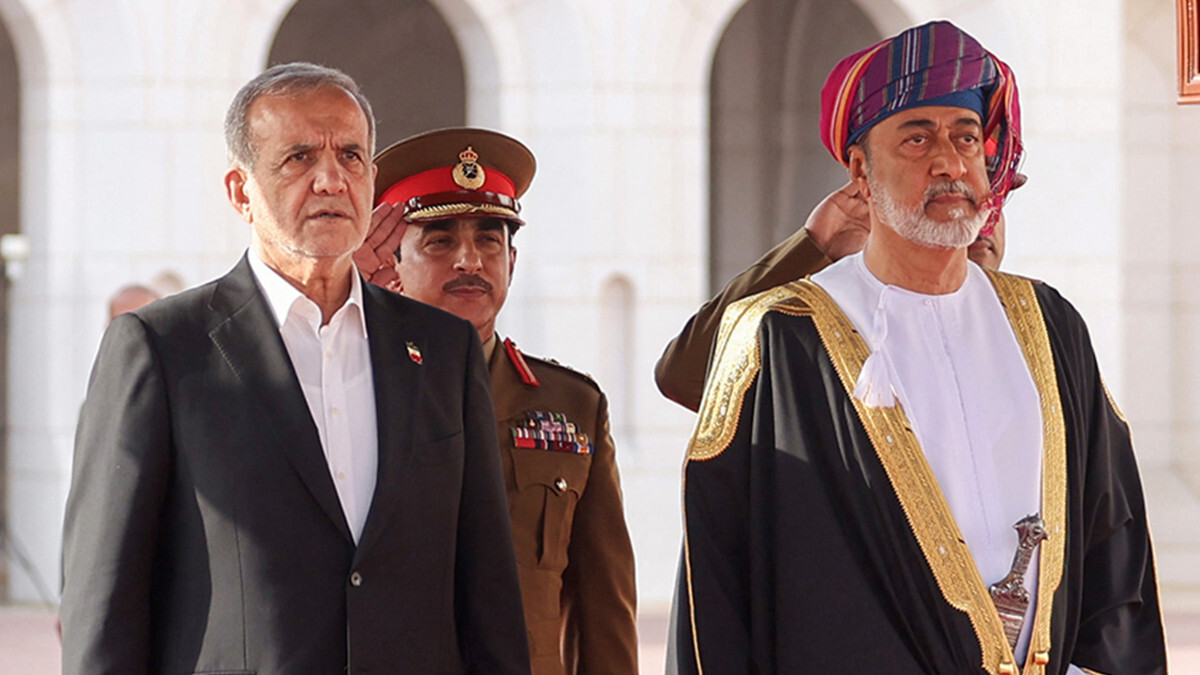
    Global powers have widely called for the existing ceasefire between the US and Iran to be extended to Lebanon to prevent further escalation. British Foreign Secretary Yvette Cooper told Sky News she was deeply troubled by the escalating Israeli attacks in Lebanon and strongly supports extending the ceasefire to the country. French Foreign Minister Jean-Noel Barrot condemned the ongoing strikes, noting they “undermine the temporary ceasefire reached yesterday between the United States and Iran” making them all the more unacceptable. French President Emmanuel Macron held phone talks with both US President Donald Trump and Iranian President Masoud Pezeshkian to push for Lebanon to be included in the truce. “I expressed my hope that the ceasefire will be fully respected by each of the belligerents, across all areas of confrontation, including in Lebanon,” Macron wrote on social media platform X.

    China’s foreign ministry spokesperson emphasized that “Lebanon’s sovereignty and security should not be violated. The safety of civilian lives and property must be guaranteed,” and called for urgent de-escalation across the region. Iranian President Masoud Pezeshkian has already listed a halt to Israeli strikes on Lebanon as one of the core conditions of Iran’s 10-point plan to end the broader regional war, according to Iranian state media.

    Despite the regional escalation triggered by the Lebanese strikes, many residents of Iran’s capital have welcomed the ceasefire with the US, breathing a collective sigh of relief after weeks of cross-border bombardment. While some residents expressed fear the truce would ultimately collapse, others celebrated what they framed as a victory for their country. “Everyone is at ease now, we are more relaxed,” 50-year-old Tehran housewife Sakineh Mohammadi told Agence France-Presse, adding she was proud of her country’s actions.

    In other regional developments, Spanish Foreign Minister Jose Manuel Albares announced that Spain will reopen its embassy in Iran, a mission that was shuttered in March following the outbreak of the latest war. Iran also announced that it is rerouting commercial shipping through an alternative route in the Strait of Hormuz, a critical global energy chokepoint, citing risks of sea mines in the main shipping lane. The Iranian government released official navigation instructions for the new entry and exit corridor through the strait.

    A new round of direct talks between US and Iranian officials is set to open Saturday in Islamabad, with US Vice President JD Vance leading the American delegation. Vance will be joined by White House special envoy Steve Witkoff and Jared Kushner, former President Trump’s son-in-law. Speaking to reporters during a stop in Hungary, Vance urged Iran not to allow the truce to collapse over the conflict in Lebanon, noting that a halt to Israeli military operations in Lebanon was never included in the original ceasefire agreement reached earlier this week.

  • Conflict sparks energy worries for households

    Conflict sparks energy worries for households

    Across the United States, millions of ordinary households are facing a growing financial squeeze as energy costs surge, fueled in large part by ongoing geopolitical conflict between the United States and Iran that has disrupted global oil markets. For Houston handyman Robert, this crisis is not an abstract economic trend — it is a daily reality reshaping every part of his budget.

    In late March, Robert joined thousands of local residents in receiving an official notice from Houston Public Works: starting April 1, water and wastewater service rates would climb by 7.87%. City officials framed the increase as unavoidable, noting that it would cover rising operational, repair, and maintenance costs, service outstanding municipal debt, and fund infrastructure expansion to accommodate the region’s growing population. Local data analysis bears out the steady upward trajectory of utility costs: the average monthly water bill for a single-family home using 4,000 gallons of water has jumped 66% since 2021, climbing from $75 five years ago to $125 in 2026.

    For Robert, the water rate hike was just the latest blow. He already fears that electricity costs will follow the same upward path, as the Iran conflict has pushed global Brent crude prices to roughly $110 per barrel. His anxiety is well-founded: Houston electricity rates have already climbed 4% year-over-year this April, while nationwide, the average increase sits at 9.5%, according to data from energy shopping platform Choose Energy. This matches a years-long trend of soaring energy costs across the country: between 2020 and 2025, Houston saw electricity rates rise 30 to 40%, mirroring the national 38% jump over the same period.

    Industry analysts point to a mix of factors driving the sustained increases, including volatile global energy commodity prices, mandatory infrastructure upgrades, more frequent extreme weather events tied to climate change, strict new environmental regulatory mandates, and the rapid expansion of energy-intensive data center facilities across the country. For millions of American households, these hikes have pushed energy affordability from a minor inconvenience to a major crisis.

    The most recent available data from the U.S. Energy Information Administration underscores the scale of the problem: the share of U.S. households experiencing energy insecurity — defined as the inability to consistently pay for basic energy needs — rose from 27% in 2020 to 33% by 2024. Analysis from the American Council for an Energy-Efficient Economy adds that one in four households spent more than 15% of their total annual income on energy bills in 2024, with many of these households reporting that they have cut back on or entirely forgone essential spending on food and prescription medication to cover their energy costs. Last year alone, national energy rates rose 7.1%, a jump that has only worsened access barriers for low-income and vulnerable families.

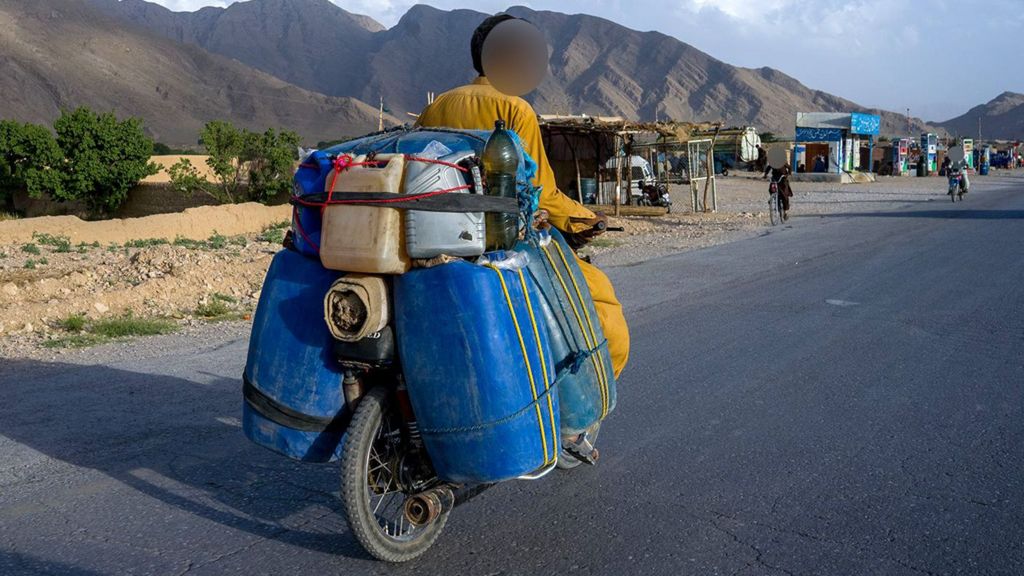
    The Iran conflict has rippled beyond electricity and water bills, driving a sharp increase in retail gasoline prices that has further strained household budgets. In the first week of April 2026, the national average price for regular unleaded gasoline hit $4.12 per gallon — a 26% increase since armed conflict between the U.S. and Iran began. The spillover effects of higher energy costs are already slowing local economic activity, Robert says: he has seen a drop in service requests from customers, many of whom complain his rates are too high even though he has not raised his own prices in two years. As households across the country cut discretionary spending to cover essential utility and fuel costs, Robert has been forced to adjust his own habits to save money: where he once used convenient local gas stations to save time, he now only refuels at discount warehouse chain Costco, and he has put his plan to buy a new car on indefinite hold to save cash for future price increases.

    Like 90% of U.S. adults surveyed in recent polling, Robert says he wants to see the Iran conflict end as soon as possible, but he holds little optimism for a quick resolution. He cites inconsistent policy messaging from the Trump administration, noting that frequent shifts in the government’s position have left ordinary Americans with no clear sense of what to expect next. “If the war drags on, high inflation is going to be inevitable, because this conflict is upending the whole global oil market, and almost everything we do depends on energy,” he explained.

    Research from the Brookings Institution confirms that sustained high gas prices take a measurable toll on public well-being beyond just household budgets. A 2009 study conducted after the 2008 global financial crisis found that rising gas prices caused a drop in self-reported happiness among U.S. citizens equivalent to the impact of a $530 monthly cut in income — a far larger effect than the direct increase in household gasoline spending alone. The study noted that even affluent households reported lower well-being when gas prices crossed the $4 per gallon threshold, as the increase was seen as a warning sign of broader economic instability, while low-income households faced immediate financial hardship from the price hikes.

    In recent weeks, U.S. social media users have shared widespread frustration over rising fuel costs, but the complaints have not drawn sympathy from observers in other developed nations. Many international social media users have pointed out that U.S. gas prices remain far lower than those in other wealthy countries: as of April 2026, the average price of gas exceeds $9 per gallon in the United Kingdom and $8 per gallon in France. Critics also argue that U.S. policy decisions tied to the Iran conflict are the root cause of global energy price spikes, meaning American consumers’ current struggles are contributing to higher costs for households across the developed world.

  • Japan’s arms export plan triggers concern

    Japan’s arms export plan triggers concern

    A controversial proposal to drastically roll back Japan’s decades-long restrictions on arms exports is triggering growing alarm among both policy experts and ordinary Japanese citizens, who warn the shift threatens the nation’s post-war pacifist foundations and risks inflating regional security tensions.

    Multiple Japanese media outlets, including Kyodo News, have confirmed that the ruling administration is on track to finalize revisions to the country’s Three Principles on Transfer of Defense Equipment and Technology as early as April 2026, with core details of the overhaul already settled. The current framework strictly regulates international military transfers: it bans certain sales outright, permits only limited non-lethal transfers after rigorous, transparent reviews, and enforces strict oversight to prevent diverted use or unauthorized third-party resales.

    The draft revision, however, would upend this framework fundamentally. Under the new rules, lethal weapon exports would be permitted in principle — a sharp departure from the current ban on selling combat-capable equipment abroad. The changes would also allow arms exports to nations actively engaged in armed conflicts through a new exception system, and replace mandatory pre-approval from Japan’s parliament with weaker ex post facto reporting requirements.

    The proposal encountered no major pushback during an initial government meeting this week, and could be referred for review to the ruling Liberal Democratic Party’s security affairs research council as early as next week, clearing the way for formal adoption.

    Makoto Konishi, a retired officer from Japan’s Self-Defense Forces, warned the rewrite would reposition Japan as a full-fledged major global arms exporter. Against a backdrop of years of stagnant economic growth, Tokyo has steadily ramped up military spending year after year, creating a trajectory that will be increasingly difficult to reverse, Konishi explained. The steady erosion of restrictions has also left the pacifist principles enshrined in Japan’s post-war constitution increasingly vague and unenforced, he added. The government’s ongoing expansion of defense spending and push to rewrite arms export rules go far beyond modest upgrades to national defense capabilities, Konishi argued, amounting to the slow, deliberate construction of a war-focused institutional framework. “This process will not only heighten public anxiety but also put Japan on a dangerous path,” he said.

    The push for arms export liberalization comes as Japan’s legislature has just approved a record-breaking national budget for fiscal year 2026, which runs through March 2027. The total budget crossed 122 trillion yen, equivalent to roughly $770 billion, with defense spending topping 9 trillion yen for the first time in Japanese history.

    Jusen Asuka, an emeritus professor at Tohoku University, pointed out that Japan is already grappling with a pressing energy crisis and widespread economic hardship that should take priority over expanding military outlays. From a macroeconomic perspective, he argued, increased investment in the defense sector will not deliver meaningful sustained growth to Japan’s GDP, because a large share of defense spending goes toward purchasing weapons from the United States, with capital ultimately flowing out of the domestic economy.

    Asuka has been a vocal opponent of revising the arms export principles, noting that Prime Minister Sanae Takaichi has pushed the overhaul forward aggressively since taking office. Changes to arms export rules, alongside ongoing discussions to revise Japan’s pacifist constitution, directly challenge the core post-war principles Japan has upheld for nearly 80 years, he said. He added that widespread opposition to such changes among the Japanese public has already translated to mass protests across the country.

    On Wednesday, hundreds of demonstrators gathered outside Japan’s National Diet building in central Tokyo, chanting anti-war slogans including “No to war” and calling on Takaichi’s administration to uphold the country’s pacifist constitution. Similar demonstrations were held at more than 100 locations across Japan this week. On the social platform X, organizers of the “Protect the Pacifist Constitution” initiative have called for broader public participation and pressured major Japanese media outlets, including national public broadcaster NHK, to cover the growing protest movement.

    Over the weekend, opposition politicians and thousands of citizens rallied near Tokyo’s Ikebukuro Station to oppose both the easing of arms export rules and the broader military expansion, voicing deep unease about the direction the country is taking. Tetsu Tatara, a spokesperson for the protest organizing committee, said the government’s push for large-scale military buildup and arms exports directly contradicts the will of the Japanese public.

    Tatara noted that the government has justified the changes by citing the so-called “China threat” narrative, a framing that has only deepened public anxiety and pushed more ordinary citizens to speak out against the shifts. Organizers of the Ikebukuro rally reported that more than 6,000 people attended the event, holding signs reading “Force does not bring peace” and “Takaichi step down” while chanting consistent anti-war messaging.

  • Iran blocks Hormuz as Israeli bombing kills hundreds in Lebanon

    Iran blocks Hormuz as Israeli bombing kills hundreds in Lebanon

    Less than 24 hours after a fragile Pakistan-brokered ceasefire between Iran, Israel, and the United States was announced, the entire agreement is on the brink of collapse after Israel launched an unprecedentedly intense bombing campaign across Lebanon, prompting Iran to halt all oil tanker traffic through the strategically critical Strait of Hormuz. This vital waterway handles roughly 20 percent of the world’s daily global oil shipments, and as of Wednesday, more than 180 tankers were already transiting the strait, with hundreds more queued for entry waiting to proceed, according to reporting from Reuters.

    The crisis began unfolding shortly after the truce was finalized on Tuesday. While Israel formally agreed to the two-week cessation of hostilities with Iran, Israeli officials immediately asserted that the terms of the agreement did not extend to its ongoing military campaign against Hezbollah in southern Lebanon. Iran, however, counters that a full halt to Israeli attacks on Lebanon is one of the 10 core binding terms of the brokered deal, labeling Israel’s intensified strikes a clear violation of the agreement.

    In the 24 hours following the ceasefire announcement, Israeli forces ramped up their bombardment of Lebanon to levels described by observers as “apocalyptic.” Lebanese health authorities confirm that at least 254 people have been killed in the strikes, with more than 1,160 others wounded — some local official estimates place the death toll as high as 300. More than 100 targets across the country, including densely populated residential urban areas, were hit in a coordinated wave of attacks that unfolded over just a few minutes. Among the fatalities in southern Lebanon are 12 medics who were serving on the front lines of emergency response, Reuters confirmed.

    Lebanese Prime Minister Nawaf Salam issued an urgent public appeal on Wednesday, calling on allied and sympathetic nations to bring maximum pressure on Israel to immediately end the bombardment. “All of Lebanon’s friends are called upon to help us stop these attacks by all available means,” Salam said in his statement.

    In response to Israel’s breach of the truce, Iran has taken rapid, dramatic action to enforce its commitments to the agreement. Iranian state media outlet Fars News first confirmed Wednesday that all commercial oil tanker traffic through the Strait of Hormuz has been suspended, timed to coincide with the expansion of Israel’s attacks on Lebanon. Top Iranian officials have also openly discussed two further escalatory steps: resuming full-scale counteroffensives against Israel, and withdrawing entirely from the ceasefire agreement entirely if the Lebanese bombing does not stop immediately.

    “Iranian Foreign Minister Abbas Araghchi outlined the country’s red lines clearly in a post on his official Telegram channel Wednesday. “The conditions for a ceasefire between Iran and the United States are clear and explicit: America must choose either a ceasefire or the continuation of war through Israel; both cannot coexist,” he wrote. “The world is witnessing the killings in Lebanon. Now the ball is in America’s court, and global public opinion is watching to see whether this country will fulfill its commitments or not.”

    Israeli political commentator Ori Goldberg offered a sharp critical assessment of his country’s actions during a Wednesday interview with Al Jazeera, framing the intensified strikes as a sign of political desperation rather than military strength. Goldberg described the expanded bombing as “a pyrotechnics show meant to demonstrate Israel’s effectiveness while ultimately demonstrating its despair.” He noted that Israeli Prime Minister Benjamin Netanyahu “bet it all” on aligning with U.S. President Donald Trump to advance his regional agenda and ultimately lost, after far-right Israeli leaders were sidelined from Trump’s decision to pause attacks on Iran.

    Netanyahu, Goldberg argued, has now turned back to Lebanon, a territory that has faced repeated Israeli incursions and sovereignty violations for decades. Since the 1980s, Israeli military operations in Lebanon have killed more than 20,000 people, most of them civilians, and Israel occupied parts of southern Lebanon for 18 years through the end of the 20th century. Many far-right Israeli politicians still publicly claim all of Lebanon as part of their ideological “Greater Israel” project.

    Israeli Defense Minister Israel Katz defended the strikes in a Wednesday statement, claiming the operation targeted hundreds of Hezbollah militants at command centers across Lebanon. Katz called the attack “the largest concentrated blow Hezbollah has suffered since Operation Beepers,” the 2024 strike that used booby-trapped communication devices to kill dozens of people, including multiple children. It is worth noting that both Katz and Netanyahu are currently accused of inciting genocide in Gaza before the International Court of Justice, and the pair are also wanted by the International Criminal Court on charges of crimes against humanity and war crimes stemming from Israel’s 29-month military campaign and siege in Gaza. That campaign has left more than 250,000 Palestinians dead, wounded, or missing, and has reduced most of the Gaza Strip to ruins, even as hundreds more Palestinians have been killed in the six months since a ceasefire was implemented there.

    Regional and international actors across the political spectrum have widely condemned Israel’s escalation as a deliberate attempt to sabotage the truce. Iraqi government spokesperson Bassem al-Awadi called the strikes “evidence of its hostile plan to sabotage the truce” and “perpetuate conflict.” Qatar’s Ministry of Foreign Affairs issued a statement calling on the global community “to fulfill its responsibilities by compelling the Israeli occupation authorities to halt their barbaric massacres and repeated attacks on Lebanon, and to hold them accountable for respecting international covenants and laws.”

    Major international humanitarian aid organizations have echoed these warnings, emphasizing that the partial ceasefire, which President Trump has touted as a landmark breakthrough for Middle East peace, will not survive unless the bombing of Lebanon stops immediately. David Miliband, president and CEO of the International Rescue Committee, noted that while the Tuesday ceasefire announcement was a “welcome step,” it remains “partial, fragile, and incomplete.” Miliband pointed to the core dispute over the truce’s scope: while Trump and Israel claim Lebanon was never included in the terms, Pakistan — the primary mediator that brokered the deal — confirms that a halt to attacks on Lebanon was part of the 10-point framework agreed to by all parties.

    “Leaving one front of the conflict burning risks prolonging the crisis, not resolving it,” Miliband said.

    Ahmad Alhendawi, Save the Children’s regional director for the Middle East, North Africa, and Eastern Europe, echoed that assessment, noting that the current truce structure “is not enough” to protect vulnerable civilian populations. “We’re urgently calling for a definitive ceasefire for the wider region, which includes Lebanon, to protect children from further harm,” Alhendawi said. “A whole generation of children bears the brunt of this conflict. A definitive ceasefire for the entire regional conflict, including Lebanon, is the only way to truly protect children’s lives and futures and end the suffering. The violence must end before more children suffer irreparable harm.”

    The Wall Street Journal reported Wednesday that Iran has already notified regional mediators that it will not participate in planned in-person follow-up ceasefire talks in Islamabad, Pakistan’s capital, unless a full ceasefire is implemented in Lebanon first. That development comes as Netanyahu has publicly vowed to “continue to strike” Lebanon regardless of the truce.

    “Sounds like somebody needs to rein in Israel ASAP,” Brian Finucane, senior adviser to the US Program at the International Crisis Group, wrote on social media Wednesday. “The American people want this war to end and bombing downtown Beirut is not a path to peace.”

    Despite widespread calls to enforce a full truce, President Trump doubled down on his position Wednesday during an interview with PBS, insisting that Lebanon was “not included in the deal” and framing the Israeli assault as “a separate skirmish.” That position has been rejected by top Iranian officials, humanitarian leaders, and even U.S. lawmakers who support a lasting regional peace, who all argue that conflicts across the Middle East are deeply interconnected.

    “Aggression towards Lebanon is aggression towards Iran,” Gen. Seyed Majid Mousavi, aerospace commander of Iran’s Islamic Revolutionary Guard Corps, stated Wednesday.

    U.S. Representative Don Beyer (D-VA) called on the Trump administration to reverse course immediately. “The Trump administration must immediately make clear to Israel that the ceasefire agreement is not and cannot be functional without a ceasefire in Lebanon,” Beyer said. “The American people want this war to end, and bombing downtown Beirut is not a path to peace.”

    Amitabh Behar, executive director of Oxfam International, emphasized in a statement that no durable peace can be achieved without ending all hostilities across the entire region. “Until there is an end to all hostilities, across the entire region, no one will feel truly safe,” Behar said. “Israel’s ongoing invasion in Lebanon, its destructive occupation of Palestinian territory, ground incursion and airstrikes in Syria, its continued attacks in Gaza, and violent attacks and territorial expansion in the West Bank are still continuing despite the provisional cessation of violence with Iran. This deadly toll across the Middle East is intolerable and must stop.”

  • Pakistan, Turkey, Egypt, Saudi Arabia a new regional power block?

    Pakistan, Turkey, Egypt, Saudi Arabia a new regional power block?

    In a breakthrough diplomatic development announced by Pakistani Prime Minister Shehbaz Sharif, the United States and Iran have reached agreement on a two-week ceasefire that came into effect in the early hours of April 8. Negotiators from both adversarial nations are scheduled to convene for follow-up peace talks this Friday in Islamabad, the Pakistani capital, marking the first formal direct engagement between the two sides in months.

    This ceasefire announcement arrives less than two weeks after Islamabad hosted a high-profile summit bringing together Pakistan, Saudi Arabia, Egypt, and Turkey. At that gathering, the four nations issued a unified call for an immediate end to hostilities across the Persian Gulf, and formalized their grouping — now dubbed the Middle East Quartet — as the primary mediating channel between Tehran and Washington. Analysts view this collective effort as the foundation of an emerging regional order aimed at reducing the influence of both Iran and Israel, whose escalating confrontations have plunged the Middle East into chaos since the outbreak of full-scale conflict in late February 2026.

    Long before the current war ignited, both Iran and Israel faced growing regional isolation, a shift that has completely upended decades of Western-led diplomatic strategy in the region. The 2020 Abraham Accords, spearheaded by the United States to normalize relations between Israel and Arab states, have effectively collapsed. The accords’ core strategic goal — securing normalization between Israel and Saudi Arabia — is now completely out of reach. While the United Arab Emirates and Bahrain signed normalization deals under the accords, Saudi Arabia has repeatedly maintained it will never formalize ties with Israel without the establishment of an independent Palestinian state. That prospect was formally ruled out by the Israeli parliament in a 2024 vote, and recent reporting indicates Saudi Arabia is already moving forward with plans to reroute a key fiber-optic cable connecting the kingdom to Europe, replacing Israel with Syria as the transit hub.

    Regional alienation of Israel has deepened across the Muslim world. Turkey suspended all formal diplomatic and economic ties with Israel in 2024 in protest of the Gaza conflict, while relations between Doha and Tel Aviv broke down completely in September 2025 following an Israeli targeted strike on Hamas leaders in the Qatari capital, an attack that drew unanimous condemnation from the United Nations Security Council.

    For its part, Iran finds itself even more isolated than it was at the start of the conflict. Once counting Russia, and to a far lesser degree China and Yemen’s Houthi movement, as its only core allies, Iran has seen its fragile regional partnerships crumble in recent months. China has deliberately distanced itself from Tehran since the outbreak of full-scale hostilities, while the Houthis, who entered the conflict in support of Iran, have been severely weakened by years of targeted Israeli airstrikes. The long-standing close alliance between Iran and Qatar was severed entirely after Iranian missiles struck Qatar’s critical Ras Laffan natural gas facility on March 18. Even Iran’s 2023 detente with Saudi Arabia, a breakthrough agreement brokered by China after years of open hostility, has collapsed completely following Iranian missile attacks on Saudi energy infrastructure earlier this year.

    It is against this backdrop of mutual pariah status for both Iran and Israel that the four-nation quartet of Pakistan, Saudi Arabia, Egypt, and Turkey has stepped up to fill the diplomatic vacuum, prioritizing regional stability after months of destructive conflict.

    The quartet’s shared strategic and economic interests have aligned to drive their push for a restructured regional order. All four states maintain robust political and economic ties with the United States, and are active members of U.S. President Donald Trump’s 2026-established Board of Peace, an international body tasked with resolving global conflicts and overseeing long-term reconstruction in Gaza. Each member also brings unique, critical assets to the alliance: Pakistan is a recognized nuclear-armed state with advanced defense capabilities; Saudi Arabia controls the world’s second-largest proven crude oil reserves, giving it unmatched global energy influence; Egypt holds strategic control over the Suez Canal, one of the world’s most vital commercial waterways; and Turkey is a longstanding NATO member with a powerful regional military. Combined, the four nations boast a total population of 500 million, making them the most politically and militarily influential bloc of Muslim-majority countries on the global stage.

    While the quartet’s collective influence is undeniable, the alliance is not without historical friction. For decades, the four nations have endured periods of tense relations, requiring deliberate diplomacy to overcome long-standing divides. Egypt and Saudi Arabia’s relationship has long been described as a “difficult marriage”: Egypt’s mid-20th century leadership of pan-Arab secular nationalism was historically viewed as a direct threat to the Saudi monarchy, but since Abdel Fattah el-Sisi took power in Cairo in 2014, the two sides have resolved their core differences. Sisi offered critical political and military support to Saudi Arabia’s 2015 military operation against the Houthis in Yemen, and the pair have since deepened their defense cooperation significantly.

    Turkey, under the long leadership of Recep Tayyip Erdoğan, has positioned itself as a regional power broker and conflict mediator, but it too has a history of frosty relations with other quartet members. Ankara’s ties with Cairo collapsed after the 2013 military coup that ousted Turkish ally Mohammed Morsi, while relations between Turkey and Saudi Arabia plunged to a historic low following the 2018 assassination of Saudi journalist Jamal Khashoggi inside the Saudi consulate in Istanbul. A 2021 U.S. intelligence assessment concluded that Saudi Crown Prince Mohammed bin Salman approved the killing, a claim he has consistently denied.

    In recent years, however, the quartet has worked through these historical divides. A formal rapprochement between Turkey and Saudi Arabia was completed in 2022, followed by a normalization of ties between Turkey and Egypt in 2025. Erdoğan toured both Cairo and Riyadh in February 2026, where he proposed multiple cross-regional geoeconomic projects to connect Asian and European markets, including the proposed Middle East Corridor designed to foster economic integration across Asia, the Persian Gulf, and Europe. Even amid recent tensions — where Pakistan has declined to intervene militarily to support Saudi Arabia against Iranian attacks, despite a 2025 strategic mutual defense pact between the two nations — the bloc has maintained its unified diplomatic push.

    As the US-Iran ceasefire holds and follow-up talks approach, the quartet’s ad hoc alliance of convenience has solidified into a transformative force in the Middle East, filling the power vacuum left by the mutual isolation of Iran and Israel and paving the way for a fundamentally restructured regional order.

    This analysis is by Natasha Lindstaedt, Professor in the Department of Government at the University of Essex, republished with permission under Creative Commons license.

  • Chinese researcher’s death after questioning in US prompts anger in Beijing

    Chinese researcher’s death after questioning in US prompts anger in Beijing

    A recent tragic death of a Chinese semiconductor researcher at the University of Michigan has sparked diplomatic demands from Beijing for a full, transparent investigation into the incident, raising fresh concerns about the growing scrutiny of Chinese academics working in the United States amid ongoing bilateral tensions. The researcher fell to his death from a campus building on March 19, and multiple US and Chinese sources have confirmed his identity as Danhao Wang, an assistant research scientist in the university’s department of electrical and computer engineering whose work focused on semiconductor technologies.

    Shortly before his death, CBS News reported, Wang had completed questioning by US federal law enforcement agents, which Chinese authorities have described as hostile. The University of Michigan confirmed in an official statement that it is treating the incident as a suspected act of self-harm, though the full circumstances surrounding the death remain unconfirmed. Both the university and Chinese government institutions have initially declined to publicly confirm Wang’s identity out of respect for the privacy of his grieving family, a position the institutions have maintained through the early stages of the case.

    The Chinese Embassy in Washington and China’s foreign ministry have repeatedly pushed US authorities to open a full investigation into the incident. Liu Pengyu, spokesperson for the Chinese Embassy in the US, told the BBC this week that the embassy was deeply distressed by the tragedy. Liu confirmed that Chinese diplomatic officials have made multiple formal representations to US government agencies and the University of Michigan regarding the case, and have been in direct contact with Wang’s family to provide full support and assistance with post-death arrangements. The embassy has also issued an advisory to all Chinese citizens studying and working in the US, urging them to increase personal safety awareness and prepare to handle interactions with US law enforcement appropriately.

    In public comments on the case, China’s foreign ministry has stressed that the death, following what Beijing calls hostile interrogation by US law enforcement, violates the fundamental legal rights of Chinese citizens, erodes trust needed for people-to-people exchanges between the two countries, and perpetuates a harmful chilling effect for Chinese academics working in the US. “China will continue to take what is necessary to firmly defend Chinese citizens’ legitimate and lawful rights and interests,” foreign ministry spokesperson Mao Ning reiterated to the BBC on Wednesday, reaffirming Beijing’s demand that US authorities deliver a full investigation and a transparent, responsible explanation to both Wang’s family and Chinese government.

    This death marks the latest high-profile incident to draw international attention to the precarious position of Chinese academics working in the US, as geopolitical tensions between Washington and Beijing continue to shape policy toward Chinese students and researchers. In 2024, another Chinese-American neuroscientist at Northwestern University died by suicide following a multi-year federal investigation into her alleged ties to Chinese academic institutions; her family has since filed a lawsuit against the university alleging unfair treatment throughout the investigation.

    Over the past five years, the US government has significantly ramped up scrutiny of Chinese researchers and students on US campuses, justifying the tougher measures with national security concerns. During the first Trump administration, a 2020 executive order barred Chinese students and researchers with suspected ties to the Chinese military from receiving US visas. In the year preceding the 2020 election, the administration further announced it would aggressively revoke visas for Chinese students, particularly those with alleged links to the Chinese Communist Party or working in sensitive, critical technology fields. That hardline position was later softened amid bilateral trade talks, when the US issued more than 600,000 student visas to Chinese citizens in a visible policy reversal.

  • Maple syrup or nutella? PM Carney calls Canadian Artemis astronaut

    Maple syrup or nutella? PM Carney calls Canadian Artemis astronaut

    In a lighthearted yet inspiring Earth-to-space call this week, Canadian Prime Minister Mark Carney connected with history-making Canadian astronaut Jeremy Hansen, a core member of NASA’s Artemis II lunar mission crew set to splash down back on Earth this Friday. The conversation celebrated not just Hansen’s groundbreaking milestone as the first non-American astronaut to ever orbit the Moon, but also the cross-border collaboration that made the mission possible, and offered a dose of relatable personality that resonated with viewers back home.

    Hansen joins three American crewmates — commander Reid Wiseman, pilot Christina Koch, and mission specialist Victor Glover — on the 10-day test flight that paves the way for future human lunar exploration. During the call, the astronaut emphasized that successful space exploration relies on more than just cutting-edge technology: it depends on intentional collaboration between team members. “Willingness is a huge ingredient in a successful team,” Hansen explained, adding that he is already eager to share his out-of-this-world photographs and personal experiences with the Canadian public once he returns to Earth.

    Carney opened the conversation by echoing the national pride that has swept Canada over Hansen’s participation in the mission. “Canadians are so proud of what you’re doing and the collaboration,” the prime minister said. “I’m thrilled. I’m absolutely thrilled to be speaking with you, Jeremy and the crew. We’ve all been watching and inspired by what you’re doing.”

    The conversation turned to the inherent risks of human space travel, a topic Carney brought up to frame the mission as a lesson for young people following the journey from Earth. Carney referenced a previous comment Hansen made about the mission being “a risk for a good reason,” noting that the line stuck with him, and framed the voyage as a constructive challenge for the next generation of innovators and explorers. Hansen expanded on the idea, explaining that not all risk is reckless: “Risk is necessary — but calculated risk, well-thought out risk and risk that you balance with others.”

    After the serious discussion of exploration and inspiration, Carney turned to the question that had captured the attention of ordinary Canadians across the country, referencing a viral photo of a jar of Nutella floating inside the Artemis II Orion capsule. “A lot of Canadians just wanted one point of reassurance, that the preference is for maple syrup over nutella on your pancakes in the morning,” Carney joked. The playful question sent the entire crew into peals of laughter, and Carney quipped that he took Hansen’s amused reaction as a vote in favor of the iconic Canadian sweet treat.

    Before closing the call, Carney extended a formal invitation to Hansen and the rest of the Artemis II crew to visit Ottawa, Canada’s capital, after their return. He added a lighthearted note about the city’s current seasonal conditions, joking: “Don’t look too closely right now. You’ll notice that it’s still pretty white, but the snow is going to go.”

    The Artemis II mission marks a critical step forward in NASA’s plan to return humans to the lunar surface for the first time since the Apollo program ended more than 50 years ago, with international collaboration at the core of its framework. Hansen’s participation cements Canada’s role as a key partner in modern deep space exploration.

  • US Coast Guard opens criminal investigation into Michigan woman’s disappearance in Bahamas

    US Coast Guard opens criminal investigation into Michigan woman’s disappearance in Bahamas

    A high-stakes missing person case unfolding in the Caribbean has taken a major turn, with the United States Coast Guard confirming Wednesday it has opened a formal criminal investigation into the disappearance of 59-year-old American traveler Lynette Hooker, who vanished after reportedly falling overboard from a small recreational vessel during a vacation with her husband.

    According to statements Brian Hooker gave to Bahamian law enforcement, the couple set out from the popular resort community of Hope Town on Abaco Island Saturday evening, heading toward nearby Elbow Cay aboard their 8-foot hard-bottomed dinghy. During the trip, Lynette fell overboard into rough, choppy waters, Brian told authorities, and was quickly pulled away from the boat by powerful ocean currents. In a chaotic turn of events, the vessel’s ignition keys went overboard with Lynette, leaving Brian unable to motor the craft back toward his wife. After struggling against the rough conditions, he eventually paddled the empty dinghy to shore, reaching the Marsh Harbour Boat Yard just before 4 a.m. local time Sunday. He alerted a dock worker, who contacted local authorities to launch an initial search.

    In a public statement shared with CBS News Wednesday, Brian Hooker expressed profound grief over the incident, saying he is devastated by the loss of his wife and remains focused on the ongoing search effort. “I am heartbroken over the recent boat accident in unpredictable seas and high winds that caused my beloved Lynette to fall from our small dinghy near Elbow Cay in the Bahamas,” he said. “Despite desperate attempts to reach her, the winds and currents drove us further apart. We continue to search for her and that is my sole focus.” He also thanked responding agencies and civilian volunteers for their work in the ongoing search.

    But the case has raised unsettling questions from Lynette’s immediate family, who point to her decades of experience on the water to cast doubt on the official account provided so far. Lynette’s daughter, Karli Aylesworth, told CBS News Wednesday that her mother has been an active sailor for more than 10 years and is a skilled, experienced swimmer. Aylesworth said she cannot reconcile her mother’s background with how the incident is described, and has called for a full, exhaustive investigation into what led to her mother’s disappearance.

    Coast Guard officials confirmed to the BBC Wednesday that the criminal probe is now active, but declined to share any further details about the scope of the investigation, including whether any persons of interest have been identified or what specific lines of inquiry investigators are pursuing. The Royal Bahamas Police Force, which initially announced the investigation and multi-agency search in a social media post Tuesday, did not immediately respond to the BBC’s request for additional comment on the new criminal investigation. The U.S. Coast Guard joins multiple Bahamian agencies in the ongoing search and investigation effort, more than five days after Lynette Hooker was first reported missing.

  • Hundreds march in Senegal’s capital over broken government promises and rising costs

    Hundreds march in Senegal’s capital over broken government promises and rising costs

    On a mid-week day in Dakar, Senegal’s coastal capital, thousands of demonstrators filled the streets to voice growing frustration with the country’s new ruling administration, as a crippling national debt crisis pushes daily living costs to unsustainable levels for ordinary citizens. The demonstration was a coordinated effort between Senegal’s most influential labor unions and the Front for the Defense of Democracy and the Republic (FDR), a major opposition political coalition, bringing together workers, union activists, and government critics from across the political spectrum.

    Mody Guiro, leader of the National Confederation of Senegalese Workers — the nation’s largest union body — told reporters the current government has broken a landmark agreement struck one year prior. Under that deal, unions agreed to pause all planned strike action in exchange for commitments to raise public sector wages and improve national working conditions. For its part, the Senegalese government argues that a historic debt crisis inherited from the previous ruling administration has stripped the state of discretionary funding needed to fulfill these pledges.

    Many protesters wore identifying red scarves and branded union headwear, carrying hand-painted signs that called for the reinstatement of thousands of laid off public employees and sharp cuts to personal income tax rates. Some groups chanted overt calls for the removal of Prime Minister Ousmane Sonko, the country’s second-highest ranking official.

    Sonko and President Bassirou Diomaye Faye’s administration took office in April 2024 on a wave of popular support, fueled by campaign promises of sweeping transformative reform. Their platform centered on rooting out systemic corruption, expanding employment opportunities for Senegal’s large youth population, and ensuring the nation captures maximum economic benefit from its abundant natural resource reserves. To date, however, the ruling PASTEF party’s reform agenda has hit significant roadblocks.

    A 2025 official government audit confirmed that the previous administration left the country with a total public debt of $13 billion — a figure far larger than had been previously disclosed to the public. That debt burden has pushed Senegal’s debt-to-GDP ratio to approximately 132%, one of the highest debt levels recorded on the African continent. Ongoing negotiations with the International Monetary Fund to secure a new economic bailout program have stalled in recent months as the country’s fiscal outlook continues to deteriorate.

    Worsening economic conditions have amplified daily hardship for millions of Senegalese people, with the nation’s youth population bearing the brunt of the crisis. Roughly 75% of Senegal’s total population is under the age of 35, making youth unemployment one of the country’s most pressing social issues. Tensions have already boiled over once this year: in February, student protests over unpaid government financial aid at Senegal’s leading public university were met with a violent crackdown by security forces, which left one student dead.

    Speaking at Wednesday’s demonstration, youth activist Mohamed Fall emphasized that widespread frustration has ground daily life across the country to a halt. “The country is at a standstill. It is essential that the government finds solutions to revive Senegal’s economy instead of picking fights everywhere,” Fall said.

    For many demonstrators, the anger stems directly from unmet campaign promises. Pape Laobe Samb, a former 12-year veteran employee of the Port of Dakar, is one of more than 700 port workers laid off since the start of 2025 as part of the Faye administration’s push to overhaul bloated state institutions. “This is not what they promised people. They said they were going to create jobs and develop the country but they did the complete opposite,” Samb told the Associated Press in an interview at the protest.

    The newly appointed director of the Port of Dakar, who took the post shortly after Faye’s inauguration, has framed the layoffs as a necessary clean-up of irregular, patronage-based contracts left behind by the previous government. Unions push back against this narrative, arguing that nearly all the terminated workers were affiliated with the previous ruling party, and that the mass firings were an unlawful, politically motivated purge rather than a genuine institutional reform.

  • China, EU welcome two-week ceasefire in Mideast

    China, EU welcome two-week ceasefire in Mideast

    On Wednesday, the international community greeted a landmark diplomatic breakthrough for Middle East peace, after Iran, the United States, and Israel reached a two-week ceasefire agreement mediated by Pakistan. This truce pauses a six-week-long conflict that has claimed hundreds of lives and thrown global energy markets into chaos. The last-minute deal came together after U.S. President Donald Trump withdrew his earlier threat to destroy “a whole civilization,” while Iranian authorities agreed to temporarily reopen the Strait of Hormuz — the critical global shipping chokepoint through which roughly one-fifth of the world’s total oil exports pass. Pakistan confirmed that formal negotiations for a permanent peace agreement could kick off as early as this Friday in Islamabad, with all involved parties signaling willingness to participate. That said, there is still no clarity on core procedural details for the upcoming talks, leaving room for uncertainty moving forward. Even ahead of formal negotiations, the truce announcement already triggered tangible shifts in global financial markets. Crude oil prices plummeted in response to the news of reopened shipping lanes: U.S. West Texas Intermediate crude fell by nearly 20%, while Brent crude dropped as much as 16%. Global stock markets also rallied on the optimism. China’s Shanghai Composite Index closed up 2.69% at 3,995 points, while major markets across the Asia-Pacific, including Sydney, Bangkok, Manila, Jakarta, Singapore, and Wellington, all recorded sharp gains. Middle Eastern equity markets also surged: Dubai’s main index jumped 8.5% in intraday trading, marking its largest single-day gain since December 2014, according to Bloomberg data. Both China and the European Union publicly welcomed the ceasefire in formal statements on Wednesday. At a daily press briefing in Beijing, Chinese Foreign Ministry spokesperson Mao Ning noted that the Strait of Hormuz is a vital corridor for global trade and energy flows, and protecting its stability serves the shared interests of the entire international community. She added that China will continue to play a constructive role in advancing lasting peace across the region. EU High Representative for Foreign Affairs Kaja Kallas framed the truce as a critical “step back from the brink,” saying it opens a “much-needed” window for further diplomatic negotiations. United Nations Secretary-General António Guterres also issued a statement welcoming the ceasefire, calling on all conflict parties to uphold their obligations under international law and strictly adhere to the truce terms to clear a path for a lasting, comprehensive regional peace. Iranian Foreign Minister Abbas Araghchi confirmed that Iran will uphold its end of the bargain, guaranteeing safe passage for all vessels through the Strait of Hormuz for the two-week truce period so long as the U.S. and Israel honor their commitments. “If attacks against Iran are halted, our powerful armed forces will cease their defensive operations,” he said in a statement issued on behalf of Iran’s Supreme National Security Council. Even as it joined the ceasefire, Iran reaffirmed its core non-negotiable demands: permanent sovereign control over the Strait of Hormuz, implementation of a $2 million transit fee per passing vessel (with a commitment to share generated revenue with Oman), international recognition of its peaceful nuclear enrichment program, full lifting of all primary and secondary U.S.-led sanctions against the country, and a complete withdrawal of U.S. military forces from the broader Middle East region. Shipping data confirmed that vessel traffic through the strait resumed within hours of the ceasefire announcement. Ship-tracking service MarineTraffic reported via social media that the Greek-owned bulk carrier NJ Earth and Liberia-flagged tanker Daytona Beach were the first commercial vessels to complete transits of the waterway, with more movements now being tracked. For his part, Trump said U.S. negotiators are “very far along” in hammering out a long-term agreement with Iran, which has already submitted a 10-point proposal that Trump called a “a workable basis for negotiation.” Israeli Prime Minister Benjamin Netanyahu announced his government’s support for the ceasefire between the U.S. and Iran, but issued a key clarification: the truce does not apply to Israeli military operations against the Hezbollah militant group in southern Lebanon. Netanyahu’s remark directly contradicted Pakistan’s earlier statement that the ceasefire terms explicitly cover Israeli strikes in Lebanon. Even amid the celebratory diplomatic news, fresh security alerts underscored just how fragile the breakthrough remains. On Wednesday, the same day the ceasefire was announced, missile warnings were activated across the United Arab Emirates, Saudi Arabia, Bahrain, and Kuwait. Iranian state media reported an attack on an oil refinery on the country’s Lavan Island, Kuwait reported drone strikes targeting its power infrastructure, and UAE officials confirmed their air defense systems intercepted incoming Iranian missiles. Since the U.S. and Israel launched joint military operations against Iran on February 28, core disputes over Iran’s nuclear program, its ballistic missile development, and its network of regional proxies have remained unresolved. With no sign those gaps have been closed, it remains unclear whether the two-week ceasefire will hold through its full term, or what will happen once the truce expires if no long-term deal is reached.