分类: world

  • Cameroon ‘military contractors’ killed in Russia-Ukraine war – BBC confirms leaked message

    Cameroon ‘military contractors’ killed in Russia-Ukraine war – BBC confirms leaked message

    The ongoing conflict in Ukraine has taken on a new, underreported dimension with the confirmation that dozens of citizens from across the African continent have died after being recruited to fight alongside Russian forces, sparking growing outcry over deceptive recruitment practices and government inaction.

    For Cameroon, the development marks the first implicit confirmation of its nationals’ involvement in the war, after a diplomatic source verified to the BBC the authenticity of a leaked foreign ministry note that acknowledged 16 Cameroonians had been killed while serving as military contractors for Russia. The leaked document, dated March 5 and addressed to the Russian Embassy in Cameroon, has not been addressed publicly by Russian officials, as multiple attempts to secure comment from the embassy went unanswered.

    Cameroon’s government has faced sharp public criticism for its months-long silence on the issue, and has yet to issue a formal public statement acknowledging the deaths. In a low-key development on Monday, the country’s foreign ministry sent a brief statement to state-owned broadcaster CRTV that listed the names of 16 Cameroonians said to be resident in Russia. The broadcast, which aired Monday evening, only asked relatives of the listed individuals to contact authorities for an urgent matter, offering no further context that would confirm the deaths.

    This quiet confirmation aligns with earlier findings from All Eyes on Wagner, an independent research group that tracks global mercenary activity, which estimated that 94 Cameroonians had died in the conflict between 2023 and 2025. Internal government documents obtained by Reuters also reveal that Cameroon’s defense ministry raised alarm over the issue as early as March 2025, when the defense minister issued a memo expressing concern over active-duty soldiers leaving the country to enlist in the war, and ordering unit commanders to step up monitoring of personnel.

    The crisis stretches far beyond Cameroon’s borders. Ukrainian intelligence officials estimate that more than 1,700 individuals from 36 different African countries have been recruited to fight for Russia in Ukraine. Multiple African governments have already documented deaths, missing persons, and deceptive recruitment rings targeting their citizens.

    Ghana, another West African nation that has been heavily impacted, has publicly called on Russia to halt all recruitment of its citizens, confirming that at least 55 Ghanaians have been killed in the conflict. In Kenya, authorities have cracked down on criminal recruitment networks that lured job seekers with false promises of well-paying work abroad. Kenya’s foreign ministry confirmed in February that more than 600 suspect recruitment agencies have been shut down, with official data showing 16 Kenyans remain missing in Russia and 47 have returned home after escaping deployment to the front lines in Ukraine.

    Zimbabwe has also reported 15 of its citizens killed after being recruited, with more than 60 still trapped in active combat zones. Earlier this year, South Africa successfully repatriated 17 of its citizens who told officials they had been tricked into deploying to Ukraine’s Donbas region to fight for Russia, and were left stranded after being pushed to the front lines.

    The widespread recruitment of African nationals has prompted growing regional concern, with governments scrambling to crack down on illegal networks and hold those responsible accountable for the deceptive tactics that have left hundreds of families facing grief and uncertainty over missing loved ones.

  • Attacks on 2 villages in northern Nigeria leave at least 20 people dead, residents say

    Attacks on 2 villages in northern Nigeria leave at least 20 people dead, residents say

    In north-central Nigeria, a pre-dawn coordinated attack on two rural communities has left local officials and residents at odds over the number of casualties, deepening concerns over the West African nation’s worsening security crisis. Multiple local witnesses confirmed the assault unfolded in the early hours of Tuesday, targeting the villages of Bagna and Erena in the Shiroro district of Niger state, roughly 250 kilometers — a four-hour drive — from the country’s capital Abuja.

    Jibrin Isah, a long-time Erena resident, described the chaotic, sudden nature of the incursion. “They arrived on motorbikes and immediately opened fire,” Isah said. “It was a total surprise; most people were still asleep in the early hours when the attack began.”

    Accounts of the death toll diverge sharply between local communities and law enforcement officials. Residents put the confirmed death count at no fewer than 20 people, with an unknown number of additional civilians still unaccounted for in the attack’s aftermath. Muhammad Tukur, another Erena resident, confirmed the community’s count to the Associated Press, stating that the final number of fatalities would likely exceed 20.

    However, local police have released a far lower casualty count. In an official statement, Niger state police spokesperson Wasiu Abiodun confirmed three security-linked deaths: two volunteer vigilante members and a driver assigned to the area’s joint security task force. Abiodun added that several other people were wounded during the hours-long operation.

    Witnesses reported that the gunmen held control of the two villages for multiple hours, looting residential properties and forcing hundreds of local residents to abandon their homes and seek refuge in safer adjacent communities.

    As Africa’s most populous nation, Nigeria has grappled with an interconnected, multi-front security crisis for more than a decade, particularly across its northern and north-central regions. Long-running insurgent activity in the country’s northeast has killed tens of thousands of people and displaced millions, according to United Nations estimates. Beyond insurgent violence, the region also faces frequent outbreaks of violence rooted in long-simmering resource disputes: conflicts over land and grazing access between mostly Muslim Fulani herding communities and largely Christian farming populations regularly escalate into deadly mass clashes. Criminal gangs focused on ransom kidnapping also operate widely across rural north-central and northwestern states, taking advantage of weak security presence to target communities.

  • Turkey detains 9 over attack outside the Israeli Consulate in Istanbul

    Turkey detains 9 over attack outside the Israeli Consulate in Istanbul

    A violent shootout outside the building hosting Israel’s closed consulate in Istanbul has left one attacker dead and sparked a cross-provincial counter-terrorism operation that resulted in the detention of nine suspects, Turkey’s state-run Anadolu Agency confirmed Wednesday.

    The incident unfolded Tuesday in Istanbul’s central business and financial district, when three assailants opened fire on Turkish police officers deployed near the consulate building. A rapid exchange of gunfire left one attacker killed on site, while the other two — identified as brothers Onur C. and Enes C. — were wounded and taken into custody immediately. Two responding police officers also suffered minor injuries in the clash, Turkish officials confirmed.

    In the wake of the attack, Turkish security forces launched sweeping arrest operations across three regions: Istanbul itself, as well as the provinces of Konya and Kocaeli, where the nine suspects were ultimately apprehended. All nine detainees are now being questioned alongside the two wounded captured attackers, according to Anadolu Agency, which did not release additional details on the suspects’ backgrounds or alleged ties to the attack.

    Turkey’s Interior Minister Mustafa Ciftci confirmed that the attackers traveled to Istanbul from Izmit, a city in Kocaeli province, in a rented vehicle. He also noted that one of the captured attackers — Onur C. — has a prior criminal record connected to drug offenses. Speaking on the ideological links of the cell, Ciftci stated that one of the assailants has connections to a group that “exploits religion,” though he stopped short of publicly naming the organization. The region has a history of large-scale deadly attacks carried out by the Islamic State group, which has targeted Turkish soil multiple times in recent decades.

    Context for the empty consulate building dates back to the outbreak of the Israel-Hamas war in Gaza. Shortly after hostilities began earlier this year, Israel withdrew all its diplomatic personnel from Turkey and shuttered the Istanbul consulate, citing growing security risks and rapidly deteriorating bilateral relations between Jerusalem and Ankara. At the time of Tuesday’s attack, no Israeli diplomatic staff were present in the building.

    Shortly after the clash, Israel’s Foreign Ministry issued an official statement condemning the attack, and expressed gratitude to Turkish law enforcement for their rapid response that prevented a higher death toll.

  • US, Iran agree to ceasefire for two weeks

    US, Iran agree to ceasefire for two weeks

    Tensions that had gripped the globe for days over an imminent US-Iran military conflict defused at the 11th hour on Tuesday, when President Donald Trump announced a bilateral two-week ceasefire, struck just moments before a self-imposed deadline that carried warnings of catastrophic destruction for Iran.

    The breakthrough agreement, mediated by Pakistani Prime Minister Shehbaz Sharif and Pakistan’s Chief of Army Staff Field Marshal Asim Munir, was shared publicly by Trump on his social media platform Truth Social. In his post, Trump confirmed he would suspend planned bombing and military strikes against Iran for 14 days, contingent on Iran’s commitment to fully, immediately, and safely reopen the Strait of Hormuz, the world’s most critical oil chokepoint at the center of the latest standoff.

    According to Reuters, Iranian officials submitted a 10-point negotiating proposal to Washington, which Trump described as a “workable basis” for finalizing a broader formal agreement. Trump added that nearly all longstanding points of dispute between the two nations had already been preliminarily agreed upon, and the two-week window will allow teams to hammer out remaining details to lock in a permanent deal. Israel has also signed off on the ceasefire arrangement.

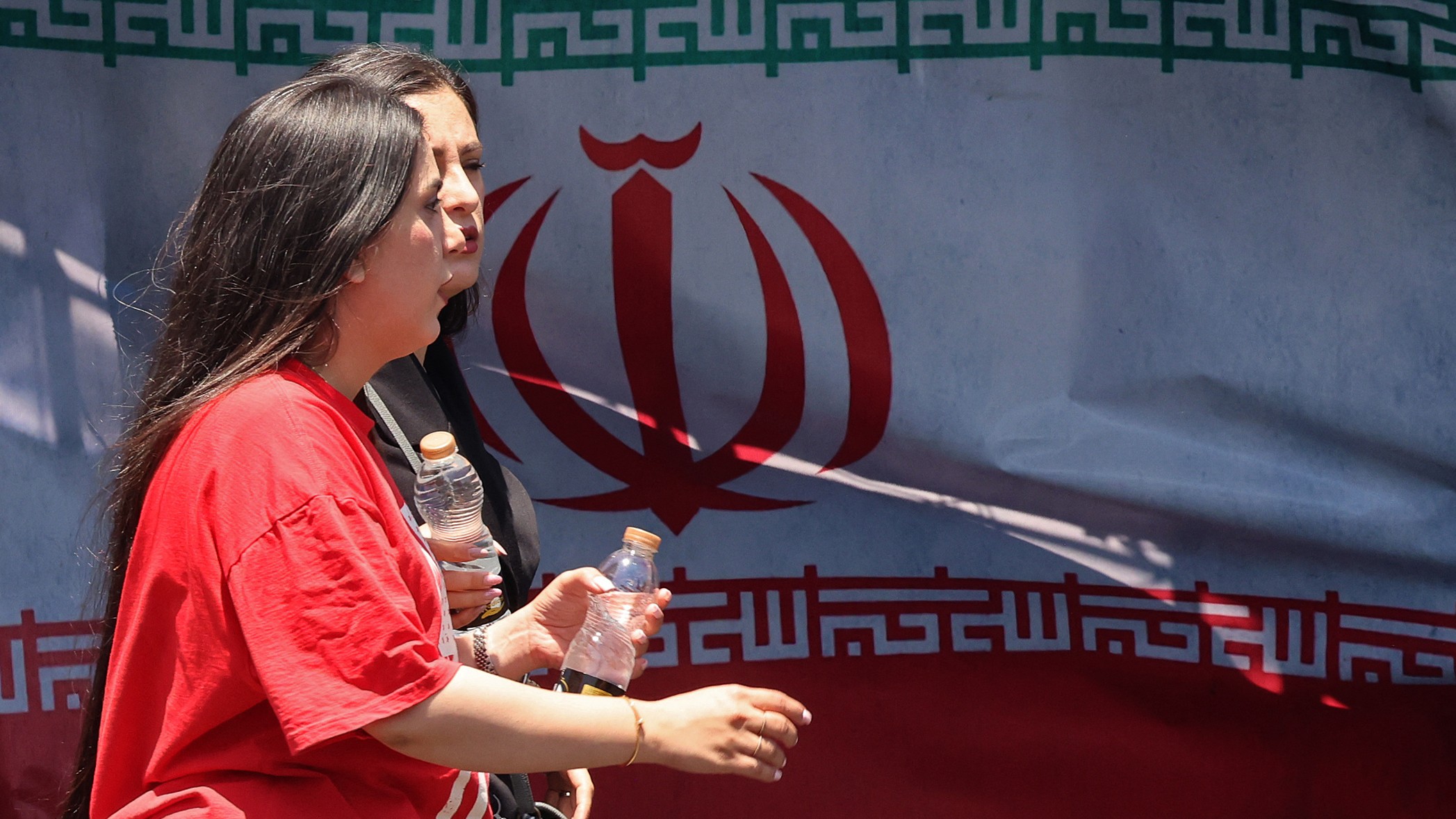
    Iran’s state television framed the agreement as a diplomatic victory for the country, while the Supreme National Security Council of Iran confirmed in an official statement that top-level leadership had approved holding direct negotiations with US negotiators in Islamabad across the 14-day truce. Talks are scheduled to kick off this Friday.

    Global energy markets reacted immediately to the de-escalation: West Texas Intermediate crude futures for May plummeted nearly 19 percent, falling below $92 a barrel as fears of supply disruptions from conflict in the Persian Gulf evaporated.

    Hours before the ceasefire announcement, the United States had been swept by widespread anxiety, triggered by days of increasingly aggressive rhetoric from Trump that left the public and global leaders deeply alarmed. On Monday, Trump issued an ultimatum threatening to obliterate Iran’s entire civilian infrastructure – including every bridge and power plant – if Tehran failed to meet his demands by the Tuesday deadline. On Tuesday morning, he doubled down on the threat, warning that “a whole civilization will die tonight” if Iran did not comply.

    That incendiary language drew fierce backlash from across the political spectrum, the public, and international institutions. Many American civilians voiced profound distress over the president’s approach. Adam Turner, a 54-year-old New York resident, told China Daily that Trump’s harsh rhetoric over Iran, paired with his confrontational style on other issues, had left him severely stressed. “It’s not speech that I would accept from any horrible person on the street. It is without respect, without intelligence, without dignity,” Turner said. “It makes me sad because I don’t think the Iranian people deserve it. He got rid of [former President Barack] Obama’s Iran deal. We had a deal in place that was effective.”

    Lewis Fox, a 66-year-old Manhattan resident, echoed that criticism, calling for a return to diplomatic diplomacy rather than coercion. “He has converted the United States into being the bully of the world versus the savior of the world. And therefore, he definitely shouldn’t be talking like that,” Fox said.

    Criticism even extended to Trump’s own political circle. Marjorie Taylor Greene, a Republican Representative and once a staunch Trump ally, publicly condemned the threat on X, writing: “Not a single bomb had dropped on America. We cannot kill an entire civilization. This is evil and madness.”

    Democratic House Minority Leader Hakeem Jeffries of New York called on congressional Republicans to intervene to prevent full-scale conflict. “Congress must immediately end this reckless war of choice in Iran before Donald Trump plunges us into World War III,” Jeffries wrote on X. “It’s time for every single Republican to put patriotic duty over party and stop the madness. Enough.”

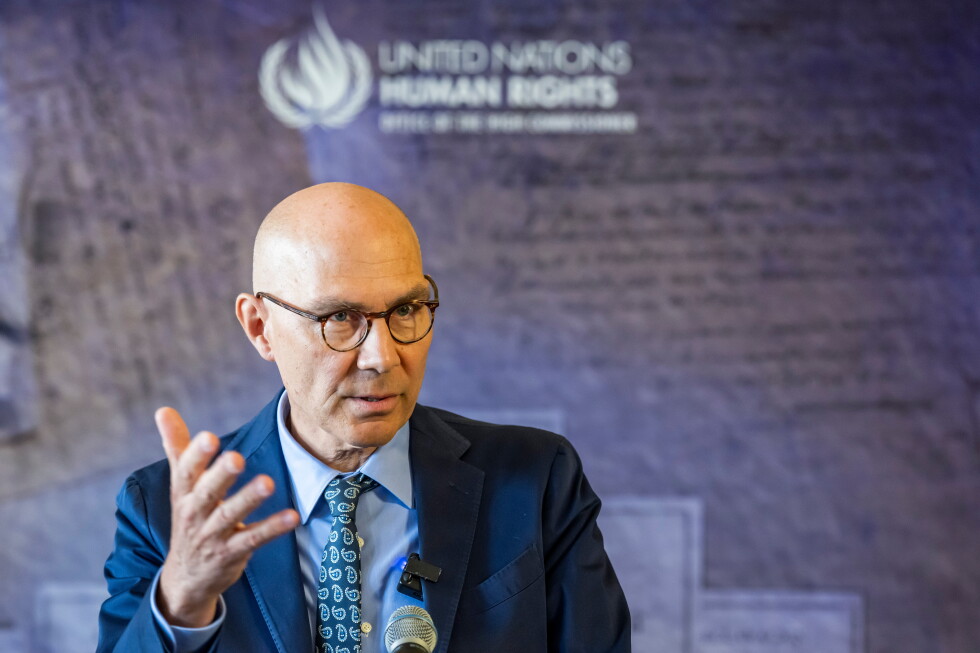
    International bodies also raised sharp objections ahead of the ceasefire. A spokesperson for UN Secretary-General António Guterres said the UN chief was “deeply troubled” by statements that threatened to hold civilian populations responsible for political outcomes. UN High Commissioner for Human Rights Volker Türk warned Tuesday that the Trump administration’s threats could constitute severe violations of international law, ahead of the last-minute truce that pulled the region back from the brink of large-scale war.

  • Madagascar declares state of emergency over severe fuel shortages linked to Iran war

    Madagascar declares state of emergency over severe fuel shortages linked to Iran war

    As spillover effects from the ongoing conflict between Israel and Iran continue to roil global energy markets, the Indian Ocean island nation of Madagascar has implemented a 14-day nationwide state of energy emergency to address crippling fuel shortages that threaten public order and critical infrastructure. The presidential office confirmed the measure was approved during a cabinet meeting Tuesday, prompted by growing concerns that unaddressed supply gaps could spark widespread civil unrest. Unlike many larger economies, Madagascar generates the vast majority of its electrical power from petroleum-fueled plants, and relies almost entirely on fuel imports from the Middle East – a supply chain that has been severely disrupted by regional conflict, even after the announcement of an overnight two-week ceasefire between warring parties. The ongoing instability has already put Madagascar in a precarious position: just last year, prolonged outages of power and clean water access fueled youth-led demonstrations that escalated into broad political unrest, ultimately culminating in a military takeover of the country. As of this report, the Malagasy government has not released a full list of specific policy actions it will implement under the new emergency powers, but officials note the declaration grants expanded authority to stabilize the national power sector, reduce the impact of ongoing disruptions, regulate consumer fuel use, and guarantee that core public services remain operational. So far, official fuel prices have not been raised since the supply crisis began, but widespread shortages have become commonplace, with local media documenting drivers waiting in multi-hour queues to access petrol stations. News of the state of emergency triggered panic buying at multiple retail fuel locations across the country Wednesday, with some stations reportedly implementing temporary customer fuel rationing to stretch limited existing supplies. The majority of Madagascar’s crude oil and fuel imports originate from Oman, located adjacent to the Strait of Hormuz – the world’s most critical chokepoint for global energy shipping, which has faced persistent disruption since the outbreak of expanded regional conflict in late February. Even with the recent ceasefire announcement, global crude prices remain significantly higher than pre-conflict levels, and energy analysts warn that repairing damaged supply infrastructure and production capacity in the Middle East could take months, or even multiple years, to complete. Madagascar is far from alone in grappling with this crisis across the African continent: multiple other African nations have rolled out urgent policy measures in recent weeks to offset the economic impact of disrupted energy supplies. Policy responses across the region have ranged from adjusting fuel pricing through subsidies or rate hikes to mandatory national electricity rationing. Most recently, The Gambia announced an immediate halt to all non-essential official travel for government employees, a policy that was first implemented just days earlier by Senegal. To the south, Zambia has temporarily eliminated all import taxes on petrol and diesel shipments, while Botswana moved to scrap national fuel levies for six months to ease cost burdens for consumers. As regional governments scramble to mitigate the fallout, the ongoing energy crisis continues to test the stability of import-dependent economies across the African continent, with Madagascar’s emergency declaration marking the most high-profile response to date.

  • Co-founder of Jalisco New Generation drug cartel pleads guilty

    Co-founder of Jalisco New Generation drug cartel pleads guilty

    In a significant development in the bilateral fight against transnational drug trafficking, the U.S. Department of Justice has confirmed that Érick Valencia Salazar, one of the founding leaders of Mexico’s infamous Jalisco New Generation Cartel (CJNG), has entered a guilty plea to federal drug trafficking charges. Known widely by his cartel alias “El 85”, Valencia Salazar’s legal process marks one of the highest-profile convictions in recent years against the leadership of the hemisphere’s most powerful drug trafficking organization.

    Valencia Salazar’s path to a U.S. courtroom has been years in the making. He was first taken into Mexican custody in 2012, only to be released five years later—an outcome that drew widespread criticism of systemic corruption within Mexican law enforcement at the time. He remained at large until 2022, when Mexican military forces tracked and arrested him in the cartel’s home stronghold of Jalisco. In February 2025, he was part of a major extradition of 29 accused Mexican drug kingpins transferred to U.S. authorities to face trial.

    According to statements from the U.S. Drug Enforcement Administration (DEA), Valencia Salazar played an instrumental role in transforming CJNG from a splinter criminal group into one of the world’s most violent narcotics enterprises. Officials say the cartel under his early leadership adopted violence as a core business strategy: eliminating rival groups to seize territorial control across Mexico while smuggling massive volumes of illicit narcotics into American communities across the border. “He helped build CJNG into a ruthless organisation that uses violence as a business model – murdering for control in Mexico while flooding the United States with poison”, the DEA said in its official statement.

    Valencia Salazar changed his initial plea of not guilty to plead guilty to a single count of conspiracy to distribute five kilograms or more of cocaine into the United States. U.S. federal law mandates a minimum 10-year prison sentence for this offense, and his formal sentencing hearing is scheduled for July 31 this year.

    The conviction comes amid a period of heightened tension and coordinated action against CJNG, which is currently the most powerful criminal organization operating in Mexico. The cartel made global headlines just months earlier when a wave of coordinated violence erupted across 20 Mexican states following reports that CJNG’s supreme leader, Nemesio Oseguera Cervantes, commonly known as “El Mencho”, had died from injuries sustained during his capture by Mexican security forces.

    Last year, the Trump administration formally designated CJNG as a Foreign Terrorist Organization (FTO), a rare classification for a transnational criminal group that signaled the U.S. government’s intent to ramp up pressure on cartel networks. In justifying the designation, the administration argued that CJNG’s activities pose a grave threat not just to the safety of American citizens and the security of U.S. borders, but also to the political and social stability of the entire Western Hemisphere. The Trump administration has repeatedly put diplomatic pressure on Mexican President Claudia Sheinbaum to increase resources and operations against cartel groups based on Mexican territory. For her part, Sheinbaum has framed the capture and subsequent death of “El Mencho” as clear evidence of the Mexican armed forces’ unwavering commitment to rooting out the country’s most notorious drug trafficking figures.

    This latest guilty plea represents a major milestone in the long-running, binational effort to dismantle CJNG’s leadership structure, though security analysts warn that the cartel remains largely operational across Mexico and continues to control significant portions of the cross-border drug trade into the U.S.

  • Pakistani PM says US-Iran ceasefire covers ‘everywhere’ including Lebanon

    Pakistani PM says US-Iran ceasefire covers ‘everywhere’ including Lebanon

    ISLAMABAD – In a surprise diplomatic announcement made Wednesday, Pakistani Prime Minister Shehbaz Sharif has confirmed that Iran, the United States and their respective allied factions have reached a deal for an immediate ceasefire that will be enforced across all affected regions, including Lebanon.

    Sharif shared the details of the breakthrough agreement in an official statement posted to the social media platform X, noting that the truce entered into force the moment the announcement was made.

    “I warmly welcome the sagacious gesture and extend deepest gratitude to the leadership of both the countries,” Sharif said in his statement. The prime minister extended a formal invitation to delegations from both nations to attend talks in the Pakistani capital of Islamabad this Friday, April 10, 2026. The upcoming negotiations are aimed at advancing toward a final, binding agreement that can resolve all outstanding disputes between the two long-adversarial states.

    Sharif praised both Tehran and Washington for demonstrating “remarkable wisdom and understanding” throughout the diplomatic process that led to the ceasefire deal. He added that he holds strong optimism that the newly scheduled “Islamabad Talks” will pave the way for long-term, durable peace in the region after years of escalating tensions.

  • Iran claims ‘historic victory,’ says US accepted terms ahead of talks

    Iran claims ‘historic victory,’ says US accepted terms ahead of talks

    Diplomatic efforts to de-escalate months of open conflict between the United States and Iran have moved forward this week, with formal negotiations scheduled to open Friday in the Pakistani capital of Islamabad, following a last-minute Pakistani-brokered agreement to pause military operations for two weeks. Both sides have framed the upcoming talks as rooted in a 10-point Iranian proposal, which Iran’s Supreme National Security Council calls a landmark victory that forced Washington to accept its core negotiating framework.

    In an official statement released Wednesday, Iran’s top security body outlined the key demands embedded in its 10-point plan, which include binding guarantees of no foreign aggression against Iran, permanent Iranian sovereignty and control over the Strait of Hormuz, full relief from crippling U.S. economic sanctions, a complete withdrawal of U.S. military forces from the broader Middle East region, and war reparations for damage inflicted during the conflict. The council emphasized that while upcoming talks will focus on ironing out final details of the framework, the preliminary agreement to negotiate does not mark a permanent end to hostilities. Iran will retain the right to resume full military operations if its full demands are not met, the statement added.

    The diplomatic breakthrough followed a flurry of activity on Tuesday, as Pakistani leaders issued a last-minute appeal to U.S. President Donald Trump to step back from a looming deadline that would have seen expanded U.S. attacks on Iran. Pakistani Prime Minister Shehbaz Sharif publicly called on Trump to extend his 8 p.m. EST deadline for escalating attacks by two weeks, to give diplomacy space to resolve the conflict. Sharif also requested that Iran reopen the Strait of Hormuz, a critical global oil chokepoint that had been closed to traffic during the conflict, to all commercial shipping during the ceasefire period.

    Trump accepted the Pakistani proposal in a post on his Truth Social platform, announcing he would suspend all U.S. bombing and offensive attacks on Iran for 14 days. The U.S. president framed the pause as a bilateral ceasefire conditional on Iran fully reopening the Strait of Hormuz immediately, noting that Iran’s 10-point proposal provides a “workable basis” to move forward with formal talks. Trump added that the U.S. had already exceeded all of its initial military objectives in the conflict, and that negotiations were already advanced toward a long-term peace deal for the Middle East. He also confirmed that almost all core points of contention between the two countries have already been agreed to in preliminary talks.

    Iran’s Supreme National Security Council confirmed Wednesday that Tehran shared its full 10-point proposal with Washington via Pakistani intermediation, and that the U.S. has formally accepted the proposal’s core principles as the foundation for formal negotiations. The council added that talks are scheduled to run up to 15 days, with an option to extend the negotiating window if needed. Any final agreement reached in Islamabad will be formalized through international verification mechanisms, the statement noted.

    The Iranian statement also pushed back against external framing of the ceasefire, claiming that Iranian military forces and their regional allied groups had inflicted severe, widespread losses on adversary forces across the Middle East, forcing the U.S. and its partners to pursue a diplomatic end to the conflict. Iran’s core long-term objective, the council said, is to establish a new regional security architecture rooted in what it describes as Iran’s established military and political supremacy in the region, and Tehran will maintain pressure on adversaries until its negotiated gains are fully consolidated.

    In a call for domestic solidarity, the Iranian security council urged full national unity across the country during the sensitive negotiating period, and warned that any provocative misstep by U.S. or partner forces will be met with an immediate, forceful response. Iran will only agree to a formal, permanent end to the conflict once every term of its original 10-point proposal has been fully agreed and implemented, the council reaffirmed. Key topics on the negotiating table in Islamabad will include rules for maritime transit through the Strait of Hormuz, concrete plans for lifting U.S. sanctions, and the future of U.S. military deployments in the Middle East.

  • Beijing calls for immediate end to conflict

    Beijing calls for immediate end to conflict

    As the deadly Iranian conflict edges closer to a major escalation ahead of a US-imposed deadline for Tehran, Beijing has stepped up diplomatic calls for an urgent end to hostilities and a return to negotiated talks, amid growing global alarm over inflammatory rhetoric threatening wider regional collapse.

    At a Tuesday press briefing, Chinese Foreign Ministry spokesperson Mao Ning outlined Beijing’s long-held position on the spiraling crisis, emphasizing that the current confrontation could have been avoided entirely. She traced the root of escalating tensions to the unlawful use of military force by the United States and Israel against Iran, a direct violation of core principles of international law. Mao stressed that military power can never deliver lasting peace; the only sustainable path forward is a negotiated political settlement. Her remarks placed immediate priority on halting all ongoing military operations, restarting dialogue between all parties, and working toward a fundamental resolution of longstanding disputes to restore lasting peace and stability across the Gulf region.

    Mao noted that the rapid deterioration of security across the Middle East, with hostilities expanding by the day, has already inflicted collateral damage on the global economy and global energy security, triggering deep concern across the international community. Since the outbreak of the conflict, China has maintained an objective, fair and neutral stance, and has consistently worked to advance a ceasefire and end to fighting. She added that Chinese Foreign Minister Wang Yi has held 26 separate phone calls with leaders and officials from key parties including Iran, Israel, Russia and multiple Gulf nations, while China’s special envoy for Middle East affairs has conducted intensive shuttle diplomacy across the region to facilitate talks. Most recently, China and Pakistan jointly released a five-point peace initiative, which reflects the broad consensus of the global community in calling for an end to the war.

    Iranian Ambassador to Pakistan Reza Amiri Moghadam said Tuesday in a post on X that Pakistan’s “positive and productive efforts” to broker an end to hostilities are now reaching a “critical, sensitive stage”, offering a glimmer of diplomatic progress amid rising violence.

    The United Nations has meanwhile issued an urgent warning over the threatening rhetoric coming from Washington, as the Trump administration’s self-imposed deadline for Iran draws near. UN Secretary-General spokesperson Stephane Dujarric told reporters Monday that the UN is “alarmed by the rhetoric” in a public threat that promised US strikes on Iranian power plants, bridges and civilian infrastructure if Tehran did not accept a US-brokered deal. Dujarric reiterated that the Secretary-General has consistently upheld commitments to international law, and once again urged all parties to abide by their legal obligations governing the conduct of hostilities.

    Citing an anonymous senior Iranian government official, Reuters reported Tuesday that Tehran has laid out clear preconditions for any negotiations on a lasting peace deal with the United States. These demands include an immediate full halt to all US-Israeli strikes, ironclad guarantees that no future attacks will be launched against Iranian territory, and full compensation for the damage already inflicted by the conflict. The official added that Iran rejects any proposal for a temporary ceasefire, pushing for a permanent, sustainable resolution to the confrontation. The official also noted that any final peace deal must recognize Iran’s right to charge transit fees for commercial ships passing through the Strait of Hormuz, with fees adjusted based on ship type, cargo and prevailing transit conditions.

    The diplomatic push follows a two-stage peace proposal put forward by Pakistan on Monday, which centers on an immediate end to attacks and the reopening of the Strait of Hormuz, a critical global chokepoint for 20 percent of the world’s daily oil supplies.

    As the clock ticked down to his self-declared deadline Tuesday morning, US President Donald Trump issued an inflammatory threat warning that “Iran’s whole civilization will die tonight” if Tehran did not accept his terms to reach a deal and reopen the strait. “A whole civilization will die tonight, never to be brought back again. I don’t want that to happen, but it probably will,” Trump wrote in a post on his social media platform Truth Social, marking a sharp escalation of rhetoric that sent jitters across global energy markets.

    In response to Trump’s threat, Iranian President Masoud Pezeshkian wrote Tuesday on X that more than 14 million Iranian citizens have already declared their readiness to sacrifice their lives to defend their homeland.

    Citing an unnamed US official, Axios journalist Barak Ravid reported Tuesday that the US has already launched limited strikes against military targets on Kharg Island, a key Iranian oil export terminal located off the country’s western coast. The Iranian Red Crescent released a statement Tuesday on X confirming that US-Israeli strikes have hit 17 civilian areas across the country over the past 24 hours, emphasizing that there is no possible justification for attacks on civilian populations. The organization reiterated that targeting defenseless civilians qualifies as a clear war crime under international law. Iranian state media reported that at least 15 people were killed in overnight strikes across the country.

    Diplomatic efforts to de-escalate the crisis have been consistently overshadowed by relentless, tit-for-tat strike threats and ongoing attacks across the region. On Tuesday, Gulf nations spent the day fending off new attacks on their territory: Saudi Arabia’s Ministry of Defense announced it had intercepted and destroyed at least 18 drones launched toward the kingdom “during the past hours”. The King Fahd Causeway, a critical infrastructure link connecting Saudi Arabia to Bahrain, was briefly closed after Iranian attacks targeted Saudi Arabia’s Eastern Province, but resumed operations several hours later after security checks confirmed the area was safe.

    The escalating conflict has left the international community on high alert, with multiple powers continuing diplomatic outreach to prevent a full-scale regional war that could have catastrophic consequences for the global economy and energy security.

  • Trump announces two-week pause in Iran attacks tied to Hormuz reopening

    Trump announces two-week pause in Iran attacks tied to Hormuz reopening

    In a breakthrough diplomatic development that has eased global geopolitical and energy market tensions, the United States and Iran have reached an agreement for a 14-day pause in military hostilities, announced Tuesday by former US President Donald Trump. The deal hinges on Tehran fully reopening the strategically critical Strait of Hormuz, a chokepoint through which nearly 20% of the world’s daily oil supplies pass.

    Trump confirmed the agreement in a post on his social media platform Truth Social, noting he had held discussions with Pakistan’s prime minister, whose government has served as a neutral mediator between the two long-adversarial nations. “Subject to the Islamic Republic of Iran agreeing to the COMPLETE, IMMEDIATE, and SAFE OPENING of the Strait of Hormuz, I agree to suspend the bombing and attack of Iran for a period of two weeks,” Trump wrote, adding that the arrangement constitutes a bilateral ceasefire.

    Iranian Foreign Minister Abbas Araghchi confirmed that for the duration of the 14-day truce, vessels will be allowed safe passage through the strait via coordination with Iranian armed forces, with adjustments made for existing technical constraints. According to Reuters reporting, US negotiators received a 10-point peace framework proposal from Iranian officials, which Trump described as “a workable basis on which to negotiate.”

    Trump added that nearly all long-standing points of contention between the two countries have already been resolved, and the two-week window will allow negotiators to draft and finalize a formal, permanent agreement. Iran’s Supreme National Security Council announced in an official statement that the negotiation process will kick off this Friday in Islamabad, Pakistan, the neutral third-party host for the talks. Iranian state television has framed the ceasefire agreement as a strategic victory for the country.

    The council also stressed that the temporary truce does not mark a full end to hostilities. Iran will only agree to a permanent ceasefire once all details of the 10-point framework are finalized and approved through negotiations, the statement clarified.

    Global energy markets reacted immediately to the news of the truce, with crude oil prices plummeting in afternoon trading. West Texas Intermediate crude futures for May delivery dropped nearly 19 percent, falling below the $92 per barrel threshold as traders priced in the return of stable shipments through the key strait.

    The announcement comes one day after anti-war demonstrators gathered outside the White House in Washington DC to protest potential US military expansion against Iran, highlighting widespread public opposition to a new major conflict in the Middle East.