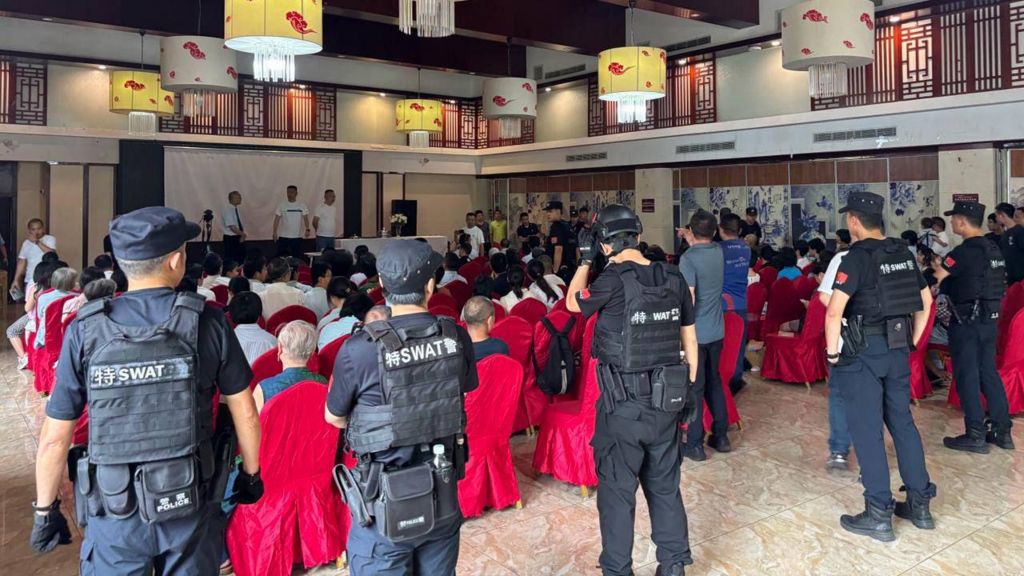
On a recent Sunday, Early Rain Covenant Church, one of China’s most prominent unregistered Protestant congregations, was violently interrupted mid-worship when armed law enforcement officers stormed the hotel ballroom venue where the congregation had gathered in the southwestern city of Jiangyou. In a formal statement released via the messaging platform Telegram the following day, church representatives confirmed that more than 30 congregants and leaders were forcibly taken from the service to a local detention center for interrogation, with two senior pastors, Yan Hong and Wu Wuqing, remaining in custody as of the latest updates. Members of the congregation estimate that at least 50 officers, including personnel from the Special Weapons and Tactics (SWAT) unit, were on site during the 11 a.m. local time raid. Visual evidence shared by the church, including photographs and video clips, shows uniformed officers surrounding seated worshippers, while plainclothes officers can be seen on stage repeatedly demanding the congregation stop singing hymns. According to the church’s account, even after the raid, worshippers who remained in the ballroom — including elderly attendees and children — were locked in the space for hours while officers conducted mandatory identity checks. While in detention, the congregants detained for interrogation continued to fellowship, sing hymns and pray together, the statement added. Officers attempted to pressure congregants locked in the ballroom to sign an undisclosed affidavit in exchange for their release; all attendees refused to sign the document, but were ultimately released by 6 p.m. local time. All detainees except pastors Yan and Wu were released between 9 p.m. and 11 p.m. Sunday, the church confirmed. No public explanation for the detentions has been issued by Chinese authorities, who have not responded to requests for comment on the incident. This is not the first time either Yan or Wu have been detained by authorities: the pair were most recently summoned by police in January on unsubstantiated charges of “picking quarrels and provoking trouble.” Founded in 2008 and originally based in the southwestern provincial capital of Chengdu, Early Rain Covenant Church has been a high-profile target of Chinese government regulation for years due to the country’s strict state control over religious practice. The church’s founding pastor, Wang Yi, was arrested during a large-scale 2018 raid and is currently serving a nine-year prison sentence on widely criticized charges of “inciting subversion of state power” and “illegal business operations.” China’s ruling Communist Party officially permits religious practice only through state-sanctioned denominations led by government-appointed clergy. According to official 2018 data, China is home to roughly 44 million Christians, though independent observers note this figure almost certainly excludes millions of worshippers who attend unregistered “house churches” like Early Rain Covenant, which operate outside state oversight. In recent years, Christian advocacy groups say government restrictions on unregistered religious activity have grown significantly harsher, with frequent raids and detentions of independent congregational leaders becoming the norm. Bob Fu, founder of ChinaAid, a non-profit organization that tracks religious freedom violations in China, called Sunday’s raid a clear demonstration of the ruling party’s ongoing framing of peaceful Christian worship as a threat to state authority. The incident comes less than a year after a similar large-scale crackdown on another prominent independent Chinese church: in October of last year, 30 leaders of the Beijing-based Zion Church were detained in coordinated raids across seven Chinese cities, and the church’s founder, Ezra Jin, remains in state custody to date.
分类: world
-
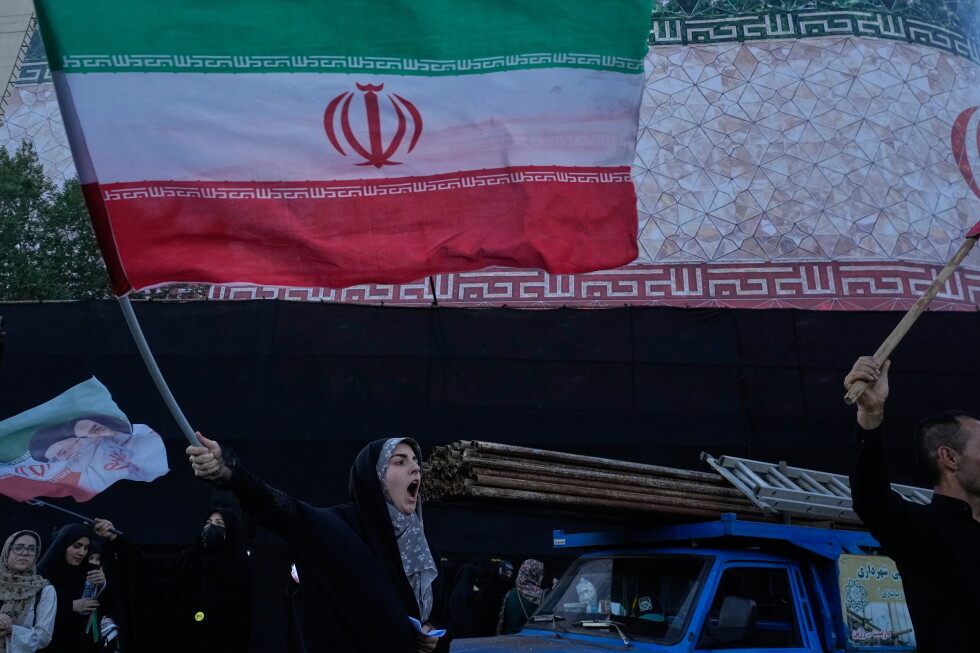
Iran and US reach an initial deal to end the war and open the Strait of Hormuz but challenges remain
GENEVA, SWITZERLAND — In a tentative breakthrough that offers a glimmer of relief for strained global energy markets, the United States and Iran have reached an initial agreement Monday to extend their fragile existing ceasefire and reopen the strategically critical Strait of Hormuz, the world’s most important oil chokepoint. The path to a permanent end to the ongoing regional conflict, however, remains littered with substantial, potentially deal-breaking obstacles, most notably Israel’s refusal to end its offensive in Lebanon and withdraw from occupied Lebanese territory.
Details of the framework agreement have not been released to the public, and all sides have confirmed the deal will not go into effect until a formal signing ceremony, scheduled for this Friday in Geneva under the mediation of Pakistan. Preparatory closed-door talks between US and Iranian diplomatic teams will kick off this week in Doha, Qatar, a senior diplomat with direct knowledge of the negotiations told the Associated Press on condition of anonymity.
Even if the strait — through which roughly 20% of the world’s daily oil and natural gas shipments flowed before the conflict — opens as planned on Friday, energy analysts warn the global energy crisis triggered by its near-total closure will take months to abate, as shipping firms and energy producers work to rebuild disrupted supply chains and restore pre-conflict operational capacity.
The current conflict traces its roots back to 2018, when then-President Donald Trump unilaterally withdrew the United States from the multinational Joint Comprehensive Plan of Action (JCPOA), the landmark nuclear agreement that had placed strict limits on Iran’s nuclear program in exchange for sanctions relief. The withdrawal sparked years of escalating tensions that eventually erupted into open war on February 28, when the US and Israel launched joint military operations against Iran. The conflict has killed thousands across the Middle East, including top Iranian clerical leaders, and driven sharp spikes in global fuel, food and commodity prices that have impacted consumers far beyond the region.
One of the biggest threats to the deal’s survival is Israel’s unyielding stance on its military campaign in Lebanon, where Israeli forces have been battling Iranian-backed Hezbollah militants. Israel joined the US in the war but is not a signatory to the new ceasefire agreement. On Monday, Israeli Defense Minister Israel Katz announced the country would maintain permanent military control over the roughly 1,000 square kilometers of territory it has seized in Lebanon, Gaza and Syria over the past two and a half years, vowing to stay “indefinitely.”
A spokesman for Prime Minister Benjamin Netanyahu’s office reaffirmed that Israel will continue all military operations necessary to defend its national security against what it frames as ongoing threats from Hezbollah and other Iranian-aligned groups. The spokesman added that Israel remains fully aligned with the US on preventing Iran from developing a nuclear weapon, but will not be bound by the terms of the US-Iran agreement.
Iran has publicly insisted that any comprehensive peace deal must include an immediate end to all hostilities in Lebanon. Israeli officials have already rejected that demand, raising serious questions about whether the preliminary agreement can survive. An Israeli airstrike on Beirut’s southern suburbs just one day before the deal was announced nearly derailed the negotiations entirely, and cross-border exchanges of fire have continued in the weeks since the last temporary ceasefire took effect.
Hezbollah, for its part, issued its first public response to the deal Monday calling it a “major achievement” for Iran that could eventually lead to the full liberation of Lebanese territory, the return of displaced residents and prisoners, and the reconstruction of war-devastated border areas. The group, however, rejected any return to the status quo that existed before the latest conflict, when a nominal ceasefire was in place but Israel continued regular targeted strikes on Hezbollah positions in Lebanon. It also criticized the Lebanese government’s past efforts at US-mediated direct negotiations with Israel that failed to deliver on the ground, calling on officials to abandon “illusions and losing bets.”
Beyond the Lebanon impasse, the agreement also faces major unresolved challenges on the nuclear issue that sparked the original tensions. The deal only gives the two sides 60 days to reach a permanent agreement on the future of Iran’s stockpile of highly enriched uranium and its overall nuclear program. The US and Israel have long alleged Iran is pursuing a nuclear weapons capability, a claim Iran has repeatedly denied, saying its nuclear program is entirely for peaceful energy and medical purposes. Negotiators note it took years of diplomacy to reach the 2015 JCPOA agreement, making a final deal in just two months an extremely high bar.
Early in the conflict, Iranian attacks on commercial shipping in the Strait of Hormuz brought traffic through the waterway to a near standstill, prompting the Trump administration to implement a full blockade of Iranian ports in response. The closure of the strait, combined with Iranian strikes on Gulf energy infrastructure and the US blockade, sent global fuel prices skyrocketing and sent ripple effects through every sector of the global economy, pushing inflation higher in almost every country worldwide.
Trump, who is facing growing political pressure to end the conflict ahead of November’s congressional midterm elections, initially hailed the preliminary agreement on social media, saying he had authorized the immediate opening of the strait and an end to the blockade. He later corrected his statement to confirm the strait would not open until the formal signing on Friday. Iran’s deputy foreign minister Kazem Gharibabadi confirmed the agreement on Iranian state television Monday, saying Iran would not begin implementation until the deal is formally signed.
Despite the significant uncertainties surrounding the deal, world leaders have broadly welcomed the preliminary breakthrough. French President Emmanuel Macron, who is hosting Trump and other G7 leaders at a summit this week, said France and other Western partners are “ready to take action very quickly” to help restore safe shipping through the strait once the agreement enters into force, noting that France already has substantial military assets in the region, including its nuclear-powered aircraft carrier the Charles de Gaulle. China and other global powers have also issued statements welcoming the step toward de-escalation. Other European leaders have struck a more cautious note, however, with Luxembourg’s Foreign Minister Xavier Bettel noting “It’s a long time till Friday,” a reference to the multiple hurdles that remain before the deal can be implemented.
The Associated Press contributed reporting from Athens, Islamabad, Washington, Jerusalem, Beirut, Doha, Tel Aviv and Evian-les-Bains.
-
Russian strikes kill nine in Ukraine and damage historic cathedral, officials say
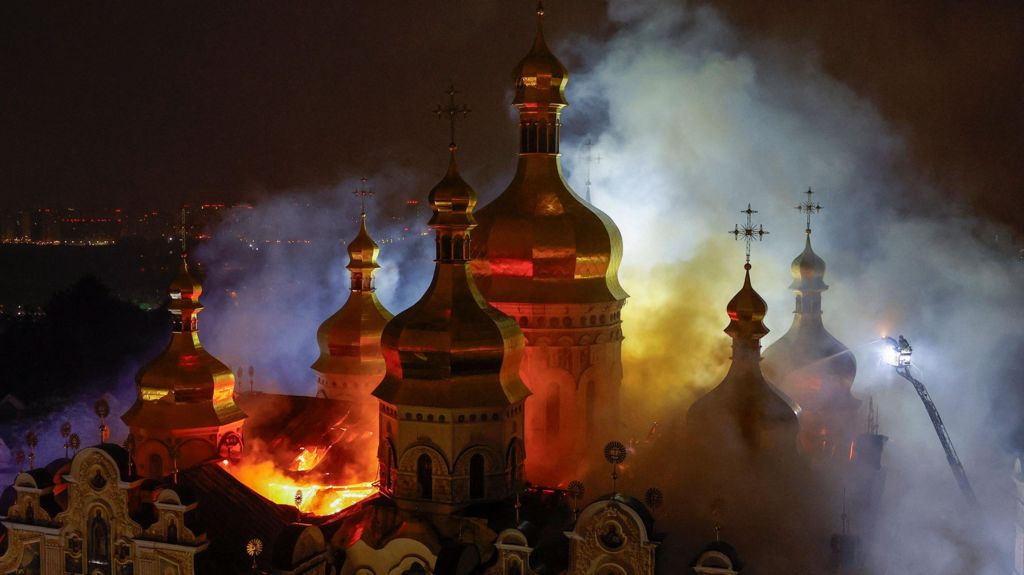
In a sharp escalation of cross-border hostilities between Russia and Ukraine on Monday, a coordinated wave of Russian strikes across Ukraine has left at least nine people dead, multiple others injured, and inflicted severe damage on one of Ukraine’s most cherished cultural and religious landmarks, the 11th-century Dormition Cathedral.
Ukrainian officials confirmed the death toll breakdown: four civilians were killed in attacks targeting the capital Kyiv, while five rescue workers lost their lives while responding to a blaze sparked by a Russian strike in the northeastern city of Kharkiv. In Kyiv, drone and missile barrages set multiple residential buildings, vehicles and infrastructure ablaze, cutting electricity access to more than 140,000 residents across the capital. Air raid sirens blared across nearly the entire country, forcing Kyiv residents to seek shelter in underground metro stations and other bomb-proof facilities. The Kyiv strikes alone wounded 23 people, with an additional five people injured in Kharkiv.
The most culturally devastating loss from the attacks is the significant damage to Dormition Cathedral, a core site within the Kyiv Pechersk Lavra monastery complex that stands as a defining symbol of Ukrainian national and religious identity. Ukrainian Prime Minister Yulia Svyrydenko condemned the attack as a deliberate, brutal assault against both the Ukrainian people and their irreplaceable cultural heritage. In response, Ukrainian Foreign Minister Andrii Sybiha announced that Kyiv would immediately launch formal procedures through UNESCO and other global international bodies to demand accountability for what he called “state barbarism” targeting cultural sites.
The violence was not confined to Ukrainian territory: Russian officials in Tula, a city south of Moscow, reported that a Ukrainian drone strike on the city killed three people and wounded three more, including a one-year-old child.
Regional tensions spilled beyond Ukraine’s borders as neighboring Poland, a key NATO ally of Kyiv, took precautionary defensive measures: the country scrambled fighter jets and activated all ground-based air defense systems in response to the Russian strike wave, in a move designed to safeguard its own territory.
The latest outbreak of deadly fighting comes just days before a scheduled G7 summit in France, where the ongoing Ukraine war is a top item on the meeting’s agenda. The strikes also follow a high-level conversation Sunday between Ukrainian President Volodymyr Zelensy and former U.S. President Donald Trump focused on exploring paths to end the full-scale conflict that Russian President Vladimir Putin launched in February 2022.
-
Why Delhi feels hotter than what temperatures show
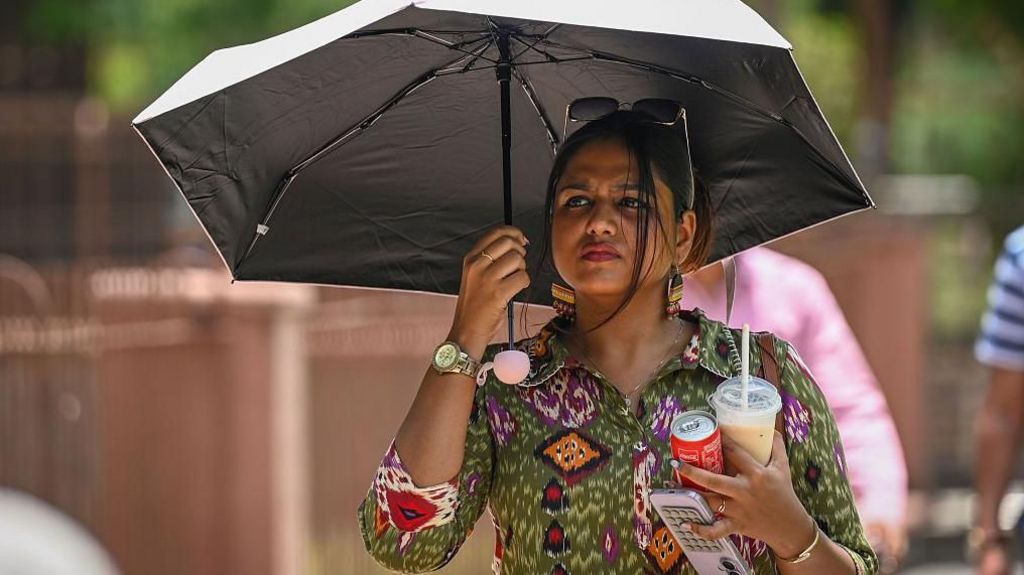
For weeks, New Delhi, India’s bustling capital, has been trapped in the grip of an unrelenting severe heatwave, with official daily air temperatures regularly climbing past the 40-degree Celsius mark. Weather forecasts routinely note that “real feel” temperatures run even higher, but a new on-the-ground investigation by Greenpeace India has laid bare just how stark the gap between official readings and the dangerous heat experienced by street-side workers and low-income residents actually is.
On the Tuesday the survey was conducted, the Indian Meteorological Department (IMD) logged an official maximum air temperature of 43.5C across the capital. But when Greenpeace researchers deployed a high-resolution thermal camera to measure surface temperatures across crowded streetscapes, the readings told a far more alarming story: in sun-exposed spots, surface temperatures hit as high as 64C, more than 20 degrees above the official air measurement.
It is important to note the difference between the two metrics: IMD’s official data measures ambient air temperature under standardized shaded conditions, while thermal imaging captures the temperature of solid exposed surfaces. On intense heat days, asphalt roads, concrete infrastructure, idling vehicles, and open ground absorb solar radiation far more intensely than the surrounding air, pushing their temperatures far higher than official air readings. These extreme surface temperatures amplify heat absorption by the human body through radiant heat, making urban areas feel vastly hotter than official forecasts suggest—especially in areas with almost no tree cover or shade.
The Greenpeace team’s first measurement stop came at midday at the IIT flyover, one of south Delhi’s busiest traffic intersections, where hundreds of thousands of vehicles pass daily and peak-hour waits can stretch to 10 minutes. When researcher Nibedita Saha pointed the camera at shaded areas under the flyover, the reading hit 42C. But when she shifted focus to idling motorcyclists waiting under direct sun at the stop line, the reading spiked to 64C. The open pavement where the team stood registered 61C—yet just 10 feet away under the cover of a single tree, the temperature dropped sharply to 39.8C.
“Consistent exposure to such extreme heat can trigger serious, life-threatening health complications,” Saha explained, noting the transformative impact of even one tree. “We felt immediate relief just moving that short distance. That’s how much difference a single tree can make.”
Medical experts warn that the gap between official temperatures and actual on-the-ground heat creates severe public health risks. Dr. A Fathahudeen, a leading pulmonologist, explains that the human body maintains a core temperature of 37C, and prolonged exposure to high surrounding heat can push this core temperature higher. “When core temperature exceeds 40C, the body stops functioning normally,” he said. “The most common issue is heat exhaustion, marked by extreme sweating, headaches, and fatigue. In more severe cases, people experience confusion, disorientation, and even seizures. Without urgent medical intervention, patients can develop multi-organ failure and die.”
To reduce risk during heatwaves, Dr. Fathahudeen advises the public to drink water regularly even when not thirsty, wear loose light-colored clothing, and use sun protection like umbrellas. He also called on the Indian government to enforce mandatory restrictions banning outdoor labor between 10:30 a.m. and 3 p.m., when heat is at its peak.
But for Delhi’s millions of low-income workers who rely on daily street-side work to survive, following this guidance is not a viable option. When the Greenpeace team traveled to Old Delhi’s iconic Red Fort to speak with street vendors, they found hundreds of people still working through the brutal heat, driven by the need to earn enough to feed their families.
“What choice do poor people like me have?” asked Sanjana Ben, a dry fruit vendor who sells her goods from the pavement. She sat on a thin cloth cushion on the scorching ground, with stacks of dry fruit laid out in front of her. The thermal camera recorded a temperature of nearly 40C on her face, but the ground just inches from her body hit 51.4C, and nearby open pavement registered 57C.
“Sometimes my head starts spinning and my vision blurs,” Sanjana Ben told the reporting team. “When the ground feels too hot, I stand up for a minute, but I can’t stand all day, so I have to sit back down.”
Nearby footwear vendor Mohammad Mahfouz Alam described the unrelenting nature of the heat, which seeps up from the ground and beats down from the sun with no escape. “There’s no relief day or night,” he said. “I feel sluggish all day, my legs ache, and I get home completely exhausted. Even after I bathe, I can’t sleep—the fan just blows hot air, and I toss and turn all night.”
Alam added that Delhi’s weather has grown far more erratic over the years, a shift that hits street-dependent workers the hardest. “Seasons aren’t predictable anymore—summer, winter, monsoon all come and go when they shouldn’t, and it hits us worst of all,” he said. Gesturing to the tree behind his stall, he added, “If this tree wasn’t here, I couldn’t work here at all. The day it’s cut down, that’s the end of me working this spot.” When the thermal camera scanned Alam’s surroundings, it registered 58.65C on nearby open pavement, and 44.8C on his shoulder.
A short walk from the Red Fort stalls lies Chandni Chowk, Delhi’s historic bustling shopping district, where a main pedestrian promenade was built years ago with stone seating areas for visitors to rest. But with no shade covering the open promenade, the seats go unused: the thermal camera registered 56.9C on the concrete pillar where a young toy vendor was sitting.
By the time the team traveled to Sundar Nagri, a lower-middle-class neighborhood in east Delhi’s Seelampur area, it was past 5 p.m. and the sun had begun to weaken. Even so, sun-exposed concrete surfaces were still scorching: a public bench at the neighborhood entrance registered 51.6C.
In this crowded neighborhood, small concrete homes are packed tightly along narrow lanes barely wide enough for one person to pass. For two weeks, 19-year-old Abhishek has kept a “Garmi Khata”, or heat register, for a Greenpeace research project, documenting how the extreme heat has disrupted his family’s health, sleep, income, and daily routines. When the team visited, the thermal camera registered 42C just outside Abhishek’s home. Walking up a narrow flight of stairs to the family’s two-room home, the team found almost no reprieve indoors: temperatures of dishes and kitchen surfaces on the wall hovered around 40C, barely lower than the outdoor reading.
The home has no window or ventilation to let trapped hot air escape, and only a small ceiling fan that circulates the same stale hot air through the rooms. “When it’s this hot, I feel nauseous all the time,” said Abhishek’s sister Kajal. “You can’t stand being outside, but you can’t stand being inside either.”
Abhishek read a recent entry from his register, which detailed how the heat has upended the family’s daily life: “This week’s heat has changed all our routines. Everyone gets home late, and no one can sleep properly,” he wrote. “In the mornings, we turn off the fan to cook, and the heat becomes unbearable. My sister can barely get her chores done, and my mother is more tired than I’ve ever seen her.”
For Abhishek, the worst part of the heatwave is the sweltering nights. “I cut my hair short, I get up multiple times a night to wash my face, I even sleep without a shirt, and I still can’t sleep,” he said. “Outside, at least there’s a little breeze. Inside, it feels like standing right next to a burning oven.”
-
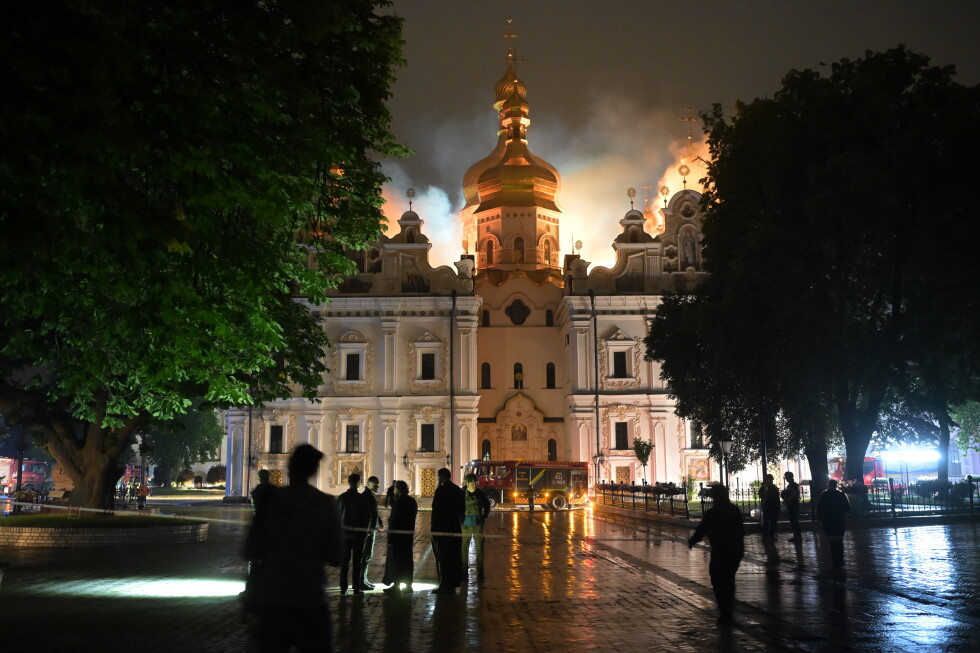
Russian attack sets fire to centuries-old religious site in Kyiv and kills 5 in Kharkiv
On a chaotic Monday morning, Ukraine faced one of the most destructive large-scale Russian aerial assaults in recent weeks, with attacks spreading across multiple major cities that left first responders dead, civilians injured, and a globally significant historic religious site damaged by fire.
The deadliest toll of the day was recorded in Ukraine’s second-largest city, Kharkiv, where five emergency service rescuers lost their lives when a second Russian strike hit the site while they were extinguishing a blaze started by an initial missile attack. Ukrainian Interior Minister Ihor Klymenko confirmed that at least five additional emergency workers were also wounded in the secondary strike.
In the capital city of Kyiv, the assault unfolded in waves: a first volley of ballistic missiles was followed by a swarm of Iranian-made Shahed assault drones, sending loud explosions echoing across residential neighborhoods. Terrified residents rushed to underground shelters as local officials repeatedly urged the public to stay in safe cover amid the ongoing attack. Klymenko confirmed that Kyiv was the primary target of the assault, with widespread damage recorded across non-military civilian infrastructure.
According to Tymur Tkachenko, chief of the Kyiv City Military Administration, at least 20 people in Kyiv, including one minor child, have required medical attention for injuries sustained in the strikes. Over the course of less than 30 minutes, five separate Russian projectiles hit civilian locations in the capital’s Shevchenkivskyi district. Targets included a 25-story residential apartment block, an open-air market and a local grocery store, all of which broke out in large fires. In Kyiv’s Obolonskyi district, a nine-story residential building was hit by a direct strike. Tkachenko said the targeting of these residential blocks was no accident, stating “This is their deliberate decision.”
Beyond civilian residential and commercial sites, the attack caused severe damage to the Kyiv-Pechersk Lavra, a centuries-old sprawling monastic complex that ranks among Eastern Christianity’s most important pilgrimage sites. Tkachenko emphasized that Russian forces deliberately targeted the site, calling the strike an attack on “the heart of one of the largest Christian shrines.” A large fire broke out at the UNESCO World Heritage Site following the strike, with the roof of the complex’s Dormition Cathedral catching fire.
Metropolitan Epiphanius, the head of the Orthodox Church of Ukraine, condemned the attack as another in a series of Russian crimes “against humanity, against history, against Christianity” and issued a public appeal for global prayers to help preserve the landmark site.
Known colloquially as the Monastery of the Caves, the Kyiv-Pechersk Lavra is a sprawling collection of churches and monastic structures constructed between the 11th and 19th centuries, featuring an extensive network of underground cave passages spanning more than 600 meters that connect many of its key buildings. Perched on the right bank of the Dnipro River running through Kyiv, the site has drawn Christian pilgrims from across the globe for more than a millennium.
-
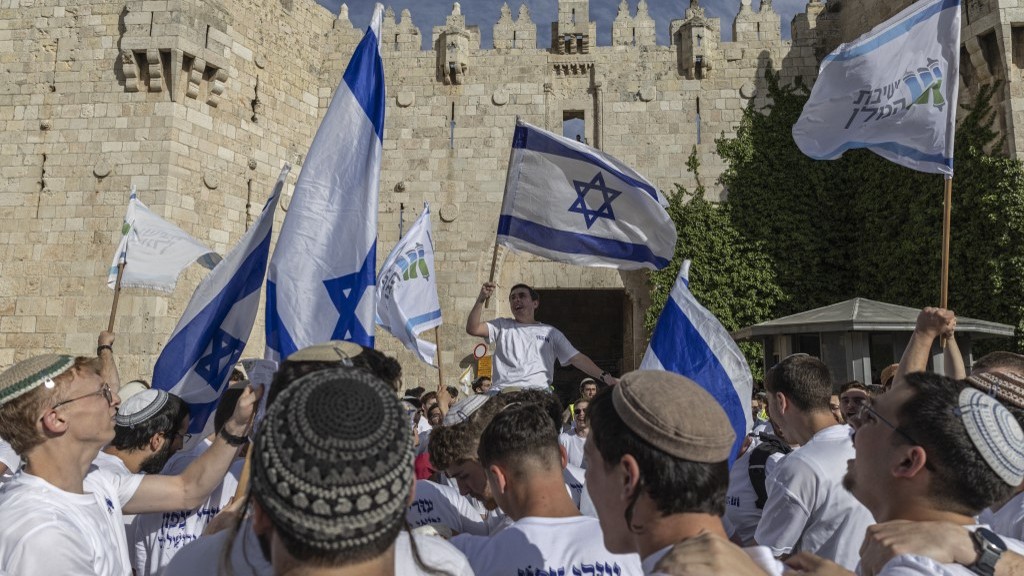
‘Reminiscent of the West Bank’: Pro-Israel activists attack protesters at London settlement event
A tense demonstration outside a London venue hosting an Israeli real estate event tied to illegal settlements in occupied Palestine devolved into violence on Sunday, as pro-Israel counter-protesters assaulted anti-apartheid activists opposing the controversial gathering. The event, branded the “Great Israeli Real Estate Event”, was held at Edgware United Synagogue in north London, drawing immediate condemnation from human rights organizations and political figures who argue it normalizes the displacement of Palestinian people and the expansion of unlawful Israeli settlements.
Anti-apartheid and pro-Palestine demonstrators assembled outside the synagogue to highlight the event’s core purpose: marketing and selling property built on occupied Palestinian land that the international community universally recognizes as illegally occupied. Public records of participating companies, published by the event’s sponsor earlier in the week, confirmed that at least four participating entities either explicitly advertise real estate in illegal Israeli settlements or are directly involved in settlement construction in the occupied West Bank.
Andrey Khrzhanovskiy, a journalist and long-standing activist working to document Israeli settler violence in the West Bank, was on site during the confrontation. He told independent outlet Middle East Eye that the aggression from pro-Israel counter-protesters mirrored exactly the violence he had witnessed first-hand in occupied Palestinian territories. “We are surrounded by a bunch of Zionists who are counter-protesting and attacking people — a bunch of Palestinian activists were attacked by the Zionists and then got arrested,” Khrzhanovskiy explained. “This is very reminiscent of everything that I’ve seen in the West Bank… I feel like I’ve been here before.”
Disturbing footage of the confrontation, circulated widely across social media platforms, captured extreme rhetoric from pro-Israel counter-protesters. The crowd chanted “There is no Palestine, we flattened it”, while even children in the counter-protest were recorded shouting misogynistic slurs at pro-Palestine and anti-apartheid demonstrators. Online footage also shows anti-Zionist activists entering the event space to disrupt the proceedings and publicly denounce the trade of illegally seized Palestinian land.
Criticism of the event extended far beyond the protest line. More than 100 sitting British Members of Parliament have joined human rights groups in calling on the UK government to block the gathering over its explicit ties to illegal settlement expansion. For many Jewish activists opposing Israeli apartheid, the event held at a British synagogue represents a profound betrayal of Jewish values and history. Paul, one of the Jewish pro-Palestine activists speaking to Middle East Eye from the protest, emphasized that the occupation and displacement of Palestinians violates core tenets of his faith.
“I’m a true practising and very proud Jew who sees what’s going on between Israel and the Palestinians as an abomination of Judaism,” Paul said. “This event is land theft. They are trading land to explicitly only a Jewish population in order to organise settlers to move to their apartheid state. And in the International Jewish Anti-Zionist Network, we say this is a disgrace to Jewish history of resistance against fascism and racism. They are the fascists, they are the racists, and we will not stand for a moment while they trade in Palestinian land.”
Amnesty International UK has echoed these criticisms, framing events like this London gathering as “apartheid and annexation with a sales pitch”. Ahead of the event, legal advocacy group The International Centre of Justice for Palestinians delivered an official legal notice to Edgware United Synagogue, formally warning leadership of the “serious legal and reputational concerns regarding the event” hosted on their property.
Maya Saad, a Middle East Eye reporter covering the protest on the ground, confirmed that cross-party political opposition and widespread rights advocacy had failed to convince the UK government to intervene to cancel the event, leaving protesters to challenge the gathering directly outside the venue. The confrontation marks the latest high-profile flashpoint in growing global tensions over Israeli settlement expansion and apartheid policies toward Palestinians, as grassroots movements push for stronger governmental action to hold Israel accountable for violations of international law.
-
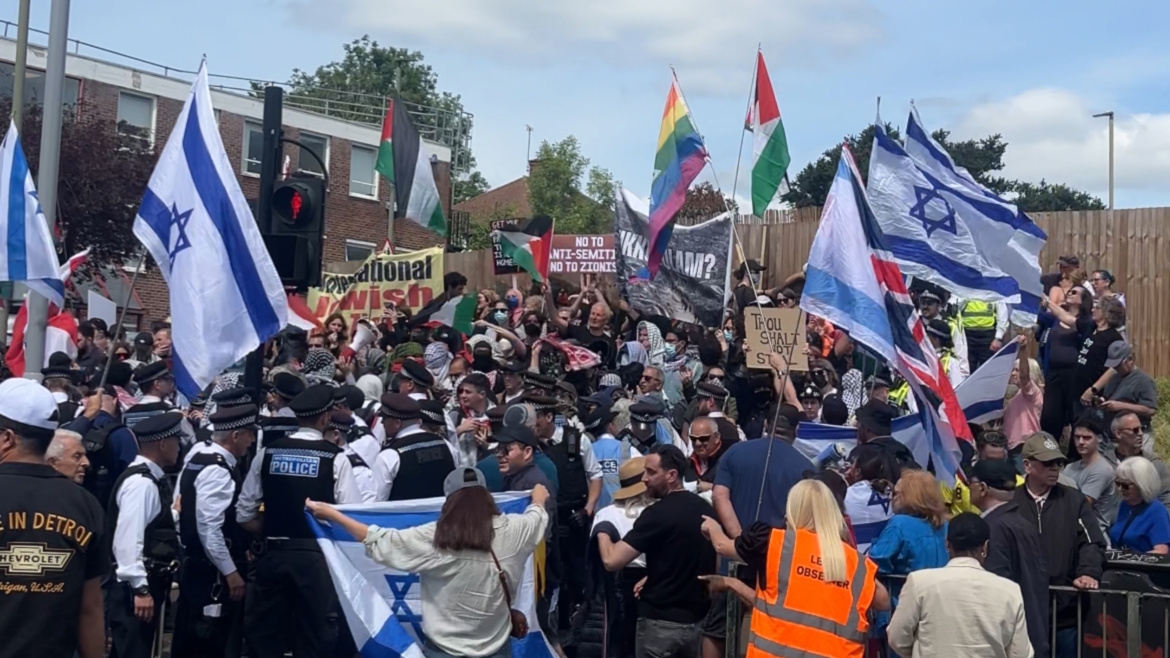
Pro-Israel supporters attack protesters at controversial London real estate event
On a Sunday in West London, tensions over Israeli settlement expansion boiled over into violent clashes outside a real estate event marketing occupied Palestinian land, leaving multiple people arrested and drawing widespread condemnation of the gathering from political and human rights figures across the United Kingdom.
The controversial gathering, dubbed the ‘Great Israeli Real Estate Event’, was held inside Edgware United Synagogue and organized by Israeli real estate firm My Home in Israel. It was designed to promote the sale of residential and commercial properties located in illegal Israeli settlements built on the occupied West Bank, territory that Palestinians claim as the core of their future sovereign state. Under international law, all Israeli settlements established in the West Bank after the 1967 Six-Day War are classified as illegal, a position reaffirmed repeatedly by United Nations resolutions and global human rights bodies.
Hundreds of demonstrators from both pro-Palestine and pro-Israel factions gathered outside the venue to stake out opposing positions on the event. Reporters on the ground from Middle East Eye, the independent outlet that first broke detailed coverage of the clashes, documented at least one physical assault: a pro-Israel supporter was filmed throwing multiple punches at a pro-Palestine activist who stood behind a metal safety railing, before uniformed officers intervened and escorted the attacker away.
Heated rhetoric permeated the standoff. Pro-Israel counter-protesters were repeatedly recorded chanting the aggressive slogan ‘There is no Palestine, we flattened it’, and even young children in the pro-Israel crowd were heard hurling misogynistic slurs at pro-Palestine campaigners. Many pro-Palestine demonstrators, including Jewish anti-Zionist activists, framed the event as nothing less than state-sanctioned theft of Palestinian land.
Oscar Leyens, a long-time Jewish pro-Palestine activist and member of the International Jewish Anti-Zionist Network, called the gathering an affront to Jewish values of anti-oppression. ‘I’m a true practising and very proud Jew who sees what’s going on between Israel and the Palestinians as an abomination of Judaism,’ Leyens told Middle East Eye. ‘This event is land theft. They are trading land to explicitly only a Jewish population in order to organise settlers to move to their apartheid state. This is a disgrace to Jewish history of resistance against fascism and racism. They are the fascists, they are the racists, and we will not stand for a moment while they trade in Palestinian land.’
Andrey Khrzhanovskiy, a journalist who has spent years documenting Israeli settler violence against Palestinian communities in the West Bank, said the violent clashes outside the London synagogue mirrored the aggression he had witnessed firsthand in occupied Palestinian territory. ‘We are surrounded by a bunch of Zionists who are counter-protesting and attacking people. A bunch of Palestinian activists were attacked by the Zionists and then got arrested,’ he said. ‘This is very reminiscent of everything that I’ve seen in the West Bank… I feel like I’ve been here before.’
By the end of the day of demonstrations, London’s Metropolitan Police Service announced that 15 people had been taken into custody in connection with the unrest. Of those arrested, seven identified as pro-Israel supporters, six as pro-Palestine demonstrators, and the affiliation of two remaining detainees remained unclear as of initial police statements.
The event itself drew fierce political and legal pushback in the UK days before it even began. Just two days prior to the gathering, more than 100 British Members of Parliament signed an open letter to UK Foreign Secretary Yvette Cooper urging authorities to cancel the event entirely. The letter argued that allowing the promotion and sale of settlement property directly contradicted existing UK government guidance that warns businesses against engaging in any settlement-related economic activity, and would violate the UK’s own obligations under international law.
London Mayor Sadiq Khan also publicly came out against the gathering, confirming he had raised his concerns directly with Metropolitan Police leadership. ‘I share concerns about the Great Israeli Real Estate Event taking place in our city, which I oppose, and that’s why I’ve discussed this directly with the Met Police,’ Khan said. ‘I’m informed that any allegations of criminality relating to the potentially unlawful sale of property at the event would be assessed by the Met with a view to investigation.’
The list of participating organizations, released publicly on Facebook by Emanuel Vatari, CEO of event sponsor Emanuel Group, confirms that multiple Israeli firms with deep ties to settlement construction took part in the event. Among them were Harey Zahav, a development firm that openly lists properties for sale in Negohot, an illegal settlement in the southern Hebron Hills, and the Meshulam Levinstein Group, a diversified construction and real estate conglomerate that has built both residential and commercial projects in illegal settlements across the West Bank and occupied East Jerusalem, including a large housing and retail development in the East Jerusalem settlement neighborhood of Homat Shmuel. Additional participants included Tivuch Shelly, an agency that advertises homes in the large West Bank settlement of Ma’ale Adunim, and Africa Israel Residences, a subsidiary of the Africa Israel Group that has developed multiple settlement projects across occupied Palestinian territory.
The International Centre of Justice for Palestinians (ICJP), a UK-based legal advocacy organization, delivered a formal legal notice to Edgware United Synagogue on the day before the event, putting venue leadership on notice of significant legal and reputational risks for hosting the gathering. The ICJP letter, reviewed by Middle East Eye, noted that the event was explicitly marketed as a platform for the sale of property in the occupied Palestinian territories, and that UK government guidelines clearly warn businesses away from such activity due to its legal and ethical risks under international law.
-
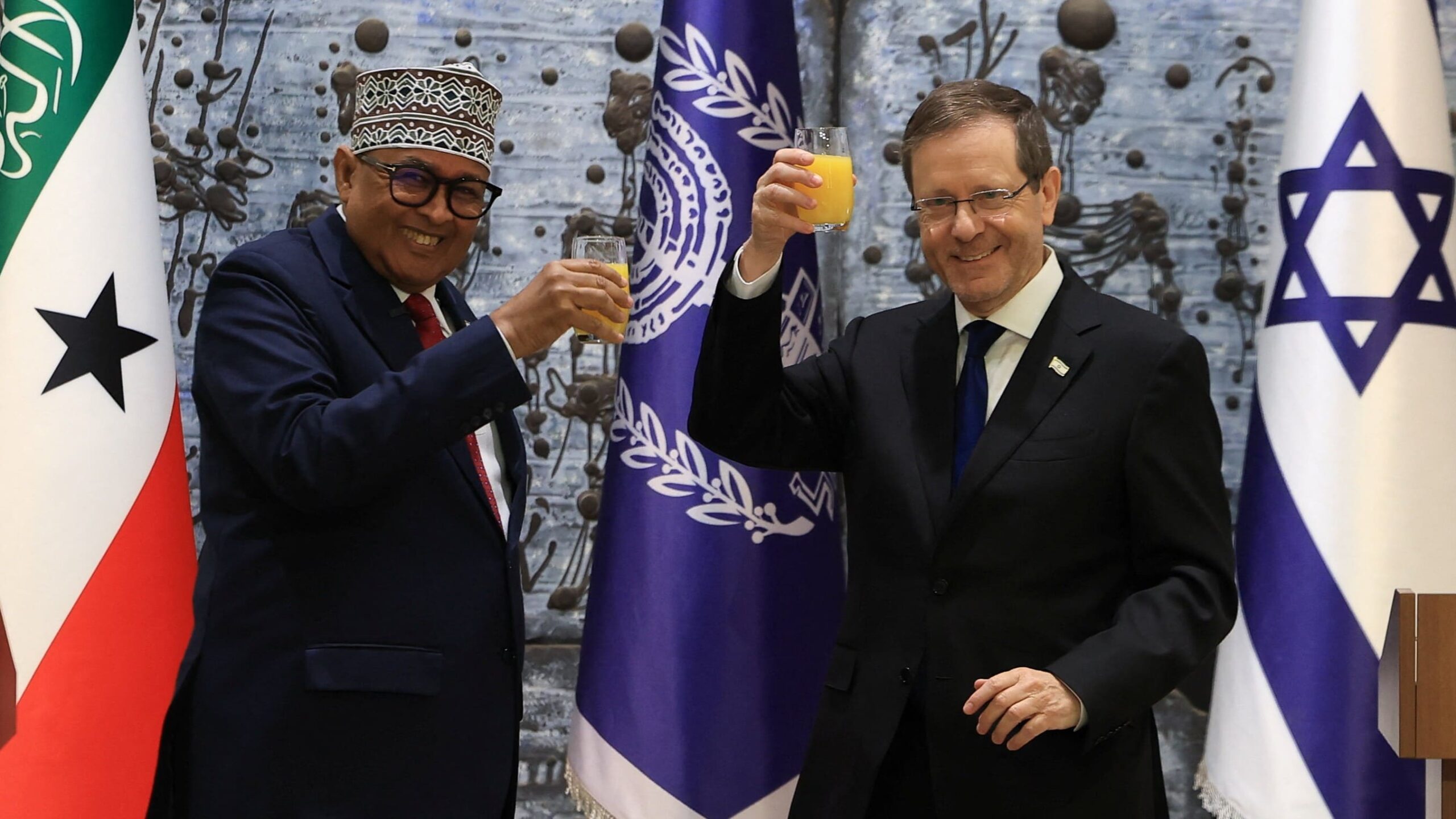
Somaliland president meets Israeli counterpart in first Jerusalem visit
In a moment that marks a pivotal shift in regional geopolitics, Abdirahman Mohamed Abdullahi — popularly known by his nickname Cirro and serving as the president of the self-declared independent state of Somaliland — arrived in Israel on Sunday, making history as the first Somaliland head of state to conduct an official state visit to the Jewish nation. The trip comes roughly six months after Israel made a groundbreaking move to recognize Somaliland as an independent sovereign state, a step no other United Nations member state had previously taken.
Taking to the social platform X to share his first impressions after landing, Cirro expressed deep gratitude for the reception he received from Israeli President Isaac Herzog. He called the journey a once-in-a-generation milestone for the relationship between the breakaway East African territory and Tel Aviv. “For thirty-five years, the people of Somaliland have built a peaceful, democratic, and resilient nation. We asked the world: Do you see us? Israel answered first,” Cirro wrote in his public post, which was paired with an on-the-ground photo from his arrival. “Today, history is being written, and Somaliland stands ready to forge a shared future founded on friendship, cooperation, and mutual respect.”
According to reporting from Israeli daily newspaper Maariv, the two-day visit will see Cirro hold additional high-level meetings with Israeli Prime Minister Benjamin Netanyahu and Foreign Minister Gideon Saar, beyond his initial talks with Herzog. Israeli President Herzog struck a collaborative tone in his response to the visit, noting that both sides aim to expand joint work across multiple priority sectors. “We both seek security and stability in the region and in the Horn of Africa. We both see the importance of protecting maritime freedom,” Herzog stated.
To understand the full context of this historic encounter, it is necessary to outline Somaliland’s decades-long path to international recognition. The autonomous region in northern Somalia declared its separation from the rest of Somalia in 1991, following the collapse of the Siad Barre regime. To date, however, the United Nations, the African Union, and nearly every sovereign government across the globe still formally recognize the territory as an integral part of Somalia, leaving Somaliland’s independence bid isolated on the global stage.
That changed this past December, when Israel became the first UN member state to formally grant recognition to Somaliland as an independent country. Regional analysts have widely framed the move as a calculated step to advance Israeli geopolitical interests in the Horn of Africa and the Red Sea region. The territory sits just 30 kilometers south of the Bab el-Mandeb Strait, the critical narrow waterway that links the Gulf of Aden to the Red Sea — one of the world’s most vital shipping lanes for global trade.
A permanent Israeli foothold in Somaliland would place Israeli military and intelligence assets within very close proximity to Yemen’s Houthi movement, which has launched repeated attacks on commercial shipping in the Red Sea since late 2023. The Houthis have stated their attacks are a retaliation for Israel’s military campaign in Gaza against Hamas. For Israel, establishing a presence in Somaliland also advances a broader goal of countering the expanding influence of Iran and its regional allied network across the Red Sea and Horn of Africa, analysts add.
Israel’s alignment with Somaliland also deepens its existing close security and political partnership with the United Arab Emirates, which has long backed Somaliland’s bid for international standing. Back in 2017, the Somaliland government approved a UAE bid to construct a military base at the strategic Port of Berbera, a move Hargeisa hoped would bolster its case for global recognition. Since Israel granted recognition to Somaliland earlier this year, senior Somaliland officials have confirmed they have held discussions about hosting an Israeli military base on their territory — a reversal of earlier denials of any such plans from Hargeisa’s foreign ministry.
For Somaliland, the new partnership with Israel carries tangible potential benefits beyond the long-sought win of international recognition. In comments given to Reuters back in February, Cirro revealed that Somaliland expects to finalize a bilateral trade agreement with Israel in the near future, and has offered Israel exploration and extraction rights to its untapped mineral deposits as part of the broader deal. The breakaway region has also identified growing security cooperation with Israel as a key priority: after the United Nations partially lifted its long-standing arms embargo on Somalia in 2023, Somaliland has cited new growing security threats to its territory and has sought to strengthen its own military capabilities.
-
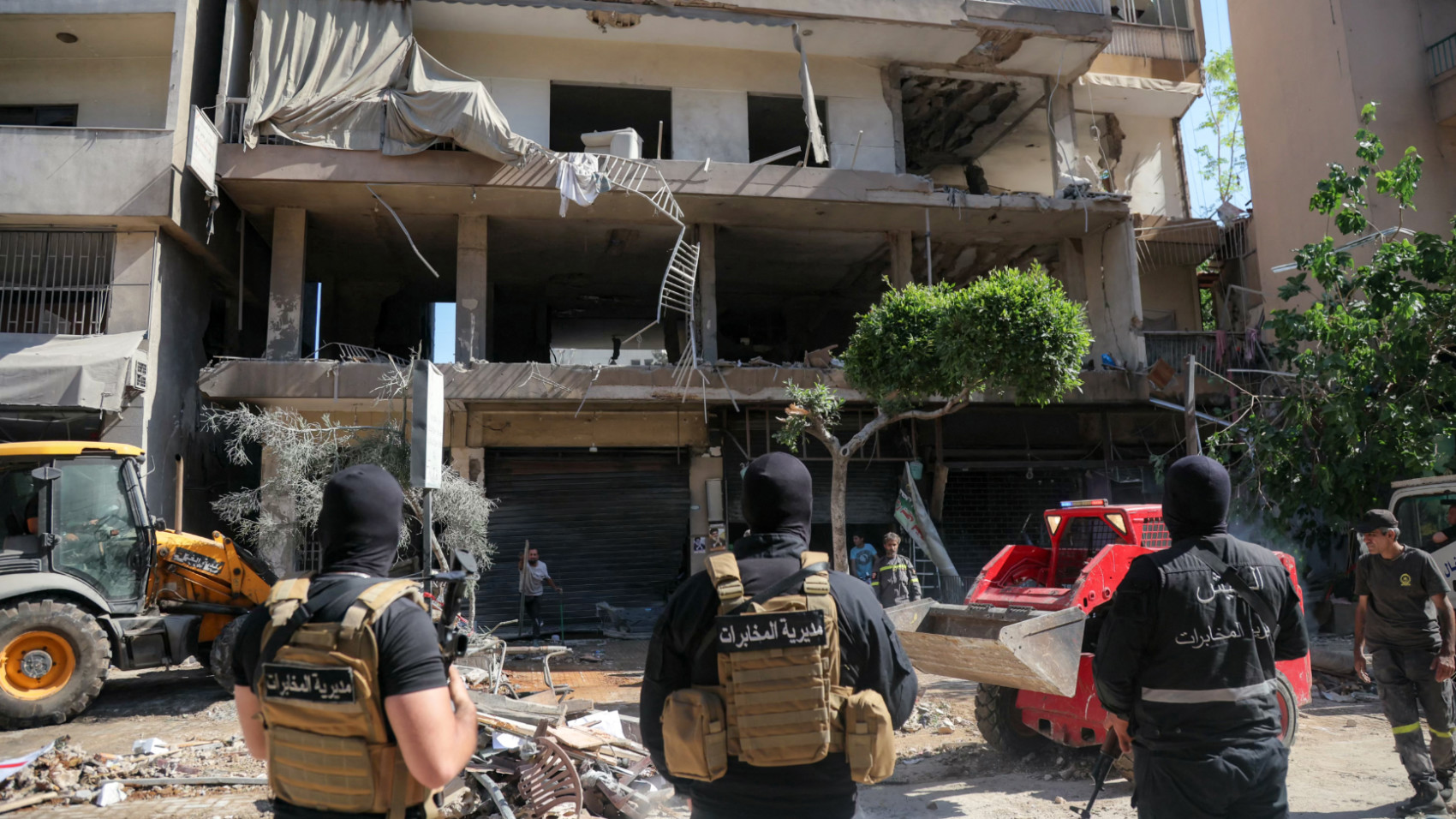
Israeli strike on Beirut kills three
On a tense Sunday in the Middle East, an Israeli drone strike on an apartment building in Beirut’s southern Ghobeiry neighborhood of the Dahieh district killed at least three civilians and left 15 others injured, sending shockwaves through already fragile regional peace negotiations and drawing sharp condemnation alongside explicit threats of retaliation from top Iranian government and military officials.
Lebanese media confirmed the targeted structure was a municipally owned apartment building in the densely populated Dahieh area, a district that has long been a stronghold of the Lebanese militant group Hezbollah. The attack marked the latest escalation in a cycle of cross-border violence that has gripped the Israel-Lebanon border for months, coming just hours after three unmanned aerial vehicles launched from Lebanese territory struck northern Israel earlier the same day. In response to that initial incursion, senior Israeli cabinet members immediately called for forceful, aggressive retaliation targeting Beirut directly.
Israeli Prime Minister Benjamin Netanyahu and Defense Minister Israel Katz issued a joint statement confirming the Sunday strike was a deliberate targeting of Hezbollah assets in Dahieh, carried out in direct response to the earlier drone fire on Israeli territory. This latest attack fits a consistent pattern of Israeli military activity that has persisted since a temporary ceasefire went into effect across the region on April 16: Israel has conducted daily bombardment operations across southern Lebanon, while its ground forces have progressively expanded their occupation of southern Lebanese villages and carried out widespread demolitions of local residential and civilian infrastructure.
Early Sunday, the Israeli military had already issued a broad evacuation order urging residents of at least 30 towns and villages across Lebanon’s Nabatieh and Sidon districts, located north of the Litani River, to leave their homes immediately ahead of planned military operations. The timing of the Beirut strike carries particularly high stakes, as it comes at a critical moment when Washington and Tehran appeared to be on the cusp of finalizing a landmark US-Iran agreement designed to de-escalate the broader regional war. As recently as this weekend, both US and Pakistani leaders publicly predicted the deal could be finalized and signed as early as Sunday.
Just last week, a separate Israeli strike on the Dahieh district already triggered a full exchange of cross-border fire between Israeli and Iranian forces, bringing regional tensions dangerously close to a full-scale conflict that would have collapsed the ongoing negotiation process entirely. Iran has long listed a full cessation of Israeli hostilities in Lebanon and a complete withdrawal of Israeli occupying forces from all southern Lebanese territory as non-negotiable conditions for any final wider agreement with the United States. On Friday, Iranian Foreign Minister Abbas Araghchi reaffirmed that the imminent deal would explicitly include commitments to end all hostilities in Lebanon and enforce the full withdrawal of Israeli troops from the south.
Sunday’s strike has thrown these plans into complete disarray. Mohammad Baqer Ghalibaf, Iran’s chief nuclear and negotiation negotiator, argued that the attack exposed a critical failure on the part of the United States: either Washington lacks the political will to uphold its own commitments to the emerging deal, or it does not have the capability to rein in its Israeli ally to meet the agreed terms. In a public post on the social platform X, Ghalibaf warned that the current path toward negotiation would become completely unworkable if the US cannot deliver on the obligations it has put forward.
Senior Iranian military leadership has further raised the threat of direct retaliation. Brigadier General Mohammad Jafar Asadi, deputy commander of Iran’s supreme military command, told Iranian state media that what he labeled Israeli “crimes” in Lebanon would not remain unanswered, signaling that Tehran is prepared to take direct military action in response to the strike.
Adding another layer of complication to the negotiation process, Israeli Defense Minister Katz has already explicitly rejected the core Iranian condition for the deal: he confirmed earlier this week that Israel has no intention of withdrawing its forces from the areas of southern Lebanon it currently occupies. This stance puts Washington in an impossible position, as it tries to reconcile its unwavering military and political support for Israel with its diplomatic goal of reaching a de-escalation agreement with Iran to prevent a wider regional war.
-
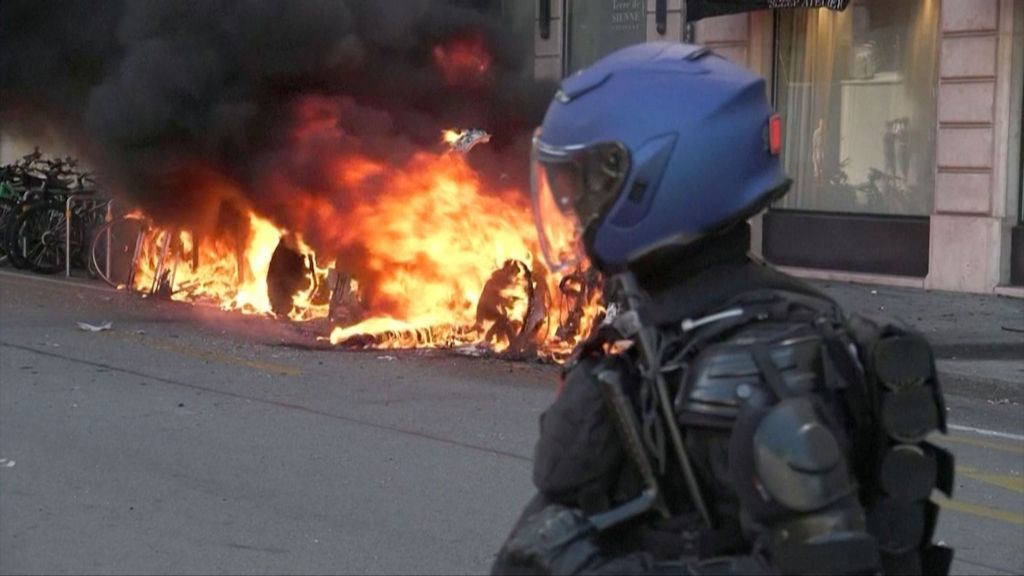
Protesters clash with police ahead of G7 summit in Geneva
In the hours leading up to the high-stakes G7 summit in Geneva, tense confrontations between demonstrators and law enforcement boiled over into violent street clashes, forcing Swiss police to deploy aggressive crowd control measures to restore order. The unrest unfolded as thousands of anti-globalization and anti-G7 activists gathered in the Swiss city to voice their opposition to the agenda of the world’s most powerful industrialized nations. What began as a planned demonstration quickly escalated into physical conflict between the two sides, prompting authorities to respond with significant force to contain the unrest. In a statement released to the press, Swiss police confirmed that officers used water cannons to push back advancing crowds and fired tear gas to disperse groups of protesters who had engaged in violent acts against law enforcement and public property. The summit, which brings together heads of state and senior government officials from Canada, France, Germany, Italy, Japan, the United Kingdom, and the United States, was already surrounded by heavy security in anticipation of widespread protests. Local officials had warned demonstrators ahead of the gathering that any unauthorized actions or acts of violence would be met with a firm response from security forces. As of the latest updates, there have been no immediate reports of serious injuries or fatalities, but multiple arrests have been confirmed in connection with the clashes. The unrest has added a layer of volatility to the start of the summit, which is expected to cover a range of pressing global issues including climate change, economic policy, international security, and global public health coordination. City officials have urged residents and visitors to avoid the area around the protest zone as police continue to work to clear the streets and reestablish calm ahead of the official start of summit proceedings.