分类: world

  • Conflict takes toll on historic sites

    Conflict takes toll on historic sites

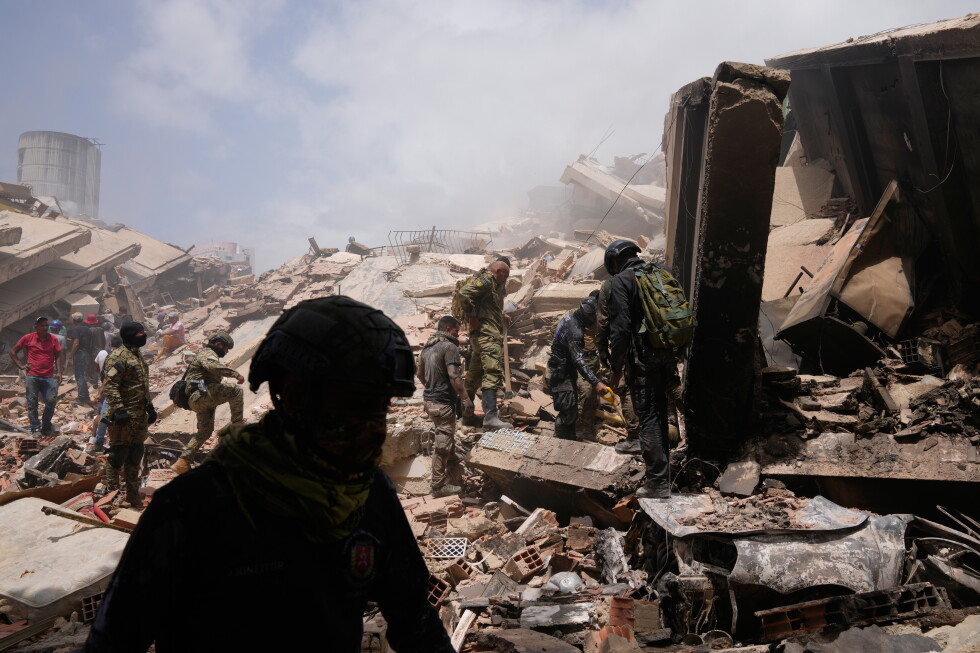
    As armed clashes between US-Israeli forces and regional opponents intensify across the Middle East, a growing global outcry has emerged over the widespread destruction of irreplaceable historic and cultural sites that form part of humanity’s collective shared memory. Leading cultural experts warn that the scale of damage goes far beyond what can be dismissed as unavoidable collateral damage of war, marking a deliberate, systematic erasure of centuries of civilizational history.

    According to Iran’s Minister of Cultural Heritage, Tourism, and Handicrafts Seyed Reza Salehi-Amiri, at least 131 historical and cultural monuments spanning 20 of Iran’s provinces have sustained damage from US-Israeli airstrikes. The capital Tehran has borne the brunt of the destruction: 63 sites in the city have been impacted, including the Golestan Palace, a world-renowned architectural masterpiece combining Safavid and Qajar era design, and the 100-hectare Sa’dabad Palace complex, which houses 20 separate museums. In central Isfahan province, 23 sites have been damaged, among them Chehel Sotoun Palace, a UNESCO World Heritage Site. Western Kurdistan province has recorded 12 damaged historical monuments.

    Neda Zoghi, an Iranian artist and civilization scholar with a doctorate in Islamic art based at Kuala Lumpur’s Asia West East Centre, emphasized that the destruction is not merely damage to empty structures. “Every tile-work panel, every inscribed archway, every manuscript cabinet represents a node in a living network of human knowledge that took centuries to construct and cannot be reconstructed in any lifetime,” she explained. Zoghi added that the layered artistic traditions of Iranian heritage mean that a single damaged site can erase multiple irreplaceable strands of human history at once, noting that these sites predate modern political conflicts by centuries and millennia. The targeting of these spaces, she argued, violates explicit international prohibitions on cultural violence during armed conflict.

    UNESCO has repeatedly called for the protection of cultural heritage across the region, reminding all parties that cultural property is protected under the 1954 Hague Convention for the Protection of Cultural Property in the Event of Armed Conflict and the 1972 World Heritage Convention. As of late March, the organization confirmed that multiple UNESCO-listed sites across Iran, Israel, and Lebanon have already sustained damage, and it has warned of growing risks to cultural sites in more than a dozen neighboring countries across the Middle East and West Asia.

    The threat extends far beyond Iran, most acutely to Gaza and Lebanon. In Gaza, which has faced three years of intense Israeli bombardment, remote satellite monitoring led by UNESCO has confirmed verified damage to 164 cultural sites between October 2023 and March 2026. This toll includes 14 religious sites, 128 buildings of historic or artistic importance, two museums, and eight archaeological sites. In Lebanon, where Israeli bombardment has escalated in recent months, growing fears center on damage to iconic sites including the Roman temple ruins of Baalbek and the ancient coastal city of Tyre, both UNESCO World Heritage Sites. Even when sites are not directly hit, experts note that shockwaves from nearby airstrikes can destabilize ancient foundations and stone structures, causing irreversible long-term damage.

    Following a formal request from the Beirut government, UNESCO held an extraordinary meeting in early April to coordinate emergency protection for Lebanese cultural heritage. The body approved provisional enhanced protection for 39 key cultural properties and allocated more than $100,000 in emergency funding for on-the-ground protection efforts. Nabil Najjar, a member of the executive committee for the world-famous Baalbeck International Festival, held annually at the archaeological site, said that while the festival has not yet been canceled, a postponement or full cancellation for 2026 looks increasingly likely. He noted that in 2024, a strike on the site’s perimeter wall prompted immediate protective measures from UNESCO, which has since rolled out similar protective marking for other at-risk sites across the country.

    Legal experts note that while UNESCO’s enhanced protection framework carries important legal weight, its on-the-ground impact is limited. Arie Afriansyah, a law professor at the University of Indonesia, explained that the 1999 Second Protocol to the Hague Convention grants the highest level of international legal protection to listed sites, banning attacks and military use of these properties and requiring criminalization of violations. “Its real value is deterrence, clearer no-strike identification, documentation, and stronger accountability later. But it is not a physical shield,” Afriansyah said, adding that protection is weakened in Lebanon because Israel is not a party to the 1999 Second Protocol, even though the broader 1954 Hague Convention remains binding.

    Zoghi highlighted a deeper systemic flaw in global enforcement of cultural heritage protection: selective application of international law. She noted that when Iran retaliates militarily, the international community moves quickly to condemn the action, but the initial US-Israeli strikes that damaged sites ranging from mosques and synagogues to ancient Zoroastrian landmarks have not faced equivalent international censure. “This asymmetry is not merely politically inconvenient. It is legally corrosive. It teaches every future aggressor that the Convention is a shield available only to the powerful,” she said. Zoghi stressed that this critique is not a justification for any particular military action, but a defense of the principle that international humanitarian law only works if it applies universally. “The moment it becomes a tool selectively deployed against one party, it ceases to function as law and becomes instead a form of geopolitical rhetoric dressed in legal language. That is dangerous for every civilization on Earth, not only for Iran.

    She also pushed back against widespread framing of the current conflict as a religious war, noting that Iranian and broader Persianate civilization has always been a pluralistic space shared by Muslim, Christian, Jewish, Zoroastrian, and secular communities. “To reduce this heritage and this conflict to a simple religious binary is to commit violence against history itself,” Zoghi said. “You may wage war against a government, but history will never forgive you for waging war against civilization.”

  • Two ships transit Hormuz for Iranian ports despite US blockade: media

    Two ships transit Hormuz for Iranian ports despite US blockade: media

    The long-running maritime standoff in one of the world’s busiest strategic waterways took a new turn this week, as two commercial vessels bound for Iranian ports successfully completed a transit through the Strait of Hormuz despite a sweeping U.S. blockade designed to cut off seaborne traffic to and from the Islamic Republic, according to a new report from leading British shipping industry outlet Lloyd’s List.

    The U.S. military confirmed just this Tuesday that it has deployed over 10,000 troops to carry out the blockade order, which applies to all vessels seeking to enter or depart Iranian ports regardless of their flag or country of origin. In response to this enforcement, shipping observers have documented a growing pattern among vessels targeting Iranian ports: altering their publicly broadcast Automatic Identification System (AIS) destination data to obscure their final intended stop before moving through the strait.

    Per Lloyd’s List’s on-the-ground industry tracking, the two Iran-flagged container ships in question originally set their AIS transponders to indicate a final destination of Bandar Abbas, Iran’s key southern commercial and military port on the Persian Gulf. Shortly after the U.S. blockade entered into force, the vessels updated their AIS destination to the far broader, less specific label “PG Ports” — short for Persian Gulf ports — hiding their specific intended endpoint from general tracking systems. After the ships cleared the Strait of Hormuz without incident, they reoriented their course directly toward Bandar Abbas and continued their journey on Tuesday, the report confirmed.

    Maritime analysts cited in the report note that this common adaptive tactic creates new, unplanned complications for the U.S. blockade’s implementation. By obfuscating their final destinations via AIS adjustments, vessels force U.S. intelligence and surveillance operations to expend far more resources to track and confirm the actual destinations of Persian Gulf-bound traffic, extending the intelligence gathering phase of the blockade and slowing interdiction efforts.

    The Strait of Hormuz remains one of the most critical chokepoints for global energy trade, with roughly a fifth of the world’s total oil consumption passing through the waterway each day. The new development highlights growing frictions between U.S. sanctions and blockade enforcement and commercial shipping operators seeking to maintain trade links with Iran, raising new questions about the long-term effectiveness of the U.S. measure.

  • After three years of war, Sudan confronts devastation as donors gather in Berlin

    After three years of war, Sudan confronts devastation as donors gather in Berlin

    Three years after conflict erupted between Sudan’s regular army and the Rapid Support Forces (RSF) paramilitary group in April 2023, the northeastern African nation remains mired in one of the world’s worst humanitarian catastrophes, even as global attention has shifted to other crisis hotspots. As international stakeholders gathered in Berlin this week for a high-stakes donor conference, German officials are pushing to secure more than $1 billion in new humanitarian pledges — exceeding the total raised at the previous London-hosted conference — to address an unfolding emergency that has been largely overlooked by the international community.

    Speaking to public broadcaster Deutschlandfunk ahead of the conference opening, German Foreign Minister Johann Wadephul expressed cautious optimism that the funding target would be met, noting that new pledges were already flowing in ahead of the gathering. “Despite the fact that global diplomatic focus is currently absorbed by Ukraine and Iran, this massive humanitarian catastrophe in Africa cannot be pushed to the margins of global consciousness,” Wadephul emphasized.

    Unlike previous diplomatic gatherings, neither the Sudanese army nor the RSF — the two warring parties that have torn the country apart since 2023 — were invited to participate in the Berlin conference. Beyond rallying much-needed humanitarian funding, the gathering also carries a secondary diplomatic goal: to jumpstart stalled peace talks that have collapsed since last November. The so-called Quad diplomatic bloc, made up of the United States, Saudi Arabia, the United Arab Emirates and Egypt, has led international peace efforts to date, but those efforts have ground to a halt amid deep disagreements and accusations of foreign interference. Rival regional powers back opposing sides in the conflict: Saudi Arabia, Egypt and Turkey publicly support the Sudanese army, while the UAE has been widely accused of supplying arms to the RSF. All four nations deny direct involvement in the fighting, and talks collapsed after Sudanese army chief Abdel Fattah al-Burhan accused the Quad of pro-RSF bias due to the UAE’s membership in the group.

    Wadephul argued that even without the warring parties in the room, the Berlin conference can still advance the cause of peace by creating space for local Sudanese stakeholders to open dialogue with one another. But Luca Renda, the United Nations Development Programme’s representative in Sudan, struck a far more pessimistic tone. “There are many external actors involved in this war, and as long as this continues, unfortunately, the chances of peace are very slim,” Renda warned.

    The human cost of three years of continuous war is staggering. Tens of thousands of people have been killed since fighting began, with the United Nations recording nearly 700 civilian deaths from drone strikes alone since the start of 2025, as attacks have intensified in southern Kordofan and Blue Nile State. More than 11 million Sudanese have been displaced from their homes, and nearly 25 million — almost half the country’s population — face acute food insecurity. Famine was officially declared last year in El-Fasher, the capital of North Darfur, and Kadugli, the capital of South Kordofan, with 20 additional regions across the country at imminent risk of famine. The conflict has pushed more than 90 percent of Sudan’s population below the poverty line, and global humanitarian funding for the crisis currently meets only 16 percent of the UN’s requested target.

    For ordinary Sudanese who have lived through three years of violence, the toll has been crippling. “People are exhausted,” Amgad Ahmed, a 42-year-old resident of Omdurman, Khartoum’s twin city, told Agence France-Presse. “Three years of war have worn people down. We have lost work, savings and any sense of stability.”

    A fragile veneer of normality has begun to emerge in Khartoum after the Sudanese army retook full control of the capital last year. Roughly 1.7 million displaced residents have returned to the city, markets have reopened, traffic has returned to long-deserted streets, and national secondary school exams were held this week for the first time after two years of widespread school closures. But visible scars of war remain everywhere, and deadly hazards still lurk beneath the tentative recovery: authorities are still working slowly to clear tens of thousands of unexploded ordnance left scattered across the city by years of urban combat.

    Al-Basheer Babker al-Basheer, a 41-year-old Sudanese who returned to Khartoum twice this year after three years away, said the capital will require decades to fully recover from the destruction. “I was happy to come back,” he said. “But when I went into the city centre, it was heartbreaking. The road to the university where I studied is no longer the same. The walls are black. They are not the same places we used to go to.”

    The Berlin conference brings together more than 80 participants, including foreign government representatives, international aid agencies, and Sudanese civil society groups, marking the third high-level international donor gathering for Sudan after conferences hosted by London and Paris over the past two years. Organizers hope the new pledges will help scale up life-saving aid across the country, even as the ongoing conflict and lack of progress on peace leave the long-term future of the world’s third-poorest nation deeply uncertain.

  • Ukraine’s Zelenskyy pursues more arms deals with allies to help check Russia’s invasion

    Ukraine’s Zelenskyy pursues more arms deals with allies to help check Russia’s invasion

    As Russia escalates deadly targeting of Ukrainian civilians and critical public infrastructure, Ukrainian President Volodymyr Zelenskyy has made securing Western backing for expanded air defense capabilities his nation’s top diplomatic priority during a urgent three-capital tour of Europe this week.

    Zelenskyy’s trip, which unfolded across 48 hours with stops in Berlin, Oslo, and Rome, comes amid a fresh wave of Russian long-range attacks that left at least two civilians dead this week, including an 8-year-old boy killed in the central Cherkasy region and a woman killed in a strike on a bus stop kiosk in southern Zaporizhzhia. The strikes hit more than six rear-area regions far from the front lines between Tuesday and Wednesday, extending a relentless campaign of bombardment that has stretched Ukraine’s existing air defense stocks thin.

    “Every day we need air defense missiles — every day Russia continues its strikes,” Zelenskyy wrote in a post on the Telegram messaging platform Wednesday. More than four years into Russia’s full-scale invasion, Ukraine has built combat-proven expertise in drone interception and even developed innovative indigenous air defense technologies. But Kyiv has been blocked from leveraging these advances by a critical gap in funding that prevents scaling up domestic production to meet the constant demand for defensive systems.

    Ahead of Wednesday’s online coordination meeting of over 50 defense partners supporting Ukraine — chaired by German Defense Minister Boris Pistorius and British Defense Secretary John Healey, with NATO Secretary-General Mark Rutte in attendance — the United Kingdom announced a major new weapons package: 120,000 drones set to be delivered to Ukraine this year, marking the largest single drone commitment London has made to date. The shipment includes long-range strike platforms, intelligence and reconnaissance drones, logistics support drones, and maritime-capability systems, though officials have not yet specified a timeline for deployment.

    The latest Russian assault on Wednesday included the largest single drone barrage Ukraine has faced in nearly two weeks: the Ukrainian Air Force confirmed that Russia launched 324 drones and three ballistic missiles into Ukrainian territory overnight, 309 of which were successfully intercepted by existing air defenses. Before dawn Wednesday, Russian forces also dropped a 1.5-ton FAB-1500 glide bomb on central Sloviansk, destroying a landmark children’s sports facility the city relied on for youth programming. A separate overnight strike on Dnipro, a major southeastern Ukrainian city, hit two university campuses, damaging academic buildings, student dormitories, and adjacent residential homes. Dnipro Mayor Borys Filatov confirmed that over 1,000 windows in surrounding structures were shattered by the blast wave, and emphasized that no military targets were located in the strike zone.

    On the opposite side of the front, Russian air defenses claimed to have intercepted 85 Ukrainian drones overnight across multiple western and southern Russian regions, the annexed Crimean Peninsula, and the waters of the Black and Azov Seas. Local authorities in Sterlitamak, a Russian industrial city roughly 1,300 kilometers east of the Ukrainian border, confirmed that downed drone debris sparked a fire at a facility in the city’s industrial zone. Radiy Habirov, governor of the Bashkortostan region that hosts Sterlitamak, did not release additional details on the extent of damage or any casualties from the incident.

    During his European tour, Zelenskyy has already secured new pledges of military and financial support from Germany and Norway, and is pushing two key priorities to address Ukraine’s air defense gap: first, urging European nations to continue contributing to a shared fund dedicated to purchasing American-made air defense systems, particularly Patriot batteries capable of intercepting Russian cruise and ballistic missiles that regularly target civilian areas. Second, he is advocating for accelerated joint weapons production agreements with European partners for drones and interceptors, while pressing the European Union to quickly disburse a promised €90 billion ($106 billion) support loan that has faced political delays in recent months. No new U.S.-mediated peace talks between Kyiv and Moscow have been announced amid the ongoing escalation.

  • Humanitarian aid needs soar in Sudan

    Humanitarian aid needs soar in Sudan

    As Sudan prepares to mark the third anniversary of a brutal civil conflict that erupted between the Sudanese Armed Forces and the Rapid Support Forces paramilitary group on April 15, 2023, the nation is sinking deeper into one of the most catastrophic humanitarian emergencies the world has seen in decades. Aid organizations are sounding the alarm that the staggering scale of unmet need among vulnerable Sudanese communities has far outpaced the current international relief response.

    New data from the International Rescue Committee underscores the severity of the crisis: over the past three years of continuous fighting, more than 12 million Sudanese people have been forced to flee their homes, and a full 34 million people — roughly two-thirds of the country’s entire population — now require life-saving humanitarian assistance to survive. This officially ranks Sudan’s crisis as the largest single humanitarian catastrophe on the global stage today.

    Testimonies from conflict survivors and on-the-ground reports from aid groups paint a grim picture of daily life across vast swathes of Sudan. Displaced families repeatedly forced to flee new outbreaks of violence struggle to access basic necessities including nutritious food, clean drinking water, and life-sustaining medical care, with critical public infrastructure destroyed by ongoing fighting.

    “The humanitarian situation in Darfur, and in Sudan in general, is extremely dire,” explained Ali Almohammed, emergency health manager for Doctors Without Borders (Médecins Sans Frontières, MSF). Almohammed characterized the crisis as defined by the total collapse of civilian protection systems, mass forced displacement, the near-total destruction of functional health services, and a catastrophic level of unmet medical and humanitarian needs that has left millions without support.

    Women and children, he added, remain the most vulnerable groups caught up in the conflict, facing exponentially elevated risks of preventable disease, acute malnutrition, targeted violence, and total lack of access to essential life-saving care as fighting drags on with no end in sight. A March 30 report from MSF further highlights that danger persists for vulnerable communities even after they flee active front lines. Women and girls face persistent insecurity across every space they occupy — on travel routes, in local markets, when collecting food or tending to farms, and even inside overcrowded displacement camps, even when fighting has moved to other regions.

    “Every day, when people go to the market, there are four or five cases of rape. When we go to the farm, this happens,” a 40-year-old woman from Sudan’s Jebel Marra region stated in testimony included in the MSF report.

    MSF officials note that survivors of gender-based violence urgently require targeted support, including confidential clinical care, injury treatment, emergency contraception, prevention and treatment for sexually transmitted infections, dedicated child protection services, and clear, functional referral pathways to connect survivors with ongoing support.

    As the conflict enters its fourth year, Almohammed says humanitarian organizations across Sudan are urgently calling for expanded international backing to scale up life-saving assistance and reestablish basic protection for civilians caught in the crossfire. Without immediate, concerted international action, aid leaders warn, Sudan’s humanitarian crisis will only continue to deepen, pushing millions more into life-threatening vulnerability in the months ahead.

  • Mandarin opens doors for Kenyan youth

    Mandarin opens doors for Kenyan youth

    Nairobi, Kenya – Ahead of the 17th annual United Nations Chinese Language Day, observed globally on April 20, a growing cohort of young Kenyans are embracing Mandarin studies, framing the language as a transformative pathway to expanded education, employment, and cross-cultural connection amid deepening bilateral relations between Kenya and China.

    For 20-year-old John Waigua, a second-year education student at Kenyatta University who also studies Mandarin at the institution’s Confucius Institute, a last-minute teaching gap turned into a life-altering perspective shift. When the school’s permanent Mandarin instructor resigned unexpectedly during Waigua’s university holiday internship, he stepped in to cover the role – and the experience revealed just how much demand exists for Mandarin speakers across the country. That firsthand insight reshaped his long-term goals: he now aims to become a certified Mandarin educator and eventually pursue a scholarship to advance his studies in China.

    Waigna’s journey is far from unique. Across Kenyan universities, growing numbers of young people are integrating Mandarin studies into their academic plans, drawn by both academic relevance and clear professional advantages. Rebecca Bukachi, an architecture student studying Mandarin at the University of Nairobi’s Confucius Institute, notes that Chinese firms lead many of Kenya’s largest infrastructure and construction projects. For her, learning Mandarin is not an extracurricular hobby – it is a direct investment in her future career, aligning perfectly with her architectural training. Damaris Gathoni, another Kenyatta University student, echoes that sentiment: as Chinese businesses and cultural exchanges become increasingly embedded in Kenya’s economy and society, the ability to speak Mandarin opens doors to interactions and opportunities that would otherwise remain out of reach.

    Educators confirm that this growing interest has translated to a rapid surge in demand for Mandarin courses. Leonard Chacha Mwita, director of the Confucius Institute at Kenyatta University, says the institute now receives daily inquiries from prospective students and their parents eager to enroll. He attributes the boom to three key drivers: expanding trade ties between China and Kenya, growing educational exchange opportunities between the two countries, and shifting global economic dynamics that have put China at the center of many young Africans’ professional outlooks. “People are traveling to China for trade, for education, and suddenly everyone recognizes that Mandarin is the language that opens those doors,” Mwita explained. “This rising enthusiasm isn’t just about language – it’s a reflection of how much stronger our cultural and educational bonds with China have become.”

    The growing embrace of Mandarin in Kenya was highlighted at a pre-UN Chinese Language Day cultural event held earlier this week at the UN Office at Nairobi, where attendees tried traditional Chinese calligraphy rubbing and other cultural activities. Zainab Hawa Bangura, director-general of the UN Office at Nairobi – the only UN headquarters located in the Global South – emphasized that linguistic diversity is a core pillar of inclusive global cooperation. As one of the UN’s six official languages, Mandarin plays a critical role in strengthening cross-border dialogue and mutual understanding, she said, adding that “here in Nairobi, we see firsthand how linguistic diversity strengthens dialogue, fosters mutual understanding, and enhances cooperation to tackle complex shared global challenges.”

    Chinese Ambassador to Kenya Guo Haiyan echoed those remarks, noting that rising interest in Mandarin among Kenyan youth speaks to the language’s growing practical value across education, skills development, and cultural exchange. “I am pleased to see that in Africa, and in Kenya in particular, the Chinese language is becoming a ‘golden key’ to unlocking new opportunities,” she said. Guo added that beyond basic communication, more young Kenyans are using Mandarin to build technical skills and engage more deeply with Chinese culture, supported by institutions ranging from Confucius Institutes to Luban Workshops, which focus on vocational training. This year, 2026, has been designated the China-Africa Year of People-to-People Exchanges, and people-to-people connections will remain a central pillar of advancing bilateral cooperation between China and African nations, Guo noted.

    As Kenya’s youth continue to turn to Mandarin to expand their horizons, the trend underscores how deepening ties between China and Kenya are creating tangible new opportunities for the next generation of East African leaders.

  • The Middle East war: latest developments

    The Middle East war: latest developments

    Just hours after Lebanon and Israel reached an agreement to begin direct negotiations in Washington, fresh military violence upended the region on Wednesday, bringing new volatility to a conflict that continues to ripple across global energy markets and international diplomacy.

    Israeli military forces carried out two targeted strikes on vehicles in southern Lebanon, Lebanese state media confirmed Wednesday. One strike hit a vehicle in the coastal town of Saadiyat, while the second targeted a car on the coastal highway in nearby Jiyeh, located roughly 12 miles south of Beirut and outside the traditional strongholds of the Iran-aligned militant group Hezbollah. In response to the strikes, Hezbollah launched approximately 30 rocket projectiles toward northern Israeli territory starting in the early hours of Wednesday, an Israel Defense Forces spokesperson confirmed to Agence France-Presse. Israeli authorities also issued a new mandatory evacuation order for civilian residents in southern Lebanon, escalating warnings ahead of anticipated further clashes.

    The fresh outbreak of violence came as diplomatic activity surrounding the broader Middle East conflict accelerated across multiple fronts. Pakistan’s Prime Minister Shehbaz Sharif launched a four-day shuttle diplomacy tour Wednesday, with stops planned in Saudi Arabia, Qatar and Turkey, as regional powers position themselves ahead of potential new peace negotiations between the United States and Iran.

    In a major development that lifted global market sentiment, former U.S. President Donald Trump announced Wednesday that a second round of direct talks between U.S. and Iranian negotiators could begin within 48 hours, stoking widespread optimism that a breakthrough deal could reopen the strategically vital Strait of Hormuz, through which roughly a fifth of global oil supplies pass daily. Trump reinforced that optimistic tone in an interview with Fox Business Network’s *Mornings with Maria*, set to air Wednesday, saying the open conflict with Iran is “very close to being over.”

    Market indicators reacted immediately to the news of upcoming talks: South Korea’s Kospi index surged more than 2%, ending the trading session just hundreds of points away from its all-time record high, while major European indices in London and Frankfurt held steady. Crude oil prices, which have spiked repeatedly amid conflict-related supply disruptions, dropped for a second consecutive session, with West Texas Intermediate crude trading at approximately $90.39 per barrel and Brent North Sea crude settling at $94.62 per barrel.

    Despite the upbeat rhetoric around upcoming negotiations, U.S. authorities have moved to maintain harsh economic pressure on Tehran. U.S. Central Command confirmed that American naval forces have “completely halted economic trade going into and out of Iran by sea,” though maritime tracking data from Tuesday showed multiple commercial vessels that recently docked at Iranian ports passing through the Strait of Hormuz in open defiance of the U.S. naval blockade. Industry analysts note that Trump’s blockade strategy targets not just Iranian oil export revenue, but also aims to pressure China — Iran’s largest crude oil customer — to compel Tehran to reopen the critical chokepoint.

    The U.S. Treasury Department announced Tuesday it will not extend a temporary sanctions waiver that allowed for the sale of Iranian oil already held in storage tankers at sea, a measure originally introduced to cushion global supply shocks caused by the conflict. The short-term authorization is set to expire in coming days and will not be renewed, the department confirmed, adding that it remains committed to “maintaining maximum pressure” on the Iranian government.

    U.S. Vice President JD Vance laid out the core U.S. negotiating position Wednesday during an event hosted by conservative advocacy group Turning Point USA, saying Trump has offered Iran a clear grand bargain: Tehran will be allowed to rebuild economically and “thrive” if it commits to permanently abandoning its nuclear weapons program. The dispute over Iran’s nuclear activities remains the central sticking point in any potential diplomatic deal; Trump launched the original conflict on the claim that Iran was developing an atomic weapon, a charge Tehran has repeatedly denied. “That’s the kind of Trumpian grand bargain that the president has put on the table. Man, we’re going to keep on negotiating and try to make it happen,” Vance said.

    Diplomatic activity is also ramping up in Beijing, where regional and global powers are coordinating positions amid the conflict. Chinese President Xi Jinping met with Russian Foreign Minister Sergei Lavrov this week, Chinese state media reported, as a wave of leaders from conflict-impacted states travel to the Chinese capital for talks. Lavrov told reporters after the meeting that Russia stands ready to “compensate” for any energy shortages China may face if Strait of Hormuz shipping remains disrupted by the ongoing conflict, according to Russian state media reports.

    In a separate humanitarian development, Sri Lanka has completed the repatriation of 238 Iranian sailors who were stranded in the South Asian nation after their vessel was torpedoed by a U.S. submarine in the Indian Ocean on March 4, a Sri Lankan government minister confirmed to AFP.

  • The human cost of the war in Sudan, three years on

    The human cost of the war in Sudan, three years on

    It has now been three full years since violent conflict first erupted across Sudan in 2023, and the accumulated human cost of the ongoing crisis has reached a scale that can only be described as staggering, according to senior BBC correspondent Barbara Plett Usher. What began as a clash between rival military factions quickly spiraled into a full-scale civil conflict that has upended the lives of millions of Sudanese people, leaving a trail of destruction that extends far beyond the front lines of battle. Unlike statistics that often reduce human suffering to numbers on a page, the toll of this war is measured in broken families, displaced communities, and lost futures that will shape the nation for generations to come.

    In the three years since hostilities began, millions of Sudanese have been forced to flee their homes, with hundreds of thousands seeking refuge in neighboring countries such as Chad, South Sudan, and Egypt. Inside the country, critical infrastructure including hospitals, schools, and water treatment facilities have been repeatedly targeted or destroyed, leaving countless communities without access to basic life-saving services. Food insecurity has reached catastrophic levels in large swathes of the country, with the United Nations warning that millions of children and vulnerable adults face acute malnutrition and even starvation as aid organizations struggle to deliver assistance to hard-to-reach areas.

    Civilian casualties continue to mount, with thousands of non-combatants killed and many more injured in cross-fire, airstrikes, and targeted attacks on residential areas. Healthcare workers, aid volunteers, and journalists documenting the crisis have also been targeted, making it even harder to capture the full extent of the human suffering unfolding across the country. As the international community has largely turned its attention to other global conflicts, the people of Sudan have been left largely abandoned to bear the brunt of a war that shows no immediate signs of ending. Plett Usher’s reporting underscores the urgent need for renewed global diplomatic efforts to broker a ceasefire and open up unimpeded access for humanitarian aid, before the human toll grows even more catastrophic in the months ahead.

  • Kenya fuel prices rise sharply despite reduction in tax due to Iran war

    Kenya fuel prices rise sharply despite reduction in tax due to Iran war

    Against the backdrop of escalating geopolitical tensions in the Middle East that have roiled global energy markets, Kenya has implemented one of its sharpest ever increases in petroleum prices, even after the government rolled out a temporary fuel tax cut to soften consumer impact. The East African nation’s Energy and Petroleum Regulatory Authority (Epra) announced the new price adjustments in its monthly review, raising diesel costs by a historic 40 Kenya shillings to hit 206 shillings (approximately $1.60) per litre. Petrol prices saw a 28-shilling uptick, bringing it to the same 206-shilling per litre benchmark. These new rates will remain in effect until the next scheduled pricing review on 14 May.

    Regulators attribute the massive price jump to skyrocketing global crude oil costs and elevated shipping expenses, impacts that outstripped the government’s recent reduction in value-added tax on fuel from 16% to 13%. The tax cut is a temporary measure set to expire in July, part of a broader continent-wide trend of African nations rolling out short-term relief to buffer consumers from global price volatility. Even before the new pricing took effect, reports of widespread fuel shortages had emerged across multiple regions of Kenya. While the Kenyan government maintains that national fuel stockpiles remain adequate, it has accused independent fuel suppliers of deliberately hoarding inventories to exacerbate supply gaps and drive up profits.

    The shortage reports have been further complicated by an ongoing national controversy surrounding a controversial, off-contract fuel import shipment that arrived last month. The consignment, arranged outside of official government-to-government supply agreements, was purchased at a far higher cost than standard market rates and has been flagged for potential substandard quality. Public anger has boiled over amid circulating reports that the questionable fuel was already blended into official government storage stocks and released into the domestic market, spurring widespread demands for transparent accountability from senior energy sector leaders.

    Government officials initially stated that they had canceled the controversial shipment over quality and cost concerns, and issued an official ban prohibiting any domestic marketers from distributing the fuel. However, the scandal has already triggered significant political upheaval: multiple senior energy officials have been arrested, and others have resigned from their posts, with a formal investigation into the affair still ongoing. In its latest statement Wednesday, Epra moved to clarify that the cost of the disputed consignment was not factored into the calculation of the new round of fuel price increases.

    The root cause of Kenya’s domestic fuel price shock traces back to the ongoing regional conflict between the United States, Israel and Iran that erupted on 28 February, which has upended global energy supply chains. Although a conditional two-week ceasefire was agreed to last Wednesday – a deal that includes a provision to reopen the Strait of Hormuz, the world’s most critical chokepoint for global oil and gas maritime shipments – persistent fears remain that the global energy crisis will worsen in the coming weeks. Commercial shipments through the strategic strait have remained largely halted since the conflict began, creating massive supply bottlenecks that have driven up crude prices worldwide.

    In response to the unfolding crisis, governments across the globe and across Africa have implemented a range of emergency policy measures to shield consumers from sudden price hikes. Beyond Kenya’s VAT cut, South Africa announced a one-month reduction to its national fuel levy two weeks ago to cap retail pump prices. Several other African nations including Zambia, Namibia and Ghana have rolled out similar tax relief measures, while harder-hit economies have taken more drastic steps: South Sudan has implemented mandatory electricity rationing to cut domestic energy consumption, and Ethiopia has reallocated limited fuel supplies to prioritize critical economic sectors. As the ceasefire holds for the moment, markets and consumers across Africa are closely watching developments in the Middle East to see if energy prices will stabilize in the weeks ahead.

  • Pope heads to Cameroon as separatists announce 3-day pause in fighting

    Pope heads to Cameroon as separatists announce 3-day pause in fighting

    In the opening leg of his four-nation African tour following a stop in Algiers, Algeria, Pope Leo XIV — the first American pope in history — is set to arrive in Yaoundé, Cameroon’s capital, on Wednesday for a high-stakes visit focused on advancing peace, confronting systemic corruption, and clarifying the ethical obligations of political leadership. This trip puts the Vatican at the center of one of central Africa’s longest-running crises, pitting the Church’s commitment to democratic governance against the entrenched authoritarian rule of 93-year-old President Paul Biya, who has held uninterrupted power since 1982 and secured a disputed eighth term in national elections last October.

    The disputed election result has remained a flashpoint of national tension since October 2023. Biya’s main challenger, Issa Tchiroma Bakary, has publicly rejected the official outcome, claiming he won the vote and urging Cameroonians to refuse to recognize Biya’s new term. Even ahead of the pope’s arrival, Vatican officials have made clear that Catholic social doctrine stands in opposition to the authoritarian style of leadership Biya has cultivated over his four decades in power. Just days before the visit, Pope Leo outlined his broader vision for ethical governance in a message to the Pontifical Academy of Social Sciences, dated April 1, that did not name Biya or Cameroon explicitly but carried clear resonance for the trip. In the address, the pope argued that authentic democracy acts as a critical guardrail against the abuse of political power, and that democratic systems only remain healthy when rooted in moral principle and a universal commitment to human dignity. Without that foundational commitment, he warned, democracy risks devolving into either majoritarian tyranny or a thin facade that masks unchecked control by narrow economic and technological elites.

    Upon his arrival in Yaoundé, the pope’s first official engagement will be a face-to-face meeting with Biya at the presidential palace. Following that audience, Leo will address a gathering of government officials, civil service leaders, and foreign diplomats, before traveling to a local orphanage operated by a Catholic congregation of nuns. With roughly 29 percent of Cameroon’s population identifying as Catholic, the visit carries deep cultural and spiritual weight for the country, alongside its political implications.

    The centerpiece of Pope Leo’s time in Cameroon will be a landmark peace gathering scheduled for Thursday in Bamenda, the capital of the country’s Northwest Region, which has borne the brunt of nearly a decade of separatist violence. The conflict erupted in 2017, when English-speaking separatist factions launched an armed rebellion to split from Cameroon’s French-speaking majority and form an independent state, Ambazonia. According to data from the International Crisis Group, the years of fighting have left more than 6,000 people dead and forced over 600,000 residents from their homes.

    In a gesture of goodwill timed to the pope’s visit, separatist groups have announced a temporary ceasefire. The Unity Alliance, a coalition of multiple separatist factions, confirmed the three-day pause in hostilities in a statement released Monday evening, noting that the truce reflects the profound spiritual importance of Pope Leo’s trip and is intended to ensure safe passage for civilians, pilgrims, and visiting dignitaries throughout the visit.

    Following the peace meeting in Bamenda, the pope’s second major public event will be an open-air Mass on Friday in Cameroon’s largest coastal city, Douala, where event organizers are projecting an attendance of roughly 600,000 worshippers and attendees. After wrapping up his time in Cameroon on Friday, Pope Leo will travel on Saturday to Angola for the third leg of his African tour, which will conclude the following week in Equatorial Guinea.

    This Associated Press religion coverage is produced through a collaboration with The Conversation US, with financial support from Lilly Endowment Inc. The AP retains sole editorial responsibility for all content.