分类: world

  • US Hormuz blockade may not survive a Chinese standoff

    US Hormuz blockade may not survive a Chinese standoff

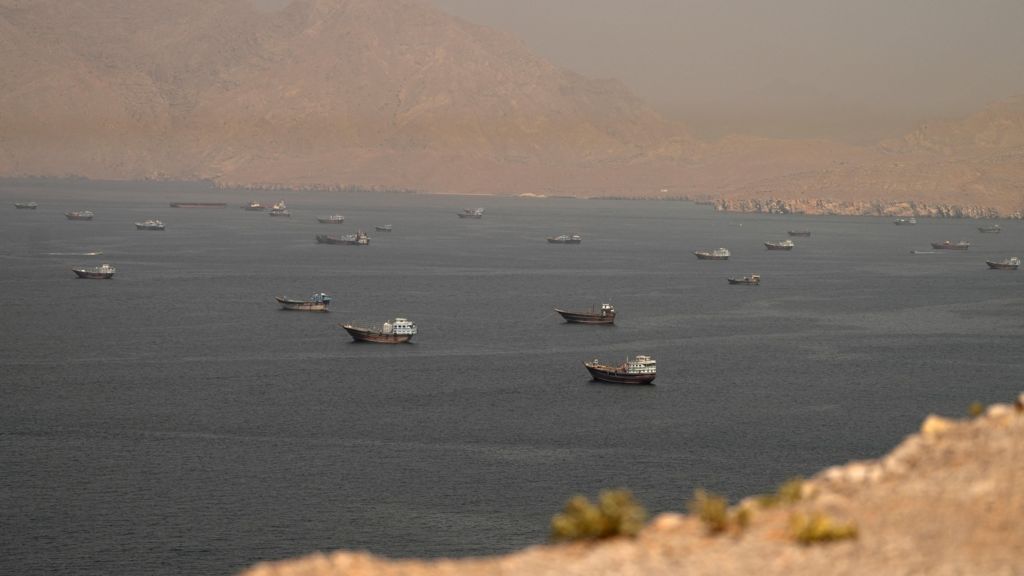
    In a development that has stoked new fears of great power confrontation in the Persian Gulf, the Rich Starry, a US-sanctioned tanker linked to China, has completed a transit of the Strait of Hormuz, defying the broad US naval blockade imposed on Iranian coastal waters earlier this month.

    According to leading maritime intelligence provider Lloyd’s List, the vessel operates under a false flag of registration in the southern African nation of Malawi, but is ultimately Chinese-owned and carries an all-Chinese crew. It was placed under US sanctions for its history of transporting Iranian goods, and details of its current cargo remain undisclosed. After anchoring off the coast of the United Arab Emirates, the transit did not technically violate the terms of the US blockade, which only restricts travel to and from Iranian ports, but the incident has sent ripple effects through global maritime and diplomatic circles, as other vessels are reportedly preparing to follow the Rich Starry’s path despite US restrictions.

    The US blockade was announced by former President Donald Trump on April 11, immediately after US-Iran peace talks in Islamabad collapsed in deadlock. The following day, US Central Command issued a clarifying statement, outlining that the operation would bar all vessels from entering or exiting Iranian ports and coastal areas, but would not block transit of the strait for ships traveling to and from non-Iranian destinations. Trump additionally issued an order instructing the US Navy to interdict any vessel in international waters that has paid the required toll to Iran, noting that no ship that complies with Iran’s illegal toll system will be granted safe passage. It remains unclear whether this order will be fully implemented.

    The Strait of Hormuz, one of the world’s most critical energy chokepoints, has been effectively closed to most commercial traffic since shortly after the joint US-Israeli military strikes on Iran in late February. The vast majority of ship owners, charterers, and insurance providers have refused to take on the significant financial and human risk of transiting the waterway amid the threat of Iranian military action.

    Blockades are a traditional naval strategy designed to convert maritime dominance into land-based leverage, cutting off an adversary’s imports and exports – in this case, Iran’s primary export of crude oil – to squeeze the target government and population by damaging their economy. For its part, Iran’s strategy of closing the strait after being attacked was intended to disrupt the global energy market, forcing the international community to pressure Washington to roll back its actions.

    Tehran has long threatened to exploit its unique geographic position adjacent to the Strait of Hormuz to shut down the waterway. After proving the severe impact a closure can have on global oil and liquefied natural gas prices, Iran has increasingly asserted its regional influence by requiring all transiting vessels to pay a tariff of up to $2 million for passage. Lloyd’s List reported on March 25 that 26 transits had already been completed under a pre-approval system run by the Islamic Revolutionary Guard Corps (IRGC), which requires ship operators to complete a vetting process to gain access.

    This Iranian demand to retain control over the strait and the right to collect tolls became a major sticking point in the April 11 talks in Pakistan. Washington has insisted that the international right to free maritime passage must be fully enforced, and the breakdown of negotiations triggered Trump’s decision to impose the naval blockade.

    Speaking to the BBC on April 13, former US diplomat to the Middle East David Satterfield framed the standoff as a test of endurance. “It’s now about which country can absorb more pain,” he said, adding that “the Iranians believe … that they can absorb more pain for a longer period than their opponents can.”

    The cost and risk calculus of the current standoff is deeply asymmetric. Maintaining the open-ended blockade will impose far higher costs on Washington than it did on Tehran to close the strait. A key open question is whether the US can sustain the interdiction operation long enough to meaningfully pressure the Iranian government, which has spent decades preparing for just such a large-scale sanctions and naval pressure campaign.

    If effectively enforced over time, the blockade could further damage Iran’s already fragile economy, which has been battered by years of sweeping sanctions, weakened by the recent war and hit by widespread nationwide anti-government protests in January. The timeline for any such impact remains uncertain, however.

    An effective blockade requires a massive commitment of naval resources. Reports indicate the US has already deployed as many as 21 warships to the Middle East, including the nuclear-powered aircraft carrier USS Abraham Lincoln and the amphibious assault ship USS Tripoli, which carries a contingent of marines trained to board suspect vessels via helicopter and small craft.

    This large deployment near Iranian coasts introduces an additional layer of risk: US assets must be protected against Iranian anti-ship missiles, attack drones, and fast-attack craft. As a result, the blockade is resource-intensive, operationally complex, and creates significant political vulnerability for the Trump administration.

    How exactly the US will enforce the blockade remains to be determined. In late 2025 and early 2026, US Navy and Coast Guard vessels boarded and seized multiple vessels linked to Venezuela’s shadow oil fleet that violated US sanctions. Whether Washington will take the same aggressive action against a Chinese-linked vessel is an open question. While firing warning shots is another potential enforcement option, that tactic carries extreme risk for tanker vessels, given the high potential for a catastrophic oil spill, as well as major political ramifications of attacking or threatening a vessel with Chinese connections.

    At present, there is no indication that the US blockade will restore free navigation through the strait in the near term. What is clear is that in the absence of unimpeded free passage, some actors are already willing to test US resolve and transit the waterway despite the blockade. The biggest risk facing all parties is a dangerous escalation if Washington moves to enforce the blockade against the Chinese-owned tanker, a scenario that is unlikely to be welcomed by Trump and his national security team.

  • Four killed and several injured after school shooting in Turkey

    Four killed and several injured after school shooting in Turkey

    Two separate school shooting incidents just 24 hours apart have left southern Turkey reeling from violence that has claimed at least four lives and left multiple others wounded, local officials confirmed this week. The most recent attack unfolded at Ayser Calık Secondary School, located in the Kahramanmaraş region of southern Turkey, according to initial statements from local authorities and regional media outlets. Visual footage captured in the immediate aftermath of the shooting shows crowds of anxious people gathered outside the school grounds, as emergency responders worked to secure the area and care for those affected. As of the latest update, the Turkish government has not released an official list of the victims’ identities, nor has it shared confirmed details about the current status or motives of the attacker. This shooting comes barely a day after a separate act of gun violence at another high school in the same southern region of the country. In that prior incident, a former student opened fire inside the school building, wounding 16 people before taking their own life. The back-to-back attacks have sparked new concern about gun safety and school security across Turkey, coming as communities in the southern part of the country already grapple with the aftermath of devastating earthquakes that struck the region in 2023.

  • Experts: Geopolitical tensions disrupting global supply chains

    Experts: Geopolitical tensions disrupting global supply chains

    Escalating geopolitical friction in the Middle East, compounded by shifting U.S. trade policies, has injected unprecedented uncertainty into global supply chains, industry leaders and policy analysts warned during a briefing at the Port of Los Angeles Monday. Top shipping executives and international relations experts say the ongoing volatility in diplomatic relations and energy markets is permanently reshaping global trade routes, raising operational costs, and forcing businesses to rewrite long-term investment strategies.

    Speaking at the event, Port of Los Angeles Executive Director Gene Seroka outlined the direct impact of strained U.S.-Iran relations and regional instability on one of the world’s most critical maritime chokepoints: the Strait of Hormuz. Before late February, 100 to 110 commercial vessels transited the 21-mile strait daily; today, only a handful of ships have been able to complete the passage, Seroka said. This blockage has sent ripple effects through already fragile global logistics networks that have yet to fully recover from post-pandemic disruptions.

    Jerrold Green, a senior fellow at the UCLA Burkle Center for International Relations, criticized the lack of meaningful progress in recent high-stakes U.S.-Iran negotiations. A 21-hour round of talks led by U.S. Vice President JD Vance over the weekend ended without any agreement, a outcome Green says is unsurprising given the lack of good-faith negotiation. “That is really not a negotiation. That’s a reading of terms that were not accepted,” Green said, noting that productive diplomacy requires reciprocal compromise and flexible bargaining—elements that have been entirely absent from the current diplomatic process.

    The extended disruption to Middle Eastern shipping lanes has already triggered major shifts in global trade patterns. Traffic through the Suez Canal, another core artery of global maritime commerce connecting Asia to Europe and North America, has dropped sharply as carriers reroute vessels to avoid regional risk. With fuel costs spiking and routing uncertainty growing, more cargo flows are being redirected to U.S. West Coast ports including Los Angeles, disrupting long-standing logistics workflows and creating unexpected congestion at these gateways, Seroka explained.

    When asked about the future of the Trans-Pacific Green Shipping Corridors, a 2023 initiative launched to speed up zero-carbon shipping between Asia and North America, Seroka noted that large-scale infrastructure and sustainability transformation operates on far longer timelines than volatile political cycles. “Most of this work that we do here at the port … takes years, and in some cases, decades. It’s never a straight line,” he said. While the Port of Los Angeles remains committed to advancing its decarbonization targets and long-term environmental goals, Seroka acknowledged that shifting trade policies and geopolitical upheaval have drastically altered the trajectory of these efforts. “All of that gets thrown into the soup, and it makes it taste very different than it did before,” he said, adding that rising energy costs and trade uncertainty have made the push for decarbonization far more complex than initially projected.

    The economic shockwaves of these supply chain disruptions are already being felt across Southern California, where the Port of Los Angeles serves as an economic anchor for the region. Local diesel prices have surged to between $7 and $8 per gallon, placing extreme financial pressure on the small trucking companies that form the backbone of last-mile port logistics. Beyond logistics, U.S. agricultural exports have also come under strain: soybean shipments from the U.S. to China have declined amid ongoing tariff tensions and evolving global sourcing strategies.

    Green, who has decades of on-the-ground experience working across the Middle East including Egypt, Iran, and Israel, warned that the current instability has permanently altered the global trade landscape. “It seems to me that the Middle East and therefore the world has changed permanently, and even if we try and go back to where we were, it simply won’t be possible,” he said. Prolonged regional unrest has already removed thousands of vessel transits from key global shipping lanes, creating massive uncertainty that carries direct economic costs. “There are massive uncertainties,” Green said. “And for me, a massive uncertainty is a potential loss. It’s not a good thing.”

    Green described the Port of Los Angeles as a strategic linchpin of California’s economy, which ranks as the fourth largest economy in the world by GDP. Mounting global uncertainty, he emphasized, directly translates to slower regional economic performance. Volatility in energy prices has also created whiplash for consumer and industrial trends, most notably in electric vehicle demand. “Electric cars are out of fashion … back and forth, caroming back and forth. Now they’re back because of the price of petroleum,” he said, noting that these constant shifts impact not just U.S. domestic industries, but consumers in every country across the globe.

    Persistent policy and geopolitical uncertainty has also put a damper on business planning across all sectors tied to trade, Seroka added. Hiring at port-related businesses has remained soft for more than 12 months, and while inflation has not spun out of control, it remains above target levels, pushing corporations to adopt a far more cautious approach to capital investment. Even the steady U.S. consumer spending that has propped up economic growth in recent months may not hold, Seroka warned: “The American consumer seems to be so consistent in their buying patterns. At some point, I would think that’s going to tip, too.”

    Green echoed these concerns, noting that the unexpected outbreak of conflict in the Middle East underscores the fundamental fragility of long-term economic planning in today’s geopolitical climate. “This war came out of nowhere. Nobody predicted it, nobody expected it, and it was a body blow,” he said. Reiterating the core risk of prolonged uncertainty, he added: “There are massive uncertainties … and massive uncertainty is a potential loss.”

  • Go on patrol with the Canadian Rangers across the frozen Arctic

    Go on patrol with the Canadian Rangers across the frozen Arctic

    Beneath the endless pale blue sky that stretches over a vast, frozen wilderness, a small group of Canadian Rangers has been making its way across one of the harshest environments on Earth. On the final stretch of a landmark journey through Canada’s remote far north, a BBC reporting team was granted rare access to accompany these dedicated servicemembers as they carry out one of the country’s most unique sovereignty missions. For decades, the Canadian Rangers have served as the eyes and ears of the nation in the Arctic, a sparsely populated region where icy conditions, subzero temperatures, and vast uninhabited expanses make regular government presence a constant challenge. This particular trek stands out as a historic effort to reaffirm Canada’s territorial claim in a region that has grown increasingly strategically important as climate change opens up Arctic waterways to new shipping lanes and natural resource exploration. Walking mile after mile across snow-covered tundra and frozen riverbeds, the Rangers demonstrate the steady commitment Canada maintains to its northern borders. The accompanying BBC journalists documented firsthand the harsh realities of Arctic patrol work, from battling wind chills that can drop to dangerous negative temperatures to navigating terrain that shifts beneath the snow with each changing season. What emerges from the journey is a portrait of quiet resilience, as these part-time military personnel — many of whom are local Indigenous residents with deep knowledge of the Arctic landscape — work to uphold Canadian sovereignty while connecting with scattered remote communities across the region. The final leg of the trek brought the patrol and their BBC guests through areas that see almost no outside visitors, highlighting just how critical the Ranger presence is to maintaining Canada’s foothold in its northernmost territories amid growing regional and global interest in the Arctic’s future.

  • Seoul court sentences US YouTuber to 6 months in jail over offensive stunts

    Seoul court sentences US YouTuber to 6 months in jail over offensive stunts

    A 25-year-old American YouTube creator, Ramsey Khalid Ismael — better known by his online alias Johnny Somali, a self-described internet troll — has received a six-month prison sentence from a Seoul court, concluding a high-profile case that triggered widespread national anger across South Korea over a series of deliberately provocative public actions.

    On Wednesday, the Seoul Western District Court delivered its guilty verdict on multiple counts against Ismael, including obstruction of business operations and distribution of fabricated sexually explicit material. Prosecutors had initially pushed for a far harsher three-year prison term, pointing to a long list of disruptive behavior the content creator committed during his time in the country. Beyond the most controversial incident that drew global attention, Ismael was accused of harassing staff and guests at a Seoul amusement park, disturbing public order at a local convenience store by blaring loud music and throwing a bowl of noodles onto a table, and creating identical disruptive scenes on public bus and subway services. He also faced charges for sharing non-consensual deepfake explicit videos to his online audience.

    The most incendiary incident that catalyzed public fury occurred in October 2024, when Ismael livestreamed himself dancing, kissing, and performing a lap dance on the Statue of Peace, a memorial honoring the so-called “comfort women” — women and girls forced into sexual slavery by the Japanese Imperial Army during World War II. The monument is a deeply symbolic site for many South Koreans, carrying heavy historical and emotional weight, and the stunt quickly drew fierce condemnation across the country. After the video went viral, Ismael issued a public apology, claiming he had no prior knowledge of the memorial’s historical meaning.

    In its ruling, the court emphasized that Ismael had shown “severe” disregard for South Korea’s legal framework and social norms. The judge noted that all of the content creator’s stunts were streamed live on his YouTube channel specifically to generate ad revenue and grow his audience, a calculation that came at the cost of offending millions of South Korean people. Following the reading of the verdict, the court ordered Ismael’s immediate arrest and detention, arguing that he poses a significant flight risk given the nature of his conviction. Ismael had already been placed under a travel ban that barred him from leaving South Korea before the conclusion of his trial, and prior to the ruling he told local reporters that he regretted his actions and wanted to issue a formal apology to the South Korean public.

  • China’s zero-tariff policy hailed as game changer for African economies

    China’s zero-tariff policy hailed as game changer for African economies

    Starting May 1, 2026, China will implement full zero-tariff treatment for all imports from 53 African countries that maintain diplomatic ties with Beijing — a policy shift that economic analysts, regional leaders, and policymakers across Africa and beyond are praising as a transformative step that will deepen mutually beneficial China-Africa cooperation and unlock sustained continental growth. The landmark policy was first officially announced by Chinese authorities during the 39th African Union Summit held in Addis Ababa, Ethiopia, in February 2026, marking a new milestone in a trade partnership that has already positioned China as Africa’s largest trading partner for 16 consecutive years.

    Nicholas Mainza, national secretary of the Economics Association of Zambia (EAZ) and Zambia’s 2025 Economist of the Year, framed the initiative as a tangible reflection of China’s longstanding dedication to equitable South-South cooperation and reciprocal trade development. By eliminating tariff barriers, African goods will gain enhanced competitiveness in the world’s second-largest consumer market, opening new pathways for export-driven economic expansion across the continent, Mainza explained.

    “To grow cross-border trade volumes, you have to create meaningful incentives for producers. Zero tariffs cut through trade barriers and make our goods far more competitive in the Chinese market,” Mainza said. “Greater export volumes to China translate into more foreign exchange earnings, which strengthen national reserves and fund critical domestic development priorities, from large-scale infrastructure projects to domestic industrialization drives.”

    Mainza noted that Zambia, whose economy has long relied on raw copper exports, stands to gain significant benefits if the country uses the new policy framework to diversify its export portfolio into value-added manufactured goods and processed agricultural products. For China, the policy also delivers strategic advantages, he added, securing reliable access to the commodities and production inputs that power China’s vast industrial base. This reciprocal arrangement confirms that the China-Africa economic partnership is balanced, mutually beneficial, and strategically aligned for long-term growth, he emphasized.

    Placing the policy in the context of shifting global trade dynamics, Mainza observed that at a time when many major economies are turning inward and adopting increasingly restrictive protectionist measures, China is choosing to open its markets wider to developing nations. “In a global landscape where more countries are raising tariff walls, China is embracing greater trade openness,” he said. “This approach strikes a deep chord with developing economies that are focused on growing through trade, rather than relying on conditional aid.”

    While Zambia’s existing deepening cooperation with China across mining, manufacturing, information and communications technology, and agro-processing puts the country in a strong position to capitalize on the new policy, Mainza stressed that local producers will need to meet Chinese market quality and safety standards to fully capitalize on the opportunity. He added that African nations across the continent must invest in upgrading domestic productivity, improving cross-border logistics networks, and strengthening regulatory compliance to maximize the policy’s benefits. “Zero tariffs create the opportunity, but national preparedness will determine how much each country gains,” Mainza said. “The core priority is boosting domestic competitiveness and trade readiness across the continent.”

    This initiative is a key part of the maturing China-Africa partnership, which is now anchored in deepening trade collaboration, infrastructure development, and industrial capacity building, Mainza explained. “This is not about creating dependency; it is about expanding trade flows and building long-term productive capacity. If implemented and managed strategically, the zero-tariff policy can make a meaningful contribution to Africa’s long-term economic transformation,” he said.

    Chinese Foreign Minister Wang Yi reaffirmed the policy’s goals during a press conference held on the sidelines of China’s annual top legislative and political advisory sessions, which concluded in Beijing on March 12. Wang explained that the full tariff elimination is designed to boost bilateral trade, deliver shared prosperity for people on both sides, and give African economies full access to the massive consumer opportunities of the Chinese market. He added that China remains firmly committed to advancing trade and investment liberalization and facilitation, maintaining the stability and smooth operation of global industrial and supply chains, upholding the multilateral trading system centered on the World Trade Organization, and defending a fair, open global economic and trade order.

    Regional leaders across Africa have echoed widespread praise for the policy. Grace Mutembo, Zambia’s high commissioner to South Africa, welcomed the zero-tariff framework as a once-in-a-generation opportunity to expand African export volumes to China. “This is a tremendous opportunity for African countries, and Zambia in particular, as we work to expand our export base,” Mutembo said. “China is one of our key target markets for our growing range of goods.” She added that Zambia and other African nations are already working to boost value addition in key sectors including agriculture and mining before exporting products to the Chinese market.

    Charles Onunaiju, director of the Center for China Studies in Nigeria, described China’s zero-tariff access for African exports as a true “game changer” for Nigeria, noting that it creates a rare, practical opening to drive broad-based economic transformation across the country. “Nigeria must seize this zero-tariff opportunity as low-hanging fruit that can transform our economy and help address persistent insecurity by creating new jobs and growth,” Onunaiju said in an interview with Nigerian broadcaster Arise News.

    Onunaiju noted that China’s 1.4 billion-person consumer market gives African economies like Nigeria unprecedented export potential, noting that even a small increase in market share could deliver outsized economic benefits. “If we can capture just 1 percent of China’s total market demand, that would be fundamentally transformative, especially for our efforts to diversify the Nigerian economy away from overreliance on crude oil exports,” he said.

    A Nairobi-based independent think tank, the HORN International Institute for Strategic Studies, noted that the new policy marks a major evolution in the China-Africa economic relationship. For the past two decades, the narrative of China-Africa engagement has largely centered on the Belt and Road Initiative, which has been defined by large-scale infrastructure loans, port development, and cross-border railway projects. Expanding this preferential trade treatment to all 53 African nations with diplomatic ties to China — including bringing major middle-income economies such as South Africa, Kenya, Nigeria, Egypt, and Morocco into the zero-tariff framework for the first time — represents an unprecedented economic concession that shifts the relationship into a new phase of trade-focused collaboration.

    The institute’s analysis added that Beijing is clearly positioning itself as the reliable long-term economic partner of choice for the Global South, stepping into the gap created by rising protectionist policies from Western economies. Projections for the 2026 fiscal year estimate that China will forgo approximately $1.4 billion in annual tariff revenue to implement the policy and support Africa’s economic integration into global markets.

    “The implementation of China’s zero-tariff policy for Africa starting in May 2026 is a defining moment in modern global geoeconomics,” the institute’s report stated. “It challenges the Western model of highly conditional trade access and provides a continent facing significant economic headwinds with a direct, unobstructed pipeline to the world’s second-largest economy.”

  • An Iranian national convicted in France returns to Iran after release of 2 French citizens

    An Iranian national convicted in France returns to Iran after release of 2 French citizens

    In a developing diplomatic twist between France and Iran, an Iranian citizen convicted of terrorism-linked charges in Paris has returned to her home country just seven days after two long-detained French nationals finally touched down back on French soil, Iranian state television has confirmed.

    The individual in question, Mahdieh Esfandiari, received her sentence from a Paris criminal court back in February this year. The court handed down a one-year prison term, an extra three-year suspended sentence, and a permanent ban on entering French territory. The charges stemmed from public comments Esfandiari made following the October 7, 2023 attacks on Israel carried out by Hamas. She has repeatedly contested the ruling and launched an appeal against the conviction.

    Esfandiari’s defense attorney, Nabil Boudi, confirmed to the Associated Press that his client had originally been placed under house arrest after the conviction. But French authorities lifted that restrictive measure exactly one week after the two French detainees, Cécile Kohler and Jacques Paris, departed Iran for France.

    Kohler and Paris, a French couple who were arrested while on vacation in Iran in May 2022, spent more than 36 months locked in Tehran’s notorious Evin Prison — a facility widely known for holding political prisoners and government dissidents. They were accused of conducting espionage on Iran, a charge Paris has repeatedly dismissed as completely baseless. The pair were granted release from prison back in November 2024, but were barred from leaving Iran by local authorities, forcing them to take shelter in French diplomatic compound in Tehran for months until their exit was approved last week. Upon their return to France, Kohler described their time in Evin Prison as unrelenting suffering, calling their imprisonment “daily horror” and a period of “hell.”

    In an interview with Iranian state television following her arrival back in Iran, Esfandiari pushed back against her French conviction, calling the court’s verdict “unjust” and claiming she “had done nothing other than stating the truth.” She also explicitly connected her release from house arrest and ability to return to Iran to the departure of Kohler and Paris, noting that “On the very same day that they were released … they (French authorities) released me. They called and said that this (house arrest) restriction has been lifted.”

    Shortly after Kohler and Paris left Iran last week, Iran’s official state news agency IRNA announced that Tehran and Paris had reached a negotiated agreement: the two French citizens would be allowed to leave, in exchange for France releasing and repatriating Esfandiari.

    But the Elysee Palace, the official office of French President Emmanuel Macron, has directly refuted that claim, denying any formal prisoner swap agreement was struck between the two nations. French Foreign Minister Jean-Noël Barrot has also declined to confirm details of behind-the-scenes talks, saying that any information about negotiations with Iran will remain “confidential.” It has previously been reported that Tehran had lobbied French officials for Esfandiari’s release since 2024.

  • Veteran negotiator Roelf Meyer appointed as South Africa’s ambassador to the US

    Veteran negotiator Roelf Meyer appointed as South Africa’s ambassador to the US

    In a calculated move aimed at defusing months of escalating diplomatic friction between Pretoria and Washington, South African President Cyril Ramaphosa has named veteran politician Roelf Meyer as the nation’s next ambassador to the United States, presidential spokesperson Vincent Magwenya confirmed to the Associated Press.

    Meyer brings a uniquely storied political background to the high-stakes posting. A white Afrikaner himself, he first held cabinet office as defense minister between 1991 and 1992 under F.W. de Klerk’s white minority National Party government. He went on to serve as the lead white government negotiator in the landmark talks that dismantled apartheid, paving the way for Nelson Mandela’s 1994 historic election as South Africa’s first Black democratic head of state. After the transition, Meyer joined Mandela’s post-apartheid cabinet as minister of constitutional development from 1994 to 1996, giving him decades of cross-party and cross-community negotiation experience.

    The appointment comes at a moment of severe strain in bilateral ties, one that has left Ramaphosa needing a nominee that could win acceptance from the outgoing Trump administration. Relations collapsed after former South African ambassador Ebrahim Rasool was expelled by the White House in response to public criticism of Donald Trump’s policies toward the country.

    Trump has openly targeted South Africa’s governing administration for months: he cut all U.S. financial assistance to the nation over unsubstantiated claims that the South African government was enabling a so-called “white genocide” of the Afrikaner minority, and launched a special program to grant migration access and asylum to white South Africans who claim persecution at home.

    Meyer’s nomination follows just one week after Ramaphosa accepted Leo Brent Bozell III, Trump’s pick for U.S. ambassador to South Africa, who took office under an immediate cloud of tension. In March, the South African foreign ministry summoned Bozell, a prominent conservative American activist, after he publicly criticized Pretoria’s diplomatic relations with Iran and attacked the country’s affirmative action policies, which he claimed prioritize Black South Africans over other racial groups.

    Beyond disputes over domestic South African policy and migration, the two countries are also deeply divided over Pretoria’s decision to bring a genocide case against Israel before the International Court of Justice over its military campaign in Gaza. The rift has spilled into multilateral forums: Trump boycotted the 2025 G20 Leaders Summit hosted by South Africa, and has extended the snub by declining to invite South Africa to the upcoming G20 meetings hosted by the U.S. in Miami this December.

    Many regional diplomacy analysts see Meyer as a pragmatic choice to repair fractured ties. John Stremlau, an expert on U.S.-Africa relations at the University of the Witwatersrand, described Meyer as “the right person, at the right time” for the posting. “He is an excellent and experienced negotiator who not only negotiated in South Africa, but has brokered agreements elsewhere in various other places under very difficult circumstances,” Stremlau noted. His core task, Stremlau added, will be to stabilize the sharply frayed relationship between the two nations. Even so, the analyst warned that the path forward would not be easy, pointing to Trump’s existing executive orders that laid out what Stremlau called a “racist agenda against South Africa’s Black majority” through the aid cut and targeted asylum program for Afrikaners.

  • Conflict takes toll on historic sites

    Conflict takes toll on historic sites

    As armed clashes between US-Israeli forces and regional opponents intensify across the Middle East, a growing global outcry has emerged over the widespread destruction of irreplaceable historic and cultural sites that form part of humanity’s collective shared memory. Leading cultural experts warn that the scale of damage goes far beyond what can be dismissed as unavoidable collateral damage of war, marking a deliberate, systematic erasure of centuries of civilizational history.

    According to Iran’s Minister of Cultural Heritage, Tourism, and Handicrafts Seyed Reza Salehi-Amiri, at least 131 historical and cultural monuments spanning 20 of Iran’s provinces have sustained damage from US-Israeli airstrikes. The capital Tehran has borne the brunt of the destruction: 63 sites in the city have been impacted, including the Golestan Palace, a world-renowned architectural masterpiece combining Safavid and Qajar era design, and the 100-hectare Sa’dabad Palace complex, which houses 20 separate museums. In central Isfahan province, 23 sites have been damaged, among them Chehel Sotoun Palace, a UNESCO World Heritage Site. Western Kurdistan province has recorded 12 damaged historical monuments.

    Neda Zoghi, an Iranian artist and civilization scholar with a doctorate in Islamic art based at Kuala Lumpur’s Asia West East Centre, emphasized that the destruction is not merely damage to empty structures. “Every tile-work panel, every inscribed archway, every manuscript cabinet represents a node in a living network of human knowledge that took centuries to construct and cannot be reconstructed in any lifetime,” she explained. Zoghi added that the layered artistic traditions of Iranian heritage mean that a single damaged site can erase multiple irreplaceable strands of human history at once, noting that these sites predate modern political conflicts by centuries and millennia. The targeting of these spaces, she argued, violates explicit international prohibitions on cultural violence during armed conflict.

    UNESCO has repeatedly called for the protection of cultural heritage across the region, reminding all parties that cultural property is protected under the 1954 Hague Convention for the Protection of Cultural Property in the Event of Armed Conflict and the 1972 World Heritage Convention. As of late March, the organization confirmed that multiple UNESCO-listed sites across Iran, Israel, and Lebanon have already sustained damage, and it has warned of growing risks to cultural sites in more than a dozen neighboring countries across the Middle East and West Asia.

    The threat extends far beyond Iran, most acutely to Gaza and Lebanon. In Gaza, which has faced three years of intense Israeli bombardment, remote satellite monitoring led by UNESCO has confirmed verified damage to 164 cultural sites between October 2023 and March 2026. This toll includes 14 religious sites, 128 buildings of historic or artistic importance, two museums, and eight archaeological sites. In Lebanon, where Israeli bombardment has escalated in recent months, growing fears center on damage to iconic sites including the Roman temple ruins of Baalbek and the ancient coastal city of Tyre, both UNESCO World Heritage Sites. Even when sites are not directly hit, experts note that shockwaves from nearby airstrikes can destabilize ancient foundations and stone structures, causing irreversible long-term damage.

    Following a formal request from the Beirut government, UNESCO held an extraordinary meeting in early April to coordinate emergency protection for Lebanese cultural heritage. The body approved provisional enhanced protection for 39 key cultural properties and allocated more than $100,000 in emergency funding for on-the-ground protection efforts. Nabil Najjar, a member of the executive committee for the world-famous Baalbeck International Festival, held annually at the archaeological site, said that while the festival has not yet been canceled, a postponement or full cancellation for 2026 looks increasingly likely. He noted that in 2024, a strike on the site’s perimeter wall prompted immediate protective measures from UNESCO, which has since rolled out similar protective marking for other at-risk sites across the country.

    Legal experts note that while UNESCO’s enhanced protection framework carries important legal weight, its on-the-ground impact is limited. Arie Afriansyah, a law professor at the University of Indonesia, explained that the 1999 Second Protocol to the Hague Convention grants the highest level of international legal protection to listed sites, banning attacks and military use of these properties and requiring criminalization of violations. “Its real value is deterrence, clearer no-strike identification, documentation, and stronger accountability later. But it is not a physical shield,” Afriansyah said, adding that protection is weakened in Lebanon because Israel is not a party to the 1999 Second Protocol, even though the broader 1954 Hague Convention remains binding.

    Zoghi highlighted a deeper systemic flaw in global enforcement of cultural heritage protection: selective application of international law. She noted that when Iran retaliates militarily, the international community moves quickly to condemn the action, but the initial US-Israeli strikes that damaged sites ranging from mosques and synagogues to ancient Zoroastrian landmarks have not faced equivalent international censure. “This asymmetry is not merely politically inconvenient. It is legally corrosive. It teaches every future aggressor that the Convention is a shield available only to the powerful,” she said. Zoghi stressed that this critique is not a justification for any particular military action, but a defense of the principle that international humanitarian law only works if it applies universally. “The moment it becomes a tool selectively deployed against one party, it ceases to function as law and becomes instead a form of geopolitical rhetoric dressed in legal language. That is dangerous for every civilization on Earth, not only for Iran.

    She also pushed back against widespread framing of the current conflict as a religious war, noting that Iranian and broader Persianate civilization has always been a pluralistic space shared by Muslim, Christian, Jewish, Zoroastrian, and secular communities. “To reduce this heritage and this conflict to a simple religious binary is to commit violence against history itself,” Zoghi said. “You may wage war against a government, but history will never forgive you for waging war against civilization.”

  • Two ships transit Hormuz for Iranian ports despite US blockade: media

    Two ships transit Hormuz for Iranian ports despite US blockade: media

    The long-running maritime standoff in one of the world’s busiest strategic waterways took a new turn this week, as two commercial vessels bound for Iranian ports successfully completed a transit through the Strait of Hormuz despite a sweeping U.S. blockade designed to cut off seaborne traffic to and from the Islamic Republic, according to a new report from leading British shipping industry outlet Lloyd’s List.

    The U.S. military confirmed just this Tuesday that it has deployed over 10,000 troops to carry out the blockade order, which applies to all vessels seeking to enter or depart Iranian ports regardless of their flag or country of origin. In response to this enforcement, shipping observers have documented a growing pattern among vessels targeting Iranian ports: altering their publicly broadcast Automatic Identification System (AIS) destination data to obscure their final intended stop before moving through the strait.

    Per Lloyd’s List’s on-the-ground industry tracking, the two Iran-flagged container ships in question originally set their AIS transponders to indicate a final destination of Bandar Abbas, Iran’s key southern commercial and military port on the Persian Gulf. Shortly after the U.S. blockade entered into force, the vessels updated their AIS destination to the far broader, less specific label “PG Ports” — short for Persian Gulf ports — hiding their specific intended endpoint from general tracking systems. After the ships cleared the Strait of Hormuz without incident, they reoriented their course directly toward Bandar Abbas and continued their journey on Tuesday, the report confirmed.

    Maritime analysts cited in the report note that this common adaptive tactic creates new, unplanned complications for the U.S. blockade’s implementation. By obfuscating their final destinations via AIS adjustments, vessels force U.S. intelligence and surveillance operations to expend far more resources to track and confirm the actual destinations of Persian Gulf-bound traffic, extending the intelligence gathering phase of the blockade and slowing interdiction efforts.

    The Strait of Hormuz remains one of the most critical chokepoints for global energy trade, with roughly a fifth of the world’s total oil consumption passing through the waterway each day. The new development highlights growing frictions between U.S. sanctions and blockade enforcement and commercial shipping operators seeking to maintain trade links with Iran, raising new questions about the long-term effectiveness of the U.S. measure.