分类: world

  • Middle East conflict slows Africa growth outlook, IMF and World Bank warn

    Middle East conflict slows Africa growth outlook, IMF and World Bank warn

    Sub-Saharan Africa’s fragile post-shock economic recovery is at growing risk of stalling this year, the International Monetary Fund (IMF) and World Bank have warned, as spillover effects from the ongoing Middle East conflict drive up critical commodity prices and amplify pre-existing economic vulnerabilities across the continent.

    In joint comments released following a Tuesday meeting in Washington between IMF leadership and the African Consultative Group, the two global financial institutions cut their 2026 growth projections for the region, confirming that the conflict has erased earlier optimism for accelerating expansion. The IMF now forecasts aggregate African GDP growth will cool to 4.2% in 2026, down from an estimated 4.5% growth in 2025. Sub-Saharan Africa’s growth, specifically, is projected to ease to 4.3% this year, with the World Bank trimming its own Sub-Saharan forecast by an even steeper 0.3 percentage points to 4.1%.

    Citing the Middle East conflict as a major new disruptive force, analysts warn that higher prices for fuel, food and fertilizer – three commodities critical to African household budgets and industrial activity – have reignited inflationary pressures that were starting to ease. The World Bank projects regional inflation will climb back up to 4.8% in 2026, a sharp jump from 3.7% recorded in 2025, a surge that hits low-income and poor households the hardest, as they spend the majority of their income on basic necessities.

    “Growth momentum in Africa is expected to slow down in 2026 contrary to earlier projections,” the joint statement reads, adding that the conflict has deepened fragility that already stemmed from soaring debt service costs, restricted access to affordable financing, and unmet development needs that have long constrained policy options for low-income and conflict-affected nations. “The war has further complicated the situation, with risks of lasting economic scarring driven by renewed inflation, food shortages and growing social tensions.”

    Pierre-Olivier Gourinchas, director of the IMF’s research department, told reporters on Tuesday that the economic hit is already visible, with growth downgrades and rising inflation recorded across a large number of African countries. He noted that the impact varies by national economy: energy-importing nations face far steeper headwinds than energy-exporting countries that benefit from elevated global oil prices.

    Beyond growth and inflation, the geopolitical uncertainty sparked by the conflict is already starting to disrupt planned investment flows into the continent. The World Bank estimates that more than $100 billion in investment commitments from Gulf Cooperation Council sovereign wealth funds – concentrated in the United Arab Emirates, Saudi Arabia and Qatar – could face delays or be scaled back as funds reassess their risk exposure amid heightened global volatility. These investments, which target priority African sectors including renewable energy, port infrastructure, logistics, mining and large-scale agriculture, have been a key source of financing for major development projects across Sub-Saharan Africa in recent years.

    IMF officials added that the combination of higher commodity prices, tighter global financial conditions, and declining foreign aid has created even more severe pressure for low-income African countries already struggling to unsustainable high debt burdens.

    Both institutions and African finance leaders have laid out a clear policy path for governments to navigate the crisis: in the near term, policymakers must prioritize keeping inflation expectations anchored and rolling out targeted, time-bound financial support to protect the most vulnerable households from price hikes. Over the medium term, countries need to accelerate structural reforms focused on economic diversification, deepen regional integration, and expand critical infrastructure to build long-term resilience against future external shocks. World Bank Africa chief economist Andrew Dabalen emphasized that maintaining core macroeconomic stability through inflation control and prudent fiscal management remains non-negotiable to set the continent up for faster growth once the current crisis eases.

  • Nigerian security forces on high alert for large-scale attack on airport and prison, memo says

    Nigerian security forces on high alert for large-scale attack on airport and prison, memo says

    ABUJA, Nigeria — Nigeria’s national security apparatus has been placed on heightened alert following a leaked internal intelligence memo that uncovered coordinated planned attacks by Islamist militant networks targeting critical public infrastructure across Abuja and neighboring Niger State. The confidential document, dated April 13 and obtained by the Associated Press from the Nigeria Customs Service on Wednesday, outlines specific high-value targets selected by the attackers: Nnamdi Azikiwe International Airport in Abuja, a federal prison in the capital, and a military detention facility located in Niger State.

    According to the memo’s text, the militants’ dual objectives are to free dozens of detained terror group members and cause catastrophic damage to Nigeria’s key aviation infrastructure. The warning draws a clear parallel to a deadly January assault on an air force base in Niamey, the capital of neighboring Niger Republic, noting that terror operatives are actively seeking to replicate that successful attack model within Nigeria’s borders. “An analysis of the report reveals a concerning correlation between the potential targeting of the Nnamdi Azikiwe Airport Abuja and recent large-scale attacks on aviation facilities in Niger Republic, notably in Niamey and Tahoua. This suggests a possible intent by terrorists to replicate the attack patterns within Nigeria,” the memo states.

    The Abuja prison referenced in the warning was the site of a major 2022 militant breakout, when an attack organized by the Islamic State West Africa Province (ISWAP) allowed 879 inmates to escape, including 64 confirmed ISWAP members. The latest planned operation is set to be executed by deep-cover sleeper cells belonging to two of Nigeria’s most active militant groups: Boko Haram and its offshoot ISWAP, the memo confirms.

    A senior Nigeria Customs Service official, who spoke on condition of anonymity due to restrictions on speaking to the media, confirmed that all branches of the military and national paramilitary forces have been placed on high alert and are actively preparing to disrupt the planned attacks. As of press time, neither the Nigeria Customs Service nor the Nigerian military has issued an official response to AP’s requests for comment on the intelligence alert.

    The revealed plot comes amid a long-running and evolving security crisis across Nigeria, Africa’s most populous nation. For more than a decade, insurgent violence has plagued the country’s northern regions, where multiple armed extremist groups operate, carrying out attacks, kidnappings for ransom, and community raids. Alongside Boko Haram and ISWAP, the IS-affiliated Lakurawa group has expanded its operations in northwestern Nigeria’s border regions adjacent to Niger Republic in recent years.

    The new terror warning also follows a recent security adjustment by the United States, which last week authorized the evacuation of non-emergency government staff and their family members from its Abuja embassy, citing a sharp rise in terrorist attacks, kidnapping incidents, and violent crime across northern Nigeria. The U.S. mission has since suspended regular public operations. Nigerian Information Minister Mohammed Idris downplayed the U.S. move, framing it as a standard precautionary step following internal security protocols, and stressed that the decision does not reflect the full security landscape across the country.

  • Pope urges Cameroon authorities to examine ‘conscience’

    Pope urges Cameroon authorities to examine ‘conscience’

    On the opening day of his high-stakes trip to Cameroon, Pope Leo XIV delivered an unusually blunt public address Wednesday, challenging the Central African nation’s ruling authorities to confront systemic corruption and human rights shortcomings while calling for a collective examination of national conscience.

    Greeted by throngs of cheering supporters lining the capital Yaoundé’s streets upon his arrival, the U.S.-born pontiff spoke directly to senior officials, including 93-year-old President Paul Biya, who has held unbroken power in the country since 1982. The visit comes just months after Biya’s disputed October re-election to an eighth term, which sparked widespread protests that were met with a harsh government crackdown.

    Standing beside Biya during the address, Pope Leo emphasized that while national security remains a core governing priority, it must always be pursued in full alignment with fundamental human rights protections. “Public authorities are called to serve as bridges, never as sources of division, even when insecurity seems prevalent,” he told the assembled crowd of officials, diplomats, and community leaders.

    Just one day before the pope’s arrival, a coalition of Cameroonian civil society groups released a public statement decrying what they called an “unprecedented period of repression” in the wake of the presidential polls. The groups have repeatedly demanded the immediate release of hundreds of political detainees, many of whom are being held without any formal legal grounding. Herve Nzouabet Kweto, representative of NGO Source de Vie and a signatory to the statement, confirmed to Agence France-Presse that out of nearly 2,782 political prisoners registered by the coalition, more than 2,630 have not yet received any trial or sentencing.

    “It is time to examine our conscience and take a bold leap forward,” Pope Leo asserted. “In order for peace and justice to prevail, the chains of corruption… must be broken.”

    In his formal response to the pontiff’s remarks, Biya acknowledged that “the world needs the message of peace” that Pope Leo brought to Cameroon during his tour. This visit marks the second stop on Pope Leo’s four-nation African pilgrimage, which launched against a backdrop of political friction: U.S. President Donald Trump recently publicly stated he is “not a big fan” of the pontiff, after Pope Leo called for renewed diplomatic efforts to secure peace in the Middle East.

    Widespread systemic corruption has plagued Cameroon throughout Biya’s decades-long tenure, with Transparency International’s 2025 Corruption Index ranking the country 142nd out of 180 surveyed nations. In recent years, the 93-year-old president has faced growing criticism over his frequent trips abroad, most of which are for medical care or luxury stays at an upscale Geneva hotel. Opposition leaders have accused Biya of diverting massive amounts of taxpayer money to fund these private getaways. A 2018 investigation by the Organized Crime and Corruption Reporting Project (OCCRP), an international consortium of investigative journalists, estimated that Biya has spent a cumulative total of 4.5 years outside of Cameroon over his 43 years in office, with public costs for these stays topping $65 million.

    Pope Leo used his address to highlight the critical role that civil society, including women’s groups, youth organizations, trade unions, humanitarian NGOs, and traditional and religious leaders, plays in building a foundation of lasting social peace. On Thursday, he is set to travel to Cameroon’s restive English-speaking Northwest region, where a long-running separatist conflict has displaced thousands and destabilized the area for years. The visit will proceed under heavy security deployment to protect the pontiff during his time in the conflict zone.

  • Visa-free policy urged to drive African integration

    Visa-free policy urged to drive African integration

    Across the African continent, business leaders, policy experts and senior officials are amplifying longstanding calls for a unified visa-free travel regime, framing the elimination of cross-border visa requirements as a non-negotiable step to unlock intra-regional trade, revitalize tourism and deliver on the long-held goal of continental integration.

  • Chinese know-how helps boost rice production in Uganda

    Chinese know-how helps boost rice production in Uganda

    In the sun-dappled wetland plains of eastern Uganda’s Butaleja district, where endless emerald rice paddies roll toward the horizon, third-generation farmer Robert Sagula walks through his towering, swaying crop with a pride that speaks to a dramatic life transformation. For decades, Sagula followed the same path his father walked, growing the traditional rice varieties first brought to the region by Chinese agricultural experts in 1975. Back then, yields were barely enough to get by: a single hectare delivered just 1,500 to 2,500 kilograms of milled rice, enough to feed his family but leave no room for long-term prosperity.

    That all shifted in 2018, when the tripartite FAO-China-Uganda South-South Cooperation project introduced high-yield hybrid rice varieties to Sagula’s community. Today, the change is visible in every stalk and every line of Sagula’s income statement. “The hybrid rice produces far higher yields, has a pleasant aroma, long golden grains that carry more weight, and sells for a much better price on local markets than our traditional varieties,” Sagula explained.

    With the proper cultivation training he received from Chinese experts, Sagula now harvests roughly 12 metric tons of paddy rice per hectare each growing season, and he farms two full seasons annually across his 1.2-hectare plot. That translates to 7,500 kilograms of milled rice per season, netting him around $2,809 in earnings every six months. His total annual income now hits roughly $16,854 — more than 10 times what he earned growing traditional varieties.

    That windfall has reshaped his family’s future: Sagula has sent all his children to top private schools, multiple have already graduated, and he has built a spacious modern family home on his farm. Word of his success has spread across eastern Uganda, drawing hundreds of curious farmers to his plot to learn his techniques. Sagula now serves as a community mentor, training local farmers in hybrid rice cultivation and encouraging more to make the switch. He credits his entire transformation to the hands-on training from Chinese agricultural experts and government support, and is calling for the project to be extended to reach more rural households.

    Launched in Uganda in 2012, the FAO-China-Uganda South-South Cooperation project was designed to lift national agricultural productivity by transferring proven, smallholder-friendly Chinese agricultural technologies and decades of cultivation expertise to Ugandan farmers. Now in its third phase, the program has evolved into a shared partnership: the first phase was fully funded by China, while the Ugandan government now covers approximately 76 percent of the third phase’s total budget, with discussions underway for a fourth extension phase to expand impact.

    To date, the program has deployed 54 experienced Chinese agricultural specialists across key sectors including livestock, fisheries, crop science, and agribusiness, according to Martin Ameu, FAO’s South-South program coordinator in Uganda. Beyond hybrid rice, the initiative has supported the adoption of a range of climate-resilient, productivity-boosting practices including integrated rice-fish co-culture, improved poultry and livestock breeds, and drought-resistant foxtail millet varieties.

    Across 33 Ugandan districts, the project has directly improved livelihoods for approximately 140,000 smallholder farmers. “We are seeing tangible gains: improved national food security from new technologies, higher household incomes for smallholders, and study exchange tours to China that give Ugandan officials and farmers firsthand experience of effective practices they can bring home,” Ameu said. The program has also strengthened cross-border trade connections and attracted new private sector investment, boosting value addition and opening new market channels for Ugandan agricultural products. Ameu notes the initiative has become a gold standard model for South-South cooperation across Africa, with Uganda sharing its successful experience at regional forums to encourage similar programs across the continent.

    Julius Twinamasiko, program coordinator at Uganda’s Ministry of Agriculture, Animal Industry and Fisheries, said the project has driven critical progress in mechanizing and commercializing the country’s smallholder agriculture sector. Beyond hybrid rice, the ministry has already released three improved foxtail millet varieties through the program, with new drought-resistant chili and sorghum varieties planned for introduction in coming years. A core long-term goal of the initiative is to build local seed production capacity for all new varieties, ensuring high-quality seeds are accessible and affordable for smallholder farmers across the country to drive widespread adoption and boost total national food output.

    “Chinese expert training has dramatically strengthened Uganda’s agricultural extension system, putting us on a stronger path to guarantee food security and improved nutrition for our rapidly growing population,” Twinamasiko added.

    In Butaleja district, the demonstration farms established during the project’s second phase proved to be the critical turning point for local adoption of hybrid rice, according to district production officer Amina Dugo. “From our first demonstration plot, we harvested 2,800 kilograms of milled rice — that result was enough to spark massive interest among local farmers, and hundreds signed up to adopt the variety almost immediately,” Dugo said. Study tours to China for Ugandan agricultural officials also helped deepen understanding of hybrid rice cultivation and program design.

    Integrated rice-fish farming, another practice introduced through the program, can boost farm incomes by up to 50 percent, Dugo explained, though seasonal flooding remains an ongoing challenge for low-lying wetland farms. Even with that challenge, improved hybrid seeds and agronomic training have lifted average yields to between 1,500 and 2,500 kilograms of milled rice per hectare across the district, a massive jump from pre-project levels.

    The program has not been without its growing pains: demand for hybrid rice seeds currently outpaces supply, and the upfront cost of hybrid seed remains a barrier for many low-income farmers. Traditional rice seed costs just $1.4 per kilogram, while hybrid seed retails for $10.4 per kilogram. Dugo noted that these challenges are already being addressed: as local seed production scales up, supply gaps will narrow, and the district is negotiating with the national government to introduce targeted seed subsidies to make hybrid varieties more accessible to smallholders. She also points out that the higher upfront cost is offset by lower seed requirements per hectare: traditional rice needs 49.4 kilograms of seed per hectare, while hybrid rice only requires 14.82 kilograms, cutting down on total input costs.

    Today, Butaleja produces an estimated 75,000 tons of rice annually, a jump the district attributes largely to the South-South Cooperation project’s contributions. Beyond improved seeds, farmers have learned a full suite of improved practices from Chinese experts, including row planting, water and soil management, optimized fertilizer use, and improved post-harvest handling that cuts waste and improves grain quality. Last year, the district also received a donation of 11 tractors, 11 combine harvesters, and three modern rice processing mills through the project, further lifting output and reducing post-harvest loss.

    “More than half of our district agricultural staff have received training in China, which has given us invaluable skills and boosted motivation across the board; staff morale is higher than it has ever been,” Dugo said, praising China’s sustained support for technology transfer, capacity building, and agricultural machinery donations.

    Chinese experts working on the ground in Butaleja echo that the project has been a mutually rewarding success. Luo Zhongping, a rice specialist who has trained local farmers in the district for three years, said it is incredibly fulfilling to see farmers embrace Chinese technologies and transform their own livelihoods through hard work and new skills.

    Wei Runwu, a foxtail millet expert working on the project, noted the drought-resistant crop has quickly gained popularity among Ugandan farmers thanks to its short 75-day growing cycle, higher yields than native finger millet, and strong nutritional profile: it contains 17 percent starch and 10 percent protein, making it a valuable addition to local food systems. Along with training, the project provided free starting seeds and fertilizer to early adopters, and “farmers are eager to switch after seeing the consistent results,” Wei said.

    Currently, more than 300 smallholder farmers in Butaleja already grow foxtail millet, and that number is expected to rise rapidly as the government scales up promotion of the newly released improved variety. Stephen Were, Butaleja’s district agricultural officer, explained that foxtail millet’s short maturity period means it can be grown across all seasons, even during short rainy periods when other crops fail, and unlike hybrid rice, it is an open-pollinated variety, meaning farmers can save and replant seeds from their own harvest each year, cutting down on recurring input costs.

    Were emphasized that the project is built for long-term sustainability. Local extension officers have already been fully trained to support hybrid rice and foxtail millet cultivation, and 10 lead farmers have been trained in each of the district’s three official rice schemes to serve as community mentors for other farmers. “Farmers learn best from their peers who face the same local conditions,” Were said. To date, 11 crop extension officers have been trained in Butaleja, five of whom traveled to China for advanced specialized training, with each officer now covering one subcounty or town council to ensure ongoing support for farmers across the district.

  • Sweden blames pro-Russian group for cyberattack last year on its energy infrastructure

    Sweden blames pro-Russian group for cyberattack last year on its energy infrastructure

    In a new public statement released Wednesday, Swedish authorities have formally attributed a 2023 cyberattack targeting a critical western Swedish heating plant to a pro-Russian faction with direct ties to Russia’s national intelligence and security apparatus. This official designation marks the first time Sweden has publicly acknowledged the breach, and it aligns with a growing cascade of warnings from other European nations that Moscow is systematically targeting continental critical infrastructure.

    Carl-Oskar Bohlin, Sweden’s Minister for Civil Defense, confirmed in the announcement that the attempt to compromise the heating plant’s operations ultimately failed, though he declined to share additional specific details about the incident or the facility involved. Bohlin drew a direct parallel between the Swedish attack and coordinated cyber intrusions that hit Polish energy infrastructure in December 2023. Those Polish attacks disrupted services at combined heat and power facilities that serve nearly 500,000 residential and commercial customers, alongside targeting wind and solar energy generation sites. Following the incident, Polish investigators concluded that the hackers responsible held direct connections to Russian state intelligence services.

    Bohlin emphasized that cross-border cyber operations targeting the control systems of European critical infrastructure, including both the Swedish and Polish incidents, pose severe, tangible risks to the stability of European societies. He characterized the sustained campaign of intrusions as evidence of reckless, high-risk behavior by Russian-linked actors that threatens everyday life across the continent.

    This string of attacks is not an isolated trend. An Associated Press investigation has tracked more than 150 separate incidents of sabotage and hostile malign activity across Europe since Russia launched its full-scale invasion of Ukraine in February 2022, all of which Western officials have linked to Moscow. Western intelligence and security assessments outline that the core strategic goals of this campaign are threefold: to erode public support for Ukraine among European populations, sow widespread fear and social division across the continent, and divert law enforcement and investigative resources away from other pressing priorities.

    The Kremlin has repeatedly and categorically denied allegations that it oversees any campaign of sabotage or hostile cyber activity across European territory.

    In the months leading up to Sweden’s announcement, other European capitals have already flagged similar Russian-linked attacks on their own critical infrastructure. In December 2023, Danish authorities disclosed that 2024 cyberattacks carried out by Russian actors against a national water utility left hundreds of residential properties without running water. In August 2023, Norwegian police confirmed that pro-Russian hackers remotely exploited a vulnerability to open a flood valve on one of the country’s dams, triggering uncontrolled water discharge. Earlier last year, Latvia’s State Security Service reported that arson attacks targeting train cars and railway infrastructure were carried out by operatives acting on behalf of Russian interests.

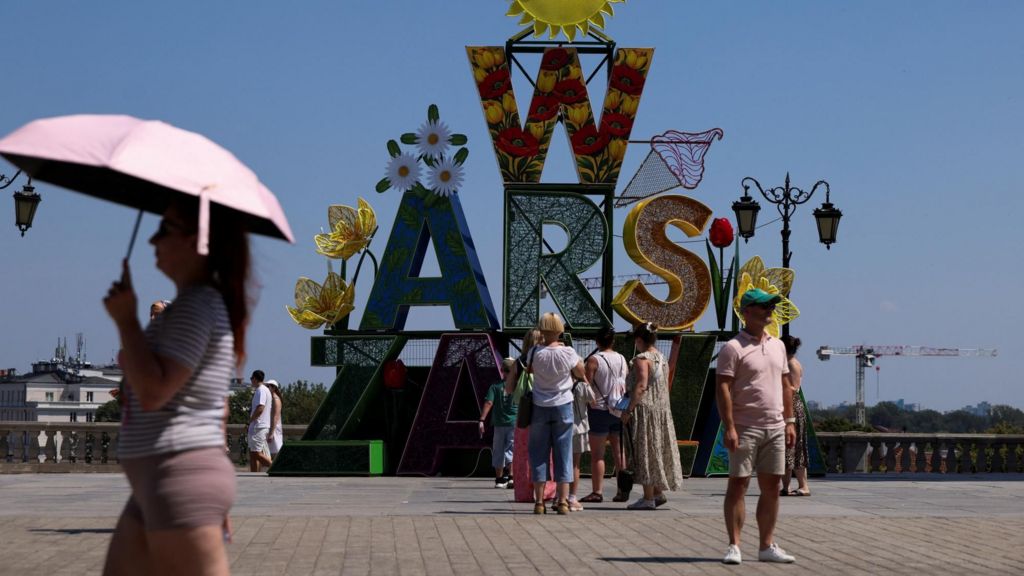
    This report was contributed by Ciobanu, reporting from Warsaw, Poland.

  • Chinese national given one year in prison for smuggling ants out of Kenya

    Chinese national given one year in prison for smuggling ants out of Kenya

    In a high-profile wildlife trafficking case that highlights Kenya’s growing crackdown on the illegal insect trade, a Chinese national has received a 12-month prison sentence and a substantial fine for attempting to smuggle more than 2,000 live queen garden ants out of the East African nation en route to China. The verdict, handed down Wednesday by a Nairobi court, ordered defendant Zhang Kequn to pay 1 million Kenyan shillings, equal to roughly $7,737 or £5,713, in addition to his custodial sentence. Presiding Judge Irene Gichobi issued a sharp rebuke of Zhang’s conduct, noting the defendant was not fully cooperative during proceedings and showed no genuine remorse for his actions. The case traces back to Zhang’s March 10 arrest at Nairobi’s Jomo Kenyatta International Airport, where authorities discovered the large consignment of live ants hidden in his checked luggage as he prepared to board a flight bound for the Chinese mainland. Court documents revealed Zhang had purchased the entire batch of ants from local Kenyan national Charles Mwangi, paying a total of 200,000 Kenyan shillings ($1,540, £1,150) for the 2,000 specimens. Mwangi was also arrested and charged in connection with the smuggling plot, and he has been released on bail as his case moves through the Kenyan judicial system. Zhang initially entered a plea of not guilty to all charges, which included illegal trafficking of protected wildlife species, before reversing his position and entering a guilty plea. Judge Gichobi emphasized that a harsh penalty was necessary to deter future trafficking activity, pointing to a steady uptick in large-scale garden ant smuggling cases across Kenya and the serious ecological damage that these illegal removals cause to local ecosystems. “There is need for a stiff deterrent sentence,” the judge stated, referencing the growing threat unregulated insect trafficking poses to Kenya’s natural biodiversity. Following the completion of his prison term, Zhang will be transferred to Chinese authorities for deportation back to his home country, per the judge’s ruling. Zhang’s legal team has confirmed he plans to challenge the verdict and sentence, and he has 14 days from the ruling date to file an official appeal with the Kenyan appeals court. Kenyan wildlife authorities have long warned that global demand for native Kenyan garden ants, particularly among private insect collectors in Europe and Asia, has spurred a sharp rise in illegal trafficking activity. Each queen garden ant can fetch as much as $220 (£170) on the global black market, making the illegal trade a high-profit, low-risk enterprise for criminal networks. This case is not an isolated incident: just 12 months ago, a Kenyan court handed down an identical 12-month prison sentence and $7,700 fine to four men – two Belgian citizens, one Vietnamese national, and one Kenyan national – who were caught attempting to smuggle thousands of live queen ants out of the country, also bound for collectors in European and Asian markets. The Kenya Wildlife Service, which leads enforcement against wildlife and insect trafficking in the country, has stepped up border and airport inspections in recent years to crack down on the illegal trade, as authorities work to protect native insect populations and preserve Kenya’s fragile ecological balance.

  • Israeli forces number Palestinian women’s hands during Jenin invasion

    Israeli forces number Palestinian women’s hands during Jenin invasion

    On a crisp Monday in April 2026, a small group of 120 displaced Palestinian women were granted just a few hours of restricted access to their Jenin refugee camp homes, part of the occupied West Bank, more than a year after Israeli military forces launched a sweeping offensive that forced tens of thousands of residents to flee. What was supposed to be a rare opportunity to retrieve personal belongings and inspect damaged properties became a new chapter of trauma, marked by invasive searches, deliberate humiliation, and the shattering final sight of entire neighborhoods reduced to smoldering rubble.

    Since the large-scale military operation began in January 2025, Israeli forces have expelled approximately 40,000 Palestinians from Jenin camp and surrounding population centers in the northern West Bank. The incursion has left most of the camp in catastrophic ruins, with large swathes sealed off to civilian residents and permanent military outposts installed across seized residential property. Monday’s access was only the second such limited entry permitted for displaced residents, following a smaller outing in July 2025 that allowed just 25 women to enter the camp.

    Before the women were allowed past the heavily fortified camp entrance, soldiers marked each woman’s hand with inked numbers and letters, sorting them by the neighborhood where their homes were located. Multiple women reported hours of degrading treatment even before entry: forced to stand for three hours under the blazing Middle Eastern sun, with troops intentionally altering neighborhood classification markings to extend the delay. Um Fadi Wahdan, a 60-something resident of the camp’s Wahdan neighborhood who spoke to Middle East Eye, described the chaotic, abusive processing that preceded the two-hour visit.

    When Wahdan finally reached her family’s five-story home—where more than 30 of her extended family once resided—she found nothing but ash and charred remains. The entire structure had been burned to the ground. “I went to the Wahdan neighbourhood where my house is. I was shocked to find it completely burned down, all five storeys. I wish I hadn’t gone,” she told reporters. She left with nothing, her grief compounded by the fact that the visit reopened wounds that had just begun to heal: her son Saeed was killed by Israeli forces in an August 2024 vehicle airstrike, one son has been detained by Israeli authorities for seven years, and a third remains in Palestinian Authority security custody.

    Wandering through the camp, Wahdan found a landscape unrecognizable from the home she grew up in. Open sewage pooled across crumbling streets, dozens of intact residential homes had been converted into military barracks, and filth covered every surface. Where once families gathered, now only military vehicles and armed patrols move freely.

    For 60-year-old Abeer al-Sabbagh, a displaced woman whose home was bombed by Israeli forces in 2023—a strike that killed three members of her family—the abuse extended beyond waiting and marking. Al-Sabbagh, who fled the camp in 2023 with her elderly mother (who has since died in exile), recounted that female Israeli soldiers forced all 120 women to undergo invasive strip searches inside a seized former family home, which had been cleared of all furniture and converted into a temporary military holding area.

    Al-Sabbagh said when she tried to refuse the search and leave, soldiers told her she would not be allowed to exit without undergoing the procedure. “It was indecent, especially since there were women in their twenties among us, and we didn’t know if there were hidden cameras,” she told Middle East Eye. Frightened by the overwhelming military presence and devastated by what she could already see of the destruction, al-Sabbagh turned back before reaching her neighborhood. “There isn’t a single house left fit for habitation,” she said.

    The accounts of the 120 women paint a devastating picture of the aftermath of Israel’s year-long military occupation of the Jenin refugee camp. For displaced residents who have spent more than a year living away from their homes, the rare, tightly controlled visit did not provide closure—instead, it confirmed that the community they knew is gone, and their treatment at the hands of Israeli forces added a new layer of dehumanizing trauma to an already devastating displacement.

  • Pupil kills nine, wounds 13 in new Turkey school shooting

    Pupil kills nine, wounds 13 in new Turkey school shooting

    In a shocking outbreak of school violence that has shaken Turkey, a second mass shooting in as many days left nine people dead and 13 others injured Wednesday when an 8th-grade student opened fire randomly at a school in the country’s southern Kahramanmaras province, a region where such mass casualty attacks have historically been extremely rare.

    According to local and national officials, the 13-year-old attacker brought multiple firearms — which authorities believe belonged to his father, a former police officer — hidden in his backpack to the school. After entering two separate classrooms, the teen began shooting indiscriminately. Initial reports had placed the death toll at four, but Interior Minister Mustafa Ciftci later confirmed the updated fatality count in an official statement, adding that six of the 13 wounded remain in intensive care, with three in critical condition. Kahramanmaras Governor Mukerrem Unluer told reporters the suspect was carrying five handguns and seven ammunition magazines, and died during the incident. Authorities have not yet confirmed whether the teen’s death was a suicide or an accidental shooting amid the chaos of the attack, Unluer added. Turkish police have since detained the suspect’s father, Ugur Mersinli, for questioning, state-run Anadolu Agency reported.

    Verified footage from the scene has captured the panic and terror that unfolded during the attack. A video recorded by a nearby resident and verified by Agence France-Presse shows terrified students leaping from first-floor windows to escape the gunfire, while dozens more run for safety through the school’s courtyard. Roughly 15 gunshots can be heard in the 90-second clip. Other footage from private Turkish news agency IHA shows an evacuated victim being carried into an ambulance, alongside distraught parents rushing to the school after news of the attack broke. Law enforcement quickly locked down the area surrounding the school, and emergency response vehicles flooded the site. Both Turkey’s interior minister and education minister traveled immediately to Kahramanmaras to oversee the response, while Justice Minister Akin Gurlek confirmed public prosecutors have launched an urgent investigation into the incident.

    Wednesday’s attack comes just 24 hours after another school shooting in Turkey, which also ended in the attacker’s death. On Tuesday, a former student opened fire with a shotgun at his old high school in the Siverek district of Sanliurfa province, wounding 16 people — 10 of whom were students — before killing himself during a confrontation with police. In the wake of that first attack, police detained one suspect and suspended four local officials from their posts over alleged failures, and the school was ordered closed for four days.

    Speaking to lawmakers from the ruling Justice and Development Party (AKP) in parliament, President Recep Tayyip Erdogan vowed that any individual found negligent or responsible for security lapses that allowed the attacks will face full accountability. “There will certainly be accountability for anyone found at fault,” Erdogan said.

    Main opposition Republican People’s Party (CHP) leader Ozgur Ozel has called for sweeping, nationwide upgrades to school security, arguing that the back-to-back attacks prove school violence in Turkey can no longer be dismissed as a series of isolated events. “This issue has turned into a growing and deepening security vulnerability,” Ozel wrote on social media platform X. He outlined a series of urgent measures he says are now non-negotiable: full screening at all school entrances and exits, an increase in on-site security personnel, upgraded campus camera systems, more frequent police patrols around school grounds, and updated, ready-to-deploy emergency crisis response plans. “The security of schools is entrusted to our state. No negligence or deficiency in this regard can be excused anymore,” Ozel added.

    School shootings were an extremely rare occurrence in Turkey before this week. The most recent prior incident occurred in May 2024, when a expelled former student shot and killed a private high school principal in Istanbul. The country already enforces some of the strictest gun control regulations in the region, requiring all firearms to be licensed and registered, mandatory mental health and criminal background checks for gun owners, and harsh legal penalties for anyone found in possession of unregistered weapons.

  • Israeli jailers assaulted Marwan Barghouti three times in a month, lawyer says

    Israeli jailers assaulted Marwan Barghouti three times in a month, lawyer says

    Top Palestinian political leader Marwan Barghouti, who has been held in Israeli custody since 2004, has been violently assaulted three separate times by Israeli prison guards over the course of one month, according to claims from his legal team and a regional prisoner advocacy campaign. The alleged attacks, which advocates describe as targeted, brutal abuse, have taken place as Barghouti is held in solitary confinement across multiple Israeli correctional facilities, raising urgent alarms over the treatment of high-profile Palestinian detainees amid the ongoing Israel-Gaza conflict.

    The campaign advocating for Barghouti’s release released a public statement Tuesday detailing the allegations, confirming the assaults occurred during his solitary detainment at Megiddo Prison in northern Israel and Ramon Prison in the country’s south. The group claims Barghouti was tortured through repeated beatings and the use of repressive restraint tactics, leaving him with multiple lacerations and widespread bleeding across his body that has gone entirely untreated by prison medical staff. The campaign added that the attacks against the 66-year-old leader are part of a broader, systematic crackdown that began when Israel launched its large-scale military campaign in Gaza in October 2023.

    Israeli human rights attorney Ben Marmarelli, who conducted a legal visit with Barghouti on Sunday, publicly outlined the full timeline of alleged abuse in a detailed post on the social platform X, calling the ongoing treatment “deeply alarming.” Per Marmarelli’s account, the first assault took place on March 24, when guards entered Barghouti’s solitary cell accompanied by a attack dog, forced the prisoner to the ground, and directed the dog to attack him on multiple occasions. The following day, as Barghouti was transferred between Megiddo Prison and Ganot Prison, a second assault occurred during the movement process.

    The most severe alleged attack took place on April 8, when guards beat Barghouti severely inside his cell at Ganot Prison, leaving him bleeding for more than two hours before he could access any care. When legal representatives submitted a formal request for urgent medical attention following the beating, prison authorities denied the application entirely.

    “These are not isolated incidents. They form a clear pattern of escalating abuse: violence, medical neglect, and treatment that places him at immediate risk,” Marmarelli wrote in his social media post. The attorney also documented the harsh, restrictive conditions imposed during his recent legal meeting with Barghouti, noting that the pair was forced to shout through a thick glass partition to communicate after prison authorities failed to repair the broken meeting room phone. “This is what a legal visit looks like today: basic conditions denied, communication obstructed, and even the most elementary human and professional standards ignored,” he added.

    Despite the degrading and dangerous conditions of his detainment, Marmarelli confirmed that Barghouti remains mentally alert and closely engaged with political developments across the region. “He had a great deal to say. Above all, he wanted to know more about his family and the Palestinian people, what is happening in Palestinian and Israeli scene. I tried to tell him everything I know,” Marmarelli said.

    Barghouti, a senior leader of the Fatah political party, has been in Israeli custody since 2002, with his conviction finalized in 2004. Israeli authorities targeted him over his prominent leadership role during the 2000–2005 Second Intifada, and he was ultimately convicted on charges linked to attacks that killed five Israelis. He is currently serving five consecutive life sentences plus an additional 40 years of incarceration. Throughout his trial, Barghouti refused to present a defense, stating publicly that he did not recognize the legitimacy of the Israeli court to hear his case.

    Public opinion polls conducted across Palestinian territories have consistently shown that Barghouti would win the Palestinian presidency by a clear margin if national elections were held and he was allowed to run as a candidate. Widely regarded as one of the only remaining Palestinian political figures capable of unifying fragmented factions across the territory, he retains broad public support even as the Palestinian Authority, Fatah’s governing body, suffers from widespread unpopularity among Palestinian residents.

    Barghouti has been held in continuous solitary confinement for years, but reports confirm that abusive treatment against him and other high-profile Palestinian detainees has intensified dramatically since October 2023, when Israel launched its current military operation in Gaza.